A to Z – English, The History of

A2Z-BADGE_[2016]April 2016 A to Z Challenge. I’m participating by writing blogs about history.

E is for English, The History of


In researching for this blog, I found the following ten-minute video from Open University. It’s called “The History of English in Ten Minutes.” I couldn’t create or write anything as brilliant as this, so I’ve admitted my defeat and have transcribed it below. Watch, read, or follow along.


The History of English in Ten Minutes

Chapter 1 Anglo-Saxon

The English language begins with the phrase ‘Up Yours Caesar!’ as the Romans leave Britain and a lot of Germanic tribes start flooding in, tribes such as the Angles and the Saxons – who together gave us the term Anglo-Saxon, and the Jutes – who didn’t. The Romans left some very straight roads behind, but not much of their Latin language. The Anglo-Saxon vocab was much more useful as it was mainly words for simple everyday things like ‘house’, ‘woman’, ‘loaf’ and ‘werewolf’. Four of our days of the week were named in honor of Anglo-Saxon gods, but they didn’t bother with Saturday, Sunday and Monday as they had all gone off for a long weekend. While they were away, Christian missionaries stole in bringing with them leaflets about jumble sales and more Latin. Christianity was a hit with the locals and made them much happier to take on funky new words from Latin like ‘martyr’, ‘bishop’ and ‘font’. Along came the Vikings, with their action-man words like ‘drag’, ‘ransack’, ‘thrust’ and ‘die’. They may have raped and pillaged but there were also into ‘give’ and ‘take’ – two of around 2000 words that they gave English, as well as the phrase ‘watch out for that man with the enormous ax.”


Chapter 2 The Norman Conquest

True to his name, William the Conqueror invades England, bringing new concepts from across the channel like the French language, the Doomsday book and the duty free Galois’s multipack. French was de rigeur for all official business, with words like ‘judge’, ‘jury’, ‘evidence’ and ‘justice’ coming in and giving John Grisham’s career a kick-start. Latin was still used ad nauseam in Church, and the common man spoke English – able to communicate only by speaking more slowly and loudly until the others understood him. Words like ‘cow’, ‘sheep’ and ‘swine’ come from the English-speaking farmers, while the a la carte versions – ‘beef’, ‘mutton’ and ‘pork’ – come from the French-speaking toffs – beginning a long running trend for restaurants having completely indecipherable menus. All in all the English absorbs about 10,000 new words from the Normans, but they still couldn’t grasp the rules of cheek kissing. The bonhomie all ended when the English nation took their new warlike lingo of ‘armies’, ‘navies’ and ‘soldiers’ and began the Hundred Years War against France. It actually lasted 116 years but by that point no one could count any higher in French and English took over as the language of power.


Chapter 3 Shakespeare

As the dictionary tells us, about 2000 new words and phrases were invented by William Shakespeare. He gave us handy words like ‘eyeball’, ‘puppy-dog’ and ‘anchovy’ – and more show-offy words like ‘dauntless’, ‘besmirch’ and ‘lacklustre’. He came up with the word ‘alligator’, soon after he ran out of things to rhyme with ‘crocodile’. And a nation of tea-drinkers finally took him to their hearts when he invented the ‘hobnob’. Shakespeare knew the power of catchphrases as well as biscuits. Without him we would never eat our ‘flesh and blood’ ‘out of house and home’ – we’d have to say ‘good riddance’ to ‘the green-eyed monster’ and ‘breaking the ice’ would be ‘as dead as a doornail’. If you tried to get your ‘money’s worth’ you’d be given ‘short shrift’ and anyone who ‘laid it on with a trowel’ could be ‘hoist with his own petard’. Of course it’s possible other people used these words first, but the dictionary writers liked looking them up in Shakespeare because there was more cross-dressing and people poking each other’s eyes out. Shakespeare’s poetry showed the world that English was a rich vibrant language with limitless expressive and emotional power. And he still had time to open all those tearooms in Stratford.


Chapter 4 The King James Bible

In 1611 ‘the powers that be’ ‘turned the world upside down’ with a ‘labor of love’ – a new translation of the bible. A team of scribes with the ‘wisdom of Solomon’ – ‘went the extra mile’ to make King James’s translation ‘all things to all men’, whether from their ‘heart’s desire’ ‘to fight the good fight’ or just for the ‘filthy lucre’. This sexy new Bible went ‘from strength to strength’, getting to ‘the root of the matter’ in a language even ‘the salt of the earth’ could understand. ‘The writing wasn’t on the wall’, it was in handy little books and with ‘fire and brimstone’ preachers reading from it in every church, its words and phrases ‘took root’ ‘to the ends of the earth’ – well at least the ends of Britain. The King James Bible is the book that taught us that ‘a leopard can’t change its spots’, that ‘a bird in the hand is worth two in the bush’, that ‘a wolf in sheep’s clothing’ is harder to spot than you would imagine, and how annoying it is to have ‘a fly in your ointment’. In fact, just as ‘Jonathan begat Meribbaal; and Meribbaal begat Micah,’ the King James Bible begat a whole glossary of metaphor and morality that still shapes the way English is spoken today. Amen.


Chapter 5 The English of Science

Before the 17th Century scientists weren’t really recognized – possibly because lab-coats had yet to catch on. But suddenly Britain was full of physicists – there was Robert Hooke, Robert Boyle – and even some people not called Robert, like Isaac Newton. The Royal Society was formed out of the Invisible College – after they put it down somewhere and couldn’t find it again. At first they worked in Latin. After sitting through Newton’s story about the ‘pomum’ falling to the ‘terra’ from the ‘arbor’ for the umpteenth time, the bright sparks realized they all spoke English and could transform our understanding of the universe much quicker by talking in their own language. But science was discovering things faster than they could name them. Words like ‘acid’, ‘gravity’, ‘electricity and ‘pendulum’ had to be invented just to stop their meetings turning into an endless game of charades. Like teenage boys, the scientists suddenly became aware of the human body – coining new words like ‘cardiac’ and ‘tonsil’, ‘ovary’, and ‘sternum’ – and the invention of ‘penis’ and ‘vagina’ made sex education classes a bit easier to follow, though ‘clitoris’ was still a source of confusion.


Chapter 6 English and Empire

With English making its name as the language of science, the Bible and Shakespeare, Britain decided to take it on tour. Asking only for land, wealth, natural resources, total obedience to the crown and a few local words in return. They went to the Caribbean looking for gold and a chance to really unwind – discovering the ‘barbeque’, the ‘canoe’ and a pretty good recipe for rum punch. They also brought back the word ‘cannibal’ to make their trip sound more exciting. In India there was something for everyone. ‘Yoga’ – to help you stay in shape, while pretending to be spiritual. If that didn’t work there was the ‘cummerbund’ to hide a paunch and – if you couldn’t even make it up the stairs without turning ‘crimson’ – they had the ‘bungalow’. Meanwhile in Africa they picked up words like ‘voodoo’ and ‘zombie’ – kicking off the teen horror film. From Australia, English took the words ‘nugget’, ‘boomerang’ and ‘walkabout’ – and in fact the whole concept of chain pubs. Between toppling Napoleon and the first World War, the British Empire gobbled up around 10 millions square miles, 400 million people and nearly a hundred thousand gin and tonics, leaving new varieties of English to develop all over the globe.


Chapter 7 The Age of the Dictionary

With English expanding in all directions, along came a new breed of men called lexicographers, who wanted to put an end to this anarchy – a word they defined as ‘what happens when people spell words slightly differently from each other’. One of the greatest was Doctor Johnson, whose ‘Dictionary of the English Language’ took him 9 years to write. It was 18 inches tall and contained 42,773 entries – meaning that even if you couldn’t read, it was still pretty useful if you wanted to reach a high shelf. For the first time, when people were calling you ‘a pickle herring’, a ‘jobbernowl or a ‘fopdoodle’ – you could understand exactly what they meant – and you’d have the consolation of knowing they all used the standard spelling. Try as he might to stop them, words kept being invented and in 1857 a new book was started that would become the Oxford English Dictionary. It took another 70 years to be finished after the first editor resigned to be an Archbishop, the second died of TB and the third was so boring that half his volunteers quit and one of the ended up in an asylum. It eventually appeared in 1928 and has continued to be revised ever since – proving the whole idea that you can stop people making up words is complete snuffbumble.


Chapter 8 American English

From the moment Brits landed in America they needed names for all the new plants and animals so they borrowed words like ‘raccoon’, ‘squash’ and ‘moose’ from the Native Americans, as well as most of their territory. Waves of immigrants fed America’s hunger for words. The Dutch came sharing ‘coleslaw’ and ‘cookies’ – probably as a result of their relaxed attitude to drugs. Later, the Germans arrived selling ‘pretzels’ from ‘delicatessens’ and the Italians arrived with their ‘pizza’, their ‘pasta’ and their ‘mafia’, just like mamma used to make. America spread a new language of capitalism – getting everyone worried about the ‘breakeven’ and ‘the bottom line’, and whether they were ‘blue chip’ or ‘white collar’. The commuter needed a whole new system of ‘freeways’, ‘subways’ and ‘parking lots’ – and quickly, before words like ‘merger’ and ‘downsizing’ could be invented. American English drifted back across the pond as Brits ‘got the hang of’ their ‘cool movies’, and their ‘groovy’ ‘jazz’. There were even some old forgotten English words that lived on in America. So they carried on using ‘fall’, ‘faucets’, ‘diapers’ and ‘candy’, while the Brits moved on to ‘autumn’, ‘taps’, ‘nappies’ and NHS dental care.


Chapter 9 Internet English

In 1972 the first email was sent. Soon the Internet arrived – a free global space to share information, ideas and amusing pictures of cats. Before the Internet, English changed through people speaking it – but the net brought typing back into fashion and hundreds of cases of repetitive strain injury. Nobody had ever had to ‘download’ anything before, let alone use a ‘toolbar’ – And the only time someone set up a ‘firewall’, it ended with a massive insurance claim and a huge pile of charred wallpaper. Conversations were getting shorter than the average attention span – why bother writing a sentence when an abbreviation would do and leave you more time to ‘blog’, ‘poke’ and ‘reboot’ when your ‘hard drive’ crashed? ‘In my humble opinion’ became ‘IMHO, ‘by the way’ became ‘BTW,’ and ‘if we’re honest that life-threatening accident was pretty hilarious! simply became ‘fail’. Some changes even passed into spoken English. For your information people frequently asked questions like, “How can ‘LOL’ mean ‘laugh out loud’ and ‘lots of love’?” But if you’re going to complain about that then UG2BK. (You’ve got to be kidding.)


Chapter 10 Global English

In the 1500 years since the Roman’s left Britain, English has shown an unique ability to absorb, evolve, invade, and if we’re honest, steal. After foreign settlers got it started, it grew into a fully-fledged language all of its own, before leaving home and travelling the world, first via the high seas, then via the high speed broadband connection, pilfering words from over 350 languages and establishing itself as a global institution. All this despite a written alphabet that bears no correlation to how it sounds and a system of spelling that even Dan Brown couldn’t decipher. Right now around 1.5 billion people speak English. Of these about a quarter are native speakers, a quarter speak it as their second language, and half are able to ask for directions to a swimming pool. There’s Hinglish – which is Hindi-English, Chinglish – which is Chinese-English, and Singlish – which is Singaporean English – and not that bit when they speak in musicals. So in conclusion, the language has got so little to do with England these days it may well be time to stop calling it ‘English’. But if someone does think up a new name for it, it should probably be in Chinese.

A to Z – Decoration Day

A2Z-BADGE_[2016]April 2016 A to Z Challenge. I’m participating by writing blogs about history.

D is for Decoration Day.

I should get two points for that. 🙂


Graves_at_Arlington_on_Memorial_DayIn 1868 following the American Civil War, the head of a Union veterans organization established Decoration Day as a time to decorate the graves of those killed in the war. However, this was certainly not a new idea, as those in the South had been doing this in family graveyards for years, well before the war. Families would gather on a Sunday in early summer at the cemetery grounds for a religious service and a picnic and place flowers on the graves of their loved ones.

There is another claim that black Americans actually invented the celebration/commemoration in Charleston, South Carolina at the close of the war in 1865, when 10,000 men, black and white, proclaimed to the world what the war was really about and celebrated the end of the war and freedom from slavery.

By the 20th century, the conflicting traditions merged to become one – Memorial Day.

Towns in Pennsylvania, Georgia, Mississippi, and Illinois have all claimed the creation of Memorial Day, and if that isn’t confusing enough, in 1966, President Johnson signed a proclamation declaring Waterloo, NY as the birthplace of Memorial Day. Seems to me they’re all about 100 years too late, and I’m not the only one who thinks so. The 89th Congress recognized that the observance of Memorial Day happened 100 years prior to the presidential proclamation.

When the first observance in 1868 was planned, it is said May 30 was chosen because it wasn’t the anniversary of any civil war battle. The White House, in typical form, says it was chosen “as an optimal date for flowers to be in bloom.” Seriously, why do we elect these people??

The earliest observances mixed religion and nationalism together to provided a way for people to make sense of their history in terms of sacrifice for a better nation. I wish people today would understand and honor that instead of trying to erase it, but that’s a-whole-nother blog. To properly honor Memorial Day, you raise your flag to the top of the staff, then lower it to half staff until noon, when you raise it again. Memorial Day is about death, sacrifice, and rebirth. Perhaps we should commemorate it more than once per year.

Just in case you go on Jeopardy: The longest continually running Memorial Day Parade has been held every year since 1868 in Ironton, Ohio.


in memory


A to Z – Culpeper Garden at Leeds Castle

A2Z-BADGE_[2016]April 2016 A to Z Challenge. I’m participating by writing about history.

C is for Culpeper Garden at Leeds Castle.


,

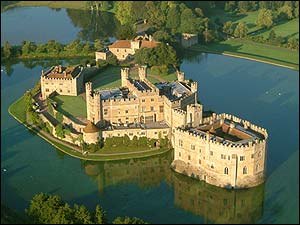
Leeds-CastleLeeds Castle is located in Maidstone, Kent, England. It was a Norman stronghold in the 11th and 12th centuries, a royal palace in the 13th through 15th, and a Tudor palace in the 16th century. It was also owned by my family at one point. The Culpepers (my mother’s family) owned the castle before the English civil war in the early 1600s. They lost it due to being on the wrong side of the war. If you’re not familiar with the outcome of the war, the king was beheaded and the royalist Culpepers fled to the new colonies to escape the same fate.

In the mid-1600s, the royal family was returned to the throne, and the Culpepers got their house back!!

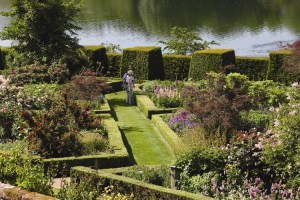
culpeper_garden_originalWhat is now called the Culpeper garden was originally a kitchen garden and nothing more, but in 1980, a designer transformed it into a cottage garden. It has an informal layout with low box hedges bordering Roses, Lupines, and Poppies. It is said to be named after herbalist Nicholas Culpeper, who is a distant cousin of mine. Nicholas transcribed the pharmacopoeia from Latin to English “so that all men may prescribe for themselves.” He ended up dying in the war mentioned above, but as far as I know, he never lived in the castle. It is still nice that they honored the family hundreds of years later by naming something after them.
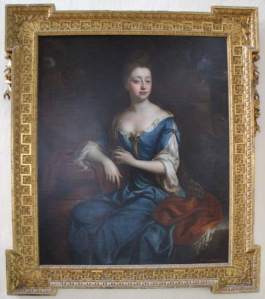
The final Culpeper owner of Leeds was Catherine Culpeper. She married Thomas Fairfax in 1690 and the property then transferred into the Fairfax family. Below are photos of Catherine and Thomas. Since their grandfathers were bitter enemies during the war, I’ve always wondered if the families condoned the marriage, if Catherine was being rebellious by marrying the enemy, or if the Fairfaxes were simply out to take everything from the Culpepers. I’m currently writing a story about it called “The Culpepper-Fairfax Scandal.” I’m not set on the end yet, so we’ll see where the characters take me and which scenario plays out.  At some point in the story, I need to include a stroll through the garden.

LadyCatherine

Thomas_Fairfax 5th baron of cameron, catherine culpeppers husband

A to Z – Beauvoir

A2Z-BADGE_[2016]April 2016 A to Z Challenge. I’m participating in the challenge by writing about history.

B is for Beauvoir.


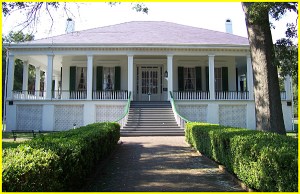
BeauvoirBeauvoir, meaning beautiful view, is know by many people, especially civil war buffs. It’s an antebellum home that sits on the shores of the Gulf of Mexico in the beautiful town of Biloxi, Mississippi. It was many things but best known as the home of Confederate President Jefferson Davis.


It was built between 1848 and 1852 by a rich plantation owner as a summer home for his family. After the man died, it was sold in 1873 by his widow for back taxes, then sold again three months later to a Sarah Dorsey.

In 1877 (following the civil war), Jefferson Davis was on the coast, looking for a place of solitude to write. He visited his family friend Mrs. Dorsey and they agreed he should stay there. He loved the home so much, he offered to buy it, and she sold it to him for $5,500.00 to be paid in three payments. After making the first payment, Mrs. Dorsey died. President Davis then found in her will that he was her sole heir.

President Davis lived in the home until his death in 1889. His daughter Winnie inherited the house and sold it to the Sons of Confederate Veterans with the stipulation that the home be used to house Confederate veterans and their wives at no charge until it wasn’t needed anymore. The last of the veterans vacated the premises in 1957. The home was severely damaged in Hurricane Katrina but is now again open as a tourist attraction and historical site.

If you find yourself in Biloxi and you’d like to visit, daily tours of the mansion run every hour between 9:30am and 4:30pm. The property is located at 2244 Beach Blvd, Biloxi, MS 39531  (228) 388-4400. You can visit their website HERE.


culpepper Joel B CulpepperMy second great grandfather Joel Bluett Culpepper served in the civil war Co. K 63rd Alabama infantry. He signed up at the age of seventeen. In 1863, he was captured and held at Fort Massachusetts on Ship Island until the end of the war. Under his rights as a Confederate veteran, he spent the last ten months of his life at Beauvoir, dying at the home 11 Jan 1911. He is on the records there as James B Culpepper.


A to Z – Arlington National Cemetery

A2Z-BADGE_[2016]April 2016 A to Z blog challenge. I’m participating by writing blogs about history.

A is for Arlington National Cemetery.


Everyone is familiar with Arlington National Cemetery, but the story behind it is pretty strange.


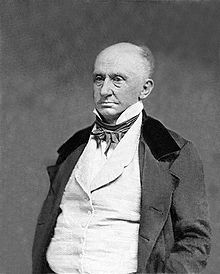
220px-GeoWPCustisThe property was originally owned by George Washington’s step-grandson, George Washington Parke Custis (photo), who built the Arlington House on the property in 1802. George Custis spent a sizable portion of his inheritance to build the palatial home. He married Mary Lee Fitzhugh and had only one child who survived to adulthood –  a daughter named Mary Anna Custis.


Mary_Custis_Lee_and_Robert_E._Lee_Jr_1845In 1831, Mary Anna married none other than Robert E. Lee. Here is a photo of Mary Anna and her son Robert E. Lee Jr., who looks like a little girl if you ask me. The couple moved into the Arlington House with her family.
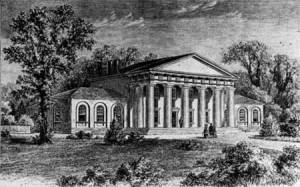
In 1857, George Custis died, leaving the house to Mary Anna’s son, George Washington Lee. Robert E. Lee was the executor of George Custis’s will, and took a three-year leave of absence from the army to make needed repairs to the property. Strangely, the will also dictated that all slaves should be freed within five years of George Custis’s death. Robert E Lee did so, setting the slaves free in December of 1862.


For thirty years, the Lees made their home at Arlington, and here’s where the story takes a sour turn.

As everyone knows, the American Civil War began in 1861. Robert E. Lee resigned his position in the army and joined the Confederate forces. He went away to serve the Confederacy and Mary Anna moved in with family on May 14, confident that federal forces would soon take over her beloved home. She was correct. They occupied Arlington on May 24.

In 1863, the government passed a law that property taxes needed to be paid in person. I doubt Lee could walk into a federal office and not be arrested, besides, he was a little busy at the time. The government seize the property for non-payment of taxes. By the end of the war, the government decided to turn the property into a federal cemetery, assuring that Lee would never return to it.

He didn’t. He died in 1870 without ever returning to Arlington. Mary Anna only returned to the home once before her death in 1873, but she refused to enter the house, too upset at its condition. Their son eventually sued the federal government for his property, and after going all the way to the Supreme Court, he won compensation in the amount of $150,000, about $3.5 million in today’s money.

In 1955, the government finally recognized Robert E. Lee, designating Arlington House as a permanent memorial.

Arlington_House_pre-1861 (all photos are from Wikipedia)


Earthquakes in Tennessee??

Not only earthquakes, but huge 6.8 to 8.8 earthquakes!! They happened back in December of 1811 and January of 1812, but they could happen again.

new madridThe New Madrid Seismic Zone, (shown here compliments of Encyclopedia Brittanica) is six times larger than the San Andreas fault zone in California. It lies centered in New Madrid, Missouri, and the last time it shook it’s ugly head was two hundred years ago. It’s waaaay overdue!! Back in 1811/12, there were over 2000 earthquakes and aftershocks that shook the midwest. They were felt as far away as NY, Boston, and Washington D.C. President James Madison felt them at the White House.

No other quakes have produced so much damage in the history of the world. The Mississippi River ran backwards, crevasses opened up in the land, and missing people were assumed swallowed by the earth. It created two waterfalls in Mississippi.

The prediction for the future?? Some say an earthquake this size will split the United States in two. Some say we haven’t seen any activity from the New Madrid fault for two hundred years, so why worry about it now?

41n6zHpRqRL._UY250_My book Elly Hays opens with Tecumseh’s prediction for the quake, and the quake is the cause for the family moving from Tennessee to the Mississippi Territory. The story isn’t about the 1811/12 quakes, but they are the reason the story happened. Elly Hays is based on a true story and is the tale of my 5th great grandmother Elizabeth Hays Rodgers. It is the epic clash between a fearless warrior with nothing to lose and a young mother on the verge of losing everything.

Elly Hays is on SALE for only $0.99 at Amazon on Kindle April 1-5!


The Backstory of “An Orphan’s Heart”

I wrote the wrong book!

My idea was to write about the wild adventures of a young woman traveling alone across the deep south in the late 1800s. Imaging steam trains and covered wagons crossing the “wild west,” encountering gentlemen who were not always gentlemen, accommodations that were less than luxurious, and money non-existent following the Civil War. Now, place a young girl fighting for survival in this rough and tumble world. That’s what I wanted to write.

Didn’t happen!

I ended up writing an emotionally deep love story that made people cry. It wasn’t the story I set out to write. When I finished it and sent it to my editor, I told her I wasn’t happy with it, but it just sort of wrote itself, and I wasn’t sure what to do with it. When she returned the manuscript to me, she said, “I think you’re a lot closer than you think. It’s a beautiful story.” After living with it for a few months, I decided to leave it alone, allowing it to be what it was, and ended up with 92% of the Amazon reviews being three, four, and five stars. It just goes to show you, you never know what the public is going to like.

51w5TKRgkCL._UY250_An Orphan’s Heart is about a young girl from Mississippi who at the age of nine lost her parents to typhoid, during the Civil War. She was subsequently shuffled from family member to family member through her teenage years, ending up in Alabama. When she became a young women, she traveled to see her brother in Texas and fell in love with a young man there. The love doesn’t last long…you’ll have to read the book.

The heroine is a real person. She is my cousin, Martha Ellen Rodgers, simply known as Ellen. She was raised by her aunt Mary (my 3rd great grandmother). I’ve taken the family events, census records, newspapers, train schedules, cover wagon trails, and social events and weaved them into a story of love – NOT a story of adventure, darn it. She was a very brave young woman, surviving things we can only read about.

An Orphan’s Heart is on sale for $0.99 on Kindle at Amazon through March 22. If you like a tear-jerky (is that a word?) tale about a different time and place, give it a try.

Saturday Snippet and Sale

51w5TKRgkCL._UY250_This week’s snippet is from An Orphan’s Heart. It’s the story of a girl who was orphaned during the Civil War and her quest to find the love she lost as a child. Martha Ellen Rodgers, simply Ellen in the book, grew up in a large, loving family in Mississippi. Her parents died of typhoid within days of each other when Ellen was nine. She spent the rest of her life searching for love and a place to belong. Her travels took her to Alabama, back to Mississippi, and eventually to Texas where she found the love of her life – only to have everything ripped from her in a shattering turn of events.

Note: You’re going to need a kleenex for this one.

An Orphan’s Heart is being offered for only $0.99 this weekend (March 18-22) on Kindle at Amazon.

Enjoy the video trailer and a snippet below.

**************************

**************************

Ellen is staying at her aunt’s house in Alabama and helping with the children. She met a handsome boy named Milton who has unexpectedly dropped by while no one was at home.

We make ourselves comfortable at the table, and as we sip our coffee, we chat about his family and farm, but his deep brown eyes make it hard for me to concentrate on anything he’s saying. We chat about his siblings and his hopes for the future. He even mentions that he might like to go to a big city someday, which brings up his desire to ride a train. I would tell him of my dreams of riding a train also, but I can’t seem to get a word in edgewise. Throughout the one-sided conversation, he’s very friendly and open, and I think I may like him a lot more than my first impression, especially his penetrating gaze. Nothing else in the world exists while I’m under that gaze.

Hours later, in the middle of a sentence, he suddenly stops and pulls out his pocket watch. “Oh, it’s getting late.” He rises from the table. “I need to get back to the farm, and you probably need to pick the children up from school.”

Reality hits me like a lightning bolt. I hadn’t thought about the time since we sat down. “Yes!” I jump up from the table. “What time is it?”

“It’s almost three.”

“I do have to go get the children right now. I only have a few minutes to get there. Please excuse me, Milton. It’s been nice spending the afternoon with you, but I really must hurry.” In one move, I grab my bonnet and head toward the door, hoping he’ll hurry behind me, but he seems to be taking his time. I stand with my back against the open door, ready to close it the moment he exits.

As he nears the door, I impatiently wait for him to walk through, but he stops an inch from my face. I think he may kiss me and I feel panic rise in my chest and can’t breathe. I close my eyes for a moment, but then think maybe I shouldn’t because it’ll look like I want him to kiss me, so I quickly open them. His full lips, that cocky grin, and those dimples are enough to set a girl’s head spinning. I’m late to pick up the children, but for that split second with his mouth an inch from mine, I really would like him to kiss me. But then I get this uncomfortable feeling that spending this afternoon with him has been highly inappropriate, so I sidestep away from him and move outside onto the porch.

“Thank you for coming by, Milton. It was very nice seeing you, but I really have to run.”

He steps out onto the porch, with his head cocked to one side, looking at me through squinted eyes. The afternoon sun in his face shows the slightest beginnings of lines around his eyes, and I think as he ages, he’ll become more and more handsome. He shrugs and his smile widens. His smile is filled with a knowledge and confidence that’s alluring, but it also unnerves me in a way I can’t explain. I wish I was more attractive, more assured of myself, more experienced with boys.

I slide behind him, pull the door closed, then quickly move around him again to step off the porch. He watches me with the look of a lion stalking his prey as I climb onto the wagon.

“The visit was my pleasure, Miss Ellen, my pleasure,” he says as he strolls over and places his hands on the worn wood of the wagon.

“I really do have to go now. Please come by again anytime,” I mumble. Did I really just say that? Did I just invite him over again?

“Oh, I’ll be back. You can count on that.” He winks and his eyes twinkle.

I snap the reins and coax the horse away from the house. I take off so fast, I almost rip Milton’s hands off, but I refuse to look back and check. I know he’s standing there watching me. I will not look back. I will not. No.

As I reach the bend in the road, I glance back. Sure enough, he is still standing in the yard with his arms folded across his chest, watching me and smiling. And now he knows I looked back. Oh, what a mess.

*************************

An Orphan’s Heart is only $0.99 on Kindle March 18-22 at Amazon.

Lori Crane is a bestselling and award-winning author of historical fiction and the occasional thriller. Her books have climbed to the Kindle Top 100 lists many times, including “Elly Hays” which debuted at #1 in Native American stories. She has also enjoyed a place among her peers in the Top 100 historical fiction authors on Amazon, climbing to #23. She resides in greater Nashville and is a professional musician by night – an indie author by day. An Orphan’s Heart was a finalist in the 2014 Eric Hoffer Awards!

Backstory of “Stuckey’s Bridge”

Here’s a little background on my series – The Stuckey’s Bridge Trilogy.

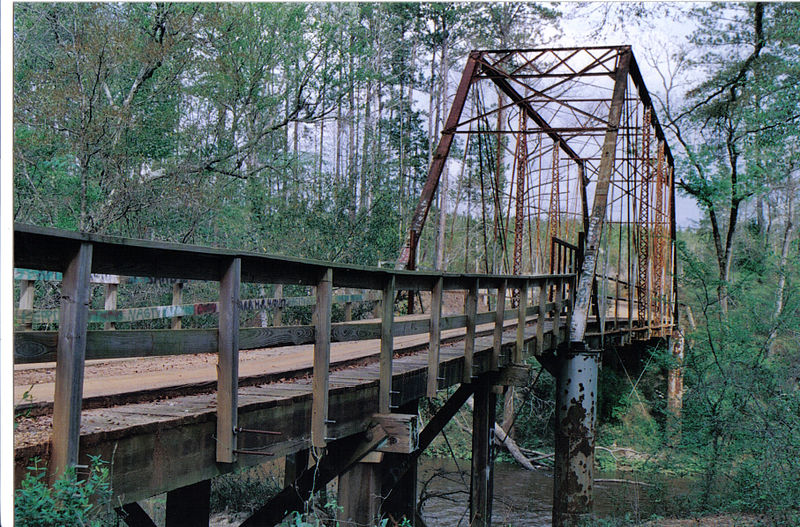
stuckey's bridge from VA Iron and Bridge Co on wikiMy childhood: I grew up in Meridian, Mississippi and heard the legend of Stuckey’s Bridge my whole life. It actually began in a book about the area written in the 1970s. The local paper, The Meridian Star, picked up on the legend from the book and the story spread like wildfire. The bridge instantly became THE place to party on the weekends, searching for ghosts and frightening girls into cuddling closer. (If you want to go there: head south out of Meridian on Interstate 59. Turn right at exit 142, then a quick left onto Meehan-Savoy Road. Travel 2.2 miles until you see a dirt road on your left. That is Stucky Bridge Road. The bridge will be about two miles down the dirt road. It is now closed, so you’ll have to turn around to leave. After you read the following legend, you may not want to go.)

The legend goes: In the late 1800s, a former member of the Dalton Gang came to Lauderdale County, Mississippi to find his fortune. He opened an inn near the Chunky River and stood on the old wooden bridge at night, flagging down merchants with his lantern, offering them a warm bed and a hot meal. Supposedly, he murdered his victims in their sleep and buried their bodies on the banks of the river. In 1901, the Virginia Bridge and Iron Company began rebuilding the old bridge and the bodies were discovered. The innkeeper, Old Man Stuckey as he is known to the locals, was hung by a posse from the iron rails of the new bridge.

Stuckey's cover_webIf you know me, you know I couldn’t stop searching until I figured out who this Old Man Stuckey really was…that became the first book in the Stuckey’s Bridge Trilogy – The Legend of Stuckey’s Bridge. (Check out the book trailer here…creepy!)

unnamedWhile writing the story, I didn’t want Old Man Stuckey to be alone all the time, so I had him run across a young boy named Levi. In the story, young Levi took on a creepiness all his own, and I received tons of emails and messages asking what Levi’s past was. As usual with my overactive imagination, I was more interested in his future than his past, so I wrote Stuckey’s Legacy: The Legend ContinuesAt the end of that book, Levi “got his” and the story became focused on the young woman Levi met during the story – Penelope Juzan.

Back to my childhood: There was a second legend around the area where I grew up. Supposedly there was an inn on Lake Juzan in the 1840s where an innkeeper murdered his guests for wealth, much like Old Man Stuckey. The man’s name was Pierre Juzan, and he dumped the bodies in the lake with the help of his Indian sidekick. Toward the end of the legend, one of them killed the other for the wealth of gold they had confiscated.

Side note: There were also a couple different accounts of trunks of confederate gold disappearing as they traveled through the area during the Civil War.

I thought all these stories had a similar thread, and I wondered if I could separate them or maybe combine them.

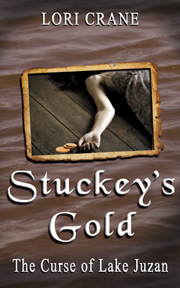
stuckey Gold Cover smallBack to the trilogy: I came to the conclusion that these legends were indeed different stories, but thought they were probably connected in some way. Those crazy ideas in my head became the third book in the trilogy, Stuckey’s Gold: The Curse of Lake Juzan.

These tales tickled me pink while writing them, and I hope you enjoy them too!

stuckey Trilogy_ smal


Saturday Snippet – Stuckey’s Bridge

51ae9DloKqL._UY250_If you haven’t yet heard about Old Man Stuckey, he’s a little like Dexter, but with less conscience, and he’s a lot more lovable. The Legend of Stuckey’s Bridge got its start when I wondered about the real man behind the ghostly legend I grew up with in Mississippi.

You can find the Kindle version of The Legend of Stuckey’s Bridge at Amazon!

Here’s a creepy scene featuring Old Man Stuckey in his younger days…

*********

He stood silent and still for a long time, not knowing what to do next. It wasn’t like he had ever killed anyone before. He didn’t have this planned out. He was certain his father would beat him to a pulp when he found out. He stood with his back against the barn door, gazing down at his dead brother, and came up with a plan.

He gathered piles of hay and arranged them in mounds in the middle of the floor. He then pulled matches out of his coat pocket and set the hay ablaze. He added more hay. And more. The fire came to life and roared as he watched. Black smoke filled the air. He felt as angry as the fire looked. His brother deserved to die and to burn—in hell. This was as close as he could come to creating the real thing.

He felt the flames hot on his face, and the smoke made him cough. He covered his nose and mouth in the crook of his arm, and breathed through his sleeve as he watched the flames grow higher and larger. The fire crackled and hissed as it quickly raced up the dry wooden ladder into the storage loft above. There was nothing up there but last summer’s hay, which lit with a whooshing sound.

He looked up. The dimness of the barn had been replaced by a bright yellow glow. Within a few short minutes, the fire had spread all the way across the loft and the roof. While he watched the loft, he didn’t notice the fire had spread all around him, eating everything in sight. Even with his nose covered, he began to cough violently, and he made his way through the black smoke to the barn door.

He pulled on it. It wouldn’t budge. He pulled it again. It wouldn’t move an inch. His brother’s dead body was lying in a heap in front of the door, blocking his escape. He bent down and grabbed the arms and attempted to pull the body out of the way, but the dead weight was far too heavy for his small, slender frame. He gave up, coughing even harder, and tried to pull the door again. He was having trouble breathing and thought he should have planned this better. He was going to die in this barn with his brother.

Suddenly, he heard his mother’s voice outside. “Is anyone in there? Thomas? Wilson?” She pounded on the door.

“Ma?”

“Thomas?”

“Ma, I’m in here. I can’t get the door open,” he yelled over the roar of the flames.

“Thomas, is that you? Pull the door!” She was screaming now, hysteria building.

“I am! It won’t open!”

The fire was thunderous; it was almost as loud as a train roaring down the tracks. He never realized fire made such a deafening noise. The flames spread quickly toward the door, licking at his feet. He looked behind him, and all he could see were yellow flames and black smoke.

“Push the door, Ma!”

He pulled the door as she pushed from the outside, and it inched open just enough for him to squeeze out. She grabbed his arm, and they ran about a hundred yards before they stopped and turned to look back at the barn. Black columns of smoke billowed into the sky, and the flames were a continuous rumble.

When he took his initial breath of fresh air, he coughed even harder. He wrapped his arms around his mother’s waist, buried his head into her bony shoulder, and hugged her tightly. She asked again if Wilson was also in the barn, and tried to pull away from him to go check. He coughed more through tears and hugged her even tighter. Again and again she tried to pull away from his grasp to go search for her other son, but he wouldn’t let go until he was sure the fire had erased all traces of his deed.

When the walls collapsed and the flames finally began to die down, he released his grip on his mother and said, “Thank you, Ma. I’m fine now.” He glanced at the smoldering rubble, then back at his mother, and added, “I don’t imagine Wilson is, though.” He turned toward the house and walked away, leaving her standing in the field with tears streaming down her smoke-stained cheeks.

*************

5-star-largeA five-star recipient at Readers’ Favorite, THE LEGEND OF STUCKEY’S BRIDGE is available in Kindle at Amazon. The paperback is also available. Pick up a copy and root for the bad guy for a change.

The Legend of Stuckey’s Bridge by Lori Crane is a page-turning winner. This is a five star winner and Lori Crane is a must-read author.” ~Trudi LoPreto for Readers’ Favorite
.
“Lori Crane is a Southern storyteller of the first order.” ~Writer’s Digest