![A2Z-BADGE_[2016]](https://loricrane.com/wp-content/uploads/2016/04/a2z-badge_2016.jpg?w=206&h=206) April 2016 A to Z Challenge. I’m participating by writing blogs about history.
April 2016 A to Z Challenge. I’m participating by writing blogs about history.
D is for Decoration Day.
I should get two points for that. 🙂
 In 1868 following the American Civil War, the head of a Union veterans organization established Decoration Day as a time to decorate the graves of those killed in the war. However, this was certainly not a new idea, as those in the South had been doing this in family graveyards for years, well before the war. Families would gather on a Sunday in early summer at the cemetery grounds for a religious service and a picnic and place flowers on the graves of their loved ones.
There is another claim that black Americans actually invented the celebration/commemoration in Charleston, South Carolina at the close of the war in 1865, when 10,000 men, black and white, proclaimed to the world what the war was really about and celebrated the end of the war and freedom from slavery.
By the 20th century, the conflicting traditions merged to become one – Memorial Day.
Towns in Pennsylvania, Georgia, Mississippi, and Illinois have all claimed the creation of Memorial Day, and if that isn’t confusing enough, in 1966, President Johnson signed a proclamation declaring Waterloo, NY as the birthplace of Memorial Day. Seems to me they’re all about 100 years too late, and I’m not the only one who thinks so. The 89th Congress recognized that the observance of Memorial Day happened 100 years prior to the presidential proclamation.
When the first observance in 1868 was planned, it is said May 30 was chosen because it wasn’t the anniversary of any civil war battle. The White House, in typical form, says it was chosen “as an optimal date for flowers to be in bloom.” Seriously, why do we elect these people??
The earliest observances mixed religion and nationalism together to provided a way for people to make sense of their history in terms of sacrifice for a better nation. I wish people today would understand and honor that instead of trying to erase it, but that’s a-whole-nother blog. To properly honor Memorial Day, you raise your flag to the top of the staff, then lower it to half staff until noon, when you raise it again. Memorial Day is about death, sacrifice, and rebirth. Perhaps we should commemorate it more than once per year.
Just in case you go on Jeopardy: The longest continually running Memorial Day Parade has been held every year since 1868 in Ironton, Ohio.

![A2Z-BADGE_[2016]](https://loricrane.com/wp-content/uploads/2016/04/a2z-badge_2016.jpg?w=170&h=170)
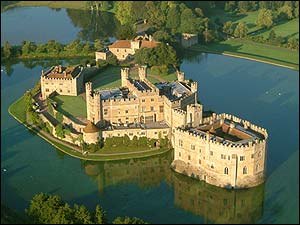
 What is now called the Culpeper garden was originally a kitchen garden and nothing more, but in 1980, a designer transformed it into a cottage garden. It has an informal layout with low box hedges bordering Roses, Lupines, and Poppies. It is said to be named after herbalist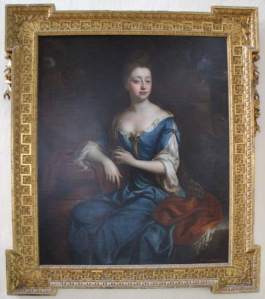

![A2Z-BADGE_[2016]](https://loricrane.com/wp-content/uploads/2016/04/a2z-badge_2016.jpg?w=198&h=198)
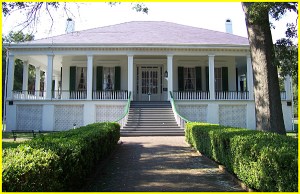 Beauvoir, meaning beautiful view, is know by many people, especially civil war buffs. It’s an antebellum home that sits on the shores of the Gulf of Mexico in the beautiful town of Biloxi, Mississippi. It was many things but best known as the home of Confederate President Jefferson Davis.
 My second great grandfather Joel Bluett Culpepper served in the civil war Co. K 63rd Alabama infantry. He signed up at the age of seventeen. In 1863, he was captured and held at Fort Massachusetts on Ship Island until the end of the war. Under his rights as a Confederate veteran, he spent the last ten months of his life at Beauvoir, dying at the home 11 Jan 1911. He is on the records there as James B Culpepper.
![A2Z-BADGE_[2016]](https://loricrane.com/wp-content/uploads/2016/04/a2z-badge_2016.jpg?w=199&h=199)
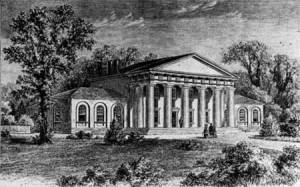
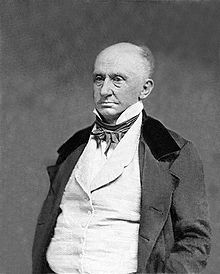 The property was originally owned by George Washington’s step-grandson, George Washington Parke Custis (photo), who built the Arlington House on the property in 1802. George Custis spent a sizable portion of his inheritance to build the palatial home. He married Mary Lee Fitzhugh and had only one child who survived to adulthood – a daughter named Mary Anna Custis.
 In 1831, Mary Anna married none other than Robert E. Lee. Here is a photo of Mary Anna and her son Robert E. Lee Jr., who looks like a little girl if you ask me. The couple moved into the Arlington House with her family.
 (all photos are from Wikipedia)
 Lori Crane