Katherine St. Leger – Culpepper Saga

Culpepper_1This is the third installment about the people and places in my upcoming series, The Culpepper Saga. You can read the first and second installments here and here.

Katherine St. Leger’s relationship to the Culpeppers is a little hard to explain, so bear with me. She was born in 1602 and was the daughter of Warham St. Leger who was a ship captain and sailed on expeditions with Sir Walter Raleigh. Since her father was absent most of the time, she lived with her grandmother, Mary St. Leger, and her step-grandpa, Alexander Culpepper.

Alexander Culpepper had no children and married the St. Leger widow when he was thirty-three years of age. She was quite a bit older than him and was probably already done birthing children by then. That being said, Alexander loved his step-granddaughter, Katherine, and raised her as if she was his own, actually naming her as his daughter in his will.

When Katherine was twenty-six years old, she married Thomas Culpepper, Alexander’s nephew. Thomas was the son of John Culpepper, whom we call Johannes in the book because there are way too many Johns. Johannes was Alexander’s brother. Johannes had two sons, John (our hero) and Thomas. Thomas married Katherine. Did you catch all that?

Katherine and Thomas grew up as cousins, but they really weren’t. Try explaining all that in a book. Go ahead. I dare ya. You’ll have to read the book and see how the heck I did it. 🙂

So, now that you have a slight grasp on who Katherine is, here’s a snippet from the first book, “I, John Culpepper.” Thomas and John are very close, but John has always felt Thomas was their father’s favorite. Maybe he’s right.

***************************************

At the conclusion of the first family supper in their new home, Thomas tapped on the rim of his glass to get everyone’s attention.

“Katherine and I are so pleased that you all could join us in our new home. We trust you all had a pleasant journey getting here, and please know that you are welcome to stay for as long as you like. We invited everyone because we have some news.” He gestured for Katherine to stand by his side. “We would like to inform you that Katherine is with child and we are expecting the first Culpepper grandchild.” Thomas beamed like a ray of sunshine.

Johannes rose and patted him on the back. “Thomas, Katherine, we are overjoyed by this news, and let me be the first to wish you a healthy son.” Johannes raised his glass and the gathering followed his lead.

From across the table, John watched the interaction between his brother and his father, and wondered if he would have received the same hearty congratulations if it were him announcing the arrival of the first grandchild. He glanced at Mary and found her staring at him. He smiled faintly, but knew by the way she cocked her head that she recognized something was amiss.

*********************************************

“I, John Culpepper” will be released April 10, 2015.

Ursula Woodcock Culpepper – Culpepper Saga

Culpepper_1This post is in place of my usual “Saturday Snippets,” and is the second installment of the background of the people and places in my coming series, The Culpepper Saga. You can read the first installment here.

Ursula Woodcock Culpepper is one of the more sentimental characters in my coming series. She was our hero’s mother, and sadly, is only in the first book, “I, John Culpepper.” She was my 11th great grandmother.

astwoodUrsula was born to Ralph Woodcock, the Alderman of London, and his wife Good Bower in 1566. She was baptized at St. Lawrence Jewry in London on January 27, 1566. Her father’s will describes her as “my daughter Ursula, wife of Solomon Pordage.” Ursula and Solomon married in 1581, when Ursula was a child of fifteen.  Solomon Pordage died September 12, 1599 and his will commended his wife to his kinsman, William Stede of Harrietsham. Solomon’s sister, Joan Pordage, was married to a Culpepper and Ursula probably met her second husband, John Culpepper of Feckenham, at family gatherings long before she was widowed. Note: This is John Sr., not our hero John, and in the book I refer to him as Johannes, as that is what is written on his tombstone.

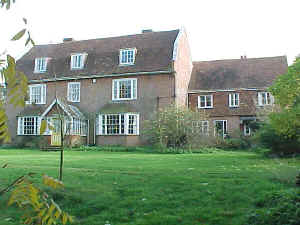
Ursula and Johannes had four children: Thomas, Cicely, John (our hero), and Frances. When the children were small, between the ages of four and ten, the family left their home in Kent and moved to Astwood Court in Feckenham (photo) so Johannes could retire and become a “country gentleman,” but they lived there for less than a year when Ursula took ill and died. She was buried at St. John the Baptist Church in Feckenham on June 2, 1612 as “Ursula, the wife of John Culpepper, Esquire.” She was forty-six years old.download

In the first book in the Culpepper Saga, “I, John Culpepper,” the following is what Johannes thought of his lovely wife. The book will be released April 10, 2015.

*****************************************************************

He pushed open the heavy door a few inches and peeked through the crack. The room was dim with all the heavy curtains drawn. It was quite different up here than the sunshine-filled bustle of the rest of the house. The room was quiet and warm, with the soft flickering light of candles dancing on the tapestries that covered the walls. He called out, “Ursula?”

“Johannes? Is that you? Please, please, come in.”

Her golden voice was as sweet as an angel’s, and that made him smile. He’d married her because of her cheerful voice—well, that and her family’s money. The Woodcock family had more manors and land than the Culpeppers, and the time-honored tradition of marrying heiresses and widows was generally the way the Culpepper men gained their fortunes. But Ursula had something else about her that Johannes loved. She was warm-hearted, with a gentle smile and soft manner. He had initially been attracted to her by the way she said, “Good morning,” and “Good evening,” and particularly the way she said, “Johannes.” Words floated from her lips as if they were lyrics she was singing just for him. Her voice had a happy lilt that filled his heart the way nothing else did. Today, it made him happy to be home.

He swung the door wide, entered the lavishly appointed room, and found Ursula sitting up in the four-poster bed, wearing a soft white gown that floated over her petite frame. A stack of pillows rested behind her back and her legs were covered with a brightly colored velvet quilt. Her hair was plaited on either side of her face, and Johannes was momentarily awed by how peaceful she looked. Childbirth agreed with her.

Her expression was one of excitement and anticipation as she held their newborn in her arms, and her smile grew more radiant as he approached the bed. “It’s a son,” she said.

***************************************************************

Sir William Berkeley – Culpepper Saga

Culpepper_1For the next few Saturdays, in place of my usual “Saturday Snippets,” I’m going to give you some background into some of the people and places in my new series, The Culpepper Saga. The series consists of four books which will be released between April and September.

One of the main characters is Sir William Berkeley. I write stories of my ancestors, but Berkeley is not one of my ancestors. He was, however, a life-long friend of our hero and my 10th great grandpa John Culpepper.

In the 1st book, Berkeley and John are young law students in England. In the 2nd and 3rd books, Berkeley plays a daily role in John’s life and is the Governor of Virginia. In the final book, Berkeley is married to John’s niece and is at the center of a deadly rebellion.

SirWilliamBerkeley2William Berkeley, referred to as “Will” by his family and friends, was born in England in 1605. He was the colonial governor of Virginia from 1642 until his death in 1677. Upon his arrival in Virginia, he built a plantation called Green Spring House and planted corn, wheat, barley, rye, and tobacco, though he despised tobacco. In 1670, he wed thirty-six-year-old Frances Culpepper, the niece of our hero John. Historical records show him fleeing Jamestown during Bacon’s Rebellion in 1676 and taking refuge in Accomac, Virginia. Most people leave it at that, but in my writing world, I happen to know that John had a house in Accomac, so it is obvious he went to John’s. After all, they had been friends for many years, and they were family through marriage. I’ll let you read the rest of his story in the Culpepper Saga, but I’ll leave you with a tidbit from the day he and John met as young boys at law school–a place called Middle Temple.

Note: Wikipedia does not confirm that Berkeley attended Middle Temple, but in “The History of Middle Temple” by Hart Publishing, records of Middle Temple show Berkeley as a student. He also wrote and published a few plays in the 1630s, which was a large part of the curriculum at the school.

The following is an excerpt from “I, John Culpepper.”

**************************************

John clapped along with the other boys as the headmaster strolled toward the center of the room. The man looked as stern as JC had warned. A pair of spectacles rested on the tip of his pointed nose, and his rather large ears stuck out from under his cap. He began stroking his goatee as if caressing the family pet. For a moment, John couldn’t put his finger on what was so amusing about the man’s appearance, then it struck him—the man looked like a goat. John tried unsuccessfully to stifle a giggle.

Barnaby’s brow wrinkled and the corners of this mouth turned down like a fish as he scanned the group of boys. He looked at each one as if viewing a repulsive heap of trash. He cleared his throat and his Adam’s apple bobbed up and down. Just as he opened his mouth to speak, a frizzy-headed boy ran into the room, allowing the door to slam behind him. The sound echoed loudly within the stone walls and the tardy boy’s face turned red with embarrassment. Barnaby followed the boy’s movement with his narrowed eyes as the boy took the only empty seat in the room—right next to John. John felt a trickle of sweat drip down his back as the headmaster slowly walked toward them.

“You’re tardy for my class,” the man scoffed, his eyes filled with hostility. When he said the word class, he drew out the a for an inappropriate amount of time, and John was again reminded of a goat, but with the man standing directly in front of him, he didn’t dare giggle.

“My apologies. I just arrived, sir.”

“What is your name, boy?” Barnaby growled.

“William Berkeley, sir.”

“William Berkeley.” He stared at Berkeley for a long time, as if attempting to memorize every feature of the boy’s face. He then repeated the name. After what seemed like an hour of uncomfortable silence, with the tension in the room growing by the second, Barnaby said, “William Berkeley, I will speak with you in private following this evening’s supper.”

“Yes, sir.” William lowered his eyes to the floor.

As Barnaby turned his back on Berkeley and returned to the center of the room, Berkeley glanced around the room at the other boys. John wondered if Berkeley’s humility was in respect for the headmaster or due to his embarrassment for being late, or both.

Berkeley leaned over to John and whispered, “Who’s that old goat?”

John almost laughed out loud and his hands flew up to his mouth.

Berkeley winked at him and grinned.

******************************************

The first book in the Culpepper Saga, “I, John Culpepper,” will be released April 10, 2015.

52 Ancestors #10 Thomas Culpepper

52ancestors-2015

This challenge is set forth by No Story Too Small, and this week’s theme is “Stormy Weather.”

No one weathered storms like my 10th great uncle Thomas Culpepper, and he was literally caught in “Stormy Weather” during one of his greatest moment.

Thomas was the eldest son of John Culpepper of Feckenham and his wife Ursula Woodcock. He was followed by two sisters, Cicely and Frances, and a brother, John, whom we refer to as John Culpepper the Merchant.

Thomas was born into a life of privilege as his family held vast estates and had worked in the king’s service for generations. When Thomas was born in 1602 in Kent, England, the Culpepper family boasted sixteen living barons and earls.

GreenwayCourtAt the age of nineteen, Thomas entered Middle Temple which was a law school. He was soon called to the bar and became a successful lawyer. He married Katherine St. Leger, moved into the family home of Greenway Court (photo) in Kent, and they started their family.

After King James I died in 1625, King Charles took over, and Thomas was promoted to a colonel in the king’s army. This was one hundred years after the Tudor reign where people had been beheaded for their religious beliefs, but King Charles was making everyone nervous with his religious antics. He married a Catholic princess, appointed a Catholic supporter to the office of archbishop of Canterbury, and demanded the Scots begin using the Catholic Book of Prayer. The people of Scotland, Ireland, and England refused to go back to the age of being charged with heresy. They began meeting behind closed doors and discussing what to do about this tyrannical king.

Parliament rallied an army against the king and in 1642 the English Civil War began. As with the Culpeppers before him, Thomas was a royalist and took the side of the king. Thomas and his friend George Goring, the earl of Norwich, fought bravely against Parliament’s army.

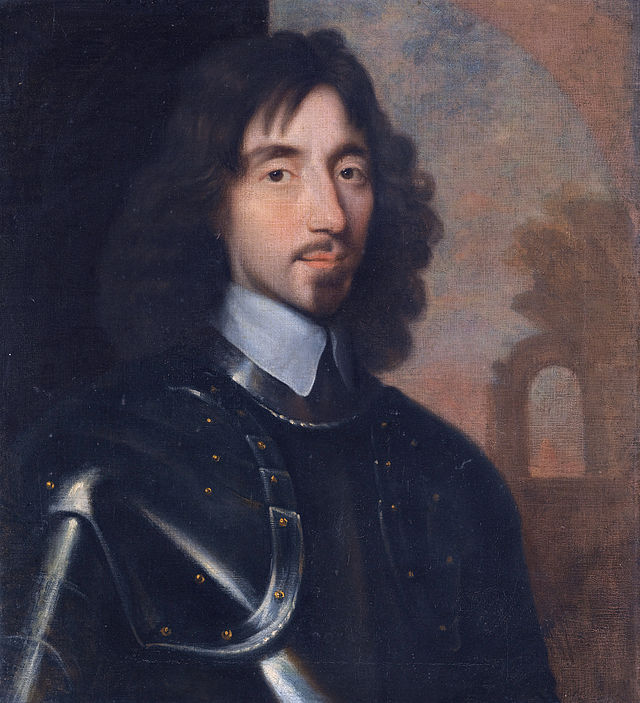
General_Thomas_Fairfax_(1612-1671In May 1648, Thomas and George raised 10,000 men around Kent to fight against Parliament. This was a significant number considering by this time Parliament’s army had split into two factions. The larger was holding down an uprising in South Wales, leaving the smaller group of 6,000 men to defend all of London and its surrounding towns. The royalists were holding the town of Maidstone (Thomas’s hometown located south of London) with a force of 2,000 men. Under the leadership of General Thomas Fairfax (photo), 4,000 parliamentarians marched south to Maidstone to recapture it.

culpepper book 1 cover ideaOn June 1, 1648, in the midst of a terrible storm, Fairfax attacked Maidstone. Fairfax’s men took over a bridge and crossed the Medway River and effectively divided Thomas’s men into two groups. Thomas’s diminished army fought in the heavy rains throughout the night and were backed up by Fairfax’s men, street by street, inch by inch. They moved up Weeks Street and finally retreated into St. Faith’s Churchyard where they fought until well after midnight through the raging thunderstorm. At the first light of dawn, out of ammunition and having nowhere else to go, 1,000 royalists emerged from the church and surrendered to Fairfax’s army.

In return for promising to lay down their arms, the soldiers were released and allowed to return to their homes, but in typical Thomas/George fashion, they didn’t. They regrouped and headed north to seize London, but they found the city’s gates closed, so they moved further north to George’s hometown of Colchester. Fairfax’s men pursued them and another battle ensued. Colchester held its ground for eleven weeks, but in August 1648, they were forced to surrender.

Throughout these battles, the king was being held prisoner by Parliament, and for the last two years, the royalists suffered defeat after defeat trying to save him and turn the tide of the war. They began realizing their cause was lost, and across the country, the royalists began surrendering left and right.

In January of 1649, King Charles was charged with treason, found guilty, and was beheaded. Following the king’s execution, all of the royalists, including Thomas Culpepper and George Goring, had their property seized by Parliament and many were beheaded or hung.

In March 1649, George Goring, being held prisoner since his loss at Colchester, was charged with treason and found guilty. Facing beheading, his family petitioned for leniency and the deciding vote, cast by the speaker of the house, granted George his freedom. He joined the exiled court of the prince in the Netherlands and became the captain of the king’s guard. When the prince reclaimed the English throne in May 1660 as King Charles II, George was by his side. George Goring died in 1663 in Brentford, just west of London.

Fortunately for Thomas, his brother John was a merchant who owned a ship. John smuggled Thomas, his wife Katherine, and their four children out of England in 1650 and took them to Virginia. Thomas escaped probable beheading in England, but sadly, he died in Virginia in 1652 at the age of fifty.

His son-in-law, Sir William Berkeley the governor of Virginia, wrote about him, “He lost all his estate, life, and liberty in the king’s service.”

*This story is told in detail in my coming book, “John Culpepper the Merchant,” which is the second book in the Culpepper Saga and will be released May 2015.

Cover Reveal “I, John Culpepper”

I’m pleased to reveal the cover for my coming book, “I, John Culpepper.” Release date April 10, 2015.

Culpepper_1Amazon Blurb

John Culpepper was born into a privileged childhood, surrounded by abundant wealth, vast land holdings, and stately English manors. As he grew, he was expected to follow family tradition—attend law school and serve in Parliament, following which he would retire to a quiet life as a country gentleman. 

John, however, had different desires. He longed to captain a mighty ship, to hear the snap of the sails, to taste the salty spray on his lips. To follow his dreams, John would have to risk being disinherited by his unyielding father. He would have to defy family convention. He would ultimately be forced to choose between the woman he loved and his mistress—the sea. 

“I, John Culpepper” is a work of historical fiction based on the life of the 17th-century man historians refer to as John Culpepper the Merchant. He is believed to be the progenitor of the modern-day American Culpeppers. He was my 10th great-grandfather.

“I, John Culpepper” will be released April 10, 2015. It is the first of four books in the Culpepper Saga. Stay tuned to this page to learn about some of the characters over the next four weeks.

OKATIBBEE CREEK on Amazon

CLICK HERE TO GET YOUR COPY OF OKATIBBEE CREEK …and don’t forget the tissue.

okatibbee creek cover front JPEGIn the bloodiest years of our nation’s history, a young mother was left alone to endure the ravages of the Civil War and a typhoid epidemic that threatened the lives of everyone left behind.

Okatibbee Creek is based on the true story of Mary Ann Rodgers, who survived the collapse of the Confederate dollar, food shortages, and the deaths of countless family members to war and disease. As she searched for a way to feed her children and her orphaned nieces and nephews, Sherman’s Union army marched through Mississippi on their way to destroy Meridian, and Mary Ann found the distant war literally on her doorstep. Help arrived just in the nick of time in the form of an unexpected champion, and Mary Ann emerged on the other side a heroic woman with an amazing story.

Okatibbee Creek is a novel of historical fiction that brings the Deep South vividly to life and will have you cheering and crying through a real-life story of loss, love and survival.

CLICK HERE TO GET YOUR COPY OF OKATIBBEE CREEK

Saturday Snippet – I, John Culpepper

Here’s a bit of my work-in-progress, “I, John Culpepper.” For you ancestry/genealogy readers, John Culpepper is my 10th great grandpa. Release date will be April 10, 2015.

****************************************************

Culpepper_1Fall 1626, England

“No! For the hundredth time, no!”

John looked down at the intricate grain of the walnut desk beneath his fingertips and shifted his weight to his other foot. He sighed, feeling his dreams disintegrate before his very eyes. The snap of the white sails, the taste of the salty spray on his lips, the smell of the tar that sealed the decks—the visions were quickly vanishing behind the thick fog of his father’s adamant disapproval. He pictured his mighty ship sinking into the black waters of condemnation, bubbling like a cauldron as it disappeared from sight. There was nothing he could do to change his father’s mind, and he wondered whatever possessed him to come to this man for assistance. He should have known better.

His father glared at John from behind the desk. He propped his elbow on the scrolled arm of the chair as his large hand methodically stroked his pointed beard. “Is there anything else?” he snapped.

John didn’t look up. He shook his head and mumbled, “No.” He turned and padded across the thick rug toward the door, listening to the man’s heavy breathing behind him. He reached for the brass doorknob, paused, and turned back. “You know I’ve always done everything you’ve asked of me. I went to school. I studied to be a lawyer. I did it all for you. I never wanted to practice law. I’d never be happy on the bench.”

“Happy? What makes you think life has anything to do with being happy? You are a Culpepper, and as such, you have an obligation to serve your family and your king in a manner befitting your station. This childish notion of owning a ship is nothing but rubbish.”

John released the doorknob and walked back toward his father’s desk. The intimidating man dwarfed the desk, his size exaggerated by the broad shoulders of his leather jerkin, yet he sat up taller in his chair in preparation for the quarrel to continue. It was a wasted gesture, as his opponent already knew the battle was lost.

John made sure he didn’t raise his voice. “Father, you have financed merchant ships for as long as I can remember. What difference does it make if I’m the one who owns the ship?”

“Culpeppers don’t own ships. I funded those expeditions as an investment—a losing investment, I might add.” He rose from his chair and his voice grew louder, echoing off the oak panels that lined the walls. “There has never been a Culpepper placed in a position to experience hunger and savages and shipwrecks, and there won’t be one now, not with my blood written on the purchase. I will not fund a ship for you, John, not now, not ever.” He pointed his finger in John’s face. “And if you somehow find a way to procure a ship, mark my words—I will disinherit and disown you. No son of mine will become a common sailor. I am finished with this conversation once and for all. Have I made myself clear?”

John exhaled, beaten. His shoulders slumped as he broke his father’s glare and dropped his eyes to the floor.

“John? Have I made myself clear?”

“Completely.”

Saturday Snippet – Savannah’s Bluebird

bluebird_small webI released Savannah’s Bluebird a year ago. It stemmed from a vivid dream I had, and though it didn’t take me months and months of research as with my historical novels, it still holds a place in my heart. It’s the story of a man and woman who tried desperately to get married, but everything stood in the way of their wedding day – including death. I published it on February 11, 2014.

I dreamt it and wrote it in 2012, the month before we found out my future son-in-law had cancer. In late 2013, I finally dug it out of the archives and finished writing it. My boy was getting worse by the day and the wedding was canceled only a week before it was to occur. The day after I published Savannah, I received a call from my daughter that our boy had been admitted to the hospital. Within days, he was placed in hospice, and he took his last breath on February 24, 2014. I always read my books after they’re released, but my heart is still broken, and I can’t bring myself to read this one. It’s a little too close to home, but there’s a reason I wrote it and a reason it’s out there in the world. Perhaps someday, I’ll find out what that reason is. Here is a snippet of Savannah’s Bluebird where Savannah is having a flashback to her childhood.

Dedicated to my beautiful son

Trien Duong

June 15, 1981 – February 24, 2014

You will always be the brightest star in our sky

13.4.danacody_1934


********************************************************

August teased her. “If you remember correctly, I asked you to marry me twenty years ago under your dad’s apple tree.”

She sighed, closed her eyes in front of the foggy mirror, and absentmindedly began brushing her teeth. She could picture that big old apple tree like it was right in front of her. The branches spread out across the sky like an enormous umbrella shading the picnic table beneath it. At the end of a good summer, so many apples would be on the tree, the branches would almost touch the ground, burdened by the weight. The old paint-peeled table beneath the tree was a favorite place for the squirrels to sit and eat the apples, leaving half-eaten cores when they scampered off. August and Savannah spent many, many afternoons talking and playing and telling childhood secrets under that tree.

In the warmth of the late fall afternoon, Savannah sat alone at the picnic table with an array of colored silk threads spread out in front of her. The leaves had fallen a few weeks ago, leaving only a few stray apples on the ends of the branches. The sun shone through the branches, warming her hands, and the sweet smell of decaying apples and the crisp smell of dying leaves surrounded her, making her head swim with happiness. Fall was her favorite time of year. She stared at the woven fabric she was embroidering and sorted through the colored threads on the table.

An ocean inlet ran along the back of the property, and she could faintly hear the soft babble of the water splashing on the rocks, as well as the buzz of dragonflies and katydids. August appeared out of the dying brush that was only a few weeks ago thick summer bushes. He was wearing a brown button-up shirt, suspenders, and dirty trousers darkened by wetness up to the knees. Obviously, he had been playing at the inlet, probably trying to catch frogs or crawdads. He ran over to the picnic table and plopped down across from her.

“Watcha doin’?” He was short-winded from running.

“I’m working on a pillow covering for home economics class,” she answered.

She picked up the fabric, turned it around, and held it up for his approval.

He wrinkled his forehead and said, “It looks like a bird. I thought you liked dogs.”

“I do like dogs, but Mrs. Thompson said we have to create something that flies.” She rolled her eyes and placed it back in front of her on the table.

“Well, why don’t you sew a spaceship with a robot or something?” he asked, wrinkling his forehead.

“Only boys would make spaceships and robots.” She scowled at him. “I want to make something else. My dad told me this story about a bluebird. He said a gypsy woman told him the bluebird represents love, and if you’re with someone you love and see a bluebird, you’ll be with that person forever.” She picked up the blue thread and attempted to thread her needle. “So, I’m embroidering a bluebird.”

“Was it one of those gypsies down on the beach?”

“No, he said it was a gypsy woman in New Orleans a long time ago—before I was even born. He was working on the railroad down there when he met my mother. He said the day after the gypsy told him that story, he and momma saw a bluebird. They were married a few days later.”

When August didn’t respond, she looked up at him—and froze. Right above his head, on the lowest branch of the tree, sat a little bluebird. It was bright blue on top with a reddish-brown throat, and it was no more than a foot from them. She didn’t move, half afraid of scaring it away and half amazed that their conversation had suddenly manifested itself. August turned to follow her gaze and froze also. Neither of them dared breathe as they watched the bird—and the bird watched them.

“Will you hand me that towel?” August asked.

Savannah didn’t respond.

“Savannah, hello? Will you please hand me that towel?” August asked again, snapping Savannah’s attention back to the present.

*********************************************

Lori Crane Books at Amazon

It’s Monday! What are you reading?

2a2It’s Monday! What are you reading?


I just finished “Letters to Kezia” by Peni Jo Renner.


24512890This is one of those rare books you cannot put down until you’ve finished it, and I read it in one sitting. The characters are based upon known facts of the author’s ancestors, and she has transformed them into a ripping tale of trust, lies, and deceit. Mary Case was a colonial woman of Connecticut, seduced into trusting a man who almost became the death of her, literally. Her daughter, Kezia, was the product of that tangled web, and Mary ultimately faced the task of telling Kezia the truth about her life and her father. The characters are rich and compelling. Their adventure is fascinating.

Author’s blurb:

It is 1693 in Hereford, Connecticut, when Mary Case, the spinster daughter of a Puritan minister, finds herself hopelessly smitten by the roguish thief, Daniel Eames. Betrothed to a man she does not like or love, she is soon compelled to help Daniel escape from jail. Suddenly, she finds herself on the run, not only accused of being Daniel’s accomplice, but also of murder.

The fugitive pair soon finds solace-and a mutual attraction-among the escapee’s Algonquin friends until two men from Daniel’s dark past hunt them down. After Mary is captured and returned home to await trial, a tragedy takes the life of her younger sister, revealing a dark secret Mary’s father has kept for months. But just as Mary learns she is pregnant, she makes a horrifying discovery about Daniel that changes everything and prompts her to develop an unlikely bond with his mother, Rebecca, who soon saves Mary from a shocking fate. It is not until years later that her daughter, Kezia, finally learns the truth about her biological father and family.

Letters to Kezia shares a courageous woman’s journey through a Puritan life and beyond as she struggles with adversity and betrayal, and discovers that loyalty can sometimes mean the difference between life and death.

Letters to Kezia on Amazon

Author’s Twitter page

Author’s Facebook page


“Stuckey’s Bridge”

Pick up a Kindle copy of “The Legend of Stuckey’s Bridge”! Hop over to Amazon and tell ’em Old Man Stuckey sent ya!

Enjoy…and sweet dreams!

Click HERE 

Stuckey's cover_webIn 1901, the Virginia Bridge & Iron Company began re-building a fifty-year-old Mississippi bridge. In the middle of the project, they began discovering bodies buried on the banks of the river.

Legend has it, he was so evil, he was even thrown out of the notorious Dalton Gang. Years later, he opened an inn near the river, and on foggy nights, boatmen witnessed him pacing back and forth across the bridge, waving his lantern, offering travelers a hot meal and a soft bed.

Those unfortunate enough to take him up on the hospitality were often never seen again.

To this day, eerie experiences are still reported around the bridge that now bears his name. If you travel down to Stuckey’s Bridge, be careful, for not much else is known about the man locals refer to as Old Man Stuckey…until now.