Culpepper Saga People and Places

Culpepper_1Only a few more days until “I, John Culpepper” is released!! April 10th!!!

Over the years, and quite a bit recently, I’ve blogged about the people and places found in the book, but if you missed anything, below is a comprehensive list to guide you through the characters. Every one of these people were real. Every one of these homes and castles were real, most still standing today. Being historical fiction, most of the story is also real.

Some of these blogs are old and some are new, but if you click on any name, you can find out more about the person or place.

John Culpepper the merchant, our hero

John’s grandpa, John Culpepper of Wigsell

John’s dad, John “Johannes” Culpepper

John’s mom, Ursula Woodcock Culpepper

John’s son, John Culpepper Jr. of the Culpepper Rebellion

John’s brother, Thomas Culpepper and his wife Katherine St. Leger

John’s childhood friend, Sir William Berkeley

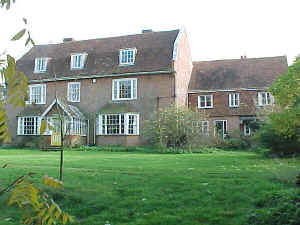
John’s childhood homes, Greenway Court and Astwood Court

John’s niece, (Thomas’s daughter) Frances Culpepper Berkeley

John’s cousin, Lord John “JC” Culpepper, 1st Baron of Thoresway

“JCs” son, Lord Thomas Culpepper, 2nd Baron of Thoresway

Homes of the Culpepper Saga

Culpepper_1In celebration of my upcoming April 10th book release, “I, John Culpepper,” I’m posting bits and pieces about the people and places you will read about in the Culpepper Saga. The four-book saga is based upon my 10th great grandfather, and most of the names and locations are real. The first three blogs about the story are available here, here, and here. This blog is about the homes John spent time in between 1606 and 1634.

Our hero, John Culpepper, was born into a very wealthy family. He was born at Greenway Court in Hollingbourne in the county of Kent. His family moved away when he was only five years old, but he eventually returned to the home when his brother Thomas married and set up house there. In the book, the old house drug up a lot of feelings and memories of John’s childhood that he had long forgotten. The home is still standing and is privately owned today.

GreenwayCourt

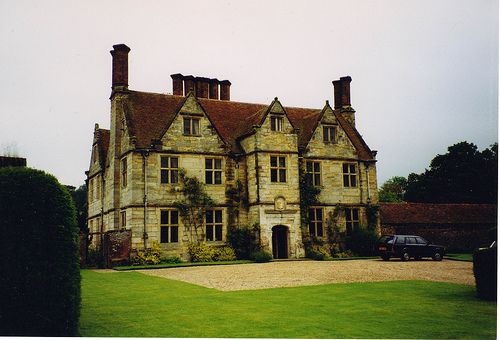
From the age of five until he went away to law school, John lived at Astwood Court in Feckenham in the county of Worcester. The home originally belonged to his great uncle Martin and was left to his father. John’s mother died in the house when John was just a child. The home is still standing and is privately owned today.

astwood

As a young boy John spent many summers at his grandfather’s estate of Wigsell Manor in Salehurst, Sussex. The 600-acre property was the stuff boy’s dreams are made of. The home is still standing and is privately owned today.

great wigsell


John’s uncle Sir Alexander Culpepper owned Leeds Castle in Maidstone, Kent. Alexander inherited the house through his wife Mary, the widow of Sir Anthony St. Leger. In 1552, the house was granted to the St. Leger family, and following the Culpepper ownership 1632-1710, it was transferred into the Fairfax family through marriage. It was built in the early 1100s and was once the home of Henry VIII and his first wife Catherine of Aragon. It is now open to the public as a tourist attraction. You can visit Leeds Castle’s website here.

Leeds-Castle


52 Ancestors #13 Ina Inez Burke Culpepper

52ancestors-2015

This challenge is set forth by No Story Too Small, and this week’s theme is “different.”

My grandmother died March 1, 1975

Meridian Star

March 4, 1975 

Mrs. Ina Culpepper

Services for Mrs. Ina Inez Culpepper, 60, were to be held at 10 a.m. today at Stephens Funeral Home Chapel, Revs. Roger Leggert and Charles Davis officiating. Burial was to be in Liberty Cemetery, Newton County.

Mrs. Culpepper died Saturday in a Meridian hospital. She was a member of First Pentecostal Holiness Church.

Survivors include her husband, Earl W. Culpepper, Meridian; two daughters, Mrs. Bobbie McQueen, Meehan, Mrs. Linda Hegwood, Utica, Mich.; two sisters, Mrs. Ellen Scarbrough, Houston, Tex., Mrs. Myrnis Howard, Meridian; three brothers, Willam Otho Burke, James Otis Burke, and E. O. Burke, all of Duffee, and four grandchildren. 


Mamaw and Papaw with grandkidsIna was my maternal grandmother. She was born in 1915 to Mary Elizabeth Howington and John Patrick “Pat” Burke. Her Howington side was English and Choctaw Indian. Her Burke side was English and Irish. She was the eldest, with four little brothers and two little sisters. One of the boys died as an infant, but the rest of her siblings outlived her and are listed in her obituary. Her mother also outlived her by two years, but for some reason, is not listed.

At the age of 21 in 1936, Ina married Earl Culpepper and had two daughters, one in 1938 and one in 1944. She worked as a seamstress at Burnley Shirt Factory in Meridian, MS and could sew anything just by looking at it in the store for a few minutes. She was a fabulous cook, a quiet woman, and she loved her four grandchildren. The little girl in the photo is me. 🙂

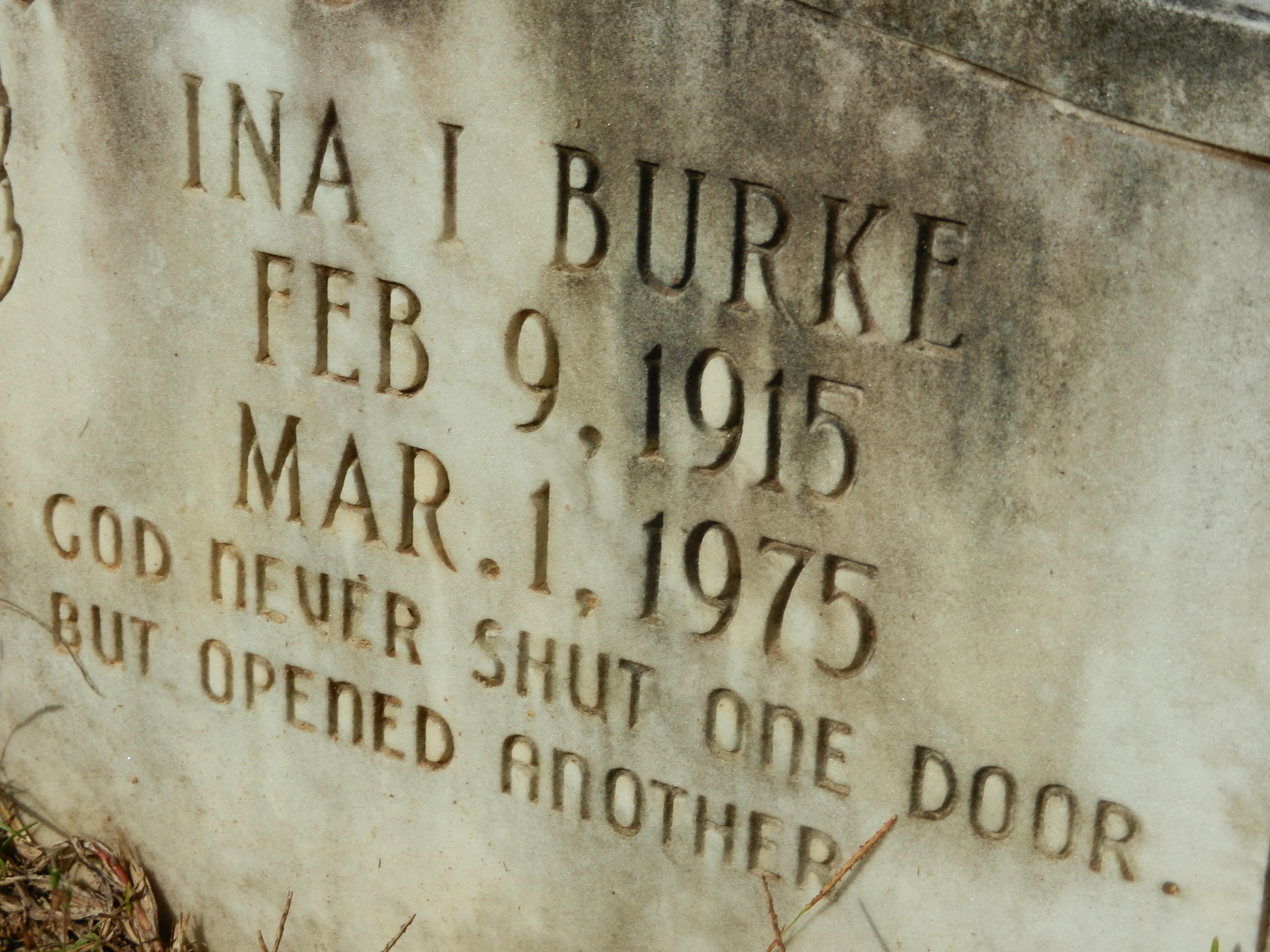
We always celebrated her birthday on February 9. Her tombstone says February 9. Her death certificate says February 9.

Her birth certificate says February 8. It was signed on February 8. It was filed in the state of MS on February 8.

burke Ina Inez Burke headstone

Katherine St. Leger – Culpepper Saga

Culpepper_1This is the third installment about the people and places in my upcoming series, The Culpepper Saga. You can read the first and second installments here and here.

Katherine St. Leger’s relationship to the Culpeppers is a little hard to explain, so bear with me. She was born in 1602 and was the daughter of Warham St. Leger who was a ship captain and sailed on expeditions with Sir Walter Raleigh. Since her father was absent most of the time, she lived with her grandmother, Mary St. Leger, and her step-grandpa, Alexander Culpepper.

Alexander Culpepper had no children and married the St. Leger widow when he was thirty-three years of age. She was quite a bit older than him and was probably already done birthing children by then. That being said, Alexander loved his step-granddaughter, Katherine, and raised her as if she was his own, actually naming her as his daughter in his will.

When Katherine was twenty-six years old, she married Thomas Culpepper, Alexander’s nephew. Thomas was the son of John Culpepper, whom we call Johannes in the book because there are way too many Johns. Johannes was Alexander’s brother. Johannes had two sons, John (our hero) and Thomas. Thomas married Katherine. Did you catch all that?

Katherine and Thomas grew up as cousins, but they really weren’t. Try explaining all that in a book. Go ahead. I dare ya. You’ll have to read the book and see how the heck I did it. 🙂

So, now that you have a slight grasp on who Katherine is, here’s a snippet from the first book, “I, John Culpepper.” Thomas and John are very close, but John has always felt Thomas was their father’s favorite. Maybe he’s right.

***************************************

At the conclusion of the first family supper in their new home, Thomas tapped on the rim of his glass to get everyone’s attention.

“Katherine and I are so pleased that you all could join us in our new home. We trust you all had a pleasant journey getting here, and please know that you are welcome to stay for as long as you like. We invited everyone because we have some news.” He gestured for Katherine to stand by his side. “We would like to inform you that Katherine is with child and we are expecting the first Culpepper grandchild.” Thomas beamed like a ray of sunshine.

Johannes rose and patted him on the back. “Thomas, Katherine, we are overjoyed by this news, and let me be the first to wish you a healthy son.” Johannes raised his glass and the gathering followed his lead.

From across the table, John watched the interaction between his brother and his father, and wondered if he would have received the same hearty congratulations if it were him announcing the arrival of the first grandchild. He glanced at Mary and found her staring at him. He smiled faintly, but knew by the way she cocked her head that she recognized something was amiss.

*********************************************

“I, John Culpepper” will be released April 10, 2015.

52 Ancestors #12 William Henry Blanks (plural)

52ancestors-2015This ancestry challenge is set forth by No Story Too Small and the theme for this week is “Same.”

 That being said, may I present…

My great great grandfather William Henry Blanks III

blanks william henry III

William III was the son of William Henry Blanks II and Nancy Narcissus Young, and the grandson of William Henry Blanks I and Jane Hill. Seeing a pattern here?

The Blanks family’s American roots date back prior to 1660 Virginia. I’m not sure where they immigrated from. William the elder was born in Virginia in 1755. He was a captain in the NC militia during the American Revolution. He died in Greene Co, Georgia in 1823 at the age of 68. Greene County is in the middle of the northern part of the state, and in 1800, was on the border of Creek Indian land. The War of 1812 saw a lot of fighting between the Americans and the Creek. What in the world possessed these people to live on such a wild frontier?

William II was born in Georgia in 1800 and was a young boy during the War of 1812. He died in Mississippi in 1859.

William III was also born in Georgia in 1846 and shows up in the Lauderdale Co, MS census in 1850 at the age of four.  Note: In 1830, the Treaty of Dancing Rabbit Creek was signed, giving the Choctaw and Creek Indian land, now Alabama and Mississippi, to the Americans. This is why we see such a migration to the area between 1830 and 1850. Land was cheap and the gov’t wanted to get it settled. Anyway, William III was the youngest of seven children and was only 11 when his mother died and 13 when his father died, leaving everything to him and his 16-year-old sister Nancy. I can only imagine how emotionally damaging those deaths were for him at that young age.

MISS0066D_Confederate-Pension-applications-Blake-Bolls-1900-1932_00202William III served the Confederacy in the Civil War under the command of John Cochran in Lauderdale County, MS. He enlisted in 1862 and was still in active service at the close of the war in 1865. On Oct 31, 1867, he married Martha Lettie “Mattie” Carpenter in Lauderdale Co, MS. He was 21. She was 19. Mattie’s father was killed in the war in 1862 when she was only 14, so she knew all too well how hard it was to lose a parent. I assume that was one of the deep connections William and Mattie shared. William and Mattie had 6 girls: Ida, Ada, Annie, Sarah, Ora, and Velma, and I heard there was a boy, John, who died as a small child, though I have no paper trail of him, only verbal history.


blanks william henry blanks III death certWilliam III died in 1922 at the age of 74 of senility and chronic bronchitis.

Mattie died at the age of 84 in 1933 of cerebral hemorrhage.


They are laid to rest at Hickory Grove Cemetery in Laurel, Jones County, MS.

blanks wm III and mattie carpenter headstones

Ursula Woodcock Culpepper – Culpepper Saga

Culpepper_1This post is in place of my usual “Saturday Snippets,” and is the second installment of the background of the people and places in my coming series, The Culpepper Saga. You can read the first installment here.

Ursula Woodcock Culpepper is one of the more sentimental characters in my coming series. She was our hero’s mother, and sadly, is only in the first book, “I, John Culpepper.” She was my 11th great grandmother.

astwoodUrsula was born to Ralph Woodcock, the Alderman of London, and his wife Good Bower in 1566. She was baptized at St. Lawrence Jewry in London on January 27, 1566. Her father’s will describes her as “my daughter Ursula, wife of Solomon Pordage.” Ursula and Solomon married in 1581, when Ursula was a child of fifteen.  Solomon Pordage died September 12, 1599 and his will commended his wife to his kinsman, William Stede of Harrietsham. Solomon’s sister, Joan Pordage, was married to a Culpepper and Ursula probably met her second husband, John Culpepper of Feckenham, at family gatherings long before she was widowed. Note: This is John Sr., not our hero John, and in the book I refer to him as Johannes, as that is what is written on his tombstone.

Ursula and Johannes had four children: Thomas, Cicely, John (our hero), and Frances. When the children were small, between the ages of four and ten, the family left their home in Kent and moved to Astwood Court in Feckenham (photo) so Johannes could retire and become a “country gentleman,” but they lived there for less than a year when Ursula took ill and died. She was buried at St. John the Baptist Church in Feckenham on June 2, 1612 as “Ursula, the wife of John Culpepper, Esquire.” She was forty-six years old.download

In the first book in the Culpepper Saga, “I, John Culpepper,” the following is what Johannes thought of his lovely wife. The book will be released April 10, 2015.

*****************************************************************

He pushed open the heavy door a few inches and peeked through the crack. The room was dim with all the heavy curtains drawn. It was quite different up here than the sunshine-filled bustle of the rest of the house. The room was quiet and warm, with the soft flickering light of candles dancing on the tapestries that covered the walls. He called out, “Ursula?”

“Johannes? Is that you? Please, please, come in.”

Her golden voice was as sweet as an angel’s, and that made him smile. He’d married her because of her cheerful voice—well, that and her family’s money. The Woodcock family had more manors and land than the Culpeppers, and the time-honored tradition of marrying heiresses and widows was generally the way the Culpepper men gained their fortunes. But Ursula had something else about her that Johannes loved. She was warm-hearted, with a gentle smile and soft manner. He had initially been attracted to her by the way she said, “Good morning,” and “Good evening,” and particularly the way she said, “Johannes.” Words floated from her lips as if they were lyrics she was singing just for him. Her voice had a happy lilt that filled his heart the way nothing else did. Today, it made him happy to be home.

He swung the door wide, entered the lavishly appointed room, and found Ursula sitting up in the four-poster bed, wearing a soft white gown that floated over her petite frame. A stack of pillows rested behind her back and her legs were covered with a brightly colored velvet quilt. Her hair was plaited on either side of her face, and Johannes was momentarily awed by how peaceful she looked. Childbirth agreed with her.

Her expression was one of excitement and anticipation as she held their newborn in her arms, and her smile grew more radiant as he approached the bed. “It’s a son,” she said.

***************************************************************

Sir William Berkeley – Culpepper Saga

Culpepper_1For the next few Saturdays, in place of my usual “Saturday Snippets,” I’m going to give you some background into some of the people and places in my new series, The Culpepper Saga. The series consists of four books which will be released between April and September.

One of the main characters is Sir William Berkeley. I write stories of my ancestors, but Berkeley is not one of my ancestors. He was, however, a life-long friend of our hero and my 10th great grandpa John Culpepper.

In the 1st book, Berkeley and John are young law students in England. In the 2nd and 3rd books, Berkeley plays a daily role in John’s life and is the Governor of Virginia. In the final book, Berkeley is married to John’s niece and is at the center of a deadly rebellion.

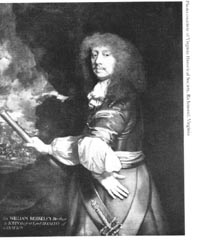
SirWilliamBerkeley2William Berkeley, referred to as “Will” by his family and friends, was born in England in 1605. He was the colonial governor of Virginia from 1642 until his death in 1677. Upon his arrival in Virginia, he built a plantation called Green Spring House and planted corn, wheat, barley, rye, and tobacco, though he despised tobacco. In 1670, he wed thirty-six-year-old Frances Culpepper, the niece of our hero John. Historical records show him fleeing Jamestown during Bacon’s Rebellion in 1676 and taking refuge in Accomac, Virginia. Most people leave it at that, but in my writing world, I happen to know that John had a house in Accomac, so it is obvious he went to John’s. After all, they had been friends for many years, and they were family through marriage. I’ll let you read the rest of his story in the Culpepper Saga, but I’ll leave you with a tidbit from the day he and John met as young boys at law school–a place called Middle Temple.

Note: Wikipedia does not confirm that Berkeley attended Middle Temple, but in “The History of Middle Temple” by Hart Publishing, records of Middle Temple show Berkeley as a student. He also wrote and published a few plays in the 1630s, which was a large part of the curriculum at the school.

The following is an excerpt from “I, John Culpepper.”

**************************************

John clapped along with the other boys as the headmaster strolled toward the center of the room. The man looked as stern as JC had warned. A pair of spectacles rested on the tip of his pointed nose, and his rather large ears stuck out from under his cap. He began stroking his goatee as if caressing the family pet. For a moment, John couldn’t put his finger on what was so amusing about the man’s appearance, then it struck him—the man looked like a goat. John tried unsuccessfully to stifle a giggle.

Barnaby’s brow wrinkled and the corners of this mouth turned down like a fish as he scanned the group of boys. He looked at each one as if viewing a repulsive heap of trash. He cleared his throat and his Adam’s apple bobbed up and down. Just as he opened his mouth to speak, a frizzy-headed boy ran into the room, allowing the door to slam behind him. The sound echoed loudly within the stone walls and the tardy boy’s face turned red with embarrassment. Barnaby followed the boy’s movement with his narrowed eyes as the boy took the only empty seat in the room—right next to John. John felt a trickle of sweat drip down his back as the headmaster slowly walked toward them.

“You’re tardy for my class,” the man scoffed, his eyes filled with hostility. When he said the word class, he drew out the a for an inappropriate amount of time, and John was again reminded of a goat, but with the man standing directly in front of him, he didn’t dare giggle.

“My apologies. I just arrived, sir.”

“What is your name, boy?” Barnaby growled.

“William Berkeley, sir.”

“William Berkeley.” He stared at Berkeley for a long time, as if attempting to memorize every feature of the boy’s face. He then repeated the name. After what seemed like an hour of uncomfortable silence, with the tension in the room growing by the second, Barnaby said, “William Berkeley, I will speak with you in private following this evening’s supper.”

“Yes, sir.” William lowered his eyes to the floor.

As Barnaby turned his back on Berkeley and returned to the center of the room, Berkeley glanced around the room at the other boys. John wondered if Berkeley’s humility was in respect for the headmaster or due to his embarrassment for being late, or both.

Berkeley leaned over to John and whispered, “Who’s that old goat?”

John almost laughed out loud and his hands flew up to his mouth.

Berkeley winked at him and grinned.

******************************************

The first book in the Culpepper Saga, “I, John Culpepper,” will be released April 10, 2015.

52 Ancestors #10 Thomas Culpepper

52ancestors-2015

This challenge is set forth by No Story Too Small, and this week’s theme is “Stormy Weather.”

No one weathered storms like my 10th great uncle Thomas Culpepper, and he was literally caught in “Stormy Weather” during one of his greatest moment.

Thomas was the eldest son of John Culpepper of Feckenham and his wife Ursula Woodcock. He was followed by two sisters, Cicely and Frances, and a brother, John, whom we refer to as John Culpepper the Merchant.

Thomas was born into a life of privilege as his family held vast estates and had worked in the king’s service for generations. When Thomas was born in 1602 in Kent, England, the Culpepper family boasted sixteen living barons and earls.

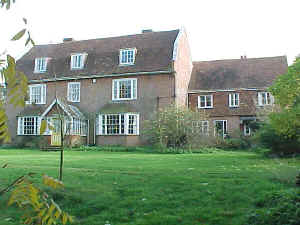
GreenwayCourtAt the age of nineteen, Thomas entered Middle Temple which was a law school. He was soon called to the bar and became a successful lawyer. He married Katherine St. Leger, moved into the family home of Greenway Court (photo) in Kent, and they started their family.

After King James I died in 1625, King Charles took over, and Thomas was promoted to a colonel in the king’s army. This was one hundred years after the Tudor reign where people had been beheaded for their religious beliefs, but King Charles was making everyone nervous with his religious antics. He married a Catholic princess, appointed a Catholic supporter to the office of archbishop of Canterbury, and demanded the Scots begin using the Catholic Book of Prayer. The people of Scotland, Ireland, and England refused to go back to the age of being charged with heresy. They began meeting behind closed doors and discussing what to do about this tyrannical king.

Parliament rallied an army against the king and in 1642 the English Civil War began. As with the Culpeppers before him, Thomas was a royalist and took the side of the king. Thomas and his friend George Goring, the earl of Norwich, fought bravely against Parliament’s army.
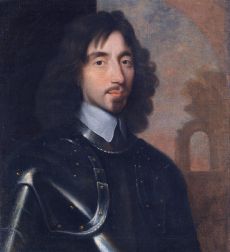
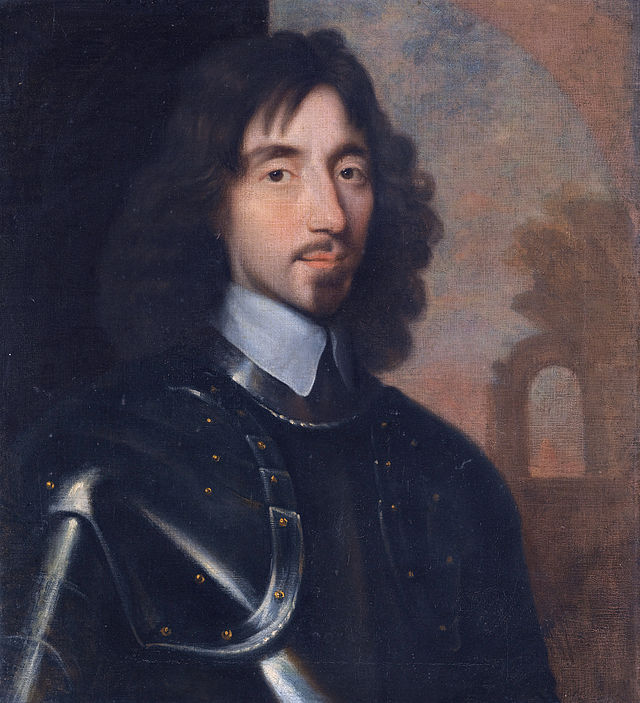
General_Thomas_Fairfax_(1612-1671In May 1648, Thomas and George raised 10,000 men around Kent to fight against Parliament. This was a significant number considering by this time Parliament’s army had split into two factions. The larger was holding down an uprising in South Wales, leaving the smaller group of 6,000 men to defend all of London and its surrounding towns. The royalists were holding the town of Maidstone (Thomas’s hometown located south of London) with a force of 2,000 men. Under the leadership of General Thomas Fairfax (photo), 4,000 parliamentarians marched south to Maidstone to recapture it.

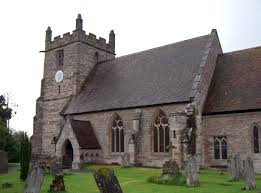
culpepper book 1 cover ideaOn June 1, 1648, in the midst of a terrible storm, Fairfax attacked Maidstone. Fairfax’s men took over a bridge and crossed the Medway River and effectively divided Thomas’s men into two groups. Thomas’s diminished army fought in the heavy rains throughout the night and were backed up by Fairfax’s men, street by street, inch by inch. They moved up Weeks Street and finally retreated into St. Faith’s Churchyard where they fought until well after midnight through the raging thunderstorm. At the first light of dawn, out of ammunition and having nowhere else to go, 1,000 royalists emerged from the church and surrendered to Fairfax’s army.

In return for promising to lay down their arms, the soldiers were released and allowed to return to their homes, but in typical Thomas/George fashion, they didn’t. They regrouped and headed north to seize London, but they found the city’s gates closed, so they moved further north to George’s hometown of Colchester. Fairfax’s men pursued them and another battle ensued. Colchester held its ground for eleven weeks, but in August 1648, they were forced to surrender.

Throughout these battles, the king was being held prisoner by Parliament, and for the last two years, the royalists suffered defeat after defeat trying to save him and turn the tide of the war. They began realizing their cause was lost, and across the country, the royalists began surrendering left and right.

In January of 1649, King Charles was charged with treason, found guilty, and was beheaded. Following the king’s execution, all of the royalists, including Thomas Culpepper and George Goring, had their property seized by Parliament and many were beheaded or hung.

In March 1649, George Goring, being held prisoner since his loss at Colchester, was charged with treason and found guilty. Facing beheading, his family petitioned for leniency and the deciding vote, cast by the speaker of the house, granted George his freedom. He joined the exiled court of the prince in the Netherlands and became the captain of the king’s guard. When the prince reclaimed the English throne in May 1660 as King Charles II, George was by his side. George Goring died in 1663 in Brentford, just west of London.

Fortunately for Thomas, his brother John was a merchant who owned a ship. John smuggled Thomas, his wife Katherine, and their four children out of England in 1650 and took them to Virginia. Thomas escaped probable beheading in England, but sadly, he died in Virginia in 1652 at the age of fifty.

His son-in-law, Sir William Berkeley the governor of Virginia, wrote about him, “He lost all his estate, life, and liberty in the king’s service.”

*This story is told in detail in my coming book, “John Culpepper the Merchant,” which is the second book in the Culpepper Saga and will be released May 2015.

Cover Reveal “I, John Culpepper”

I’m pleased to reveal the cover for my coming book, “I, John Culpepper.” Release date April 10, 2015.

Culpepper_1Amazon Blurb

John Culpepper was born into a privileged childhood, surrounded by abundant wealth, vast land holdings, and stately English manors. As he grew, he was expected to follow family tradition—attend law school and serve in Parliament, following which he would retire to a quiet life as a country gentleman. 

John, however, had different desires. He longed to captain a mighty ship, to hear the snap of the sails, to taste the salty spray on his lips. To follow his dreams, John would have to risk being disinherited by his unyielding father. He would have to defy family convention. He would ultimately be forced to choose between the woman he loved and his mistress—the sea. 

“I, John Culpepper” is a work of historical fiction based on the life of the 17th-century man historians refer to as John Culpepper the Merchant. He is believed to be the progenitor of the modern-day American Culpeppers. He was my 10th great-grandfather.

“I, John Culpepper” will be released April 10, 2015. It is the first of four books in the Culpepper Saga. Stay tuned to this page to learn about some of the characters over the next four weeks.

52 Ancestors #9 Howell Joel “Hobby” Wedgeworth

52ancestors-2015

This challenge is set forth by No Story Too Small, and this week’s theme is “Close to home.”

You can’t get more close to home than this story. I live just south of Franklin, TN and my great aunt’s father was captured in Franklin during the Civil War, nearly in my backyard.

wedgeworth howell joel hobby and martha morrow, par of ora wedgeworth culpepperHowell Joel “Hobby” Wedgeworth was born Nov. 26, 1837 in Greene County, Alabama to Rev. Joel Walker Wedgeworth and Margaret Jane Smith. In 1852, he married Elvira Hughens and had one daughter Margaret Jane in 1858. Sadly, his wife died in 1860. I don’t know the fate of his little girl, as he went off to fight in the Civil War as a bachelor.

During the war, Hobby served with 5th Mississippi Regiment Co K as a musician. He was wounded in December of 1862, but kept serving. On November 30, 1864, he was captured at the Battle of Franklin, TN and sent to Louisville, KY to military prison, then to Camp Douglas in Chicago. After the war ended, he was released on June 18, 1865. You can read more about the Franklin battle HERE.

It was told by his granddaughter that Rev. Joel Wedgeworth went to a designated meeting place to pick up his son after the war and didn’t even recognize him because he was so thin and worn.

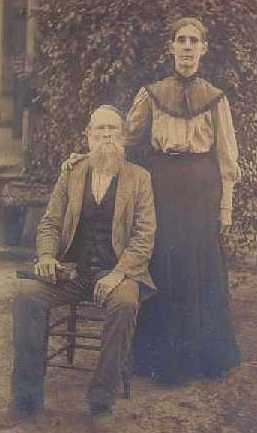
When Hobby returned from the war, he immediately married Martha Morrow (pictured with Hobby) in 1865 and had eight children, the youngest being Ora Wedgeworth who married my great grandpa’s brother, Floyd Culpepper.

Hobby died Jan. 5, 1907 in Neshoba County, Mississippi at the age of 69. He is buried with his wife at Hester Cemetery in Neshoba.

IMG_20141115_150317159_HDRI attended the 150th anniversary muster of the Battle of Franklin November 2014 and witnessed the re-enactment as well as a memorial salute performed in the Confederate cemetery located at the site.IMG_20141115_150047367