OKATIBBEE CREEK on Amazon

CLICK HERE TO GET YOUR COPY OF OKATIBBEE CREEK …and don’t forget the tissue.

okatibbee creek cover front JPEGIn the bloodiest years of our nation’s history, a young mother was left alone to endure the ravages of the Civil War and a typhoid epidemic that threatened the lives of everyone left behind.

Okatibbee Creek is based on the true story of Mary Ann Rodgers, who survived the collapse of the Confederate dollar, food shortages, and the deaths of countless family members to war and disease. As she searched for a way to feed her children and her orphaned nieces and nephews, Sherman’s Union army marched through Mississippi on their way to destroy Meridian, and Mary Ann found the distant war literally on her doorstep. Help arrived just in the nick of time in the form of an unexpected champion, and Mary Ann emerged on the other side a heroic woman with an amazing story.

Okatibbee Creek is a novel of historical fiction that brings the Deep South vividly to life and will have you cheering and crying through a real-life story of loss, love and survival.

CLICK HERE TO GET YOUR COPY OF OKATIBBEE CREEK

Saturday Snippet – I, John Culpepper

Here’s a bit of my work-in-progress, “I, John Culpepper.” For you ancestry/genealogy readers, John Culpepper is my 10th great grandpa. Release date will be April 10, 2015.

****************************************************

Culpepper_1Fall 1626, England

“No! For the hundredth time, no!”

John looked down at the intricate grain of the walnut desk beneath his fingertips and shifted his weight to his other foot. He sighed, feeling his dreams disintegrate before his very eyes. The snap of the white sails, the taste of the salty spray on his lips, the smell of the tar that sealed the decks—the visions were quickly vanishing behind the thick fog of his father’s adamant disapproval. He pictured his mighty ship sinking into the black waters of condemnation, bubbling like a cauldron as it disappeared from sight. There was nothing he could do to change his father’s mind, and he wondered whatever possessed him to come to this man for assistance. He should have known better.

His father glared at John from behind the desk. He propped his elbow on the scrolled arm of the chair as his large hand methodically stroked his pointed beard. “Is there anything else?” he snapped.

John didn’t look up. He shook his head and mumbled, “No.” He turned and padded across the thick rug toward the door, listening to the man’s heavy breathing behind him. He reached for the brass doorknob, paused, and turned back. “You know I’ve always done everything you’ve asked of me. I went to school. I studied to be a lawyer. I did it all for you. I never wanted to practice law. I’d never be happy on the bench.”

“Happy? What makes you think life has anything to do with being happy? You are a Culpepper, and as such, you have an obligation to serve your family and your king in a manner befitting your station. This childish notion of owning a ship is nothing but rubbish.”

John released the doorknob and walked back toward his father’s desk. The intimidating man dwarfed the desk, his size exaggerated by the broad shoulders of his leather jerkin, yet he sat up taller in his chair in preparation for the quarrel to continue. It was a wasted gesture, as his opponent already knew the battle was lost.

John made sure he didn’t raise his voice. “Father, you have financed merchant ships for as long as I can remember. What difference does it make if I’m the one who owns the ship?”

“Culpeppers don’t own ships. I funded those expeditions as an investment—a losing investment, I might add.” He rose from his chair and his voice grew louder, echoing off the oak panels that lined the walls. “There has never been a Culpepper placed in a position to experience hunger and savages and shipwrecks, and there won’t be one now, not with my blood written on the purchase. I will not fund a ship for you, John, not now, not ever.” He pointed his finger in John’s face. “And if you somehow find a way to procure a ship, mark my words—I will disinherit and disown you. No son of mine will become a common sailor. I am finished with this conversation once and for all. Have I made myself clear?”

John exhaled, beaten. His shoulders slumped as he broke his father’s glare and dropped his eyes to the floor.

“John? Have I made myself clear?”

“Completely.”

52 Ancestors #8 James Rodgers

52ancestors-2015

This challenge is set forth by No Story Too Small, and this week’s theme is “Good Deeds.”

I don’t have any “deeds” for my ancestors, but I do have some “land grants.”

The following is a land grant for my 6th great grandfather, James Rodgers Sr, who was born to James Rodgers and Mary McPherson in 1732 in Massachusetts. He married Margaret Woods in 1766 in Augusta County, Virginia, and they must have immediately moved to Tennessee, as my 5th great grandfather was born in Greene County, Tennessee in 1767. (For family members who follow this blog, this James Rodgers is the grandfather of Hays Rodgers, the father-in-law of Elly Hays.)

James was forty-four years old at the beginning of the Revolution and did not fight, but he served by housing soldiers. In return for his patriotism, he was granted 200 acres of land in Greene County, Tennessee in 1792. He did not enjoy it long, as he died on the land in 1794.

The thing that strikes me is the property lines were set by trees. No wonder people ended up having feuds over whose hog was on whose property.

downloadNorth Carolina Revolutionary War Land Grants

Roll 12: Book 1: Page 284 (Greene County, Tennessee)

The State of North Carolina, to all whom these Presents shall come. Greeting:

Know ye, that we, for and in consideration of the sum of Fifty Shillings for every hundred acres hereby granted, paid into our Treasury by James Rodgers

Have given and granted and by these presents do give and grant unto the said James Rodgers a tract of land containing two hundred acres lying and being in our county of Greene on the north side of Nolachucky on Deals Branch of Lick Creek.

oak-treeBeginning at a Spanish oak, white oak and dogwood and yew. Thence south two hundred and forty poles to a white oak and black oak. Thence with said Rodgers line one hundred and thirty six poles to a stake. Thence to the beginning. As by the plat here unto annexed doth appear together with all woods, waters, mines, minerals, here did with and appurtenances to the said land belonging or appertaining to hold to the said James Rodgers his heirs and assigns forever yielding and paying to us such sums of money yearly or otherwise as our General Assembly from time to time may direct provided always that the said James Rodgers shall cause this grant to be Registered in the Registers office of our said county of Greene within twelve months from the date hereof other sum the same shall be void and of none effect.

In Testimony Whereof, we have caused these, our letters to be made patent and our great Seal to be hereunto affixed.

Witness Alexander Martin

Esquire, our Governor, Captain General and Commander-in-Chief at Danbury this 11th day of May, in the 16th year of our Independence and in the year of our lord 1792.

Alexander Martin (signed)

52 Ancestors #7 Catherine Howard

52ancestors-2015

This challenge is set forth by No Story Too Small, and this week’s theme is “Love.”

One of the most interesting stories of “Love” in my ancestry comes from the journals of Tudor history.

howard2Catherine Howard was the fifth wife of King Henry VIII. She was also my cousin. Her father was Edmund Howard and her mother was Joyce Culpepper. Joyce’s father was Sir Richard Culpepper.

In the 1200s, the Culpepper’s were split into two definitive lines by brothers Walter and Thomas into the Preston Hall Culpeppers and Bayhall Culpeppers, respectively. In the 1400s, the Bayhall line split into two lines with brothers again, so instead of Preston Hall and Bayhall, we now have Preston Hall, Wigsell, and Bedgebury. Catherine’s maternal grandfather, Sir Richard Culpepper, was of the Preston Hall line. Catherine had many Culpepper cousins, one being my 12th great grandfather William Culpepper of the Wigsell line, and another being Thomas Culpepper of the Bedgebury line. Though distant, Catherine Howard and Thomas Culpepper were cousins.

Just to make history even more confusing…Catherine’s paternal grandfather was Thomas Howard Duke of Norfolk. This man was Anne Boleyn’s grandfather too. Catherine and Anne (Henry VIII’s second wife) were first cousins.

On 28 July 1540, sixteen-year-old Catherine married King Henry after he ended his politically motivated marriage to (fourth wife) Anne of Cleaves. Henry was nearly fifty years old. For fourteen months, the newlyweds were happy, but then the rumors began. Henry became convinced his young bride was having relations with a few men, the most painful being his trusted servant, Catherine’s cousin, Thomas Culpepper.

In my opinion, one can imagine Catherine at sixteen-years old being quite overwhelmed by all the attention she was receiving along with her new-found feelings of superiority and immortality simply because she was Henry’s wife. And it is possible that Thomas in his mid-twenties, was merely playing a game with a teenage girl. The excitement of this game would be hard to top, especially with a prize as valuable as the wife of the King. Then again, they may have actually loved each other.

Catherine and Thomas were charged with treason, tried, and convicted. Thomas was beheaded 10 Dec 1541. Catherine was stripped of her title of Queen, locked in her chambers, and her future remained in limbo until Parliament decided what to do with her. On 10 February 1542, she was taken to be executed. She traveled by boat to the Tower and undoubtedly passed under the bridge where Thomas’s head was impaled. I wonder if she looked up. Her execution was held Monday, 13 February 1542.

According to popular folklore, her final words were, “I die a Queen, but I would rather have died the wife of Culpepper”. Did she really die for love, or was she simply a young girl who didn’t realize the place next to the King was a fragile one?

The above portrait, which has always been reported to be that of Catherine Howard, is now in dispute by the National Portrait Gallery in London. Apparently the poor girl lost her head…and now her face. Below is a letter she sent to her cousin/lover Thomas Culpepper.


GW402H604Master Culpeper,

I heartily recommend me unto you, praying you to send me word how that you do. It was showed me that you was sick, the which thing troubled me very much till such time that I hear from you praying you to send me word how that you do, for I never longed so much for a thing as I do to see you and to speak with you, the which I trust shall be shortly now. That which doth comfortly me very much when I think of it, and when I think again that you shall depart from me again it makes my heart die to think what fortune I have that I cannot be always in your company. It my trust is always in you that you will be as you have promised me, and in that hope I trust upon still, praying you that you will come when my Lady Rochford is here for then I shall be best at leisure to be at your commandment, thanking you for that you have promised me to be so good unto that poor fellow my man which is one of the griefs that I do feel to depart from him for then I do know no one that I dare trust to send to you, and therefore I pray you take him to be with you that I may sometime hear from you one thing. I pray you to give me a horse for my man for I had much ado to get one and therefore I pray send me one by him and in so doing I am as I said afor, and thus I take my leave of you, trusting to see you shortly again and I would you was with me now that you might see what pain I take in writing to you.

Yours as long as life endures,
Katheryn.

One thing I had forgotten and that is to instruct my man to tarry here with me still for he says whatsomever you bid him he will do it.


It’s Monday! What are you reading?

2a2It’s Monday! What are you reading?


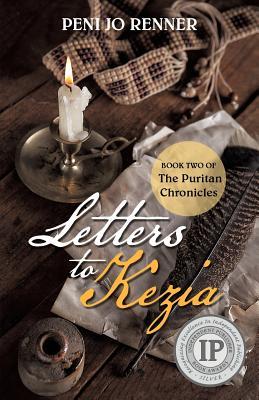
I just finished “Letters to Kezia” by Peni Jo Renner.


24512890This is one of those rare books you cannot put down until you’ve finished it, and I read it in one sitting. The characters are based upon known facts of the author’s ancestors, and she has transformed them into a ripping tale of trust, lies, and deceit. Mary Case was a colonial woman of Connecticut, seduced into trusting a man who almost became the death of her, literally. Her daughter, Kezia, was the product of that tangled web, and Mary ultimately faced the task of telling Kezia the truth about her life and her father. The characters are rich and compelling. Their adventure is fascinating.

Author’s blurb:

It is 1693 in Hereford, Connecticut, when Mary Case, the spinster daughter of a Puritan minister, finds herself hopelessly smitten by the roguish thief, Daniel Eames. Betrothed to a man she does not like or love, she is soon compelled to help Daniel escape from jail. Suddenly, she finds herself on the run, not only accused of being Daniel’s accomplice, but also of murder.

The fugitive pair soon finds solace-and a mutual attraction-among the escapee’s Algonquin friends until two men from Daniel’s dark past hunt them down. After Mary is captured and returned home to await trial, a tragedy takes the life of her younger sister, revealing a dark secret Mary’s father has kept for months. But just as Mary learns she is pregnant, she makes a horrifying discovery about Daniel that changes everything and prompts her to develop an unlikely bond with his mother, Rebecca, who soon saves Mary from a shocking fate. It is not until years later that her daughter, Kezia, finally learns the truth about her biological father and family.

Letters to Kezia shares a courageous woman’s journey through a Puritan life and beyond as she struggles with adversity and betrayal, and discovers that loyalty can sometimes mean the difference between life and death.

Letters to Kezia on Amazon

Author’s Twitter page

Author’s Facebook page


“Stuckey’s Bridge”

Pick up a Kindle copy of “The Legend of Stuckey’s Bridge”! Hop over to Amazon and tell ’em Old Man Stuckey sent ya!

Enjoy…and sweet dreams!

Click HERE 

Stuckey's cover_webIn 1901, the Virginia Bridge & Iron Company began re-building a fifty-year-old Mississippi bridge. In the middle of the project, they began discovering bodies buried on the banks of the river.

Legend has it, he was so evil, he was even thrown out of the notorious Dalton Gang. Years later, he opened an inn near the river, and on foggy nights, boatmen witnessed him pacing back and forth across the bridge, waving his lantern, offering travelers a hot meal and a soft bed.

Those unfortunate enough to take him up on the hospitality were often never seen again.

To this day, eerie experiences are still reported around the bridge that now bears his name. If you travel down to Stuckey’s Bridge, be careful, for not much else is known about the man locals refer to as Old Man Stuckey…until now.

52 Ancestors #6 Chlodio 395-448 A.D. No, Really.

52ancestors-2015

This challenge is set forth by No Story Too Small, and this week’s theme is “So Far Away.”

So, So, So, Very, Very, Far Away!

My Culpepper line is very well traced by many people, including having its own website – Culpepper Connections. My 13th great grandfather William Culpepper married Cicely Barrett. The Barrett line intersects with the Bellhouse line and the Poyntz line and can be traced all the way back to King Charlemagne, King of the Franks 748-814 A.D.

charlemagne-hero-ABIf you Google King Charlemagne’s paternal line, you can go back to his 10th great grandfather. Charlemagne is my 39th, making Chlodio my 51st.


Pépin_the_youngerPepin the Short 714-768 King of the Franks


martel_charles214x313


Charles Martel 688-741 Duke of the Franks, a statesman and military leader


PepinHerstal


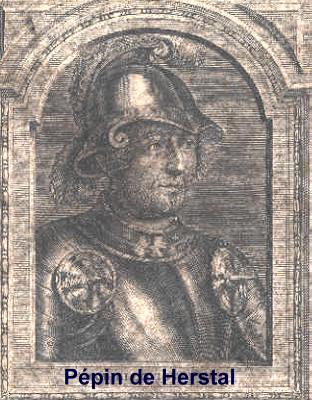
Pepin of Herstal 635-714 Duke of the Franks


ansegisel


Ansegisel 610-670ish Served King Sigbert III as a Duke. Murdered.


Saint_Arnould


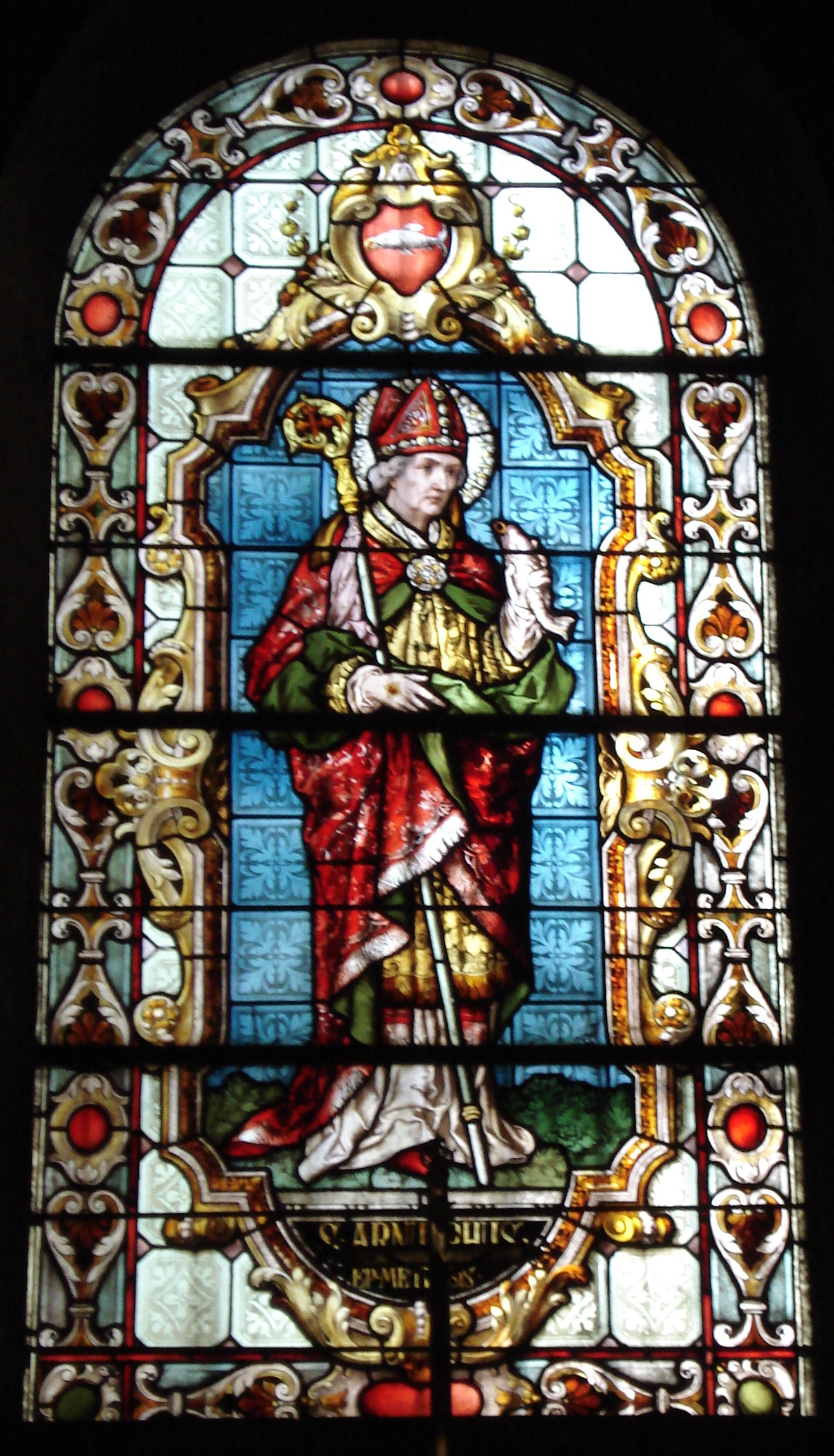
Arnulf of Metz 582-640 Frankish bishop of Metz and advisor to the Merovingian Court.


bodegisel


Bodegisel ?-585 Frankish Duke. Served Kings Chilperic I and Chilperic II.


mummolin


Mummolin ? Mayor of the Palace of Neustria. Married Chilperic II’s daughter.


munderic_largeMunderic ?-532 Merovingian with a claim to the Frankish throne. Married a Roman senator’s daughter.


clodericCloderic the Parricide ?-509 Murdered his own father in order to take the kingdom, then was murdered himself.


170px-Rathausturm_Köln_-_Sigibert_von_Ripuarien_(5907-09)Sigobert the Lame 445-509 King of the Franks, murdered by his son Chloderic the Parricide.


ChlodebaudChlodebaud 430-450 King of the Franks


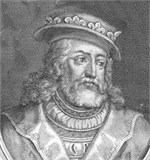
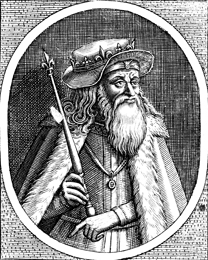
Chlodio Long-HairChlodio Long-Hair 395-448 A.D. King of the Franks

52 Ancestors #5 Mary Elizabeth Howington

52ancestors-2015

This challenge is set forth by No Story Too Small, and this week’s theme is “Plowing through.”

There are a few ways to interpret this week’s theme, Plowing Through, and the first thing that comes to mind is a farmer, but I’ve decided to take a different perspective. Here is an ancestor that was so hard to trace, I had to Plow Through for a long time to find answers.

My great grandmother, Mary Elizabeth Howington Burke.

Granny Burke was a million years old when I was a child, so I never paid her much mind. But as I grew older and began researching my ancestors, I thought back on those days and wished I would have sat down and talked to her about her family.

burke Mary Howington Burke headstoneShe came from poor roots, born in 1893 to John Thomas Howington and Florence Smith. She was followed by seven siblings, including a brother named Milton Howington whom we called “Uncle Sug”(as in sugar) while I was growing up. In 1914, she married John Patrick “Pat” Burke and had seven children, including my grandmother Ina Burke. Pat died in 1958 and Mary died in 1977. They are buried at Liberty Baptist Church Cemetery in Duffee, Mississippi. That’s all the information I had for years. She lived a quiet life in the country and did not leave a paper trail.

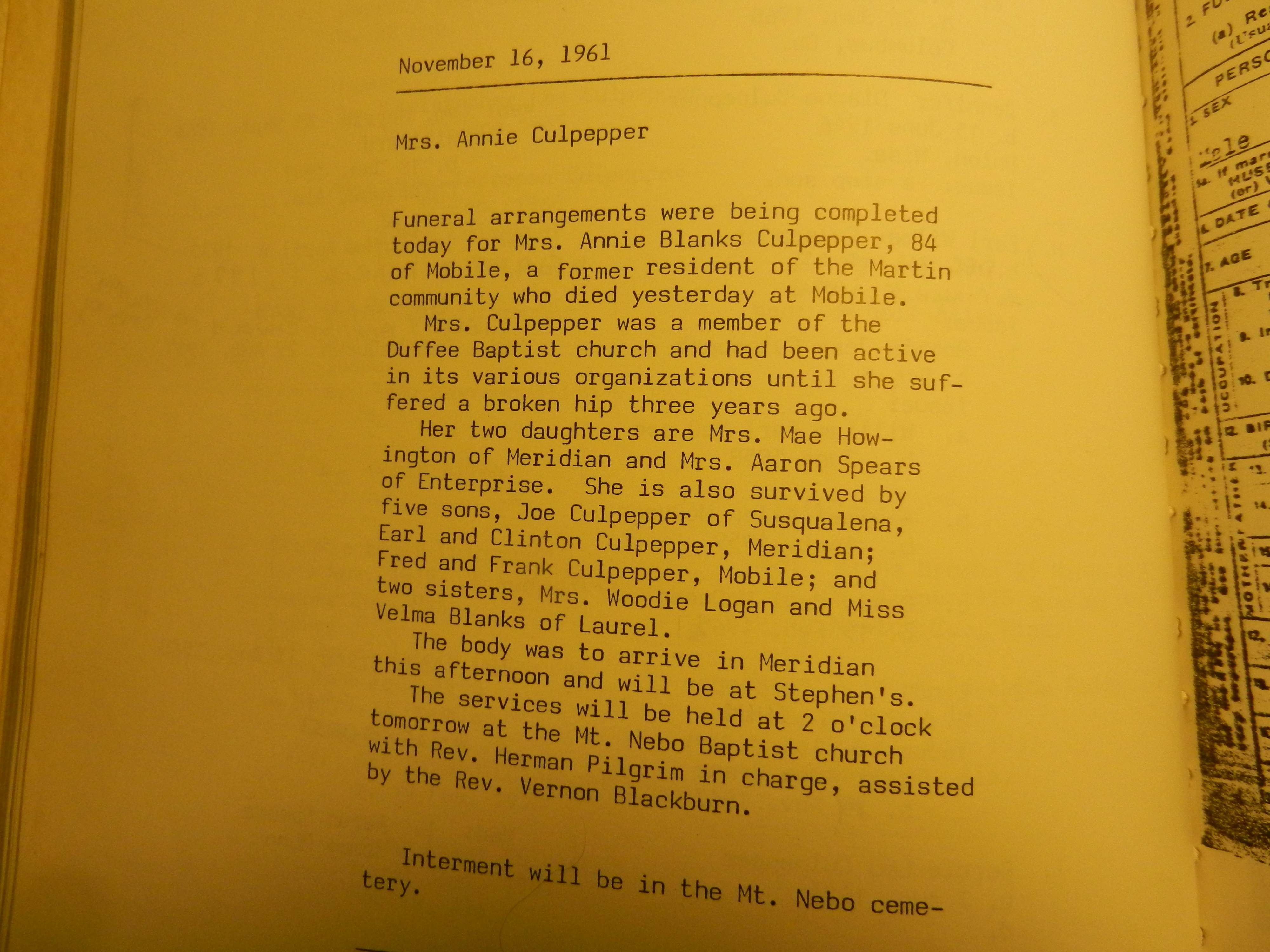
culpepper annie blanks culpepper obitOne day, I read an obituary for my other great grandmother, Annie Culpepper, one that I had read many, many times before, but something stuck out this time. It said Annie was survived by her children, including my grandfather, Earl Culpepper, and a daughter named Mae Howington. First of all, I was sure “Mae” was referring my grandfather’s little sister Zeffie Mae. Second of all, who was this Howington my great aunt Zeffie was married to? Could this Howington be related to Mary Howington? (Note: my grandfather Earl Culpepper was married to Mary Howington’s daughter, Ina Burke.)

As I plowed through documents, made phone calls to elderly family members, and lived inside the time-sucking monster we call Ancestry.com for a whole week, I found the answers about Mary Howington’s ancestry.

Zeffie Mae Culpepper Howington was married to Milton “Uncle Sug” Howington. My grandpa’s little sister was married to grandma’s uncle. By tracing Milton Howington, who left tons of records, I uncovered the whole Howington clan.

The hardest part was explaining to my aunt that her “Uncle Sug” was also her mother’s “Uncle Sug.”

Welcome to the South.

Sailing to Jamestown

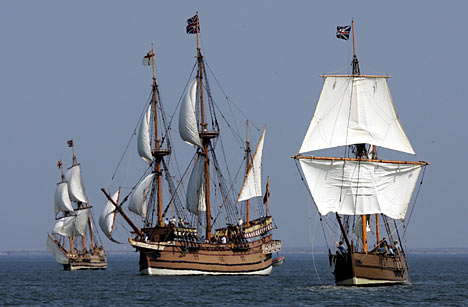
I was doing research for a new book and found three ships sailed from England in 1606 and founded Jamestown, Virginia. Their names were Susan Constant, Discovery, and Godspeed. On a side note, there is some evidence the the first ship was actually named the Sarah Constant, but that’s neither here nor there. The ships carried 105 passengers and 39 crew, and it took them four months to cross the Atlantic. I added the ships to my story and didn’t think much else about them, until I saw the following picture…

susan constant, discovery, goodspeed replicas on the chesapeake

These are the replicas of the original ships. They were used in 2007 to celebrate the 400th birthday of Jamestown and remain docked on the James River. Well, if you know me, you know I love tall ships, so now you have my interest. The more I researched the ships, the more exciting tidbits I found.

Many American’s know the name John Smith (of John Smith and Pocahontas fame) as being one of the original settlers of Jamestown, but few know that he sailed to American on the Susan Constant, and less know that he was almost hung for having a disagreement with one of the ship’s officers. Instead of killing him, they imprisoned him on board the ship for the remainder of the journey. Four months is a long time to be confined to the hole.

The captain of the Godspeed was Bartholomew Gosnold. He had made voyages to the colonies before. In 1602, he discovered and named Cape Cod and Martha’s Vineyards, but the settlements he tried to place there didn’t take hold. After securing funding and ships, he sailed again in 1606. This time confident that a settlement could be formed. The thirty-something husband and father never saw his family again, as he died of scurvy and dysentery only four months after landing in Jamestown. Don’t drink the water!

The Jamestown colony was settled in 1607 by adventurers bent on making a profit. The Plymouth colony was not settled until 1621. Plymouth settlers fled to the new world for religious freedom. Why is it that Plymouth is so much more popular in the American history books than Jamestown? Is it because of Thanksgiving and those silly hats the Puritans wore?


Saturday Snippet – John Culpepper the Merchant

culpepper book 2 cover ideaThe second book in The Culpepper Saga takes place in the mid-1600s. John Culpepper finally got himself the boat he wished for throughout the first book (“I, John Culpepper”) and has fulfilled his dream of sailing to the new colony of Virginia. However, while he was away, civil war broke out at home in England, and John is in an understandable hurry to get back to his wife and family.

Here’s a scene from “John Culpepper the Merchant.”

***************************************************

November 1642, The Doldrums


The Thomas and John sat idle, unmoving in the dim morning light. Her sails hung limp, as they had for the last two days. John ran his hands through his hair and impatiently tapped his foot as he stared across her bow at the unending sea of glass before him. The water blended with the sky, creating a mist as far as the eye could see. There was no horizon, just an endless mirror of foggy steel blue.

He never thought this place existed and had never experienced it on any of his prior journeys, but now, when he most needed to make haste, he found his ship stuck in the middle of it. They called it the doldrums—the place in the ocean where no wind billowed sails, no waves lapped against hulls, and no mighty vessels leapt across the breakers. John had heard tales of ships being stuck in the doldrums for weeks at a time. He prayed this wouldn’t be the case, but on this third morning, he was beginning to wonder if they’d ever break free of it. He’d heard ancient legends of ships carrying horses beneath their decks, and when they found themselves stuck in the doldrums, the crew would build cranes, lower the horses into the water, and allow them to pull the ship. He didn’t know if those stories were true, for he had never witnessed a horse swimming, but in any case, he wasn’t carrying any horses. He was, however, carrying two small rowboats.

“Drop the boats!” he yelled to Benjamin. “We’ll row.”

“Sir?” Benjamin approached. “You want the crew to row us out of the doldrums?”

“Yes, Benjamin. Put them to oar. See to it at once.”

“Yes, sir.”

* * *

The men dropped the small boats into the water, tied them to the ship, and began to row. They struggled against the weight of their load, but ever so slowly, the majestic ship began to creep forward.

“How long do you think we’ll have to row?” one of the sailors asked another next to him.

“Until the cap’n gets her back to wind…or until we’re all dead. Whichever comes first.”

“Stop talking and keep rowing!” Benjamin bellowed from the bow.

For the next thirty hours, the sailors took turns rowing. The only movement in the water surrounding them came from the small ripples caused by their oars. After more than a day, the limp sails picked up a small draft and began swaying in the midafternoon sun.

“Sir!” yelled a sailor from one of the boats.

Benjamin turned and saw the sailor pointing up toward the sails. He looked up and saw the sails flutter in the breeze, and an uncommon grin spread across his unshaven face. He jogged to the back of the ship and descended the creaking, wooden steps to the lower deck. He dropped his head below the opening and blinked to adjust to the dim light. “Cap’n, she’s back to wind!”

“Finally!” John jumped from behind his scarred, wooden desk and followed Benjamin up the steps. On deck, he raised his hand to block the sun’s rays as he looked up at the fluttering sails. A cold, Atlantic breeze blew across John’s face, the first he had felt in four days, and he laughed out loud. “Ha! We’ve cleared the doldrums! Benjamin, hoist the sails and get us underway.”

“Aye, sir. Hoist the sails!”

Almost instantly, there was a flurry of activity on the upper deck as weathered sailors began pulling up the small boats, climbing the masts, raising the sails, and shouting commands.

“We have a lot of time to make up,” John said. “I want to be in London within the week.”

“Aye, sir!”

***********************************

John Culpepper the Merchant is now available at Amazon!

For pictures, paintings, and documents of the people and places in the Culpepper Saga, please visit the Culpepper Saga Facebook page.