October Ancestry Challenge – Mary Ann Rodgers

oct ancestry challenge-001The October Ancestry Challenge 2013 23 posts – 23 days – 23 ancestors.

Ancestor #17 – Mary Ann Rodgers


Rodgers, Mary Ann Rodgers Carpenter JollyShe was just a name in my family tree. Mary Ann Rodgers Carpenter Jolly. My third great grandmother. 1828-1898.

I discovered that she lost her first husband, Rice Carpenter, in the Civil War in 1862. How sad to lose the one you love, but hey, it’s war, people die. After he died, she remarried in 1864.

I looked at the 1870 census and found she was married to William Jolly and was living with his children, her children, and three children they had together. It was a house-full! But at least their three children (Ancestor #15) were proof they must have liked each other, right? That’s good. I was interested where William came from, so I traced him back and looked at his 1860 census. In 1860, he was living with his wife Harriet, their four children, and a woman named Nancy Carpenter who was 69 years of age.

Nancy Carpenter? The only Nancy Carpenter I know is Rice’s mother, whose maiden name was Nancy Rice. Why was Mary Ann’s mother-in-law living with her future husband?? Were they neighbors? Was she their cleaning lady? I clicked on Nancy Carpenter and saw her relationship to the “head of house” was listed as “mother-in-law.” She was William’s mother-in-law? What?? She was Harriet’s mother?

So, I went back and looked at Rice’s family, and sure enough, his sister Harriet was married to William. Rice died 31 Dec 1862 and Harriet died a month later on 30 Jan 1863. Their spouses, Mary Ann and William, brother-in-law/sister-in-law, married in 1864. Well of course they did. They had known each other for many years, hadn’t they?

The more I looked at the Rodgers and Carpenter families, the more I was amazed by the sheer number of family members they lost to war and typhoid. At the time of my research, I remember counting SEVENTEEN, but I’m sure there were many more I missed. I couldn’t wrap my head around that kind of heartache and quickly became impressed with Mary Ann’s strength. How would you react if you lost two or three family members this year? You would probably need Prozac. How would you respond if you lost a dozen? I wouldn’t even be able to get out of bed. Seventeen in one year? I can’t even fathom that.

okatibbee_cover frontYears, numbers, and names from census records are just that – years, numbers, and names – unless you put yourself in their shoes. Then they become tears, children, and heartaches. We all come from those strong women. We are the living proof of their strength. If the boat sank, the story would be over. But it didn’t, and we know that because we are here. We are the survivors. I dug deep down in my heart and soul and decided to tell her story, a story she would be proud of. I wanted her to know that she didn’t go through all of that in vain. I am here. I am her legacy. Her story has been told to make us all stronger. We are the products of strength, fortitude, and integrity, as well as tears, heartache, and pain. We are the children our grandmothers fought so hard for, and I want Mary Ann to be as proud of me as I am of her.


October Ancestry Challenge – John Francis Burke

oct ancestry challenge-001The October Ancestry Challenge 2013 23 posts – 23 days – 23 ancestors.

Ancestor #16 – John Francis Burke, my 2nd great grandfather from Dublin, Ireland.

Family stories say he stowed away alone on an America-bound ship when he was 15 years old. The captain found him en route and told him he could not be taken back. He told the captain, “If I wanted to go back, I wouldn’t have stowed away.” So, they dropped him off in Miami in 1862, in the beginning of the Civil War.

There are a few John Burkes in Confederate military records and census records from 1862 to 1870, but I don’t know which one, if any, is him. There is one in particular in the 1870 census listed as a farmhand in Alabama that I am leaning toward, but I’m not sure.

The next record of him was his marriage in 1879 to Nancy Didama Spencer of Mississippi, daughter of my Ancestor #5 George Washington Spencer. He is shown living with her family in the 1880 census and is listed as a “ditcher.” The record said he was 30 years old, making his birth about 1850, making him only 12 years old when he ran away from home. I wish I could figure out the truth, which may require a trip to Dublin.

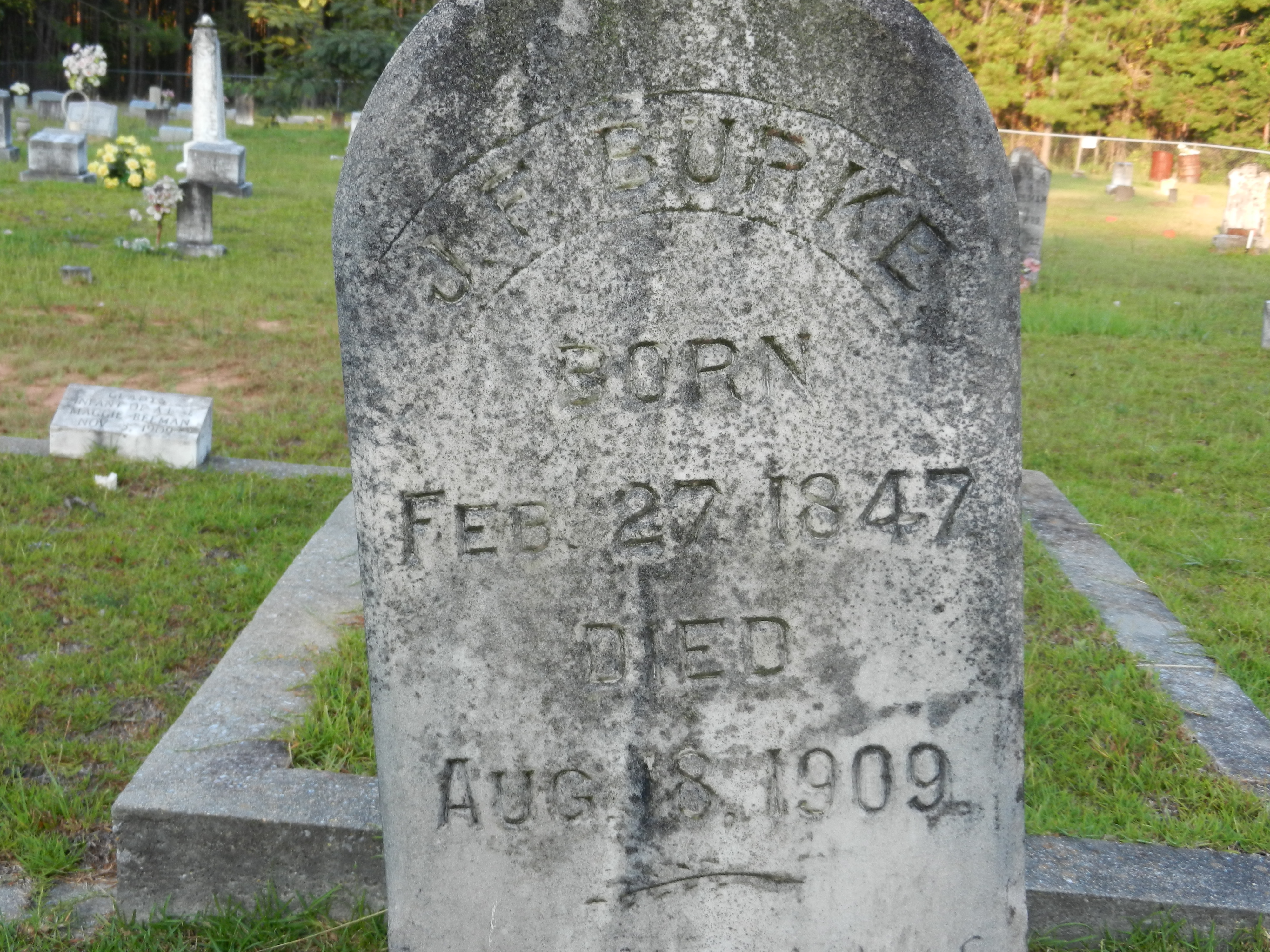
burke JP Burke Sr headstoneHe and “Grandma Damie” had six children between 1880 to 1894. There are no other records of him. Strangely, Damie is listed as a widow in the 1900 census, though John Francis did not die until 1909. Family members tell me Damie did not believe in divorce, and Damie and John spent the last ten years of their marriage under the same roof, but not speaking. When Damie spoke to the census-taker, she said she was a widow. I don’t know what he did to make her so angry, but it must have been a doozey. This explains why they are not buried next to each other at the cemetery. I always wondered why they are in different rows.

On a side note: One of their children was John Patrick Burke who married Mary Elizabeth Howington. I think Mary Elizabeth Howington’s mother was a Choctaw Indian, but I’m still trying to prove that fact. Anyway, John Patrick Burke’s mother, Grandma Damie, was a doctor and rode around the community side-saddle taking care of the sick. My mother told me a story about a grandmother who was a “medicine woman” who knew every plant and tree and how it could be used to heal people. She told me it was my other grandmother who was a Choctaw Indian, but I believe she got the women confused, and she was speaking of Grandma Damie as the doctor, but the other grandma was the Indian.

Family members told me John Francis left home because he was angry with his father. I don’t know who his parents were, but if I ever venture into Dublin, Ireland records, I should be able to find him because his children were named after his siblings. His children were John Patrick “Pat”, Robert Emmett “Bob”, George Washington (Probably won’t find a sibling with that name. That was his father-in-law’s name), Nina Virginia, Kathlene L, and David Edmund.

I don’t know what kind of childhood his son (my great grandpa), John Patrick “Pat” Burke, had as he died four years before I was born, but I do know he played fiddle every Saturday night at the community barn dances. A cousin has his fiddle and the family pump organ stored away. Being a professional musician, I would give anything to get my hands on those. I wonder where my great grandfather learned to play fiddle. It’s such an Irish thing to do, don’t you think? Perhaps his father taught him. Hmmm.

tattooI’m not sure I will ever find my Irish ancestors, and I feel sorry for John Francis’s mother, never knowing what happened to her rebellious fifteen-year-old son. John Burke could have pulled that name out of the sky or it could have been Bourke or O’Byrne or something. Either way, here’s a toast to my grandfather, John Francis Burke. For without his braveness at the tender age of fifteen, I would not be here.

October Ancestry Challenge – Ludie, Alice, and John

oct ancestry challenge-001The October Ancestry Challenge 2013 

23 posts/23 days/23 ancestors.

Ancestor #15 – Ludie, Alice, and John


Ludie, Alice, and John were children of my 3rd great grandmother, Mary Ann Rodgers Carpenter, and her second husband, William Jolly.

Mary Ann had married Rice Carpenter and had a handful of children before he was killed in the Civil War on Dec 31, 1862.

William Jolly had married Rice’s sister, Harriet Carpenter, and also had a handful of children before she died of typhoid in Jan 1863 – only a month after Rice died.

I imagine Mary Ann and William (brother-in-law/sister-in-law) were a good support system for each other at the time. So much so, that in 1864, they married. Their children, who were once cousins, became 1/2 siblings. And to make the family even more complicated, in 1866, 1867, and 1869, they had three of their own children: Sarah Louella “Ludie” Jolly, Alice Jolly, and John Jolly. I feel as though I am closely related to the Jollys, but since I am a descendant of Mary Ann and Rice, it feels as though I’m not really related to them at all. It’s like they’re a different family. Ludie, Alice, and John would be my 1/2 aunts and 1/2 uncle. I’ve never even heard of such a thing.

Sarah Louella Jolly family 1900, hub Frank, kids Oscar, Cora, Alma, Grover, Elma, Queenie, Fred, Austin, BarneyAnyway, to make a confusing family EVEN MORE confusing, Ludie married Frank Williamson…


Alice Jolly family 1896, with hub Henry, Carl and Edith, girl standing is not hers - Copy …and Alice married Jeff Williamson.


I know what you’re thinking, and no, they weren’t brothers. I breathed a sigh of relief, too. Ludie moved to Louisiana and had, ready?, FIFTEEN kids! Alice remained in Mississippi and had four kids.


Their little brother John first married Missouri Johnson. On Dec 7, 1891, she gave birth to their first child, a son, and on Dec 14, she died of complications.


John Eades Jolly and wife SarahIn 1894, John found love again and remarried. Guess what her name was? Yep, Johnson…Bettie Johnson. I’m not going to tell you the women weren’t related because I don’t know for sure. I can’t find much info on Missouri.


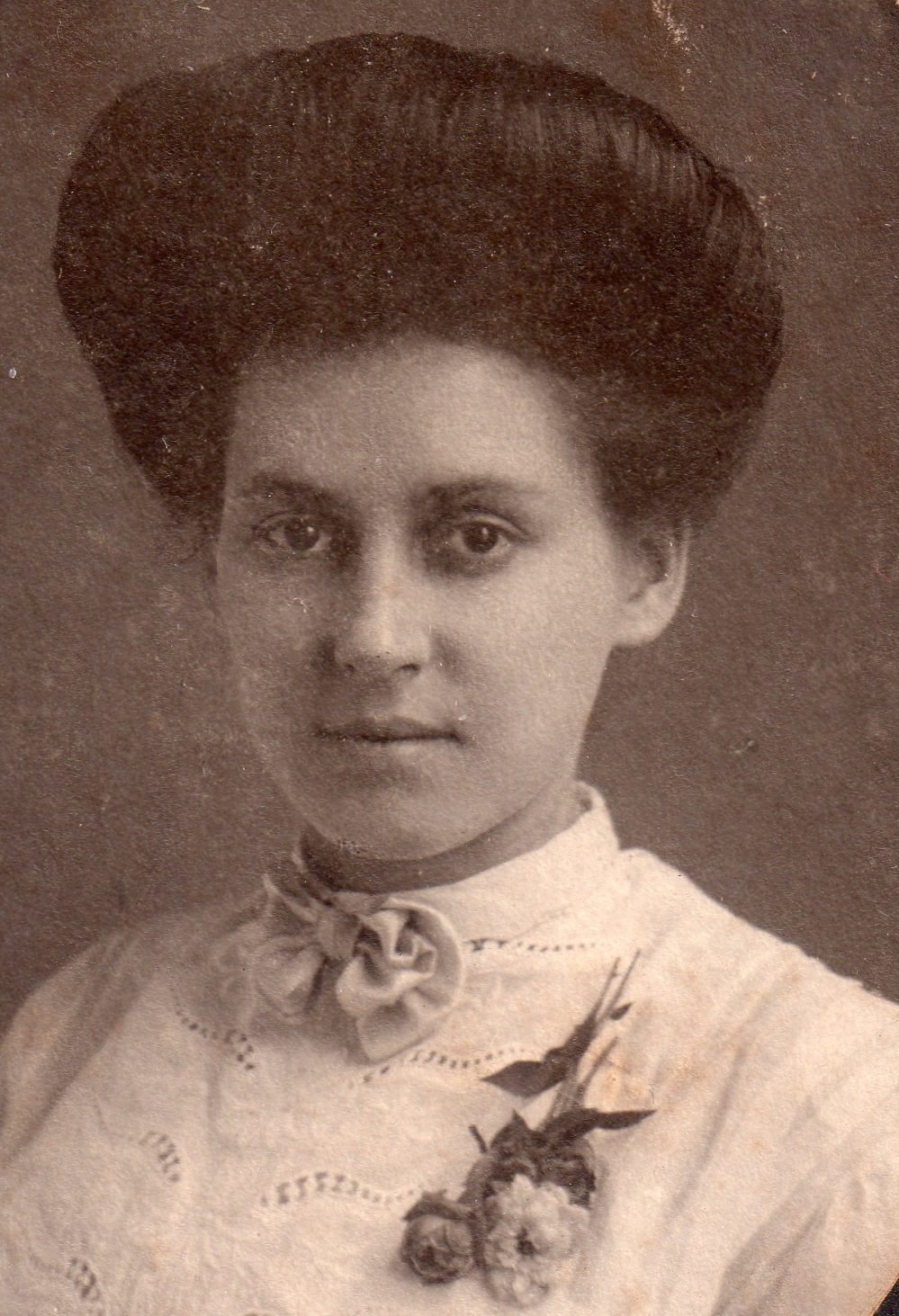
I will tell you one thing for sure, even though I don’t have a photo of my 3rd great grandmother, Mary Ann, I can tell by her children that she was a beautiful woman!


P.S. If this family menagerie has peaked your interest, Mary Ann’s whole story is told in my book Okatibbee Creek.” I’ve been thinking about her and the family recently because we are finishing up the audio book for release in November, and listening to the narrator speak in my grandmother’s voice has really been haunting me. I think I’ll do an ancestry post about her in the next couple days. 🙂

October Ancestry Challenge – William Thomas Fisher

oct ancestry challenge-001The October Ancestry Challenge 2013 

23 posts/23 days/23 ancestors.

Ancestor #14 – William Thomas Fisher

My 3rd great grandfather was William Thomas Fisher, son of Southy Fisher and Elizabeth Butler. He was born on June 5, 1819 in Alabama, and as far as I can tell from records, he only had three sisters: Martha, Maria, and Permilla.

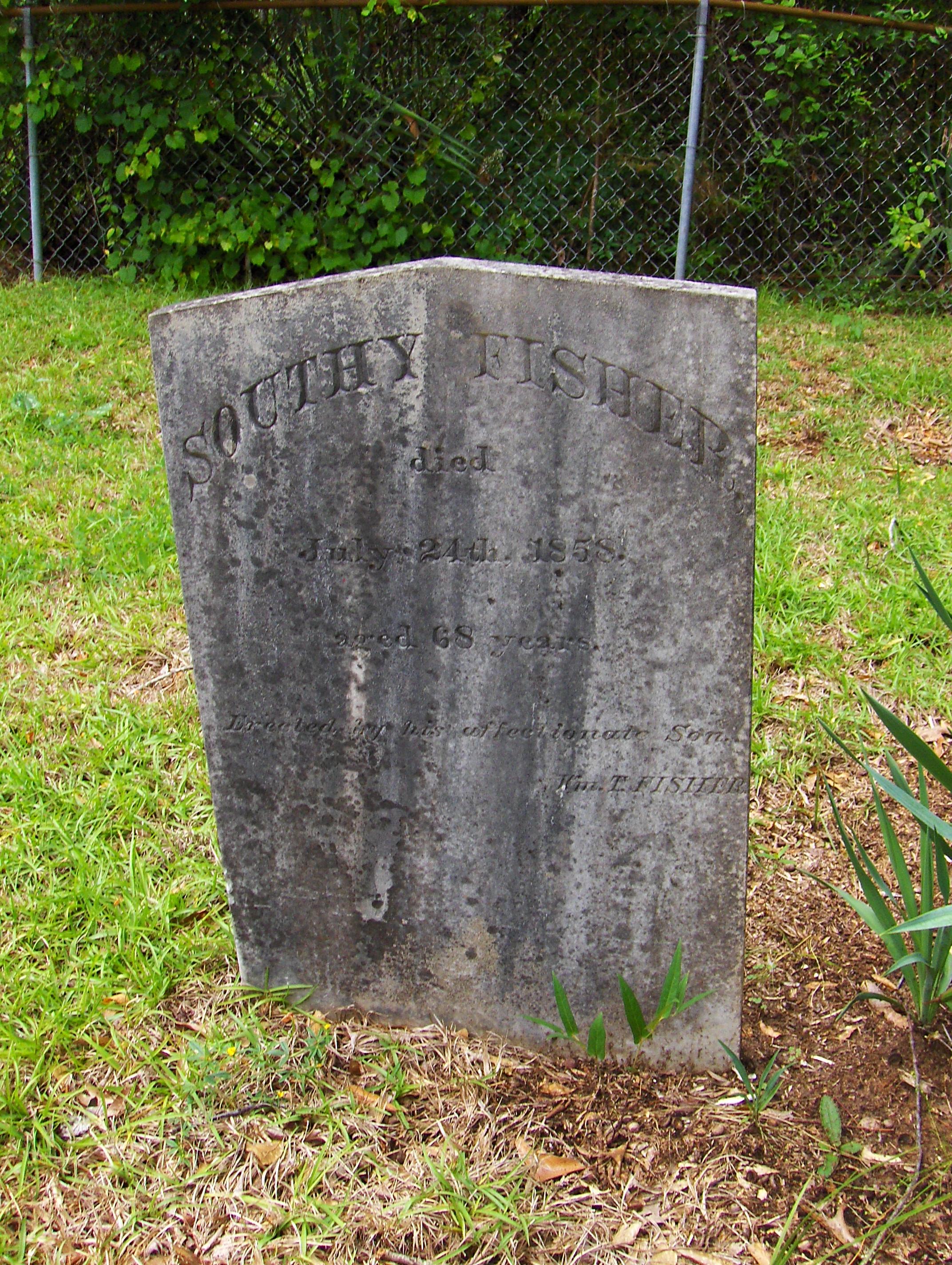
fisher southyHere is his father’s will:

In the name of God, Amen. 

I Southy Fisher of the county of Lauderdale in the state of Mississippi, of lawful age, and sound and disposing mind and memory, God be praised for it, do hereby make this my last will and testament.

1st  It is my desire that when it shall please God to take, that my body be decently interred.

2nd  It is my desire that my beloved wife Elizabeth Fisher have during her life a negro girl named Harriett, and at her death this said negro girl Harriett is to belong to my belong son William T. Fisher.

3rd  It is my will and desire that my son William T. Fisher shall have all my negroes that I shall own at my death, and which I now own namely Frank, Ned, Harriett, Aggy and Anthony a boy, all slaves for life, and my stock of horses, hogs, oxen, cattle, sheep, goats all my farming utensils, my crop of cotton, corn and small grain either growing or gathered, and all other species of property remaining on the farm, and also my plantation on which I now reside, and all other lands in this and adjoining counties.

4th  It is my will and desire that my Executor whom I shall hereafter name pay my just debts out of the first money that may come into his hands and also that he pay to my daughters, Martha White, Maria Fisher and Permilla Burton the sum of five dollars each as a full and entire interest in my estate.  They having been provided for by a deed of Gift to each of them dated the seventeenth day of April 1855 and duly recorded in deed book letter G. 

5th  I do hereby nominate and appoint my friend Benjamin Y Parke my executor and desire that he may carry out the provisions of my will and to settle up my estate at as convenient and short a time as the law will admit.  In   ——whereof shall —— set my hand and seal the fourth day of June AC 1855.

Southy Fisher (seal) 

 Signed sealed published and witnessed by the said Southy Fisher as and for his last will and testament in the presence of us, who in his presence and at his request and in the presence of each other have with set and subscribed our names as witness here..—-  this fourth day of June AD 1855. 

H.D. Meador, J. Lown, C E Rushing

 (note: Benjamin Parke was the county clerk at that time)

****************************************

William T. and Ann Elizabeth (Butler) FisherWilliam didn’t marry until the age of 39, and the family story is that he rode to North Carolina, where the family was originally from, and brought back Ann Eliza Butler on horseback. She was 15 years his junior, and Butler was also his mother’s maiden name, so they may have been cousins or something.

After their marriage, William went to Mobile to buy a slave to help Ann in the kitchen. While he was there, he noticed a small black boy with light patches on his skin. He asked the slave traders what they were going to do with the boy, who was about 5 years old. The traders said on their way back, they would throw him overboard to the sharks. William wouldn’t allow that to happen, so he brought the boy home and raised him. The boy’s name was Charlie “Fisher” and he stayed at William’s side even during the Civil War. Charlie drew a pension from the war until his death in 1928.

At the end of the war, William not only freed Charlie, but gave him 80 acres of family land on Fisher Road in Zero, Lauderdale County, Mississippi. Charlie’s descendants still live on the land to this day.

Though William seemed to be a warm and loving family man, he didn’t take crap from anyone, which seems to be a family trait that we’ll discuss more below. William was imprisoned at Mississippi State Prison in Jackson, Mississippi about a year before the Civil War. He was imprisoned for killing a man named McGinnis in his corn crib. It was told McGinnis was stealing, but the underlying belief is that it was a card game gone bad and William caught McGinnis cheating and shot him. William had to sell off a lot of land to pay off the judge and lawyers to try and stay out of jail, but he served time anyway. When the war began, he was release to serve as a Captain.

Here’s a great story (condensed by me) about William’s family and a dispute at The Brickyard in Marion, Lauderdale County, Mississippi.

***************************************************

Aunt Muggie’s Dilemma  

In 1846, Marion was a hub of activity as young men signed up for the militia in hope of fighting in the Mexican War. The Brickyard at Marion was the mustering point.

The owner of the brickyard, S. S. Shumate and his wife Muggie, had a disagreement with a man named Fisher. The reason seemed to be over Shumate’s claim to ownership of the brickyard. On at least one occasion the dispute became heated to the extent that the town Marshal intervened and arrested the participants. They were each fined $1, and for a time the dispute ended.

However, sometime later the Fishers again appeared at the brickyard. This time they were armed. The Shumates and the Fishers were armed with Flintlock weapons, each a single-shot gun, which took time to load and fire.

When the Fishers made their presence known at the brickyard, one can imagine the hurried preparation of Muggie and her husband to meet the challenge. When prepared, they stepped out into the brickyard and fired.

When Muggie and Shumate stepped out to confront the Fishers, Muggie had two guns, Shumate had one. Apparently, each of the Fishers had a single gun. Muggie was the first to fire and her shot “cut down old man Fisher.” One of the Fisher boys, William, fired at Muggie and missed. Muggie discarded her empty gun, picked up her second gun and fired again, this time dropping William Fisher. Muggie’s husband, terrified by the fighting, immediately dropped his weapon and fled.

Muggie, furious with Shumate for his cowardice, picked up his unfired weapon and shot him down. This was, perhaps, not the wisest choice of targets, since at least one Fisher continued to hold a charged weapon. This remaining Fisher aimed and shot, killing Muggie before she could reload her weapons. 

*****************************************************

William and Ann had eleven children, including my 2nd great grandmother Caledonia Fisher who married Joseph Lawson Pickett. The Pickett clan wasn’t much more peaceful than the Fisher clan. You can read about a Pickett gunfight here.

fisher william thomas headstone, callies fatherWilliam died May 13, 1882 at the age of 62. Ann died January 13, 1910 at the age of 75. They are both buried at Fisher Cemetery in Lauderdale County, Mississippi.fisher ann eliza butler fisher headstone


October Ancestry Challenge – William Lafayette Brown Jr

oct ancestry challenge-001The October Ancestry Challenge 2013 

23 posts/23 days/23 ancestors.

Ancestor #13 – William Lafayette Brown Jr


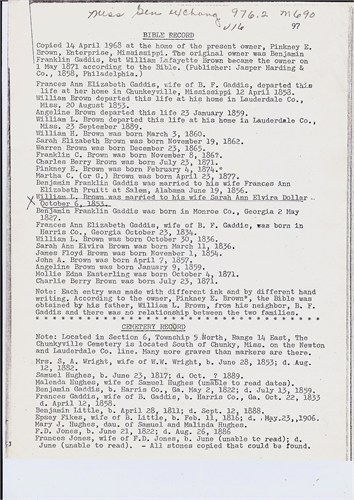
brown william lafayett bibleMy 3rd great grandfather was William Lafayette Brown Jr. He was born in 1836 in Lauderdale County, Mississippi to William Sr and Martha Hamrick Brown. He only had one brother, John Henry, and six sisters. Poor boy.  The document to the left is the transcribed family bible.

William Jr (24) and John Henry (29) both signed up for the 37th Mississippi Infantry during the Civil War in May 1862. They were in Company D under Lt H. G. Hamrick. As close as everyone was in Lauderdale County at the time, I’m sure Lt Hamrick was a relative. In November of 1862, William Jr was promoted to Corporal. In November of 1863, he was sent to work with the Calvary, and in February of 1864, he was promoted to 3rd Sargent.

7872_561759593863541_1656188250_nFor you Civil War buffs, here are the details of his company

Officers of Company D (Enterprise Tigers)
Whitman C. Turner, Capt., r. January 3, 1863
F. S. Pickle], Capt., r. August 29, 1864
Allen C. Carter, 2nd Lt., died August 23, 1862
H. G. Hamrick, 2nd Lt., r. July 27, 1862
Ira J. Williams, 1st Lt., died April 9, 1862
J. L. Peters, 1st Lt.
D. Lindsey, 2nd Lt.
N. R. Sumrall, 2nd Lt.
 

Stationed at Enterprise, Mississippi, March 7, 1862.
March 7. Muster-in roll of Captain Whitman C. Turner’s Company, the Enterprise Tigers, of Mississippi Volunteers . . .
called into the service of the Confederate States of America by virtue of a proclamation of the Governor of the state of Mississippi January 1862 from March 7, 1862 for the term of three years or for the war, unless sooner discharged. . . .
ROBERT McLAIN, Mustering Officer.

Stationed at Columbus, Mississippi, March 7-June 30, 1862.
Stationed at Saltillo, Mississippi, July-August 1862.
Stationed near Lumpkin’s Mill, September-October 1862.
September 10. Left for Iuka from Baldwyn.
September 14. Took possession of Iuka.
September 19-20. Had battle on the evening of September 19 and evacuated the place on the morning of September 20 and retreated back to Baldwyn, traveling about 100 miles.
September 25. Left Baldwyn for Corinth via Ripley.
October 3-4. Gave the enemy battle at Corinth and began our retreat from Corinth on the evening of October 4 and came back to Ripley and thence to this place, traveling about 140 miles on that march.
Stationed in barracks, Yazoo County, Mississippi, November-December 1862.
Stationed at Snyder’s Mill, Mississippi, January-February 1863.
Stationed at Enterprise, Mississippi, April 30-October 31, 1863.
Stationed near Enterprise, Mississippi, November-December1863.
Stationed near Pollard, Alabama, January-February 1864.
Stationed at Atlanta, Georgia, February 29-August 31, 1864.


Okay, let’s back up just a moment, and then we’ll fast forward to the good part.


william lafayette brown and sarah dollar marriage licenseBefore joining the Infantry, William Jr married Sarah Ann Dollar on October 6, 1854. The document to the left is their marriage license. They had three boys and a girl. While he was running around fighting, his wife gave birth to my 2nd great grandmother Sarah Elizabeth “Bettie” Brown on November 19, 1862 (100 years to the day before I was born). Once he returned from the war, they had five more children: four more boys and another girl.

He was obviously a viral young man, and while he was away from home from 62 to 65, he needed to find a way to burn off all that testosterone. The story is: he was a sniper and guarded the railroad bridges at the Chunky River in Mississippi, and was captured by Federal forces. He dug a hole out of the stockade and escaped. Later, he allowed himself to be captured a second time to help others escape. He/they did. He had a bounty on his head by the Union for the remainder of the war.


brown william L and Sarah A at goodwater cemeteryWilliam Lafayette Brown Jr, the father, the Rebel, and the war hero, died at the age of 52 on September 23, 1889 and is buried at Goodwater Cemetery in Enterprise, Mississippi.


October Ancestry Challenge – Ora Alice Blanks Bates

oct ancestry challenge-001The October Ancestry Challenge 2013 – 23 posts/23 days/23 ancestors.

Week three!

Ancestor # 12 – Ora Alice Blanks Bates


ora blanks batesOra Alice was my great grandmother’s, Annie Blanks Culpepper’s, little sister. (Annie was my Ancestor #1.) I found Ora a few years ago while researching on Ancestry. She married Shellie Houston Bates and had four children. Shortly after this photo was taken in 1916, with her holding baby William Leonard, he died and she never recovered from the lost. She died three months later. She was 28.

blanks ora blanks shellie bates family 1917


As I looked at the photo, I felt so bad for the little girl in the middle. Her name was Mary Louise. It broke my heart that she had lost her mother at such a young age, and I couldn’t get it out of my head that her mother may have committed suicide or overdosed. I don’t know what doctors gave grieving people back in 1917, but I imagine they didn’t know any more about mental health than they know now.

In my search, I found an Ancestry contributor who seemed to know a lot about the family, so I contacted her, and she was kind enough to send me information. It turns out she is my cousin, and all of these photographs are from her personal collection.

After the baby’s death, Mr. Bates moved his wife from Mississippi to Alabama for a change of scenery, but Ora did not improve. According to her death certificate, she died of “acute melancholia” and the contributing factor was “convulsions.” In my mind, I bet those convulsions were cause by some sort of medication.

I now had answers about Ora, but was still upset about the sweet little girl in the picture. I contacted the woman from Ancestry again and told her that the family photo was haunting me. She wrote me back and said it all turned out okay, as she was the little girl’s granddaughter. That made my spirits rise considerably.

Little Mary Louise grew up with her aunt (her father’s sister). She married and had children and lived to a ripe old age.

blanks bates marie louise bates and grandmother martha carpenter blanksHere is a picture of her as a teenager around 1930 with her maternal grandmother – my great great grandmother Martha Lettie “Mattie” Carpenter Blanks, who I mentioned in my Ancestor #10 post.

I have trouble wrapping my head around the fact that the little girl in that first picture is holding my great great grandmother in this picture. It seems strange to me when my worlds collide like that.

October Ancestry Challenge – William Henry Blanks II

oct ancestry challenge-001The October Ancestry Challenge 2013 – 23 posts/23 days/23 ancestors.

We’re in week three!

Ancestor #10 – William Henry Blanks II and kids

William Henry Blanks II was my 3rd great grandfather. He was born in 1800 in Greene County, Georgia. His father, grandfather, great grandfather, 2nd great, and 3rd great were all born in Virginia, dating back to 1660.

His grandfather was Henry Blanks. The following is Henry’s will.

***********************************************

HENRY BLANKS 1794 will

Will of HENRY BLANKS-Pittsylvania County, Va., dated September 15, 1794-, recorded October 20, 1794.

“IN THE NAME OF GOD AMEN I HENRY BLANKS of the County of Pittsylvania being sick and weak of body but of sound sense and memory and considering the certainty of death and the uncertainty of the time thereof have thought fit to make this my last Will and Testament in the manner followeth.

ImprImis I recommend my soul to God who gave it me and my body to the earth to be interred at the discretion of Executors hereafter named,

Item I lend to my beloved wife during her widowhood my house hold and kitchen furniture, all my stock of horses, cattle and hogs, the tools and plantation utensils belong to the plantation whereon I live together wilth use of the same during her widowhood after my just debts are pay’d

Item I give to my Sons JOHN and JOSEPH two hundred and ten acres of Land that I now Live on joining Bannister river to be equally divided between them. Also it is my will and desire that the above mentioned household and Kitchen furniture and all my stock of horses, cattle and hogs, the tools and plantation utensils belong to the Plantation should be equally divided between my Sons JOHN and JOSEPH and my Son in law WILLIAM PARSONS and POLLY his wife , WILLIAM FARTHING and TABITHA his wife .

Item I gave to my Son JAMES of Georgia a horse now in his possession to him I give the same to his heirs forever

Item I give to my Son WILLIAM of Georgia a mare cow & calf and a sow now in his possession to him I give the same to his heirs forever

Item I give to my Son in Law BENJAMIN WATKINS and his wife SARAH five Shillings and of my movable Property after my wife’s widowhood

Item I give to my Son in Law DANIEL BAYTS and his Wife ELIZABETH a cow and calf now in their possession to him I give the same to his heirs forever

And lastly this is my last Will and Testament hereby revoking all former Wills by me made. In Witness whereof I have hereunto set my hand and Seal this fifteenth day of September one thousand seven hundred and ninety four.

Signed, Sealed and published in the

presence of us who subscribed the same

in the presence of the said Testator

Thomas Anderson, Francis Anderson

Elkanah Echols, Richard Anderson

AT A COURT held for Pittsylvania County the 20th day of October 1794– within written last Will and Testament of HENRY BLANKS deceased was exhibited into Court and proved by the Oaths of two of the witnesses hereto and Ordered to be Recorded. And on the motion of NAOMI widow and relict of the said Testator Certificate is granted her for obtaining Letters of Administration of all and singular the Goods and Chattels, rights and Credits of the said Testator with the said Will annexed she having first taken the Oath by Law prescribed and together with JOHN BLANKS, JOSEPH BLANKS and JOHN OWEN the securities entered into Bond and acknowledged. the same By the Court Teste Will Tunstall C. C. -Pittsylvania County, Va., Deed & Will Bk. 10, p. 75.

**************************************************

blanks william henry blanks I Georgia Journal 27 Jan 1824 pg 3William Henry II’s father William Henry I was born about 1760 in Virginia and was captain in the NC militia during the American Revolution. He served 1779-1780 and defended Charleston, SC under Brigadier General Caswell. In 1799, after five generations in Virginia, the family moved to Georgia, but as evidence of the above will, there was already some family there. After William Henry I died in 1823, his son sold all of his belongings. The newspaper clipping is from the Georgia Journal, 27 Jan 1824, pg 3.

William Henry II married Nancy Young in 1819 and had 8 children in Greene County, Georgia. Sometime between 1840 and 1850, he moved his family to Lauderdale County, Mississippi. I don’t know the reason, but every one of them went.

His two eldest sons James Lafayette Blanks and Thomas Young Blanks became Reverends and also served in the Confederate Army. His third son Jefferson Franklin Blanks moved to Arkansas between 1857 and 1860. Next, he had a fourth son Richard Lane Blanks and two daughters Martha Ellen and Nancy Ann. Finally, his youngest child was my 2nd great grandfather, William Henry Blanks III.

blanks william henry III and mattie carpenter blanksWilliam III married Martha Lettie “Mattie” Carpenter and remained in Lauderdale County until he retired. He spent his golden years an hour away in Laurel, Jones County, Mississippi. His death certificate states he died of senility and chronic bronchitis in 1922. His wife died eleven years later, following a stroke.

blanks family bibleI find it strange that all of the children remained in Lauderdale County except for Jefferson. I wonder what was so intriguing about Arkansas  in the late 1850s to make him leave his family. Jefferson married, had seven children, and raised them in Arkansas.

His youngest son was Jack Bruce Blanks. Jack also moved away from his family and married a girl in Louisiana and opened a general store. I don’t know which one in this photo is him, but I love this old picture. blanks jack bruce general store

According to William II’s will, his youngest children Nancy Ann and William III were his favorites. He left them his entire estate. He left $1 to each of his other children.

********************************************************

The Last Will and Testament of William H Blanks… State of Mississippi Lauderdale County August 18,1859.

Know all persons by these present that I do this day bequeath to my daughter Nancy & son William the sum total of my Estate being in consideration of my parental affection and love for them. My sons James, Thomas, Jefferson, and Richard I do give unto one dollar a piece also my daughter Martha English I give the same one dollar to be by each and all of them held in peace for life. My daughter Nancy and son William are by the Law of the Land old enough to choose their own guardians. Let them choose who they please their money is to be for their education and raising to be laid out on them at the will of their Guardian he to give Security for his management of the same, all of the above do request as the Last Will on Earth hoping the same may be satisfactory to all people on Earth in Testimony on which setting my hand and Seal Witness by undersigned. W H Blanks

W J Brown, P H Higgins

Jas F Ginnen                                                                  

P. S. It is my wish for Nancy & William to have their brother Thomas to hold their business in charge.

Will Book 1, Page 17 Lauderdale County Courthouse, Meridian, Mississippi.

October Ancestry Challenge – Joel B Culpepper

oct ancestry challenge-001The October Ancestry Challenge 2013 is 23 posts in 23 days (Monday through Friday) about 23 ancestors.

We’re in week two!

Ancestor #6 – Joel Bluett Culpepper

culpepper Joel B CulpepperMy great great grandfather Joel Bluett Culpepper was born in 1845 in Clark County, MS and died 11 Nov 1911 at Beauvoir Confederate Soldiers home in Biloxi, MS.

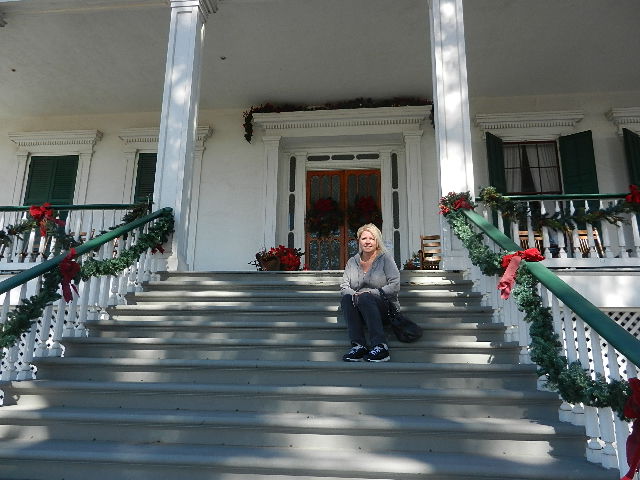
If you’re not familiar with Beauvoir, it was the home of Confederate President Jefferson Davis, and following the Civil War, it was turned into a home for Confederate veterans. It is now a historical site and I have sat on that porch many, many times. The first photo is pre-hurricane Katrina. The second is me on the rebuilt front steps in December 2012.

Beauvoirdec 2012 231

Joel was born to Rev. Joseph M Culpepper and Nancy Yarbrough along with 3 brothers and 2 sisters. His paternal grandparents were Simeon Culpepper and Elizabeth Bluett. That’s where his middle name came from. It’s an old southern tradition to give maiden names of mothers and grandmothers to son and grandsons.

Page 1 joel Joel signed up for the 63rd Alabama Infantry Co K, stating that his residence was in Choctaw Co, Alabama. His brother Benjamin signed up for the 40th Alabama Infantry Co C. I have no idea why the boys signed up in Alabama or if they were actually living there at the time. The answer may lie in their father.

Their father, the Rev Joseph M, signed up for the 37th Mississippi Infantry on April 11, 1862 and died on August 15th of the same year in a battle at Columbus, Mississippi. Joel was only 17 at the time and Benjamin was 18. They may have been sent to Alabama to live with relatives following their father’s death and signed up for the cause to honor him. The enrollment date on Benjamin’s war documents is October 1863 in Sumter County, Alabama, but the date is not visible on Joel’s document, but it was definitely before Benjamin signed up. Page 4 joseph

fort massachusetts on ship islandPrior to Benjamin signing up, on April 9, 1863, Joel was captured by Federal Forces and held prisoner at Fort Massachusetts on Ship Island until the end of the war. He was an 18-yr-old boy.

In 1870, Joel married Mary E “Mollie” McFarland and they had six children, one of them being my great grandfather William Samuel “Sam” Culpepper who married Annie Josephine Blanks. I wrote about her in my Ancestor #1 blog.

Mollie died in 1908, and Joel moved in with his daughter for a time until it was decided he would enter Beauvoir under his rights as a Confederate soldier. He lived there for 10 months preceding his death. The records on file name him as James B Culpepper. He and Mollie are laid to rest at Zion Cemetery in Kemper County, Mississippi. culpepper, mary e molly mcfarlandculpepper, joel bluitt

October Ancestry Challenge – George Washington Spencer

oct ancestry challenge-001

The October Ancestry Challenge 2013 is 23 posts in 23 days (Monday through Friday) about 23 ancestors.

We’re in week two!


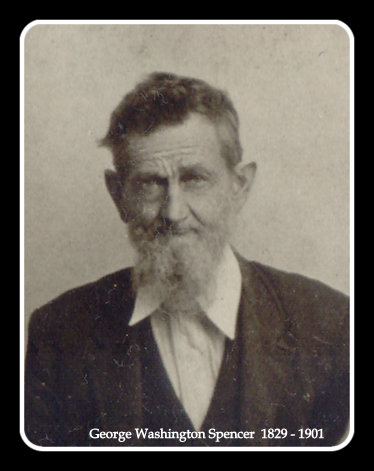
Ancestor #5 – My 3rd great grandfather George Washington Spencer


50643187_136536244812My 3rd great grandfather was George Washington Spencer. He was born June 1829 in Tuscaloosa, Alabama and died at the age of 72 in July 1901 in Newton Co, Mississippi. He was the son of Rev. William Saladin Spencer and Martha Didama Gross. He had ten siblings and was the second from youngest, so I imagine he got away with just about anything he wanted to. You can just imagine by the tenth child, you’d just throw up your hands and say, “Whatever!”


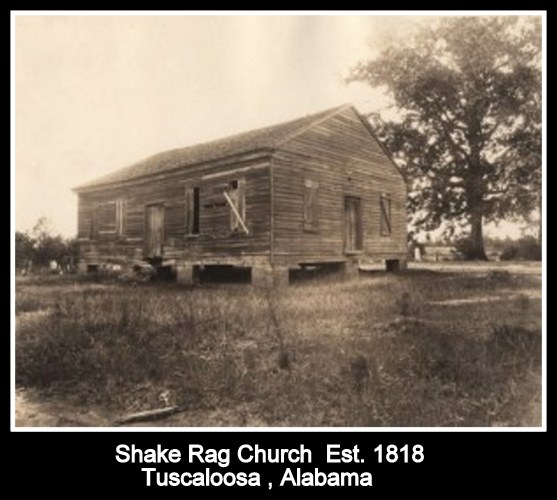
Behind this church is the cemetery where his parents are buried. It is possible George attended this church and his father may have preached there. (the photo is from my cousin mebauc)50643187_137826751612


George married Nancy Virginia “Jenny” Holdcroft in 1858 at the age of 29. She was ten years is junior. Hubba hubba. They lived in Newton County, Mississippi, and he was listed on the 1860 Federal Census as a school teacher.


Page 1When the Civil War broke out, he joined the 35th Mississippi Infantry, Company B on March 1, 1862 and some of the muster rolls show him as being hospitalized in Jackson, Marion, and Lauderdale Springs. Reports state he had an infection in his leg. In 1864, he was granted a medical discharge. My cousin told me George’s wife went by wagon to pick him up and bring him home. Though it’s nearly impossible to read, the following is his medical discharge.Page 13


The leg infection did not stop him from making whoopee, however! He had seven children between 1859 and 1878, the eldest being my 2nd great grandmother Nancy Didama “Grandma Damie” Spencer Burke.


He is laid to rest next to his wife (who died in 1928 at the age of 89) in unmarked graves at Hickory Cemetery, Newton County, Mississippi.


Saturday Snippet – Complete with Music and Indians

Saturdays are the days I usually post snippets of one of my books, but today is slightly different. As many of you know, when I’m not writing historical fiction books, I’m playing music – the whole “professional musician by night, indie author by day” thing. That being said, I tend to get caught up in the music of the time of whatever book I’m writing. My latest work takes place in 1812, the setting is the Mississippi Territory, known today as Clarke County, Alabama, and a few of the characters are Mvskoke (Muskogee Creek Indian.) Because of this, I’ve been listening to traditional Creek music for the last few months, and this particular song has stuck in my head. It feels more like an ancient chant than a song, and I can’t stop playing it. It is “Heleluyvn.”

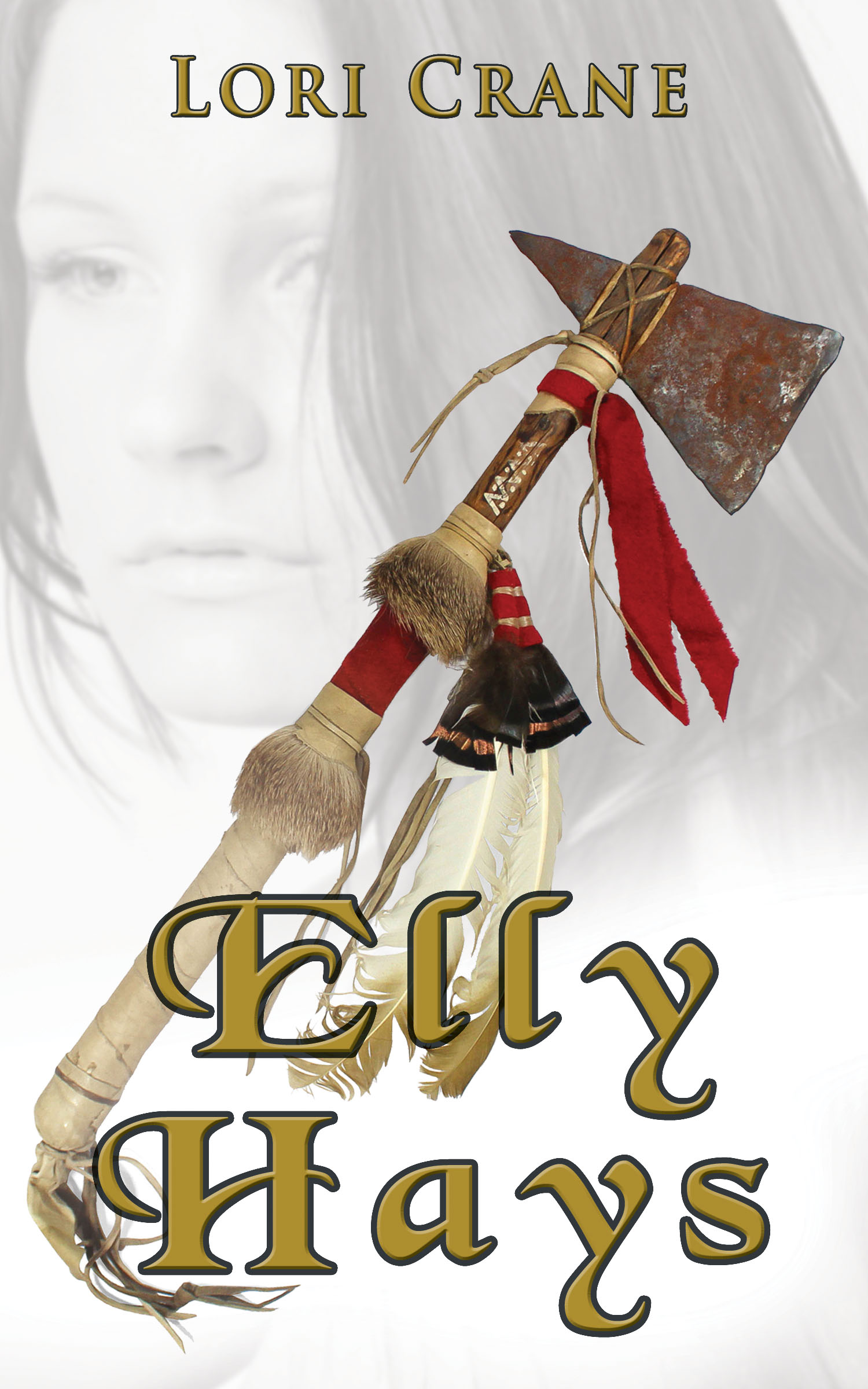
elly cover_webHere’s an excerpt from “Elly Hays” coming Nov 4 to all online retailers. Elly is my 5th great grandmother, and the book is the third in the Okatibbee Creek series.

******************************

The laborers had erected a small makeshift platform in the middle of the meadow. It rose two feet off the ground so Tecumseh could be seen above the massive gathering of people. Rumors had circulated for months that he would come, as it had been foretold by a bright comet in the nighttime sky in March of 1811, and the gathering crowd numbered into the hundreds, perhaps closer to a thousand, representing over a dozen of the twenty Mvskoke clans.

As the people waited for him to take the platform, they grew increasingly impatient. They had been assembling for days to hear him speak, so not only were they weary from their travels, but the scorching sun was not improving their disposition. The air was as stagnant as the wait, with not even the slightest of breezes to offer relief from the stifling heat. The afternoon sun melting into evening had made them agitated, and they grumbled and occasionally began chanting for the great warrior to appear and address them. When he did not take the platform after a few minutes, the chanting quieted to a dull objection, only to start up again within a short amount of time.

Over the last few months, reports had surfaced that the Americans would once again declare war against the British. Before and since the revolution, the British had befriended the Indians, asking for their help in warding off the Americans’ expansion. Since the Indians considered the land theirs in the first place, they were pleased to oblige. The Indians had never asked for a favor in return, but the waves of white settlers were growing, continually trespassing upon their tribal land. They needed help, they needed answers, they needed to stop the encroachment. They eagerly awaited Tecumseh’s speech and they were anxious to hear a plan. They wanted to know what he wanted of them. If the reports of an impending war were true, perhaps this was the time to join forces with the British and defeat the white man once and for all.

Finally, a group of elders dressed in vibrant tribal robes with headdresses embellished with porcupine fur and hawk feathers stepped up onto the platform. The cheer began small and grew to a fevered pitch as it spread across the field of warriors like a breeze washing over wheat. The elders greeted the crowd and led them in singing their tribal anthem, “Heleluyvn,” following which the crowd erupted again in anticipation of the great warrior’s arrival.

Elly Hays is available at Amazon