Sir William Berkeley – Culpepper Saga

Culpepper_1For the next few Saturdays, in place of my usual “Saturday Snippets,” I’m going to give you some background into some of the people and places in my new series, The Culpepper Saga. The series consists of four books which will be released between April and September.

One of the main characters is Sir William Berkeley. I write stories of my ancestors, but Berkeley is not one of my ancestors. He was, however, a life-long friend of our hero and my 10th great grandpa John Culpepper.

In the 1st book, Berkeley and John are young law students in England. In the 2nd and 3rd books, Berkeley plays a daily role in John’s life and is the Governor of Virginia. In the final book, Berkeley is married to John’s niece and is at the center of a deadly rebellion.
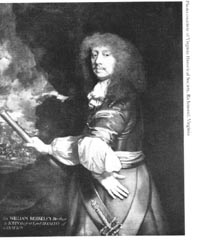
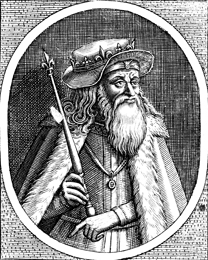
SirWilliamBerkeley2William Berkeley, referred to as “Will” by his family and friends, was born in England in 1605. He was the colonial governor of Virginia from 1642 until his death in 1677. Upon his arrival in Virginia, he built a plantation called Green Spring House and planted corn, wheat, barley, rye, and tobacco, though he despised tobacco. In 1670, he wed thirty-six-year-old Frances Culpepper, the niece of our hero John. Historical records show him fleeing Jamestown during Bacon’s Rebellion in 1676 and taking refuge in Accomac, Virginia. Most people leave it at that, but in my writing world, I happen to know that John had a house in Accomac, so it is obvious he went to John’s. After all, they had been friends for many years, and they were family through marriage. I’ll let you read the rest of his story in the Culpepper Saga, but I’ll leave you with a tidbit from the day he and John met as young boys at law school–a place called Middle Temple.

Note: Wikipedia does not confirm that Berkeley attended Middle Temple, but in “The History of Middle Temple” by Hart Publishing, records of Middle Temple show Berkeley as a student. He also wrote and published a few plays in the 1630s, which was a large part of the curriculum at the school.

The following is an excerpt from “I, John Culpepper.”

**************************************

John clapped along with the other boys as the headmaster strolled toward the center of the room. The man looked as stern as JC had warned. A pair of spectacles rested on the tip of his pointed nose, and his rather large ears stuck out from under his cap. He began stroking his goatee as if caressing the family pet. For a moment, John couldn’t put his finger on what was so amusing about the man’s appearance, then it struck him—the man looked like a goat. John tried unsuccessfully to stifle a giggle.

Barnaby’s brow wrinkled and the corners of this mouth turned down like a fish as he scanned the group of boys. He looked at each one as if viewing a repulsive heap of trash. He cleared his throat and his Adam’s apple bobbed up and down. Just as he opened his mouth to speak, a frizzy-headed boy ran into the room, allowing the door to slam behind him. The sound echoed loudly within the stone walls and the tardy boy’s face turned red with embarrassment. Barnaby followed the boy’s movement with his narrowed eyes as the boy took the only empty seat in the room—right next to John. John felt a trickle of sweat drip down his back as the headmaster slowly walked toward them.

“You’re tardy for my class,” the man scoffed, his eyes filled with hostility. When he said the word class, he drew out the a for an inappropriate amount of time, and John was again reminded of a goat, but with the man standing directly in front of him, he didn’t dare giggle.

“My apologies. I just arrived, sir.”

“What is your name, boy?” Barnaby growled.

“William Berkeley, sir.”

“William Berkeley.” He stared at Berkeley for a long time, as if attempting to memorize every feature of the boy’s face. He then repeated the name. After what seemed like an hour of uncomfortable silence, with the tension in the room growing by the second, Barnaby said, “William Berkeley, I will speak with you in private following this evening’s supper.”

“Yes, sir.” William lowered his eyes to the floor.

As Barnaby turned his back on Berkeley and returned to the center of the room, Berkeley glanced around the room at the other boys. John wondered if Berkeley’s humility was in respect for the headmaster or due to his embarrassment for being late, or both.

Berkeley leaned over to John and whispered, “Who’s that old goat?”

John almost laughed out loud and his hands flew up to his mouth.

Berkeley winked at him and grinned.

******************************************

The first book in the Culpepper Saga, “I, John Culpepper,” will be released April 10, 2015.

52 Ancestors #10 Thomas Culpepper

52ancestors-2015

This challenge is set forth by No Story Too Small, and this week’s theme is “Stormy Weather.”

No one weathered storms like my 10th great uncle Thomas Culpepper, and he was literally caught in “Stormy Weather” during one of his greatest moment.

Thomas was the eldest son of John Culpepper of Feckenham and his wife Ursula Woodcock. He was followed by two sisters, Cicely and Frances, and a brother, John, whom we refer to as John Culpepper the Merchant.

Thomas was born into a life of privilege as his family held vast estates and had worked in the king’s service for generations. When Thomas was born in 1602 in Kent, England, the Culpepper family boasted sixteen living barons and earls.

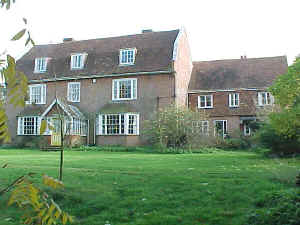
GreenwayCourtAt the age of nineteen, Thomas entered Middle Temple which was a law school. He was soon called to the bar and became a successful lawyer. He married Katherine St. Leger, moved into the family home of Greenway Court (photo) in Kent, and they started their family.

After King James I died in 1625, King Charles took over, and Thomas was promoted to a colonel in the king’s army. This was one hundred years after the Tudor reign where people had been beheaded for their religious beliefs, but King Charles was making everyone nervous with his religious antics. He married a Catholic princess, appointed a Catholic supporter to the office of archbishop of Canterbury, and demanded the Scots begin using the Catholic Book of Prayer. The people of Scotland, Ireland, and England refused to go back to the age of being charged with heresy. They began meeting behind closed doors and discussing what to do about this tyrannical king.

Parliament rallied an army against the king and in 1642 the English Civil War began. As with the Culpeppers before him, Thomas was a royalist and took the side of the king. Thomas and his friend George Goring, the earl of Norwich, fought bravely against Parliament’s army.

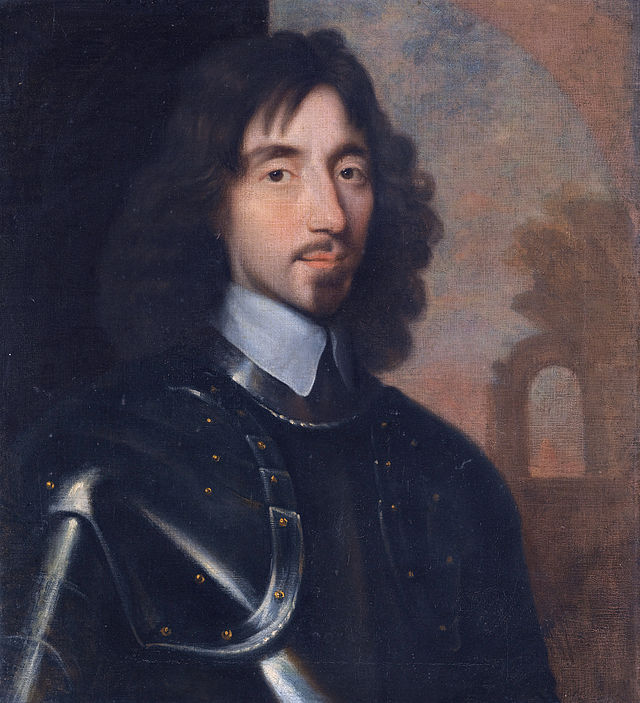
General_Thomas_Fairfax_(1612-1671In May 1648, Thomas and George raised 10,000 men around Kent to fight against Parliament. This was a significant number considering by this time Parliament’s army had split into two factions. The larger was holding down an uprising in South Wales, leaving the smaller group of 6,000 men to defend all of London and its surrounding towns. The royalists were holding the town of Maidstone (Thomas’s hometown located south of London) with a force of 2,000 men. Under the leadership of General Thomas Fairfax (photo), 4,000 parliamentarians marched south to Maidstone to recapture it.

culpepper book 1 cover ideaOn June 1, 1648, in the midst of a terrible storm, Fairfax attacked Maidstone. Fairfax’s men took over a bridge and crossed the Medway River and effectively divided Thomas’s men into two groups. Thomas’s diminished army fought in the heavy rains throughout the night and were backed up by Fairfax’s men, street by street, inch by inch. They moved up Weeks Street and finally retreated into St. Faith’s Churchyard where they fought until well after midnight through the raging thunderstorm. At the first light of dawn, out of ammunition and having nowhere else to go, 1,000 royalists emerged from the church and surrendered to Fairfax’s army.

In return for promising to lay down their arms, the soldiers were released and allowed to return to their homes, but in typical Thomas/George fashion, they didn’t. They regrouped and headed north to seize London, but they found the city’s gates closed, so they moved further north to George’s hometown of Colchester. Fairfax’s men pursued them and another battle ensued. Colchester held its ground for eleven weeks, but in August 1648, they were forced to surrender.

Throughout these battles, the king was being held prisoner by Parliament, and for the last two years, the royalists suffered defeat after defeat trying to save him and turn the tide of the war. They began realizing their cause was lost, and across the country, the royalists began surrendering left and right.

In January of 1649, King Charles was charged with treason, found guilty, and was beheaded. Following the king’s execution, all of the royalists, including Thomas Culpepper and George Goring, had their property seized by Parliament and many were beheaded or hung.

In March 1649, George Goring, being held prisoner since his loss at Colchester, was charged with treason and found guilty. Facing beheading, his family petitioned for leniency and the deciding vote, cast by the speaker of the house, granted George his freedom. He joined the exiled court of the prince in the Netherlands and became the captain of the king’s guard. When the prince reclaimed the English throne in May 1660 as King Charles II, George was by his side. George Goring died in 1663 in Brentford, just west of London.

Fortunately for Thomas, his brother John was a merchant who owned a ship. John smuggled Thomas, his wife Katherine, and their four children out of England in 1650 and took them to Virginia. Thomas escaped probable beheading in England, but sadly, he died in Virginia in 1652 at the age of fifty.

His son-in-law, Sir William Berkeley the governor of Virginia, wrote about him, “He lost all his estate, life, and liberty in the king’s service.”

*This story is told in detail in my coming book, “John Culpepper the Merchant,” which is the second book in the Culpepper Saga and will be released May 2015.

52 Ancestors #9 Howell Joel “Hobby” Wedgeworth

52ancestors-2015

This challenge is set forth by No Story Too Small, and this week’s theme is “Close to home.”

You can’t get more close to home than this story. I live just south of Franklin, TN and my great aunt’s father was captured in Franklin during the Civil War, nearly in my backyard.

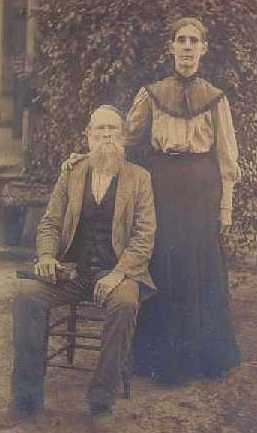
wedgeworth howell joel hobby and martha morrow, par of ora wedgeworth culpepperHowell Joel “Hobby” Wedgeworth was born Nov. 26, 1837 in Greene County, Alabama to Rev. Joel Walker Wedgeworth and Margaret Jane Smith. In 1852, he married Elvira Hughens and had one daughter Margaret Jane in 1858. Sadly, his wife died in 1860. I don’t know the fate of his little girl, as he went off to fight in the Civil War as a bachelor.

During the war, Hobby served with 5th Mississippi Regiment Co K as a musician. He was wounded in December of 1862, but kept serving. On November 30, 1864, he was captured at the Battle of Franklin, TN and sent to Louisville, KY to military prison, then to Camp Douglas in Chicago. After the war ended, he was released on June 18, 1865. You can read more about the Franklin battle HERE.

It was told by his granddaughter that Rev. Joel Wedgeworth went to a designated meeting place to pick up his son after the war and didn’t even recognize him because he was so thin and worn.

When Hobby returned from the war, he immediately married Martha Morrow (pictured with Hobby) in 1865 and had eight children, the youngest being Ora Wedgeworth who married my great grandpa’s brother, Floyd Culpepper.

Hobby died Jan. 5, 1907 in Neshoba County, Mississippi at the age of 69. He is buried with his wife at Hester Cemetery in Neshoba.

IMG_20141115_150317159_HDRI attended the 150th anniversary muster of the Battle of Franklin November 2014 and witnessed the re-enactment as well as a memorial salute performed in the Confederate cemetery located at the site.IMG_20141115_150047367


Saturday Snippet – I, John Culpepper

Here’s a bit of my work-in-progress, “I, John Culpepper.” For you ancestry/genealogy readers, John Culpepper is my 10th great grandpa. Release date will be April 10, 2015.
****************************************************

Culpepper_1Fall 1626, England

“No! For the hundredth time, no!”

John looked down at the intricate grain of the walnut desk beneath his fingertips and shifted his weight to his other foot. He sighed, feeling his dreams disintegrate before his very eyes. The snap of the white sails, the taste of the salty spray on his lips, the smell of the tar that sealed the decks—the visions were quickly vanishing behind the thick fog of his father’s adamant disapproval. He pictured his mighty ship sinking into the black waters of condemnation, bubbling like a cauldron as it disappeared from sight. There was nothing he could do to change his father’s mind, and he wondered whatever possessed him to come to this man for assistance. He should have known better.

His father glared at John from behind the desk. He propped his elbow on the scrolled arm of the chair as his large hand methodically stroked his pointed beard. “Is there anything else?” he snapped.

John didn’t look up. He shook his head and mumbled, “No.” He turned and padded across the thick rug toward the door, listening to the man’s heavy breathing behind him. He reached for the brass doorknob, paused, and turned back. “You know I’ve always done everything you’ve asked of me. I went to school. I studied to be a lawyer. I did it all for you. I never wanted to practice law. I’d never be happy on the bench.”

“Happy? What makes you think life has anything to do with being happy? You are a Culpepper, and as such, you have an obligation to serve your family and your king in a manner befitting your station. This childish notion of owning a ship is nothing but rubbish.”

John released the doorknob and walked back toward his father’s desk. The intimidating man dwarfed the desk, his size exaggerated by the broad shoulders of his leather jerkin, yet he sat up taller in his chair in preparation for the quarrel to continue. It was a wasted gesture, as his opponent already knew the battle was lost.

John made sure he didn’t raise his voice. “Father, you have financed merchant ships for as long as I can remember. What difference does it make if I’m the one who owns the ship?”

“Culpeppers don’t own ships. I funded those expeditions as an investment—a losing investment, I might add.” He rose from his chair and his voice grew louder, echoing off the oak panels that lined the walls. “There has never been a Culpepper placed in a position to experience hunger and savages and shipwrecks, and there won’t be one now, not with my blood written on the purchase. I will not fund a ship for you, John, not now, not ever.” He pointed his finger in John’s face. “And if you somehow find a way to procure a ship, mark my words—I will disinherit and disown you. No son of mine will become a common sailor. I am finished with this conversation once and for all. Have I made myself clear?”

John exhaled, beaten. His shoulders slumped as he broke his father’s glare and dropped his eyes to the floor.

“John? Have I made myself clear?”

“Completely.”

52 Ancestors #8 James Rodgers

52ancestors-2015

This challenge is set forth by No Story Too Small, and this week’s theme is “Good Deeds.”

I don’t have any “deeds” for my ancestors, but I do have some “land grants.”

The following is a land grant for my 6th great grandfather, James Rodgers Sr, who was born to James Rodgers and Mary McPherson in 1732 in Massachusetts. He married Margaret Woods in 1766 in Augusta County, Virginia, and they must have immediately moved to Tennessee, as my 5th great grandfather was born in Greene County, Tennessee in 1767. (For family members who follow this blog, this James Rodgers is the grandfather of Hays Rodgers, the father-in-law of Elly Hays.)

James was forty-four years old at the beginning of the Revolution and did not fight, but he served by housing soldiers. In return for his patriotism, he was granted 200 acres of land in Greene County, Tennessee in 1792. He did not enjoy it long, as he died on the land in 1794.

The thing that strikes me is the property lines were set by trees. No wonder people ended up having feuds over whose hog was on whose property.

downloadNorth Carolina Revolutionary War Land Grants

Roll 12: Book 1: Page 284 (Greene County, Tennessee)

The State of North Carolina, to all whom these Presents shall come. Greeting:

Know ye, that we, for and in consideration of the sum of Fifty Shillings for every hundred acres hereby granted, paid into our Treasury by James Rodgers

Have given and granted and by these presents do give and grant unto the said James Rodgers a tract of land containing two hundred acres lying and being in our county of Greene on the north side of Nolachucky on Deals Branch of Lick Creek.

oak-treeBeginning at a Spanish oak, white oak and dogwood and yew. Thence south two hundred and forty poles to a white oak and black oak. Thence with said Rodgers line one hundred and thirty six poles to a stake. Thence to the beginning. As by the plat here unto annexed doth appear together with all woods, waters, mines, minerals, here did with and appurtenances to the said land belonging or appertaining to hold to the said James Rodgers his heirs and assigns forever yielding and paying to us such sums of money yearly or otherwise as our General Assembly from time to time may direct provided always that the said James Rodgers shall cause this grant to be Registered in the Registers office of our said county of Greene within twelve months from the date hereof other sum the same shall be void and of none effect.

In Testimony Whereof, we have caused these, our letters to be made patent and our great Seal to be hereunto affixed.

Witness Alexander Martin

Esquire, our Governor, Captain General and Commander-in-Chief at Danbury this 11th day of May, in the 16th year of our Independence and in the year of our lord 1792.

Alexander Martin (signed)

52 Ancestors #7 Catherine Howard

52ancestors-2015

This challenge is set forth by No Story Too Small, and this week’s theme is “Love.”

One of the most interesting stories of “Love” in my ancestry comes from the journals of Tudor history.

howard2Catherine Howard was the fifth wife of King Henry VIII. She was also my cousin. Her father was Edmund Howard and her mother was Joyce Culpepper. Joyce’s father was Sir Richard Culpepper.

In the 1200s, the Culpepper’s were split into two definitive lines by brothers Walter and Thomas into the Preston Hall Culpeppers and Bayhall Culpeppers, respectively. In the 1400s, the Bayhall line split into two lines with brothers again, so instead of Preston Hall and Bayhall, we now have Preston Hall, Wigsell, and Bedgebury. Catherine’s maternal grandfather, Sir Richard Culpepper, was of the Preston Hall line. Catherine had many Culpepper cousins, one being my 12th great grandfather William Culpepper of the Wigsell line, and another being Thomas Culpepper of the Bedgebury line. Though distant, Catherine Howard and Thomas Culpepper were cousins.

Just to make history even more confusing…Catherine’s paternal grandfather was Thomas Howard Duke of Norfolk. This man was Anne Boleyn’s grandfather too. Catherine and Anne (Henry VIII’s second wife) were first cousins.

On 28 July 1540, sixteen-year-old Catherine married King Henry after he ended his politically motivated marriage to (fourth wife) Anne of Cleaves. Henry was nearly fifty years old. For fourteen months, the newlyweds were happy, but then the rumors began. Henry became convinced his young bride was having relations with a few men, the most painful being his trusted servant, Catherine’s cousin, Thomas Culpepper.

In my opinion, one can imagine Catherine at sixteen-years old being quite overwhelmed by all the attention she was receiving along with her new-found feelings of superiority and immortality simply because she was Henry’s wife. And it is possible that Thomas in his mid-twenties, was merely playing a game with a teenage girl. The excitement of this game would be hard to top, especially with a prize as valuable as the wife of the King. Then again, they may have actually loved each other.

Catherine and Thomas were charged with treason, tried, and convicted. Thomas was beheaded 10 Dec 1541. Catherine was stripped of her title of Queen, locked in her chambers, and her future remained in limbo until Parliament decided what to do with her. On 10 February 1542, she was taken to be executed. She traveled by boat to the Tower and undoubtedly passed under the bridge where Thomas’s head was impaled. I wonder if she looked up. Her execution was held Monday, 13 February 1542.

According to popular folklore, her final words were, “I die a Queen, but I would rather have died the wife of Culpepper”. Did she really die for love, or was she simply a young girl who didn’t realize the place next to the King was a fragile one?

The above portrait, which has always been reported to be that of Catherine Howard, is now in dispute by the National Portrait Gallery in London. Apparently the poor girl lost her head…and now her face. Below is a letter she sent to her cousin/lover Thomas Culpepper.


GW402H604Master Culpeper,

I heartily recommend me unto you, praying you to send me word how that you do. It was showed me that you was sick, the which thing troubled me very much till such time that I hear from you praying you to send me word how that you do, for I never longed so much for a thing as I do to see you and to speak with you, the which I trust shall be shortly now. That which doth comfortly me very much when I think of it, and when I think again that you shall depart from me again it makes my heart die to think what fortune I have that I cannot be always in your company. It my trust is always in you that you will be as you have promised me, and in that hope I trust upon still, praying you that you will come when my Lady Rochford is here for then I shall be best at leisure to be at your commandment, thanking you for that you have promised me to be so good unto that poor fellow my man which is one of the griefs that I do feel to depart from him for then I do know no one that I dare trust to send to you, and therefore I pray you take him to be with you that I may sometime hear from you one thing. I pray you to give me a horse for my man for I had much ado to get one and therefore I pray send me one by him and in so doing I am as I said afor, and thus I take my leave of you, trusting to see you shortly again and I would you was with me now that you might see what pain I take in writing to you.

Yours as long as life endures,
Katheryn.

One thing I had forgotten and that is to instruct my man to tarry here with me still for he says whatsomever you bid him he will do it.


It’s Monday! What are you reading?

2a2It’s Monday! What are you reading?


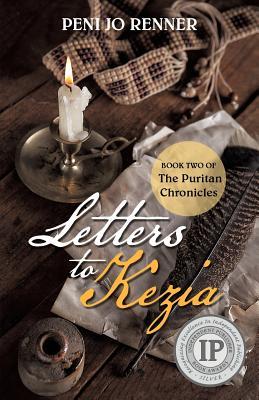
I just finished “Letters to Kezia” by Peni Jo Renner.


24512890This is one of those rare books you cannot put down until you’ve finished it, and I read it in one sitting. The characters are based upon known facts of the author’s ancestors, and she has transformed them into a ripping tale of trust, lies, and deceit. Mary Case was a colonial woman of Connecticut, seduced into trusting a man who almost became the death of her, literally. Her daughter, Kezia, was the product of that tangled web, and Mary ultimately faced the task of telling Kezia the truth about her life and her father. The characters are rich and compelling. Their adventure is fascinating.

Author’s blurb:

It is 1693 in Hereford, Connecticut, when Mary Case, the spinster daughter of a Puritan minister, finds herself hopelessly smitten by the roguish thief, Daniel Eames. Betrothed to a man she does not like or love, she is soon compelled to help Daniel escape from jail. Suddenly, she finds herself on the run, not only accused of being Daniel’s accomplice, but also of murder.

The fugitive pair soon finds solace-and a mutual attraction-among the escapee’s Algonquin friends until two men from Daniel’s dark past hunt them down. After Mary is captured and returned home to await trial, a tragedy takes the life of her younger sister, revealing a dark secret Mary’s father has kept for months. But just as Mary learns she is pregnant, she makes a horrifying discovery about Daniel that changes everything and prompts her to develop an unlikely bond with his mother, Rebecca, who soon saves Mary from a shocking fate. It is not until years later that her daughter, Kezia, finally learns the truth about her biological father and family.

Letters to Kezia shares a courageous woman’s journey through a Puritan life and beyond as she struggles with adversity and betrayal, and discovers that loyalty can sometimes mean the difference between life and death.

Letters to Kezia on Amazon

Author’s Twitter page

Author’s Facebook page


52 Ancestors #6 Chlodio 395-448 A.D. No, Really.

52ancestors-2015

This challenge is set forth by No Story Too Small, and this week’s theme is “So Far Away.”

So, So, So, Very, Very, Far Away!

My Culpepper line is very well traced by many people, including having its own website – Culpepper Connections. My 13th great grandfather William Culpepper married Cicely Barrett. The Barrett line intersects with the Bellhouse line and the Poyntz line and can be traced all the way back to King Charlemagne, King of the Franks 748-814 A.D.

charlemagne-hero-ABIf you Google King Charlemagne’s paternal line, you can go back to his 10th great grandfather. Charlemagne is my 39th, making Chlodio my 51st.


Pépin_the_youngerPepin the Short 714-768 King of the Franks


martel_charles214x313


Charles Martel 688-741 Duke of the Franks, a statesman and military leader


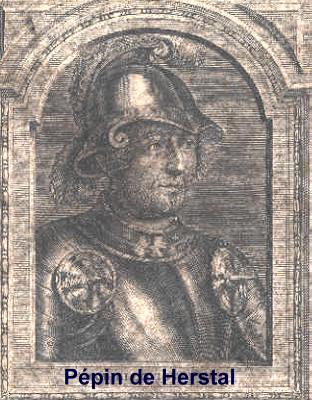
PepinHerstal


Pepin of Herstal 635-714 Duke of the Franks


ansegisel


Ansegisel 610-670ish Served King Sigbert III as a Duke. Murdered.


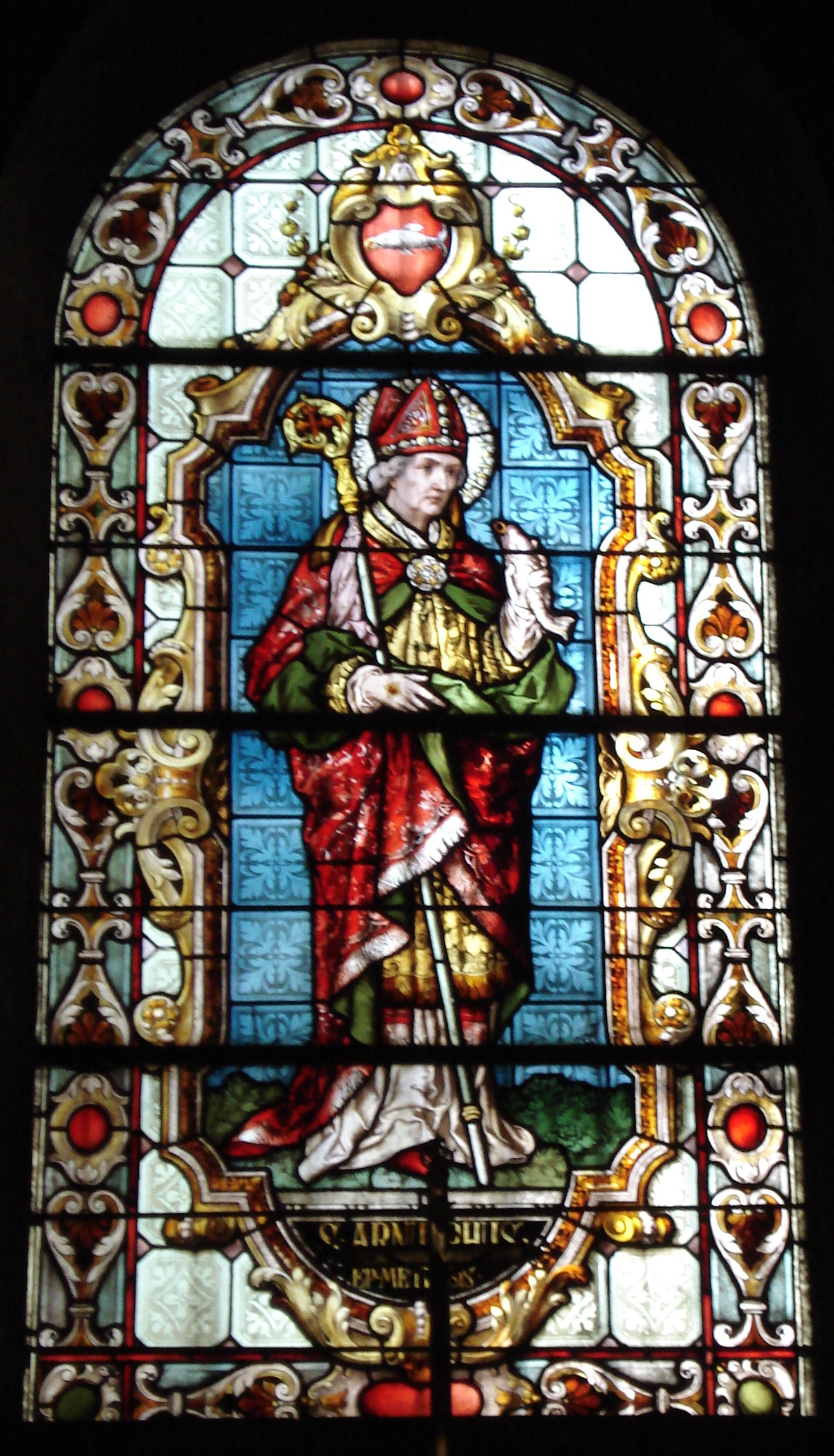
Saint_Arnould


Arnulf of Metz 582-640 Frankish bishop of Metz and advisor to the Merovingian Court.


bodegisel


Bodegisel ?-585 Frankish Duke. Served Kings Chilperic I and Chilperic II.


mummolin


Mummolin ? Mayor of the Palace of Neustria. Married Chilperic II’s daughter.


munderic_largeMunderic ?-532 Merovingian with a claim to the Frankish throne. Married a Roman senator’s daughter.


clodericCloderic the Parricide ?-509 Murdered his own father in order to take the kingdom, then was murdered himself.


170px-Rathausturm_Köln_-_Sigibert_von_Ripuarien_(5907-09)Sigobert the Lame 445-509 King of the Franks, murdered by his son Chloderic the Parricide.


ChlodebaudChlodebaud 430-450 King of the Franks


Chlodio Long-HairChlodio Long-Hair 395-448 A.D. King of the Franks

52 Ancestors #5 Mary Elizabeth Howington

52ancestors-2015

This challenge is set forth by No Story Too Small, and this week’s theme is “Plowing through.”

There are a few ways to interpret this week’s theme, Plowing Through, and the first thing that comes to mind is a farmer, but I’ve decided to take a different perspective. Here is an ancestor that was so hard to trace, I had to Plow Through for a long time to find answers.

My great grandmother, Mary Elizabeth Howington Burke.

Granny Burke was a million years old when I was a child, so I never paid her much mind. But as I grew older and began researching my ancestors, I thought back on those days and wished I would have sat down and talked to her about her family.

burke Mary Howington Burke headstoneShe came from poor roots, born in 1893 to John Thomas Howington and Florence Smith. She was followed by seven siblings, including a brother named Milton Howington whom we called “Uncle Sug”(as in sugar) while I was growing up. In 1914, she married John Patrick “Pat” Burke and had seven children, including my grandmother Ina Burke. Pat died in 1958 and Mary died in 1977. They are buried at Liberty Baptist Church Cemetery in Duffee, Mississippi. That’s all the information I had for years. She lived a quiet life in the country and did not leave a paper trail.

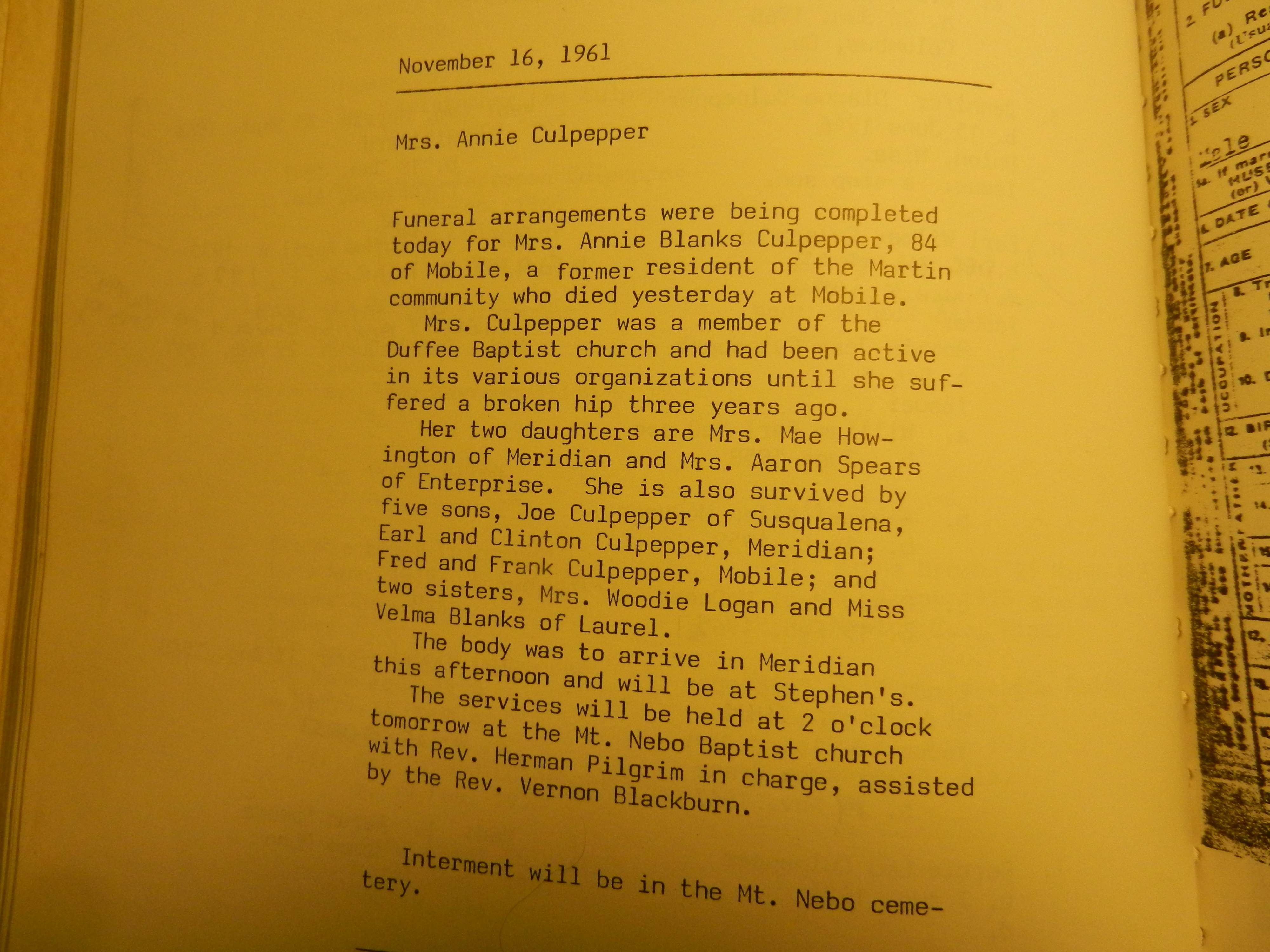
culpepper annie blanks culpepper obitOne day, I read an obituary for my other great grandmother, Annie Culpepper, one that I had read many, many times before, but something stuck out this time. It said Annie was survived by her children, including my grandfather, Earl Culpepper, and a daughter named Mae Howington. First of all, I was sure “Mae” was referring my grandfather’s little sister Zeffie Mae. Second of all, who was this Howington my great aunt Zeffie was married to? Could this Howington be related to Mary Howington? (Note: my grandfather Earl Culpepper was married to Mary Howington’s daughter, Ina Burke.)

As I plowed through documents, made phone calls to elderly family members, and lived inside the time-sucking monster we call Ancestry.com for a whole week, I found the answers about Mary Howington’s ancestry.

Zeffie Mae Culpepper Howington was married to Milton “Uncle Sug” Howington. My grandpa’s little sister was married to grandma’s uncle. By tracing Milton Howington, who left tons of records, I uncovered the whole Howington clan.

The hardest part was explaining to my aunt that her “Uncle Sug” was also her mother’s “Uncle Sug.”

Welcome to the South.

52 Ancestors #4 Bettie Brown

52ancestors-2015

This challenge is set forth by No Story Too Small, and this week’s theme is “Closest to your birthday.”

This week’s theme is a piece of cake for me – birthday cake! My birthday is November 19, 1962. The ancestor closest to my birthday is my great great grandmother who was born November 19, 1862.

Sarah Elizabeth “Bettie” Brown Keene

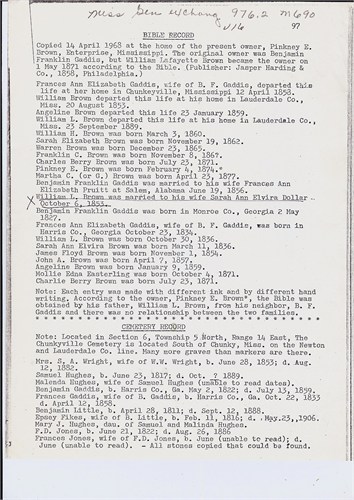
brown william lafayett bibleSarah Elizabeth “Bettie” Brown was born to William Lafayette Brown Jr and Sarah Ann Elvira Dollar Brown in Lauderdale County, Mississippi. (photo: transcribed family Bible) There were ten children in her family, seven boys and three girls, one of whom died at birth. Five of the children were born just before the Civil War began, and her father was a sharp shooter guarding the railroad bridges at Chunky, Mississippi, so her mother was home with a handful of children under the age of eight at the start of the war. When her father returned from the war, the next child was born in 1865. They wasted no time!

At the age of 18, Bettie married John Thompson 16 Nov 1881 and had one daughter, Fleta. I don’t know what happened to Mr. Thompson, but in 1890 Bettie married Thomas Gilbert Lafayette Keene who served as Lauderdale County’s treasure 1904-1907. They had seven children: Eunice Tabitha, Isaac, Essie Mae, Ernest Grady, Benjamin Blaine, Eula Ouida (my great grandmother), and Earl Vandorn. Bettie outlived her husband by five years and died on 18 Jul 1926 at the age of 63.

Brown Sarah Elizabeth Bettie Brown Keene