Good Cover = Book Sales! 5 easy steps!

5-easy-steps-inGOOD COVER = BOOK SALES! 5 Easy Steps!

So, you’ve finished your awesome novel. You’ve toiled and fretted over each and every word, and your characters are now dancing through their scenes with grace and eloquence. Now what?

It’s time to take off your author hat and replace it with your business hat. You want to sell your book, and to do that, you need great packaging. You need to create an interesting cover that will stick out above the millions of other books in the marketplace. Oreos don’t only sell because they’re awesome, they sell because the package tells you you like them. Next time you’re in the store, look at Oreos vs the no-name brand. You’ll see the difference immediately. The purpose of packaging is to get your potential customer to notice your book. Then to pick it up. If your name is Stephen King, you don’t need to worry about your cover. If not, you need all the help you can get! You don’t want just another pretty cover, you want the whole package—an incredible package that will sell your book.

SO, WHERE DO YOU START?

1) Start with genre. Is your book historical fiction, medical drama, psychotic thriller? Check out the top books in your genre. Do they have a common element? Use it. You want people to be able to recognize your genre immediately.

2) What’s your demographic? 20-something urban or mature woman in the south? You need a cover that will appeal to this demographic. Even if your book is about a southern serial killer in Huntsville, Alabama, an image of a scary man wielding a knife over a dead girl is not going to appeal to a proper southern woman. Who are you trying to sell this book to?

3) Pretend you’re telling someone about your book. What are the scenes you’re relating? Those are the pictures you want to include, whether they are abstract or an actual photograph of a blonde girl in a 1950’s powder-blue dress.

4) What emotional response do you want from your customer when they’ve finished your book? Fear, tears, happiness, hopefulness? The girl in the blue dress can be any of those things if the image is manipulated correctly. Check with your cover designer for suggestions on how to change the same girl into a multitude of emotions.

5) The font. Does the book take place in Old England or 1940s art-deco New York? You want an appropriate font, and make sure it’s readable on the thumbnail-size postage stamp your customer will see on the Internet. A pretty font is not necessarily your friend.

Note: If you are not an experienced graphic designer, hire a professional!!! You’ll still need to tell him/her what you want by using the five ideas above. If this is your first book cover, you need different covers for different items. Paperback, ebook, audiobook, etc. all require different sizes and elements. You’re cover designer will know how and  where to find these requirements.


********************

Lori Crane is a bestselling and award-winning author of historical fiction and the occasional thriller. Her books have climbed to the Kindle Top 100 lists many times, including “Elly Hays” which debuted at #1 in Native American stories. She has also enjoyed a place among her peers in the Top 100 historical fiction authors on Amazon, climbing to #23. She resides in greater Nashville and is a professional musician by night – an indie author by day.
51QeOBe26zL._SL500_AA300_PIaudible,BottomRight,13,73_AA300_

okatibbee creek cover final jpeg51-lUHhsD7L._UY250_

Saturday Snippets – Coming Soon – Culpepper’s Rebellion

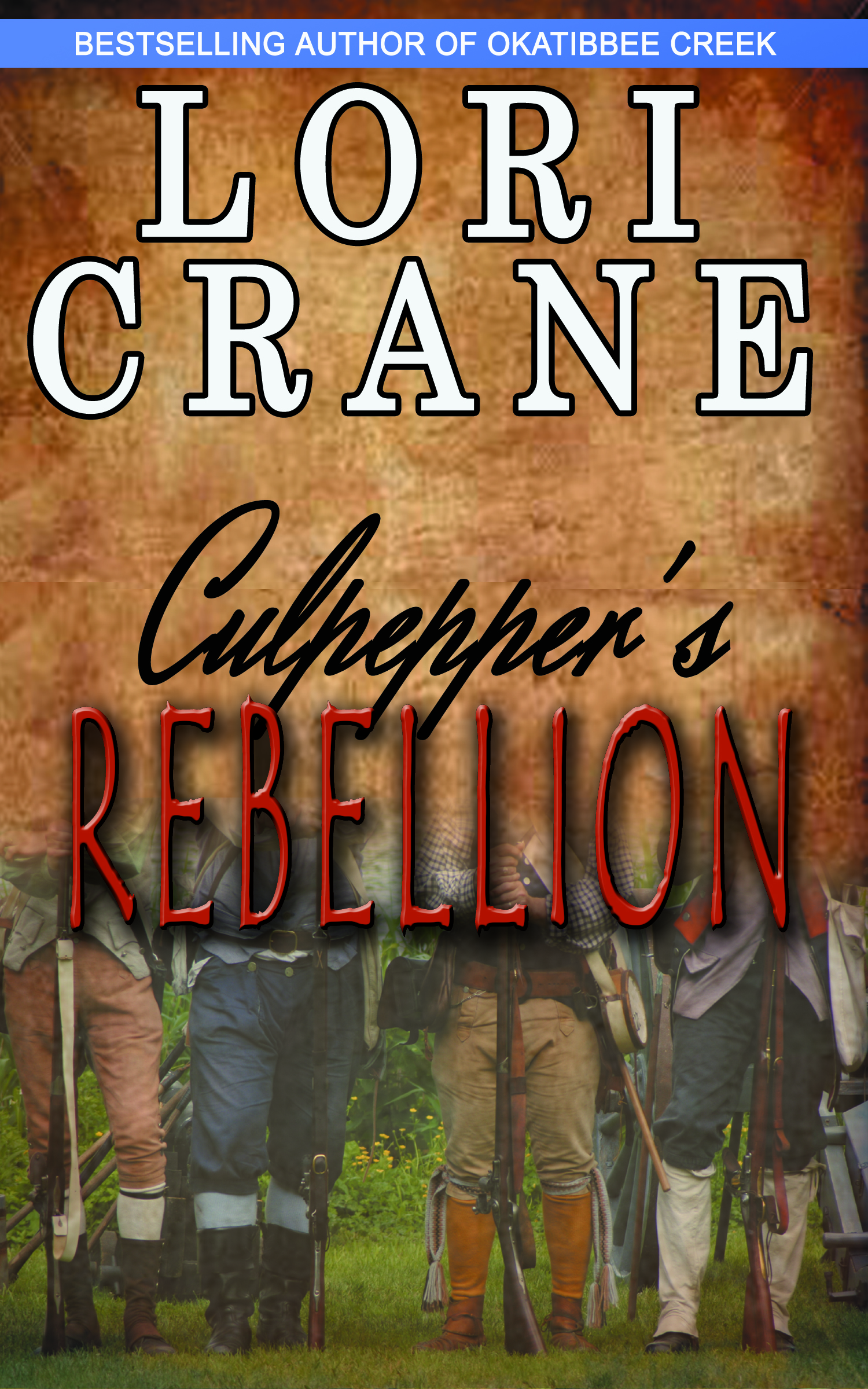
Culpepper4I’m finishing up the final revisions of the fourth book in the Culpepper Saga, Culpepper’s Rebellion.

In the first book of the series, John Culpepper struggles to realize his dreams, never seeing eye-to-eye with his father. His dad sends him to law school, and John hates every moment of it, wishing instead to own a ship and become a merchant between London and the colony of Virginia.

In the second book, the English civil war breaks out, and John’s ship is the only lifeline that saves the family from certain execution.

In the third book, John becomes the patriarch of the family, struggling to hold his family together on two continents.

In this final book, John finds himself in the middle of  Bacon’s Rebellion in Jamestown, Virginia. He is so wrapped up in the Jamestown drama, he doesn’t realize his youngest son is beginning his own rebellion in Carolina. When all is finally calming down in Virginia, John’s son is arrested in London on charges of treason. John’s law training, which he so desperately despised in his youth, becomes the only thing standing between his son’s life and death.

Here’s the first chapter of the new book. Culpepper’s Rebellion will be released October 31, 2015.

***************************

CHAPTER 1

1680, The Tower, London

John followed the guard down the winding hallway. It was narrow and dark with only the light of an occasional torch resting in its iron holder, flickering shadows on the stone walls. Where John could see, the walls looked dark and damp, covered with a slimy layer of green mold, but the musty smell didn’t mask the overwhelming stench of urine and feces. He shook his head and wrinkled his nose at the insult.

As he passed intermittent arched doorways, prisoners yelled at him through small, bar-covered windows and pounded their fists on the wooden doors. Some begged for mercy, others pleaded for food and drink. The desperate voices echoing off the walls should have made John uneasy, but he only felt sheer hopelessness for those imprisoned. He didn’t look up when they called to him. He walked behind the guard with his head down, his heart heavy. How could any man endure this dreadful place? He remembered his older brother serving a short sentence within these walls during the civil war more than thirty years earlier, but in all of John’s seventy-four years, he had never seen the inside of the Tower. The unfortunate occasion that had brought him all the way from Virginia to be here on this day was more terrifying than the actual place.

The guard slowed when he rounded the corner, reaching inside his tunic pocket and noisily producing a ring of iron keys. John waited while the man found the appropriate key and placed it in the keyhole. When he turned it, there was a loud metallic snap. The guard pushed open the door, which moaned softly on its rusted hinges, and John entered.

The small room was lit by only a sliver of a window placed so high on the wall that none could see in or out. As the guard closed and locked the door behind him, John’s heart melted at the sight of the figure lying in a ball on a wooden platform, facing the moldy wall. John assumed the platform was a bed, but there was no blanket, no warmth, no comfort. A mouse scampered across John’s boot and disappeared into the tiniest of holes in the wall. At least the prisoners didn’t have to sleep on the floor with the mice.

“Johnny?” John said quietly.

Johnny sat up and spun around. “Father! What are you doing here?”

“I came to see to your welfare.”

“They’ve charged me with treason.” He ran his fingers through his disheveled curls.

“I know. That’s why I’m here.” His son looked so thin and worn. “You need a lawyer and I know of none better than myself.”

“You hate practicing law.”

“I’d hate it more to see your head on the scaffold.”

“I don’t think you can prevent it. They believe I embezzled the king’s funds.”

“Did you?”

“Of course not.”

“Then we’ll find a way out of this. Your mother will be very displeased with me if I allow you to lose your head.”

Johnny rose and wrapped his arms around John. “Thank you for coming, Father. I hate to admit it…” He paused and swallowed hard. “But for the first time in my life, I’m truly frightened.”

“I am too, son.”

************************************

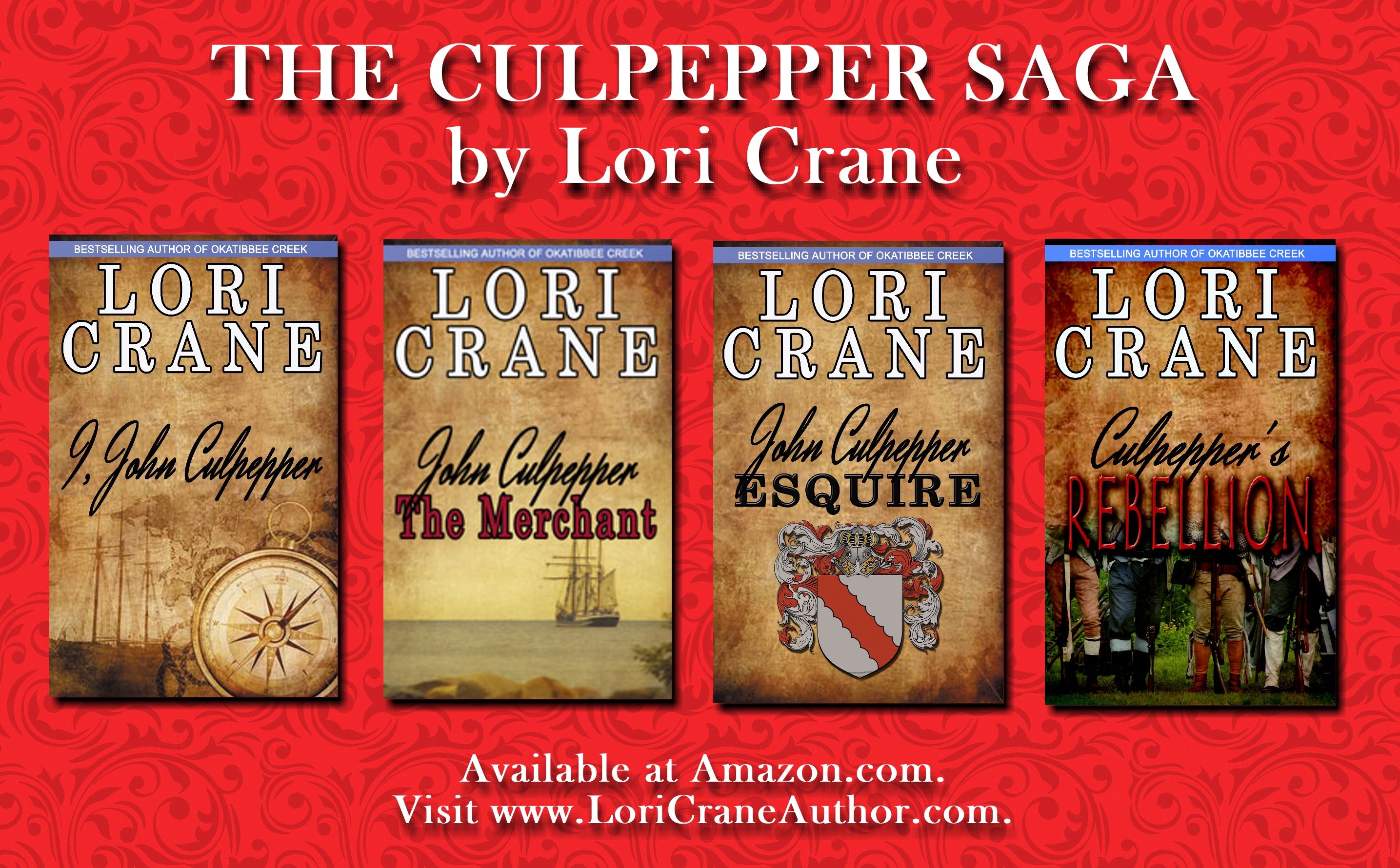
The first three in the series are available at Amazon. After you read them, please stop by the Culpepper Saga Facebook page to see pictures, paintings, and documents from the real history of John Culpepper.

culpepper saga-001

Audiobooks = press play

TESTING 1,2,3…AUDIOBOOKS
.
The first thing you need to look at when considering making an audiobook are the numbers. The Audio Publishers Association reported $800 million in audiobook sales in 2011. The number grew to $1 billion in 2012 and $1.2 billion in 2013. Yes, that’s billion, with a B. Goodereader.com said the audiobook industry was worth over $2 billion in 2014. I haven’t seen any numbers for 2015 yet, but there should be a little bit in there for you.
.
Now that I have your attention, let’s create an audiobook. The process of creating an audiobook is completely painless at ACX. This post isn’t a commercial for ACX, but I’ve used them a couple times now, and they are author-friendly. ACX (Audiobook Creation Exchange) is the company that links authors with narrators and distributes to Audible, Amazon, and iTunes.
.
Your first step in creating an audiobook is to create an account at ACX.com, and then you can listen to some narrators by gender, accent, and style.
 .
downloadHIRE A NARRATOR
.
Once you’re ready to go, you need to hire a narrator. You can narrate yourself, but it you don’t have recording equipment and lots of practice in front of a mic or lots of money to spend in a recording studio, it is a million times easier and faster to hire a professional.
.
To find the perfect narrator, just upload a section of your book to ACX and invite auditions. Of course, you can email the actors you listened to when you first signed on. Make sure your uploaded section contains some dialog and maybe some drama in it. You want to hear the range of the narrator. Be ready to move forward quickly because you’ll get auditions almost immediately. Send each narrator a note of thanks for taking the time to audition your sample – whether you hire them or not. It takes a lot of time to record, master, and upload your sample, and they’re doing it for FREE.
.
Once you choose a narrator, you then offer them a deal.
 .
6a00d8341bf73153ef0105359fa532970c-800wi“SO, HOW MUCH IS THIS GOING TO COST ME?”
.
Narrators charge anywhere from $100 to $300 per finished hour. This is called a “pay-for-production” deal. Example: If you’re book is 50k words, that’s about 6 hours finished, so the finished cost will be between $600 and $1800. Some narrators opt to do a 50/50 “royalty-share” instead. That’s 50% of your royalties for 10 years with no money up front.
.
Take a moment and do the math so you know how many audiobooks you need to sell to break even. ACX sets your price by the length, and the above 6-hour book example would sell for roughly $19.95. The longer the book, the higher the selling price. The shorter, the lower. Read further to find out your share. The range of Audible pricing is 1-3 hours $7-10, 3-5 hours $10-20, 5-10 hours $15-25, 10-20 hours $20-30. Here’s another fun fact: If your book is purchased by a new Audible member as their first download, you get a $50 bounty. That’s fun!
 .
distributionDISTRIBUTION
.
ACX will offer you two distribution options. 1) 40% royalties for an exclusive distribution deal. This is a seven-year contract and you are not allowed to sell the audiobooks yourself to anyone at any time through any avenue in any format (digital, CD, audio tape) during that time. OR 2) 25% royalties for an non-exclusive deal, and you can sell them anywhere you want. ACX distributes to Audible, Amazon, and iTunes, so I don’t know where else you’d want to sell them, unless you want to have them pressed and sell them out of your trunk. But keep in mind, according to the Audio Publishers Association, audiobooks that were downloaded through a website instead of bought on CD in 2009 were 29%, 36% in 2010, and 46% in 2011, and growing, so there may not be any good reason to press your audiobook.
.
If your narrator costs $250 per finished hour and your book is 6 hours long, it will cost you $1500 for a pay-for-production deal. If you go with exclusive distribution and are making 40% of the $19.95 sale price, you would need to sell a couple hundred copies to break even. One note here: Audible members which are a huge chunk of your sales pay about half price, so your royalty income and break even number would need to be adjusted for those sales. You’d need to sell about 400 copies to only Audible members to break even. A majority of buyers on Audible are members.
.
If you choose the “royalty share” option with your narrator, you would NOT need to pay the $1500 up front, but you would split the royalties 50/50 and only make $4 per copy sold for the next 10 years, and $2 for an Audible member sale.
.
So, figure out how long your book will be (roughly 8500 words per finished hour) and how many copies you need to sell before you step up to the plate and ask for auditions and negotiate fees.
.
Once you decide on your narrator, make a price/payment deal with them, and choose your ACX distribution option, you’ll need to upload your entire book and give the narrator some deadlines. There will be two deadlines: one for your narrator to upload the first 15 minutes for you to approve and one for the whole project to be completed. If your narrator isn’t too busy, they can have the first 15 minutes to you within a few days and the book completed within a month. They will upload each chapter to ACX as it is recorded, so you can listen to each chapter as it is uploaded and send a message to correct anything you’d like corrected. Be specific about the pronunciation of any strange names or titles up front in the process to avoid later corrections. My book Okatibbee Creek is pronounced Oh-kuh-TIB-bee. That makes it easier.
.
When the recording is finished and all chapters are uploaded, you’ll need to approve the recording. Your narrator will then send you a bill if you opted for the pay-for-production deal. If you opted for the royalty-share deal, this step will be omitted. Once you pay your narrator, he/she will let ACX know your audiobook is approved for sale.
.
ACX will then take 2-3 weeks to get your audiobook live on the sites. So, the whole process should take about eight weeks. If you opt for a pay-for-production deal, save your pennies first. Do not make the narrator wait to get paid.
 .
Note
.
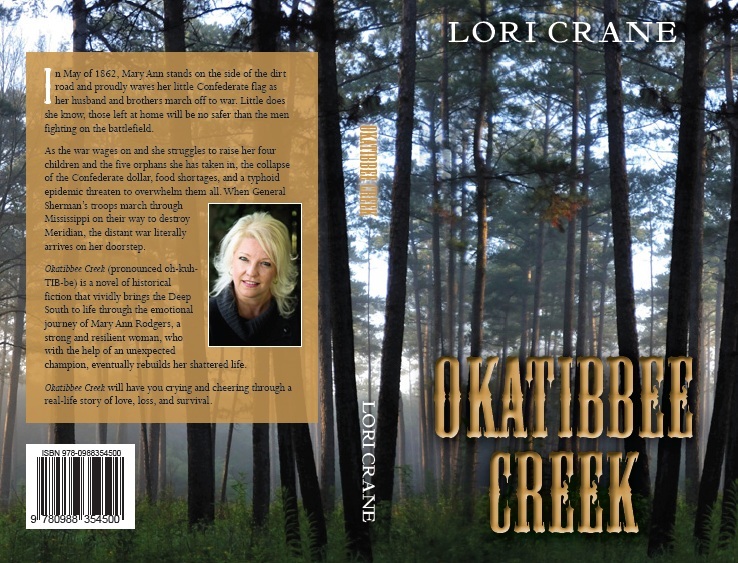
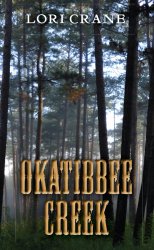
The size of your cover needs to be adjusted for an audiobook to a square CD shape. You cannot use your ebook cover. Here’s the original ebook cover for Okatibbee Creek and the resized audiobook cover. The needed dimensions can be found on the ACX website.
.
okatibbee creek cover front JPEG
okatibbee audio
Note 2
.
I don’t know if they always do it, but Audible sent me 25 free download codes to give away. For the above example 6-hour book, that’s $500 worth of freebies, so while you’re waiting for your project to be completed, think of some creative ways to market and give those copies away. Some authors swear by audiobook sales. Give it a shot!
.
.
*****************************
Lori Crane is a bestselling and award-winning author of historical fiction and the occasional thriller. Her books have climbed to the Kindle Top 100 lists many times, including “Elly Hays” which debuted at #1 in Native American stories. She has also enjoyed a place among her peers in the Top 100 historical fiction authors on Amazon, climbing to #23. She resides in greater Nashville and is a professional musician by night – an indie author by day.
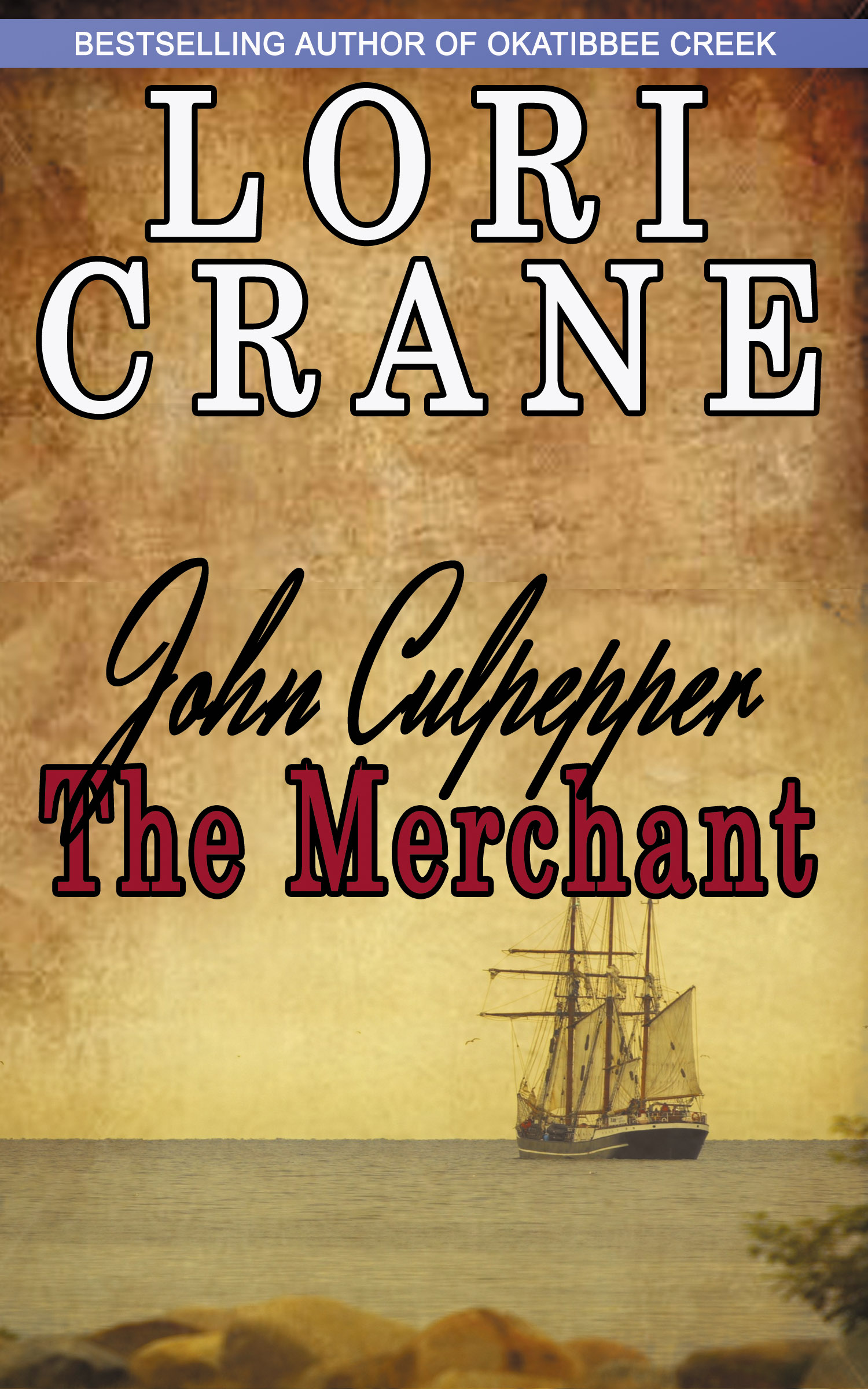
Saturday Snippets – John Culpepper the Merchant

5-star-largeJohn Culpepper the Merchant just received a 5-star review from Readers’ Favorite!! You can read it HERE.

I can’t tell you how much reviews mean to us indie authors…especially good reviews. We often learn something from the bad reviews, but mostly not. Good reviews sell books. Period. So for every book you like by ANY author, please leave a review. We all appreciate it.


The Merchant ebookAnyway…back to the matter at hand.

John Culpepper the Merchant is the second book in the Culpepper Saga. The first book is about John’s childhood. In this one, he’s all grown up. His family remains in England while he fulfills his childhood dream of sailing back and forth between London and Virginia. Seems peachy, yes? I’m sure it would have been if the king wouldn’t have been angering the masses. A deadly civil war breaks out in England, and John always seems to be on the wrong side of the ocean at the wrong time. By the end of the war when the royalists (yes, John’s family) have been defeated, John’s ship becomes the only lifeline to save the Culpeppers from certain beheading.

Somehow, between the war and the merchant business, John and his wife managed to raise a family. Here’s a snippet of John taking his four boys upstairs to meet their newborn brother.

********************************************

1644

Following a hearty breakfast, John climbed the stairs, followed by his rambunctious sons, all wanting to see the new baby. He cracked the door open and found Mary sitting up in bed holding the newborn, her brown hair cascading over her shoulders. Her color was much better after a good night’s sleep.

“Your sons want to see the baby,” John whispered almost apologetically.

“Of course they do. Bring them in.”

John opened the door and the group ran toward the bed. Mary grinned at them and patted the bed for Robbie to climb up. John thought his wife was a saint, or at least had the patience of one.

All the boys looked like their father, but none more so than the new baby. The boys cooed over the infant, and John reminded them repeatedly to keep their voices down. It was a wasted request.

“He looks like you!” Denny exclaimed, looking at Henry.

“What are you saying? That I look like a baby?” Henry challenged.

The baby scrunched up his face at the sound of the voices.

James laughed. “I’ve seen you make that face. He does look just like you.”

Henry punched him in the arm and James punched back.

“Stop it,” John scolded.

Mary looked down the row of children lining her bedside. “Well, I think all my boys look like their handsome father.”

“You’re handsome,” teased Denny, punching James in the arm.

“No, you’re handsome,” James punched back.

“All right, let’s go and let your mother rest.” John picked up Robbie and coaxed the rest of the herd toward the door. Denny and James began poking each other. John handed three-year-old Robbie to Henry and grabbed both misbehavers by their hair.

“Ouch,” they squealed in unison.

“I told you to be quiet and stop acting like…”

“Acting like what?” Denny said in defiance.

“Well…boys. Stop acting like boys.” John laughed at his own lack of parenting skills. Four years of law school, a momentary career as a lawyer, and a decade of commanding a boisterous crew on a merchant ship were no preparation for raising high-spirited boys. He thought about it for a moment and realized that besides his younger sister Frances, who was now a thirty-six-year-old married woman, he had always been the youngest of his generation. He’d never had any younger brothers or cousins to mind. One thing was for certain—Mary had her hands full during John’s lengthy absences, and he suddenly understood why she often pleaded with him to remain home for longer stretches of time. He was exhausted and it was only nine o’clock in the morning.

***************************************

The first three books in the Culpepper Saga are available at Amazon. The fourth book will be released October 2015.

culpepper saga-001


4 Ways to Create a Catchy Blog Title

blog

The first thing that catches someone’s eye in the blogosphere is a snappy title. Writing the title for your blog shouldn’t be an exercise in wittiness. It should tell people what they will find if they click.

4 Ways to Create a Catchy Blog Title

  • Your title should tell the reader exactly what to expect. What did you expect when you opened this blog? Yep, 4 ways to create a catchy blog title. The name says it all. A bad example of a title is “Fiction 101.” Yuck, boring, not enough information. A good title is “3 Ways to Make your Fiction Come to Life.” If you’re a fiction writer, wouldn’t you like to read that blog? Do you know why? Because it offers a service, an insight, some expertise.
  • How about numbers? Try this: “8 Haunted Places in Detroit” or “5 Ways to Get Your Husband off the Couch.” People like numbers!
  • Rock the adjectives! “Catchy Blog Titles” is better than “Blog Titles.” Try adjectives people are attracted to: Free, Fun, Incredible, Effortless, Secret.
  • Try something outlandish. I like mixing opposites or writing something one would never, ever actually do. “Fuzzy Bunnies are Smug,” “The Graceful Klutz,” “Shampoo your Lion’s Mane in 20 Minutes Without Getting Bitten.”

Recapping:

1. Say exactly what your blog is about.

2. Try a number.

3. Add an adjective.

4. Try something crazy.

*********************

Lori Crane is a bestselling and award-winning author of historical fiction and the occasional thriller. Her books have climbed to the Kindle Top 100 lists many times, including “Elly Hays” which debuted at #1 in Native American stories. She has also enjoyed a place among her peers in the Top 100 historical fiction authors on Amazon, climbing to #23. She resides in greater Nashville and is a professional musician by night – an indie author by day.
Creating a Live Twitter Event


twitter-birdsEver consider doing a live Twitter chat? It’s a great way for your fans to connect with you. If you don’t yet have fans, it’s a great way to get some!

If you have a large following, you can probably do a one-hour Twitter chat all by yourself. Most of us are not so lucky and need to enlist the help of our author friends.

SETTING IT UP

Ask four or five author friends to join you.

Choose a day that is not a holiday or a sporting event day.

Choose an hour to do the chat. When promoting, always include the time zone (example: 4-5pm Eastern).

Choose an appropriate hashtag for the event. Hint: If including the live chat with a book tour, perhaps use the name of your book. If you’re considering doing a monthly or weekly chat, use something that you’ll be chatting about. If your monthly topic is about you and your friends who are all indie authors, maybe something like #indieswrite would work. Make it short and specifically on topic.

Choose a name for your chat. “Indies Go Global” “You Too Can Write” “Thrillers for Chickens” “Cute Boys who Write” Your choice!

Now, go to Tweetchat.com and register your time, day, name, and hashtag. It sometimes takes them two weeks to register your chat and put it on their calendar, so plan in advance. If you’re doing a recurring chat, they will put that on the calendar also.

Tweetchat.com is a live Twitter feed that only shows the hashtag you are following at that moment. You won’t have to wade through a million posts to follow the conversation. Tweetchat also automatically includes your hashtag in your comments, so you don’t have to remember to do so with each comment.

PUTTING IT TOGETHER

Keep in mind, Twitter only allows 140-character comments, so you should plan your comments in advance.

Pre-write a welcome to your guests in Word, so you can simply copy and paste.

Offer your author friends a chance to introduce themselves, their genres, their titles. Even if the chat is about your book, guests still like to see that you have a lot of cool author friends. Ask each other questions about books or writing process. You can also plan these in advance.

At the end of the chat, offer your author friends a chance to post where guests can find more information about them.

The most important part is: Plan specific questions for you and your author friends. Email them to your author friends and give them ample time to create 140-character answers. After everyone answers a question at the chat, discuss the topic among yourselves. Your guests will start chiming in. Leave your answers open-ended. “Don’t you think a hatchet is scarier than an ax?”

Include your guests in the conversation.

Don’t be afraid to re-tweet comments. This will bring in other guests from Twitter who didn’t know the event was happening. If everyone tweets enough, you may even “trend” on the front page of Twitter and attract an even larger audience. Cool!

If none of your guests enter the conversation, that’s okay. They’re still watching, so keep it lively for them.

PROMOTING

Promote the event on Twitter, your blog, your website, Facebook, everywhere.

Create an event on Facebook and invite all your friends. (On the left side of your Facebook newsfeed is a button that says “Create Event.” Use it. On the top of the pop-up box, you can change the event from Private to Public. )

Tell people the day, time (with time zone), hashtag, and topic. Invite them to join you on Tweetchat.com. Create a link. Don’t make them go looking for it. Explain that Tweetchat is a live Twitter feed that only includes the hashtag you’re currently following.

If you’re using the chat as part of a book tour, do the chat toward the end of the tour. That gives you plenty of time to promote that hashtag at every stop!

*************************************

Lori Crane is a bestselling and award-winning author of historical fiction and the occasional thriller. Her books have climbed to the Kindle Top 100 lists many times, including “Elly Hays” which debuted at #1 in Native American stories. She has also enjoyed a place among her peers in the Top 100 historical fiction authors on Amazon, climbing to #23. She resides in greater Nashville and is a professional musician by night – an indie author by day.
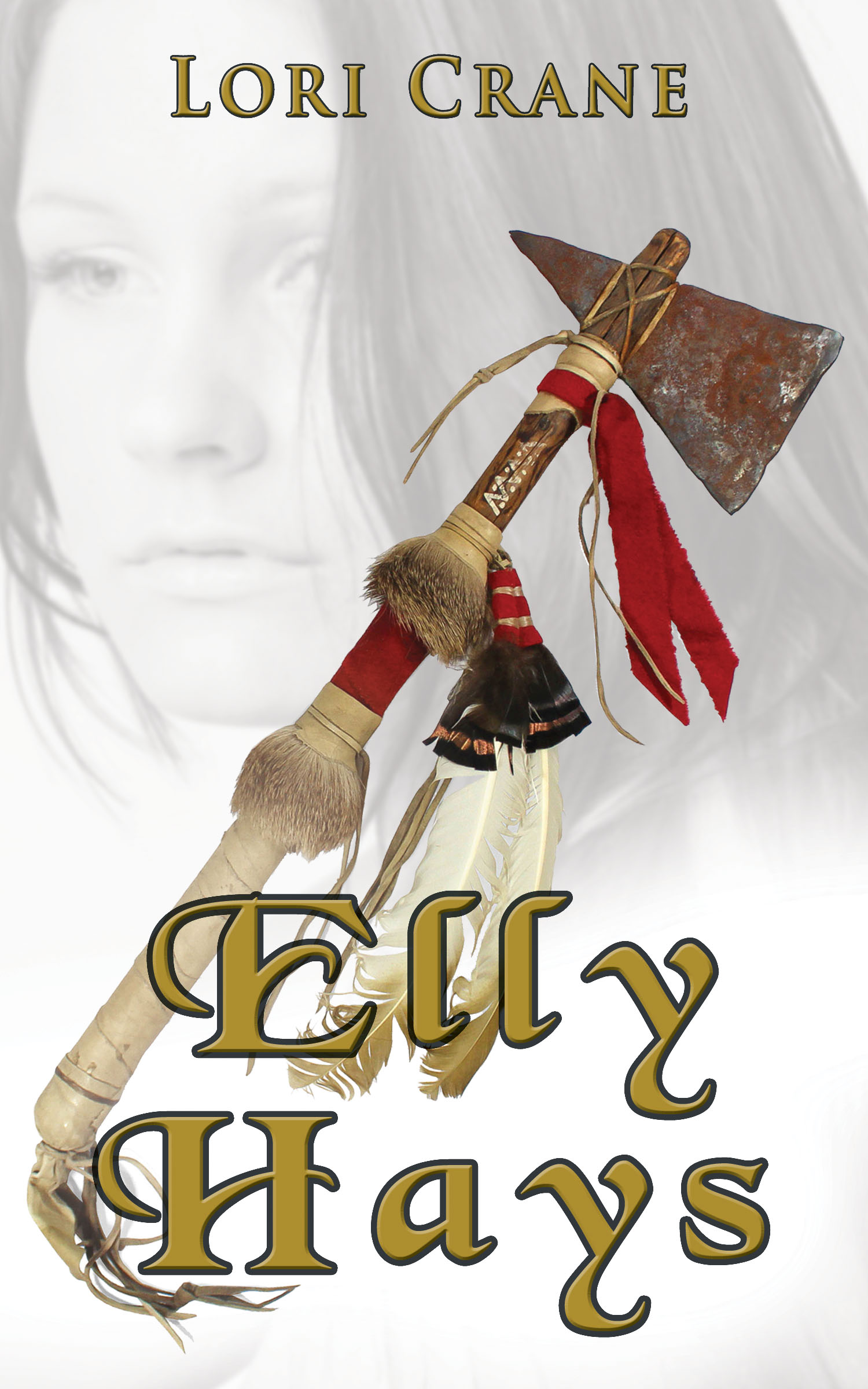
Saturday Snippet of Elly Hays

elly cover_webElly Hays is based on real people and real events. She was my 5th great-grandmother, Elizabeth Hays Rodgers. I wrote about her granddaughter in Okatibbee Creek and about her great-granddaughter in An Orphan’s Heart, but I began to wonder where the strength of these women came from, so I backed up in the family tree and found Elly. She lived in the Mississippi Territory, today known as Alabama, in the early 1800s – through a most frightening time when the South was the unsettled frontier and the Creek Indians fought against the Americans for the rights to the land. Not only is this her story, but we also get to see it through the eyes of the Creek warrior, Tafv (pronounced TAH-fuh.)

Elly Hays is told in alternating chapters of Elly’s point of view and Tafv’s point of view, and from the first few chapters, you can sense their will be an epic clash between a warrior with nothing to lose and a young mother on the verge of losing everything.

Below is a snippet of the first meeting between Elly and Tafv’s brother Eto.

*******

She angrily plopped down on a rock and yanked dirty stockings from the basket. She dunked them in the water and began scrubbing them hard enough to put holes in them. She could feel her ears buzzing and her shortness of breath and realized she needed to calm down. She stopped scrubbing, closed her eyes, and took a deep breath through her nose, trying to slow her heart. She concentrated on releasing the tension in her shoulders and the knot in her stomach. She felt guilty for losing her temper with her husband, but frustration was taking over her life. Every day brought new problems—life-and-death problems. Her mounting anger was overriding her fear of the Indians and her love for her husband.

She opened her eyes when she heard him clear his throat behind her, and she turned to apologize for her harsh tone of voice. But when she saw the black eyes looking back at her that did not belong to James, she stopped and gasped. They belonged to an Indian, sitting tall on a brown and white painted horse. She hadn’t heard him approach. She jumped to her feet, wondering where she could run.

The Indian was bare-chested, wearing only tan animal hide pants and moccasins. His hair was short, shaved on the sides and sticking up higher on top. Most of the Indians she had seen had this same haircut. His face was covered with lines of red and black paint, and he wore a headband tied around his head with strips of animal fur hanging on either side of his face. His headband was not adorned with any feathers. This was not the same Indian she had seen before.

He stared at her for a long time and did not move. She glanced across the swift creek to the left and right, but there was nowhere to run. She would never be able to outrun a horse. Her heart beat wildly as beads of sweat broke out on her brow. She remained frozen.

“I came to warn you,” the Indian said in a monotone.

Elly was surprised by his English.

He sat motionless, waiting for her response.

She finally blurted out, “Warn me about what? That you want us to leave? We already got that warning.” She could feel her temper escalating again. All of the tension she had felt the last few months, all of the worry for her children, all of the stress of building a new life, was about to explode in this Indian’s face.

“Yes, I’m here to warn you that you need to leave, but not for the reason you are thinking.” He looked down at the reins in his hands, as if trying to gather his thoughts and find the correct words. “My brother and I were the ones who killed your animals.”

Elly threw a wet stocking on the ground. She hadn’t realized she was still holding it, and it had dripped down her blue linen skirt, causing the front of her dress to become dark in color. “You? You did that? How am I supposed to feed my children?” she raised her voice, her temper becoming stronger than her fear.

“This is the least of your worries. When your husband chased us away, my brother’s boy fell from his horse and snapped his neck.” His eyes carried a tint of sadness. “The boy is dead.”

Elly felt her heart soften for a young boy she didn’t even know. Her anger began to subside, as if it were being washed away by the babbling creek beside her. “I’m…I’m very sorry to hear that,” she stammered, wringing her wet hands together.

“You must understand, my brother is the great warrior of our village. He has vowed revenge on your husband and your family for the death of his son.”

Elly’s eyes widened as the Indian continued.

“He told our Great Chief your husband killed his son, and the Great Chief has given him permission to slaughter your family.”

Elly was shocked by the revelation and quickly shook her head. “No. My…my husband would never kill a boy. He’s never killed anyone, for any reason.”

“Our great warrior does not know this.”

“Please tell him. Tell him my husband didn’t kill his son.” She took a step forward as she begged.

The Indian shook his head and looked at her with compassion. “I cannot tell him anything. I can only warn you. You must leave now…before it’s too late.”

Elly placed her hand over her mouth as tears stung her eyes. Her body began to tremble, and she turned her face toward the creek so the Indian would not see her cry. After a moment, she composed herself, wiped her cheek with the back of her hand, and turned back toward the Indian, but he was gone. She looked left and right through the trees, but it seemed he had simply vanished as quickly as he had appeared.

************

3booksElly Hays is available in paperback and Kindle at Amazon.

Elly Hays received Honorable Mention in the 2013 Great Midwest Book Festival, it was on the short list of “50 self-published books worth reading 2013/14” at Indie Author Land, and the cover was a semi-finalist in the 2014 Authorsdb Book Cover Contest. It is the third book of the Okatibbee Creek Series, following Okatibbee Creek and An Orphan’s Heart.

What Type of Editing do I Need?

Types of Editing

pencil-1979pxWhat Type of Editing Do I Need?

If you’re an author, you’ve undoubtedly heard someone along the way say something about getting an editor. You may have a sneaking suspicion that your work could probably use a little polishing. Are there paragraphs that just don’t feel right? Parts of the story line that feel rushed or too slow? Did you get a C in high-school English? Yes, you need an editor. Depending on your writing experience, you can use one or all four edits on your book, and those edits can be done by one person or four different people. Stephen King has an editor, you should too.

So, what are the different kinds of editing available and which do you need? Here’s a breakdown of editor services.

Developmental Editing

When you are stuck anywhere in a story, whether you are at the initial stages of creating an outline, or you are at the end of writing the rough draft, but the pieces aren’t lining up, you need a developmental edit. A developmental editor will review the whole story for you and tell you where there are holes in your plot, where your characters aren’t developed, where you’ve left story lines dangling with no conclusions. They will make suggestions on where and how to fix your story. In short, a developmental editor will help you develop your story.

Substantive Editing

When you are finished with your manuscript, you may consider a substantive edit. An editor will help you put your story into its final form. They may change points of view, look for inconsistencies in your character’s behavior, rearrange your paragraphs, and rework your dialog. You want your story and your characters to be believable. This is the outcome of a good substantive edit.

Copyediting

Once you’ve completed your “final” manuscript, you want to have an editor do a copyedit. A copy editor will read each sentence and fix grammar, punctuation, spelling, and voice. If you give them enough latitude, they will rework tangled sentences and paragraphs. They will also check your captions and footnotes for accuracy against your text. You may get the work back with ideas to improve or delete parts of your work. Your book should be close to finished after this step.

Proofreading

Proofreading is the final step in editing. When you a sure your work is finished, a proofreader will go over your manuscript one sentence, one word, one comma at a time and make sure it is all correct. If you have photos or charts, they will also review those. They will correct any errors overlooked in the copyedit. They will also check all elements of design, including headers, font styles, and page numbers.


***********************************

Lori Crane is a bestselling and award-winning author of historical fiction and the occasional thriller. Her books have climbed to the Kindle Top 100 lists many times, including “Elly Hays” which debuted at #1 in Native American stories. She has also enjoyed a place among her peers in the Top 100 historical fiction authors on Amazon, climbing to #23. She resides in greater Nashville and is a professional musician by night – an indie author by day.
Rocking Your “About” Page

vintage-hand-about-meSo, you’ve started a blog. Good for you!

What did you write on your “About” page? A lot of people write a simple bio, then walk away and never touch it again.

Yikes! Don’t do that!

Your “About” page is the most important post on your blog.

It tells a reader who you are and what you’re about, and most of all, WHY THEY SHOULD READ YOUR BLOG. Most people will check out your “About” page before they get two or three blogs into your site, because your “About” page lets them know instantly if they’d like to find out more about you and if they’d like to spend more time on your blog. Think of it as an introduction to a new friend at a party. Do you simply say “Hi” and walk away? No, of course not. You chit chat. You let your new friend know a bit about yourself. In your introductory conversation, they will find out if you have anything in common, if you’re an expert on a topic they find interesting, and if you will grow to be friends. This is the goal of your “About” page.

3 ways to make a better “About” page!

  • Add a photo! Nothing connects people more than being able to put a face to a name.
  • Write your “About” page as if you’re writing a blog post. Make it interesting, funny, or serious, however you normally write on your blog. If there’s one thing that bores everyone to death, it’s “I was born in Little Rock and I have two dogs.” Snoozer! That does not tell us why we should read your blog and does not entice us to come back again later.
  • Update your “About” page periodically. If you have a new picture taken, put it on there. If you have recently moved to Uganda, tell us all the wonderful things you’re going to post about Uganda. Got a new giraffe? We want to know!


***********************************

Lori Crane is a bestselling and award-winning author of historical fiction and the occasional thriller. Her books have climbed to the Kindle Top 100 lists many times, including “Elly Hays” which debuted at #1 in Native American stories. She has also enjoyed a place among her peers in the Top 100 historical fiction authors on Amazon, climbing to #23. She resides in greater Nashville and is a professional musician by night – an indie author by day.

Amazon Paperback Giveaways and Growing Twitter

Hi authors! I’m not dressing up this post with pictures and frills. This is business! If you’ve been trying to grow your Twitter following, this post is for you.

Amazon has a new program for authors of paperbacks. Scroll to the bottom of your Amazon paperback page, underneath your reviews. You’ll see “Set up an Amazon Giveaway.”

Here’s how it works:

You can offer as many books as you’d like, keeping in mind you have to pay retail price + shipping + applicable tax. You can set up the giveaway in two ways. 1) first come, first serve. Don’t pick that one. Or 2) offering your book to a lucky number (entrant). You can require your entrants follow you on Twitter. If you choose option 2, click “lucky number” and the button to connect to your Twitter account, select the winning entrant from 2-50,000, enter the number of books you’re giving away. The giveaway will run for one week. You cannot change the dates.

MATH: I know what you’re thinking – if I give away 5 books, 1 to every 20th entrant, I’ll get at least 100 new Twitter followers. No, no, no, think bigger. That’s what I did the first time and the 5 books were gone in less than a half hour. Yes, I got just shy of 200 Twitter followers, but the giveaway was over before I even told my Facebook people to enter. Set it up for a BIGGER number. If you give a book away to every 1000th follower, you would get 5000 Twitter followers! FIVE THOUSAND. It’s taken me two years to get to eight thousand. Maybe even go bigger if you’ve got the guts! You need to fill out three short blurbs, one to announce the giveaway, one for the people who didn’t win, and one to congratulate the winners. The contest is instantaneous. The entrant learns if they’ve won or not at that moment, so they’re not going to put off buying your book because they want to wait and see if they’ve won. I filled out the forms like so: Enter to win one of five paperbacks of XYZ. – Sorry, you didn’t win this time, but stay tuned for future giveaways. – Congratulations, you’re the winner! Enjoy XYZ and please check out all my books.

WORK: The cool thing is that Amazon does all the work. They contact the winners. They ship the books. You do nothing! It costs more than hosting a giveaway yourself, but when’s the last time you got 5000 Twitter followers from your giveaway?

MONEY: My paperback sells for $9.99, so my total cost for 5 books with shipping and my Tennessee tax was about $82. I got $13 back in royalties from CreateSpace AND I got credit for the sales in my Amazon rankings.

THE PIS DE RESISTANCE: If you don’t give away all your books in the allotted week, Amazon will return your unused money.

If you try it, let me know your outcome. We’re all in this together. 🙂


**********************************

Lori Crane is a bestselling and award-winning author of historical fiction and the occasional thriller. Her books have climbed to the Kindle Top 100 lists many times, including “Elly Hays” which debuted at #1 in Native American stories. She has also enjoyed a place among her peers in the Top 100 historical fiction authors on Amazon, climbing to #23. She resides in greater Nashville and is a professional musician by night – an indie author by day.