Saturday Snippet – John Culpepper the Merchant

If you read the first book in the Culpepper Saga, “I, John Culpepper,” you’ll remember the red-headed wench John’s father was flirting with at the Blackwall Inn the day John was born in 1606. I was tickled to included her in the second book, and in an off-handed way, she is instrumental in saving John’s family at the end of the book.

********************************
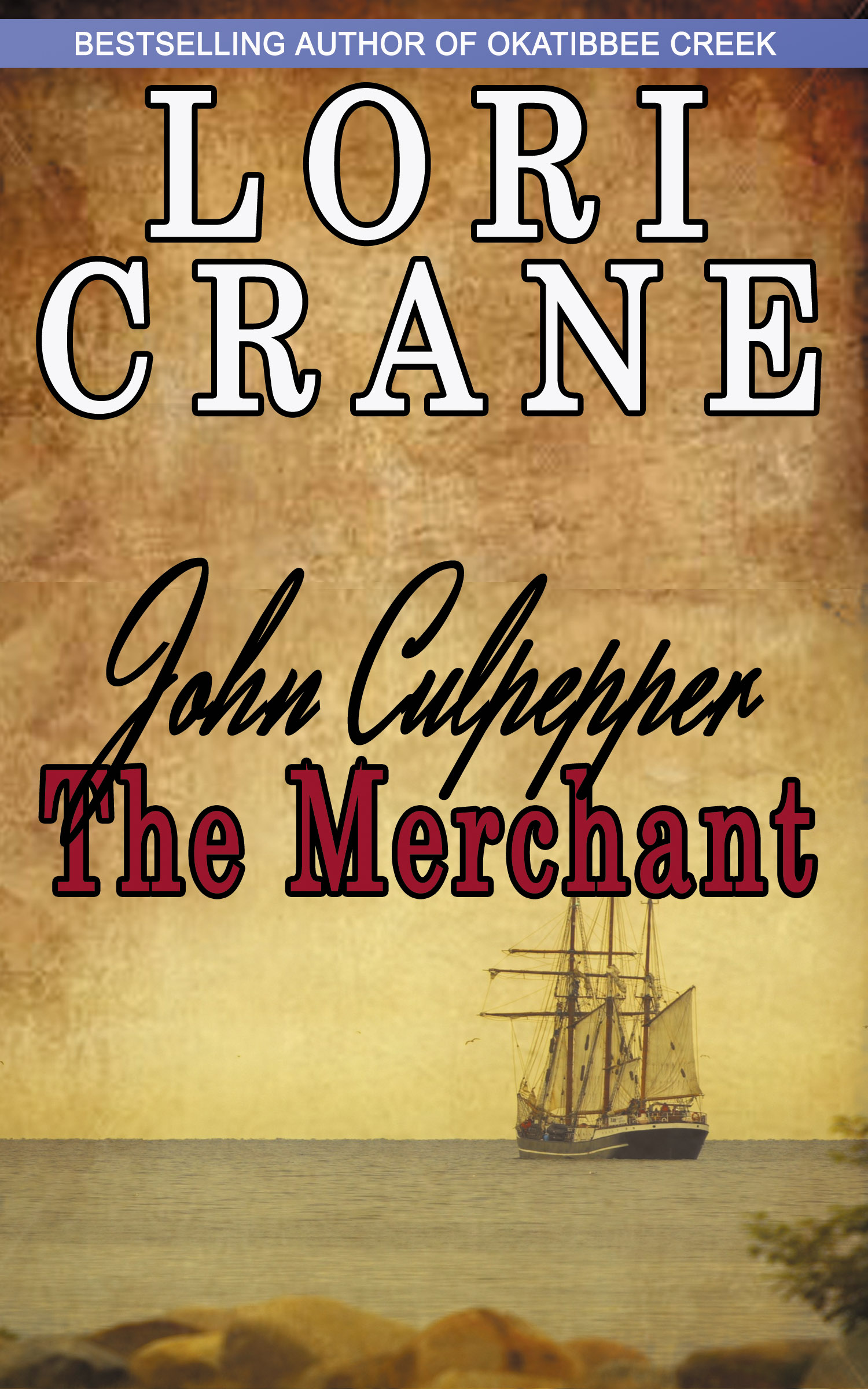
The Merchant ebookJohn Culpepper the Merchant

January 1643, Oliver Cromwell

John and his brother rode through a cold and damp fog into London and went for an ale at the Blackwall Inn. They removed their hats and scarfs and took a seat at the dank, corner table nearest the soot-encrusted fireplace that was glowing warm with embers. A scrawny boy placed a few logs into the fireplace, and the brothers watched the red embers grow into a roaring fire. They ordered a couple pints of ale, and once the barkeep delivered the mugs to the table, Thomas began to fill John in on all the unrest in the land that John had missed over the previous year.

“JC wrote me of the king trying to arrest those five members of the House of Commons and of his raising his standard at Nottingham, but what happened in between?” John asked.

Thomas took a drink and sighed. “Did he tell you about Cromwell?”

John shook his head.

“After the fiasco in the House of Commons, the king fled London and was ambushed in Birmingham.”

“JC told me that.”

“That attack was instigated by Oliver Cromwell.”

“Who’s Oliver Cromwell?”

“Exactly. He’s a nobody, a man of modest means, barely inside the gentry class. He’s sat in Parliament for a few years but has been pretty much useless and quiet. His only claim is that he led a single cavalry troop some years ago, and for some reason, Parliament thought that enough to elevate his status. They placed him in charge of their cavalry. He’s a committed Puritan with deep-rooted desires to take the king down because of his past religious rulings. After remaining quiet and never participating in Parliament’s dealings for years, somehow he convinced Parliament to pass what he called the Militia Ordinance, proclaiming the people of London are bound by law to join Parliament’s militia if called, and he immediately began recruiting men of low birth.”

“What’s the punishment for not joining?”

“Beheading.”

John exhaled and shook his head in disbelief.

Thomas continued. “He’s not recruiting military men or men of gentry, he’s recruiting anyone he can get his hands on. He’s not a trained military leader, so from a strategic standpoint, it’s difficult to guess his next move.”

“How many men does he have now?”

“Probably twice as many as we do. He took over the king’s royal army in London and is recruiting men by force.”

“Have the members of Parliament lost their minds?”

“Apparently so, but not all of them. Many members have disappeared to their country homes. They refuse to participate in taking down the king. The ones who are left, like Cromwell, are now jockeying for position in what they think will be a new country. Parliament is supposed to represent the people, but sadly, the citizens are now afraid of Parliament and the king is nowhere to be found to protect them. Without an option, they’re joining Cromwell’s militia in droves.”

John groaned and looked down into his mug.

An older woman with slivers of gray in her long red hair set two more pints on their table.

“Thank you,” John said.

“You’re Culpeppers,” she said, unquestionably.

John nodded.

She looked into John’s eyes. “You look just like your father.”

“Excuse me, do I know you?” John asked.

“No, you don’t know me.” She smiled and pointed at the mugs. “These pints are on the house. Tell your father to come by and visit.”

“Our father is long dead, madam,” Thomas said.

She spun her head to look at Thomas, shock in her eyes. “Oh, I’m sorry. I didn’t know.” A flash of sadness crossed her face and she looked back at John.

John wondered how this lowly, tavern wench knew a man of his father’s importance. She was middle aged with soft wrinkles around her eyes, but he could tell by her prominent cheekbones and full lips that she had probably been quite beautiful in her younger days. Perhaps this wench was the reason his father remained in London for lengthy stretches of time so many years ago.

The woman’s eyes became misty. “I’m very sorry to hear that. I was rather fond of your father. Well, if you ever need anything, my son owns the fishery in Maidstone, right on the River Medway. His name is Waller and the place is called Waller’s. You tell him his mother sent you.”

John and Thomas looked quizzically at each other and then Thomas said, “Um, Waller’s. All right. Thank you for the information, madam.”

“Of course.” She nodded at Thomas and slowly backed up from the table, stealing fleeting glances at John. “Just like your father,” she mumbled.

********************************

“John Culpepper the Merchant” is available in Kindle and paperback at Amazon.

For pictures, paintings, and documents of the people and places in the Culpepper Saga, please visit the Culpepper Saga Facebook page.
culpepper saga-001

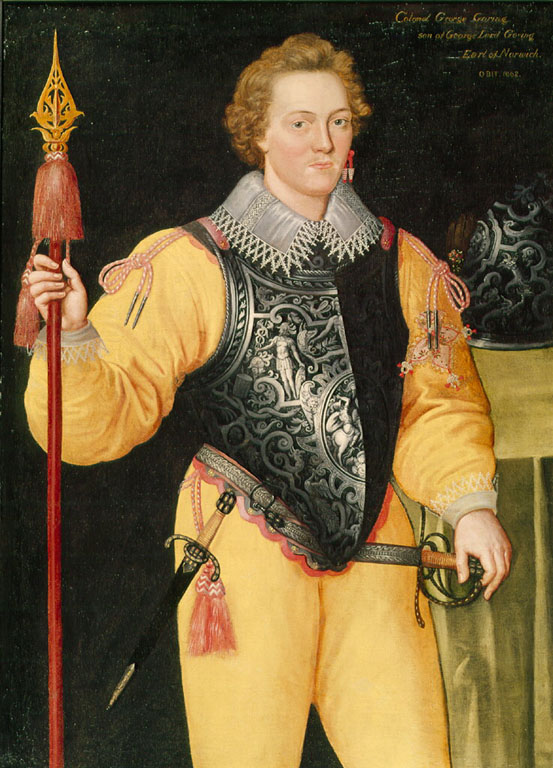
George Goring, the Earl of Norwich

In place of my usual Saturday Snippets in May, I’m writing of the people and places in my coming book, “John Culpepper the Merchant,” which is the second book in the Culpepper Saga.

67_13_8George Goring was born in 1585 and was a politician and a soldier. He served the House of Commons 1621-28. When trouble started between King Charles and Parliament in 1640, Goring took the king’s side. He stayed abroad, soliciting help from other countries, but when Parliament intercepted a letter to the queen, he was found out and charged with high treason. He stayed out of the country until ’47, but when he returned, it was with gusto. He raised an army of 10,000 men in Kent and fought against the parliamentarian army, losing at Maidstone, and being forced to surrender at Colchester.

He remained in the tower during the king’s trial and beheading on 30 January 1649. He was brought before Parliament in March of that year and found guilty of treason to which he was sentenced to death. His family begged for leniency and the deciding vote cast by the speaker of the house found him Not Guilty.  He fled to Denmark to watch over the exiled prince, and returned to London when the prince was brought into power as King Charles II in 1660.

He died in Brentford, just outside of London, on 6 January 1663.

In my book, Goring is a family friend of Colonel Thomas Culpepper and Sir Alexander Culpepper (John’s brother and uncle), and Goring’s daughter is instrumental in getting word to John in Virginia to come to England to rescue his family.

“John Culpepper the Merchant” will be released May 24, 2015.

Saturday Snippet – I, John Culpepper

Culpepper_1My new book, I, John Culpepper, has just hit the shelves! I’m so excited.

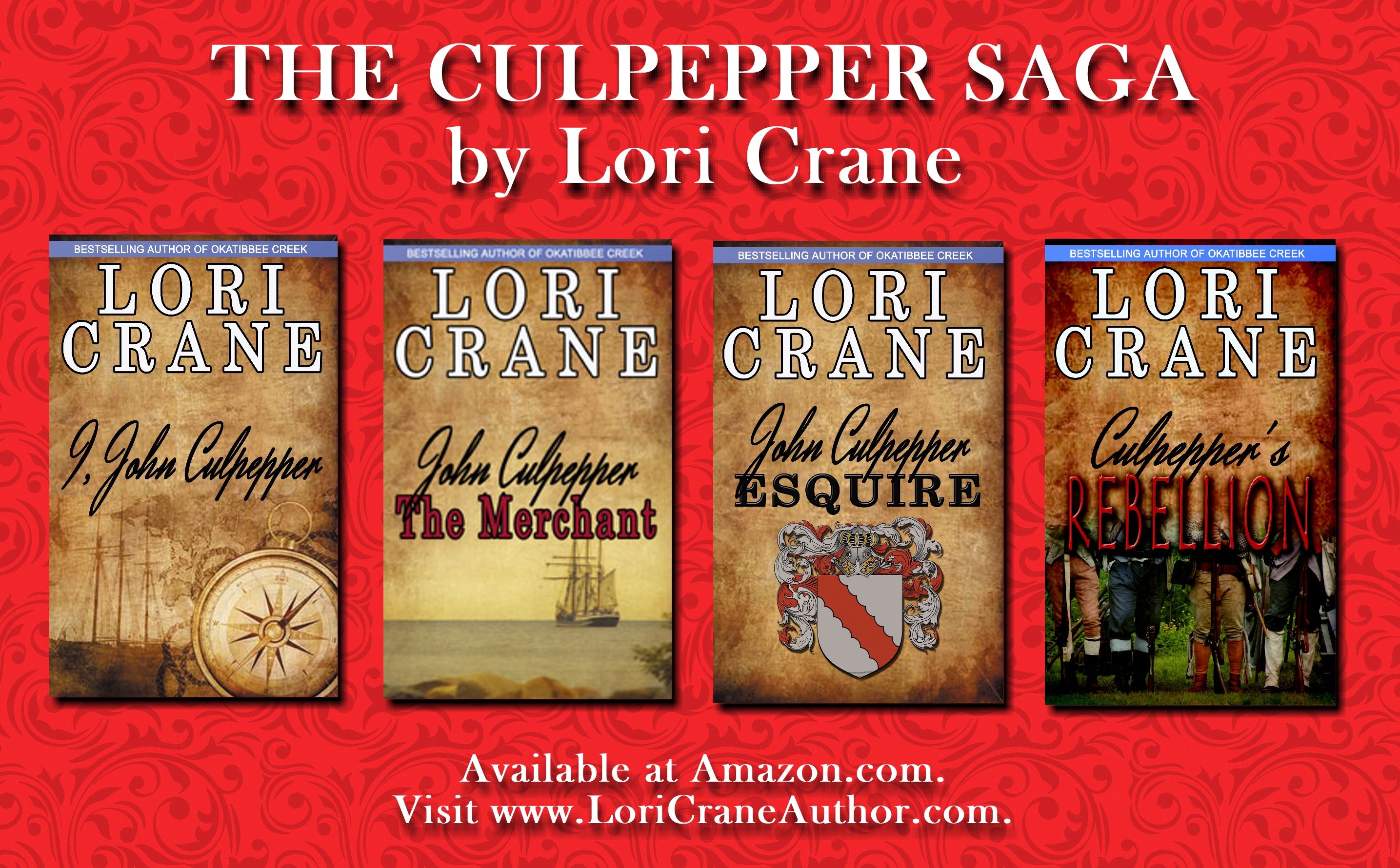
If you haven’t heard anything about it yet, John Culpepper is my 10th great-grandfather, born in England in 1606 and the progenitor of the modern-day American Culpeppers. The book is the first of four in the Culpepper Saga, the story of John’s life, beginning on the day of his birth, through the settlement of the American colonies, the turbulence of the English Civil War, and the rebellions in Virginia and Carolina which one-hundred years later would lead to the Revolution. It is a series of historical fiction, filled with drama and danger. Yet, there are moments of lightness and humor in John’s life.

When John was fifteen, he attended law school in England, and he was under the understandable impression that his headmaster resembled a goat. The joke between him and his friends carries on for quite a few chapters, as young boys typically can’t let a good laugh go without beating it to death with a stick. At one point, they played a prank on the man just as John’s father stormed into the school, angry about John’s behavior.

Below is one of my favorite scenes featuring John, his brother Thomas, his father Johannes, and Headmaster Barnaby.

**************************************************

Johannes Culpepper stomped in through the archway of the library door. His heavy boots echoed off the stone floor and paneled walls and disturbed the quiet room, causing every student to look up from their studies. Johannes’s sheer size was daunting, and in his broad-shouldered jerkin with his large hat, he looked even more intimidating. His face was red and his eyes were narrowed. His jaw twitched in anger. He marched straight to the table in the center of the room where John, Thomas, and their friends sat.

Thomas looked up in surprise. “Father! What brings you here?”

“I’ve gotten word in London that someone is misbehaving.” He glared across the table at John.

“No, Father, that’s not true,” countered John.

“We will discuss this outside. Both of you, come with me.” He marched out the back door and into Temple Garden with John and Thomas trailing close behind. By the time they reached the middle of the yard, faces of schoolboys had pressed against the diamond-shaped panes of glass, watching and listening for the heated argument that was surely to begin.

Johannes stood with his hands on his hips, chastising the boys about something, but the students inside the library couldn’t make out what he was saying. Johannes’s face was red and veins bulged from his temples, but John didn’t look angry. As a matter of fact, he looked quite amused.

John and Thomas faced their father, and directly behind him, picketed in the middle of the garden, was a white goat, dressed in a black robe with gold cords around its neck. Next to the goat stood Barnaby, his hands on his hips, his face purple with anger as he glared at the goat. The goat looked up at Barnaby and let out a loud “baaaa!” John couldn’t stifle his laughter. He turned away from his father and pretended to have a coughing fit.

****************************************

I, John Culpepper is available at Amazon.

Please stop by the Culpepper Saga Facebook page to see photos and to find more information about the settings and characters.

Culpepper Saga People and Places

Culpepper_1Only a few more days until “I, John Culpepper” is released!! April 10th!!!

Over the years, and quite a bit recently, I’ve blogged about the people and places found in the book, but if you missed anything, below is a comprehensive list to guide you through the characters. Every one of these people were real. Every one of these homes and castles were real, most still standing today. Being historical fiction, most of the story is also real.

Some of these blogs are old and some are new, but if you click on any name, you can find out more about the person or place.

John Culpepper the merchant, our hero

John’s grandpa, John Culpepper of Wigsell

John’s dad, John “Johannes” Culpepper

John’s mom, Ursula Woodcock Culpepper

John’s son, John Culpepper Jr. of the Culpepper Rebellion

John’s brother, Thomas Culpepper and his wife Katherine St. Leger

John’s childhood friend, Sir William Berkeley

John’s childhood homes, Greenway Court and Astwood Court

John’s niece, (Thomas’s daughter) Frances Culpepper Berkeley

John’s cousin, Lord John “JC” Culpepper, 1st Baron of Thoresway

“JCs” son, Lord Thomas Culpepper, 2nd Baron of Thoresway

Sir William Berkeley – Culpepper Saga

Culpepper_1For the next few Saturdays, in place of my usual “Saturday Snippets,” I’m going to give you some background into some of the people and places in my new series, The Culpepper Saga. The series consists of four books which will be released between April and September.

One of the main characters is Sir William Berkeley. I write stories of my ancestors, but Berkeley is not one of my ancestors. He was, however, a life-long friend of our hero and my 10th great grandpa John Culpepper.

In the 1st book, Berkeley and John are young law students in England. In the 2nd and 3rd books, Berkeley plays a daily role in John’s life and is the Governor of Virginia. In the final book, Berkeley is married to John’s niece and is at the center of a deadly rebellion.

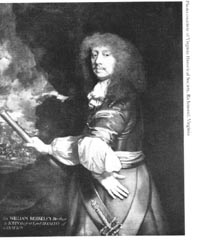
SirWilliamBerkeley2William Berkeley, referred to as “Will” by his family and friends, was born in England in 1605. He was the colonial governor of Virginia from 1642 until his death in 1677. Upon his arrival in Virginia, he built a plantation called Green Spring House and planted corn, wheat, barley, rye, and tobacco, though he despised tobacco. In 1670, he wed thirty-six-year-old Frances Culpepper, the niece of our hero John. Historical records show him fleeing Jamestown during Bacon’s Rebellion in 1676 and taking refuge in Accomac, Virginia. Most people leave it at that, but in my writing world, I happen to know that John had a house in Accomac, so it is obvious he went to John’s. After all, they had been friends for many years, and they were family through marriage. I’ll let you read the rest of his story in the Culpepper Saga, but I’ll leave you with a tidbit from the day he and John met as young boys at law school–a place called Middle Temple.

Note: Wikipedia does not confirm that Berkeley attended Middle Temple, but in “The History of Middle Temple” by Hart Publishing, records of Middle Temple show Berkeley as a student. He also wrote and published a few plays in the 1630s, which was a large part of the curriculum at the school.

The following is an excerpt from “I, John Culpepper.”

**************************************

John clapped along with the other boys as the headmaster strolled toward the center of the room. The man looked as stern as JC had warned. A pair of spectacles rested on the tip of his pointed nose, and his rather large ears stuck out from under his cap. He began stroking his goatee as if caressing the family pet. For a moment, John couldn’t put his finger on what was so amusing about the man’s appearance, then it struck him—the man looked like a goat. John tried unsuccessfully to stifle a giggle.

Barnaby’s brow wrinkled and the corners of this mouth turned down like a fish as he scanned the group of boys. He looked at each one as if viewing a repulsive heap of trash. He cleared his throat and his Adam’s apple bobbed up and down. Just as he opened his mouth to speak, a frizzy-headed boy ran into the room, allowing the door to slam behind him. The sound echoed loudly within the stone walls and the tardy boy’s face turned red with embarrassment. Barnaby followed the boy’s movement with his narrowed eyes as the boy took the only empty seat in the room—right next to John. John felt a trickle of sweat drip down his back as the headmaster slowly walked toward them.

“You’re tardy for my class,” the man scoffed, his eyes filled with hostility. When he said the word class, he drew out the a for an inappropriate amount of time, and John was again reminded of a goat, but with the man standing directly in front of him, he didn’t dare giggle.

“My apologies. I just arrived, sir.”

“What is your name, boy?” Barnaby growled.

“William Berkeley, sir.”

“William Berkeley.” He stared at Berkeley for a long time, as if attempting to memorize every feature of the boy’s face. He then repeated the name. After what seemed like an hour of uncomfortable silence, with the tension in the room growing by the second, Barnaby said, “William Berkeley, I will speak with you in private following this evening’s supper.”

“Yes, sir.” William lowered his eyes to the floor.

As Barnaby turned his back on Berkeley and returned to the center of the room, Berkeley glanced around the room at the other boys. John wondered if Berkeley’s humility was in respect for the headmaster or due to his embarrassment for being late, or both.

Berkeley leaned over to John and whispered, “Who’s that old goat?”

John almost laughed out loud and his hands flew up to his mouth.

Berkeley winked at him and grinned.

******************************************

The first book in the Culpepper Saga, “I, John Culpepper,” will be released April 10, 2015.

OKATIBBEE CREEK on Amazon

CLICK HERE TO GET YOUR COPY OF OKATIBBEE CREEK …and don’t forget the tissue.

okatibbee creek cover front JPEGIn the bloodiest years of our nation’s history, a young mother was left alone to endure the ravages of the Civil War and a typhoid epidemic that threatened the lives of everyone left behind.

Okatibbee Creek is based on the true story of Mary Ann Rodgers, who survived the collapse of the Confederate dollar, food shortages, and the deaths of countless family members to war and disease. As she searched for a way to feed her children and her orphaned nieces and nephews, Sherman’s Union army marched through Mississippi on their way to destroy Meridian, and Mary Ann found the distant war literally on her doorstep. Help arrived just in the nick of time in the form of an unexpected champion, and Mary Ann emerged on the other side a heroic woman with an amazing story.

Okatibbee Creek is a novel of historical fiction that brings the Deep South vividly to life and will have you cheering and crying through a real-life story of loss, love and survival.

CLICK HERE TO GET YOUR COPY OF OKATIBBEE CREEK

Saturday Snippet – I, John Culpepper

Here’s a bit of my work-in-progress, “I, John Culpepper.” For you ancestry/genealogy readers, John Culpepper is my 10th great grandpa. Release date will be April 10, 2015.

****************************************************

Culpepper_1Fall 1626, England

“No! For the hundredth time, no!”

John looked down at the intricate grain of the walnut desk beneath his fingertips and shifted his weight to his other foot. He sighed, feeling his dreams disintegrate before his very eyes. The snap of the white sails, the taste of the salty spray on his lips, the smell of the tar that sealed the decks—the visions were quickly vanishing behind the thick fog of his father’s adamant disapproval. He pictured his mighty ship sinking into the black waters of condemnation, bubbling like a cauldron as it disappeared from sight. There was nothing he could do to change his father’s mind, and he wondered whatever possessed him to come to this man for assistance. He should have known better.

His father glared at John from behind the desk. He propped his elbow on the scrolled arm of the chair as his large hand methodically stroked his pointed beard. “Is there anything else?” he snapped.

John didn’t look up. He shook his head and mumbled, “No.” He turned and padded across the thick rug toward the door, listening to the man’s heavy breathing behind him. He reached for the brass doorknob, paused, and turned back. “You know I’ve always done everything you’ve asked of me. I went to school. I studied to be a lawyer. I did it all for you. I never wanted to practice law. I’d never be happy on the bench.”

“Happy? What makes you think life has anything to do with being happy? You are a Culpepper, and as such, you have an obligation to serve your family and your king in a manner befitting your station. This childish notion of owning a ship is nothing but rubbish.”

John released the doorknob and walked back toward his father’s desk. The intimidating man dwarfed the desk, his size exaggerated by the broad shoulders of his leather jerkin, yet he sat up taller in his chair in preparation for the quarrel to continue. It was a wasted gesture, as his opponent already knew the battle was lost.

John made sure he didn’t raise his voice. “Father, you have financed merchant ships for as long as I can remember. What difference does it make if I’m the one who owns the ship?”

“Culpeppers don’t own ships. I funded those expeditions as an investment—a losing investment, I might add.” He rose from his chair and his voice grew louder, echoing off the oak panels that lined the walls. “There has never been a Culpepper placed in a position to experience hunger and savages and shipwrecks, and there won’t be one now, not with my blood written on the purchase. I will not fund a ship for you, John, not now, not ever.” He pointed his finger in John’s face. “And if you somehow find a way to procure a ship, mark my words—I will disinherit and disown you. No son of mine will become a common sailor. I am finished with this conversation once and for all. Have I made myself clear?”

John exhaled, beaten. His shoulders slumped as he broke his father’s glare and dropped his eyes to the floor.

“John? Have I made myself clear?”

“Completely.”

To FREE or not to FREE, Kindle Select is the Question

I know the title is corny…sue me. This post is for my author friends. The rest of you will be bored silly. My apologies. I’ll post something better next time.

kdp-select_01I’ve never understood why an author would sign up for Kindle Select, requiring their eBook to be exclusive to Amazon, and in exchange, being given the wonderful opportunity (sarcasm) of either giving their book away for FREE or doing a promotion called Kindle Countdown Deal where the price drops to rock bottom and rises at periodic intervals, creating a ticking clock for the customer to freak out about. The author gets his or her choice of one of these fabulous no-income-producing options for up to five days per quarter. Makes no sense to me.


sorry excuseEXCUSES:

I’ve been working on a new four-book series (Yes, all at the same time. Don’t know what the hell I was thinking.) and haven’t released anything since August 2014. Combined with being in Europe the entire fall and in the Bahamas the whole month of December, I’ve done little to no promotion since my last book release.


paparazziRESULT:

My book sales have taken a nosedive. I released eight books and two book sets in the twenty months prior, so my sales have remained consistent until my recent disappearing act. Apparently, if you spend six months out of the public eye, you’re dead in the water. Who knew?


SOLUTION:

I decided to play around with my books and see if anything would boost sales while I awaited my next release in April, hence I removed my three-book Stuckey’s Bridge Trilogy from Barnes & Noble, iTunes, Scribd, Oyster, and Smashwords and signed them up for the Amazon-exclusive Kindle Select. I guess if I’m not selling them, I can give them away, right? (more sarcasm) Whatever. I gave away the first in the trilogy, The Legend of Stuckey’s Bridge, Friday, Feb 6 – Sunday, Feb 8.


OUTCOME:

Downloads over the three-day period totaled 2633, including the US, UK, Germany, India, Canada, Australia, and Japan. Stuckey’s Bridge topped out at #87 in Free Kindles (the photo below was taken an hour before when it was #97), #1 in Historical Thrillers, and #1 in Mystery, Thriller, Suspense. Real sales of the sequel, Stuckey’s Legacy, placed that book at #57 in Historical Thrillers, and the third book in the trilogy, Stuckey’s Gold, went to #74 in the same category.

Stuckeys Bridge sales

When the promotion was all said and done, the three books remained in the Top 100 of the Historical Thriller category for about four days. A week later, books two and three have seen a marked increase in sales and all three are being “borrowed” surprisingly well through Kindle Unlimited and Kindle Prime. The sales and “borrows” have easily covered any losses of not being available on Nook and his friends.

CONCLUSION:

I have a pretty large social media reach, but I know there’s not much I can do to promote a book that’s a year and a half old. Anyone who follows me already knows about the book. Therefore, downloads were 408 and 401 on Friday and Saturday, respectively. A popular blogger can announce a promotion and sales will take off. Amazon can send out one email and sales will soar. You know that lightning strike when you see it. It’s impossible to miss.

ebookdaily-logoWell, Stuckey’s Bridge got picked up on Sunday by eBookDaily, and bless their little electronic hearts, they caused over 1800 downloads on Sunday between 10 a.m. and midnight. That’s over 120 an hour for 14 hours straight!

If the marketing stars align, Kindle Select seems like a pretty good thing. If they don’t, it could be just another marketing idea with mediocre results. I’m not sold yet, but I’m leaning a little bit that way…just a tad.

What’s your experience?


Saturday Snippet – Savannah’s Bluebird

bluebird_small webI released Savannah’s Bluebird a year ago. It stemmed from a vivid dream I had, and though it didn’t take me months and months of research as with my historical novels, it still holds a place in my heart. It’s the story of a man and woman who tried desperately to get married, but everything stood in the way of their wedding day – including death. I published it on February 11, 2014.

I dreamt it and wrote it in 2012, the month before we found out my future son-in-law had cancer. In late 2013, I finally dug it out of the archives and finished writing it. My boy was getting worse by the day and the wedding was canceled only a week before it was to occur. The day after I published Savannah, I received a call from my daughter that our boy had been admitted to the hospital. Within days, he was placed in hospice, and he took his last breath on February 24, 2014. I always read my books after they’re released, but my heart is still broken, and I can’t bring myself to read this one. It’s a little too close to home, but there’s a reason I wrote it and a reason it’s out there in the world. Perhaps someday, I’ll find out what that reason is. Here is a snippet of Savannah’s Bluebird where Savannah is having a flashback to her childhood.

Dedicated to my beautiful son

Trien Duong

June 15, 1981 – February 24, 2014

You will always be the brightest star in our sky

13.4.danacody_1934


********************************************************

August teased her. “If you remember correctly, I asked you to marry me twenty years ago under your dad’s apple tree.”

She sighed, closed her eyes in front of the foggy mirror, and absentmindedly began brushing her teeth. She could picture that big old apple tree like it was right in front of her. The branches spread out across the sky like an enormous umbrella shading the picnic table beneath it. At the end of a good summer, so many apples would be on the tree, the branches would almost touch the ground, burdened by the weight. The old paint-peeled table beneath the tree was a favorite place for the squirrels to sit and eat the apples, leaving half-eaten cores when they scampered off. August and Savannah spent many, many afternoons talking and playing and telling childhood secrets under that tree.

In the warmth of the late fall afternoon, Savannah sat alone at the picnic table with an array of colored silk threads spread out in front of her. The leaves had fallen a few weeks ago, leaving only a few stray apples on the ends of the branches. The sun shone through the branches, warming her hands, and the sweet smell of decaying apples and the crisp smell of dying leaves surrounded her, making her head swim with happiness. Fall was her favorite time of year. She stared at the woven fabric she was embroidering and sorted through the colored threads on the table.

An ocean inlet ran along the back of the property, and she could faintly hear the soft babble of the water splashing on the rocks, as well as the buzz of dragonflies and katydids. August appeared out of the dying brush that was only a few weeks ago thick summer bushes. He was wearing a brown button-up shirt, suspenders, and dirty trousers darkened by wetness up to the knees. Obviously, he had been playing at the inlet, probably trying to catch frogs or crawdads. He ran over to the picnic table and plopped down across from her.

“Watcha doin’?” He was short-winded from running.

“I’m working on a pillow covering for home economics class,” she answered.

She picked up the fabric, turned it around, and held it up for his approval.

He wrinkled his forehead and said, “It looks like a bird. I thought you liked dogs.”

“I do like dogs, but Mrs. Thompson said we have to create something that flies.” She rolled her eyes and placed it back in front of her on the table.

“Well, why don’t you sew a spaceship with a robot or something?” he asked, wrinkling his forehead.

“Only boys would make spaceships and robots.” She scowled at him. “I want to make something else. My dad told me this story about a bluebird. He said a gypsy woman told him the bluebird represents love, and if you’re with someone you love and see a bluebird, you’ll be with that person forever.” She picked up the blue thread and attempted to thread her needle. “So, I’m embroidering a bluebird.”

“Was it one of those gypsies down on the beach?”

“No, he said it was a gypsy woman in New Orleans a long time ago—before I was even born. He was working on the railroad down there when he met my mother. He said the day after the gypsy told him that story, he and momma saw a bluebird. They were married a few days later.”

When August didn’t respond, she looked up at him—and froze. Right above his head, on the lowest branch of the tree, sat a little bluebird. It was bright blue on top with a reddish-brown throat, and it was no more than a foot from them. She didn’t move, half afraid of scaring it away and half amazed that their conversation had suddenly manifested itself. August turned to follow her gaze and froze also. Neither of them dared breathe as they watched the bird—and the bird watched them.

“Will you hand me that towel?” August asked.

Savannah didn’t respond.

“Savannah, hello? Will you please hand me that towel?” August asked again, snapping Savannah’s attention back to the present.

*********************************************

Lori Crane Books at Amazon

“Getting better and better,” said the dumb puppet.

This morning, someone said to me that his book wouldn’t win an award because it was his first book. He said his writing skills are still developing.

Duh. Of course they’re still developing, and hopefully, they always will. If you stop learning, you’re dead. It’s the perfectionist part of us that makes us good writers, or good artists, or good moms. We always try to do better next time. If that desire ever fades, well, it’ll be a very sad day.

Leonid_Pasternak_-_The_Passion_of_creationDo you ever get to the point in your story where you have to tell the reader a whole laundry list of happenings to help them understand the outcome of the plot? Most times, you can write it in real-time, dispersed throughout the story, but in this instance, it wasn’t part of my main story, and my main characters weren’t involved…until the moment they were. While my characters were going about their drama-filled lives, behind the scenes, the King was causing an uproar which would eventually lead to civil war. I spent three hours writing and rewriting five paragraphs about what happened in the three years prior to my characters becoming involved. The next day, I spent another two hours rewriting and editing the same five paragraphs, trying to make them seem as if they weren’t an obtrusive information dump. How could I disguise five paragraphs and avoid stopping my story dead in its tracks? Geez, in the amount of time I spent, I could have written five chapters, not five paragraphs. I was frustrated and frankly, pissed off.

I thought about something I learned recently and decided to put it to the test.

Puppet_on_a_String_by_NotTheOneInstead of information dumping on your reader, add a “dumb puppet” to the scene. The dumb puppet can be dumb or smart, male or female, main character or innocent bystander. It doesn’t matter; it’s just a title. What matters is the character knows nothing of the events and will ask questions. Someone is going to have to explain what the hell is going on to him, and the reader will find out at the same time. Genius!

The benefit of using a dumb puppet is you don’t stop the movement of your story for a stupid information dump. Sometimes they are necessary, but I really hate them. I wish I would have kept both drafts so you could see the difference, but alas, the information dump went out with the trash, and I’m left with only the dumb puppet. I’ve used the dumb puppet before but didn’t realize I was using him or that he had a title. This time, I deliberately used him, and I think he did an upstanding job.

See? I’m still learning. By the way, I won an award on my first book, so it’s possible.