April 2016 A to Z Challenge – I’m writing about history.
L is for Legend of Stuckey’s Bridge
True? Not true? Half true but blown way out of proportion?
The Legend
In the 1890s, Old Man Stuckey, a former member of the Dalton Gang, ran an inn on a stagecoach route along the Chunky River in Lauderdale County, Mississippi. He could often be seen at night on the bridge, waving his lantern to passing flatboats carrying produce and cotton up and down the river, and flagging down coaches who had been traveling all day. He offered weary travelers a soft bed and a hot meal.
According to legend, he murdered them in their sleep for their riches and buried their bodies along the banks of the river.
In 1901, the Virginia Bridge & Iron Company began rebuilding the dilapidated bridge by his inn and found the remains of Stuckey’s victims. The sheriff and his posse hung Stuckey from the very bridge he used to attract his victims. They left his body hanging for five days before the noose was cut and his body splashed into the cold water below.
Old Man Stuckey must have been a serious psychopath or sociopath (psychopaths are genetic, sociopaths are created, but both have the same personality traits). Since there was no record of his existence at that time, I wonder where he came from and what kind of background he had that made him so nuts. In writing the book “The Legend of Stuckey’s Bridge,” and investigating Old Man Stuckey’s exploits, I started by researching the Dalton Brothers – Bill, Bob, Grat, and Emmet. What I found interesting about them is they did not set out to be outlaws. They were all initially U.S. marshals. Bill lived in California on his successful farm with his beautiful wife and is not in the Wanted Poster below. I assume his wife wouldn’t let him go that day.
Bill was involved in California politics, and the local farmers were trying to keep the railroads from running through their farms. When his three brothers (the hotties pictured above) showed up, their manly testosterone levels escalated, and they came up with a plan to teach the railroads a thing or two. They attempted to rob a train, but being inexperienced, bumbling train robbers, the result was a total fiasco. They fled empty handed under gunfire.
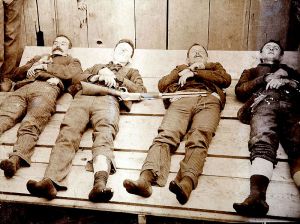
Somewhere between that humiliating failure in 1890 and their terrible deaths in 1892 while trying to rob TWO banks – across the street from each other – at the same time – in broad daylight – which resulted in a shootout – and most of the gang getting killed, their fine morals and upbringing obviously went astray. Boys will be boys.
The photo here is from Wikipedia from the 1892 shootout. The middle two are Bob and Grat. Their boots were removed. They are all in handcuffs. Who took their boots?? And why are they handcuffed?? And what’s up with the gun in the photo?? So, they had a town photographer, but no town doctor to know if they were dead or not, hence the handcuffs??
Anyway, Old Man Stuckey’s story starts with the Dalton Gang on the very day of this bank shootout. Old Man Stuckey didn’t pick very good friends.
April 2016 A to Z Challenge – I’m blogging about history.
K is for King Tut’s Curse
When you think of a king, you usually picture an older, wiser man, sporting a beard and a long robe. Well, King Tut was king for only ten years and died at the young age of nineteen. He was hardly the image we picture in our heads. He died around 1324 B.C. but his remains weren’t discovered until over three thousand years later. His tomb was discovered and opened by Howard Carter November 29, 1922. The carvings on the walls predicted a swift death to anyone who bothers his tomb. (photo by Jerzy Strzelecki, wikimedia.)
“Death shall come on swift wings to him who disturbs the peace of the king.”
Let’s see if the prophecies came true.
The first death occurred four months after opening the tomb. George Herbert was the financier of the excavation. He was bitten on the cheek by a mosquito and accidentally cut the bump while shaving. He developed blood poisoning and died April 1923. Coincidentally, the first autopsy of King Tut revealed a healed lesion on his left cheek. Legend has it that Herbert’s son reported Herbert’s dog back in England howled and dropped dead at the same time as his master.
George Gould visited the tomb, developed a fever, and died May 1923.
Prince Ali Kamel Fahmy Bey visited the tomb. He was shot dead by his wife July 1923.
Colonel Aubrey Herbert, George Herbert’s half brother, died September 1923 from blood poisoning.
Sir Archibald Douglas-Reid, the radiologist who x-rayed King Tut, died January 1924.
Sir Lee Stack, died November 1924 of assassination in Cairo.
A. C. Mace, a member of the excavation team, died in 1928 of arsenic poisoning.
Mervyn Herbert, George Herbert’s half brother and Aubrey Herbert’s full brother, died May 1929 of malaria.
Captain Bethell, Carter’s secretary, died November 1929 of poisoning.
Richard Bethell, father of the above, died February 1930 of suicide.
Fifty-eight people were present at the opening of the tomb. Eight died strange deaths in the twelve years following. By 1935, the press had attributed twenty one deaths to the curse. Dozens of people connected with the opening of the tomb, from security guards to archeologists, had strange incidents occur soon after the opening of the tomb.
James Breasted worked with Howard Carter after the tomb was opened. Breasted found his canary dead in its cage in the mouth of a cobra, a symbol of the Egyptian monarchy.
In 1925, Carter gave his friend Bruce Ingram a paperweight of a mummified hand wearing a scarab bracelet that said, “Cursed be he who moves my body. To him shall come fire, water, and pestilence.” Soon after receiving the gift, Ingram’s house burned down. After it was rebuilt, it flooded.
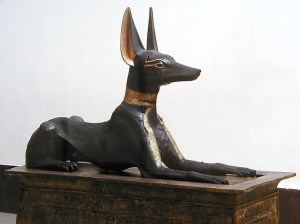
In May 1926, Carter reported in his diary that he witnessed jackals around the site, the same type as Anubis who is the guardian of the king. He said he had never seen a jackal in his thirty-five years of working in the desert. (photo by Jon Bodsworth, wikimedia)
Skeptics point out that many of the original founders lived long and healthy lives, but when was the last time you heard of someone dying of poisoning? I don’t believe in curses any more than I believe in ghosts, but I find it all very strange.
Most everyone knows Jefferson Davis was the President of the Confederate States during the Civil War. Here are some interesting facts you may not know. (photo www.biography.com)
Jefferson Davis served in the U.S. Army for a time. While there, he fell in love with his commander’s daughter, Sarah Taylor, daughter of future president Zachary Taylor.
Ole Zach wouldn’t give them permission to marry for he thought being a wife in an army post was too hard a life for his little girl. Jeff was depressed by the judgment, though he understood Zach’s stance. He traveled south to talk to his brother Joseph Davis about it. Joe had also been in the army and had resigned to move south and start a plantation. The brothers came to the conclusion that being in the army wasn’t such a great life. Jeff made a decision to leave the army. On June 17, 1935, he married Sarah, and on June 30th, he resigned his position.
Jeff and Sarah moved south to help his brother with the plantation. Joe gave Jeff a portion of the land that was covered with briers and bushes. To escape the summer heat, Jeff and Sarah traveled south to the coast to visit his sister in Louisiana. Sarah contracted malaria, yellow fever as it was known at the time, and she died only three months after they were married.
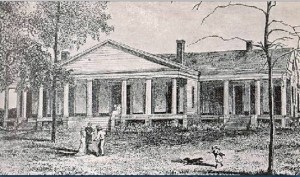
For years following his bride’s death, he was a recluse. He spent his time developing a 1000-acre plantation on his brother’s land and he called it Brierfield. (photo http://mshistorynow.mdah.state.ms.us)
In 1944, he eventually remarried. By this time, his plantation was successful and he had over 100 slaves. He spent the next decade being placed in various offices by the governor of Mississippi. When Mississippi succeeded from the union, Jeff was acting as the state senator. He was very saddened by the news of succession and delivered his farewell address to the Senate and returned to Mississippi. He was soon appointed commander in chief of the Confederate armies, then appointed President. He was not happy about the war. He certainly did not want the job as President.
Upon leaving the Senate, he returned to Brierfield for a short time before moving to Montgomery, Alabama which was the capitol of the Confederacy.
What I find interesting about the story is that when Sherman started his campaign in Vicksburg, MS, he burnt down Hurricane Plantation, Joe’s home. He didn’t burn Brierfield Plantation next door. He used it instead as a supply post for the Union army. Coincidence? I doubt it. Imagine how angry Jeff was after spending his mourning time building it. It was almost a shrine to Sarah. Now it was in the hands of the enemy.
After the Confederates surrendered to the Union in 1865, Jeff was imprisoned as a traitor for a while, but released after two years. He returned to Brierfield but found it unlivable.
Joe had never given Jeff the title to the land, and while Jeff was in jail, Joe had sold Brierfield to their former slaves. After Joe died, the new owners defaulted on the payments. Joe’s grandchildren claimed ownership of the land, but Jeff took them to court and won Brierfield back. For the very first time, after forty years, it was legally his. While he lived in Biloxi at Beauvoir, he tried to make Brierfield profitable again. He was working on the property in the fall of 1889 when he contracted pneumonia. He died a few weeks later.
Ugh. Yes, it’s that time of year again. Tax time. April 15th is right around the corner.
But you know, we didn’t always pay income tax. Our country was established in 1776, and we didn’t pay our first yearly income tax until 1913. How did the federal government survive all those decades without our money??
Well, they did get a bit of it. Around 1800, the government started charging a tax on such things as liquor, sugar, tobacco, carriages, and slaves, but when the War of 1812 started, there wasn’t quite enough money to fund it, so the government started taxing jewelry, too. When the war was finished, congress stopped taxing Americans at all and relied solely on tariffs on imported goods.
The government survived nicely for the next fifty years, but when the civil war began, they again raised taxes to fund it. In 1862, Congress passed the first law enacting an income tax. It was a progressive tax. Persons earning $600 to $10,000 per year paid 3%. People earning more, paid more.
After the war ended, income tax was again eliminated and the government again taxed tobacco and liquor. As a matter of fact, in 1895 THE U.S. SUPREME COURT CLAIMED THAT INCOME TAX WAS UNCONSTITUTIONAL! The money was not equally used across state lines and therefore went against the Constitution.
Where are these people? We should get them back!
Well, good things never last. In 1913, the powers that be passed the 16th amendment, making the income tax a permanent fixture. It states: “The Congress shall have power to lay and collect taxes on incomes, from whatever source derived, without apportionment among the several States, and without regard to any census or enumeration.”
Since that time, new taxes, new laws, new procedures, new rules come and go every year. The 2015 tax code was 74,608 pages long. No wonder Americans are so confused and frustrated. They not only take our money, but they make the laws difficult for us to understand. Then they rule with ridiculously intimidation, sick threats of stiff penalties and fines that make mafia loan sharks look kinder than the tooth fairy, not to mention the threat of jail time that hangs over our heads. Geez. Shame on our government and our system.
I shouldn’t complain. I got a refund this year. But it was my money in the first place, wasn’t it?
Everyone knows the name. Most everyone knows a joke. If you’re familiar with Helen Keller, you probably know she was blind and deaf. She was also an author, a lecturer, and a political activist interested in women’s suffrage, labor rights, and socialism.
She was born June 27, 1880 in Alabama to Arthur Keller and Kate Adams. She was born a normal child with the ability to see and hear, but at the age of 19 months, she contracted either Scarlet Fever or Meningitis and became blind and deaf from the illness. I can’t even imagine how she was intelligent enough to communicate to her family at such a young age, but by the age of seven, she had created more than sixty signs.
The Keller family was advised to contact Alexander Graham Bell, who was working with deaf children at the time. The photo (from Perkins School for the Blind Archives – Wikimedia) is of Helen and Mr. Bell. He referred them to Perkins Institute for the blind, which marked the beginning of Helen’s slow walk to normalcy. Helen studied with a visually-impaired former student of Perkins Institute, Anne Sullivan, who became her lifelong friend and eventually accompanied her to NY to also attend a school for the deaf. Helen continued her education by attending Cambridge School for Young Ladies and Radcliffe College, where she was the first deaf blind person to receive a Bachelor of Arts Degree.
She was fluent at Braille, reading sign language by touching another’s hands, and she could experience music if it was close enough to vibrate a nearby table or other object.
In her later life, she achieved so many honors, it is impossible to list them all here. The ones I found interesting are that she traveled the world, received the Presidential Medal of Freedom, published twelve books, met every president from Grover Cleveland to Lyndon Johnson, and was friends with Charlie Chaplin and Mark Twain. The others are available on Wikipedia at https://en.wikipedia.org/wiki/Helen_Keller.
In 1961, she suffered a series of strokes and spent the rest of her life at her home in Connecticut. She died peacefully in her sleep June 1, 1968 at the age of 87. She is buried at the Washington National Cathedral.
How did she learn to speak without being able to hear or see? She can tell you in her own words.
Perhaps, no other moment in the history of the United States is as touching or as memorable as President Lincoln’s Gettysburg Address.
July 1863 marked the bloodiest battle of the civil war. Union and Confederate soldiers clashed at Gettysburg, marking the end of thousands of lives. 45,000 soldiers were killed, injured, captured, or went missing. It was left to Pennsylvania’s governor to take care of the fallen soldier’s remains. In October, seventeen acres were purchased and the Union soldiers killed in the battle were re-buried in a formal cemetery. Almost as an after-thought, two weeks before the dedication ceremony, President Lincoln was asked to give a speech, setting the cemetery apart as sacred land. This battle was recognized as a major turning point of the war for the north, so I would think the President thought it a fine opportunity to spread a little positive encouragement to a war-weary Union.
November 19, 1863, on the way to the Gettysburg cemetery grounds, President Lincoln told his companions that he felt weak and dizzy. During his speech, it was noted that he looked “a ghastly color.” On the return train trip to Washington D.C., the President became ill with fever and a headache. It was determined later that he suffered from a mild case of small pox. Feeling sick and feverish, I can’t imagine how he sat through a long and most likely boring event, keeping in mind it was a bitterly freezing day in November in Pennsylvania.
The ceremony began with music played by a band, a prayer by a reverend, more music, and a two-hour speech by Edward Everett. It continued with more music, a hymn, a song by the Baltimore Glee Club, and finally… the speech by President Lincoln. It concluded with a song sung by a choir and a benediction.
Lincoln’s short speech has gone down in history. It was met with mixed feelings at the time, but has now become the most articulate version of our vision for democracy. For those of you who don’t do math, the ‘Four score and seven years ago’ is referring to 1776, the beginning of the American Revolution.
Ladies and Gentlemen, the President of the United States.
Four score and seven years ago our fathers brought forth on this continent a new nation, conceived in liberty, and dedicated to the proposition that all men are created equal.
Now we are engaged in a great civil war, testing whether that nation, or any nation so conceived and so dedicated, can long endure. We are met on a great battlefield of that war. We have come to dedicate a portion of that field, as a final resting place for those who here gave their lives that that nation might live. It is altogether fitting and proper that we should do this.
But, in a larger sense, we can not dedicate, we can not consecrate, we can not hallow this ground. The brave men, living and dead, who struggled here, have consecrated it, far above our poor power to add or detract. The world will little note, nor long remember what we say here, but it can never forget what they did here. It is for us the living, rather, to be dedicated here to the unfinished work which they who fought here have thus far so nobly advanced. It is rather for us to be here dedicated to the great task remaining before us—that from these honored dead we take increased devotion to that cause for which they gave the last full measure of devotion—that we here highly resolve that these dead shall not have died in vain—that this nation, under God, shall have a new birth of freedom—and that government of the people, by the people, for the people, shall not perish from the earth.
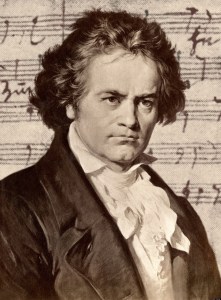
Most people are familiar with Beethoven’s piece “Fur Elise,” but there are still questions about who the piece was written for. The original manuscript, which has since been lost, was composed when he was forty years old and going deaf. It was dated 27 Apr 1810. It was found upon Beethoven’s death by Ludwig Nohl in 1826, but it wasn’t published until nearly forty years later in 1865. (If you’re trying to piece together a timeline in your head, that was the same year the civil war ended in America.)
The version we know today was the first draft transcribed by Nohl, but there was also a later revised and incomplete version in Beethoven’s hand dated 1822 that used arpeggios in the left hand and had a few extra bars.
It isn’t certain who Elise was, but there are a few possibilities:
The manuscript may have been transcribed wrong, and it may have been “Fur Therese,” as in Therese Malfatti. Beethoven was in love with her and proposed marriage to her in 1810, but she turned him down and married someone else.
It may have been written for soprano Elisabeth Rockel (called Elise and Betty) who had befriended Beethoven in 1808.
It may have been written for Juliane Katharine Elisabet Barensfeld (called Elise) who was a child prodigy and live with Beethoven’s friend Johann Malzel. Supposedly, Beethoven dedicated the song to the 13-year-old Elise as a favor to the above mentioned Therese who lived next door to Malzel.
There is also a theory that ‘Elise’ was a general term for ‘Sweetheart.’
Whomever the girl was, she must have been very special for him to dedicate to her such a beautiful piece.
In researching for this blog, I found the following ten-minute video from Open University. It’s called “The History of English in Ten Minutes.” I couldn’t create or write anything as brilliant as this, so I’ve admitted my defeat and have transcribed it below. Watch, read, or follow along.
The History of English in Ten Minutes
Chapter 1 Anglo-Saxon
The English language begins with the phrase ‘Up Yours Caesar!’ as the Romans leave Britain and a lot of Germanic tribes start flooding in, tribes such as the Angles and the Saxons – who together gave us the term Anglo-Saxon, and the Jutes – who didn’t. The Romans left some very straight roads behind, but not much of their Latin language. The Anglo-Saxon vocab was much more useful as it was mainly words for simple everyday things like ‘house’, ‘woman’, ‘loaf’ and ‘werewolf’. Four of our days of the week were named in honor of Anglo-Saxon gods, but they didn’t bother with Saturday, Sunday and Monday as they had all gone off for a long weekend. While they were away, Christian missionaries stole in bringing with them leaflets about jumble sales and more Latin. Christianity was a hit with the locals and made them much happier to take on funky new words from Latin like ‘martyr’, ‘bishop’ and ‘font’. Along came the Vikings, with their action-man words like ‘drag’, ‘ransack’, ‘thrust’ and ‘die’. They may have raped and pillaged but there were also into ‘give’ and ‘take’ – two of around 2000 words that they gave English, as well as the phrase ‘watch out for that man with the enormous ax.”
Chapter 2 The Norman Conquest
True to his name, William the Conqueror invades England, bringing new concepts from across the channel like the French language, the Doomsday book and the duty free Galois’s multipack. French was de rigeur for all official business, with words like ‘judge’, ‘jury’, ‘evidence’ and ‘justice’ coming in and giving John Grisham’s career a kick-start. Latin was still used ad nauseam in Church, and the common man spoke English – able to communicate only by speaking more slowly and loudly until the others understood him. Words like ‘cow’, ‘sheep’ and ‘swine’ come from the English-speaking farmers, while the a la carte versions – ‘beef’, ‘mutton’ and ‘pork’ – come from the French-speaking toffs – beginning a long running trend for restaurants having completely indecipherable menus. All in all the English absorbs about 10,000 new words from the Normans, but they still couldn’t grasp the rules of cheek kissing. The bonhomie all ended when the English nation took their new warlike lingo of ‘armies’, ‘navies’ and ‘soldiers’ and began the Hundred Years War against France. It actually lasted 116 years but by that point no one could count any higher in French and English took over as the language of power.
Chapter 3 Shakespeare
As the dictionary tells us, about 2000 new words and phrases were invented by William Shakespeare. He gave us handy words like ‘eyeball’, ‘puppy-dog’ and ‘anchovy’ – and more show-offy words like ‘dauntless’, ‘besmirch’ and ‘lacklustre’. He came up with the word ‘alligator’, soon after he ran out of things to rhyme with ‘crocodile’. And a nation of tea-drinkers finally took him to their hearts when he invented the ‘hobnob’. Shakespeare knew the power of catchphrases as well as biscuits. Without him we would never eat our ‘flesh and blood’ ‘out of house and home’ – we’d have to say ‘good riddance’ to ‘the green-eyed monster’ and ‘breaking the ice’ would be ‘as dead as a doornail’. If you tried to get your ‘money’s worth’ you’d be given ‘short shrift’ and anyone who ‘laid it on with a trowel’ could be ‘hoist with his own petard’. Of course it’s possible other people used these words first, but the dictionary writers liked looking them up in Shakespeare because there was more cross-dressing and people poking each other’s eyes out. Shakespeare’s poetry showed the world that English was a rich vibrant language with limitless expressive and emotional power. And he still had time to open all those tearooms in Stratford.
Chapter 4 The King James Bible
In 1611 ‘the powers that be’ ‘turned the world upside down’ with a ‘labor of love’ – a new translation of the bible. A team of scribes with the ‘wisdom of Solomon’ – ‘went the extra mile’ to make King James’s translation ‘all things to all men’, whether from their ‘heart’s desire’ ‘to fight the good fight’ or just for the ‘filthy lucre’. This sexy new Bible went ‘from strength to strength’, getting to ‘the root of the matter’ in a language even ‘the salt of the earth’ could understand. ‘The writing wasn’t on the wall’, it was in handy little books and with ‘fire and brimstone’ preachers reading from it in every church, its words and phrases ‘took root’ ‘to the ends of the earth’ – well at least the ends of Britain. The King James Bible is the book that taught us that ‘a leopard can’t change its spots’, that ‘a bird in the hand is worth two in the bush’, that ‘a wolf in sheep’s clothing’ is harder to spot than you would imagine, and how annoying it is to have ‘a fly in your ointment’. In fact, just as ‘Jonathan begat Meribbaal; and Meribbaal begat Micah,’ the King James Bible begat a whole glossary of metaphor and morality that still shapes the way English is spoken today. Amen.
Chapter 5 The English of Science
Before the 17th Century scientists weren’t really recognized – possibly because lab-coats had yet to catch on. But suddenly Britain was full of physicists – there was Robert Hooke, Robert Boyle – and even some people not called Robert, like Isaac Newton. The Royal Society was formed out of the Invisible College – after they put it down somewhere and couldn’t find it again. At first they worked in Latin. After sitting through Newton’s story about the ‘pomum’ falling to the ‘terra’ from the ‘arbor’ for the umpteenth time, the bright sparks realized they all spoke English and could transform our understanding of the universe much quicker by talking in their own language. But science was discovering things faster than they could name them. Words like ‘acid’, ‘gravity’, ‘electricity and ‘pendulum’ had to be invented just to stop their meetings turning into an endless game of charades. Like teenage boys, the scientists suddenly became aware of the human body – coining new words like ‘cardiac’ and ‘tonsil’, ‘ovary’, and ‘sternum’ – and the invention of ‘penis’ and ‘vagina’ made sex education classes a bit easier to follow, though ‘clitoris’ was still a source of confusion.
Chapter 6 English and Empire
With English making its name as the language of science, the Bible and Shakespeare, Britain decided to take it on tour. Asking only for land, wealth, natural resources, total obedience to the crown and a few local words in return. They went to the Caribbean looking for gold and a chance to really unwind – discovering the ‘barbeque’, the ‘canoe’ and a pretty good recipe for rum punch. They also brought back the word ‘cannibal’ to make their trip sound more exciting. In India there was something for everyone. ‘Yoga’ – to help you stay in shape, while pretending to be spiritual. If that didn’t work there was the ‘cummerbund’ to hide a paunch and – if you couldn’t even make it up the stairs without turning ‘crimson’ – they had the ‘bungalow’. Meanwhile in Africa they picked up words like ‘voodoo’ and ‘zombie’ – kicking off the teen horror film. From Australia, English took the words ‘nugget’, ‘boomerang’ and ‘walkabout’ – and in fact the whole concept of chain pubs. Between toppling Napoleon and the first World War, the British Empire gobbled up around 10 millions square miles, 400 million people and nearly a hundred thousand gin and tonics, leaving new varieties of English to develop all over the globe.
Chapter 7 The Age of the Dictionary
With English expanding in all directions, along came a new breed of men called lexicographers, who wanted to put an end to this anarchy – a word they defined as ‘what happens when people spell words slightly differently from each other’. One of the greatest was Doctor Johnson, whose ‘Dictionary of the English Language’ took him 9 years to write. It was 18 inches tall and contained 42,773 entries – meaning that even if you couldn’t read, it was still pretty useful if you wanted to reach a high shelf. For the first time, when people were calling you ‘a pickle herring’, a ‘jobbernowl or a ‘fopdoodle’ – you could understand exactly what they meant – and you’d have the consolation of knowing they all used the standard spelling. Try as he might to stop them, words kept being invented and in 1857 a new book was started that would become the Oxford English Dictionary. It took another 70 years to be finished after the first editor resigned to be an Archbishop, the second died of TB and the third was so boring that half his volunteers quit and one of the ended up in an asylum. It eventually appeared in 1928 and has continued to be revised ever since – proving the whole idea that you can stop people making up words is complete snuffbumble.
Chapter 8 American English
From the moment Brits landed in America they needed names for all the new plants and animals so they borrowed words like ‘raccoon’, ‘squash’ and ‘moose’ from the Native Americans, as well as most of their territory. Waves of immigrants fed America’s hunger for words. The Dutch came sharing ‘coleslaw’ and ‘cookies’ – probably as a result of their relaxed attitude to drugs. Later, the Germans arrived selling ‘pretzels’ from ‘delicatessens’ and the Italians arrived with their ‘pizza’, their ‘pasta’ and their ‘mafia’, just like mamma used to make. America spread a new language of capitalism – getting everyone worried about the ‘breakeven’ and ‘the bottom line’, and whether they were ‘blue chip’ or ‘white collar’. The commuter needed a whole new system of ‘freeways’, ‘subways’ and ‘parking lots’ – and quickly, before words like ‘merger’ and ‘downsizing’ could be invented. American English drifted back across the pond as Brits ‘got the hang of’ their ‘cool movies’, and their ‘groovy’ ‘jazz’. There were even some old forgotten English words that lived on in America. So they carried on using ‘fall’, ‘faucets’, ‘diapers’ and ‘candy’, while the Brits moved on to ‘autumn’, ‘taps’, ‘nappies’ and NHS dental care.
Chapter 9 Internet English
In 1972 the first email was sent. Soon the Internet arrived – a free global space to share information, ideas and amusing pictures of cats. Before the Internet, English changed through people speaking it – but the net brought typing back into fashion and hundreds of cases of repetitive strain injury. Nobody had ever had to ‘download’ anything before, let alone use a ‘toolbar’ – And the only time someone set up a ‘firewall’, it ended with a massive insurance claim and a huge pile of charred wallpaper. Conversations were getting shorter than the average attention span – why bother writing a sentence when an abbreviation would do and leave you more time to ‘blog’, ‘poke’ and ‘reboot’ when your ‘hard drive’ crashed? ‘In my humble opinion’ became ‘IMHO, ‘by the way’ became ‘BTW,’ and ‘if we’re honest that life-threatening accident was pretty hilarious! simply became ‘fail’. Some changes even passed into spoken English. For your information people frequently asked questions like, “How can ‘LOL’ mean ‘laugh out loud’ and ‘lots of love’?” But if you’re going to complain about that then UG2BK. (You’ve got to be kidding.)
Chapter 10 Global English
In the 1500 years since the Roman’s left Britain, English has shown an unique ability to absorb, evolve, invade, and if we’re honest, steal. After foreign settlers got it started, it grew into a fully-fledged language all of its own, before leaving home and travelling the world, first via the high seas, then via the high speed broadband connection, pilfering words from over 350 languages and establishing itself as a global institution. All this despite a written alphabet that bears no correlation to how it sounds and a system of spelling that even Dan Brown couldn’t decipher. Right now around 1.5 billion people speak English. Of these about a quarter are native speakers, a quarter speak it as their second language, and half are able to ask for directions to a swimming pool. There’s Hinglish – which is Hindi-English, Chinglish – which is Chinese-English, and Singlish – which is Singaporean English – and not that bit when they speak in musicals. So in conclusion, the language has got so little to do with England these days it may well be time to stop calling it ‘English’. But if someone does think up a new name for it, it should probably be in Chinese.
In 1868 following the American Civil War, the head of a Union veterans organization established Decoration Day as a time to decorate the graves of those killed in the war. However, this was certainly not a new idea, as those in the South had been doing this in family graveyards for years, well before the war. Families would gather on a Sunday in early summer at the cemetery grounds for a religious service and a picnic and place flowers on the graves of their loved ones.
There is another claim that black Americans actually invented the celebration/commemoration in Charleston, South Carolina at the close of the war in 1865, when 10,000 men, black and white, proclaimed to the world what the war was really about and celebrated the end of the war and freedom from slavery.
By the 20th century, the conflicting traditions merged to become one – Memorial Day.
Towns in Pennsylvania, Georgia, Mississippi, and Illinois have all claimed the creation of Memorial Day, and if that isn’t confusing enough, in 1966, President Johnson signed a proclamation declaring Waterloo, NY as the birthplace of Memorial Day. Seems to me they’re all about 100 years too late, and I’m not the only one who thinks so. The 89th Congress recognized that the observance of Memorial Day happened 100 years prior to the presidential proclamation.
When the first observance in 1868 was planned, it is said May 30 was chosen because it wasn’t the anniversary of any civil war battle. The White House, in typical form, says it was chosen “as an optimal date for flowers to be in bloom.” Seriously, why do we elect these people??
The earliest observances mixed religion and nationalism together to provided a way for people to make sense of their history in terms of sacrifice for a better nation. I wish people today would understand and honor that instead of trying to erase it, but that’s a-whole-nother blog. To properly honor Memorial Day, you raise your flag to the top of the staff, then lower it to half staff until noon, when you raise it again. Memorial Day is about death, sacrifice, and rebirth. Perhaps we should commemorate it more than once per year.
Just in case you go on Jeopardy: The longest continually running Memorial Day Parade has been held every year since 1868 in Ironton, Ohio.
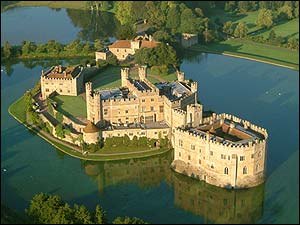
Leeds Castle is located in Maidstone, Kent, England. It was a Norman stronghold in the 11th and 12th centuries, a royal palace in the 13th through 15th, and a Tudor palace in the 16th century. It was also owned by my family at one point. The Culpepers (my mother’s family) owned the castle before the English civil war in the early 1600s. They lost it due to being on the wrong side of the war. If you’re not familiar with the outcome of the war, the king was beheaded and the royalist Culpepers fled to the new colonies to escape the same fate.
In the mid-1600s, the royal family was returned to the throne, and the Culpepers got their house back!!
What is now called the Culpeper garden was originally a kitchen garden and nothing more, but in 1980, a designer transformed it into a cottage garden. It has an informal layout with low box hedges bordering Roses, Lupines, and Poppies. It is said to be named after herbalist Nicholas Culpeper, who is a distant cousin of mine. Nicholas transcribed the pharmacopoeia from Latin to English “so that all men may prescribe for themselves.” He ended up dying in the war mentioned above, but as far as I know, he never lived in the castle. It is still nice that they honored the family hundreds of years later by naming something after them.
The final Culpeper owner of Leeds was Catherine Culpeper. She married Thomas Fairfax in 1690 and the property then transferred into the Fairfax family. Below are photos of Catherine and Thomas. Since their grandfathers were bitter enemies during the war, I’ve always wondered if the families condoned the marriage, if Catherine was being rebellious by marrying the enemy, or if the Fairfaxes were simply out to take everything from the Culpepers. I’m currently writing a story about it called “The Culpepper-Fairfax Scandal.” I’m not set on the end yet, so we’ll see where the characters take me and which scenario plays out. At some point in the story, I need to include a stroll through the garden.
![A2Z-BADGE_[2016]](https://loricrane.com/wp-content/uploads/2016/04/a2z-badge_2016.jpg?w=182&h=182) April 2016 A to Z Challenge – I’m writing about history.
April 2016 A to Z Challenge – I’m writing about history. True? Not true? Half true but blown way out of proportion?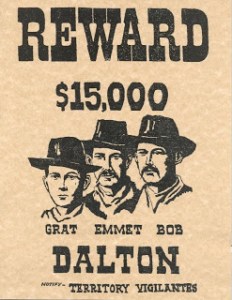
![A2Z-BADGE_[2016]](https://loricrane.com/wp-content/uploads/2016/04/a2z-badge_2016.jpg?w=164&h=164) April 2016 A to Z Challenge – I’m blogging about history.
April 2016 A to Z Challenge – I’m blogging about history. When you think of a king, you usually picture an older, wiser man, sporting a beard and a long robe. Well, King Tut was king for only ten years and died at the young age of nineteen. He was hardly the image we picture in our heads. He died around 1324 B.C. but his remains weren’t discovered until over three thousand years later. His tomb was discovered and opened by Howard Carter November 29, 1922. The carvings on the walls predicted a swift death to anyone who bothers his tomb. (photo by
 In May 1926, Carter reported in his diary that he witnessed jackals around the site, the same type as Anubis who is the guardian of the king. He said he had never seen a jackal in his thirty-five years of working in the desert. (photo by
 ![A2Z-BADGE_[2016]](https://loricrane.com/wp-content/uploads/2016/04/a2z-badge_2016.jpg?w=181&h=181)
 Most everyone knows Jefferson Davis was the President of the Confederate States during the Civil War. Here are some interesting facts you may not know. (photo
  For years following his bride’s death, he was a recluse. He spent his time developing a 1000-acre plantation on his brother’s land and he called it Brierfield. (photo
 ![A2Z-BADGE_[2016]](https://loricrane.com/wp-content/uploads/2016/04/a2z-badge_2016.jpg?w=187&h=187)

 Since that time, new taxes, new laws, new procedures, new rules come and go every year. The 2015 tax code was 74,608 pages long. No wonder Americans are so confused and frustrated. They not only take our money, but they make the laws difficult for us to understand. Then they rule with ridiculously intimidation, sick threats of stiff penalties and fines that make mafia loan sharks look kinder than the tooth fairy, not to mention the threat of jail time that hangs over our heads. Geez. Shame on our government and our system.
![A2Z-BADGE_[2016]](https://loricrane.com/wp-content/uploads/2016/04/a2z-badge_2016.jpg?w=216&h=216)
 The Keller family was advised to contact Alexander Graham Bell, who was working with deaf children at the time. The photo (from Perkins School for the Blind Archives – Wikimedia) is of Helen and Mr. Bell. He referred them to Perkins Institute for the blind, which marked the beginning of Helen’s slow walk to normalcy. Helen studied with a visually-impaired former student of Perkins Institute, Anne Sullivan, who became her lifelong friend and eventually accompanied her to NY to also attend a school for the deaf. Helen continued her education by attending Cambridge School for Young Ladies and Radcliffe College, where she was the first deaf blind person to receive a Bachelor of Arts Degree.
![A2Z-BADGE_[2016]](https://loricrane.com/wp-content/uploads/2016/04/a2z-badge_2016.jpg?w=168&h=168)
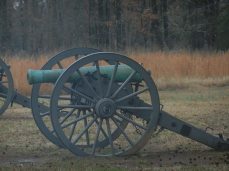 Perhaps, no other moment in the history of the United States is as touching or as memorable as President Lincoln’s Gettysburg Address.
![A2Z-BADGE_[2016]](https://loricrane.com/wp-content/uploads/2016/04/a2z-badge_2016.jpg?w=175&h=175)
![A2Z-BADGE_[2016]](https://loricrane.com/wp-content/uploads/2016/04/a2z-badge_2016.jpg?w=206&h=206)
 In 1868 following the American Civil War, the head of a Union veterans organization established Decoration Day as a time to decorate the graves of those killed in the war. However, this was certainly not a new idea, as those in the South had been doing this in family graveyards for years, well before the war. Families would gather on a Sunday in early summer at the cemetery grounds for a religious service and a picnic and place flowers on the graves of their loved ones.
![A2Z-BADGE_[2016]](https://loricrane.com/wp-content/uploads/2016/04/a2z-badge_2016.jpg?w=170&h=170)
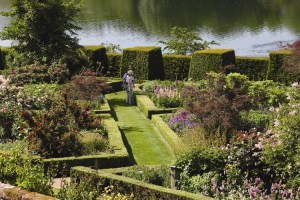 What is now called the Culpeper garden was originally a kitchen garden and nothing more, but in 1980, a designer transformed it into a cottage garden. It has an informal layout with low box hedges bordering Roses, Lupines, and Poppies. It is said to be named after herbalist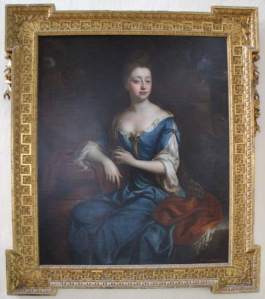

 Lori Crane