Margaretta van Hesse from “John Culpepper, Esquire”

JC Esquire (1)In place of my usual Saturday Snippets, I’m writing about the people and places from the Culpepper Saga. The third book, “John Culpepper, Esquire,” will be released in July. If you missed books one or two, click HERE or HERE.

margaretta van hesse Lady CulpepperOne of the more tragic figures of “John Culpepper, Esquire” is Margaretta van Hesse, also known as Lady Culpepper (photo). She was an heiress from Denmark who married Lord Thomas Culpepper second baron of Thoresway in 1659 at The Hague. Lord Thomas (photo) was the son of Lord John Culpepper, known in the story as JC, cousin of our hero.
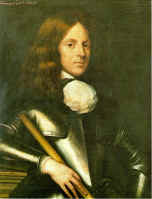
lord_thosFollowing the English Civil War, JC had taken his family to Denmark while he watched over the exiled prince, but when the prince was welcomed back into England in 1660 as King Charles II, the whole family moved back. Lord Thomas and his new bride took up residence at Leeds Castle. She was newly married, probably didn’t speak the language or understand the English customs, and Lord Thomas unceremoniously dropped her off at the castle and moved to London to live with his mistress Susannah Willis.

Fortunately for Margaretta, John’s nephew Alex was asked by JC to stay at the castle and help her get settled in. There is no proof of Margaretta and Alex having any sort of relationship, but there are a few strange coincidences that make me scratch my head.

Alex’s mom, Katherine, died in 1658.

LadyCatherineMargaretta, somehow without a husband around, gave birth to a daughter in 1670. The baby was named Catherine (photo). Hmmm.

In 1671, Lord Thomas appointed Alex the Surveyor General of Virginia and tried to send him away. Records show Alex in Virginia for a short time, but he almost immediately came back to England.

In 1689, Lord Thomas became ill and died in his house in London. Margaretta didn’t even find out about it until well after his death. His mistress had him buried. He left a will in favor of the mistress, but Margaretta had the will suppressed, making sure Catherine got everything. Before Margaretta went to court, with Alex along to assist her, Alex, now 58-years-old, quickly and conveniently married Lord Thomas’s sister Judith, who moved into Leeds Castle with them. The woman was old and died a year later.

Alex died in 1694 and in his will, he left everything to Margaretta. He was buried at St. Margaret’s Church in Bromfield, Kent, near the castle.

Margaretta never re-married. She died in 1710 at Leeds Castle and was buried at St. Margaret’s.
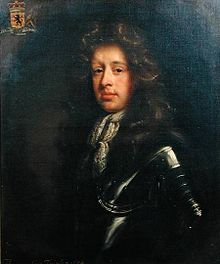
Thomas_Fairfax 5th baron of cameron, catherine culpeppers husbandA year after her inheritance, young Catherine married Lord Thomas Fairfax (photo) in 1690. Their children were: Thomas Fairfax, Henry Colpepper Fairfax, Katherine Fairfax, Margaret Fairfax, Frances Fairfax, Mary Fairfax, and Robert Fairfax. Family historians state that Catherine had all of her children baptized at St. Margaret’s and had built a family vault to bury her mother in. Nothing is ever mentioned about Alex’s connection or the fact that he is buried there also. Strangely enough, Catherine’s husband died the same year as her mother but was buried elsewhere.

Catherine died in 1719 at the age of 49. She was not buried with her husband. She was buried at St. Margaret’s with her mother and Alex.

The Culpepper Saga ends in the late 1670s, so we don’t learn about Catherine and Lord Fairfax, but in book two “John Culpepper the Merchant” their grandfathers were trying to kill each other during the civil war. I imagine their marriage was quite scandalous in both families, and I suspect there will be a juicy sequel about them coming this winter or early next spring. “The Culpepper-Fairfax Scandal” sounds like a good title.

culpepper saga-001

52 Ancestors #26 Sir Alexander Culpepper

52ancestors-2015

This challenge is set forth by No Story Too Small and this week’s theme is “Halfway.”

This was a difficult theme, and I looked through half-Indian ancestors, halfway to the furthest ancestor, taking up half my time in research ancestors, anyone with a name that included “half,” and every other angle one could think of. I eventually came up with Sir Alexander Culpepper of Greenway Court, Knight who made it halfway through the English Civil War. The war began in 1642 and ended in 1649. Alexander died at the battle of Bridgewater in August 1645. He was my 11th great uncle.

Alexander was the youngest son of John Culpepper of Wigsell and Elizabeth Sedley, born in 1570. His brothers included Sir Thomas of Hollingbourne and Johannes of Feckenham (my 11th great grandfather). He also had a few sisters. In 1603, he married Mary Scott St Leger, the widow of Anthony St Leger. She was quite a bit older than him and was probably already done birthing children by the time they married, so Alexander never had any children of his own. He did have a step-son who was nearly his age, and the man had a daughter named Katherine whom Alexander raised, actually naming her his daughter in his will. Technically, she was his step-granddaughter.

In his will, he also left his home of Leeds Castle (photo) to his nephew’s minor son (son of the above Katherine who married said nephew. Got that?). Anyway, he did this so if the royalists lost the war, the house wouldn’t be seized by the parliamentarians. Before he died, he changed his will to say if his nephew wasn’t alive to oversee the property, the son would not get the house. It would instead go to his cousin Lord John Culpepper the first baron of Thoresway. I don’t know why he did that. Lord John wasn’t even in the country. He was in Denmark and France guarding the queen and the royal children.

Leeds-Castle

In July 1645, Alexander rode to Bridgewater to help fight against Oliver Cromwell and General Thomas Fairfax and was killed there. I wrote about the battle in my book, “John Culpepper the Merchant,” and made him out to be a war hero, but the truth is he was 75 years old at the time and it is reported that he died of illness at Bridgewater, not of battle. At least he made it halfway through the war.

Governor Samuel Stephens from “John Culpepper, Esquire”

JC Esquire (1)In place of my usual Saturday Snippet for the next few weeks, I’ll be writing about the people and places from the third book in the Culpepper Saga, “John Culpepper, Esquire,” which will be released July 2015. If you missed the first or second books, you can see them HERE and HERE.

In the book, due to unforeseen circumstances, John finds himself as patriarch of the Culpepper family, suddenly with two young nieces to watch out for. He marries twenty-year-old Anna off to Christopher Dansby and eighteen-year-old Frances off to an up-and-coming politician named Samuel Stephens.

Samuel Stephens was born in Jamestown, Virginia in 1629. He lived on a 1350-acre plantation called Boldrup in Newport News, Warwick County, Virginia.

Upon Stephens and Frances’s marriage in 1652, she had only been in America for two years. She had been raised in great splendor in England as the Culpepper family were wealthy aristocrats, but following the English Civil War (1642-49) the family needed to escape from the country before they were beheaded. Her uncle John rescued them and brought them to Virginia. Needless to say, the amenities in Virginia were not quite the lands and manors Frances was accustomed to. Upon marrying Samuel Stephens, she surely reverted back to her rich comforts.

Stephens served as the Commander of Southern Plantation (later northeastern North Carolina) 1662-1664, and later became the governor of Albemarle (later North Carolina) from 1667-1669. He was the first native born governor in America. He died in office at the age of forty. They had no children. Frances inherited all of his wealth.

After his untimely death, Frances married Sir William Berkeley in 1670. Berkeley was the governor of Virginia and a childhood friend of her uncle John’s. He was nearly twice her age, but the two made a likely political team. In 1671, the Berkeleys sold Boldrup to William Cole, a member of the Virginia Council.

Today, Boldrup Plantation is a 42-acre historic archeological site and on the U.S. National Register of Historic Places and the Virginia Landmarks Register. The site includes the graves of William Cole and two of his wives.

Saturday Snippet – John Culpepper the Merchant

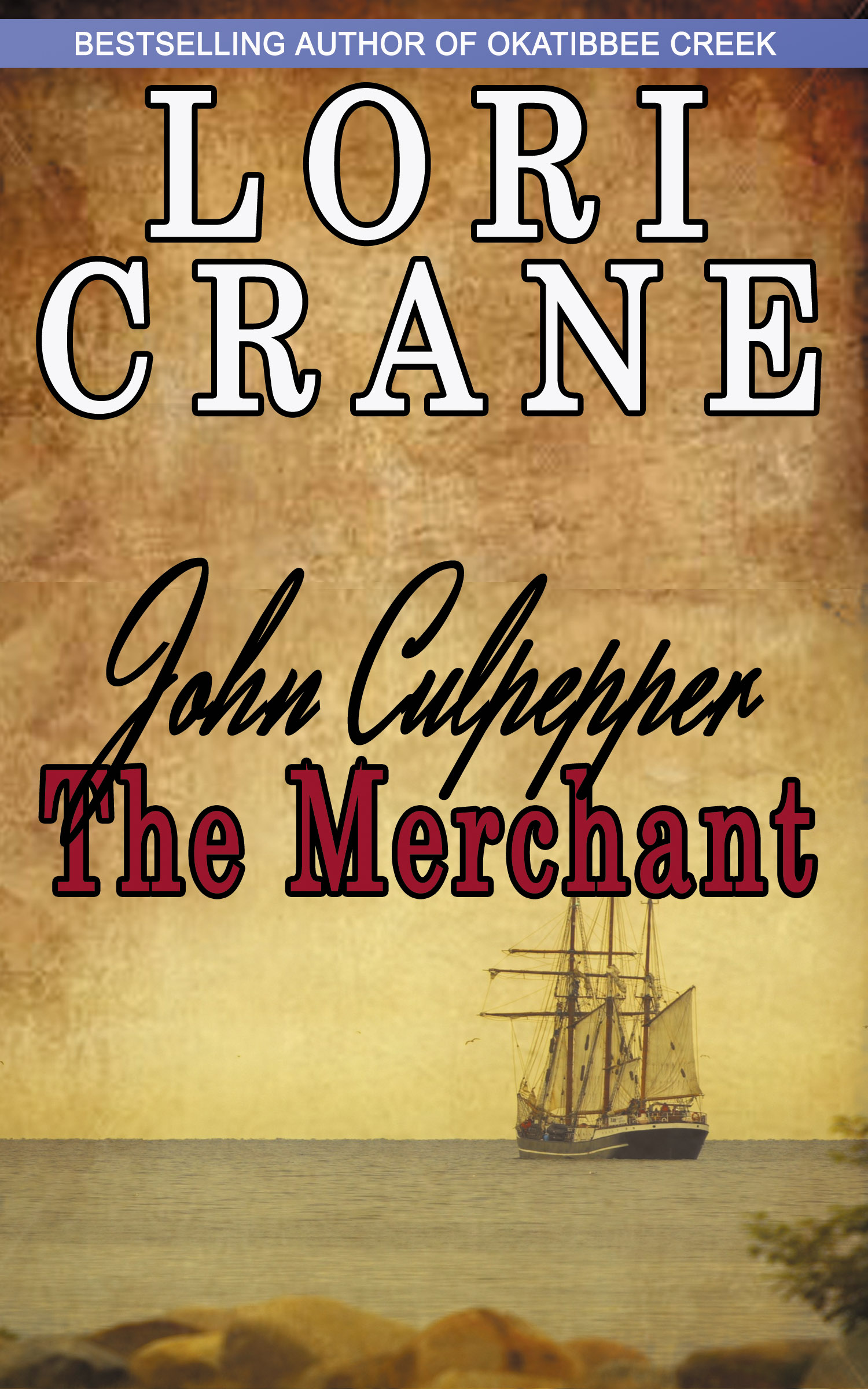
The Merchant ebookMy new book, John Culpepper the Merchant, takes place in the 17th century, both in the colony of Virginia and in the country of England. England was in the middle of a civil war, and John’s uncle, Sir Alexander Culpepper, was a knight in the king’s army. At the battle of Bridgewater, we witnessed how brave Alexander really was.

*********************************************

John Culpepper the Merchant

July 1645, Battle at Bridgewater

“Advance the second cavalry!” Goring commanded.

The second group galloped down the hill.

That’s when Alexander saw them on the other side of the stream. Fairfax’s cavalry appeared out of nowhere, crossing the ford with nothing to stop their advance. There was no clanging of armor as with a regular group of horse heading into battle. Alexander knew these soldiers weren’t in armor. The weight would slow down the horses. He had to admit, Fairfax was a brilliant commander. There was no thunder of hooves as the horses were not galloping. The approaching men were dressed in leather jerkins and moved to a strange and ominous sound of marching hooves and creaking leather. A menacing sound sure to make even the most courageous opponent question his bravery.

They advanced four abreast, knee to knee, with four more behind, and four more behind that. There had to be hundreds of them. They looked like demons rising from the very depths of hell, bent on killing each and every royalist. What happened to the day of fighting with honor and valor? When did the parliamentarians stop taking prisoners? When did they start killing every man who crossed their path? The Welsh soldiers were gone. The light guns were gone. The only thing standing between success and defeat were the three groups of horse, two of which were not faring so well against Fairfax’s army.

“Ready your swords, gentlemen!” Alexander yelled to his men who were waiting nervously at the top of the ridge. Nearly half his men were not professional soldiers but farmers. They weren’t used to facing anything this terrifying. He wasn’t sure he had ever faced anything this terrifying. “Steady…” He watched the horses below him advance across the ford, and far in the distance, he recognized a figure dressed all in black astride a white horse. Fairfax. Black Tom, the royalists called him. The man sat tall in his saddle at the back of his army, looking like Satan himself. Alexander felt his adrenaline rise. Today would be the day General Thomas Fairfax paid for his decision to abandon the king’s men. Today would be the day Black Tom took a sword through his black heart.

Alexander’s men waited and watched, their horses prancing nervously. Fairfax’s group of horses easily destroyed Goring’s first line, scattering the men about the marsh like scarecrows. Even horses lay dead. Alexander grimaced as he watched more men fall and some of the horses run off. The second group fought more diligently than the first and Alexander thought for a moment they could win the battle. That’s when he saw the next group of Fairfax’s men on horseback, larger than the first, crossing the stream, again four abreast. There had to be more than two hundred of them.

“Ready, men!” He yelled to his group of sixty men.

Their swords glistened in the sunlight. This would be the day of their greatest victory or their worst defeat.

Alexander took a deep breath, braced himself, and from the pit of his stomach he bellowed, “Charge!”

********************************************

John Culpepper the Merchant is available in Kindle and paperback at Amazon.

For pictures, paintings, and documents of the people and places in the series, visit the Culpepper Saga Facebook page.

culpepper saga-001

52 Ancestors #24 The Heirloom

52ancestors-2015

This challenge is set forth by No Story Too Small and this week’s theme is “Heirloom.”

I wish I could say I have lots of old stuff, but alas, I have nearly nothing. I have my maternal grandfather’s old cigar box, and a silver makeup compact from my paternal great grandmother, but the most prize possession is now gone. For a while I had possession of my maternal grandmother’s sewing machine, but it was lost in a move years ago. She was an amazing seamstress and worked for the Burnley Shirt Factory in Meridian, Mississippi. I’m certain she’s in this Burnley employee picture taken in 1939, but it’s so small, I haven’t been able to find her. I don’t even know that I could even recognize her in a picture from 1939.

Burnley Shirt Factory 1939

She died at the age of 59 in 1975 and is still greatly missed. This is her, holding me.

Ina Inez Burke Culpepper 1915-1975

burke ina and gdaughter lori

Saturday Snippet – John Culpepper the Merchant

If you read the first book in the Culpepper Saga, “I, John Culpepper,” you’ll remember the red-headed wench John’s father was flirting with at the Blackwall Inn the day John was born in 1606. I was tickled to included her in the second book, and in an off-handed way, she is instrumental in saving John’s family at the end of the book.

********************************

The Merchant ebookJohn Culpepper the Merchant

January 1643, Oliver Cromwell

John and his brother rode through a cold and damp fog into London and went for an ale at the Blackwall Inn. They removed their hats and scarfs and took a seat at the dank, corner table nearest the soot-encrusted fireplace that was glowing warm with embers. A scrawny boy placed a few logs into the fireplace, and the brothers watched the red embers grow into a roaring fire. They ordered a couple pints of ale, and once the barkeep delivered the mugs to the table, Thomas began to fill John in on all the unrest in the land that John had missed over the previous year.

“JC wrote me of the king trying to arrest those five members of the House of Commons and of his raising his standard at Nottingham, but what happened in between?” John asked.

Thomas took a drink and sighed. “Did he tell you about Cromwell?”

John shook his head.

“After the fiasco in the House of Commons, the king fled London and was ambushed in Birmingham.”

“JC told me that.”

“That attack was instigated by Oliver Cromwell.”

“Who’s Oliver Cromwell?”

“Exactly. He’s a nobody, a man of modest means, barely inside the gentry class. He’s sat in Parliament for a few years but has been pretty much useless and quiet. His only claim is that he led a single cavalry troop some years ago, and for some reason, Parliament thought that enough to elevate his status. They placed him in charge of their cavalry. He’s a committed Puritan with deep-rooted desires to take the king down because of his past religious rulings. After remaining quiet and never participating in Parliament’s dealings for years, somehow he convinced Parliament to pass what he called the Militia Ordinance, proclaiming the people of London are bound by law to join Parliament’s militia if called, and he immediately began recruiting men of low birth.”

“What’s the punishment for not joining?”

“Beheading.”

John exhaled and shook his head in disbelief.

Thomas continued. “He’s not recruiting military men or men of gentry, he’s recruiting anyone he can get his hands on. He’s not a trained military leader, so from a strategic standpoint, it’s difficult to guess his next move.”

“How many men does he have now?”

“Probably twice as many as we do. He took over the king’s royal army in London and is recruiting men by force.”

“Have the members of Parliament lost their minds?”

“Apparently so, but not all of them. Many members have disappeared to their country homes. They refuse to participate in taking down the king. The ones who are left, like Cromwell, are now jockeying for position in what they think will be a new country. Parliament is supposed to represent the people, but sadly, the citizens are now afraid of Parliament and the king is nowhere to be found to protect them. Without an option, they’re joining Cromwell’s militia in droves.”

John groaned and looked down into his mug.

An older woman with slivers of gray in her long red hair set two more pints on their table.

“Thank you,” John said.

“You’re Culpeppers,” she said, unquestionably.

John nodded.

She looked into John’s eyes. “You look just like your father.”

“Excuse me, do I know you?” John asked.

“No, you don’t know me.” She smiled and pointed at the mugs. “These pints are on the house. Tell your father to come by and visit.”

“Our father is long dead, madam,” Thomas said.

She spun her head to look at Thomas, shock in her eyes. “Oh, I’m sorry. I didn’t know.” A flash of sadness crossed her face and she looked back at John.

John wondered how this lowly, tavern wench knew a man of his father’s importance. She was middle aged with soft wrinkles around her eyes, but he could tell by her prominent cheekbones and full lips that she had probably been quite beautiful in her younger days. Perhaps this wench was the reason his father remained in London for lengthy stretches of time so many years ago.

The woman’s eyes became misty. “I’m very sorry to hear that. I was rather fond of your father. Well, if you ever need anything, my son owns the fishery in Maidstone, right on the River Medway. His name is Waller and the place is called Waller’s. You tell him his mother sent you.”

John and Thomas looked quizzically at each other and then Thomas said, “Um, Waller’s. All right. Thank you for the information, madam.”

“Of course.” She nodded at Thomas and slowly backed up from the table, stealing fleeting glances at John. “Just like your father,” she mumbled.

********************************

“John Culpepper the Merchant” is available in Kindle and paperback at Amazon.

For pictures, paintings, and documents of the people and places in the Culpepper Saga, please visit the Culpepper Saga Facebook page.

culpepper saga-001

Saturday Snippet – John Culpepper the Merchant

The Merchant ebookMy new release, “John Culpepper the Merchant” is the second book in the Culpepper Saga. It begins in England in 1642 at the onset of the English civil war. The king had been angering his people for his entire reign of seventeen years, and the opening chapter of the book sets the scene. It is one of the catalysts of the war.

***************************************************

John Culpepper the Merchant

Chapter 1

January 4, 1642, London, England

The king marched into the room unannounced. He walked through the middle of the active session of Parliament and was greeted with stunned silence. Never before had a monarch entered the House of Commons uninvited, and the nearly two hundred members present froze in place as if someone had painted their portrait, capturing the moment complete with paper strewn across tables, pens held in the air, and faces turned to pose for the painter. The king did not return their shocked gazes.

From his seat at a table in the center of the room, JC watched the king walk past him, easily slipping between the unmoving members of the House. JC’s jaw fell open when the king sat in the speaker’s chair. JC looked back toward the door, wondering how the king had entered the room without warning and saw the king’s sergeant at arms blocking the doorway. Behind the intimidating man stood the king’s soldiers—hundreds of them as far as JC could tell.

After a lengthy and excruciating silence, the king rose from the chair. The knuckles of his right hand turned white as he gripped the ball on top of his walking stick. His left hand remained at his side, balled into a fist.

“Gentlemen!” The king narrowed his eyes as he scrutinized each face. It was obvious he was not going to stay as he had neglected to remove his wide-brimmed hat, which matched his black velvet cloak. Underneath, he wore a red doublet and breeches, almost the same shade as his face. “I am sorry to have this occasion to come unto you, and I apologize for violating your parliamentary privilege.” His beard twitched as he clenched his teeth. “But those guilty of treason have no privilege.”

There was a collective gasp from the room, and a trickle of sweat dripped down JC’s back. Parliament had not been convened for nearly nine years, as the king thought it his royal prerogative to rule the country alone, but after Scotland had invaded the north in retaliation for the king’s religious rulings, he desperately needed money to fund his army. The only body that could legally raise taxes to fund an army was Parliament, so the king was forced to call on it. It denied the king’s request to raise taxes, and instead compiled a list of over two hundred grievances against the king, demanding he address them. The document had been delivered a month ago but Parliament had never received word as to the king’s reaction.

JC had not participated in the writing of the grievances. For the last nineteen years, he had worked in the king’s service, just as his family had done for many kings and many generations. He would never contribute to anything as treasonous as telling the king how to rule. During his service, JC had never seen the king’s demeanor this threatening. This unannounced visit to the House of Commons was not going to end well for someone.

The king lifted his hand and gestured for his sergeant at arms to enter the room.

All heads turned toward the door, and all eyes followed the sergeant as he walked to the middle of the room and unrolled a piece of paper. He held it with both hands in front of his face and turned clockwise as he read aloud. “I am commanded by His Majesty, my master, upon my allegiance that I should come to the House of Commons and request from Mr. Speaker five members of the House of Commons. When these gentlemen are delivered, I am commanded to arrest them in His Majesty’s name for high treason. Their names are Mr. Denzil Hollis, Sir Arthur Haselrig, Mr. John Pym, Mr. William Strode, and Mr. John Hampden.”

The sergeant rolled up the paper and stuffed it back into his breast pocket.

JC witnessed a scowl cross the king’s face while the sergeant read the names. The five men were the authors of the list of grievances.

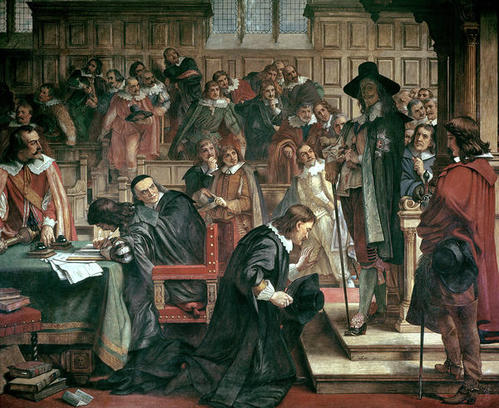
Attempted_Arrest_of_the_Five_members_lenthall kneels before charles“Mr. William Lenthall,” the king bellowed.

A man wearing a black cape with a white collar emerged from the crowd and knelt before the king. “Yes, Your Majesty.”

“Mr. Speaker, where are these men we seek? Do you see them in this room?”

Lenthall kept his eyes to the floor. “May it please Your Majesty, I have neither eyes to see nor tongue to speak in this place but only as the House is pleased to direct me, whose servant I am.”

The king stared at the top of Lenthall’s head. Lenthall remained still. No man risked a glance toward another or even dared to breathe for fear of attracting the king’s attention. The king sighed and said, “I see all the birds have flown.”

With a flick of his wrist, the king flipped his long hair off his shoulder and marched past Lenthall, leaving him kneeling in front of his own empty chair. The sergeant at arms followed the king from the room. When the door slammed, everyone exhaled.

**************************************

John Culpepper the Merchant” is available in Kindle and paperback at Amazon.

For pictures, paintings, and documents of the people and places in the series, visit the Culpepper Saga Facebook page.

52 Ancestors #22 Middle Temple

52ancestors-2015

This challenge is set forth by No Story Too Small,

and this week’s challenge is “Commencement.”

middle_temple_by_thomas_shepherd_c.1830Since “commencement” has to do with school or beginnings, I chose to write about my 10th great grandfather and his brother attending a law school in London, a place called Middle Temple. The photo is a drawing by Thomas Shepherd in 1830, but my guys attended there in 1621. The Honorable Society of Middle Temple is/was a prestigious law school in England, one of the five “Inns” where the rich kids attended. There are only four today, but they still boast the exclusivity of being the places where students are trained to become barristers or lawyers.

My grandfather, John Culpepper, was admitted ‘specially’ to Middle Temple on May 7, 1621 as “Mr. John Culpeper, second son of John Culpeper of Astwood, Worcestershire, Esquire.” His brother, Thomas, was admitted the same day as “Mr. Thomas Culpeper, son and heir apparent of John Culpeper of Astwood, Esquire.” John was fifteen. Thomas was nineteen.

Thomas graduated from the school and embarked on a professional career as a lawyer, but John did not pursue law, probably to the dismay of his lawyer father. John instead purchased a ship and became a merchant. His father did not help him with financing. It was his brother who stepped up to assist him. They named the ship the Thomas and John and John ran a successful merchant business between England and the Virginia Colony. There is some evidence he also sailed to Barbados.

middle temple hall black and whiteThe Inn at the time of their schooling consisted of a group of buildings like a campus, and most of the school is the same today. The center of inn life was Temple Hall (photo that looks like Hogwarts) which was used as a dining and meeting room. Today it is used for banquets and weddings. William Shakespears’s Twelfth Night reportedly had its first performance here in 1602.

Fountain Court at Middle TempleThere is also Fountain Court (photo), Temple Library, and Temple Church which was erected by the Knights Templar in the 13th century and still stands today.

Members of the gentry class, holding British properness and manners in high esteem must have risen to the occasion, learning the art of persuasion and rhetoric and arguing. One can only imagine the verbal sparring that took place at the time in this hall and around this fountain. Their words had so much more meaning than ours do today.

New Release! “John Culpepper the Merchant”

51hHerBrPbL._UY250_If you’ve been following along, I’ve been writing a four-book series on 17th century John Culpepper who was my 10th great-grandfather. He was born in 1606 in Kent, England and was trained as a lawyer in his youth, but his greatest desire was to command a ship. Against his father’s wishes, when he was in his twenties, he purchased a ship, and his father never spoke to him again. His childhood story is told in the first book of the series, “I, John Culpepper.”

The Merchant ebookMy new release, the second book “John Culpepper the Merchant,” begins in 1642 and follows John to the colony of Virginia, but it more-or-less leaves him there as England finds itself in an uproar. The King had been angering his citizens with his religious antics since he took the throne in 1625, and the citizens had had enough. Parliament began fighting back and effectively split the country in two – the parliamentarians vs. the royalists. As civil war raged on, John returned over and over, but by the time he reached his wife and family, the fighting had usually died down. By the time he returned to Virginia, it had started back up again.

While everyone hoped the bloodshed would soon end, the members of Parliament, namely Oliver Cromwell, had other plans. He wanted to take over the country, he wanted the king dead, he would stop at nothing. After the king’s surrender, kidnapping, trial, and ultimately, his execution, the royalists found themselves at the mercy of Cromwell, and John had only one choice. He had to return to England under the cloak of darkness and rescue his family from certain death. It’s a good thing he had a ship and didn’t listen to his father.

“John Culpepper the Merchant” is available in Kindle and paperback at Amazon.

The third book in the series, “John Culpepper, Esquire,” will be released July 2015.

For pictures, paintings, and documents of the people and places in the series, visit the Culpepper Saga Facebook page.

culpepper saga-001

It’s Monday! What are you reading? Cover Reveal!

2a2It’s Monday! What are you reading?

I’ve been reading “John Culpepper the Merchant” by Lori Crane. LOL!

It’s my book, so I guess I’m cheating a little bit on posting it for this blog, but if I don’t make sure it’s error free before release, someone will lose their marbles, and we don’t want that to happen. So…I’ve been in final edit, proofread, flip-flop mode, wavering between thinking it’s-not-ready-for-release and it’s-the-best-book-ever. Truthfully, it’s probably somewhere in the middle, but as all my author friends know, that’s what we do. Flip-flopping is our most time-consuming hobby. 🙂

The Merchant ebookI’d also like to show off the new cover. Isn’t it so cool? My cover designer is amazing!

The book will be out in a few days and I’m tickled pink!

Blurb

For hundreds of years, the Culpepper family backed the monarchy, but when King Charles disbanded Parliament, married a Catholic princess, and appointed an archbishop who was a Catholic supporter, the royalist Culpeppers found themselves at odds with their friends and neighbors.

Years earlier, against his family’s wishes, John had purchased a merchant ship, sailed to Virginia, and spent most of his time there. While on American soil, he received word of the uprisings that followed the king’s actions.

When civil war began, John feared for the safety of his family in England. He was horrified when the king was captured, convicted of high treason, and beheaded. Would John’s family be next? The only way to rescue them would be with his ship, under the cloak of darkness. Would he succeed, or would they all be caught and tried as traitors?

John Culpepper the Merchant is the second book in the Culpepper saga and is the story of the progenitor of the modern-day American Culpeppers. He was the author’s tenth great-grandfather.