Ludie, Alice, and John were children of my 3rd great grandmother, Mary Ann Rodgers Carpenter, and her second husband, William Jolly.
Mary Ann had married Rice Carpenter and had a handful of children before he was killed in the Civil War on Dec 31, 1862.
William Jolly had married Rice’s sister, Harriet Carpenter, and also had a handful of children before she died of typhoid in Jan 1863 – only a month after Rice died.
I imagine Mary Ann and William (brother-in-law/sister-in-law) were a good support system for each other at the time. So much so, that in 1864, they married. Their children, who were once cousins, became 1/2 siblings. And to make the family even more complicated, in 1866, 1867, and 1869, they had three of their own children: Sarah Louella “Ludie” Jolly, Alice Jolly, and John Jolly. I feel as though I am closely related to the Jollys, but since I am a descendant of Mary Ann and Rice, it feels as though I’m not really related to them at all. It’s like they’re a different family. Ludie, Alice, and John would be my 1/2 aunts and 1/2 uncle. I’ve never even heard of such a thing.
Anyway, to make a confusing family EVEN MORE confusing, Ludie married Frank Williamson…
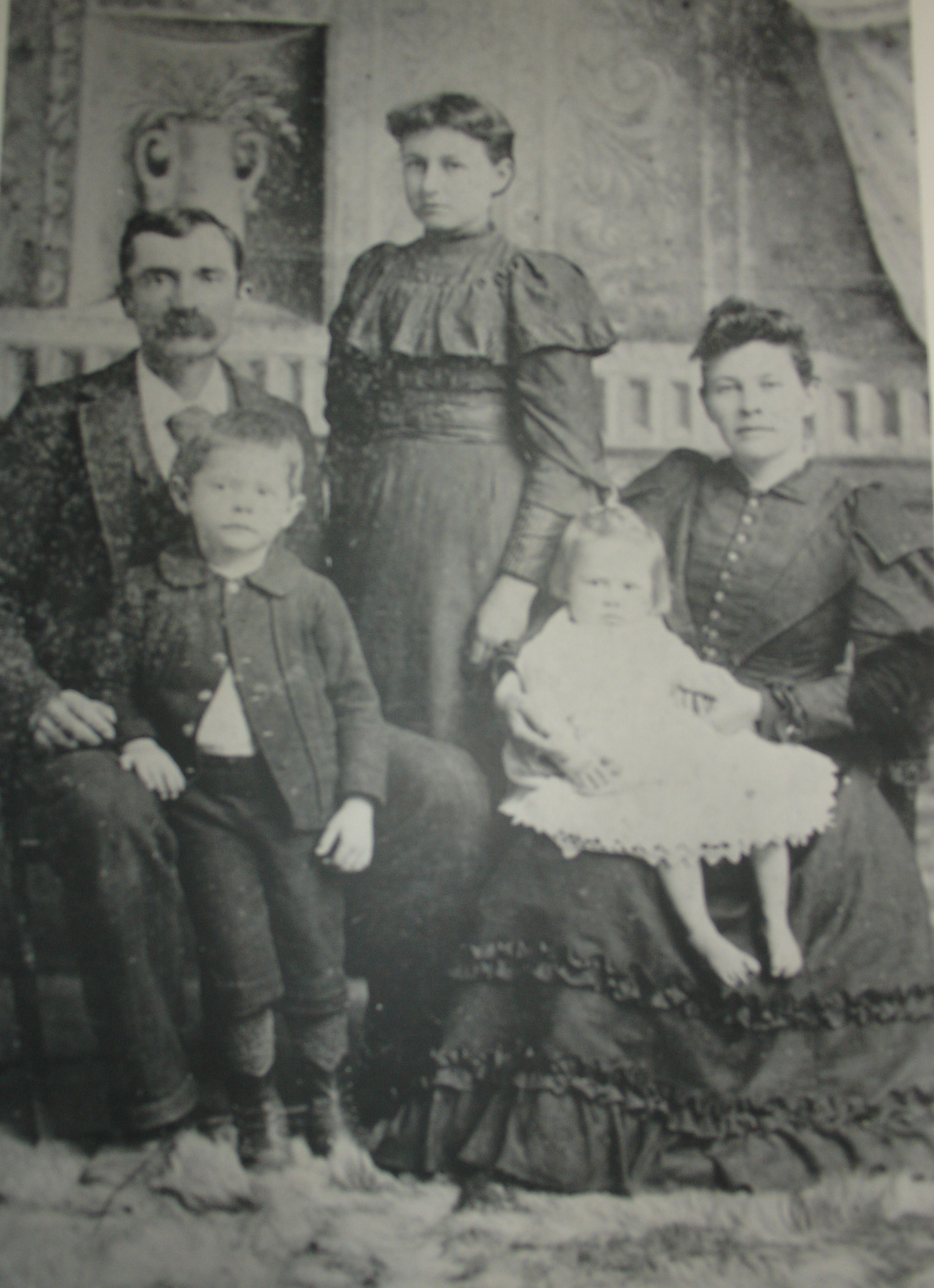
…and Alice married Jeff Williamson.
I know what you’re thinking, and no, they weren’t brothers. I breathed a sigh of relief, too. Ludie moved to Louisiana and had, ready?, FIFTEEN kids! Alice remained in Mississippi and had four kids.
Their little brother John first married Missouri Johnson. On Dec 7, 1891, she gave birth to their first child, a son, and on Dec 14, she died of complications.
In 1894, John found love again and remarried. Guess what her name was? Yep, Johnson…Bettie Johnson. I’m not going to tell you the women weren’t related because I don’t know for sure. I can’t find much info on Missouri.
I will tell you one thing for sure, even though I don’t have a photo of my 3rd great grandmother, Mary Ann, I can tell by her children that she was a beautiful woman!
P.S. If this family menagerie has peaked your interest, Mary Ann’s whole story is told in my book “Okatibbee Creek.” I’ve been thinking about her and the family recently because we are finishing up the audio book for release in November, and listening to the narrator speak in my grandmother’s voice has really been haunting me. I think I’ll do an ancestry post about her in the next couple days. 🙂
Saturdays are the days I usually post snippets of one of my books, but today is slightly different. As many of you know, when I’m not writing historical fiction books, I’m playing music – the whole “professional musician by night, indie author by day” thing. That being said, I tend to get caught up in the music of the time of whatever book I’m writing. My latest work takes place in 1812, the setting is the Mississippi Territory, known today as Clarke County, Alabama, and a few of the characters are Mvskoke (Muskogee Creek Indian.) Because of this, I’ve been listening to traditional Creek music for the last few months, and this particular song has stuck in my head. It feels more like an ancient chant than a song, and I can’t stop playing it. It is “Heleluyvn.”
Here’s an excerpt from “Elly Hays” coming Nov 4 to all online retailers. Elly is my 5th great grandmother, and the book is the third in the Okatibbee Creek series.
******************************
The laborers had erected a small makeshift platform in the middle of the meadow. It rose two feet off the ground so Tecumseh could be seen above the massive gathering of people. Rumors had circulated for months that he would come, as it had been foretold by a bright comet in the nighttime sky in March of 1811, and the gathering crowd numbered into the hundreds, perhaps closer to a thousand, representing over a dozen of the twenty Mvskoke clans.
As the people waited for him to take the platform, they grew increasingly impatient. They had been assembling for days to hear him speak, so not only were they weary from their travels, but the scorching sun was not improving their disposition. The air was as stagnant as the wait, with not even the slightest of breezes to offer relief from the stifling heat. The afternoon sun melting into evening had made them agitated, and they grumbled and occasionally began chanting for the great warrior to appear and address them. When he did not take the platform after a few minutes, the chanting quieted to a dull objection, only to start up again within a short amount of time.
Over the last few months, reports had surfaced that the Americans would once again declare war against the British. Before and since the revolution, the British had befriended the Indians, asking for their help in warding off the Americans’ expansion. Since the Indians considered the land theirs in the first place, they were pleased to oblige. The Indians had never asked for a favor in return, but the waves of white settlers were growing, continually trespassing upon their tribal land. They needed help, they needed answers, they needed to stop the encroachment. They eagerly awaited Tecumseh’s speech and they were anxious to hear a plan. They wanted to know what he wanted of them. If the reports of an impending war were true, perhaps this was the time to join forces with the British and defeat the white man once and for all.
Finally, a group of elders dressed in vibrant tribal robes with headdresses embellished with porcupine fur and hawk feathers stepped up onto the platform. The cheer began small and grew to a fevered pitch as it spread across the field of warriors like a breeze washing over wheat. The elders greeted the crowd and led them in singing their tribal anthem, “Heleluyvn,” following which the crowd erupted again in anticipation of the great warrior’s arrival.
Rice Benjamin Carpenter was born August 15, 1828 in Greene County, Alabama to Benjamin Carpenter and Nancy Rice Carpenter. He was the eighth of ten children.
In 1834, his family moved to Pine Springs, Lauderdale County, Mississippi for the low-cost land and fertile soil. Rice was six years old.
He married Mary Ann Rodgers in 1846. They were both seventeen.
They had five children – Martha Lettie, Benjamin Hays, William Travis, Charles Clinton, and MF – one girl and four boys.
After living with his friends Ebenezer and Sarah Miles in Pine Springs for a few years, in 1853 they bought 80 acres of land from Mary Ann’s father and began farming, but within a few short years, Rice realized he was a better merchant than a farmer, and by 1860 they had opened a general store in Marion Station, Mississippi.
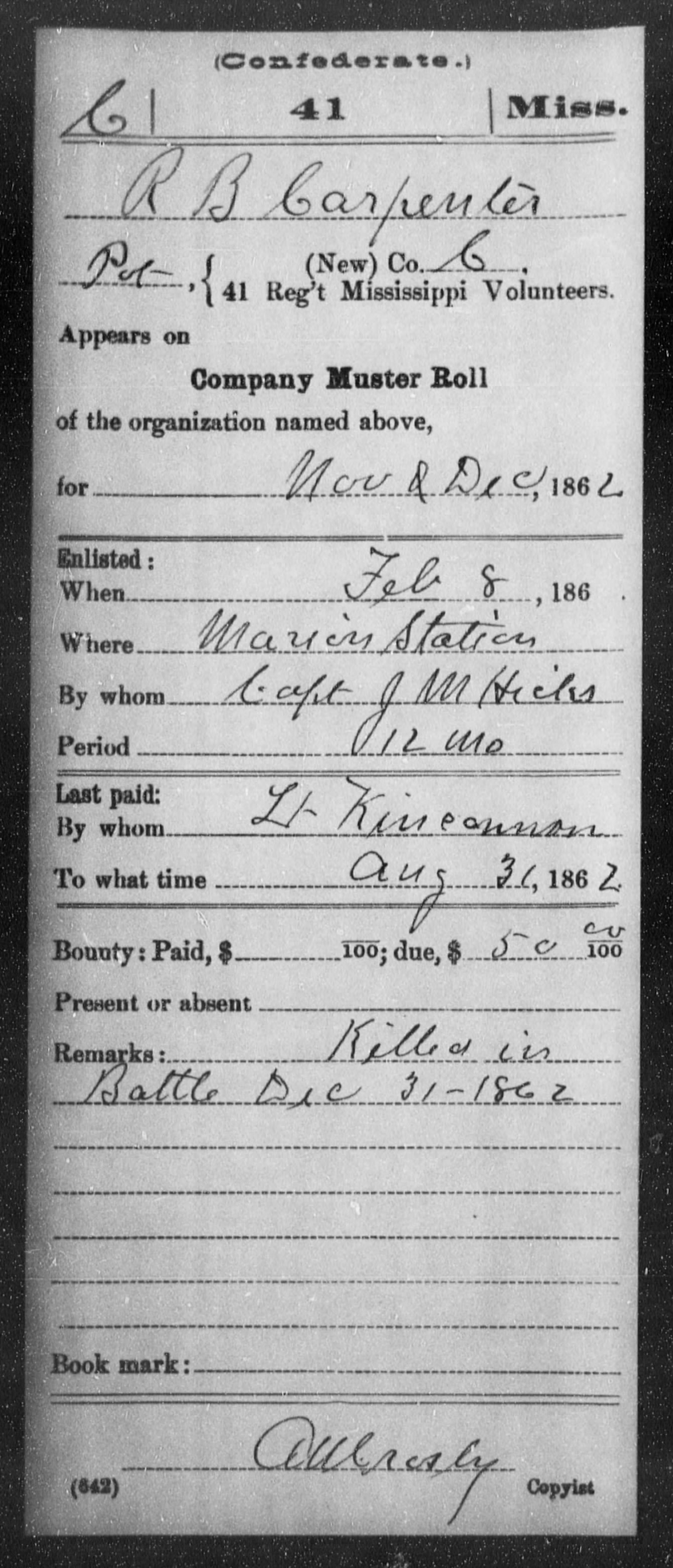
When the Civil War began, Rice signed up for the 41st Mississippi Infantry, Company C on February 8, 1862. This must have been a frightening time for the family, as Mary Ann was eight months pregnant with their last child who was born March 12th, 1862.
At dawn on December 31, 1862, amid limestone boulders and cedar forest, his infantry attacked the Union soldiers at the Battle of Stones River in Murfreesboro, Tennessee.
Private Rice Benjamin Carpenter died on that day on the battlefield at the age of 34, leaving behind his wife and children.
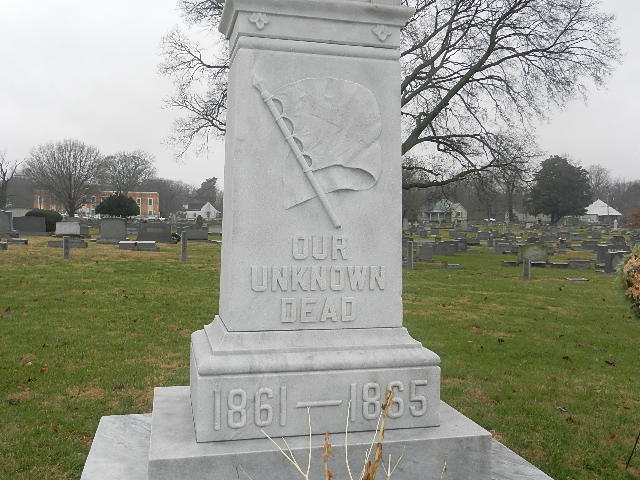
He is laid to rest at Confederate Circle, Evergreen Cemetery, Murfreesboro, Tennessee. RIP 3rd great grandpa. Rest well soldier, your job is done.
In honor of my coming October book release of “Elly Hays,” today’s Writer’s Corner will be about the book’s heroine, Elizabeth Hays Rodgers, and how she came to be the center of a novel.
She was the only daughter of Samuel Hays and Elizabeth Priscilla Crawford, born in North Carolina in 1774. She spent her young childhood in the unrest of the Revolutionary War. She married when she was sixteen, and after twenty-one years of marriage and eleven children, her husband decided to uproot the family from Tennessee and start a new life in the Mississippi Territory. Considering what they were walking into, I had to write her story. A portion of it is below. It will help you understand that area of the country at that time in history.
The (unedited) Prologue
In 1811, America was on the verge of war. The victory in the Revolutionary War gave Americans their independence, but the newly formed country had many unresolved issues. Americans had a vast frontier to settle and they considered the land now known as Canada to be part of their land. They wanted to expand northward and westward, but the British joined forces with the Native Indians in an attempt to prevent the Americans from expanding in either direction.
The British had also begun restricting America’s trade with France and the mighty Royal Navy ruled the seas. The Royal Navy had more than tripled in size due to their war with France, and they needed sailors. They captured American merchant ships off the coast of America and forced the men with British accents to join the ranks of the Royal Navy, proclaiming they were not American, but indeed British. Kidnappings and power struggles in shipping ports like New Orleans loomed over the newly formed United States.
The British not only invaded the southern coastal cities of the United States, but also the eastern seaboard, attacking Baltimore and New York, and burning Washington D.C. to the ground. The War of 1812 is historically referred to as the second war for independence. It was the battle for boundaries and identity for the Americans.
Sadly, the Native American Indians had the most to lose in the power struggle. Shawnee warrior Tecumseh was but a child when he witnessed his father brutally murdered by a white frontiersman. His family moved from village to village and witnessed each destroyed at the hands of the white men during and after the American Revolution. As a young teen, following the Revolution, he formed a band of warriors who attempted to block the expansion of the white man into their territory, but the effort saw no lasting result. Conflict with the white man was a battle he had fought all his life, and as a warrior now in his early forties, he knew the stakes were high for the Indians in the coming battle. He traveled the southeast, coaxing the numerous Indian nations to unite against the white man, promising help from the British in the form of weapons and ammunition, and offering reinstatement of the Indian’s lost lands upon victory. Tecumseh’s prophet, who traveled with him into Creek territory, forecasted a victory, foreseeing no Creeks being wounded or killed in the battle.
In the Eastern Mississippi Territory, which later became the state of Alabama, the Creek Indians were divided. Many Creek villages had been trading with the white man for years and participated in civilization programs offered by the United States government. These Creeks had been taught the ways of the white man. They spoke English, could read and write, and even incorporated white man’s tools into their daily lives. They traded or were given gifts of plows, looms, and spinning wheels, and had no qualms with the white man. Many had married whites, and they did not want to join in the fight.
In opposition, many villages joined with Tecumseh, for they wanted to maintain their way of life, claiming the white man’s ways would destroy their culture. They had witnessed the white man encroaching on their lands, destroying their forests and villages, and polluting their streams. And probably, some suspected the white man’s intent was not co-existence but domination, for they had seen this come to fruition in the treatment of the black slaves.
In 1811 and 1812, tribal tensions were growing due to these differences in beliefs, and this caused a great war in the Creek nation called The Red Stick War. It was a civil war fought between the Creek people, but by 1813, it expanded to include the American frontiersmen and the U.S. government. At the height of the War of 1812, the Creeks were at war with nearly everyone, including their own people.
It was in this turmoil that a white farming family moved from their home in Tennessee to the fertile farmlands of the eastern Mississippi Territory, a place known today as Clarke County, Alabama. James Rodgers, his wife Elly, and their eleven children unknowingly entered a hornet’s nest.
If you have read the first book in the Okatibbee Creek series, “Okatibbee Creek,” you will be familiar with its heroine, Mary Ann Rodgers. “Elly Hays” is about Mary Ann’s paternal grandmother, Elizabeth Hays Rodgers, better known as Elly. If you have not read any of the Okatibbee Creek series, they are a collection of stories about one family and the strong women of our past. These are the real-life stories of my grandmothers, aunts, and cousins, but if you live in the U. S., they could also be the stories of your female ancestors – the women who fought for us, for our safety, our lives, and our freedom, and who sacrificed everything with the depth of their love and their astounding bravery.
“Elly Hays“ will be release October 2013 in paperback, Kindle, and Nook.
Writing an intense action scene with cowboys, a drunk man, and no offensive language was a challenge, but here it is. This is part of a scene from my book, “An Orphan’s Heart.”
Set up – Alabama 1875. Ellen has hitched a ride across the state with two moonshine-hauling wagons. The four men have been gentlemen for the previous five days, but tonight is a different story. Apparently Floyd has been sampling the product.
Cast of characters:
Ellen Rodgers – twenty-five-year-old girl who hitched a ride
Floyd – old wagon driver
Earl – cook
Buck – sharpshooter
Luke – Buck’s teenage son who drives the second wagon
~~~~~~~~~~~~~~~~~~~~~~~~~~~~~~~~~~~~
“What are you whishpering ovah there? Are you trying to keep that pretty little girl all to yourshelf?” Floyd has risen to his feet, with more than a little difficulty, and is staggering toward us. He stops for a moment in the middle of the campfire clearing, and guzzles from the jug, throwing his head all the way back. I think he may fall backward, and I wonder if he will break open his skull if that happens.
Earl doesn’t move from his spot next to me. He sits in a relaxed pose, leaning forward with his elbows on his knees, with a half-whittled piece of wood in one hand and a knife in the other.
“That’s enough, Floyd! Go sleep it off.” His stern voice doesn’t match his calm body language, but when I see his eyes squinting in Floyd’s direction and his jaw throb with anger, I think Floyd should do as he is told.
“Don’t tell me what to do, Earl. I wanna talk to the pretty girl, too.”
I don’t move. I don’t even think I’m breathing. I have never seen a person in this condition before, and I’m not sure if he’s dangerous or if he’s going to fall down at any moment.
Earl slowly rises to his feet, moves in front of me, and lowers his voice. “You’re not going to do any such thing. The lady doesn’t need to speak with you when you’re drunk.”
Floyd wildly takes a swing at Earl and hits him right in the jaw, causing Earl to hit the ground with a thud. He is out cold. Luke throws his guitar down on the dirt, runs around the outside of the circle, and grabs for my hand, but Floyd beats him to it. Before I realize what is happening, Floyd spins me around and I find myself facing Luke, pinned in Floyd’s arms.
“That’sh better, pretty lady,” Floyd slobbers. The rancid odor of whiskey and rotting teeth invades my nostrils.
Luke freezes and pushes his hands toward the ground in an attempt to calm Floyd down. “Look, Floyd, you don’t want to do this.”
“How do you know what I wanna do?” He spits down my neck as he speaks, wobbling back and forth. The motion and the smell are making me sick to my stomach.
Luke looks past me, over my shoulder. He nods, then there is a sudden noise behind me. When Floyd turns toward the noise, Luke grabs my hand and says, “Come on!”
“Hey!” Floyd hollers at us as we pull away.
“That’s enough, Floyd!” Buck yells, appearing from the woods behind us.
Floyd turns toward Buck, and moves faster than his inebriated body should be able to. Luke yanks me toward the wagon and shoves me in. Buck grabs Floyd by his outstretched arm, spins him around, and puts the knife up to Floyd’s throat. Floyd curses, demanding Buck to let him go. I assume Buck refused, for they’re soon having an all-out brawl. I hear the jug hit the ground, but I don’t know if Floyd threw it or dropped it. I also hear fists making contact with flesh. I can’t imagine Floyd is in any shape to fight off a man like Buck.
I jump when I hear a gunshot. Everything is abruptly silent. The bullfrogs stop croaking, and it seems as if time is standing still. I look wide-eyed at Luke, wondering if Floyd has been shot.
“It’s all right,” he says, shaking his head in answer to my unspoken question.
The following is a snippet from my book “An Orphan’s Heart.”It is the second in the Okatibbee Creek Series and is the true story of Ellen Rodgers, an orphan who grows up in search of the only thing that matters to her…love.
Set up: 1884 Texas. While Ellen visits her brother Willie in Texas, she meets and falls in love with his brother-in-law, Sam Meek. They have been staying at Sam’s house for weeks following the death of his mother, but now it’s time to go back to Willie’s, which is nine days away by wagon, and she is sadly forced to leave Sam behind.
~~~~~~~~~~~~~~~~~~~~~~~~~~~~~~~~~~~~~~~~~
While the sun rises, I help Mollie pack the rest of the girls’ belongings into the wagon. When I return to the house for my bag, I stand in the middle of the parlor, looking around for the last time. This is a beautiful home, and strangely, I will miss this place more than any other I have known.
When Sam enters the back door, everything stops. I stare down at the floor and will myself not to cry. This is not my first loss. I am a big girl. I will get over it. I will get over him.
I look up and see in his face the same pain I feel in my heart. I can’t bear it. I want to pull him to me and take away his sorrow, but that will only cause us both more pain, so I simply say, “Thank you for your hospitality, Mr. Meek. I hope to see you again.” I nod and turn to walk out the front door. I climb up onto the wagon and tell Willie I’m ready to go. The girls start chatting excitedly, and the horses pull away.
With every mile, my resolve is crumbling into little pieces. I reach up and hold the golden heart around my neck. I have finally found the love I was looking for, and with every moment, I’m getting farther away from it. My chest is aching. I take a deep breath and vow that I will never care about anyone ever again—not that I could. When you love someone as much as I love that man, no other love can ever fill your heart.
After an hour of staring at the horizon, I swear my body is going to fall apart from the pain. I don’t know how I’ll get through the rest of the day, much less the rest of my life. I think I hear someone call my name, but over the horses’ clomping, the wagon’s creaking, and the chattering of the girls, I know I’m just hearing things.
A few moments later, however, a black stallion gallops past us and cuts off our horses. Willie yells, “Whoa!” and yanks back on the reins as we narrowly avoid a collision with the stallion and its rider.
It’s Sam!
He jumps down from the steed, apologizes for stopping us, and runs around to my side of the wagon.
“Ellen! I can’t let you go. Please don’t leave.”
I burst into tears.
Willie stands up in his driver’s seat. “Sam, you know it’s not acceptable for her to stay with you. She is a proper woman and you are a single man.”
“Then I shall fix that.” He backs up a couple steps and kneels down on one knee. He removes his hat and places it over his heart. “Ellen, will you please do me the honor of becoming my wife?”
Here’s a snippet from my AWARD-WINNING book “Okatibbee Creek.” Haha. Yes, award winning! It was recently named the bronze medal winner in the 2013 eLit Book Awards in Literary Fiction. That’s funny, because I’m sure it was entered as Historical Fiction, but whatev. An award is an award. We take ’em any way we can get ’em! 😛
~~~~~~~~~~~~~~~~~~~~~~~~~~~~~~~~~~~~~~~~~~~~~~~~
Set up – January 1863 Mississippi. The Civil War is in full swing. Mary Ann Carpenter owns an old general store in town where the war’s casualty lists are periodically posted. Four of her brothers and her husband, Rice, are off fighting in the war, and she has not heard from any of them in a while and is understandably worried.
~~~~~~~~~~~~~~~~~~~~~~~~~~~~~~~~~~~~~~~~~~~~~~~~
Martha Jane yells up the stairs, “Mary, there’s a gentleman here. He says he has to see you.”
I return to my room to get my day cap. I smooth down my wrinkled dress and head downstairs.
When I reach the bottom of the stairs, I see him. I do not recognize his face, but I recognize his clothing. He is a Confederate soldier. He is standing in the open doorway of the store with the gray, cloudy sky at his back. He is dressed in a wrinkled gray uniform with a dirty yellow cummerbund. His trousers have holes in them, with mud caked around the bottoms of his pant legs. His jacket is missing some buttons, and he looks quite thin and weary. He is wearing shoes that are covered in red Mississippi mud and probably have no soles on the bottom. He is holding his tattered hat and a piece of paper in his dirty hands.
“Hello, sir, what can I do for you?” I ask as I approach.
“Hello, ma’am.” He nods. “Are you Mrs. Carpenter?”
“Yes, I am. And who are you, may I ask?”
“Private Joseph Brown, ma’am. Captain asked me to deliver the latest casualty list to you in person.” He holds the folded piece of paper toward me and looks down at the floor, like a child in trouble for doing something wrong.
“Why are you delivering this? It usually comes by a mail carrier,” I ask as I reach for the paper. I look at the boy’s face. He nervously avoids my eyes and keeps staring at the floor.
“Why are you delivering this to me?” I repeat.
“I promised I would. I’m sorry, ma’am. Goodbye, ma’am,” he murmurs, and backs out the open door.
I look at the piece of paper in my hand for a long time, wondering if I can open it. I don’t know whose names are on this paper, but I suspect the worst, and I don’t want to read it. My eyes sting with tears as I dread a simple piece of paper. I try to unfold it, but my hands are shaking, so I stop and hold it to my chest. I take a deep breath.
Martha Jane stands behind me, not saying a word or making a sound.
“Martha Jane, will you please go upstairs and mind the children for a few minutes?” I ask her.
She nods and quietly heads up the stairs.
I walk outside across the wooden porch and down the two stone steps onto the ground. I walk across the dirt road that is now filled with puddles of red mud from the rain. I keep walking straight ahead. I walk into the overgrown field across the road. I walk with purpose, with determination, like I have somewhere important to go. I want to run. I want to run away and never come back. I keep walking.
In the middle of the field, the thunder sounds above my head. I stop and look up at the ominous clouds that are almost as threatening as the piece of paper I hold in my hand. My hands are shaking as I slowly unfold it and smooth it open. My stomach feels like it has a hole in it. My eyes fill with tears. My hands are now trembling so violently, I almost can’t read it. The name at the top is the only name I see.
“Carpenter, Rice Benjamin: killed in battle 31 December, 41st Mississippi Infantry, Co C.”
Drops of water fall onto the page, but I can’t tell if they are raindrops or teardrops. Even God Himself is crying.
All I’ve wanted the last seven months is for my husband to come home and hold me and tell me everything will be all right. All I’ve done for the last seven months is managed the store and the family, and I’ve waited—waited for Rice to come home. I’ve waited and I’ve prayed and I’ve done everything possible in preparation for him to come home to me.
I’ve dreamed of his homecoming. I’ve dreamed of taking up our lives where we left off. I’ve imagined us having more children. I’ve wished for his arms around me. I’ve seen his blue eyes in my dreams so often and heard his laughter ringing in my head over and over. I’ve pictured his beautiful Carpenter smile as he runs up the road and takes me in his arms. My heart always feels like bursting at the thought of seeing him again. I’ve imagined our happy reunion hundreds of times.
Now what?
There will be no homecoming. There will be no funeral. There will be no body. There will be no goodbye. It’s just over. My heart is ripping out of my chest in a pain I can’t even try to describe. My future is gone. My past is gone. My present is gone. Everything is gone. It all died with Rice.
I stand in the middle of the field in a blinding thunderstorm, holding a wet piece of paper that is all that is left of my husband, and I scream at the top of my lungs.
~~~~~~~~~~~~~~~~~~~~~~~~~~~~~~~~~~~~~~~~~~~~~~~
“Okatibbee Creek” is available in Kindle and paperback at Amazon, and Nook and paperback at Barnes & Noble. Also in ebook at Sony and Kobo.
The property is located in Monroe, Michigan. There have been two homes built on the property. The original house was built by Francois Navarre on land given to him by the Potawatomi Tribe. The house is named after one of its residents, Dr. Alfred Sawyer, who lived there from 1859-1870. The original house was demolished and a new one built in 1873. Dr. Sawyer never lived in the current house, but it remained in his family until his daughter donated it to the city of Monroe in 1973.
Following lunch, my ladies from the United States Daughters of 1812 are having a bench dedication at the River Raisin National Battlefield, commemorating the bicentennial of the War of 1812.
My 1812 soldier is Hays Rodgers.
While I was writing this little blurb, my phone rang and a lady told me my book “Okatibbee Creek” won the bronze medal in Literary Fiction at the 2012 eLit Book Awards. Check the book out on Amazon. The book is about Hays Rodgers’s daughter. “Wow, that’s a weird coincidence,” said the award-winning author. 🙂
What better way to preserve history and honor those who have come before than to be an active member in societies? I never understood what societies did until I became a member of a few. What they do is preserve and honor tradition. They don’t allow ritual and sacrifice be forgotten. The groups I belong to are service organizations, dedicated to promoting patriotism and history, and they follow strict rules of tradition.
I belong to the United States Daughters of 1812 under my 4th great grandfather Hays Rodgers who fought for the Mississippi Militia. He was assigned to Capt Evan Austill’s company of volunteers in Maj Sam Dale’s Battalion to fight against the hostile Creek Indians.
Here is the U.S.D. of 1812’s purpose copied from their website:
The U.S.D. of 1812, founded in 1892, is a volunteer women’s service organization dedicated to promoting patriotism, preserving and increasing knowledge of the history of the American people by the preservation of documents and relics, marking of historic spots, recording of family histories and traditions, celebration of patriotic anniversaries, teaching and emphasizing the heroic deeds of the civil, military, and naval life of those who molded this Government between the close of the American Revolution and the close of the War of 1812, to urge Congress to compile and publish authentic records of men in civil, military, and naval service from 1784 to 1815 inclusive, and to maintain at National Headquarters in Washington D.C., a museum and library of memorabilia of the 1784-1815 period.
(photo: Hays Rodgers)
I also belong to the Daughters of the American Revolution under my 5th great grandfather Joseph Culpepper who fought for the 3rd South Carolina (Rangers) Regiment.
A little piece of their purpose from their website includes: The DAR, founded in 1890 and headquartered in Washington, D.C., is a non-profit, non-political volunteer women’s service organization dedicated to promoting patriotism, preserving American history, and securing America’s future through better education for children.
If that’s not enough to do, I also belong to the United Daughters of the Confederacy under my 2nd great grandfather Joel B Culpepper who fought for the 63rd Alabama Infantry Co K .
The UDC exists to (from their website):
To collect and preserve the material necessary for a truthful history of the War Between the States and to protect, preserve, and mark the places made historic by Confederate valor
To assist descendants of worthy Confederates in securing a proper education
To fulfill the sacred duty of benevolence toward the survivor of the War and those dependent upon them
To honor the memory of those who served and those who fell in the service of the Confederate States of America
To record the part played during the War by Southern women, including their patient endurance of hardship, their patriotic devotion during the struggle, and their untiring efforts during the post-War reconstruction of the South
To cherish the ties of friendship among the members of the Organization
(photo: Joel B Culpepper)
I am honored and blessed to be a small part of these organizations and to carry on the traditions of the women who served before me.
I write a lot about my Rodgers ancestors, but playing just as an important role in the fact that I am sitting here are my Hays ancestors.
My fifth great grandma was Elizabeth “Elly” Hays. She was born just before the start of the Revolutionary War either in Tennessee or North Carolina to Samuel Hays and Elizabeth Pricilla Brawford. Records say North Carolina, but her father was born and died in Davison County, Tennessee, so NC seems strange. Her little brother, Charles, was also born in NC, so it is possible the family lived there for a while. And her paternal grandfather died in NC, so the family definitely had a connection there. I haven’t researched her thoroughly (yet), but it looks like she was the only girl with at least four brothers.
Elly was sixteen when she married James Rodgers in Tennessee on 20 Dec 1790. She birthed twelve children. In 1811, the family packed up and moved to the eastern Mississippi Territory – a place called Alabama, which wouldn’t become a state for a few more years. You know how difficult it is going on a road trip with little kids in the car? Imagine being on a wagon for days with a dozen of the little rug rats and not a McDonalds in sight.
This was a time in history when the U. S. was flexing its political muscle and tensions were escalating, leading up to the War of 1812. And little did the Rodgers family know, they were moving into Creek territory. Not only were the Creek Indians fighting the U.S. Government, they had also broken into two sanctions and were fighting amongst themselves. The Rodgers family moved into the middle of a rat’s nest. They were harassed for years by the marauding Indians, taunting them and stealing their livestock, and the final straw, burning down their home.
In 1815, her two eldest sons, Hays (named after momma’s family) and Absolom, joined the Mississippi Militia to help fight off the hostile Creek Indians, and following the boy’s discharges in 1818, the family moved west to Lauderdale County, Mississippi.
Her husband died in Mississippi eight years later, and she moved back to Clarke County, Alabama and probably lived with her daughter Elizabeth. She died in Alabama in 1839 at the age of 65.
Elizabeth Hays Rodgers is the heroine of my coming book “Elly Hays” which is the third book in the Okatibbee Creek Series. It will be released Winter 2013.
 The October Ancestry Challenge 2013
  Anyway, to make a confusing family EVEN MORE confusing, Ludie married Frank Williamson…
 …and Alice married Jeff Williamson.
 In 1894, John found love again and remarried. Guess what her name was? Yep, Johnson…Bettie Johnson. I’m not going to tell you the women weren’t related because I don’t know for sure. I can’t find much info on Missouri.








 Lori Crane