Sir William Berkeley – Culpepper Saga

Culpepper_1For the next few Saturdays, in place of my usual “Saturday Snippets,” I’m going to give you some background into some of the people and places in my new series, The Culpepper Saga. The series consists of four books which will be released between April and September.

One of the main characters is Sir William Berkeley. I write stories of my ancestors, but Berkeley is not one of my ancestors. He was, however, a life-long friend of our hero and my 10th great grandpa John Culpepper.

In the 1st book, Berkeley and John are young law students in England. In the 2nd and 3rd books, Berkeley plays a daily role in John’s life and is the Governor of Virginia. In the final book, Berkeley is married to John’s niece and is at the center of a deadly rebellion.
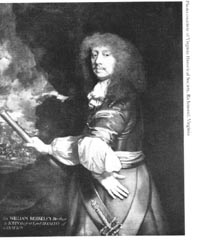
SirWilliamBerkeley2William Berkeley, referred to as “Will” by his family and friends, was born in England in 1605. He was the colonial governor of Virginia from 1642 until his death in 1677. Upon his arrival in Virginia, he built a plantation called Green Spring House and planted corn, wheat, barley, rye, and tobacco, though he despised tobacco. In 1670, he wed thirty-six-year-old Frances Culpepper, the niece of our hero John. Historical records show him fleeing Jamestown during Bacon’s Rebellion in 1676 and taking refuge in Accomac, Virginia. Most people leave it at that, but in my writing world, I happen to know that John had a house in Accomac, so it is obvious he went to John’s. After all, they had been friends for many years, and they were family through marriage. I’ll let you read the rest of his story in the Culpepper Saga, but I’ll leave you with a tidbit from the day he and John met as young boys at law school–a place called Middle Temple.

Note: Wikipedia does not confirm that Berkeley attended Middle Temple, but in “The History of Middle Temple” by Hart Publishing, records of Middle Temple show Berkeley as a student. He also wrote and published a few plays in the 1630s, which was a large part of the curriculum at the school.

The following is an excerpt from “I, John Culpepper.”

**************************************

John clapped along with the other boys as the headmaster strolled toward the center of the room. The man looked as stern as JC had warned. A pair of spectacles rested on the tip of his pointed nose, and his rather large ears stuck out from under his cap. He began stroking his goatee as if caressing the family pet. For a moment, John couldn’t put his finger on what was so amusing about the man’s appearance, then it struck him—the man looked like a goat. John tried unsuccessfully to stifle a giggle.

Barnaby’s brow wrinkled and the corners of this mouth turned down like a fish as he scanned the group of boys. He looked at each one as if viewing a repulsive heap of trash. He cleared his throat and his Adam’s apple bobbed up and down. Just as he opened his mouth to speak, a frizzy-headed boy ran into the room, allowing the door to slam behind him. The sound echoed loudly within the stone walls and the tardy boy’s face turned red with embarrassment. Barnaby followed the boy’s movement with his narrowed eyes as the boy took the only empty seat in the room—right next to John. John felt a trickle of sweat drip down his back as the headmaster slowly walked toward them.

“You’re tardy for my class,” the man scoffed, his eyes filled with hostility. When he said the word class, he drew out the a for an inappropriate amount of time, and John was again reminded of a goat, but with the man standing directly in front of him, he didn’t dare giggle.

“My apologies. I just arrived, sir.”

“What is your name, boy?” Barnaby growled.

“William Berkeley, sir.”

“William Berkeley.” He stared at Berkeley for a long time, as if attempting to memorize every feature of the boy’s face. He then repeated the name. After what seemed like an hour of uncomfortable silence, with the tension in the room growing by the second, Barnaby said, “William Berkeley, I will speak with you in private following this evening’s supper.”

“Yes, sir.” William lowered his eyes to the floor.

As Barnaby turned his back on Berkeley and returned to the center of the room, Berkeley glanced around the room at the other boys. John wondered if Berkeley’s humility was in respect for the headmaster or due to his embarrassment for being late, or both.

Berkeley leaned over to John and whispered, “Who’s that old goat?”

John almost laughed out loud and his hands flew up to his mouth.

Berkeley winked at him and grinned.

******************************************

The first book in the Culpepper Saga, “I, John Culpepper,” will be released April 10, 2015.

52 Ancestors #9 Howell Joel “Hobby” Wedgeworth

52ancestors-2015

This challenge is set forth by No Story Too Small, and this week’s theme is “Close to home.”

You can’t get more close to home than this story. I live just south of Franklin, TN and my great aunt’s father was captured in Franklin during the Civil War, nearly in my backyard.

wedgeworth howell joel hobby and martha morrow, par of ora wedgeworth culpepperHowell Joel “Hobby” Wedgeworth was born Nov. 26, 1837 in Greene County, Alabama to Rev. Joel Walker Wedgeworth and Margaret Jane Smith. In 1852, he married Elvira Hughens and had one daughter Margaret Jane in 1858. Sadly, his wife died in 1860. I don’t know the fate of his little girl, as he went off to fight in the Civil War as a bachelor.

During the war, Hobby served with 5th Mississippi Regiment Co K as a musician. He was wounded in December of 1862, but kept serving. On November 30, 1864, he was captured at the Battle of Franklin, TN and sent to Louisville, KY to military prison, then to Camp Douglas in Chicago. After the war ended, he was released on June 18, 1865. You can read more about the Franklin battle HERE.

It was told by his granddaughter that Rev. Joel Wedgeworth went to a designated meeting place to pick up his son after the war and didn’t even recognize him because he was so thin and worn.

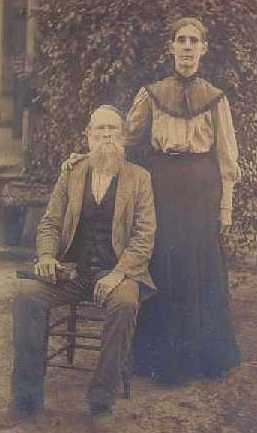
When Hobby returned from the war, he immediately married Martha Morrow (pictured with Hobby) in 1865 and had eight children, the youngest being Ora Wedgeworth who married my great grandpa’s brother, Floyd Culpepper.

Hobby died Jan. 5, 1907 in Neshoba County, Mississippi at the age of 69. He is buried with his wife at Hester Cemetery in Neshoba.

IMG_20141115_150317159_HDRI attended the 150th anniversary muster of the Battle of Franklin November 2014 and witnessed the re-enactment as well as a memorial salute performed in the Confederate cemetery located at the site.IMG_20141115_150047367


OKATIBBEE CREEK on Amazon

CLICK HERE TO GET YOUR COPY OF OKATIBBEE CREEK …and don’t forget the tissue.

okatibbee creek cover front JPEGIn the bloodiest years of our nation’s history, a young mother was left alone to endure the ravages of the Civil War and a typhoid epidemic that threatened the lives of everyone left behind.

Okatibbee Creek is based on the true story of Mary Ann Rodgers, who survived the collapse of the Confederate dollar, food shortages, and the deaths of countless family members to war and disease. As she searched for a way to feed her children and her orphaned nieces and nephews, Sherman’s Union army marched through Mississippi on their way to destroy Meridian, and Mary Ann found the distant war literally on her doorstep. Help arrived just in the nick of time in the form of an unexpected champion, and Mary Ann emerged on the other side a heroic woman with an amazing story.

Okatibbee Creek is a novel of historical fiction that brings the Deep South vividly to life and will have you cheering and crying through a real-life story of loss, love and survival.

CLICK HERE TO GET YOUR COPY OF OKATIBBEE CREEK

Saturday Snippet – I, John Culpepper

Here’s a bit of my work-in-progress, “I, John Culpepper.” For you ancestry/genealogy readers, John Culpepper is my 10th great grandpa. Release date will be April 10, 2015.

****************************************************

Culpepper_1Fall 1626, England

“No! For the hundredth time, no!”

John looked down at the intricate grain of the walnut desk beneath his fingertips and shifted his weight to his other foot. He sighed, feeling his dreams disintegrate before his very eyes. The snap of the white sails, the taste of the salty spray on his lips, the smell of the tar that sealed the decks—the visions were quickly vanishing behind the thick fog of his father’s adamant disapproval. He pictured his mighty ship sinking into the black waters of condemnation, bubbling like a cauldron as it disappeared from sight. There was nothing he could do to change his father’s mind, and he wondered whatever possessed him to come to this man for assistance. He should have known better.

His father glared at John from behind the desk. He propped his elbow on the scrolled arm of the chair as his large hand methodically stroked his pointed beard. “Is there anything else?” he snapped.

John didn’t look up. He shook his head and mumbled, “No.” He turned and padded across the thick rug toward the door, listening to the man’s heavy breathing behind him. He reached for the brass doorknob, paused, and turned back. “You know I’ve always done everything you’ve asked of me. I went to school. I studied to be a lawyer. I did it all for you. I never wanted to practice law. I’d never be happy on the bench.”

“Happy? What makes you think life has anything to do with being happy? You are a Culpepper, and as such, you have an obligation to serve your family and your king in a manner befitting your station. This childish notion of owning a ship is nothing but rubbish.”

John released the doorknob and walked back toward his father’s desk. The intimidating man dwarfed the desk, his size exaggerated by the broad shoulders of his leather jerkin, yet he sat up taller in his chair in preparation for the quarrel to continue. It was a wasted gesture, as his opponent already knew the battle was lost.

John made sure he didn’t raise his voice. “Father, you have financed merchant ships for as long as I can remember. What difference does it make if I’m the one who owns the ship?”

“Culpeppers don’t own ships. I funded those expeditions as an investment—a losing investment, I might add.” He rose from his chair and his voice grew louder, echoing off the oak panels that lined the walls. “There has never been a Culpepper placed in a position to experience hunger and savages and shipwrecks, and there won’t be one now, not with my blood written on the purchase. I will not fund a ship for you, John, not now, not ever.” He pointed his finger in John’s face. “And if you somehow find a way to procure a ship, mark my words—I will disinherit and disown you. No son of mine will become a common sailor. I am finished with this conversation once and for all. Have I made myself clear?”

John exhaled, beaten. His shoulders slumped as he broke his father’s glare and dropped his eyes to the floor.

“John? Have I made myself clear?”

“Completely.”

Saturday Snippet – Savannah’s Bluebird

bluebird_small webI released Savannah’s Bluebird a year ago. It stemmed from a vivid dream I had, and though it didn’t take me months and months of research as with my historical novels, it still holds a place in my heart. It’s the story of a man and woman who tried desperately to get married, but everything stood in the way of their wedding day – including death. I published it on February 11, 2014.

I dreamt it and wrote it in 2012, the month before we found out my future son-in-law had cancer. In late 2013, I finally dug it out of the archives and finished writing it. My boy was getting worse by the day and the wedding was canceled only a week before it was to occur. The day after I published Savannah, I received a call from my daughter that our boy had been admitted to the hospital. Within days, he was placed in hospice, and he took his last breath on February 24, 2014. I always read my books after they’re released, but my heart is still broken, and I can’t bring myself to read this one. It’s a little too close to home, but there’s a reason I wrote it and a reason it’s out there in the world. Perhaps someday, I’ll find out what that reason is. Here is a snippet of Savannah’s Bluebird where Savannah is having a flashback to her childhood.

Dedicated to my beautiful son

Trien Duong

June 15, 1981 – February 24, 2014

You will always be the brightest star in our sky

13.4.danacody_1934


********************************************************

August teased her. “If you remember correctly, I asked you to marry me twenty years ago under your dad’s apple tree.”

She sighed, closed her eyes in front of the foggy mirror, and absentmindedly began brushing her teeth. She could picture that big old apple tree like it was right in front of her. The branches spread out across the sky like an enormous umbrella shading the picnic table beneath it. At the end of a good summer, so many apples would be on the tree, the branches would almost touch the ground, burdened by the weight. The old paint-peeled table beneath the tree was a favorite place for the squirrels to sit and eat the apples, leaving half-eaten cores when they scampered off. August and Savannah spent many, many afternoons talking and playing and telling childhood secrets under that tree.

In the warmth of the late fall afternoon, Savannah sat alone at the picnic table with an array of colored silk threads spread out in front of her. The leaves had fallen a few weeks ago, leaving only a few stray apples on the ends of the branches. The sun shone through the branches, warming her hands, and the sweet smell of decaying apples and the crisp smell of dying leaves surrounded her, making her head swim with happiness. Fall was her favorite time of year. She stared at the woven fabric she was embroidering and sorted through the colored threads on the table.

An ocean inlet ran along the back of the property, and she could faintly hear the soft babble of the water splashing on the rocks, as well as the buzz of dragonflies and katydids. August appeared out of the dying brush that was only a few weeks ago thick summer bushes. He was wearing a brown button-up shirt, suspenders, and dirty trousers darkened by wetness up to the knees. Obviously, he had been playing at the inlet, probably trying to catch frogs or crawdads. He ran over to the picnic table and plopped down across from her.

“Watcha doin’?” He was short-winded from running.

“I’m working on a pillow covering for home economics class,” she answered.

She picked up the fabric, turned it around, and held it up for his approval.

He wrinkled his forehead and said, “It looks like a bird. I thought you liked dogs.”

“I do like dogs, but Mrs. Thompson said we have to create something that flies.” She rolled her eyes and placed it back in front of her on the table.

“Well, why don’t you sew a spaceship with a robot or something?” he asked, wrinkling his forehead.

“Only boys would make spaceships and robots.” She scowled at him. “I want to make something else. My dad told me this story about a bluebird. He said a gypsy woman told him the bluebird represents love, and if you’re with someone you love and see a bluebird, you’ll be with that person forever.” She picked up the blue thread and attempted to thread her needle. “So, I’m embroidering a bluebird.”

“Was it one of those gypsies down on the beach?”

“No, he said it was a gypsy woman in New Orleans a long time ago—before I was even born. He was working on the railroad down there when he met my mother. He said the day after the gypsy told him that story, he and momma saw a bluebird. They were married a few days later.”

When August didn’t respond, she looked up at him—and froze. Right above his head, on the lowest branch of the tree, sat a little bluebird. It was bright blue on top with a reddish-brown throat, and it was no more than a foot from them. She didn’t move, half afraid of scaring it away and half amazed that their conversation had suddenly manifested itself. August turned to follow her gaze and froze also. Neither of them dared breathe as they watched the bird—and the bird watched them.

“Will you hand me that towel?” August asked.

Savannah didn’t respond.

“Savannah, hello? Will you please hand me that towel?” August asked again, snapping Savannah’s attention back to the present.

*********************************************

Lori Crane Books at Amazon

52 Ancestors #7 Catherine Howard

52ancestors-2015

This challenge is set forth by No Story Too Small, and this week’s theme is “Love.”

One of the most interesting stories of “Love” in my ancestry comes from the journals of Tudor history.

howard2Catherine Howard was the fifth wife of King Henry VIII. She was also my cousin. Her father was Edmund Howard and her mother was Joyce Culpepper. Joyce’s father was Sir Richard Culpepper.

In the 1200s, the Culpepper’s were split into two definitive lines by brothers Walter and Thomas into the Preston Hall Culpeppers and Bayhall Culpeppers, respectively. In the 1400s, the Bayhall line split into two lines with brothers again, so instead of Preston Hall and Bayhall, we now have Preston Hall, Wigsell, and Bedgebury. Catherine’s maternal grandfather, Sir Richard Culpepper, was of the Preston Hall line. Catherine had many Culpepper cousins, one being my 12th great grandfather William Culpepper of the Wigsell line, and another being Thomas Culpepper of the Bedgebury line. Though distant, Catherine Howard and Thomas Culpepper were cousins.

Just to make history even more confusing…Catherine’s paternal grandfather was Thomas Howard Duke of Norfolk. This man was Anne Boleyn’s grandfather too. Catherine and Anne (Henry VIII’s second wife) were first cousins.

On 28 July 1540, sixteen-year-old Catherine married King Henry after he ended his politically motivated marriage to (fourth wife) Anne of Cleaves. Henry was nearly fifty years old. For fourteen months, the newlyweds were happy, but then the rumors began. Henry became convinced his young bride was having relations with a few men, the most painful being his trusted servant, Catherine’s cousin, Thomas Culpepper.

In my opinion, one can imagine Catherine at sixteen-years old being quite overwhelmed by all the attention she was receiving along with her new-found feelings of superiority and immortality simply because she was Henry’s wife. And it is possible that Thomas in his mid-twenties, was merely playing a game with a teenage girl. The excitement of this game would be hard to top, especially with a prize as valuable as the wife of the King. Then again, they may have actually loved each other.

Catherine and Thomas were charged with treason, tried, and convicted. Thomas was beheaded 10 Dec 1541. Catherine was stripped of her title of Queen, locked in her chambers, and her future remained in limbo until Parliament decided what to do with her. On 10 February 1542, she was taken to be executed. She traveled by boat to the Tower and undoubtedly passed under the bridge where Thomas’s head was impaled. I wonder if she looked up. Her execution was held Monday, 13 February 1542.

According to popular folklore, her final words were, “I die a Queen, but I would rather have died the wife of Culpepper”. Did she really die for love, or was she simply a young girl who didn’t realize the place next to the King was a fragile one?

The above portrait, which has always been reported to be that of Catherine Howard, is now in dispute by the National Portrait Gallery in London. Apparently the poor girl lost her head…and now her face. Below is a letter she sent to her cousin/lover Thomas Culpepper.


GW402H604Master Culpeper,

I heartily recommend me unto you, praying you to send me word how that you do. It was showed me that you was sick, the which thing troubled me very much till such time that I hear from you praying you to send me word how that you do, for I never longed so much for a thing as I do to see you and to speak with you, the which I trust shall be shortly now. That which doth comfortly me very much when I think of it, and when I think again that you shall depart from me again it makes my heart die to think what fortune I have that I cannot be always in your company. It my trust is always in you that you will be as you have promised me, and in that hope I trust upon still, praying you that you will come when my Lady Rochford is here for then I shall be best at leisure to be at your commandment, thanking you for that you have promised me to be so good unto that poor fellow my man which is one of the griefs that I do feel to depart from him for then I do know no one that I dare trust to send to you, and therefore I pray you take him to be with you that I may sometime hear from you one thing. I pray you to give me a horse for my man for I had much ado to get one and therefore I pray send me one by him and in so doing I am as I said afor, and thus I take my leave of you, trusting to see you shortly again and I would you was with me now that you might see what pain I take in writing to you.

Yours as long as life endures,
Katheryn.

One thing I had forgotten and that is to instruct my man to tarry here with me still for he says whatsomever you bid him he will do it.


Saturday Snippet – John Culpepper the Merchant

culpepper book 2 cover ideaThe second book in The Culpepper Saga takes place in the mid-1600s. John Culpepper finally got himself the boat he wished for throughout the first book (“I, John Culpepper”) and has fulfilled his dream of sailing to the new colony of Virginia. However, while he was away, civil war broke out at home in England, and John is in an understandable hurry to get back to his wife and family.

Here’s a scene from “John Culpepper the Merchant.”

***************************************************

November 1642, The Doldrums


The Thomas and John sat idle, unmoving in the dim morning light. Her sails hung limp, as they had for the last two days. John ran his hands through his hair and impatiently tapped his foot as he stared across her bow at the unending sea of glass before him. The water blended with the sky, creating a mist as far as the eye could see. There was no horizon, just an endless mirror of foggy steel blue.

He never thought this place existed and had never experienced it on any of his prior journeys, but now, when he most needed to make haste, he found his ship stuck in the middle of it. They called it the doldrums—the place in the ocean where no wind billowed sails, no waves lapped against hulls, and no mighty vessels leapt across the breakers. John had heard tales of ships being stuck in the doldrums for weeks at a time. He prayed this wouldn’t be the case, but on this third morning, he was beginning to wonder if they’d ever break free of it. He’d heard ancient legends of ships carrying horses beneath their decks, and when they found themselves stuck in the doldrums, the crew would build cranes, lower the horses into the water, and allow them to pull the ship. He didn’t know if those stories were true, for he had never witnessed a horse swimming, but in any case, he wasn’t carrying any horses. He was, however, carrying two small rowboats.

“Drop the boats!” he yelled to Benjamin. “We’ll row.”

“Sir?” Benjamin approached. “You want the crew to row us out of the doldrums?”

“Yes, Benjamin. Put them to oar. See to it at once.”

“Yes, sir.”

* * *

The men dropped the small boats into the water, tied them to the ship, and began to row. They struggled against the weight of their load, but ever so slowly, the majestic ship began to creep forward.

“How long do you think we’ll have to row?” one of the sailors asked another next to him.

“Until the cap’n gets her back to wind…or until we’re all dead. Whichever comes first.”

“Stop talking and keep rowing!” Benjamin bellowed from the bow.

For the next thirty hours, the sailors took turns rowing. The only movement in the water surrounding them came from the small ripples caused by their oars. After more than a day, the limp sails picked up a small draft and began swaying in the midafternoon sun.

“Sir!” yelled a sailor from one of the boats.

Benjamin turned and saw the sailor pointing up toward the sails. He looked up and saw the sails flutter in the breeze, and an uncommon grin spread across his unshaven face. He jogged to the back of the ship and descended the creaking, wooden steps to the lower deck. He dropped his head below the opening and blinked to adjust to the dim light. “Cap’n, she’s back to wind!”

“Finally!” John jumped from behind his scarred, wooden desk and followed Benjamin up the steps. On deck, he raised his hand to block the sun’s rays as he looked up at the fluttering sails. A cold, Atlantic breeze blew across John’s face, the first he had felt in four days, and he laughed out loud. “Ha! We’ve cleared the doldrums! Benjamin, hoist the sails and get us underway.”

“Aye, sir. Hoist the sails!”

Almost instantly, there was a flurry of activity on the upper deck as weathered sailors began pulling up the small boats, climbing the masts, raising the sails, and shouting commands.

“We have a lot of time to make up,” John said. “I want to be in London within the week.”

“Aye, sir!”

***********************************

John Culpepper the Merchant is now available at Amazon!

For pictures, paintings, and documents of the people and places in the Culpepper Saga, please visit the Culpepper Saga Facebook page.

Saturday Snippet – ELLY HAYS

elly cover_webElly Hays is the real-life story of a woman struggling to keep her family safe from the Creek Indians during the War of 1812. From the first few chapters, you know there is no way this story is going to end without a terrifying confrontation.

*********************************

She angrily plopped down on a rock and yanked dirty stockings from the basket. She dunked them in the water and began scrubbing them hard enough to put holes in them. She could feel her ears buzzing and her shortness of breath and realized she needed to calm down. She stopped scrubbing, closed her eyes, and took a deep breath through her nose, trying to slow her heart. She concentrated on releasing the tension in her shoulders and the knot in her stomach. She felt guilty for losing her temper with her husband, but frustration was taking over her life. Every day brought new problems—life-and-death problems. Her mounting anger was overriding her fear of the Indians and her love for her husband.

She opened her eyes when she heard him clear his throat behind her, and she turned to apologize for her harsh tone of voice. But when she saw the black eyes looking back at her that did not belong to James, she stopped and gasped. They belonged to an Indian, sitting tall on a brown and white painted horse. She hadn’t heard him approach. She jumped to her feet, wondering where she could run.

The Indian was bare-chested, wearing only tan animal hide pants and moccasins. His hair was short, shaved on the sides and sticking up higher on top. Most of the Indians she had seen had this same haircut. His face was covered with lines of red and black paint, and he wore a headband tied around his head with strips of animal fur hanging on either side of his face. His headband was not adorned with any feathers. This was not the same Indian she had seen before.

He stared at her for a long time and did not move. She glanced across the swift creek to the left and right, but there was nowhere to run. She would never be able to outrun a horse. Her heart beat wildly as beads of sweat broke out on her brow. She remained frozen.

“I came to warn you,” the Indian said in a monotone.

Elly was surprised by his English.

He sat motionless, waiting for her response.

She finally blurted out, “Warn me about what? That you want us to leave? We already got that warning.” She could feel her temper escalating again. All of the tension she had felt the last few months, all of the worry for her children, all of the stress of building a new life, was about to explode in this Indian’s face.

“Yes, I’m here to warn you that you need to leave, but not for the reason you are thinking.” He looked down at the reins in his hands, as if trying to gather his thoughts and find the correct words. “My brother and I were the ones who killed your animals.”

Elly threw a wet stocking on the ground. She hadn’t realized she was still holding it, and it had dripped down her blue linen skirt, causing the front of her dress to become dark in color. “You? You did that? How am I supposed to feed my children?” she raised her voice, her temper becoming stronger than her fear.

“This is the least of your worries. When your husband chased us away, my brother’s boy fell from his horse and snapped his neck.” His eyes carried a tint of sadness. “The boy is dead.”

Elly felt her heart soften for a young boy she didn’t even know. Her anger began to subside, as if it were being washed away by the babbling creek beside her. “I’m…I’m very sorry to hear that,” she stammered, wringing her wet hands together.

“You must understand, my brother is the great warrior of our village. He has vowed revenge on your husband and your family for the death of his son.”

Elly’s eyes widened as the Indian continued.

“He told our Great Chief your husband killed his son, and the Great Chief has given him permission to slaughter your family.”

Elly was shocked by the revelation and quickly shook her head. “No. My…my husband would never kill a boy. He’s never killed anyone, for any reason.”

“Our great warrior does not know this.”

“Please tell him. Tell him my husband didn’t kill his son.” She took a step forward as she begged.

The Indian shook his head and looked at her with compassion. “I cannot tell him anything. I can only warn you. You must leave now…before it’s too late.”

*********************************

Lori Crane Books at Amazon

On This Day in 1862

My 3rd great grandfather, Rice Benjamin Carpenter, was born August 15, 1828 in Greene County, Alabama to Benjamin Carpenter and Nancy Rice Carpenter. He was the eighth of ten children.

In 1834, following the signing of the Treaty of Dancing Rabbit Creek, his family moved to Pine Springs, Lauderdale County, Mississippi for the low-cost land and fertile soil. Rice was six years old.

He married Mary Ann Rodgers in 1846. They were both seventeen.

They had five children – Martha Lettie, Benjamin Hays, William Travis, Charles Clinton, and MF – one girl and four boys.

frs4544After living with some friends in Pine Springs for a few years, in 1853 they bought 80 acres of land from Mary Ann’s father and began farming, but within a few short years, Rice realized he was a better merchant than a farmer, and by 1860 they had opened a general store in Marion Station, Mississippi.


dec 2012 388When the Civil War began, Rice signed up for the 41st Mississippi Infantry, Company C on February 8, 1862. This must have been a frightening time for the family, as Mary Ann was eight months pregnant with their last child who was born March 12th, 1862.


dec 2012 394On This Day at dawn on December 31, 1862, amid limestone boulders and cedar forest, his infantry attacked the Union soldiers at the Battle of Stones River in Murfreesboro, Tennessee. (only 20 miles from my house)


Page 6Private Rice Benjamin Carpenter died on that day on the battlefield at the age of 34, leaving behind his wife and children.


dec 2012 407He is laid to rest at Confederate Circle, Evergreen Cemetery, Murfreesboro, Tennessee.

RIP 3rd great grandpa. Rest well soldier, your job is done.

A portion of his story is told in my book, “Okatibbee Creek.” Available at Amazon.

This post brought to you by On This Day. 

On This Day in 1848, 1859, 1879, 1917, 1939, 2010

There are some days in my family tree that have far too many events attached to them. There won’t be a death or birth or marriage for the weeks prior and following, but on one day, they all stack up. Very strange. December 10th is one of those days.

On Thisblanks martha lettie carpenter Day in 1848, my 2nd great grandmother was born. She was Martha Lettie “Mattie” Carpenter. She was born to Mary Ann Rodgers and Rice Benjamin Carpenter. Her father died during the Civil War when she was only fourteen. The story is written in Okatibbee Creek. Mattie married William Henry Blanks III, and they had seven children, six being girls. (photo Mattie Carpenter Blanks)

On This Day in 1859, my other 2nd great grandmother was born. She was Nancy Didama Spencer, and she was born to George Washington Spencer and Nancy Virginia Holdcroft.

On This Day in 1879, my 2nd great grandparents wed. The above Nancy Spencer married an Irish immigrant named John Francis Burke. They had six children and twenty-seven grandchildren.

On This Day in 1917, my great aunt Minnie Ellen Crane was born, baby sister of my grandfather.

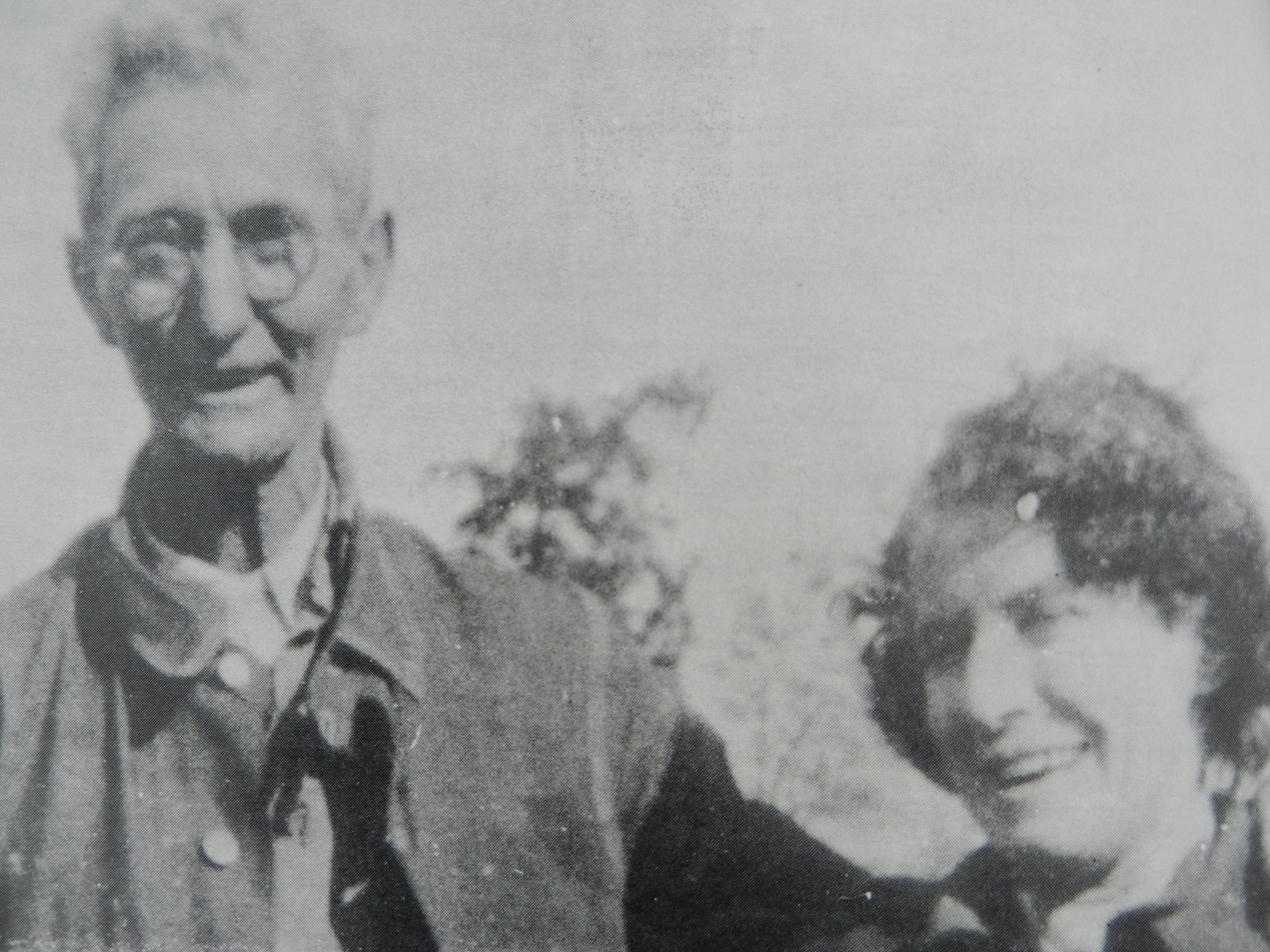
culpepper Sam and Annie CulpepperOn This Day in 1939, my great grandfather William Samuel Culpepper died. He was 66 and suffered from hypertension. He married Annie Josephine Blanks, daughter of the above Mattie and William Henry Blanks. So Annie’s husband died on her mother’s birthday. (photo of Sam and Annie)

On This Day in 2010, my great aunt Myrnis Burke died at the age of 76. She was my grandmother’s little sister. She was a granddaughter of the above Nancy Spencer and John Francis Burke. She died on their wedding anniversary.

This post brought to you by On This Day.