52 Ancestors #22 Middle Temple

52ancestors-2015

This challenge is set forth by No Story Too Small,

and this week’s challenge is “Commencement.”

middle_temple_by_thomas_shepherd_c.1830Since “commencement” has to do with school or beginnings, I chose to write about my 10th great grandfather and his brother attending a law school in London, a place called Middle Temple. The photo is a drawing by Thomas Shepherd in 1830, but my guys attended there in 1621. The Honorable Society of Middle Temple is/was a prestigious law school in England, one of the five “Inns” where the rich kids attended. There are only four today, but they still boast the exclusivity of being the places where students are trained to become barristers or lawyers.

My grandfather, John Culpepper, was admitted ‘specially’ to Middle Temple on May 7, 1621 as “Mr. John Culpeper, second son of John Culpeper of Astwood, Worcestershire, Esquire.” His brother, Thomas, was admitted the same day as “Mr. Thomas Culpeper, son and heir apparent of John Culpeper of Astwood, Esquire.” John was fifteen. Thomas was nineteen.

Thomas graduated from the school and embarked on a professional career as a lawyer, but John did not pursue law, probably to the dismay of his lawyer father. John instead purchased a ship and became a merchant. His father did not help him with financing. It was his brother who stepped up to assist him. They named the ship the Thomas and John and John ran a successful merchant business between England and the Virginia Colony. There is some evidence he also sailed to Barbados.

middle temple hall black and whiteThe Inn at the time of their schooling consisted of a group of buildings like a campus, and most of the school is the same today. The center of inn life was Temple Hall (photo that looks like Hogwarts) which was used as a dining and meeting room. Today it is used for banquets and weddings. William Shakespears’s Twelfth Night reportedly had its first performance here in 1602.

Fountain Court at Middle TempleThere is also Fountain Court (photo), Temple Library, and Temple Church which was erected by the Knights Templar in the 13th century and still stands today.

Members of the gentry class, holding British properness and manners in high esteem must have risen to the occasion, learning the art of persuasion and rhetoric and arguing. One can only imagine the verbal sparring that took place at the time in this hall and around this fountain. Their words had so much more meaning than ours do today.

It’s Monday! What are you reading? Cover Reveal!

2a2It’s Monday! What are you reading?

I’ve been reading “John Culpepper the Merchant” by Lori Crane. LOL!

It’s my book, so I guess I’m cheating a little bit on posting it for this blog, but if I don’t make sure it’s error free before release, someone will lose their marbles, and we don’t want that to happen. So…I’ve been in final edit, proofread, flip-flop mode, wavering between thinking it’s-not-ready-for-release and it’s-the-best-book-ever. Truthfully, it’s probably somewhere in the middle, but as all my author friends know, that’s what we do. Flip-flopping is our most time-consuming hobby. 🙂

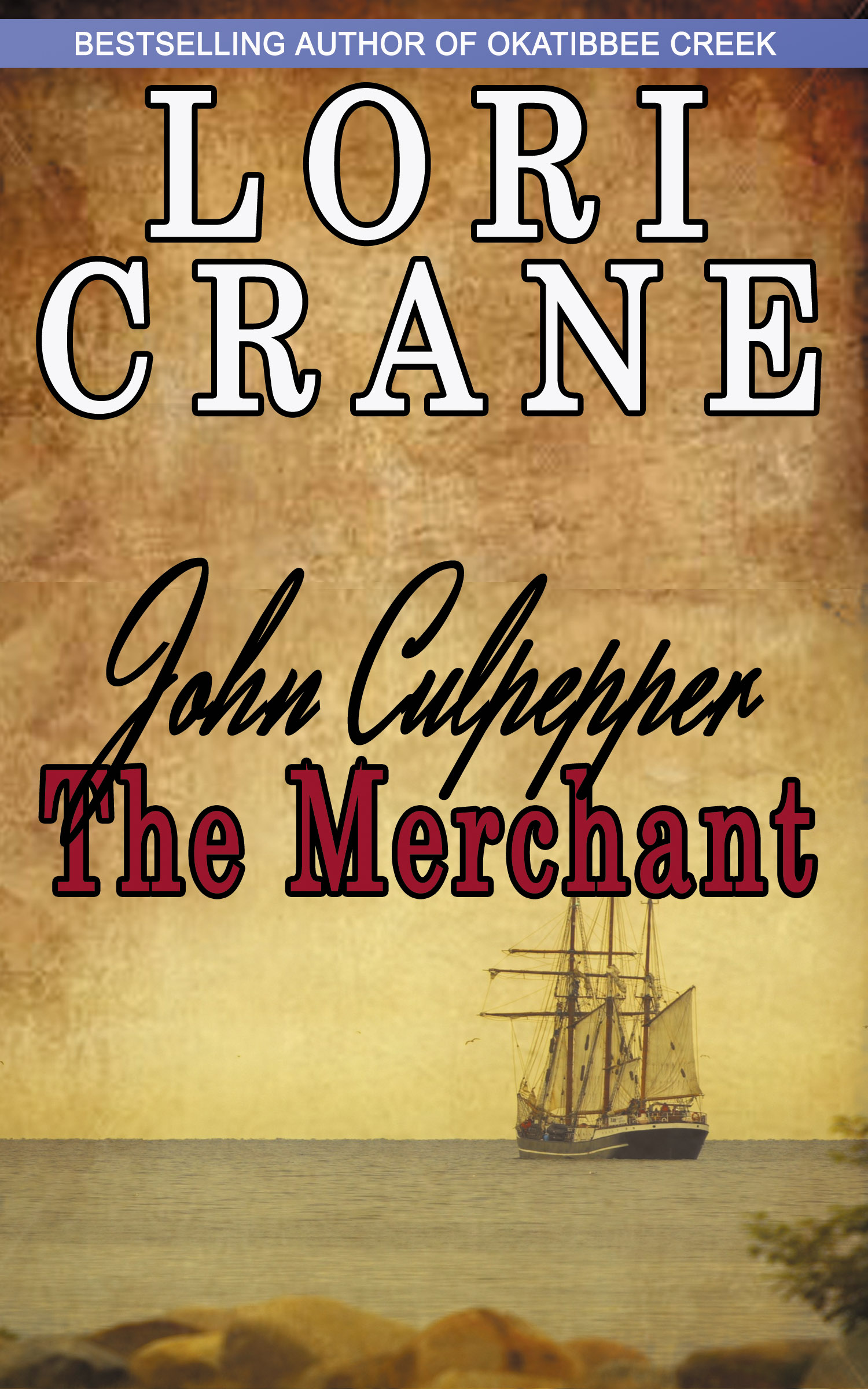
The Merchant ebookI’d also like to show off the new cover. Isn’t it so cool? My cover designer is amazing!

The book will be out in a few days and I’m tickled pink!

Blurb

For hundreds of years, the Culpepper family backed the monarchy, but when King Charles disbanded Parliament, married a Catholic princess, and appointed an archbishop who was a Catholic supporter, the royalist Culpeppers found themselves at odds with their friends and neighbors.

Years earlier, against his family’s wishes, John had purchased a merchant ship, sailed to Virginia, and spent most of his time there. While on American soil, he received word of the uprisings that followed the king’s actions.

When civil war began, John feared for the safety of his family in England. He was horrified when the king was captured, convicted of high treason, and beheaded. Would John’s family be next? The only way to rescue them would be with his ship, under the cloak of darkness. Would he succeed, or would they all be caught and tried as traitors?

John Culpepper the Merchant is the second book in the Culpepper saga and is the story of the progenitor of the modern-day American Culpeppers. He was the author’s tenth great-grandfather.

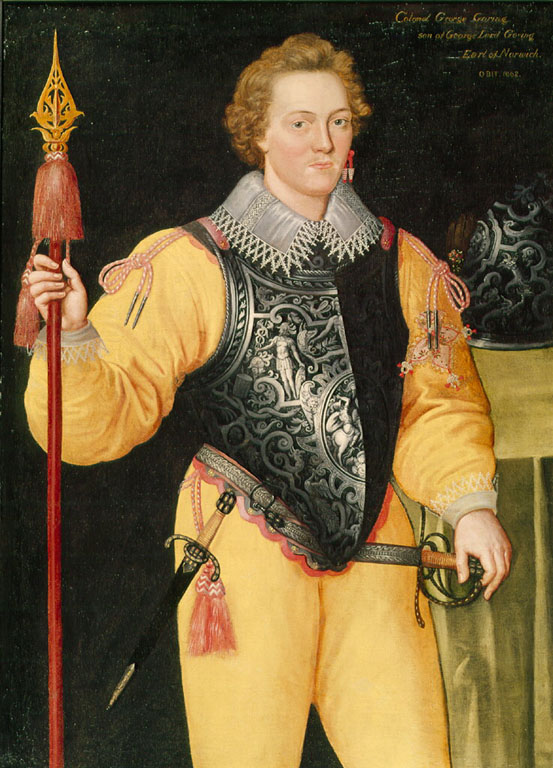
George Goring, the Earl of Norwich

In place of my usual Saturday Snippets in May, I’m writing of the people and places in my coming book, “John Culpepper the Merchant,” which is the second book in the Culpepper Saga.

67_13_8George Goring was born in 1585 and was a politician and a soldier. He served the House of Commons 1621-28. When trouble started between King Charles and Parliament in 1640, Goring took the king’s side. He stayed abroad, soliciting help from other countries, but when Parliament intercepted a letter to the queen, he was found out and charged with high treason. He stayed out of the country until ’47, but when he returned, it was with gusto. He raised an army of 10,000 men in Kent and fought against the parliamentarian army, losing at Maidstone, and being forced to surrender at Colchester.

He remained in the tower during the king’s trial and beheading on 30 January 1649. He was brought before Parliament in March of that year and found guilty of treason to which he was sentenced to death. His family begged for leniency and the deciding vote cast by the speaker of the house found him Not Guilty.  He fled to Denmark to watch over the exiled prince, and returned to London when the prince was brought into power as King Charles II in 1660.

He died in Brentford, just outside of London, on 6 January 1663.

In my book, Goring is a family friend of Colonel Thomas Culpepper and Sir Alexander Culpepper (John’s brother and uncle), and Goring’s daughter is instrumental in getting word to John in Virginia to come to England to rescue his family.

“John Culpepper the Merchant” will be released May 24, 2015.

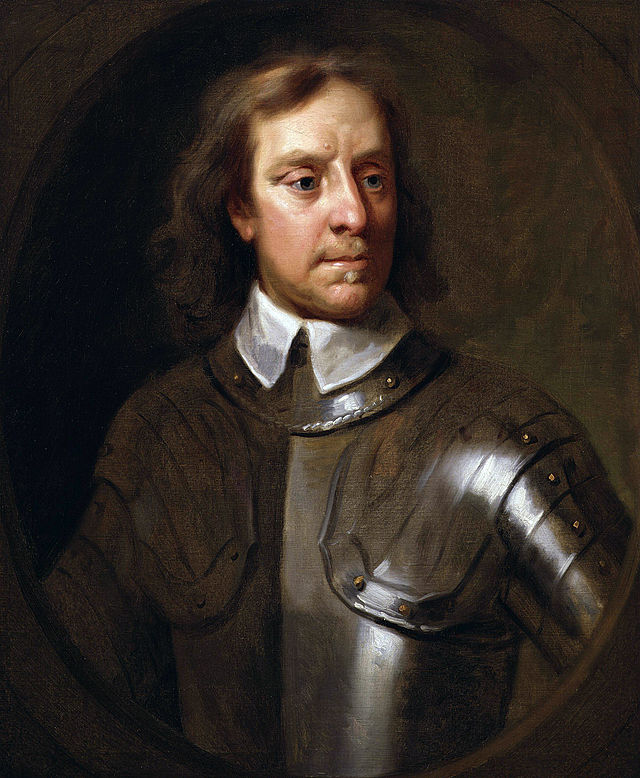
Oliver Cromwell. Regicidal dictator or hero of liberty?

In place of my usual Saturday Snippets for the month of May, I’m posting about the people and places in my coming book “John Culpepper the Merchant,” which is the second book in the Culpepper Saga.

Oliver_CromwellOne of the most controversial figures in my coming book is Oliver Cromwell. He was born into mild obscurity and remained nearly invisible for the first forty years of his life, serving in Parliament, but not accomplishing anything of significance. But in 1640, he stepped into the spotlight.

The king had been aggravating his country with religious rhetoric since his coronation in 1625, and Parliament had stepped forward and addressed the king with a list of grievances. After political struggles for a year between the king and Parliament, the king finally declared war on Parliament. Cromwell, a devout puritan who believed God guided his every move, stepped forward to command the cavalry of the parliamentarian army.

His command and influence grew and at the end of the war, under his leadership, the king was tried and found guilty of treason. Cromwell was the third of fifty-nine men to step forward and add his signature and seal to the king’s death warrant (photo). Following the king’s execution 30 January 1649, Cromwell led England as the English Commonwealth for nine years.

Charles I death warrant

After Cromwell died in 1658, the members of Parliament brought back the Stuart monarchy, declaring Prince Charles to be king since his father’s death years earlier. They acted as if the last decade had never happened.

The prince, now King Charles II, took the throne, and on 30 January 1661, the anniversary of his father’s execution, he had Cromwell’s body exhumed and posthumously executed. Cromwell’s body was hung in chains and his severed head was displayed on a pole outside of Westminster Hall, where the trial of the king had taken place.

Some historians consider Cromwell a hero, some a revolutionary, some a dictator, but at least this ‘nobody’ has not been forgotten. In my coming book, he is enemies with my Culpepper family, so I’m certainly not fond of him.

“John Culpepper the Merchant” will be released May 24, 2015.

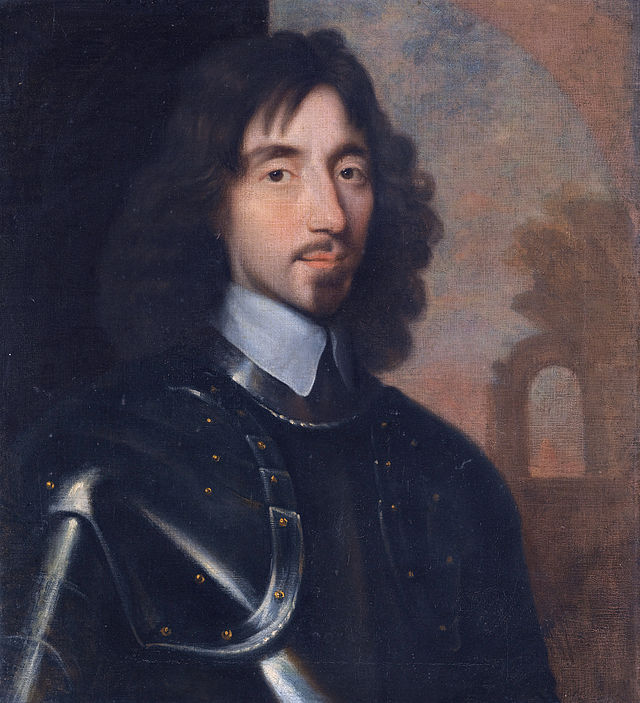
General Thomas Fairfax or Black Tom

In place of my usual Saturday Snippets for the month of May, I’ll be posting about the characters and places in my coming book, “John Culpepper the Merchant.” It’s the second in the Culpepper Saga.

General_Thomas_Fairfax_(1612-1671The book starts in 1640 at the onset of the English Civil War, and one of the characters my hero’s family keeps running into in battle is General Thomas Fairfax (photo). The Culpepper family backed the king as royalists, Fairfax backed Parliament and became the general of the parliamentarian army.

Thomas Fairfax was the 3rd lord of Cameron. He was born into the gentry class January 1612 and was a talented army commander, claiming many victories during the war. He served in Parliament with Oliver Cromwell, but became disenchanted with Cromwell’s policies after Cromwell conquered a town, then murdered one hundred of the three hundred people who surrendered.

Nearing the end of the war, Cromwell had the king in custody and charged him with treason, the consequences of the charge would be beheading. The day the court gathered to sign the king’s death warrant in January of 1650, Fairfax was a no-show. He sent his wife to tell the court that they shouldn’t have elected him to the court for he had no interest in killing the king. He resigned from the army, leaving Cromwell in control the country.

Upon Cromwell’s death in 1659, Fairfax was active in restoring the monarchy to the Stuarts, which conveniently made him exempt from the punishments the new king exacted on the other leaders of the revolution.

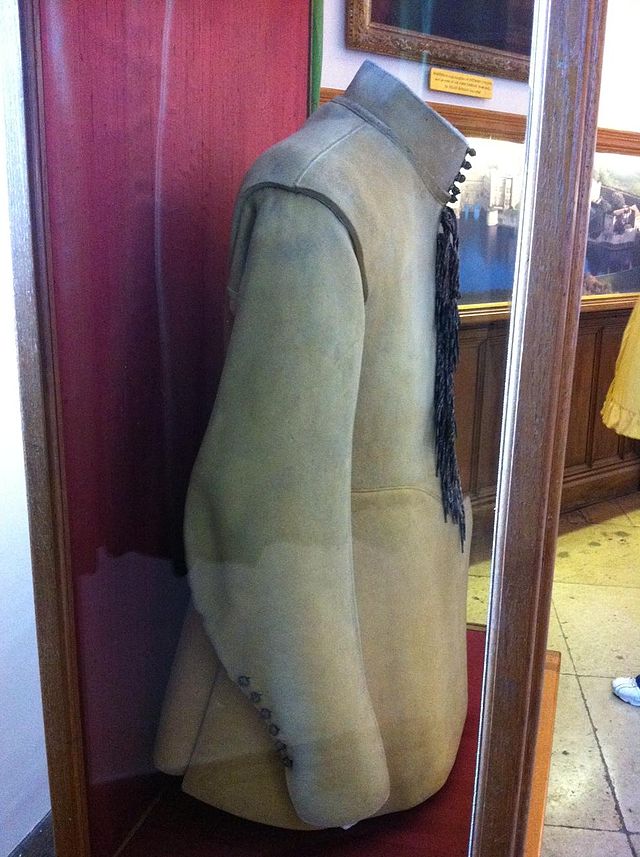
Leeds_Maidstone_Fairfax_Doublet_1648His dark hair and eyes earned him the nickname “Black Tom.” This photo is the doublet he wore in 1648 at the battle of Maidstone, which is a whole chapter in my coming book where he fought directly with Thomas Culpepper (our hero’s brother), and you can read a little about it HERE.

General Fairfax died in 1671 with no sons to take his title of baron, so it was given to his cousin Henry Fairfax. In the future (though not in the Culpepper Saga because it ends before this time) Lord Thomas Fairfax 5th baron of Cameron (Henry’s son) will marry a Culpepper granddaughter. It must have been highly scandalous as their grandfathers were trying to kill each other a few years earlier. Perhaps I should plan on writing another book, The Culpepper-Fairfax Scandal.  🙂

“John Culpepper the Merchant” will be released May 24, 2015.

Saturday Snippet – I, John Culpepper

Culpepper_1My new book, I, John Culpepper, has been released!!

It is the story of young John Culpepper, whose only dream is to own a merchant ship. As you will see in the snippet below, his aristocratic father is not the most supportive. Some of the story occurs simultaneously with historical events we know well. The follow snippet happens on September 6, 1620.

********************************

Fourteen-year-old John stood on the banks of the Thames and stared at her. She was the most majestic creature he had ever seen. He admired her pear shape, her curved lines. From the beak of her prow to the tip of her stern, she must have been nearly one hundred feet in length. Three masts towered above her decks and her white sails billowed, straining against their ropes. Fluttering atop her mainmast, the red-and-white English flag proudly announced her pedigree. She rode the gentle waves toward the English Channel, sailing into the rising sun. Her sharp silhouette stood in contrast to the backdrop of a clouded pink-and-purple sky.

“What are you looking at, boy?” his father bellowed from the carriage.

He pointed at the river as he turned. “Look at the ship, Father!”

“Stop gawking and get over here and unhitch these horses.”

“Yes, sir,” John mumbled. He trudged back toward the carriage, wondering why there wasn’t a footman or stable boy to take care of the animals. He walked around to the other side of the horses and wrapped his fingers around one of the halters.

He peeked around the horse’s nose, watching his father march through the puddles as he crossed the road toward the inn. His father’s long black cloak billowed behind him, caught by an unexpected breeze. John looked up at the sky. Last night’s storm clouds were dissolving and large pockets of blue sky were beginning to show through. When he looked back at his father, the man’s shadow was walking beside him, just as formidable as the real man.

Thomas appeared by John’s side and plopped their father’s large trunk on the ground at John’s feet. The horse jumped and John quickly released the halter.

Thomas complained under his breath, “You’ll never learn, will you? That’s not one of our ships sailing for the Virginia Company. That’s a competitor’s ship. Father isn’t interested in that ship. As a matter of fact, Father has lost so much money investing in these expeditions, he’s not interested in any ships or your fascination with them.”

“How much money?”

“What?” Thomas asked from the back of the carriage, where he was now retrieving another trunk.

“How much money has he lost?”

“I don’t know exactly, but he’s been waiting for shipments of timber from Virginia that never arrived. He said the men who sailed there were too busy trying to survive to cut any trees. So, each time a ship returns empty, Father loses money.”

“But money aside, how can he not love them? All of them. They’re beautiful. Imagine where that ship is heading, sailing off to some enchanted seaport. Silk from the Orient, cotton and tobacco from the colonies. I can picture it coming ashore in Virginia, where one can view rolling land as far as the eye can see, so much land and it’s nearly free for the taking.” John turned to gaze again at the ship as it rounded the bend of the river. He took a step away from the horses so he could see her better, if only for the next few moments until she disappeared.

“Don’t admire that ship too fondly. She’s not going to the Orient. She’s called the Mayflower and she’s going to Plymouth.” Thomas looked at the ship. “And she’s not so grand. As a matter of fact, she’s rather old. She’s already crossed the ocean quite a few times.” He looked back at John. “And why are you talking about rolling land? You’ll never own land.” He laughed as John struggled with the horse’s buckles. “Father will leave everything to me. You will be sent to Middle Temple to be trained as a lawyer, and someday you will oversee my estates.”

John gave up on the buckles and marched toward his brother. “I don’t want to oversee your estates. Oversee them yourself.”

*****************************************

I, John Culpepper is available at Amazon.

Stop by the Culpepper Saga Facebook page to see more of the people and places of the series.

52 Ancestors #16 John Culpepper of Wigsell

52ancestors-2015

This challenge is set forth by No Story Too Small, and this week’s theme is “Live Long.”

Strangely enough, my parents and my maternal grandmother all died in their 50s, so I’ve always had this notion that I would probably die in my 50s also. Not really a morbid thought, just a weird likelihood. When I started looking at the ages of my ancestors for this blog, I was surprised to find a majority of my ancestors lived into their 80s. Maybe I’ll get a few more years out of this life than I thought.

One of my ancestors lived to be 82…back in 1612. I think that is a considerable age for the time. According to early English records, an infant had a 30% chance of dying before the age of 15, 60% for working-class children in the city. As people had no concept of immunity, many died of childhood diseases, and as they grew, they were likely to die of food-borne illnesses or communal diseases like the plague and typhus. In 1665, 80,000 people died of the plague in London, 45,000 were children. Sanitary practices weren’t invented, and medicine wasn’t even a factor. Most thought one survived only because of luck, and many families named their children with identical names, knowing only one had a chance of surviving into adulthood.

book 1 different angleSo, in 1530, my 12th great-grandfather John Culpepper of Wigsell was born in Salehurst, Sussex, England. He had at least two brothers who also lived to a considerable age, all breaking the above mortality rates. He married Elizabeth Sedley at the age of thirty, had seven children who all survived, and remained in his childhood home of Wigsell Manor until his death 20 October 1612 at the age of 82. The home is still standing today and is privately owned. Mostly, John lived a quiet life in the country, but records show him an active Justice of the Peace in public testimonies and an involvement in Queen Elizabeth’s Privy Council from 1558 to 1592.

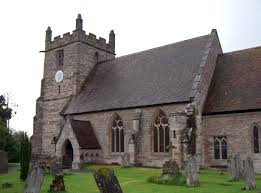
St_Mary_the_Virgin_Church,_Salehurst_(Geograph_Image_2366571_3456e22f)He was buried at St. Mary the Virgin Church in Salehurst on 21 October 1612 as “Johanes Colepeper, armiger, etatis 82.” Armiger means having the right to a coat of arms, and etatis means age. If there was a monument, it was destroyed during the Commonwealth’s desecration of the local churches in the mid 1600s.

It’s Release Day! It’s Release Day!

Culpepper_1I’m so excited!

Today is release day for my new book, I, John Culpepper!! Ahoy, Sailor!

I began writing this book in August of last year, but the more I researched, the more interesting stuff I found, so…the book…became FOUR BOOKS. It morphed into the Culpepper Saga, beginning with John’s childhood, segueing into the English Civil War, moving across the ocean to the colony of Virginia, and finally finding inner peace and acceptance. It seems like I’ve been writing the story forever, and when I put it like that, I guess I have been…well, at least 60 years worth of writing. The tale begins in 1606 in England and is the life-story of my 10th great-grandfather, John Culpepper.

The Culpepper family has been traced by many genealogists back to the 12th century in England. They were a political family who served the monarchy for generations. Though my favorite Culpepper patriarch has always been John Culpepper of Wigsell, who lived in the 16th century, I ended up writing the book series about his grandson, also named John Culpepper. Maybe someday I’ll go back and tell his grandpa’s story.

John was born in Kent, England in 1606 and was surrounded by a cast of interesting family members including his above mentioned grandfather, his brother Thomas who served as a colonel in the king’s army, his uncle Sir Alexander Culpepper who was a knight under King James and King Charles I, and his cousin Lord Culpepper first baron of Thoresway who served under three kings. But none made a bigger impression on John than his overbearing father, Johannes, who was a prominent lawyer in London. His father insisted John attend law school, but John wanted instead to command a mighty ship. This dream strained their relationship, and his father threatened to disown him when it came time to purchase a ship. Instead of receiving daddy’s help, John got funding from his older brother, Thomas, and records show the name of the ship being the Thomas and John. Records also show John in the colony of Virginia upon the occasion of his father’s death.

The first book in the Culpepper Saga, I, John Culpepper, is the story of John’s childhood, his strained relationship with his father, meeting the lovely woman who would eventually become his wife, and starting his career as a ship merchant. In the three sequels, we will find John’s ship becoming a lifeboat that keeps the family from certain execution during the English Civil War, and John’s unwanted law-school education becoming the only thing standing between life and death for his youngest son. In retrospect, maybe John’s father wasn’t the bad guy John always thought him to be.

Everything happens for a reason, especially for John Culpepper.

I, John Culpepper is available at Amazon.

For photos and paintings of the people and places in the series, visit the Culpepper Saga Facebook page.

Ursula Woodcock Culpepper – Culpepper Saga

Culpepper_1This post is in place of my usual “Saturday Snippets,” and is the second installment of the background of the people and places in my coming series, The Culpepper Saga. You can read the first installment here.

Ursula Woodcock Culpepper is one of the more sentimental characters in my coming series. She was our hero’s mother, and sadly, is only in the first book, “I, John Culpepper.” She was my 11th great grandmother.

astwoodUrsula was born to Ralph Woodcock, the Alderman of London, and his wife Good Bower in 1566. She was baptized at St. Lawrence Jewry in London on January 27, 1566. Her father’s will describes her as “my daughter Ursula, wife of Solomon Pordage.” Ursula and Solomon married in 1581, when Ursula was a child of fifteen.  Solomon Pordage died September 12, 1599 and his will commended his wife to his kinsman, William Stede of Harrietsham. Solomon’s sister, Joan Pordage, was married to a Culpepper and Ursula probably met her second husband, John Culpepper of Feckenham, at family gatherings long before she was widowed. Note: This is John Sr., not our hero John, and in the book I refer to him as Johannes, as that is what is written on his tombstone.

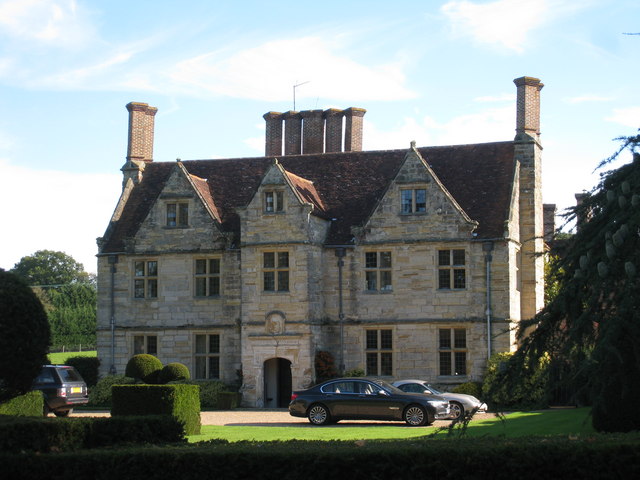
Ursula and Johannes had four children: Thomas, Cicely, John (our hero), and Frances. When the children were small, between the ages of four and ten, the family left their home in Kent and moved to Astwood Court in Feckenham (photo) so Johannes could retire and become a “country gentleman,” but they lived there for less than a year when Ursula took ill and died. She was buried at St. John the Baptist Church in Feckenham on June 2, 1612 as “Ursula, the wife of John Culpepper, Esquire.” She was forty-six years old.download

In the first book in the Culpepper Saga, “I, John Culpepper,” the following is what Johannes thought of his lovely wife. The book will be released April 10, 2015.

*****************************************************************

He pushed open the heavy door a few inches and peeked through the crack. The room was dim with all the heavy curtains drawn. It was quite different up here than the sunshine-filled bustle of the rest of the house. The room was quiet and warm, with the soft flickering light of candles dancing on the tapestries that covered the walls. He called out, “Ursula?”

“Johannes? Is that you? Please, please, come in.”

Her golden voice was as sweet as an angel’s, and that made him smile. He’d married her because of her cheerful voice—well, that and her family’s money. The Woodcock family had more manors and land than the Culpeppers, and the time-honored tradition of marrying heiresses and widows was generally the way the Culpepper men gained their fortunes. But Ursula had something else about her that Johannes loved. She was warm-hearted, with a gentle smile and soft manner. He had initially been attracted to her by the way she said, “Good morning,” and “Good evening,” and particularly the way she said, “Johannes.” Words floated from her lips as if they were lyrics she was singing just for him. Her voice had a happy lilt that filled his heart the way nothing else did. Today, it made him happy to be home.

He swung the door wide, entered the lavishly appointed room, and found Ursula sitting up in the four-poster bed, wearing a soft white gown that floated over her petite frame. A stack of pillows rested behind her back and her legs were covered with a brightly colored velvet quilt. Her hair was plaited on either side of her face, and Johannes was momentarily awed by how peaceful she looked. Childbirth agreed with her.

Her expression was one of excitement and anticipation as she held their newborn in her arms, and her smile grew more radiant as he approached the bed. “It’s a son,” she said.

***************************************************************

Sir William Berkeley – Culpepper Saga

Culpepper_1For the next few Saturdays, in place of my usual “Saturday Snippets,” I’m going to give you some background into some of the people and places in my new series, The Culpepper Saga. The series consists of four books which will be released between April and September.

One of the main characters is Sir William Berkeley. I write stories of my ancestors, but Berkeley is not one of my ancestors. He was, however, a life-long friend of our hero and my 10th great grandpa John Culpepper.

In the 1st book, Berkeley and John are young law students in England. In the 2nd and 3rd books, Berkeley plays a daily role in John’s life and is the Governor of Virginia. In the final book, Berkeley is married to John’s niece and is at the center of a deadly rebellion.

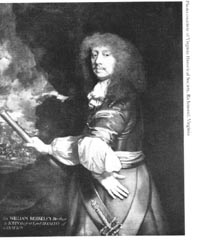
SirWilliamBerkeley2William Berkeley, referred to as “Will” by his family and friends, was born in England in 1605. He was the colonial governor of Virginia from 1642 until his death in 1677. Upon his arrival in Virginia, he built a plantation called Green Spring House and planted corn, wheat, barley, rye, and tobacco, though he despised tobacco. In 1670, he wed thirty-six-year-old Frances Culpepper, the niece of our hero John. Historical records show him fleeing Jamestown during Bacon’s Rebellion in 1676 and taking refuge in Accomac, Virginia. Most people leave it at that, but in my writing world, I happen to know that John had a house in Accomac, so it is obvious he went to John’s. After all, they had been friends for many years, and they were family through marriage. I’ll let you read the rest of his story in the Culpepper Saga, but I’ll leave you with a tidbit from the day he and John met as young boys at law school–a place called Middle Temple.

Note: Wikipedia does not confirm that Berkeley attended Middle Temple, but in “The History of Middle Temple” by Hart Publishing, records of Middle Temple show Berkeley as a student. He also wrote and published a few plays in the 1630s, which was a large part of the curriculum at the school.

The following is an excerpt from “I, John Culpepper.”

**************************************

John clapped along with the other boys as the headmaster strolled toward the center of the room. The man looked as stern as JC had warned. A pair of spectacles rested on the tip of his pointed nose, and his rather large ears stuck out from under his cap. He began stroking his goatee as if caressing the family pet. For a moment, John couldn’t put his finger on what was so amusing about the man’s appearance, then it struck him—the man looked like a goat. John tried unsuccessfully to stifle a giggle.

Barnaby’s brow wrinkled and the corners of this mouth turned down like a fish as he scanned the group of boys. He looked at each one as if viewing a repulsive heap of trash. He cleared his throat and his Adam’s apple bobbed up and down. Just as he opened his mouth to speak, a frizzy-headed boy ran into the room, allowing the door to slam behind him. The sound echoed loudly within the stone walls and the tardy boy’s face turned red with embarrassment. Barnaby followed the boy’s movement with his narrowed eyes as the boy took the only empty seat in the room—right next to John. John felt a trickle of sweat drip down his back as the headmaster slowly walked toward them.

“You’re tardy for my class,” the man scoffed, his eyes filled with hostility. When he said the word class, he drew out the a for an inappropriate amount of time, and John was again reminded of a goat, but with the man standing directly in front of him, he didn’t dare giggle.

“My apologies. I just arrived, sir.”

“What is your name, boy?” Barnaby growled.

“William Berkeley, sir.”

“William Berkeley.” He stared at Berkeley for a long time, as if attempting to memorize every feature of the boy’s face. He then repeated the name. After what seemed like an hour of uncomfortable silence, with the tension in the room growing by the second, Barnaby said, “William Berkeley, I will speak with you in private following this evening’s supper.”

“Yes, sir.” William lowered his eyes to the floor.

As Barnaby turned his back on Berkeley and returned to the center of the room, Berkeley glanced around the room at the other boys. John wondered if Berkeley’s humility was in respect for the headmaster or due to his embarrassment for being late, or both.

Berkeley leaned over to John and whispered, “Who’s that old goat?”

John almost laughed out loud and his hands flew up to his mouth.

Berkeley winked at him and grinned.

******************************************

The first book in the Culpepper Saga, “I, John Culpepper,” will be released April 10, 2015.