Saturday Snippet – John Culpepper the Merchant

The Merchant ebookMy new release, “John Culpepper the Merchant” is the second book in the Culpepper Saga. It begins in England in 1642 at the onset of the English civil war. The king had been angering his people for his entire reign of seventeen years, and the opening chapter of the book sets the scene. It is one of the catalysts of the war.

***************************************************

John Culpepper the Merchant

Chapter 1

January 4, 1642, London, England

The king marched into the room unannounced. He walked through the middle of the active session of Parliament and was greeted with stunned silence. Never before had a monarch entered the House of Commons uninvited, and the nearly two hundred members present froze in place as if someone had painted their portrait, capturing the moment complete with paper strewn across tables, pens held in the air, and faces turned to pose for the painter. The king did not return their shocked gazes.

From his seat at a table in the center of the room, JC watched the king walk past him, easily slipping between the unmoving members of the House. JC’s jaw fell open when the king sat in the speaker’s chair. JC looked back toward the door, wondering how the king had entered the room without warning and saw the king’s sergeant at arms blocking the doorway. Behind the intimidating man stood the king’s soldiers—hundreds of them as far as JC could tell.

After a lengthy and excruciating silence, the king rose from the chair. The knuckles of his right hand turned white as he gripped the ball on top of his walking stick. His left hand remained at his side, balled into a fist.

“Gentlemen!” The king narrowed his eyes as he scrutinized each face. It was obvious he was not going to stay as he had neglected to remove his wide-brimmed hat, which matched his black velvet cloak. Underneath, he wore a red doublet and breeches, almost the same shade as his face. “I am sorry to have this occasion to come unto you, and I apologize for violating your parliamentary privilege.” His beard twitched as he clenched his teeth. “But those guilty of treason have no privilege.”

There was a collective gasp from the room, and a trickle of sweat dripped down JC’s back. Parliament had not been convened for nearly nine years, as the king thought it his royal prerogative to rule the country alone, but after Scotland had invaded the north in retaliation for the king’s religious rulings, he desperately needed money to fund his army. The only body that could legally raise taxes to fund an army was Parliament, so the king was forced to call on it. It denied the king’s request to raise taxes, and instead compiled a list of over two hundred grievances against the king, demanding he address them. The document had been delivered a month ago but Parliament had never received word as to the king’s reaction.

JC had not participated in the writing of the grievances. For the last nineteen years, he had worked in the king’s service, just as his family had done for many kings and many generations. He would never contribute to anything as treasonous as telling the king how to rule. During his service, JC had never seen the king’s demeanor this threatening. This unannounced visit to the House of Commons was not going to end well for someone.

The king lifted his hand and gestured for his sergeant at arms to enter the room.

All heads turned toward the door, and all eyes followed the sergeant as he walked to the middle of the room and unrolled a piece of paper. He held it with both hands in front of his face and turned clockwise as he read aloud. “I am commanded by His Majesty, my master, upon my allegiance that I should come to the House of Commons and request from Mr. Speaker five members of the House of Commons. When these gentlemen are delivered, I am commanded to arrest them in His Majesty’s name for high treason. Their names are Mr. Denzil Hollis, Sir Arthur Haselrig, Mr. John Pym, Mr. William Strode, and Mr. John Hampden.”

The sergeant rolled up the paper and stuffed it back into his breast pocket.

JC witnessed a scowl cross the king’s face while the sergeant read the names. The five men were the authors of the list of grievances.
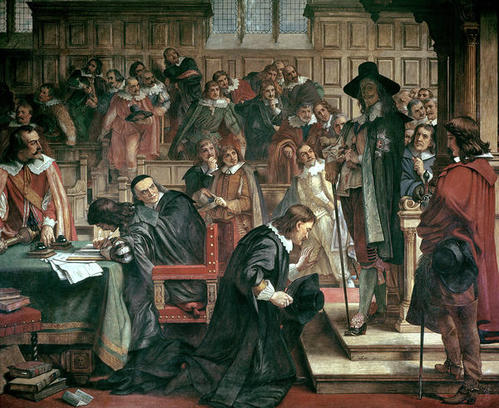
Attempted_Arrest_of_the_Five_members_lenthall kneels before charles“Mr. William Lenthall,” the king bellowed.

A man wearing a black cape with a white collar emerged from the crowd and knelt before the king. “Yes, Your Majesty.”

“Mr. Speaker, where are these men we seek? Do you see them in this room?”

Lenthall kept his eyes to the floor. “May it please Your Majesty, I have neither eyes to see nor tongue to speak in this place but only as the House is pleased to direct me, whose servant I am.”

The king stared at the top of Lenthall’s head. Lenthall remained still. No man risked a glance toward another or even dared to breathe for fear of attracting the king’s attention. The king sighed and said, “I see all the birds have flown.”

With a flick of his wrist, the king flipped his long hair off his shoulder and marched past Lenthall, leaving him kneeling in front of his own empty chair. The sergeant at arms followed the king from the room. When the door slammed, everyone exhaled.

**************************************

John Culpepper the Merchant” is available in Kindle and paperback at Amazon.

For pictures, paintings, and documents of the people and places in the series, visit the Culpepper Saga Facebook page.
New Release! “John Culpepper the Merchant”

51hHerBrPbL._UY250_If you’ve been following along, I’ve been writing a four-book series on 17th century John Culpepper who was my 10th great-grandfather. He was born in 1606 in Kent, England and was trained as a lawyer in his youth, but his greatest desire was to command a ship. Against his father’s wishes, when he was in his twenties, he purchased a ship, and his father never spoke to him again. His childhood story is told in the first book of the series, “I, John Culpepper.”

The Merchant ebookMy new release, the second book “John Culpepper the Merchant,” begins in 1642 and follows John to the colony of Virginia, but it more-or-less leaves him there as England finds itself in an uproar. The King had been angering his citizens with his religious antics since he took the throne in 1625, and the citizens had had enough. Parliament began fighting back and effectively split the country in two – the parliamentarians vs. the royalists. As civil war raged on, John returned over and over, but by the time he reached his wife and family, the fighting had usually died down. By the time he returned to Virginia, it had started back up again.

While everyone hoped the bloodshed would soon end, the members of Parliament, namely Oliver Cromwell, had other plans. He wanted to take over the country, he wanted the king dead, he would stop at nothing. After the king’s surrender, kidnapping, trial, and ultimately, his execution, the royalists found themselves at the mercy of Cromwell, and John had only one choice. He had to return to England under the cloak of darkness and rescue his family from certain death. It’s a good thing he had a ship and didn’t listen to his father.

“John Culpepper the Merchant” is available in Kindle and paperback at Amazon.

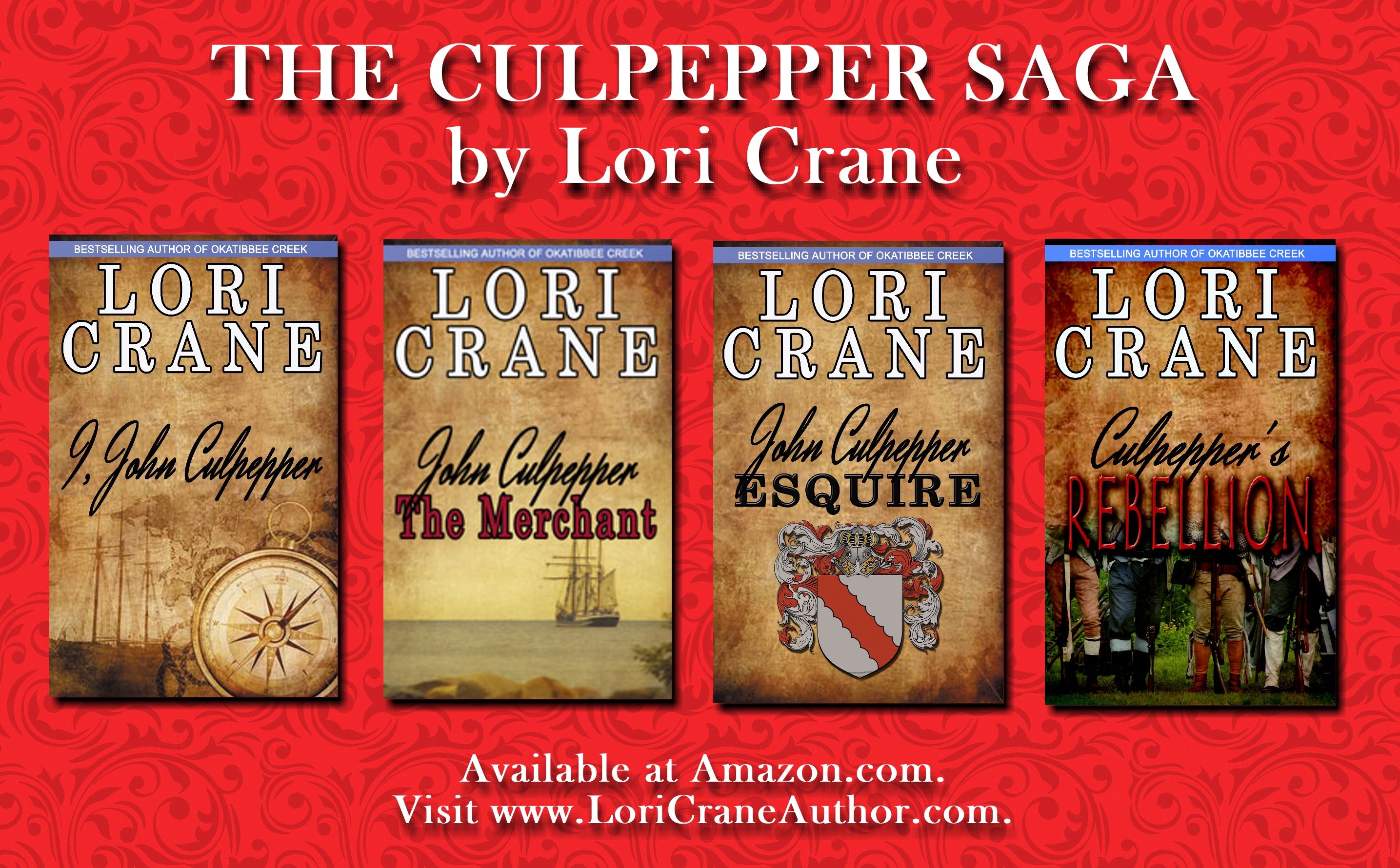
The third book in the series, “John Culpepper, Esquire,” will be released July 2015.

For pictures, paintings, and documents of the people and places in the series, visit the Culpepper Saga Facebook page.

culpepper saga-001

It’s Monday! What are you reading? Cover Reveal!

2a2It’s Monday! What are you reading?

I’ve been reading “John Culpepper the Merchant” by Lori Crane. LOL!

It’s my book, so I guess I’m cheating a little bit on posting it for this blog, but if I don’t make sure it’s error free before release, someone will lose their marbles, and we don’t want that to happen. So…I’ve been in final edit, proofread, flip-flop mode, wavering between thinking it’s-not-ready-for-release and it’s-the-best-book-ever. Truthfully, it’s probably somewhere in the middle, but as all my author friends know, that’s what we do. Flip-flopping is our most time-consuming hobby. 🙂

The Merchant ebookI’d also like to show off the new cover. Isn’t it so cool? My cover designer is amazing!

The book will be out in a few days and I’m tickled pink!

Blurb

For hundreds of years, the Culpepper family backed the monarchy, but when King Charles disbanded Parliament, married a Catholic princess, and appointed an archbishop who was a Catholic supporter, the royalist Culpeppers found themselves at odds with their friends and neighbors.

Years earlier, against his family’s wishes, John had purchased a merchant ship, sailed to Virginia, and spent most of his time there. While on American soil, he received word of the uprisings that followed the king’s actions.

When civil war began, John feared for the safety of his family in England. He was horrified when the king was captured, convicted of high treason, and beheaded. Would John’s family be next? The only way to rescue them would be with his ship, under the cloak of darkness. Would he succeed, or would they all be caught and tried as traitors?

John Culpepper the Merchant is the second book in the Culpepper saga and is the story of the progenitor of the modern-day American Culpeppers. He was the author’s tenth great-grandfather.

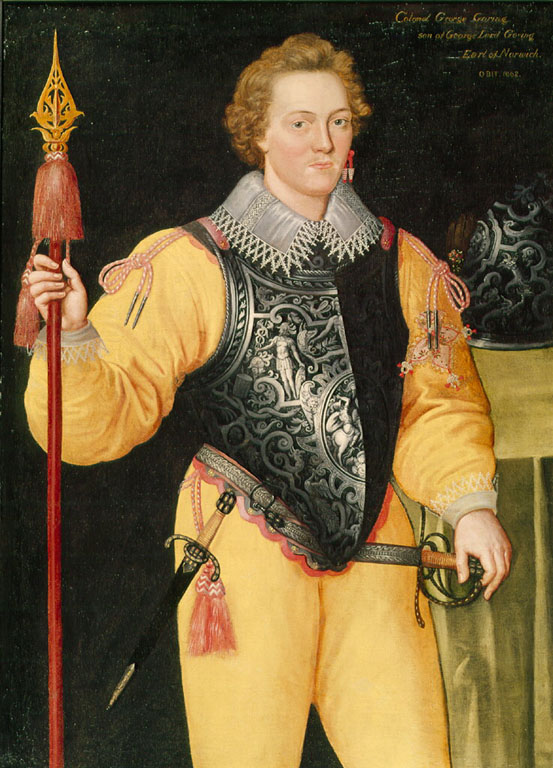
George Goring, the Earl of Norwich

In place of my usual Saturday Snippets in May, I’m writing of the people and places in my coming book, “John Culpepper the Merchant,” which is the second book in the Culpepper Saga.

67_13_8George Goring was born in 1585 and was a politician and a soldier. He served the House of Commons 1621-28. When trouble started between King Charles and Parliament in 1640, Goring took the king’s side. He stayed abroad, soliciting help from other countries, but when Parliament intercepted a letter to the queen, he was found out and charged with high treason. He stayed out of the country until ’47, but when he returned, it was with gusto. He raised an army of 10,000 men in Kent and fought against the parliamentarian army, losing at Maidstone, and being forced to surrender at Colchester.

He remained in the tower during the king’s trial and beheading on 30 January 1649. He was brought before Parliament in March of that year and found guilty of treason to which he was sentenced to death. His family begged for leniency and the deciding vote cast by the speaker of the house found him Not Guilty.  He fled to Denmark to watch over the exiled prince, and returned to London when the prince was brought into power as King Charles II in 1660.

He died in Brentford, just outside of London, on 6 January 1663.

In my book, Goring is a family friend of Colonel Thomas Culpepper and Sir Alexander Culpepper (John’s brother and uncle), and Goring’s daughter is instrumental in getting word to John in Virginia to come to England to rescue his family.

“John Culpepper the Merchant” will be released May 24, 2015.

Oliver Cromwell. Regicidal dictator or hero of liberty?

In place of my usual Saturday Snippets for the month of May, I’m posting about the people and places in my coming book “John Culpepper the Merchant,” which is the second book in the Culpepper Saga.

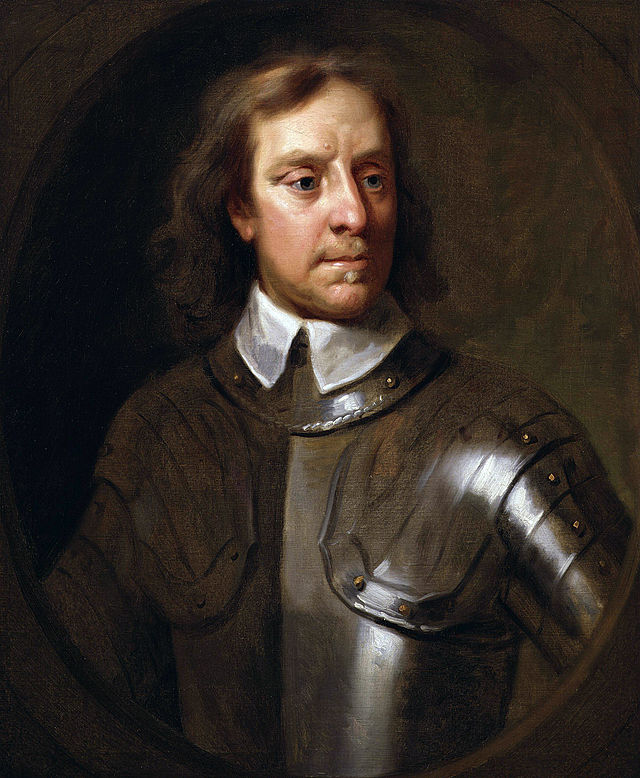
Oliver_CromwellOne of the most controversial figures in my coming book is Oliver Cromwell. He was born into mild obscurity and remained nearly invisible for the first forty years of his life, serving in Parliament, but not accomplishing anything of significance. But in 1640, he stepped into the spotlight.

The king had been aggravating his country with religious rhetoric since his coronation in 1625, and Parliament had stepped forward and addressed the king with a list of grievances. After political struggles for a year between the king and Parliament, the king finally declared war on Parliament. Cromwell, a devout puritan who believed God guided his every move, stepped forward to command the cavalry of the parliamentarian army.

His command and influence grew and at the end of the war, under his leadership, the king was tried and found guilty of treason. Cromwell was the third of fifty-nine men to step forward and add his signature and seal to the king’s death warrant (photo). Following the king’s execution 30 January 1649, Cromwell led England as the English Commonwealth for nine years.

Charles I death warrant

After Cromwell died in 1658, the members of Parliament brought back the Stuart monarchy, declaring Prince Charles to be king since his father’s death years earlier. They acted as if the last decade had never happened.

The prince, now King Charles II, took the throne, and on 30 January 1661, the anniversary of his father’s execution, he had Cromwell’s body exhumed and posthumously executed. Cromwell’s body was hung in chains and his severed head was displayed on a pole outside of Westminster Hall, where the trial of the king had taken place.

Some historians consider Cromwell a hero, some a revolutionary, some a dictator, but at least this ‘nobody’ has not been forgotten. In my coming book, he is enemies with my Culpepper family, so I’m certainly not fond of him.

“John Culpepper the Merchant” will be released May 24, 2015.

General Thomas Fairfax or Black Tom

In place of my usual Saturday Snippets for the month of May, I’ll be posting about the characters and places in my coming book, “John Culpepper the Merchant.” It’s the second in the Culpepper Saga.

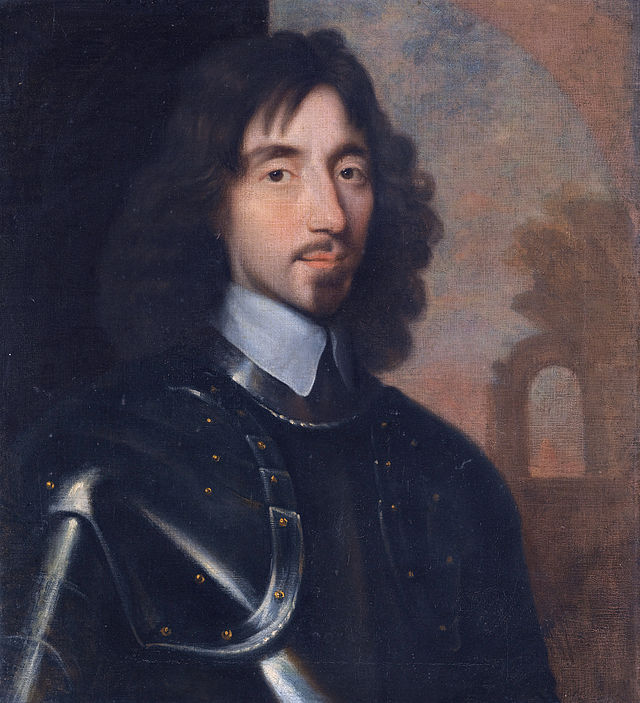
General_Thomas_Fairfax_(1612-1671The book starts in 1640 at the onset of the English Civil War, and one of the characters my hero’s family keeps running into in battle is General Thomas Fairfax (photo). The Culpepper family backed the king as royalists, Fairfax backed Parliament and became the general of the parliamentarian army.

Thomas Fairfax was the 3rd lord of Cameron. He was born into the gentry class January 1612 and was a talented army commander, claiming many victories during the war. He served in Parliament with Oliver Cromwell, but became disenchanted with Cromwell’s policies after Cromwell conquered a town, then murdered one hundred of the three hundred people who surrendered.

Nearing the end of the war, Cromwell had the king in custody and charged him with treason, the consequences of the charge would be beheading. The day the court gathered to sign the king’s death warrant in January of 1650, Fairfax was a no-show. He sent his wife to tell the court that they shouldn’t have elected him to the court for he had no interest in killing the king. He resigned from the army, leaving Cromwell in control the country.

Upon Cromwell’s death in 1659, Fairfax was active in restoring the monarchy to the Stuarts, which conveniently made him exempt from the punishments the new king exacted on the other leaders of the revolution.

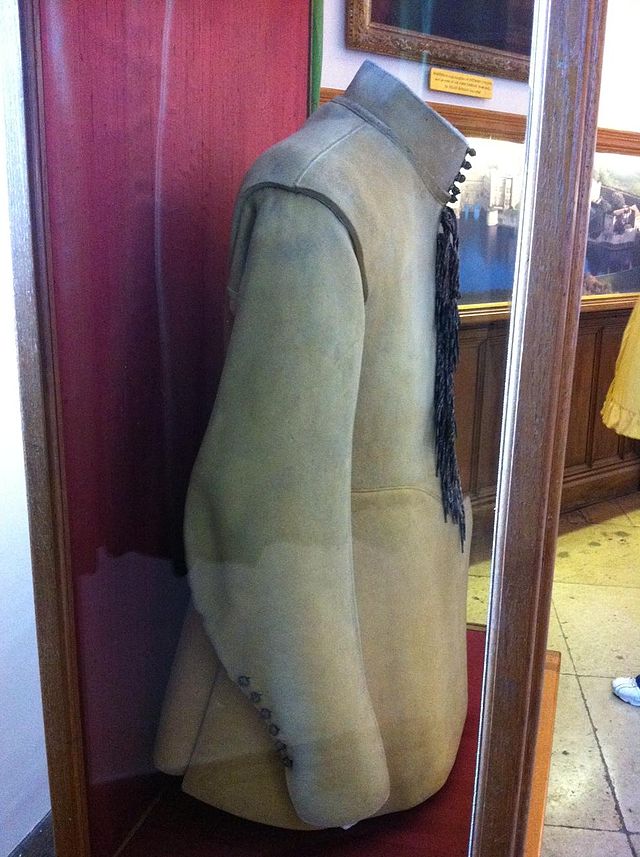
Leeds_Maidstone_Fairfax_Doublet_1648His dark hair and eyes earned him the nickname “Black Tom.” This photo is the doublet he wore in 1648 at the battle of Maidstone, which is a whole chapter in my coming book where he fought directly with Thomas Culpepper (our hero’s brother), and you can read a little about it HERE.

General Fairfax died in 1671 with no sons to take his title of baron, so it was given to his cousin Henry Fairfax. In the future (though not in the Culpepper Saga because it ends before this time) Lord Thomas Fairfax 5th baron of Cameron (Henry’s son) will marry a Culpepper granddaughter. It must have been highly scandalous as their grandfathers were trying to kill each other a few years earlier. Perhaps I should plan on writing another book, The Culpepper-Fairfax Scandal.  🙂

“John Culpepper the Merchant” will be released May 24, 2015.