Celebrate All Hallow’s Eve with a Shiver up Your Spine!

Happy All Hallow’s Eve to all of you ghouls and goblins.

Just for fun, try the Kindle copy of

The Legend of Stuckey’s Bridge

51ae9DloKqL._UY250_

Old Man Stuckey is the perfect accompaniment to a frightful Halloween week. He’s a little bit Dexter with a streak of Hannibal, but somehow, he makes me laugh.


Pick up a copy…if you dare! Sweet dreams.

Click HERE to go to Amazon! If you don’t have a Kindle, no worries. Click HERE to download the app to your tablet, computer, or phone.


Saturday Snippet – In Exchange for Your Freedom

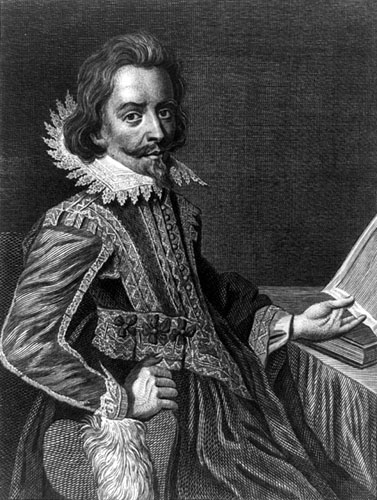
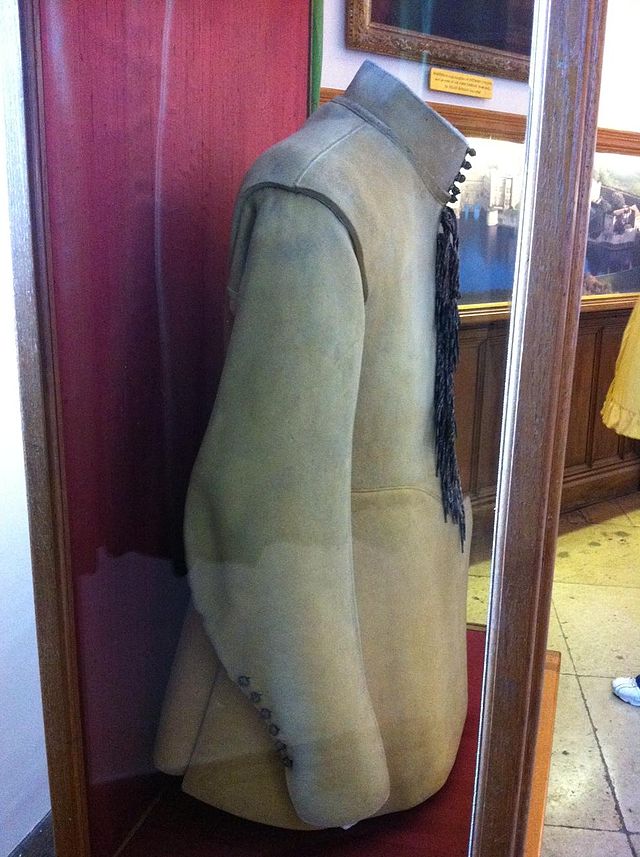
Leeds_Maidstone_Fairfax_Doublet_1648In celebration of the release on October 31st of the fourth book in the Culpepper Saga, “Culpepper’s Rebellion,” we’re spending the next few Saturdays re-living moments from the first three books. In the second book, “John Culpepper the Merchant,” John finds himself mostly in Virginia, while at home in England, a deadly civil war has begun. His brother Thomas has been promoted to colonel in the king’s army. In this snippet, Thomas is fighting in his own backyard against General Fairfax of the parliamentarian army. Thomas’s wife and children could probably here the cannons from their house. The photo is the leather doublet General Fairfax wore in the battle. It has been preserved and is on display at Leeds Castle.


*********************************

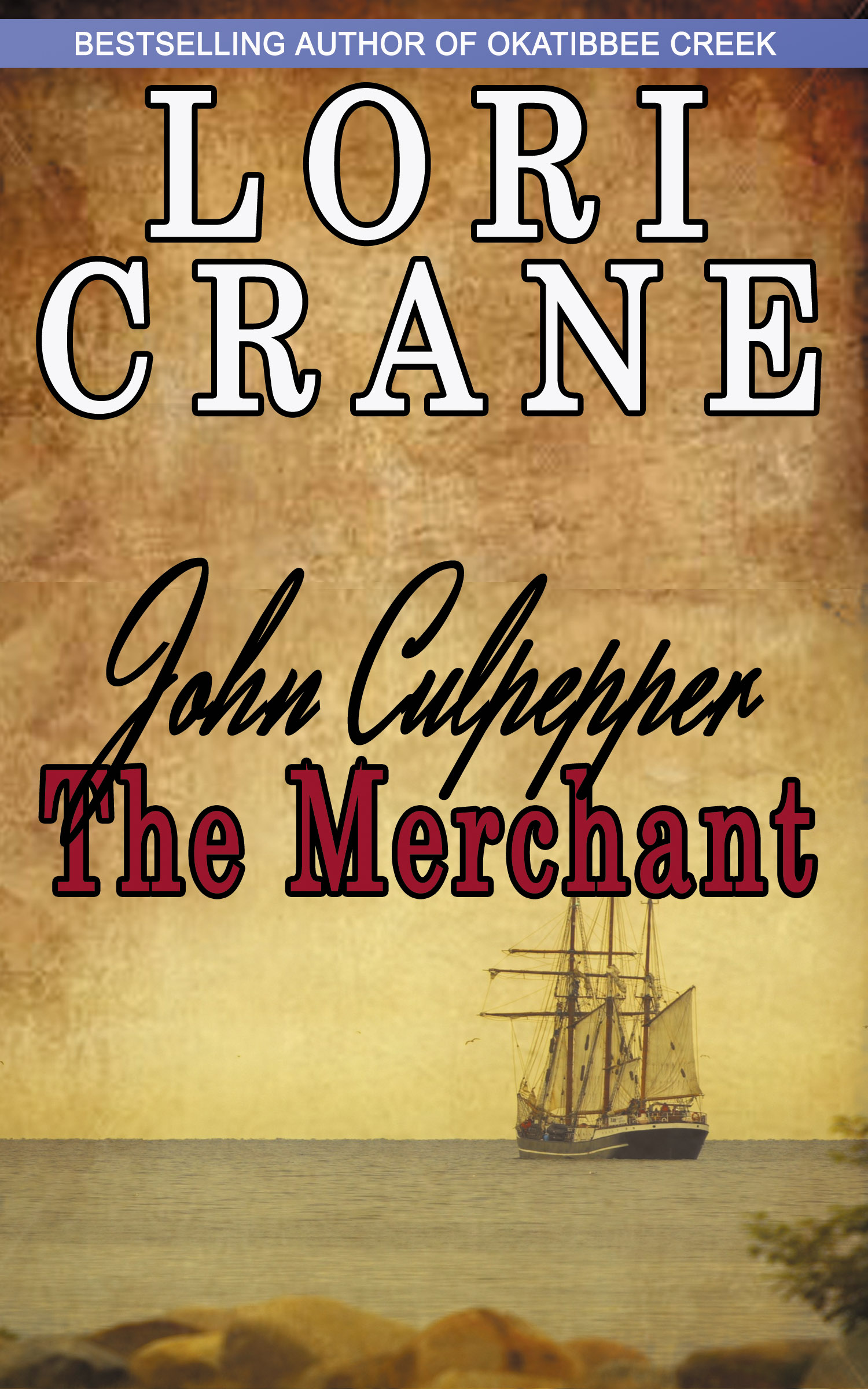
The Merchant ebookWhen the afternoon grew late, the heavens opened up and heavy rains fell on Maidstone, but that did not stop Fairfax’s advance. His troops attacked Thomas’s army from behind. Their powder had become wet in the storm so they couldn’t use their muskets, but they fought with their longbows and swords. Fairfax’s men pushed Thomas’s soldiers back street by street, inch by inch. Lightning flashed as the royalists fought near Gabriel’s Hill. Thunder pounded their ears as they were moved back further to Week Street.

By the time evening turned to night, Thomas and his men had been pushed back to St. Faith’s Churchyard. They fought among massive oaks and tombstones, often not knowing which sounds were thunder and which were cannon fire. Thomas’s men held their ground.

As midnight fell, the fighting died down and Thomas’s men found shelter inside the church. The thunderstorm had flooded the cemetery and the torrents had seeped under the door of the church, covering the floor in inches of rainwater. The soldiers lay on the pews, wondering what they would do come morning. They were tired. They were cold and wet. They didn’t know how they would escape from the church that had now become a prison since Fairfax’s army had the building surrounded. What was left of their ammunition was wet and useless.

In the wee hours of the morning, the storms subsided, and the two armies sat in silence until the night gave way to the soft light of early morning. Thomas looked out the window and saw Fairfax, dressed in black, gallop onto the scene on his white horse. Fairfax spoke to a soldier, and though Thomas couldn’t make out their words, he could tell by Fairfax’s gestures that he was instructing the man to allow the royalist soldiers to emerge from the church and then send them home.

Thomas understood the move. Fairfax only wanted to capture the town; he didn’t want to be responsible for a thousand prisoners. Thomas instructed his men to wave a white flag and surrender. He needed them to stay alive to fight another day. Staying holed up in this church with no ammunition would not win the war. They had to keep their eyes on the larger prize.

One of the men cracked open the church door and stuck a white cloth through the opening, waving it at Fairfax’s man. Slowly, the soldiers exited, arms behind their heads.

Fairfax had won Maidstone.

Since St. Faith’s Church was flooded, the prisoners, under the shadow of muskets and swords, were commanded to walk single file up the hill to All Saints Church, where Fairfax’s men would catalog their names and release them, making them promise to lay down their arms and return home.

Thomas stayed with his men but remained silent at the back of the line, his head bowed, his eyes meeting no one’s. At All Saints Church, Thomas stood in the kaleidoscope of sunny colors blazing through the stained-glass windows and gazed down at his uncle Alexander’s tomb. He was certain his men had fought a brave battle, but as he stared at the tomb, he wondered if he could have done more. His men were before him, lined up like cattle ready to go to slaughter. He felt their fate was even worse than death, for they were giving up their pride and their king.

Perhaps he was being hard on himself. Perhaps he was just tired. After all, he had not felt the comfort of a soft bed for the last forty-eight hours.

After staring at his uncle’s tomb for more than an hour and listening to his soldier’s names being taken at the front of the line, Thomas decided to follow in his uncle’s footsteps. They could take his name on this day. They could take his arms and his horse. They could disband his men, but they would never take his spirit nor his ambition to see the king back on the throne. He would live to see these men with their ink pots and quills beheaded for treason. He would fight for his king until his final breath. Today was not the end. In fact, today was a new beginning.

When he was the only soldier left in the church, he raised his head and stepped away from his uncle’s tomb. He marched to the table set up near the door and looked down at the soldier sitting behind it. He found himself gazing into the eyes of General Thomas Fairfax.

“Well, Colonel Thomas Culpepper, do you claim command of these men?”

“No, these are George Goring’s men. I am only here to serve.”

“Goring? That traitor? It seems you have chosen to serve the wrong side.”

“When all is said and done, we’ll see if that is true, but I suspect you’re mistaken.”

Fairfax sighed and scribbled Thomas’s name on the paper in front of him. He spoke without looking up at Thomas. “Colonel Culpepper, in exchange for your freedom on this day, you are to lay down your arms and return to your home. Do you understand?”

“I understand,” Thomas lied without a flinch.

“Then you are free to go,” Fairfax said.

Thomas didn’t move.

Fairfax looked up.

Thomas said, “I hope you know what you’re doing, Thomas Fairfax. It will be a great shame when we change places and you’re forced to give up your talents as a competent military leader, only to find your head on a spike next to Cromwell’s.”

Fairfax narrowed his eyes. “Is that a threat, Culpepper?”

“No, just an observation.”

A bead of sweat appeared on the general’s forehead. He looked around at his own men loitering in the church. “We are finished here.”

***************************

The first three books in the Culpepper Saga are available in paperback and Kindle at Amazon.
culpepper saga-001


Nathaniel Bacon from the Culpepper Saga

book 4 nathaniel baconIn lieu of a Saturday Snippet, I’d like to introduce you to the ever handsome and dashing Nathaniel Bacon (photo).

THE MAN

Nathaniel was born in 1647 in England to an aristocratic family. In the early 1670s, he was charged with some phony land dealings and fled to Virginia. Fortunately, he had a few distant cousins already living there. One was the hero of the Culpepper Saga, John Culpepper. The other was Sir William Berkeley, the governor of Virginia, who was married to John’s niece. One big happy family. Berkeley assisted Bacon in obtaining land grants, and being family and all, Berkeley gave Bacon a seat on the Virginia Council in 1675. And all is well.

THE TIMES

In the 1670s, the colonists of Virginia fought continuously with the local Indians. The Indians were barbaric and destroyed colonists’ homes and crops and killed their families. The colonists needed some sort of militia to keep their families and property safe, but there were only 6,000 free men in the colony. These were mostly aristocratic men with a combined total of 2,000 indentured servants and 6,000 slaves. Do you really think they were the kind to go do the dirty work of fighting off the Indians? And they certainly didn’t want to arm disgruntled servants and slaves. In typical politician fashion, Berkeley’s only idea was to raise more taxes in hopes that something would work. One of the taxes was the Fort Tax, which was supposed to be used to build forts and to man them to keep a look-out for Indians. The “forts” ended up being nothing more than mud huts and of course were never manned. Berkeley’s colonists were not happy. He had a mess on his hands.

Along comes Bacon who would be happy to take care of the Indian problem. He doesn’t speak with the governor about his plans, but after serving copious amounts of brandy at his estate, he was unanimously elected the leader of the new militia. This illegal militia was not approved by Governor Berkeley and could certainly be construed as usurping the governor’s prerogative. Not something one should do in the times.

THE CRAZY GOVERNOR

SirWilliamBerkeley2Berkeley (photo) was pushing seventy years and his actions seem a bit nuts.

First, when he heard about Bacon’s militia, he named Bacon a rebel and took away his seat on the council.

Then he forgave him and gave him his seat back. He told Bacon if he stayed out of trouble for a fortnight, he would grant him the commission to raise a legal militia.

After Bacon went home, Berkeley named Bacon a traitor and sent his men to arrest him. Bacon fled and the two played cat-and-mouse for a few months. Berkeley was being threatened by the militia, bombarded by the colonists, and fighting with the Indians. Afraid for his life, he fled also.

With Berkeley gone, Bacon came back to Jamestown and tried to take back his seat on the council, but the council refused. Berkeley heard of Bacon’s whereabouts and sent his men to arrest Bacon. Bacon spread propaganda about his location – one day he was here with four-hundred men, the next he was there with five-hundred.

Following the rebels burning down the entire city of Jamestown, Berkeley came out of hiding to view the damage. Bacon followed and surrounded the state house with Berkeley in it. Berkeley came out and bared his chest, demanding that Bacon shoot him right now. Bacon refused and the two went inside to discuss terms to an agreement. Berkeley, of course, gave Bacon everything he wanted including command of the Virginia militia.

After Bacon left to begin forming his militia, Berkeley denied ever giving him the commission and again demanded his arrest. He then went back into hiding until this Bacon mess was over. While Berkeley was in hiding, he received word that Bacon had died October 1676 of dysentery and the rebellion was over.

Many think Bacon’s actions were simply to put an end to local Indian problems, but after studying the incident, I’m leaning toward the idea that Bacon’s ego was larger than that. I think he wanted to be the governor of Virginia. He wanted to run the aging Berkeley out of office and take the glory (and the tax money) for himself.

Following the rebellion, Berkeley gathered up the leaders of the militia and hung twenty-three of them. He was summoned to England by the king to answer for his actions. He sailed the following spring, but he became ill on the voyage and died shortly after his arrival in July 1677 – without ever seeing the king.

*************************

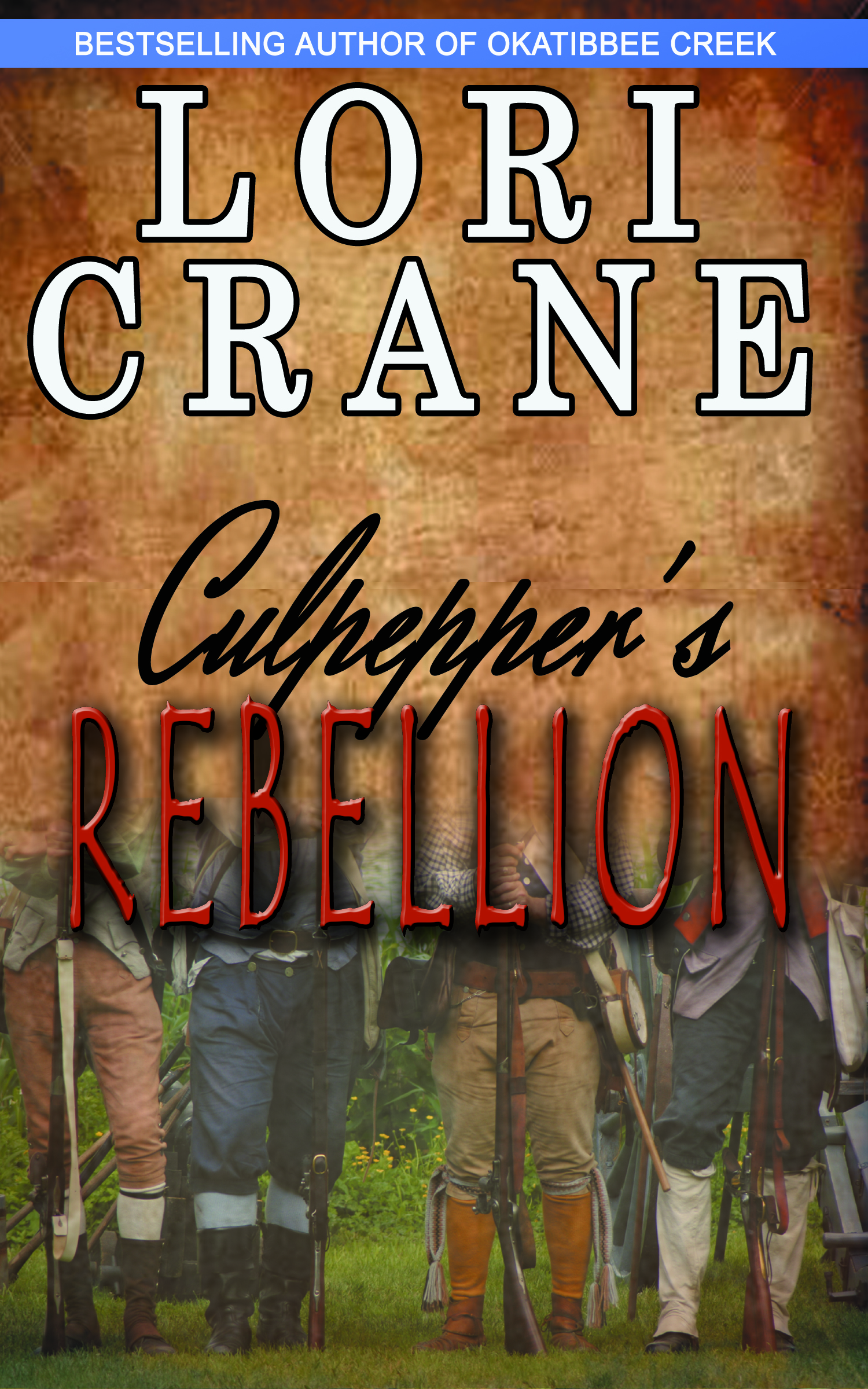
Culpepper4Bacon’s Rebellion is a huge part of the fourth book in the Culpepper Saga, “Culpepper’s Rebellion.” It will be released October 31, 2015 and will be available in paperback and on Kindle at Amazon.

culpepper saga-001

52 Ancestors #39 Unusual Names

52ancestors-2015

This challenge is set forth by No Story Too Small, and this week’s theme is “Unusual.”

Now that I’ve been singing Tom Jones’s “It’s Not Unusual” for the last week, I may have come up with an idea for this theme. I’ve decided to look at some unusual names and where they came from.

eula and benMy aunt’s name is Ouida, pronounced WEE-da. I found out her grandmother was Eula Ouida Keene 1899-1981 (photo with husband).


blanks bates marie louise bates and grandmother martha carpenter blanksMy 2nd great grandmother Martha Lettie Carpenter 1848-1933 (photo with granddaughter) was named after her 2nd great grandmother Lettie Potts 1735-?.


culpepper Joel B CulpepperMy 5th great grandmother was Elizabeth Bluett 1798-1856. After she married a Culpepper, there has been a Bluett or Bluitt in nearly every generation, including my 3rd great grandpa Joel Bluett Culpepper 1845-1911 (photo) and my great uncle Andrew Bluitt Culpepper 1882-1954.


My 4th great grandmother Elizabeth Rice 1791-1870 named her son Rice Carpenter 1828-1862, who happened to be Martha Lettie Carpenter’s father.


Rodgers Hays SrMy 5th great grandmother Elizabeth Hays 1774-1839 named her son Hays Rodgers 1793-1862 (photo), who happened to be Rice Carpenter’s father-in-law.


My favorite name from the olden days was not a relative, but the name has stuck with me for a long time. It’s Pinkney Jeeter. Oh, how I love that! 🙂


52 Ancestors #38 Favorite Place

52ancestors-2015

This challenge is set forth by No Story Too Small and this week’s theme is “Favorite Place.”

Eula Keene Pickett with Howard and AzaleaMy favorite place was my great grandmother’s house. She lived in Zero, Mississippi, just south of Meridian. This photo, courtesy of my cousin P. Grayson, is around 1925. She is with her son Howard and her daughter Azalea, my grandmother.

Grandma Pickett’s home wasn’t grand, but it was awesome. She had chickens who used to peck at my toes when I went out to collect the eggs. She had a cow that appeared as a calf each spring and disappeared each winter. I supposed we had lots of roasts because of that, but I never thought to ask what happened to the cows. I seem to remember a horse or two. I also remember five little ceramic pigs that held seasonings, salt, and pepper. They sat on the shelf above the kitchen sink. The house always smelled like sweet tea and green beans. My cousins lived next door, and I would run back and forth between playing with them and spending time with my great grandmother. Eula Ouida Keene Pickett 1899-1981 spent a lot of her time sewing quilts. I never thought much of it, but she was always in her chair, working on a new quilt with her glasses resting on the end of her nose.

IMG_20150908_180218183_HDRWhen I turned sixteen, Grandma Pickett gave me one of those quilts, just as she did for each of her six great-grandchildren. The pink one was for my birthday. The blue one was given to me later, just before she died. I was seventeen years old. I still use the quilts in our guest rooms and think of her every time I make the beds.

IMG_20150908_180223409_HDR

Saturday Snippets – Coming Soon – Culpepper’s Rebellion

Culpepper4I’m finishing up the final revisions of the fourth book in the Culpepper Saga, Culpepper’s Rebellion.

In the first book of the series, John Culpepper struggles to realize his dreams, never seeing eye-to-eye with his father. His dad sends him to law school, and John hates every moment of it, wishing instead to own a ship and become a merchant between London and the colony of Virginia.

In the second book, the English civil war breaks out, and John’s ship is the only lifeline that saves the family from certain execution.

In the third book, John becomes the patriarch of the family, struggling to hold his family together on two continents.

In this final book, John finds himself in the middle of  Bacon’s Rebellion in Jamestown, Virginia. He is so wrapped up in the Jamestown drama, he doesn’t realize his youngest son is beginning his own rebellion in Carolina. When all is finally calming down in Virginia, John’s son is arrested in London on charges of treason. John’s law training, which he so desperately despised in his youth, becomes the only thing standing between his son’s life and death.

Here’s the first chapter of the new book. Culpepper’s Rebellion will be released October 31, 2015.

***************************

CHAPTER 1

1680, The Tower, London

John followed the guard down the winding hallway. It was narrow and dark with only the light of an occasional torch resting in its iron holder, flickering shadows on the stone walls. Where John could see, the walls looked dark and damp, covered with a slimy layer of green mold, but the musty smell didn’t mask the overwhelming stench of urine and feces. He shook his head and wrinkled his nose at the insult.

As he passed intermittent arched doorways, prisoners yelled at him through small, bar-covered windows and pounded their fists on the wooden doors. Some begged for mercy, others pleaded for food and drink. The desperate voices echoing off the walls should have made John uneasy, but he only felt sheer hopelessness for those imprisoned. He didn’t look up when they called to him. He walked behind the guard with his head down, his heart heavy. How could any man endure this dreadful place? He remembered his older brother serving a short sentence within these walls during the civil war more than thirty years earlier, but in all of John’s seventy-four years, he had never seen the inside of the Tower. The unfortunate occasion that had brought him all the way from Virginia to be here on this day was more terrifying than the actual place.

The guard slowed when he rounded the corner, reaching inside his tunic pocket and noisily producing a ring of iron keys. John waited while the man found the appropriate key and placed it in the keyhole. When he turned it, there was a loud metallic snap. The guard pushed open the door, which moaned softly on its rusted hinges, and John entered.

The small room was lit by only a sliver of a window placed so high on the wall that none could see in or out. As the guard closed and locked the door behind him, John’s heart melted at the sight of the figure lying in a ball on a wooden platform, facing the moldy wall. John assumed the platform was a bed, but there was no blanket, no warmth, no comfort. A mouse scampered across John’s boot and disappeared into the tiniest of holes in the wall. At least the prisoners didn’t have to sleep on the floor with the mice.

“Johnny?” John said quietly.

Johnny sat up and spun around. “Father! What are you doing here?”

“I came to see to your welfare.”

“They’ve charged me with treason.” He ran his fingers through his disheveled curls.

“I know. That’s why I’m here.” His son looked so thin and worn. “You need a lawyer and I know of none better than myself.”

“You hate practicing law.”

“I’d hate it more to see your head on the scaffold.”

“I don’t think you can prevent it. They believe I embezzled the king’s funds.”

“Did you?”

“Of course not.”

“Then we’ll find a way out of this. Your mother will be very displeased with me if I allow you to lose your head.”

Johnny rose and wrapped his arms around John. “Thank you for coming, Father. I hate to admit it…” He paused and swallowed hard. “But for the first time in my life, I’m truly frightened.”

“I am too, son.”

************************************

The first three in the series are available at Amazon. After you read them, please stop by the Culpepper Saga Facebook page to see pictures, paintings, and documents from the real history of John Culpepper.

culpepper saga-001

52 Ancestors #36 Working for a Living

52ancestors-2015

This challenge is set forth by No Story Too Small and this week’s prompt is Workin’ for a Living.

I have at least six nurses, one doctor, two cops, a seamstress, a school teacher, and a bunch of farmers in my family, but the one that comes to mind is my 2nd great grandfather, the treasurer of Lauderdale County, Mississippi 1904-1907, Thomas Gilbert Lafayette Keene.

plaque in Lauderdale Co Court House in MeridianTGL Keene was born 20 Apr 1859. It took me years to find information about his family and I had to piece it together through other family names, but the 1860 census shows TGL living with his father Green, his mother Sarah, his aunt Elizabeth (dad’s sister), his other aunt Catherine (dad’s other sister) and his seventy-year-old grandpa Gilbert Keene. TGL’s older siblings include John, Martha, Minerva Ellen, and Mary. TGL was the baby at only a year or so old.

Sometime before the 1870 census, his mom and dad died. The 1870 census shows Minerva Ellen, Mary, and TGL (now 11) living with their 50-year-old aunt Elizabeth. Not only are his parents noticeably absent, but grandpa isn’t listed either.

The 1880 census shows TGL at the age of 21 living with his eldest sister Martha and her husband Charles Pierce and their children and working as an assistant on their farm. I assume old aunt Elizabeth was dead by this time. This poor boy just keeps losing the adults in his life.

In Aug 1890, TGL married Sarah Elizabeth “Bettie” Brown, and over the next ten years, they had seven children, one being my great grandmother Eula Ouida Keene Pickett, whom I loved dearly. Too bad she never spoke to me of her family. All of TGL’s children survived him except for a boy who died as an infant.

Records show TGL worked in the county system since at least 1900, becoming the county treasurer 1904-1907, and the marble plaque above still stands in the Lauderdale County Courthouse in Meridian, Mississippi. In 1910, TGL was listed on the census as a Justice of the Peace. In 1918, he returned to his roots and is listed in the Mississippi census as a farmer. Upon his death in 1921 at the age of 62, he was a member of the Lauderdale County Board of Supervisors.

TGL Keene death certStrangely, with all of his public service, there are very few records of him, and his parents are not listed on his death certificate. Perhaps the Keene family never spoke of those who came before. Or perhaps, TGL was a private man. How could his wife and his grown children not know the names of his parents to list on the certificate? His wife outlived him by five years, and they are both buried at Oak Grove Baptist Cemetery in the Bonita Community, Lauderdale County, Mississippi.

t g l keene headstone


Saturday Snippet of I, John Culpepper

I began researching my ancestry as a teenager. I knew my Culpepper line came to America from England in the 1600s, and I knew they were wealthy land owners with much prestige in the English court, but I didn’t understand why they would give all that up to sail to an inhospitable land full of savage Indians, facing the possibility of shipwreck, starvation, and death. How did those aristocratic people end up as the modest family I knew in my youth in Mississippi? The journey to find these answers became a series of four books about my 10th great-grandfather, John Culpepper.

51hHerBrPbL._UY250_Follow the series as John rebels against his father, the English civil war destroys the family, John ends up as the family patriarch in the colony of Virginia, and finally, as John comes to terms with his life and his past. The first book in the series is I, JOHN CULPEPPER. The subsequent books are JOHN CULPEPPER THE MERCHANT, JOHN CULPEPPER ESQUIRE and CULPEPPER’S REBELLION.

Here’s the opening chapter of I, JOHN CULPEPPER, setting the stage with his tumultuous relationship with his dad.

************

CHAPTER 1

Fall 1626

“No! For the hundredth time, no!”

John looked down at the intricate grain of the walnut desk beneath his fingertips and shifted his weight to his other foot. He sighed, feeling his dreams disintegrate before his very eyes. The snap of the white sails, the taste of the salty spray on his lips, the smell of the tar that sealed the decks—the visions were quickly vanishing behind the thick fog of his father’s adamant disapproval. He pictured his mighty ship sinking into the black waters of condemnation, bubbling like a cauldron as it disappeared from sight. There was nothing he could do to change his father’s mind, and he wondered whatever possessed him to come to this man for assistance. He should have known better.

His father glared at John from behind the desk. He propped his elbow on the scrolled arm of the chair as his large hand methodically stroked his pointed beard. “Is there anything else?” he snapped.

John didn’t look up. He shook his head and mumbled, “No.” He turned and padded across the thick rug toward the door, listening to the man’s heavy breathing behind him. He reached for the brass doorknob, paused, and turned back. “You know I’ve always done everything you’ve asked of me. I went to school. I studied to be a lawyer. I did it all for you. I never wanted to practice law. I’d never be happy on the bench.”

“Happy? What makes you think life has anything to do with being happy? You are a Culpepper, and as such, you have an obligation to serve your family and your king in a manner befitting your station. This childish notion of owning a ship is nothing but rubbish.”

John released the doorknob and walked back toward his father’s desk. The intimidating man dwarfed the desk, his size exaggerated by the broad shoulders of his leather jerkin, yet he sat up taller in his chair in preparation for the quarrel to continue. It was a wasted gesture, as his opponent already knew the battle was lost.

John made sure he didn’t raise his voice. “Father, you have financed merchant ships for as long as I can remember. What difference does it make if I’m the one who owns the ship?”

“Culpeppers don’t own ships. I funded those expeditions as an investment—a losing investment, I might add.” He rose from his chair and his voice grew louder, echoing off the oak panels that lined the walls. “There has never been a Culpepper placed in a position of experiencing hunger and savages and shipwrecks, and there won’t be one now, not with my blood written on the purchase. I will not fund a ship for you, John, not now, not ever.” He pointed his finger in John’s face. “And if you somehow find a way to procure a ship, mark my words—I will disinherit and disown you. No son of mine will become a common sailor. I am finished with this conversation once and for all. Have I made myself clear?”

John exhaled, beaten. His shoulders slumped as he broke his father’s glare and dropped his eyes to the floor.

“John? Have I made myself clear?”

“Completely.”

***********

5-star-largeThe recipient of 5-stars at Readers’ Favorite, I, JOHN CULPEPPER is available in paperback and Kindle at Amazon. CLICK HERE.

“In I, John Culpepper, you will be transported back to the time John lived and you will feel like you are a part of John’s life. The experience of reading this book was out of this world. … it is a magical experience and you will not want to miss it for anything! Amazing!” ~ Rabia Tanveer for Readers’ Favorite

culpepper saga-001

52 Ancestors #35 School Days with George Washington Spencer

52ancestors-2015

This challenge is set forth by No Story Too Small and this week’s challenge is “School Days.”

geo wash spencer

My 3rd great grand-father became a Confederate soldier in 1862, but in 1860, he was listed on the U.S. Census as a school teacher in Newton County, Mississippi.

church of rev william saladin spencerGeorge Washington Spencer was born in Alabama in June 1829, the son of preacher William Saladin Spencer and his wife Martha Didama Gross. GW grew up around the Shake Rag Church (photo) in Tuscaloosa, AL as one of eleven children. His last sibling was born in 1835, his father died in 1841, and his mother died in 1867 all in Alabama, but at some point GW moved west to Mississippi. At the age of 29 in 1858, he married Nancy Virginia “Jenny” Holdcroft, and in 1859, they had their first child, my 2nd great grand-mother Nancy Didama Spencer. (She was followed by six siblings.)

The Spencers made their home in Newton County, MS, and with a wife and a baby at home, GW needed a job, so he became a school teacher. There was no organized education at the time, so communities and churches usually gathered up some money and asked someone to educated their children. Teachers were generally left to their own devices to create a curriculum, and classrooms usually held children of all ages in one room. But the good news is that twelve-year-old children at the time were educated with books we would consider college level today. GW spent his days with the local kids, expanding the minds of the next generation.

Then the war began.

He enlisted 1 Mar 1862 at Scooba, Mississippi with Co.B 35th Mississippi Infantry. According to family members, he was sick most of the war from a leg infection and was medically discharged 10 Jan 1864. Rosters show him in Confederate hospitals in Jackson, Marion, and Lauderdale Springs, Mississippi. The passed-down family story is that his wife went by horse and wagon to pick him up from a Confederate hospital to bring him home. This was just before General Sherman’s march from Vicksburg to Meridian in Feb 1864.

Following the war, he is listed on all census records as a farmer until his death 22 Jul 1901. His career in education was a short-lived one.

GW and his wife Jenny are buried in unmarked graves at Hickory Cemetery, Newton County, Mississippi.

(photos courtesy of my cousin M. Baucum)

Saturday Snippet of Elly Hays

elly cover_webElly Hays is based on real people and real events. She was my 5th great-grandmother, Elizabeth Hays Rodgers. I wrote about her granddaughter in Okatibbee Creek and about her great-granddaughter in An Orphan’s Heart, but I began to wonder where the strength of these women came from, so I backed up in the family tree and found Elly. She lived in the Mississippi Territory, today known as Alabama, in the early 1800s – through a most frightening time when the South was the unsettled frontier and the Creek Indians fought against the Americans for the rights to the land. Not only is this her story, but we also get to see it through the eyes of the Creek warrior, Tafv (pronounced TAH-fuh.)

Elly Hays is told in alternating chapters of Elly’s point of view and Tafv’s point of view, and from the first few chapters, you can sense their will be an epic clash between a warrior with nothing to lose and a young mother on the verge of losing everything.

Below is a snippet of the first meeting between Elly and Tafv’s brother Eto.

*******

She angrily plopped down on a rock and yanked dirty stockings from the basket. She dunked them in the water and began scrubbing them hard enough to put holes in them. She could feel her ears buzzing and her shortness of breath and realized she needed to calm down. She stopped scrubbing, closed her eyes, and took a deep breath through her nose, trying to slow her heart. She concentrated on releasing the tension in her shoulders and the knot in her stomach. She felt guilty for losing her temper with her husband, but frustration was taking over her life. Every day brought new problems—life-and-death problems. Her mounting anger was overriding her fear of the Indians and her love for her husband.

She opened her eyes when she heard him clear his throat behind her, and she turned to apologize for her harsh tone of voice. But when she saw the black eyes looking back at her that did not belong to James, she stopped and gasped. They belonged to an Indian, sitting tall on a brown and white painted horse. She hadn’t heard him approach. She jumped to her feet, wondering where she could run.

The Indian was bare-chested, wearing only tan animal hide pants and moccasins. His hair was short, shaved on the sides and sticking up higher on top. Most of the Indians she had seen had this same haircut. His face was covered with lines of red and black paint, and he wore a headband tied around his head with strips of animal fur hanging on either side of his face. His headband was not adorned with any feathers. This was not the same Indian she had seen before.

He stared at her for a long time and did not move. She glanced across the swift creek to the left and right, but there was nowhere to run. She would never be able to outrun a horse. Her heart beat wildly as beads of sweat broke out on her brow. She remained frozen.

“I came to warn you,” the Indian said in a monotone.

Elly was surprised by his English.

He sat motionless, waiting for her response.

She finally blurted out, “Warn me about what? That you want us to leave? We already got that warning.” She could feel her temper escalating again. All of the tension she had felt the last few months, all of the worry for her children, all of the stress of building a new life, was about to explode in this Indian’s face.

“Yes, I’m here to warn you that you need to leave, but not for the reason you are thinking.” He looked down at the reins in his hands, as if trying to gather his thoughts and find the correct words. “My brother and I were the ones who killed your animals.”

Elly threw a wet stocking on the ground. She hadn’t realized she was still holding it, and it had dripped down her blue linen skirt, causing the front of her dress to become dark in color. “You? You did that? How am I supposed to feed my children?” she raised her voice, her temper becoming stronger than her fear.

“This is the least of your worries. When your husband chased us away, my brother’s boy fell from his horse and snapped his neck.” His eyes carried a tint of sadness. “The boy is dead.”

Elly felt her heart soften for a young boy she didn’t even know. Her anger began to subside, as if it were being washed away by the babbling creek beside her. “I’m…I’m very sorry to hear that,” she stammered, wringing her wet hands together.

“You must understand, my brother is the great warrior of our village. He has vowed revenge on your husband and your family for the death of his son.”

Elly’s eyes widened as the Indian continued.

“He told our Great Chief your husband killed his son, and the Great Chief has given him permission to slaughter your family.”

Elly was shocked by the revelation and quickly shook her head. “No. My…my husband would never kill a boy. He’s never killed anyone, for any reason.”

“Our great warrior does not know this.”

“Please tell him. Tell him my husband didn’t kill his son.” She took a step forward as she begged.

The Indian shook his head and looked at her with compassion. “I cannot tell him anything. I can only warn you. You must leave now…before it’s too late.”

Elly placed her hand over her mouth as tears stung her eyes. Her body began to tremble, and she turned her face toward the creek so the Indian would not see her cry. After a moment, she composed herself, wiped her cheek with the back of her hand, and turned back toward the Indian, but he was gone. She looked left and right through the trees, but it seemed he had simply vanished as quickly as he had appeared.

************

3booksElly Hays is available in paperback and Kindle at Amazon.
Elly Hays received Honorable Mention in the 2013 Great Midwest Book Festival, it was on the short list of “50 self-published books worth reading 2013/14” at Indie Author Land, and the cover was a semi-finalist in the 2014 Authorsdb Book Cover Contest. It is the third book of the Okatibbee Creek Series, following Okatibbee Creek and An Orphan’s Heart.