Oliver Cromwell. Regicidal dictator or hero of liberty?

In place of my usual Saturday Snippets for the month of May, I’m posting about the people and places in my coming book “John Culpepper the Merchant,” which is the second book in the Culpepper Saga.

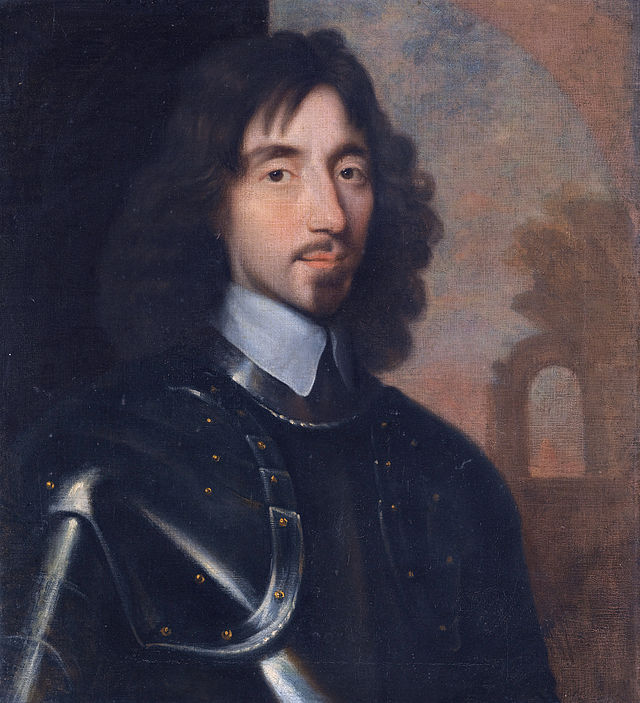
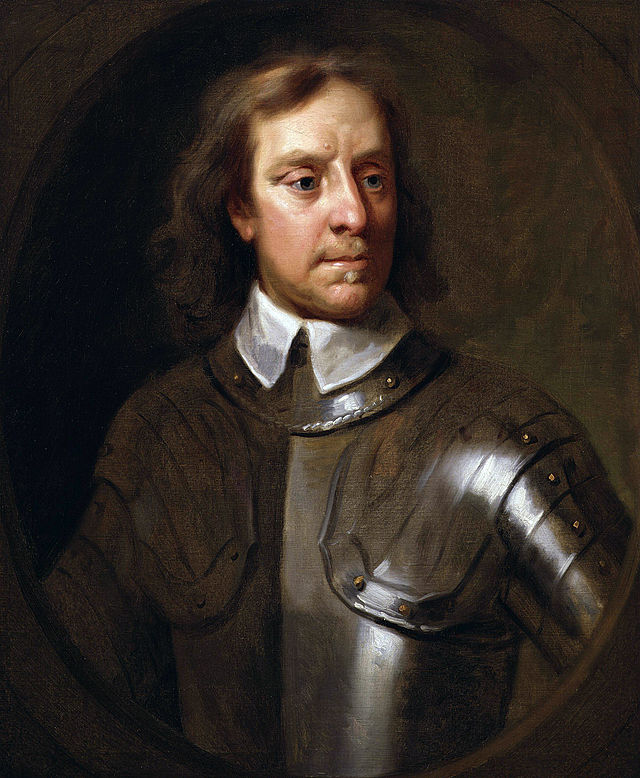
Oliver_CromwellOne of the most controversial figures in my coming book is Oliver Cromwell. He was born into mild obscurity and remained nearly invisible for the first forty years of his life, serving in Parliament, but not accomplishing anything of significance. But in 1640, he stepped into the spotlight.

The king had been aggravating his country with religious rhetoric since his coronation in 1625, and Parliament had stepped forward and addressed the king with a list of grievances. After political struggles for a year between the king and Parliament, the king finally declared war on Parliament. Cromwell, a devout puritan who believed God guided his every move, stepped forward to command the cavalry of the parliamentarian army.

His command and influence grew and at the end of the war, under his leadership, the king was tried and found guilty of treason. Cromwell was the third of fifty-nine men to step forward and add his signature and seal to the king’s death warrant (photo). Following the king’s execution 30 January 1649, Cromwell led England as the English Commonwealth for nine years.

Charles I death warrant

After Cromwell died in 1658, the members of Parliament brought back the Stuart monarchy, declaring Prince Charles to be king since his father’s death years earlier. They acted as if the last decade had never happened.

The prince, now King Charles II, took the throne, and on 30 January 1661, the anniversary of his father’s execution, he had Cromwell’s body exhumed and posthumously executed. Cromwell’s body was hung in chains and his severed head was displayed on a pole outside of Westminster Hall, where the trial of the king had taken place.

Some historians consider Cromwell a hero, some a revolutionary, some a dictator, but at least this ‘nobody’ has not been forgotten. In my coming book, he is enemies with my Culpepper family, so I’m certainly not fond of him.

“John Culpepper the Merchant” will be released May 24, 2015.

General Thomas Fairfax or Black Tom

In place of my usual Saturday Snippets for the month of May, I’ll be posting about the characters and places in my coming book, “John Culpepper the Merchant.” It’s the second in the Culpepper Saga.

General_Thomas_Fairfax_(1612-1671The book starts in 1640 at the onset of the English Civil War, and one of the characters my hero’s family keeps running into in battle is General Thomas Fairfax (photo). The Culpepper family backed the king as royalists, Fairfax backed Parliament and became the general of the parliamentarian army.

Thomas Fairfax was the 3rd lord of Cameron. He was born into the gentry class January 1612 and was a talented army commander, claiming many victories during the war. He served in Parliament with Oliver Cromwell, but became disenchanted with Cromwell’s policies after Cromwell conquered a town, then murdered one hundred of the three hundred people who surrendered.

Nearing the end of the war, Cromwell had the king in custody and charged him with treason, the consequences of the charge would be beheading. The day the court gathered to sign the king’s death warrant in January of 1650, Fairfax was a no-show. He sent his wife to tell the court that they shouldn’t have elected him to the court for he had no interest in killing the king. He resigned from the army, leaving Cromwell in control the country.

Upon Cromwell’s death in 1659, Fairfax was active in restoring the monarchy to the Stuarts, which conveniently made him exempt from the punishments the new king exacted on the other leaders of the revolution.

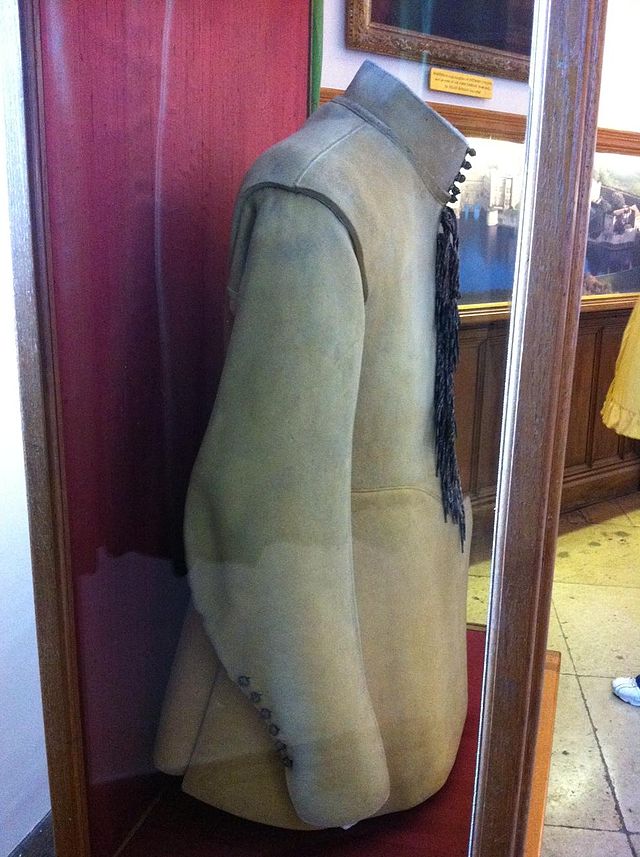
Leeds_Maidstone_Fairfax_Doublet_1648His dark hair and eyes earned him the nickname “Black Tom.” This photo is the doublet he wore in 1648 at the battle of Maidstone, which is a whole chapter in my coming book where he fought directly with Thomas Culpepper (our hero’s brother), and you can read a little about it HERE.

General Fairfax died in 1671 with no sons to take his title of baron, so it was given to his cousin Henry Fairfax. In the future (though not in the Culpepper Saga because it ends before this time) Lord Thomas Fairfax 5th baron of Cameron (Henry’s son) will marry a Culpepper granddaughter. It must have been highly scandalous as their grandfathers were trying to kill each other a few years earlier. Perhaps I should plan on writing another book, The Culpepper-Fairfax Scandal.  🙂

“John Culpepper the Merchant” will be released May 24, 2015.

Work in Progress Blog Tour

I’m excited to participate in a different kind of blog tour today. It’s the Work in Progress Blog Tour!

088eb14324190ad8956eff.L._V146807737_SX200_One of my favorite authors, PC Zick (photo), nominated me to share with you my current Work in Progress. Check out Patricia’s WiP on her blog HERE and her books on Amazon HERE.

The rules of the tour are:

  • Link back to the person who nominated you.
  • Nominate other authors.
  • Write the opening line(s) of your first three chapters from your WiP.

Since I’m super late in joining the tour and my other author friends have already participated, I’m only nominating one writer, so you have no excuse but to check her out…

downloadAnna Belfrage! Anna (photo) is an amazingly talented writer responsible for the eight-book “Graham Saga.” Check out her blog HERE and her books on Amazon HERE.

11109430_501104980043857_173471212737687744_n


And now…

My current WiP is the second book in the Culpepper Saga. Our hero, John, is spending most of his time in the colony of Virginia, but his family is living in England under the dark cloud of a civil war. Here are the opening lines of the first three chapters of my WiP, “John Culpepper the Merchant,” releasing in May 2015.

Chapter 1 – The King

The King marched into the room, unannounced. His footfall echoed off the stone walls as he paraded through the middle of an active session of Parliament and was greeted with stunned silence.

Chapter 2 – John

John Culpepper had been sitting idle in Jamestown for the last ten months. He had never tarried in Virginia for such a length of time before.

Chapter 3 – The Doldrums

She sat idle, unmoving in the dim morning light. Her sails hung limp just as they had for the last two days. John restlessly stared across her bow at the unending sea of glass that lay before him.

52 Ancestors #10 Thomas Culpepper

52ancestors-2015

This challenge is set forth by No Story Too Small, and this week’s theme is “Stormy Weather.”

No one weathered storms like my 10th great uncle Thomas Culpepper, and he was literally caught in “Stormy Weather” during one of his greatest moment.

Thomas was the eldest son of John Culpepper of Feckenham and his wife Ursula Woodcock. He was followed by two sisters, Cicely and Frances, and a brother, John, whom we refer to as John Culpepper the Merchant.

Thomas was born into a life of privilege as his family held vast estates and had worked in the king’s service for generations. When Thomas was born in 1602 in Kent, England, the Culpepper family boasted sixteen living barons and earls.

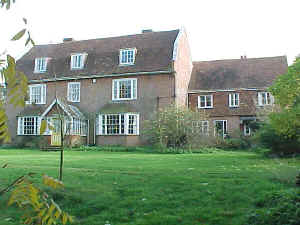
GreenwayCourtAt the age of nineteen, Thomas entered Middle Temple which was a law school. He was soon called to the bar and became a successful lawyer. He married Katherine St. Leger, moved into the family home of Greenway Court (photo) in Kent, and they started their family.

After King James I died in 1625, King Charles took over, and Thomas was promoted to a colonel in the king’s army. This was one hundred years after the Tudor reign where people had been beheaded for their religious beliefs, but King Charles was making everyone nervous with his religious antics. He married a Catholic princess, appointed a Catholic supporter to the office of archbishop of Canterbury, and demanded the Scots begin using the Catholic Book of Prayer. The people of Scotland, Ireland, and England refused to go back to the age of being charged with heresy. They began meeting behind closed doors and discussing what to do about this tyrannical king.

Parliament rallied an army against the king and in 1642 the English Civil War began. As with the Culpeppers before him, Thomas was a royalist and took the side of the king. Thomas and his friend George Goring, the earl of Norwich, fought bravely against Parliament’s army.
General_Thomas_Fairfax_(1612-1671In May 1648, Thomas and George raised 10,000 men around Kent to fight against Parliament. This was a significant number considering by this time Parliament’s army had split into two factions. The larger was holding down an uprising in South Wales, leaving the smaller group of 6,000 men to defend all of London and its surrounding towns. The royalists were holding the town of Maidstone (Thomas’s hometown located south of London) with a force of 2,000 men. Under the leadership of General Thomas Fairfax (photo), 4,000 parliamentarians marched south to Maidstone to recapture it.

culpepper book 1 cover ideaOn June 1, 1648, in the midst of a terrible storm, Fairfax attacked Maidstone. Fairfax’s men took over a bridge and crossed the Medway River and effectively divided Thomas’s men into two groups. Thomas’s diminished army fought in the heavy rains throughout the night and were backed up by Fairfax’s men, street by street, inch by inch. They moved up Weeks Street and finally retreated into St. Faith’s Churchyard where they fought until well after midnight through the raging thunderstorm. At the first light of dawn, out of ammunition and having nowhere else to go, 1,000 royalists emerged from the church and surrendered to Fairfax’s army.

In return for promising to lay down their arms, the soldiers were released and allowed to return to their homes, but in typical Thomas/George fashion, they didn’t. They regrouped and headed north to seize London, but they found the city’s gates closed, so they moved further north to George’s hometown of Colchester. Fairfax’s men pursued them and another battle ensued. Colchester held its ground for eleven weeks, but in August 1648, they were forced to surrender.

Throughout these battles, the king was being held prisoner by Parliament, and for the last two years, the royalists suffered defeat after defeat trying to save him and turn the tide of the war. They began realizing their cause was lost, and across the country, the royalists began surrendering left and right.

In January of 1649, King Charles was charged with treason, found guilty, and was beheaded. Following the king’s execution, all of the royalists, including Thomas Culpepper and George Goring, had their property seized by Parliament and many were beheaded or hung.

In March 1649, George Goring, being held prisoner since his loss at Colchester, was charged with treason and found guilty. Facing beheading, his family petitioned for leniency and the deciding vote, cast by the speaker of the house, granted George his freedom. He joined the exiled court of the prince in the Netherlands and became the captain of the king’s guard. When the prince reclaimed the English throne in May 1660 as King Charles II, George was by his side. George Goring died in 1663 in Brentford, just west of London.

Fortunately for Thomas, his brother John was a merchant who owned a ship. John smuggled Thomas, his wife Katherine, and their four children out of England in 1650 and took them to Virginia. Thomas escaped probable beheading in England, but sadly, he died in Virginia in 1652 at the age of fifty.

His son-in-law, Sir William Berkeley the governor of Virginia, wrote about him, “He lost all his estate, life, and liberty in the king’s service.”

*This story is told in detail in my coming book, “John Culpepper the Merchant,” which is the second book in the Culpepper Saga and will be released May 2015.
Saturday Snippet – John Culpepper the Merchant

culpepper book 2 cover ideaThe second book in The Culpepper Saga takes place in the mid-1600s. John Culpepper finally got himself the boat he wished for throughout the first book (“I, John Culpepper”) and has fulfilled his dream of sailing to the new colony of Virginia. However, while he was away, civil war broke out at home in England, and John is in an understandable hurry to get back to his wife and family.

Here’s a scene from “John Culpepper the Merchant.”

***************************************************

November 1642, The Doldrums


The Thomas and John sat idle, unmoving in the dim morning light. Her sails hung limp, as they had for the last two days. John ran his hands through his hair and impatiently tapped his foot as he stared across her bow at the unending sea of glass before him. The water blended with the sky, creating a mist as far as the eye could see. There was no horizon, just an endless mirror of foggy steel blue.

He never thought this place existed and had never experienced it on any of his prior journeys, but now, when he most needed to make haste, he found his ship stuck in the middle of it. They called it the doldrums—the place in the ocean where no wind billowed sails, no waves lapped against hulls, and no mighty vessels leapt across the breakers. John had heard tales of ships being stuck in the doldrums for weeks at a time. He prayed this wouldn’t be the case, but on this third morning, he was beginning to wonder if they’d ever break free of it. He’d heard ancient legends of ships carrying horses beneath their decks, and when they found themselves stuck in the doldrums, the crew would build cranes, lower the horses into the water, and allow them to pull the ship. He didn’t know if those stories were true, for he had never witnessed a horse swimming, but in any case, he wasn’t carrying any horses. He was, however, carrying two small rowboats.

“Drop the boats!” he yelled to Benjamin. “We’ll row.”

“Sir?” Benjamin approached. “You want the crew to row us out of the doldrums?”

“Yes, Benjamin. Put them to oar. See to it at once.”

“Yes, sir.”

* * *

The men dropped the small boats into the water, tied them to the ship, and began to row. They struggled against the weight of their load, but ever so slowly, the majestic ship began to creep forward.

“How long do you think we’ll have to row?” one of the sailors asked another next to him.

“Until the cap’n gets her back to wind…or until we’re all dead. Whichever comes first.”

“Stop talking and keep rowing!” Benjamin bellowed from the bow.

For the next thirty hours, the sailors took turns rowing. The only movement in the water surrounding them came from the small ripples caused by their oars. After more than a day, the limp sails picked up a small draft and began swaying in the midafternoon sun.

“Sir!” yelled a sailor from one of the boats.

Benjamin turned and saw the sailor pointing up toward the sails. He looked up and saw the sails flutter in the breeze, and an uncommon grin spread across his unshaven face. He jogged to the back of the ship and descended the creaking, wooden steps to the lower deck. He dropped his head below the opening and blinked to adjust to the dim light. “Cap’n, she’s back to wind!”

“Finally!” John jumped from behind his scarred, wooden desk and followed Benjamin up the steps. On deck, he raised his hand to block the sun’s rays as he looked up at the fluttering sails. A cold, Atlantic breeze blew across John’s face, the first he had felt in four days, and he laughed out loud. “Ha! We’ve cleared the doldrums! Benjamin, hoist the sails and get us underway.”

“Aye, sir. Hoist the sails!”

Almost instantly, there was a flurry of activity on the upper deck as weathered sailors began pulling up the small boats, climbing the masts, raising the sails, and shouting commands.

“We have a lot of time to make up,” John said. “I want to be in London within the week.”

“Aye, sir!”

***********************************

John Culpepper the Merchant is now available at Amazon!

For pictures, paintings, and documents of the people and places in the Culpepper Saga, please visit the Culpepper Saga Facebook page.