Good Cover = Book Sales! 5 easy steps!

5-easy-steps-inGOOD COVER = BOOK SALES! 5 Easy Steps!

So, you’ve finished your awesome novel. You’ve toiled and fretted over each and every word, and your characters are now dancing through their scenes with grace and eloquence. Now what?

It’s time to take off your author hat and replace it with your business hat. You want to sell your book, and to do that, you need great packaging. You need to create an interesting cover that will stick out above the millions of other books in the marketplace. Oreos don’t only sell because they’re awesome, they sell because the package tells you you like them. Next time you’re in the store, look at Oreos vs the no-name brand. You’ll see the difference immediately. The purpose of packaging is to get your potential customer to notice your book. Then to pick it up. If your name is Stephen King, you don’t need to worry about your cover. If not, you need all the help you can get! You don’t want just another pretty cover, you want the whole package—an incredible package that will sell your book.

SO, WHERE DO YOU START?

1) Start with genre. Is your book historical fiction, medical drama, psychotic thriller? Check out the top books in your genre. Do they have a common element? Use it. You want people to be able to recognize your genre immediately.

2) What’s your demographic? 20-something urban or mature woman in the south? You need a cover that will appeal to this demographic. Even if your book is about a southern serial killer in Huntsville, Alabama, an image of a scary man wielding a knife over a dead girl is not going to appeal to a proper southern woman. Who are you trying to sell this book to?

3) Pretend you’re telling someone about your book. What are the scenes you’re relating? Those are the pictures you want to include, whether they are abstract or an actual photograph of a blonde girl in a 1950’s powder-blue dress.

4) What emotional response do you want from your customer when they’ve finished your book? Fear, tears, happiness, hopefulness? The girl in the blue dress can be any of those things if the image is manipulated correctly. Check with your cover designer for suggestions on how to change the same girl into a multitude of emotions.

5) The font. Does the book take place in Old England or 1940s art-deco New York? You want an appropriate font, and make sure it’s readable on the thumbnail-size postage stamp your customer will see on the Internet. A pretty font is not necessarily your friend.

Note: If you are not an experienced graphic designer, hire a professional!!! You’ll still need to tell him/her what you want by using the five ideas above. If this is your first book cover, you need different covers for different items. Paperback, ebook, audiobook, etc. all require different sizes and elements. You’re cover designer will know how and  where to find these requirements.


********************

Lori Crane is a bestselling and award-winning author of historical fiction and the occasional thriller. Her books have climbed to the Kindle Top 100 lists many times, including “Elly Hays” which debuted at #1 in Native American stories. She has also enjoyed a place among her peers in the Top 100 historical fiction authors on Amazon, climbing to #23. She resides in greater Nashville and is a professional musician by night – an indie author by day.

51QeOBe26zL._SL500_AA300_PIaudible,BottomRight,13,73_AA300_

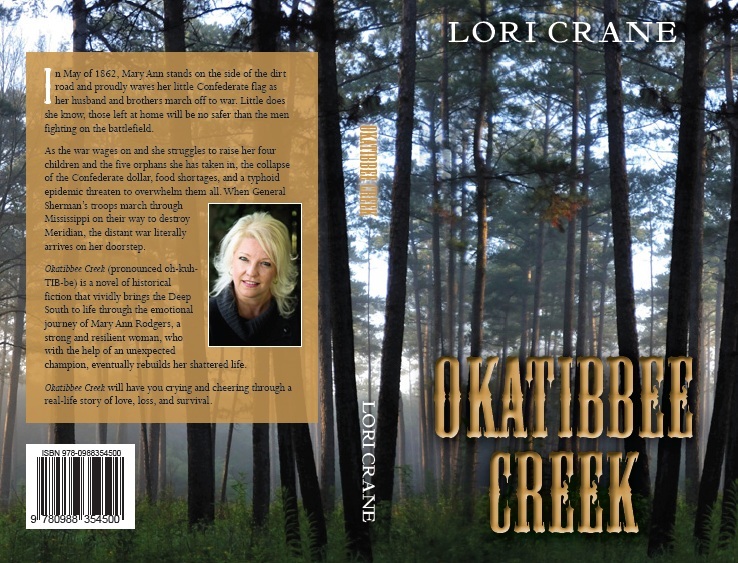
okatibbee creek cover final jpeg51-lUHhsD7L._UY250_

On This Day in 1985 William Clinton Culpepper

William Clinton CulpepperOn This Day, September 14, 1985, William Clinton Culpepper died.

Uncle Clinton, as he was known to me, was my great uncle, brother of my grandfather. He lived next door to my grandparents and I have many fond memories of his kindness and love and especially his hugs.


culpepper Sam and Annie CulpepperClinton was born in Kemper County, MS on May 11, 1900 to William Samuel Culpepper and Annie Josephine Blanks (photo). He was the eldest of nine children totaling five boys and four girls. His father was a sawyer who followed the saw mill business, gone from home for great lengths of time, so the boys were taught to run the farm when their father was away. I imagine, being the eldest child, most of the responsibility fell to Clinton.

In 1922, when Clinton was 22, he married Miss Eloise Snowden. Following the birth of their two daughters, Eloise came down with breast cancer. For a man who was used to running the family, Clinton took the illness terribly. He put a gun to his head and pulled the trigger. Eloise survived the illness and Clinton survived the gunshot wound, but he now had a severely reduced mental capacity, and their marriage couldn’t stand the strain. They divorced.

William Clinton Culpepper and Thelma Smith CulpepperIn 1945, Clinton found love for the second time and married Miss Thelma Edna Annie Smith (photo). Again disaster struck. Thelma was diagnosed with breast cancer. Again Clinton put a gun to his head. Again they both survived the disasters. Thelma took care of Clinton for the rest of her life. She died 9 May 1984. Clinton died a year later 14 Sept 1985.

dec 2012 212


They are both buried near Thelma’s parents in Mt. Pleasant Cemetery in DeKalb, Kemper County, MS.

Rest in peace, Uncle Clinton. ♥


This post is brought to you by On This Day: A Perpetual Calendar for Family Genealogy.


Saturday Snippets – Coming Soon – Culpepper’s Rebellion

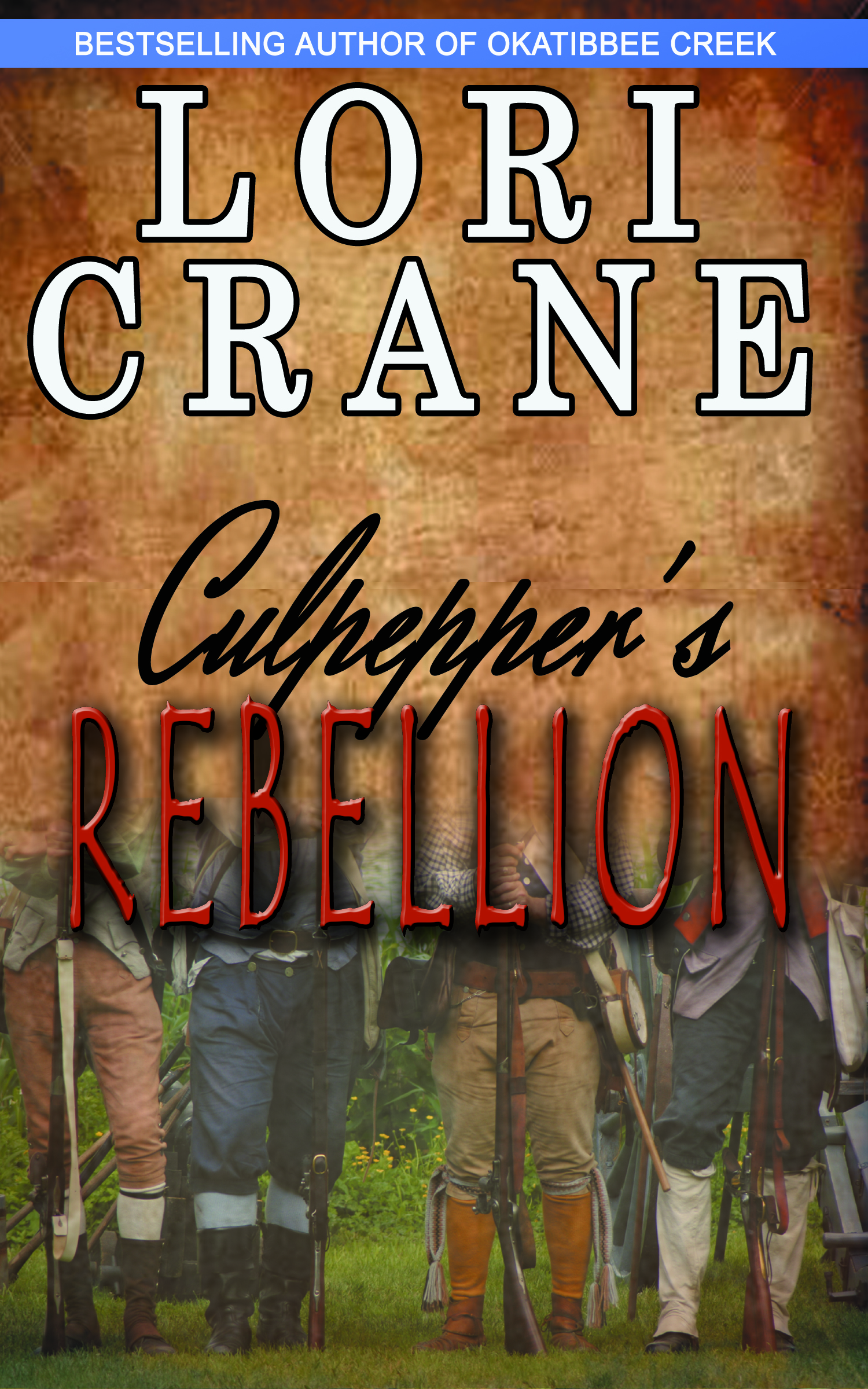
Culpepper4I’m finishing up the final revisions of the fourth book in the Culpepper Saga, Culpepper’s Rebellion.

In the first book of the series, John Culpepper struggles to realize his dreams, never seeing eye-to-eye with his father. His dad sends him to law school, and John hates every moment of it, wishing instead to own a ship and become a merchant between London and the colony of Virginia.

In the second book, the English civil war breaks out, and John’s ship is the only lifeline that saves the family from certain execution.

In the third book, John becomes the patriarch of the family, struggling to hold his family together on two continents.

In this final book, John finds himself in the middle of  Bacon’s Rebellion in Jamestown, Virginia. He is so wrapped up in the Jamestown drama, he doesn’t realize his youngest son is beginning his own rebellion in Carolina. When all is finally calming down in Virginia, John’s son is arrested in London on charges of treason. John’s law training, which he so desperately despised in his youth, becomes the only thing standing between his son’s life and death.

Here’s the first chapter of the new book. Culpepper’s Rebellion will be released October 31, 2015.

***************************

CHAPTER 1

1680, The Tower, London

John followed the guard down the winding hallway. It was narrow and dark with only the light of an occasional torch resting in its iron holder, flickering shadows on the stone walls. Where John could see, the walls looked dark and damp, covered with a slimy layer of green mold, but the musty smell didn’t mask the overwhelming stench of urine and feces. He shook his head and wrinkled his nose at the insult.

As he passed intermittent arched doorways, prisoners yelled at him through small, bar-covered windows and pounded their fists on the wooden doors. Some begged for mercy, others pleaded for food and drink. The desperate voices echoing off the walls should have made John uneasy, but he only felt sheer hopelessness for those imprisoned. He didn’t look up when they called to him. He walked behind the guard with his head down, his heart heavy. How could any man endure this dreadful place? He remembered his older brother serving a short sentence within these walls during the civil war more than thirty years earlier, but in all of John’s seventy-four years, he had never seen the inside of the Tower. The unfortunate occasion that had brought him all the way from Virginia to be here on this day was more terrifying than the actual place.

The guard slowed when he rounded the corner, reaching inside his tunic pocket and noisily producing a ring of iron keys. John waited while the man found the appropriate key and placed it in the keyhole. When he turned it, there was a loud metallic snap. The guard pushed open the door, which moaned softly on its rusted hinges, and John entered.

The small room was lit by only a sliver of a window placed so high on the wall that none could see in or out. As the guard closed and locked the door behind him, John’s heart melted at the sight of the figure lying in a ball on a wooden platform, facing the moldy wall. John assumed the platform was a bed, but there was no blanket, no warmth, no comfort. A mouse scampered across John’s boot and disappeared into the tiniest of holes in the wall. At least the prisoners didn’t have to sleep on the floor with the mice.

“Johnny?” John said quietly.

Johnny sat up and spun around. “Father! What are you doing here?”

“I came to see to your welfare.”

“They’ve charged me with treason.” He ran his fingers through his disheveled curls.

“I know. That’s why I’m here.” His son looked so thin and worn. “You need a lawyer and I know of none better than myself.”

“You hate practicing law.”

“I’d hate it more to see your head on the scaffold.”

“I don’t think you can prevent it. They believe I embezzled the king’s funds.”

“Did you?”

“Of course not.”

“Then we’ll find a way out of this. Your mother will be very displeased with me if I allow you to lose your head.”

Johnny rose and wrapped his arms around John. “Thank you for coming, Father. I hate to admit it…” He paused and swallowed hard. “But for the first time in my life, I’m truly frightened.”

“I am too, son.”

************************************

The first three in the series are available at Amazon. After you read them, please stop by the Culpepper Saga Facebook page to see pictures, paintings, and documents from the real history of John Culpepper.

culpepper saga-001

52 Ancestors #37 Seventy-one Grandchildren!!

52ancestors-2015

This challenge is set forth by No Story Too Small, and this week’s prompt is “Large Family.”

Hays Rodgers and Marey A Scott Rodgers

 14 children 

71 grandchildren!

il_570xN.449898023_h4w0

  1. Lewis Rodgers 1817-1890 m. Nancy Powell Ward, nine children
  2. James Rodgers 1818-1862 m. Martha A Sanderford, five children
  3. Allen Rodgers 1820-1894 m. Judith Walker McGehee, seven children, m. Nancy Abigail Chatham, six children
  4. Jackson Rodgers 1821- unknown
  5. Susannah Rodgers 1822-1904 m. Elijah Jackson Chatham, twelve children
  6. Stephen Rodgers 1824-1834 died young
  7. William Hays Rodgers 1826-1834 died young
  8. Mary Ann Rodgers 1828-1898 m. Rice Benjamin Carpenter, five children, m. William Eades Jolly, three children
  9. Timothy Rodgers 1830-1862
  10. Hays Rodgers Jr 1832-1913 m. Lucinda Graham, ten children
  11. Wilson Rodgers 1834-1864 m. Sarah Jane Graham, one child
  12. John W Rodgers 1836-1864
  13. Elizabeth Rodgers 1839-1875 m. George Malon Graham, ten children
  14. Martha Jane Rodgers 1844-1880 m. Martin V Warren, m. James Knox Meeks, m. Adam James Edgar, three children

Hays and Marey were my 4th great grandparents. #8 Mary Ann and Rice were my 3rd great grandparents.

1840810882_Thanksgiving20Dinner_xlargeOne can only imagine what Christmas would look in a house like this. After a while, the birth of a new child would be common place, and one might even have to decide which birth to attend and which one to not attend. There must have been a lot of love and a lot of chaos, but large families also have the potential for great tragedy. Hays and his large family lived in Mississippi, and when the Civil War broke out in 1862, they had no idea what was to come.

#9, #10, #11, and #12 served in the Confederacy. Only #10 returned home, and he came home with a useless arm that had taken a mini ball.

#8, #13, and #14 had husbands who served. As a matter of fact, #14 had two husbands who served. The only one who came home was #13’s. #14 was twice widowed by the age of twenty.

#5 had an eldest son who served. He was the first-born grandson in the family. He died at the age of 18 of illness at the training camp, one of the first casualties of the war.

If losing seven men in a single family wasn’t bad enough, typhoid also swept through the county the winter of 1862/63. During that terrible winter, Hays and Marey died within months of each other. Others lost to the disease were #2 and his wife within days of each other, leaving five orphans. #8’s infant son was also lost.

Looking at it from #8’s perspective. She lost three brothers, three brothers-in-law (one being her husband’s brother), four sisters-in-law (three were her husband’s sisters), an 18-year-old nephew, her husband, her infant son, and both parents within a seventeen month period. FIFTEEN PEOPLE! It turns my stomach to think about it.

Mary Ann seemed to be the one who held the family together after the tragedy. She was an amazing woman who had no idea how capable she was. Not only did she see the family through the tragedy, she came out on the other side a strong woman with an amazing story. Her story is detailed in my book Okatibbee Creek. 

Rodgers, Mary Ann Rodgers Carpenter Jolly

Audiobooks = press play

TESTING 1,2,3…AUDIOBOOKS
.
The first thing you need to look at when considering making an audiobook are the numbers. The Audio Publishers Association reported $800 million in audiobook sales in 2011. The number grew to $1 billion in 2012 and $1.2 billion in 2013. Yes, that’s billion, with a B. Goodereader.com said the audiobook industry was worth over $2 billion in 2014. I haven’t seen any numbers for 2015 yet, but there should be a little bit in there for you.
.
Now that I have your attention, let’s create an audiobook. The process of creating an audiobook is completely painless at ACX. This post isn’t a commercial for ACX, but I’ve used them a couple times now, and they are author-friendly. ACX (Audiobook Creation Exchange) is the company that links authors with narrators and distributes to Audible, Amazon, and iTunes.
.
Your first step in creating an audiobook is to create an account at ACX.com, and then you can listen to some narrators by gender, accent, and style.
 .
downloadHIRE A NARRATOR
.
Once you’re ready to go, you need to hire a narrator. You can narrate yourself, but it you don’t have recording equipment and lots of practice in front of a mic or lots of money to spend in a recording studio, it is a million times easier and faster to hire a professional.
.
To find the perfect narrator, just upload a section of your book to ACX and invite auditions. Of course, you can email the actors you listened to when you first signed on. Make sure your uploaded section contains some dialog and maybe some drama in it. You want to hear the range of the narrator. Be ready to move forward quickly because you’ll get auditions almost immediately. Send each narrator a note of thanks for taking the time to audition your sample – whether you hire them or not. It takes a lot of time to record, master, and upload your sample, and they’re doing it for FREE.
.
Once you choose a narrator, you then offer them a deal.
 .
6a00d8341bf73153ef0105359fa532970c-800wi“SO, HOW MUCH IS THIS GOING TO COST ME?”
.
Narrators charge anywhere from $100 to $300 per finished hour. This is called a “pay-for-production” deal. Example: If you’re book is 50k words, that’s about 6 hours finished, so the finished cost will be between $600 and $1800. Some narrators opt to do a 50/50 “royalty-share” instead. That’s 50% of your royalties for 10 years with no money up front.
.
Take a moment and do the math so you know how many audiobooks you need to sell to break even. ACX sets your price by the length, and the above 6-hour book example would sell for roughly $19.95. The longer the book, the higher the selling price. The shorter, the lower. Read further to find out your share. The range of Audible pricing is 1-3 hours $7-10, 3-5 hours $10-20, 5-10 hours $15-25, 10-20 hours $20-30. Here’s another fun fact: If your book is purchased by a new Audible member as their first download, you get a $50 bounty. That’s fun!
 .
distributionDISTRIBUTION
.
ACX will offer you two distribution options. 1) 40% royalties for an exclusive distribution deal. This is a seven-year contract and you are not allowed to sell the audiobooks yourself to anyone at any time through any avenue in any format (digital, CD, audio tape) during that time. OR 2) 25% royalties for an non-exclusive deal, and you can sell them anywhere you want. ACX distributes to Audible, Amazon, and iTunes, so I don’t know where else you’d want to sell them, unless you want to have them pressed and sell them out of your trunk. But keep in mind, according to the Audio Publishers Association, audiobooks that were downloaded through a website instead of bought on CD in 2009 were 29%, 36% in 2010, and 46% in 2011, and growing, so there may not be any good reason to press your audiobook.
.
If your narrator costs $250 per finished hour and your book is 6 hours long, it will cost you $1500 for a pay-for-production deal. If you go with exclusive distribution and are making 40% of the $19.95 sale price, you would need to sell a couple hundred copies to break even. One note here: Audible members which are a huge chunk of your sales pay about half price, so your royalty income and break even number would need to be adjusted for those sales. You’d need to sell about 400 copies to only Audible members to break even. A majority of buyers on Audible are members.
.
If you choose the “royalty share” option with your narrator, you would NOT need to pay the $1500 up front, but you would split the royalties 50/50 and only make $4 per copy sold for the next 10 years, and $2 for an Audible member sale.
.
So, figure out how long your book will be (roughly 8500 words per finished hour) and how many copies you need to sell before you step up to the plate and ask for auditions and negotiate fees.
.
Once you decide on your narrator, make a price/payment deal with them, and choose your ACX distribution option, you’ll need to upload your entire book and give the narrator some deadlines. There will be two deadlines: one for your narrator to upload the first 15 minutes for you to approve and one for the whole project to be completed. If your narrator isn’t too busy, they can have the first 15 minutes to you within a few days and the book completed within a month. They will upload each chapter to ACX as it is recorded, so you can listen to each chapter as it is uploaded and send a message to correct anything you’d like corrected. Be specific about the pronunciation of any strange names or titles up front in the process to avoid later corrections. My book Okatibbee Creek is pronounced Oh-kuh-TIB-bee. That makes it easier.
.
When the recording is finished and all chapters are uploaded, you’ll need to approve the recording. Your narrator will then send you a bill if you opted for the pay-for-production deal. If you opted for the royalty-share deal, this step will be omitted. Once you pay your narrator, he/she will let ACX know your audiobook is approved for sale.
.
ACX will then take 2-3 weeks to get your audiobook live on the sites. So, the whole process should take about eight weeks. If you opt for a pay-for-production deal, save your pennies first. Do not make the narrator wait to get paid.
 .
Note
.
The size of your cover needs to be adjusted for an audiobook to a square CD shape. You cannot use your ebook cover. Here’s the original ebook cover for Okatibbee Creek and the resized audiobook cover. The needed dimensions can be found on the ACX website.
.
okatibbee creek cover front JPEG
okatibbee audio
Note 2
.
I don’t know if they always do it, but Audible sent me 25 free download codes to give away. For the above example 6-hour book, that’s $500 worth of freebies, so while you’re waiting for your project to be completed, think of some creative ways to market and give those copies away. Some authors swear by audiobook sales. Give it a shot!
.
.
*****************************
Lori Crane is a bestselling and award-winning author of historical fiction and the occasional thriller. Her books have climbed to the Kindle Top 100 lists many times, including “Elly Hays” which debuted at #1 in Native American stories. She has also enjoyed a place among her peers in the Top 100 historical fiction authors on Amazon, climbing to #23. She resides in greater Nashville and is a professional musician by night – an indie author by day.

Saturday Snippets – John Culpepper the Merchant

5-star-largeJohn Culpepper the Merchant just received a 5-star review from Readers’ Favorite!! You can read it HERE.

I can’t tell you how much reviews mean to us indie authors…especially good reviews. We often learn something from the bad reviews, but mostly not. Good reviews sell books. Period. So for every book you like by ANY author, please leave a review. We all appreciate it.


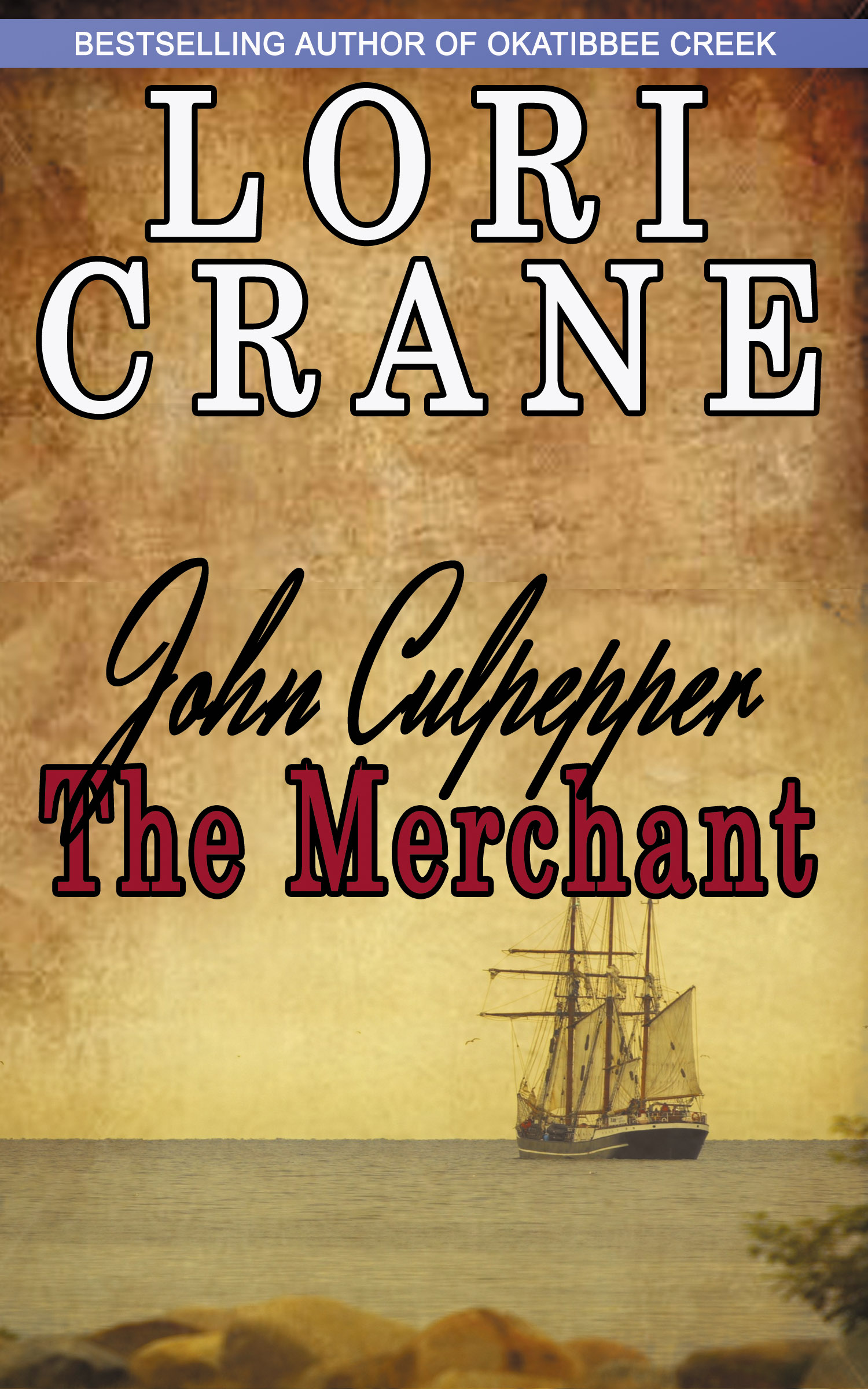
The Merchant ebookAnyway…back to the matter at hand.

John Culpepper the Merchant is the second book in the Culpepper Saga. The first book is about John’s childhood. In this one, he’s all grown up. His family remains in England while he fulfills his childhood dream of sailing back and forth between London and Virginia. Seems peachy, yes? I’m sure it would have been if the king wouldn’t have been angering the masses. A deadly civil war breaks out in England, and John always seems to be on the wrong side of the ocean at the wrong time. By the end of the war when the royalists (yes, John’s family) have been defeated, John’s ship becomes the only lifeline to save the Culpeppers from certain beheading.

Somehow, between the war and the merchant business, John and his wife managed to raise a family. Here’s a snippet of John taking his four boys upstairs to meet their newborn brother.

********************************************

1644

Following a hearty breakfast, John climbed the stairs, followed by his rambunctious sons, all wanting to see the new baby. He cracked the door open and found Mary sitting up in bed holding the newborn, her brown hair cascading over her shoulders. Her color was much better after a good night’s sleep.

“Your sons want to see the baby,” John whispered almost apologetically.

“Of course they do. Bring them in.”

John opened the door and the group ran toward the bed. Mary grinned at them and patted the bed for Robbie to climb up. John thought his wife was a saint, or at least had the patience of one.

All the boys looked like their father, but none more so than the new baby. The boys cooed over the infant, and John reminded them repeatedly to keep their voices down. It was a wasted request.

“He looks like you!” Denny exclaimed, looking at Henry.

“What are you saying? That I look like a baby?” Henry challenged.

The baby scrunched up his face at the sound of the voices.

James laughed. “I’ve seen you make that face. He does look just like you.”

Henry punched him in the arm and James punched back.

“Stop it,” John scolded.

Mary looked down the row of children lining her bedside. “Well, I think all my boys look like their handsome father.”

“You’re handsome,” teased Denny, punching James in the arm.

“No, you’re handsome,” James punched back.

“All right, let’s go and let your mother rest.” John picked up Robbie and coaxed the rest of the herd toward the door. Denny and James began poking each other. John handed three-year-old Robbie to Henry and grabbed both misbehavers by their hair.

“Ouch,” they squealed in unison.

“I told you to be quiet and stop acting like…”

“Acting like what?” Denny said in defiance.

“Well…boys. Stop acting like boys.” John laughed at his own lack of parenting skills. Four years of law school, a momentary career as a lawyer, and a decade of commanding a boisterous crew on a merchant ship were no preparation for raising high-spirited boys. He thought about it for a moment and realized that besides his younger sister Frances, who was now a thirty-six-year-old married woman, he had always been the youngest of his generation. He’d never had any younger brothers or cousins to mind. One thing was for certain—Mary had her hands full during John’s lengthy absences, and he suddenly understood why she often pleaded with him to remain home for longer stretches of time. He was exhausted and it was only nine o’clock in the morning.

***************************************

The first three books in the Culpepper Saga are available at Amazon. The fourth book will be released October 2015.

culpepper saga-001


52 Ancestors #36 Working for a Living

52ancestors-2015

This challenge is set forth by No Story Too Small and this week’s prompt is Workin’ for a Living.

I have at least six nurses, one doctor, two cops, a seamstress, a school teacher, and a bunch of farmers in my family, but the one that comes to mind is my 2nd great grandfather, the treasurer of Lauderdale County, Mississippi 1904-1907, Thomas Gilbert Lafayette Keene.

plaque in Lauderdale Co Court House in MeridianTGL Keene was born 20 Apr 1859. It took me years to find information about his family and I had to piece it together through other family names, but the 1860 census shows TGL living with his father Green, his mother Sarah, his aunt Elizabeth (dad’s sister), his other aunt Catherine (dad’s other sister) and his seventy-year-old grandpa Gilbert Keene. TGL’s older siblings include John, Martha, Minerva Ellen, and Mary. TGL was the baby at only a year or so old.

Sometime before the 1870 census, his mom and dad died. The 1870 census shows Minerva Ellen, Mary, and TGL (now 11) living with their 50-year-old aunt Elizabeth. Not only are his parents noticeably absent, but grandpa isn’t listed either.

The 1880 census shows TGL at the age of 21 living with his eldest sister Martha and her husband Charles Pierce and their children and working as an assistant on their farm. I assume old aunt Elizabeth was dead by this time. This poor boy just keeps losing the adults in his life.

In Aug 1890, TGL married Sarah Elizabeth “Bettie” Brown, and over the next ten years, they had seven children, one being my great grandmother Eula Ouida Keene Pickett, whom I loved dearly. Too bad she never spoke to me of her family. All of TGL’s children survived him except for a boy who died as an infant.

Records show TGL worked in the county system since at least 1900, becoming the county treasurer 1904-1907, and the marble plaque above still stands in the Lauderdale County Courthouse in Meridian, Mississippi. In 1910, TGL was listed on the census as a Justice of the Peace. In 1918, he returned to his roots and is listed in the Mississippi census as a farmer. Upon his death in 1921 at the age of 62, he was a member of the Lauderdale County Board of Supervisors.

TGL Keene death certStrangely, with all of his public service, there are very few records of him, and his parents are not listed on his death certificate. Perhaps the Keene family never spoke of those who came before. Or perhaps, TGL was a private man. How could his wife and his grown children not know the names of his parents to list on the certificate? His wife outlived him by five years, and they are both buried at Oak Grove Baptist Cemetery in the Bonita Community, Lauderdale County, Mississippi.

t g l keene headstone


4 Ways to Create a Catchy Blog Title

blog

The first thing that catches someone’s eye in the blogosphere is a snappy title. Writing the title for your blog shouldn’t be an exercise in wittiness. It should tell people what they will find if they click.

4 Ways to Create a Catchy Blog Title

  • Your title should tell the reader exactly what to expect. What did you expect when you opened this blog? Yep, 4 ways to create a catchy blog title. The name says it all. A bad example of a title is “Fiction 101.” Yuck, boring, not enough information. A good title is “3 Ways to Make your Fiction Come to Life.” If you’re a fiction writer, wouldn’t you like to read that blog? Do you know why? Because it offers a service, an insight, some expertise.
  • How about numbers? Try this: “8 Haunted Places in Detroit” or “5 Ways to Get Your Husband off the Couch.” People like numbers!
  • Rock the adjectives! “Catchy Blog Titles” is better than “Blog Titles.” Try adjectives people are attracted to: Free, Fun, Incredible, Effortless, Secret.
  • Try something outlandish. I like mixing opposites or writing something one would never, ever actually do. “Fuzzy Bunnies are Smug,” “The Graceful Klutz,” “Shampoo your Lion’s Mane in 20 Minutes Without Getting Bitten.”

Recapping:

1. Say exactly what your blog is about.

2. Try a number.

3. Add an adjective.

4. Try something crazy.

*********************

Lori Crane is a bestselling and award-winning author of historical fiction and the occasional thriller. Her books have climbed to the Kindle Top 100 lists many times, including “Elly Hays” which debuted at #1 in Native American stories. She has also enjoyed a place among her peers in the Top 100 historical fiction authors on Amazon, climbing to #23. She resides in greater Nashville and is a professional musician by night – an indie author by day.

Saturday Snippet of I, John Culpepper

I began researching my ancestry as a teenager. I knew my Culpepper line came to America from England in the 1600s, and I knew they were wealthy land owners with much prestige in the English court, but I didn’t understand why they would give all that up to sail to an inhospitable land full of savage Indians, facing the possibility of shipwreck, starvation, and death. How did those aristocratic people end up as the modest family I knew in my youth in Mississippi? The journey to find these answers became a series of four books about my 10th great-grandfather, John Culpepper.

51hHerBrPbL._UY250_Follow the series as John rebels against his father, the English civil war destroys the family, John ends up as the family patriarch in the colony of Virginia, and finally, as John comes to terms with his life and his past. The first book in the series is I, JOHN CULPEPPER. The subsequent books are JOHN CULPEPPER THE MERCHANT, JOHN CULPEPPER ESQUIRE and CULPEPPER’S REBELLION.

Here’s the opening chapter of I, JOHN CULPEPPER, setting the stage with his tumultuous relationship with his dad.

************

CHAPTER 1

Fall 1626

“No! For the hundredth time, no!”

John looked down at the intricate grain of the walnut desk beneath his fingertips and shifted his weight to his other foot. He sighed, feeling his dreams disintegrate before his very eyes. The snap of the white sails, the taste of the salty spray on his lips, the smell of the tar that sealed the decks—the visions were quickly vanishing behind the thick fog of his father’s adamant disapproval. He pictured his mighty ship sinking into the black waters of condemnation, bubbling like a cauldron as it disappeared from sight. There was nothing he could do to change his father’s mind, and he wondered whatever possessed him to come to this man for assistance. He should have known better.

His father glared at John from behind the desk. He propped his elbow on the scrolled arm of the chair as his large hand methodically stroked his pointed beard. “Is there anything else?” he snapped.

John didn’t look up. He shook his head and mumbled, “No.” He turned and padded across the thick rug toward the door, listening to the man’s heavy breathing behind him. He reached for the brass doorknob, paused, and turned back. “You know I’ve always done everything you’ve asked of me. I went to school. I studied to be a lawyer. I did it all for you. I never wanted to practice law. I’d never be happy on the bench.”

“Happy? What makes you think life has anything to do with being happy? You are a Culpepper, and as such, you have an obligation to serve your family and your king in a manner befitting your station. This childish notion of owning a ship is nothing but rubbish.”

John released the doorknob and walked back toward his father’s desk. The intimidating man dwarfed the desk, his size exaggerated by the broad shoulders of his leather jerkin, yet he sat up taller in his chair in preparation for the quarrel to continue. It was a wasted gesture, as his opponent already knew the battle was lost.

John made sure he didn’t raise his voice. “Father, you have financed merchant ships for as long as I can remember. What difference does it make if I’m the one who owns the ship?”

“Culpeppers don’t own ships. I funded those expeditions as an investment—a losing investment, I might add.” He rose from his chair and his voice grew louder, echoing off the oak panels that lined the walls. “There has never been a Culpepper placed in a position of experiencing hunger and savages and shipwrecks, and there won’t be one now, not with my blood written on the purchase. I will not fund a ship for you, John, not now, not ever.” He pointed his finger in John’s face. “And if you somehow find a way to procure a ship, mark my words—I will disinherit and disown you. No son of mine will become a common sailor. I am finished with this conversation once and for all. Have I made myself clear?”

John exhaled, beaten. His shoulders slumped as he broke his father’s glare and dropped his eyes to the floor.

“John? Have I made myself clear?”

“Completely.”

***********

5-star-largeThe recipient of 5-stars at Readers’ Favorite, I, JOHN CULPEPPER is available in paperback and Kindle at Amazon. CLICK HERE.

“In I, John Culpepper, you will be transported back to the time John lived and you will feel like you are a part of John’s life. The experience of reading this book was out of this world. … it is a magical experience and you will not want to miss it for anything! Amazing!” ~ Rabia Tanveer for Readers’ Favorite

culpepper saga-001

52 Ancestors #35 School Days with George Washington Spencer

52ancestors-2015

This challenge is set forth by No Story Too Small and this week’s challenge is “School Days.”

geo wash spencer

My 3rd great grand-father became a Confederate soldier in 1862, but in 1860, he was listed on the U.S. Census as a school teacher in Newton County, Mississippi.

church of rev william saladin spencerGeorge Washington Spencer was born in Alabama in June 1829, the son of preacher William Saladin Spencer and his wife Martha Didama Gross. GW grew up around the Shake Rag Church (photo) in Tuscaloosa, AL as one of eleven children. His last sibling was born in 1835, his father died in 1841, and his mother died in 1867 all in Alabama, but at some point GW moved west to Mississippi. At the age of 29 in 1858, he married Nancy Virginia “Jenny” Holdcroft, and in 1859, they had their first child, my 2nd great grand-mother Nancy Didama Spencer. (She was followed by six siblings.)

The Spencers made their home in Newton County, MS, and with a wife and a baby at home, GW needed a job, so he became a school teacher. There was no organized education at the time, so communities and churches usually gathered up some money and asked someone to educated their children. Teachers were generally left to their own devices to create a curriculum, and classrooms usually held children of all ages in one room. But the good news is that twelve-year-old children at the time were educated with books we would consider college level today. GW spent his days with the local kids, expanding the minds of the next generation.

Then the war began.

He enlisted 1 Mar 1862 at Scooba, Mississippi with Co.B 35th Mississippi Infantry. According to family members, he was sick most of the war from a leg infection and was medically discharged 10 Jan 1864. Rosters show him in Confederate hospitals in Jackson, Marion, and Lauderdale Springs, Mississippi. The passed-down family story is that his wife went by horse and wagon to pick him up from a Confederate hospital to bring him home. This was just before General Sherman’s march from Vicksburg to Meridian in Feb 1864.

Following the war, he is listed on all census records as a farmer until his death 22 Jul 1901. His career in education was a short-lived one.

GW and his wife Jenny are buried in unmarked graves at Hickory Cemetery, Newton County, Mississippi.

(photos courtesy of my cousin M. Baucum)