It’s Monday! What are you reading? A Difference of Purpose

2a2


I’m currently reading…

A Difference of Purpose: A Novel of the American Civil War

by Terry Soileau


816r0GNpUaL._SL1500_Anything to do with the Civil War pulls at my heartstrings, and I got this book for free from the author’s Kindle giveaway. I’m about halfway through and find it a quick read. The book opens with a list of the cast of characters, which puts me off just a bit, because I know at that point the character development will be lacking. As I read, I began to see the story is not told in a novel style or an historical fiction style, but more as an historian delivering just the facts. The tale is interesting, but I wish the book was told as a true drama. There is a bit of dialog, but the writer seldom indicates who said the line, leaving the reader to figure it out on his own. That being said, it is a very good story, and would have been a lot better with a substantive edit.

Blurb from Amazon

A DIFFERENCE OF PURPOSE is a civil war novel that tells the story of 12 year old Jonathan Berkeley, a Confederate drummer boy serving with the famous Orphan Brigade, and his uncle and Godfather, Alexander Wythe, an abolitionist lawyer and captain serving in the Union army. They wrestle with God and their own inner demons as they confront devastating personal tragedies and search desperately for faith, love, and meaning in a torn and tragic world of civil war. Captain Wythe is forced to question his faith when confronted with the loss of loved ones, including his wife, Amanda Wythe, and with the human suffering, inhumanity, cruelty and chaos of the American Civil War. This story of loss, sorrow, faith and redeeming love takes the reader on a fast paced journey to the bloody battlefields of Fredericksburg, Stones River, and Chickamauga, and through a tragic world of division and heartbreak. Also, featured in this novel of love and war are Abraham Lincoln, Clara Barton, the abolition of slavery, the mistreatment of American Indians, and the largest mass execution in American history

Saturday Snippet – Culpepper Saga Preview

I usually post blogs about books that are already finished, but I’m having such a good time with my work in progress, I’d like to share a piece of it with you. The Culpepper Saga will be four books about one of my ancestors named John Culpepper.

Culpepper_1John was born in England in 1606. As a young lad he was trained as a lawyer, but he decided to be a merchant instead. He bought a ship and sailed back and forth between the colony of Virginia and England, delivering immigrants to the colonies and bringing back cotton and tobacco. His life wasn’t spectacular, but the cast of characters surrounding him were pretty intriguing, the political and religious climate of his homeland was so volatile, one could lose a head if one wasn’t careful, and the vast expansion of the new world set the stage for quite an amazing adventure. The first installment will be about his childhood, the second about the English Civil War where King Charles I was executed and the royalist Culpepper family scattered like rats, the third about his adventures in Virginia and rise to family patriarch, and the final story will be in his later years during Bacon’s Rebellion and his son causing the Culpepper Rebellion in North Carolina and being charged with treason (good thing daddy was a lawyer!).

culpepper book 2 cover ideaI’ve decided on the title “I, John Culpepper” for the first book.

All that being said, here’s a bit of the scene from the day John was born….

**************************************************************

1606, Blackwall, London

“Master Culpepper! Master Culpepper!” the servant boy shouted over the bells clanging from the church steeple. He pulled the scratchy scarf tightly around his neck to ward off the chill as he pushed his way through the masses gathered on the foggy banks of the Thames.

The crowd had been gathering on the wharf for nearly two days to witness the departure of the ships, and they were prepared for a spectacle unlike any they had seen before. When the tide came in, the three ships carrying one hundred forty passengers and sailors would depart England on an exciting adventure. The air smelled of salt and tar and sweat. This was a remarkable place, a magical place, where the preparations were as exciting at the coming voyage. The anticipation in the air was nearly as thick as the fog.

The boy stopped for a moment as a wooden cask was rolled across the cobblestone in front of him. He watched as workers carefully rolled the barrel up the tilted gangplank. He remained frozen in the middle of the bustling crowd, staring at the ship. He had never seen anything so majestic in all his twelve years, and his jaw dropped at her sheer size. She was an enormous castle-like structure, at least eighty feet in length, her belly bulging at the side where the last of the cargo was being loaded in. Crates and boxes were continually being carried up the gangplank, where they disappeared into the ship’s dark interior. The deck above the cargo area was much narrower and the boy imagined that’s where the sailors would remain during the voyage, climbing masts and hoisting sails. Circling the spiderweb of hemp ropes and yardarms, seagulls cawed as if singing along with the rhythmical clanging of a nearby metal object. The boy scanned the scene for the source of the sound and noticed a blind beggar sitting on the cobblestone near the bow of the ship, tapping a stick on a metal bowl.

Behind the ship floated a second ship, nearly as large as the first, and behind that loomed a third. Each hosted its own cast of sailors, supplies, vagrants, and gangplanks. As wavelets gently raised and lowered the vessels, moans of protest arose from the taut ropes, and the weathered wood creaked with each stomp of a sailor’s boot. Nearby, two mangy hounds barked and growled over some fish scraps, bringing the boy’s attention back to his task at hand. Remembering why he had come, he yelled, “Master Culpepper!” He spun around and around looking for the man, weaving between horses, carts, trunks, and sailors shouting commands. He darted in and out of the crowd, making sure he didn’t bump into any wealthy gentlemen, recognizable by their long cloaks adorned with colorful silk threads.

In April, King James had created the Virginia Company, which would finance sailings to Virginia and Plymouth with the aim of settling colonies and profiting from the land’s abundant natural resources. The aristocracy funded the expeditions with the expectation of making an exorbitant profit. The three ships embarking from Blackwall on this day would sail to Virginia and bring back riches. There were rumors of gold, silver, and gems merely washing up on the shore for the taking. If nothing else, there was surely timber to be harvested. The trees in England had long been felled and the rising price of timber would certainly bring the investors a hefty return.

After they finished loading supplies and the morning fog had dissipated, the ships would raise their sails and ride the tide down the Thames. They would enter the English Channel and cross the great ocean and return by summertime.

The boy bobbed in and out of the crowd, searching for his master.

“Who are you searching for, lad?” a man in a ruffled collar asked.

“Master Culpepper,” the boy replied, removing his hat and revealing his dirty blond hair, which was sticking this way and that like a wheat field in a mighty windstorm. He twisted the wool hat in his hands.

“Johannes or Tom?”

“Johannes Culpepper, sir.”

“I saw him down by the front ship—the Discovery—only moments ago. He was standing right on the dock.”

“Thank you.”

The boy nodded, replaced his cap, and shoved through the workers and onlookers toward the front ship. As he passed the first ship, he looked at the name written on her side and sounded out the letters. He couldn’t make any sense of the words Susan Constant, but when he reached the second ship, he could read God…speed. He wondered if the Godspeed was true to her name. If he were to sail, he would rather sail on the Godspeed and get there faster. From what he understood, it was a two-month voyage if the weather was bonny, maybe four months if the ship ran into rough seas.

He had once spent a morning in a small fishing boat and instantly became green with sickness that lasted for days. He didn’t think he would be able to survive the time it would take to sail to Virginia. He gawked at the bow of the Godspeed as he ran past, witnessing a young lad about his age. The sailor dripped with sweat, even in the chill of the damp morning air, as he coiled ropes and folded sails. What a great adventure it would be to sail to Virginia, but alas, the boy would never get to do such amazing things. He was a servant, a gift from His Majesty King James I to Johannes Culpepper. He would always be a servant, but perhaps someday he would be fortunate enough to serve the king. Even though Master Culpepper was good to him, he wished to someday live at court and be somebody. At least he had the slimmest of chances. His sister had been placed in the kitchen of some castle in Wales. She would never be anything more than a scullery maid. Women would never hold a place in society. They were not welcomed on this voyage, either.

He hopped up and down, unsuccessfully trying to look over the crowd. “Master Culpepper!” he called.

A man turned and pointed. “Culpepper is right over there, son.”

“Thank you, sir.”

The boy sprinted in the general direction, and when he pushed through a couple workers conversing on the dock, he saw him.

“Master Culpepper!”

The boy ran up behind Johannes Culpepper and patted the back of his master’s arm, hopping up and down. “Master Culpepper!”

Johannes turned and looked down at the boy, his square jaw set and his blue-gray eyes burrowing into the lad. “What is it, boy? Why are you making such a commotion?”

The boy panted, out of breath from running. “Master Culpepper, m’lady is havin’ the baby, sir!”

Johannes’s face turned red as he glanced around the crowd to see if anyone was eavesdropping. When he saw no one was, he folded his arms across his chest and stroked his beard. “You came all this way to tell me that?”

“Yes, sir.”

“Very good, boy. You run along home now.”

The boy didn’t move. How could his master not be excited about this news? Did he not want to return home and see his wife and child? Was there anything the boy could say to convince the man to accompany him back to the house?

“Go on. Run along.” Johannes waved the boy off with a flip of his ringed fingers and abruptly turned his back.

“Yes, sir.” The lad backed up, keeping his eyes on his master, wondering what he would tell the governess when he returned home without his master in tow. He had ridden nearly four hours to get to Blackwall this morning, most of it in the dark as the sun had not even risen when he left. He would have a four-hour return trip to think of something. He turned and walked back in the direction from which he had come.


On This Day in 1936

On This Day in 1936, my great uncle Howard Benjamin Pickett died following a car crash at the age of 19.

Eula Keene Pickett with Howard and AzaleaHoward was born November 19, 1917 to Benjamin Berry Pickett and Eula Ouida Keene in Lauderdale County, Mississippi. He was the eldest of three children. A sister Margaret Azalea (my grandmother) was born in 1919, and a sister Fleta Clarise was born in 1921. Fleta Clarise died of pneumonia in 1923. Howard was six. Here he is pictured with his mother and sister.

Meridian Star
Howard Benjamin Pickett, 19, son of Mr. and Mrs. Benjamin Berry Pickett of 308 Fifth avenue, Meridian, who was injured in an automobile crash near Newton on Highway 80, died in a Newton hospital late Thursday. Miss Hazel Brasfield, 15, also of Meridian, remained in a critical condition Friday morning. Pickett, who was said to have been driving the automobile when it crashed at 5 a.m., received internal injuries. He never regained consciousness. Miss Brasfield is suffering from a crushed thigh. Other occupants of the machine were Jim Edwards, Billy White, Neva Ezell, Jack Ward, and Geneva Burt, all of Meridian. All were slightly injured but were able to return to Meridian soon after the accident. Pickett is said to have rented the automobile from a 630 taxi driver at 7 a.m. Wednesday, stating he intended to go to Jackson. The crash occured when a tire blew out, causing the machine to leave the highway, overturning several times before striking a stump. Funeral services will be held at 4 p.m. Friday from the Eight Avenue Baptist Church. Surviving are his parents: Mr and Mrs. Benjamin Berry Pickett and one sister, Azelea Pickett, all of Meridian. The Revs. Ed Grayson and Rev. Blanding Vaughan will officiate at the funeral. Interment will follow in Fisher Cemetery. Active pallbearers: Maurice Covington, Torris Brand, Billie White, Purvis Taylor, Jack Elkin, and Selbie Snellgrove. Honary pallbearers: A.L. Talbert, Mr. Keaten, Mr. Snider, Ermer Brown, J.B. Brown, Grady Brand, Mr. Lawerence, H.C. Webb, Edwin Cochran, Mr. Mitchell, Mr. Connell, Howard Meyers, Jamie Harden, Marion W. Reiley, G.L. Walker. James F. Webb Funeral Home in charge. 

pickett howard benjamin headstoneHoward and I share the birthday of November 19th, along with his maternal grandmother (my 2nd great), Sarah Elizabeth “Betty” Brown Keene. His dad’s mother was a Fisher, and he is laid to rest with his parents and siblings in the Fisher Family Cemetery in Meridian, Mississippi.

This blog brought to you by On This Day at Amazon.

Food Pyramid Categories…and what the heck they mean

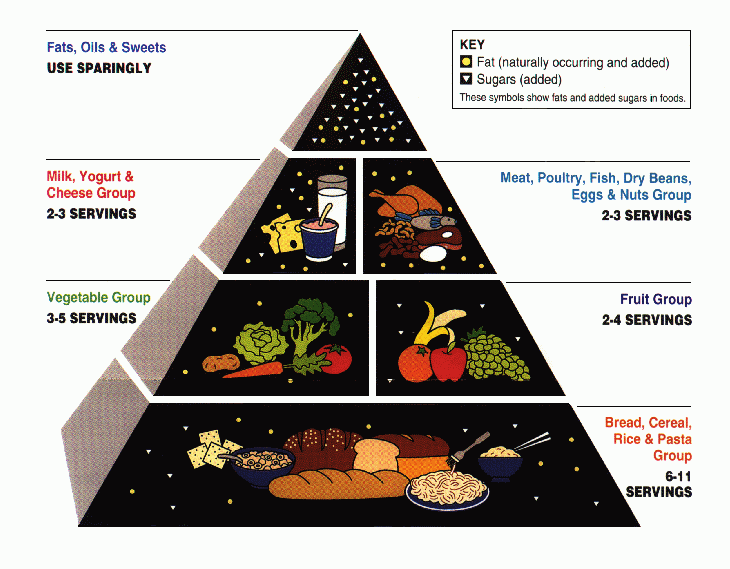
September 1st, I posted a blog on a book I was reading that teaches a person with any chronic illness how to heal their body using nutrition. You can read that here. As I was doing my morning walk, I got to thinking that a lot of us could use some help understanding health and wellness BEFORE we get to the point of chronic illness, so being a certified nutritionist and a personal trainer who used to own a couple gyms, I decided to post a blog on the components of the food pyramid, which so many people don’t understand. Below is the pyramid broken down for beginners and forgetters.

Disclaimer: Please see your doctor before starting on any nutrition program as this may not be right for you. This diet contains all food groups and does not take into account any allergies, diet restrictions, or vegan/vegetarian choices.
USDA_Food_PyramidThe following nutritional program is based on the USDA food pyramid and in my opinion and experience is the easiest and best way to good health. I have followed this plan strictly three times in my life; once to lower my 200 cholesterol to 140, which I did in six weeks; once to lose 30 pounds of baby weight, which I did over three months; and recently, to control my borderline diabetes. I haven’t had my sugar checked recently, but I feel 100% better and coincidentally lost a quick ten pounds. Yay! We are using the lowest serving numbers in the pyramid diet, as the largest serving numbers should be saved for 230-pound male body builders who work out six times a week. By the end of the blog, you should understand the number of servings you need.

Let’s talk quickly about calories. The easiest way to decide how many calories you need is by the weight you want to be. If you want to be 140 pounds, multiply 140 by 10. You need 1400 calories per day. If you want to be 150 pounds, 1500 calories per day. Easy! This amount should be adjusted up or down by your fitness and exercise level. If you want to be 140 pounds, but are inactive, then 1200 calories would help you lose weight. If you want to gain weight from 140 to 150 and you run marathons, you may need 1800 calories. Adjust your numbers accordingly, understanding that 3500 calories equals roughly one pound (body fat and lean muscle tissue are different numbers, but that’s a good estimate.) If you consume 300 calories less than you need and burn 200 calories a day with exercise, that’s a 500 calorie deficit per day or 3500 calories per week. You should lose just over a pound per week. In contrast, if you overeat by 50 calories per day, you’ll gain six pounds per year. Not hard to do. We’ll discuss calories more at the end of this blog.

Let’s talk about measuring. It’s a pain in the rear to pull out a measuring cup to get a perfect serving of one cup or one tablespoon. Measure things the first couple times, always using the same cup or spoon or plate, then you can eyeball it for the rest of your life. Of course, when you buy new dishes, you’ll have to measure again. My new soup bowls are flippin’ huge!  🙂

Ready to feel better? Ready to have more energy? Ready to learn what’s good and what isn’t? Let’s go!

1531544_10152318711308326_7663885554453194581_nDAIRY

For the record – the white-faced beauty in the photo is my girl Lucy. Freckles is behind her.

Dairy – The first thing to know is the USDA recommends two-three servings of dairy per day. You need calcium for healthy bones and vitamin D to help absorb the calcium. A serving size is 8 ounces of milk or yogurt. That’s it! (Cheese looks like its included in the dairy category, but it actually has more protein than calcium, so we’ll include it later in the protein section.) If you currently drink whole milk, this week buy 2%, then 1%, then finally skim. You’ll get used to it, I promise, and soon you’ll wonder how you ever drank milk that was so thick. FYI: If you add a pat of butter to one cup of skim milk, you get 1%. Another pat will give you 2%. Two more pats will give you whole milk. Try that little exercise just for fun and see if you can drink it. Eww. Those fats are saturated fats and clog up your arteries and your heart. Also understand that your yogurt should be sugar free, fat free, and fruit free. Bummer! Don’t worry, we’ll fix it later.

Diet Plan – Enjoy one cup of skim milk with breakfast. You do eat breakfast don’t you? If not, just drink the milk. Enjoy one cup of skim milk or yogurt later in the day as an afternoon snack between lunch and dinner.

OLYMPUS DIGITAL CAMERAFRUIT

Fruit – Fruit contains natural sugars and tons of vitamins. They will give you spurts of energy and feed your organs in spectacular ways, aiding in fighting off colds and helping in digestion and elimination. The USDA recommends two-four servings of fruit per day. A serving of fruit is quite simple. In most cases, it’s a piece that you can hold in your hand. Orange, apple, pear, peach, kiwi, plum, etc. In some cases like watermelon, that measurement is not available, so keep in mind that you should still be able to hold the serving in your hand. One cup of watermelon or cantaloupe, 15 grapes, a box of raisins or dried cranberries, 1/2 grapefruit, 1/2 cup of berries, 1/2 cup juice, etc. If you’re not a big fruit eater, try the dried raisins or cranberries on your salad, cooked on top of your meat, or added to your morning cereal. Do not substitute a fruit serving for what’s in the bottom of store-bought yogurt. That’s too much added sugar. If you want fruit in your yogurt, add your own fresh fruit. If fresh fruit is not available, buy frozen fruit. If that’s not available, buy canned fruit that’s packed in water or light syrup. Avoid the extra sugar of heavy syrups whenever possible. Note: if you have blood sugar issues, you should eat your fruit with other foods. When eaten alone, fruit can cause a spike and a quick drop in sugar levels.

Diet Plan – Enjoy two fruits per day. Add one to breakfast and one later as a mid-morning snack. NOTE: Make one of them a citrus (orange, tangerine, grapefruit, pineapple) which covers your proper vitamin C intake for the whole day.

Culmination – You should enjoy a dairy and a fruit with breakfast (or as breakfast, try yogurt with fresh blueberries), a fruit as a mid-morning snack, and a dairy as an afternoon snack.


Sauteed-Veggies_0VEGGIES

Veggies are easy! The USDA recommends three-five servings per day. A serving size in one cup raw or 1/2 cup cooked. Bam! You know what veggies are, but I will tell you what they are not. They are NOT potatoes, corn, or beans (except for green beans). Potatoes, corn, and beans contain more starch than fiber and are placed in the grain/starch category which we will go over below. So, your veggies are anything leafy and green, squash, zucchini, pickles, cucumbers, tomatoes (which are super high in vitamin C), brussel sprouts, peppers, eggplant, cabbage, carrots, radishes, etc. If you can grow it in your garden, it’s probably a veggie. The easiest way to keep track of your veggies is to eat one for lunch and two for dinner. Slice a tomato to go with your sandwich, add chopped veggies to the top of your pasta, salads are always good. If you’re on the go and simply don’t have time, try a small can of sodium-free V8 juice. You can chug it in one second.

Diet Plan – Enjoy three veggies per day, one with lunch and two with dinner. NOTE: Make one a dark leafy green (kale, broccoli, spinach, romaine, etc.) which covers your proper iron intake for the whole day. Iron is good for the blood.

Culmination – Enjoy a dairy and a fruit with breakfast, a fruit as a morning snack, a veggie with your lunch, a dairy as an afternoon snack, and two veggies with your dinner.

10543639_10152584438533326_311256467130695967_nPROTEIN

Protein – The USDA food pyramid recommends two-three servings of protein at three ounces per serving. Three ounces of meat is the size of a deck of playing cards. Just like the fruit or vegetable, it’s something you can hold in your hand. Proteins include beef, pork, chicken, turkey, duck, etc. It also includes all seafood, but with seafood, you can eat double because it’s lower in calories. Eggs are also included in the protein category. One egg equals one ounce, so a three egg omelet is good. The pyramid states cheese is in the dairy category, but they’ve gone back and forth with this for years. Here, we’ll keep cheese in the protein category, but make sure it’s a hard cheese like parmesan. Soft cheeses like American and Feta are super high in fat (that’s why they’re soft). Buy soft cheeses like mozzarella and cheddar that say “part skim.” That has a lower fat content. Don’t get me wrong: Fat is not bad, but we don’t want the saturated fats found in cheeses, we want healthy unsaturated fats, which we will learn about below. Although legumes, peanut butter, nuts and seeds are high in protein, they contain more starches and fats than protein, so are categorized in other places which we’ll discuss below in fats and grains. So, basically your protein is meat, seafood, eggs, and cheese. Make the most lean choices you can when choosing your meats, keeping in mind the farther away from the bone, the less fat. This means a steak is better than ribs, a breast is better than a leg. And processed meats such as sausage, bacon, and lunch meats should go far away. They are filled with sodium and fat. Avoid them if you can.

Diet Plan – Eat one serving of protein at lunch and one at dinner. (You can change your protein serving to breakfast if desired.)

Culmination – Our diet is expanding into eating five meals per day: Breakfast – one dairy and one fruit; Snack – one fruit; Lunch – one protein and one veggie; Snack – one dairy; Dinner – one protein and two veggies.

imagesFATS

Fats – There are two kinds of fats: fats that come from animals are saturated fats, and fats that come from plants are unsaturated fats. Your body needs fats, but your heart doesn’t need the saturated kinds. The USDA recommends fat intake be kept to a minimum. You can add up to three unsaturated fats daily, one at each meal. A serving is generally a tablespoon. Fats include oil, grease, butter, nuts, seeds, and strangely, avocado. Watch where your fats come from. If it’s from an animal, find a vegetable substitute. Margarine is better than butter, Canola oil is better than Crisco, sunflower seeds are better than bacon. If you have to eat bacon (which I LOVE), one slice is a fat serving. The best way to use fats is to cook in olive oil, make homemade oil and vinegar dressing for your salad, and add some walnuts, almonds, or peanuts to your breakfast cereal.

Diet Plan – Keep in mind that all fats are optional and may be adding extra calories you don’t need. You may add one serving of fat to each meal.

Culmination – You should be eating five times per day and using the following in your diet: Breakfast – one fruit, one dairy, one fat; Snack – one fruit; Lunch – one protein, one veggie, one fat; Snack – one dairy; Dinner – one protein, two veggies, one fat.

download (1)GRAINS AND STARCHES

Grains and Starches – These terms are used interchangeably, though technically, starches are grains, fruits, and veggies, and grains are just grains. Whatever, for the sake of this menu, we’ll pretend they are the same thing. This is the hardest category for people to master because it includes fried and sugary things such as cakes, pies, chips, and french fries. Ugh. The most important thing to keep in mind about grains is to ALWAYS choose a whole grain. Those fried and sugary items listed above are NOT whole grains. A whole grain is: whole wheat, barley, rice, corn, rye, etc. Read the label of your bread this week. The first ingredient should include the word “whole.” If your bread contains the words “enriched” or “bleached” then put it back down on the shelf. Enriched means they process the crap out of it until it has no more nutritional value, then add chemical vitamins and minerals back into it. Your body can’t break down those chemicals, so the “enriched, bleached” wheat bread you’re eating is just useless calories. Read the label!! A grain/starch is 80 calories. You can find that information on the label also. Generally, a serving of grain is one slice of bread, english muffin, pita, tortilla, small bagel, or one cup of breakfast cereals, but make sure they are “whole” and have minimal sugar. Cheerios, Raisin Bran, Total, pretty much anything by Kashi, is good. Natural grains such as one cup of oatmeal, grits, brown rice, or whole wheat pasta are perfect. The last part of grains include one potato, one ear of corn, or one cup of beans (not green beans, those are a veggie). Those are all starchy veggies and have been placed in the grain/starch category. Make good whole-grain choices for this category. Don’t waste it on processed chips and french fries. The USDA recommends six-eleven servings per day. The difference there is 480 calories to 880 calories. Yikes! Generally, five or six work for women, and six to ten work for men.

Diet Plan – You should add one-two servings of grain/starch per meal.

Culmination – Your pyramid meals should look like the following: Breakfast – one grain, one dairy, one fruit, one fat; Snack – one fruit; Lunch – two grains, one protein, one veggie, one fat; Snack – one dairy; Dinner – two grains, one protein, two veggies, one fat. This is a 1200 calorie diet. See “Calories” below to adjust your caloric intake by adding grains, veggies, and fruits.

CALORIES – We discussed calories at the top of the blog, but now that you have a better understanding of food groups, let’s break it down further. A dairy serving, a fat serving, and a grain/starch serving are each 80 calories. A fruit is 60 calories. A veggie is 40 calories. Protein is 150 calories. If you are adjusting your calorie intake, keep in mind we never adjust dairy, protein, or fats, because we don’t want to increase cholesterol or saturated  fat levels. Add calories by adding fruit, veggies, and grains. Don’t get lazy and add grains that aren’t healthy.

SNACKS – Besides the regular snacks on this diet, sometimes we just need something sweet, crunchy, or chocolaty. Count these snacks as your grains/starches. A sugar-free fudgecicle has 45 calories. You can have two in place of a grain! – Try your veggies raw and dip them in two tablespoons of hummus (70 calories = a grain). Just as satisfying as any sour cream or ranch dip. – If you find yourself surrounded by birthday cake or Thanksgiving pie, take the smallest piece and trade the calories out for your grains. – Alcohol is also 80 calories per a proper portion and counted as a grain, but use in moderation while getting your diet on track. Nothing can blow a diet faster than a late night alcohol binge. – Popcorn is a great TV snack and is 80 calories per three cups. Lay off the butter, try some popcorn sprinkle mix instead. The store carries great flavors like cheddar and jalapeno.

FREE STUFF – You can use up to three free items per day. These items include fat-free sour cream (perfect for that baked potato), ketchup, mustard, BBQ sauce, non-dairy coffee flavorings, low-fat mayonnaise, and of course, add herbs to everything. I always have fresh chives in the fridge. Diet sodas are free, but be warned they are very high in sodium, and new studies are coming out daily condemning aspartame. Tea and coffee is always free.

WHITE DEATH – Anything white needs to be used in great moderation. They include: sugar, salt, flour, rice, bread, pasta. Substitutes include: brown sugar or molasses, sea salt, whole wheat flour, brown rice, whole grain bread, and whole wheat pasta.

SHOPPING – Plan your menus in advance so you have everything you need when it’s time to eat. Don’t randomly throw dinner together with whatever is in the fridge. The best way to shop at the grocery store is to go around the outside walls. Everything you need for health is along those walls – fruits, veggies, dairy, meat, read the labels for the best grains, buy healthy fats. Everything in the center aisles needs to be approached with great caution. If it comes in a box, it probably doesn’t have much vitamins or minerals left in it, but it still has plenty of the calories, salts, preservatives, and sugars.

Eat balanced, eat fresh, eat healthy!

It’s Monday! What are you reading? The Gerson Therapy

2a2

I just finished reading

The Gerson Therapy: The Proven Nutritional Program for Cancer and Other Illnesses

by Charlotte Gerson and Morton Walker


coverThis is a different book than the sort I usually talk about. It’s a juicing book to heal your body. Dr. Max Gerson (1881-1959) was a pioneer in using nutrition to HEAL every chronic illness from arthritis to diabetes to cancer. After losing my son-in-law to Hodgkin’s Lymphoma in February, I spoke to so many people who knew people who beat cancer using this program. They swear this program works. I also saw a TV special on Dr. Gerson and found him quite amazing. Well, heading into the second half of my life (if I live that long), I have some health concerns and thought I’d take a look at this book. I’ve fought blood sugar problems my whole life and was told by a physician that I would probably be an insulin dependent diabetic by the time I turned 50. I hasn’t happened yet, but I do feel it sneaking up on me.

I found the 2-year-long nutrition program to be quite intensive, but if it’s a matter of dying of cancer or following a strict diet for two years, I’ll go with the diet. There are some quirky things like coffee enemas that I won’t go into, but the science that backs it in the book is quite convincing.

My only problem with the book is what it said at the end. It said the diet should NOT be followed by healthy people. I don’t get that at all. You have to come down with a chronic illness before you can get healthy? I understand it’s a radical diet, but something about that didn’t make sense to me, and they could have told me that BEFORE I bought the book.

So, long story short, I’m sticking with my basic pyramid diet and hoping for the best.

The Backstory of the STUCKEY’S BRIDGE TRILOGY

Here’s a little background on the Stuckey’s Bridge Trilogy.

stuckey's bridge from VA Iron and Bridge Co on wikiMy childhood: I grew up in Meridian, Mississippi and heard the legend of Stuckey’s Bridge my whole life. It actually began in a book about the area written in the 1970s. The local paper, The Meridian Star, picked up on the legend from the book and the story spread like wildfire. The bridge instantly became THE place to party on the weekends, searching for ghosts and frightening girls into cuddling closer. (If you want to go there: head south out of Meridian on Interstate 59. Turn right at exit 142, then a quick left onto Meehan-Savoy Road. Travel 2.2 miles until you see a dirt road on your left. That is Stucky Bridge Road. The bridge will be about two miles down the dirt road. It is now closed, so you’ll have to turn around to leave. After you read the following legend, you may not want to go.)

The legend goes: In the late 1800s, a former member of the Dalton Gang came to Lauderdale County, Mississippi to find his fortune. He opened an inn near the Chunky River and stood on the old wooden bridge at night, flagging down merchants with his lantern, offering them a warm bed and a hot meal. Supposedly, he murdered his victims in their sleep and buried their bodies on the banks of the river. In 1901, the Virginia Bridge and Iron Company began rebuilding the old bridge and the bodies were discovered. The innkeeper, Old Man Stuckey as he is known to the locals, was hung by a posse from the iron rails of the new bridge.

Stuckey's cover_webIf you know me, you know I couldn’t stop searching until I figured out who this Old Man Stuckey really was…that became the first book in the Stuckey’s Bridge Trilogy, THE LEGEND OF STUCKEY’S BRIDGE. (Check out the book trailer…creepy!)

unnamedWhile writing the story, I didn’t want Old Man Stuckey to be alone all the time, so I had him run across a young boy named Levi. In the story, young Levi took on a creepiness all his own, and I received tons of emails and messages asking what Levi’s past was. As usual with my overactive imagination, I was more interested in his future than his past, so I wrote STUCKEY’S LEGACY: THE LEGEND CONTINUES. At the end of that book, Levi “got his” and the story focused on the young woman he met during the story, Penelope Juzan.

Back to my childhood: There was a second legend around the area where I grew up. Supposedly there was an inn on Lake Juzan in the 1840s where an innkeeper murdered his guests for wealth, much like Old Man Stuckey. The man’s name was Pierre Juzan, and he dumped the bodies in the lake with the help of his Indian sidekick. Toward the end of the legend, one of them killed the other for the wealth of gold they had confiscated.

Side note: There were also a couple different accounts of trunks of confederate gold disappearing as they traveled through the area during the Civil War.

I thought all these stories had a similar thread, and I wondered if I could separate them.

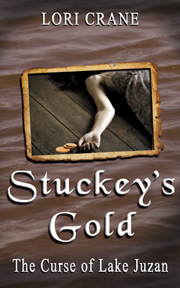
stuckey Gold Cover smallBack to the trilogy: I came to the conclusion that these legends were indeed different stories, but thought they were probably connected in some way. Those crazy ideas in my head became the third book in the trilogy, STUCKEY’S GOLD: THE CURSE OF LAKE JUZAN. 

These tales tickled me pink while writing them, and I hope you enjoy them too!

stuckey Trilogy_ smal


Update: October 1st release of – The Complete Stuckey’s Bridge Trilogy  available exclusively on Kindle at Amazon. Click HERE!

Lori Crane Books at Amazon

On This Day in 1905

On This Day in 1905, my 2nd great grandfather, Andrew Jackson Crane, died.

Jack, as he was known, was born January 8, 1852 to Jeremiah William Crane and Sarah Frances Grimes in Clarke County, Mississippi. He had one brother and three sisters. When he was 21, on December 4, 1873, he married Martha Jane “Mattie” Mercer in Clarke County and had three children: Ella Jane, Minnie Lee, and my great grandpa, Amos Bolivar.

To understand his generation, one must remember Abraham Lincoln was elected President in 1860, Mississippi seceded from the Union in 1861, and the country went to war. election1860mapJack was an impressionable youth during this period and probably watched many of his neighbors go off to fight with the 37th Mississippi Infantry. One must wonder if he was a frightened young boy, hiding behind his mother’s hooped skirts, or a feisty lad, anxious to grow up and go too. As with most of the South, cotton was the main economy of the area, and railroads had been built during the 1850s to transport it, but in 1864, General Sherman’s troops marched through the area and destroyed nearly everything, including the railroad tracks. Once the war was over, the tracks were repaired, but the farmers no longer had slaves to work the fields and cotton harvests diminished. Somehow, through the next 40 years of reconstruction, the economy grew quickly. Homes began adding electricity, running water, and paved streets. People weren’t driving automobiles yet, as the Model T wasn’t introduced until 1908, but the wagon riders were now subjected to less dust, and the roads didn’t wash away with heavy rains. The population of nearby Meridian tripled from 1870 to 1885, doubled again by 1898, and doubled again by 1906. Jack lived through a horrific childhood of war and change, but in his later years, he witnessed amazing growth and technology. I wonder if the electricity reached his house before he died.

crane a j and wife obeliskJack passed away at the young age of 53 on August 25, 1905 and is laid to rest near his home at McGowan Chapel Cemetery in Harmony, Mississippi. His wife, Mattie, didn’t die until November 28, 1945 at the age of 93. She never remarried.

This post brought to you by On This Day available on Amazon.

Saturday Snippet – Stuckey’s Gold

Here’s a snippet from my coming release:

STUCKEY’S GOLD: THE CURSE OF LAKE JUZAN

stuckey Gold Cover smallBlurb

In 1840, Pierre Juzan was an innkeeper on the shores of Lake Juzan. His business was successful, but he wanted more. One day he got wind of a coach transporting a trunk of gold near his home, and his actions on that fateful day would spark an Indian curse that would haunt his family for four generations. Seventy years later, can Penelope Juzan break the curse, or will she suffer the same tragic fate as her forefathers?

“The Legend of Stuckey’s Bridge” and “Stuckey’s Legacy: The Legend Continues” told tales of the gold leaving a trail of destruction from Meridian, Mississippi to Jekyll Island, Georgia. In “Stuckey’s Gold: The Curse of Lake Juzan,” we may find the victims in the original tales were merely bit players in a story that is far darker and more sinister than one could imagine.

“Stuckey’s Gold: The Curse of Lake Juzan” is the final installment in the “Stuckey’s Bridge Trilogy” and is the tale of four generations struggling to escape a curse caused by greed.

********************************************************************

The sun had already reached its highest point and was slowly beginning its descent behind them. By the look of the shadows, Leon guessed it was around three o’clock. He knew the traveling distance from the county line, so he figured the coach would be arriving at any moment. As he recalculated its arrival time, he heard horse hooves on the road. The two sat silent and still on their horses and watched the man from last night trot past them. Their plan was to let him travel by unharmed as to not warn the drivers of impending danger. They would take care of him later.

Not more than a few minutes had passed before they heard the grinding of wagon wheels. Two men sat in the driver’s seat of the wooden coach. One was whistling a tune. Leon was feeling anxious and wanted to get on with it, so he decided to make the annoying whistler his first target. He pulled out his bow, armed it with an arrow, took aim through the trees, and let his arrow fly. It hit its intended target and the whistling abruptly stopped. The whistler slumped in his seat, an arrow through the left side of his neck. The horses didn’t flinch, but the man’s partner looked over at him and his jaw dropped. Leon quickly pulled out another arrow, aimed, and put it through the chest of the second man as he still stared at his partner in disbelief. The second man slumped in the seat.

From higher up on the hill, Pierre rode his horse out of the woods and fell in line behind the wagon. He gave Leon a nod. Leon nodded back. Leon tucked his bow away and emerged from the woods, trotting alongside the wagon. The wagon’s team kept pulling the wagon forward, oblivious to the fact they no longer had a driver. They began to pick up speed as the road began to slant downhill. Leon grabbed the side of the wagon and pulled himself onto it, abandoning his own horse on the road. He crawled across the canvas back and climbed over the rail, into the driver’s seat. He grabbed the whistler by the shirt and pushed him over the side. The man plopped onto the road like a sack of potatoes, and Leon felt the coach jostle and heard bones snap as the back wheel of the wagon ran over some part of the whistler’s body. He grimaced at the sound.

Behind him, Pierre grabbed Leon’s abandoned horse’s reins and continued down the hill, pulling Leon’s horse along with him. Leon glanced back and saw both horses neigh and rear up when they approached the whistler’s body unexpectedly sprawled in the middle of the road.

He turned his attention back to the coach’s horses. They were now nearing a gallop down the hill. He reached down on the floor of the wagon and fumbled around until he found the reins. He grabbed them and was about to pull back on them when the butt of a gun came down on top of his head. He saw stars as he fell to the floor of the coach. He turned his head and saw the whistler’s partner pointing a revolver at his face. As the driver clicked the hammer back, Leon kicked the gun out of the man’s hand. He heard it bounce off the edge of the wagon then discharge as it hit the ground. The sound echoed through the trees, startling the wagon’s horses who took off at full gallop.

*************************************************

STUCKEY’S GOLD is available at Amazon!

On This Day in 1891

On This Day in 1891

My great great grandparents, Joseph Lawson Pickett and Caledonia D Fisher, were married in Lauderdale County, Mississippi.

pickett, joseph lawson sr, son of rt and lucyJoe Lawson was born Jan 1866, son of Robert Theodore Pickett and Lucy Ann Rackley in Alabama. He had four older sisters and four younger brothers, all born in Alabama. Sometime between 1880 and 1890, the family moved to Mississippi. At age 25, he married 21-year-old Callie. They had five boys and one girl: Benjamin Berry (1893-1973 my great grandpa), Robert Elbert (1897-1978), Joseph Lawson Jr (1901-1928), Florence (1902-1990), Mark Joshua (1905-1949), and Clyde (1907-1993). From the stories passed down of the four boys, including moonshine stills, shootouts with local authorities, going to prison for murder, and young Joe Jr. being shot by law enforcement at the age of 27, they were obviously a wild bunch. I don’t know if the parents didn’t discipline the children or if the boys were just uncontrollable. Joe Lawson died at the age of 44 in 1910. The exact date of his death is unknown at this time, but it was after the 1910 census was taken which was April 20th. Callie never remarried.

pickett, caledonia d fisher, wf of joe lawson srCallie was born 12 Jul 1870 to William Thomas Fisher and Ann Eliza Butler in Mississippi. She had six older siblings and four younger ones, totaling six boys and five girls. Her father was a Civil War soldier and owned quite a bit of land in the Zero Community near Meridian. He was just as much a character at those Pickett boys. Perhaps that’s why Callie liked Joe so much. Callie’s father was in jail at the start of the Civil War for shooting a man over a poker game, but they released him so he could go fight. Having children born in 1860, 62, 63, and 65, I’m not sure when or where he actually fought. A portion of Fisher land was designated as Fisher Cemetery, holding the remains of many Fisher and Pickett descendants, but Joe and Callie are both laid to rest down the road at Pleasant Hill Cemetery in Meridian. She died 26 Aug 1931. Her obituary in the Meridian Star Newspaper is as follows, but notice the marriage year is different, probably told to the paper by a member of the family. I have the Lauderdale County Marriage Records transcribed which say, “1891, Marriage Book 2, page 368.”

Mrs. Caledonia Fisher Pickett, 61, died Wednesday at 4:30 a.m. at her home on Rt. 3. She was born and raised in Lauderdale County and in 1889 was married to the late Lawson Pickett. She was a member of the Zero Methodist Church. She is survived by one daughter, Mrs. Florence Harper; four sons; Ben, Elbert, Mark, and Clyde Pickett; one sister, Mrs. Ada Purvis; three brothers, Thomas, Jeff, and Jim Fisher. Funeral services will be held from Pleasant Hill Methodist Church Thursday at 3:30 p.m., the Revs. J.W. Ramsey and Ed Grayson officiating. Interment to follow in the Pleasant Hill Cemetery. Active Pallbearers: Lester Walker, Earl Dawes, George Gay, Charlie Molpus, Dan Covington, and Dan Rolling. Honorary: Martin Miller, C.S. Dearman, John Robinson, Ed Culpepper, Elmer Brown, and Monroe Sims.  ~Meridian Star

This post brought to you by On This Day available at Amazon.


On This Day in 1909

On This Day in 1909, John Francis Burke, passed away. He was 62 years old. He was my great great grandfather.

1847 Ireland

imagesI can’t post a photo to go with this story. The images are too horrific.

In 1847, the great famine in Ireland was in full swing. Food prices had skyrocketed and those who needed food the most, couldn’t afford any. The summer’s crop of potatoes survived, but the crop was inadequate to feed the masses because everyone was afraid to plant. The British Relief Association raised money throughout America and Europe to send assistance. Soup kitchens opened, and people actually collapse and died of starvation trying to get to them. People poured onto ships bound for Canada and America. One shipwreck in April, killed 250 emigrants. In May, one sailed to Canada and was the cause of a typhus epidemic. When all was said and done, between 1845 and 1852, one million people died of starvation and another one million emigrated from Ireland.

This was the atmosphere John Francis Burke was born into. He was born in Dublin on February 27, 1847. One can imagine that his parents were very resourceful, perhaps with the negative connotations of that trait: stingy, tight-fisted, and ungenerous. They spent years struggling to feed their children, and when the potato blight was over, they probably didn’t break the cycle of struggle, just in case it should happen again.

merchant ship replicaNot much is known about his parents or his childhood. A family member told me his sibling had the same names as his children, so I expect there was a Patrick, Robert, Emmett, Nina, Virginia, Kathleen, David, and/or an Edmond somewhere in the bunch. When he was a young lad of 15, he snuck down to the shipyard and stowed away on an American-bound ship. After they set sail, the captain found him en route and told him the ship couldn’t take him back home. He replied to the captain, “If I wanted to go home, I wouldn’t have stowed away.” We don’t know the relationship or lack of one he had with his parents and siblings, but we can imagine his mother searching for her fifteen-year-old son and being heartbroken. I don’t know if he ever contacted his family after leaving Dublin.

The ship dropped him off in Miami, Florida in 1862. Yes, 1862, during the middle of the Civil War. Confederate War Records show a couple men with similar names that could be him serving in Florida, Alabama, and Mississippi. The 1870 census shows a couple names that could be him: one in Florida and one in Alabama. He finally shows up in the 1880 census as being a “ditcher” and living with his new in-laws, the Spencer family.

On December 10, 1879, at the age of 32, he married Nancy Didama Spencer in Lauderdale County, Mississippi. Over the next fourteen years, they had six children: John Patrick 1880, Robert Emmett 1883, George Washington 1886, Nina Virginia 1889, Kathlene L 1892, and David Edmond 1894. These children prove John and Nancy must have liked each other a little bit, but a new snag appears in 1900.

burke JP Burke Sr headstone 2The 1900 census shows Nancy living at home with all the children and listed as a “widow.” I didn’t understand this because John’s headstone clearly says he died in 1909. Finally a cousin told me Nancy did not believe in divorce, but she and John lived in the same house and did not speak to each other for the last fifteen years of their marriage. This also explains why they are buried in different rows at the cemetery. From a psychological standpoint, I wonder if he left Dublin because of his father’s personality and then became just like the man, causing his wife to dislike him. What could someone do that was so bad to tell a census taker he was dead? After John’s death August 18, 1909, the 1910 census shows Nancy as a widow with five children still at home. John is laid to rest at Liberty Baptist Church Cemetery in Duffee, Mississippi, among children and grandchildren.

On a lighter note, I know his son John Patrick “Pat” (my great grandfather) was a fiddle player on the weekends at barn dances. I wonder if Pat learned to play from his father. Playing the fiddle is such an Irish thing to do, don’t you think?

Brought to you by On This Day available at Amazon.