A to Z – King Tut’s Curse

A2Z-BADGE_[2016]April 2016 A to Z Challenge – I’m blogging about history.

K is for King Tut’s Curse


Tutanchamon_(js)_1When you think of a king, you usually picture an older, wiser man, sporting a beard and a long robe. Well, King Tut was king for only ten years and died at the young age of nineteen. He was hardly the image we picture in our heads. He died around 1324 B.C. but his remains weren’t discovered until over three thousand years later. His tomb was discovered and opened by Howard Carter November 29, 1922. The carvings on the walls predicted a swift death to anyone who bothers his tomb. (photo by Jerzy Strzelecki, wikimedia.)

“Death shall come on swift wings to him who disturbs the peace of the king.”

Let’s see if the prophecies came true.


The first death occurred four months after opening the tomb. George Herbert was the financier of the excavation. He was bitten on the cheek by a mosquito and accidentally cut the bump while shaving. He developed blood poisoning and died April 1923. Coincidentally, the first autopsy of King Tut revealed a healed lesion on his left cheek. Legend has it that Herbert’s son reported Herbert’s dog back in England howled and dropped dead at the same time as his master.

George Gould visited the tomb, developed a fever, and died May 1923.

Prince Ali Kamel Fahmy Bey visited the tomb. He was shot dead by his wife July 1923.

Colonel Aubrey Herbert, George Herbert’s half brother, died September 1923 from blood poisoning.

Sir Archibald Douglas-Reid, the radiologist who x-rayed King Tut, died January 1924.

Sir Lee Stack, died November 1924 of assassination in Cairo.

A. C. Mace, a member of the excavation team, died in 1928 of arsenic poisoning.

Mervyn Herbert, George Herbert’s half brother and Aubrey Herbert’s full brother, died May 1929 of malaria.

Captain Bethell, Carter’s secretary, died November 1929 of poisoning.

Richard Bethell, father of the above, died February 1930 of suicide.

Fifty-eight people were present at the opening of the tomb. Eight died strange deaths in the twelve years following. By 1935, the press had attributed twenty one deaths to the curse. Dozens of people connected with the opening of the tomb, from security guards to archeologists, had strange incidents occur soon after the opening of the tomb.

James Breasted worked with Howard Carter after the tomb was opened. Breasted found his canary dead in its cage in the mouth of a cobra, a symbol of the Egyptian monarchy.

In 1925, Carter gave his friend Bruce Ingram a paperweight of a mummified hand wearing a scarab bracelet that said, “Cursed be he who moves my body. To him shall come fire, water, and pestilence.” Soon after receiving the gift, Ingram’s house burned down. After it was rebuilt, it flooded.

Tutanhkamun_jackalIn May 1926, Carter reported in his diary that he witnessed jackals around the site, the same type as Anubis who is the guardian of the king. He said he had never seen a jackal in his thirty-five years of working in the desert. (photo by Jon Bodsworth, wikimedia)

Skeptics point out that many of the original founders lived long and healthy lives, but when was the last time you heard of someone dying of poisoning? I don’t believe in curses any more than I believe in ghosts, but I find it all very strange.

A to Z – Jefferson Davis

A2Z-BADGE_[2016]April 2016 A to Z Challenge – I’m blogging about history.

J is for Jefferson Davis


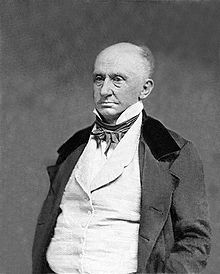
jefferson davisMost everyone knows Jefferson Davis was the President of the Confederate States during the Civil War. Here are some interesting facts you may not know. (photo www.biography.com)
Jefferson Davis served in the U.S. Army for a time. While there, he fell in love with his commander’s daughter, Sarah Taylor, daughter of future president Zachary Taylor.

Ole Zach wouldn’t give them permission to marry for he thought being a wife in an army post was too hard a life for his little girl. Jeff was depressed by the judgment, though he understood Zach’s stance. He traveled south to talk to his brother Joseph Davis about it. Joe had also been in the army and had resigned to move south and start a plantation. The brothers came to the conclusion that being in the army wasn’t such a great life. Jeff made a decision to leave the army. On June 17, 1935, he married Sarah, and on June 30th, he resigned his position.

Jeff and Sarah moved south to help his brother with the plantation. Joe gave Jeff a portion of the land that was covered with briers and bushes. To escape the summer heat, Jeff and Sarah traveled south to the coast to visit his sister in Louisiana. Sarah contracted malaria, yellow fever as it was known at the time, and she died only three months after they were married.

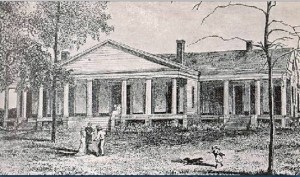
brierfieldFor years following his bride’s death, he was a recluse. He spent his time developing a 1000-acre plantation on his brother’s land and he called it Brierfield. (photo http://mshistorynow.mdah.state.ms.us)

In 1944, he eventually remarried. By this time, his plantation was successful and he had over 100 slaves. He spent the next decade being placed in various offices by the governor of Mississippi. When Mississippi succeeded from the union, Jeff was acting as the state senator. He was very saddened by the news of succession and delivered his farewell address to the Senate and returned to Mississippi. He was soon appointed commander in chief of the Confederate armies, then appointed President. He was not happy about the war. He certainly did not want the job as President.

Upon leaving the Senate, he returned to Brierfield for a short time before moving to Montgomery, Alabama which was the capitol of the Confederacy.

What I find interesting about the story is that when Sherman started his campaign in Vicksburg, MS, he burnt down Hurricane Plantation, Joe’s home. He didn’t burn Brierfield Plantation next door. He used it instead as a supply post for the Union army. Coincidence? I doubt it. Imagine how angry Jeff was after spending his mourning time building it. It was almost a shrine to Sarah. Now it was in the hands of the enemy.

After the Confederates surrendered to the Union in 1865, Jeff was imprisoned as a traitor for a while, but released after two years. He returned to Brierfield but found it unlivable.

Joe had never given Jeff the title to the land, and while Jeff was in jail, Joe had sold Brierfield to their former slaves. After Joe died, the new owners defaulted on the payments. Joe’s grandchildren claimed ownership of the land, but Jeff took them to court and won Brierfield back. For the very first time, after forty years, it was legally his. While he lived in Biloxi at Beauvoir, he tried to make Brierfield profitable again. He was working on the property in the fall of 1889 when he contracted pneumonia. He died a few weeks later.

His surviving family never lived at Brierfield.

The house was destroyed by fire in 1931.

A to Z – Income Tax

A2Z-BADGE_[2016]April 2016 A to Z Challenge. I’m participating by blogging about history.

I is for Income Tax


tax-day-2015-meme-3

Ugh. Yes, it’s that time of year again. Tax time. April 15th is right around the corner.

But you know, we didn’t always pay income tax. Our country was established in 1776, and we didn’t pay our first yearly income tax until 1913. How did the federal government survive all those decades without our money??

Well, they did get a bit of it. Around 1800, the government started charging a tax on such things as liquor, sugar, tobacco, carriages, and slaves, but when the War of 1812 started, there wasn’t quite enough money to fund it, so the government started taxing jewelry, too. When the war was finished, congress stopped taxing Americans at all and relied solely on tariffs on imported goods.

The government survived nicely for the next fifty years, but when the civil war began, they again raised taxes to fund it. In 1862, Congress passed the first law enacting an income tax. It was a progressive tax. Persons earning $600 to $10,000 per year paid 3%. People earning more, paid more.

After the war ended, income tax was again eliminated and the government again taxed tobacco and liquor. As a matter of fact, in 1895 THE U.S. SUPREME COURT CLAIMED THAT INCOME TAX WAS UNCONSTITUTIONAL! The money was not equally used across state lines and therefore went against the Constitution.

Where are these people? We should get them back!

Well, good things never last. In 1913, the powers that be passed the 16th amendment, making the income tax a permanent fixture. It states: “The Congress shall have power to lay and collect taxes on incomes, from whatever source derived, without apportionment among the several States, and without regard to any census or enumeration.”

new-tax-formSince that time, new taxes, new laws, new procedures, new rules come and go every year. The 2015 tax code was 74,608 pages long. No wonder Americans are so confused and frustrated. They not only take our money, but they make the laws difficult for us to understand. Then they rule with ridiculously intimidation, sick threats of stiff penalties and fines that make mafia loan sharks look kinder than the tooth fairy, not to mention the threat of jail time that hangs over our heads. Geez. Shame on our government and our system.


I shouldn’t complain. I got a refund this year. But it was my money in the first place, wasn’t it?


A to Z – Helen Keller

A2Z-BADGE_[2016]April 2016 A to Z Challenge – I’m participating by writing blogs about history.

H is for Helen Keller

Everyone knows the name. Most everyone knows a joke. If you’re familiar with Helen Keller, you probably know she was blind and deaf. She was also an author, a lecturer, and a political activist interested in women’s suffrage, labor rights, and socialism.

She was born June 27, 1880 in Alabama to Arthur Keller and Kate Adams. She was born a normal child with the ability to see and hear, but at the age of 19 months, she contracted either Scarlet Fever or Meningitis and became blind and deaf from the illness. I can’t even imagine how she was intelligent enough to communicate to her family at such a young age, but by the age of seven, she had created more than sixty signs.

Helen_Keller_and_Alexander_Graham_BellThe Keller family was advised to contact Alexander Graham Bell, who was working with deaf children at the time. The photo (from Perkins School for the Blind Archives – Wikimedia) is of Helen and Mr. Bell. He referred them to Perkins Institute for the blind, which marked the beginning of Helen’s slow walk to normalcy. Helen studied with a visually-impaired former student of Perkins Institute, Anne Sullivan, who became her lifelong friend and eventually accompanied her to NY to also attend a school for the deaf. Helen continued her education by attending Cambridge School for Young Ladies and Radcliffe College, where she was the first deaf blind person to receive a Bachelor of Arts Degree.

She was fluent at Braille, reading sign language by touching another’s hands, and she could experience music if it was close enough to vibrate a nearby table or other object.

In her later life, she achieved so many honors, it is impossible to list them all here. The ones I found interesting are that she traveled the world, received the Presidential Medal of Freedom, published twelve books, met every president from Grover Cleveland to Lyndon Johnson, and was friends with Charlie Chaplin and Mark Twain. The others are available on Wikipedia at https://en.wikipedia.org/wiki/Helen_Keller.

In 1961, she suffered a series of strokes and spent the rest of her life at her home in Connecticut. She died peacefully in her sleep June 1, 1968 at the age of 87. She is buried at the Washington National Cathedral.

How did she learn to speak without being able to hear or see? She can tell you in her own words.

A to Z – Gettysburg Address

A2Z-BADGE_[2016]April 2016 A to Z Challenge. I’m participating by writing blogs about history.

G is for Gettysburg Address


dec 2012 388Perhaps, no other moment in the history of the United States is as touching or as memorable as President Lincoln’s Gettysburg Address.

July 1863 marked the bloodiest battle of the civil war. Union and Confederate soldiers clashed at Gettysburg, marking the end of thousands of lives. 45,000 soldiers were killed, injured, captured, or went missing. It was left to Pennsylvania’s governor to take care of the fallen soldier’s remains. In October, seventeen acres were purchased and the Union soldiers killed in the battle were re-buried in a formal cemetery. Almost as an after-thought, two weeks before the dedication ceremony, President Lincoln was asked to give a speech, setting the cemetery apart as sacred land. This battle was recognized as a major turning point of the war for the north, so I would think the President thought it a fine opportunity to spread a little positive encouragement to a war-weary Union.

November 19, 1863, on the way to the Gettysburg cemetery grounds, President Lincoln told his companions that he felt weak and dizzy. During his speech, it was noted that he looked “a ghastly color.” On the return train trip to Washington D.C., the President became ill with fever and a headache. It was determined later that he suffered from a mild case of small pox. Feeling sick and feverish, I can’t imagine how he sat through a long and most likely boring event, keeping in mind it was a bitterly freezing day in November in Pennsylvania.

The ceremony began with music played by a band, a prayer by a reverend, more music, and a two-hour speech by Edward Everett. It continued with more music, a hymn, a song by the Baltimore Glee Club, and finally… the speech by President Lincoln. It concluded with a song sung by a choir and a benediction.

Lincoln’s short speech has gone down in history. It was met with mixed feelings at the time, but has now become the most articulate version of our vision for democracy. For those of you who don’t do math, the ‘Four score and seven years ago’ is referring to 1776, the beginning of the American Revolution.

Ladies and Gentlemen, the President of the United States.

lincoln method studios

Four score and seven years ago our fathers brought forth on this continent a new nation, conceived in liberty, and dedicated to the proposition that all men are created equal.

Now we are engaged in a great civil war, testing whether that nation, or any nation so conceived and so dedicated, can long endure. We are met on a great battlefield of that war. We have come to dedicate a portion of that field, as a final resting place for those who here gave their lives that that nation might live. It is altogether fitting and proper that we should do this.

But, in a larger sense, we can not dedicate, we can not consecrate, we can not hallow this ground. The brave men, living and dead, who struggled here, have consecrated it, far above our poor power to add or detract. The world will little note, nor long remember what we say here, but it can never forget what they did here. It is for us the living, rather, to be dedicated here to the unfinished work which they who fought here have thus far so nobly advanced. It is rather for us to be here dedicated to the great task remaining before us—that from these honored dead we take increased devotion to that cause for which they gave the last full measure of devotion—that we here highly resolve that these dead shall not have died in vain—that this nation, under God, shall have a new birth of freedom—and that government of the people, by the people, for the people, shall not perish from the earth.

A to Z – Fur Elise who?

A2Z-BADGE_[2016]April 2016 A to Z Challenge. I’m blogging about history.

F is for ‘Fur Elise’ who?


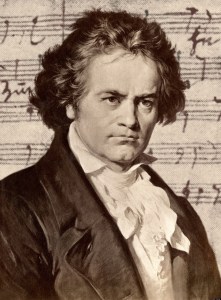
AETJFR Ludwig van Beethoven

AETJFR Ludwig van Beethoven

Most people are familiar with Beethoven’s piece “Fur Elise,” but there are still questions about who the piece was written for. The original manuscript, which has since been lost, was composed when he was forty years old and going deaf. It was dated 27 Apr 1810. It was found upon Beethoven’s death by Ludwig Nohl in 1826, but it wasn’t published until nearly forty years later in 1865. (If you’re trying to piece together a timeline in your head, that was the same year the civil war ended in America.)

The version we know today was the first draft transcribed by Nohl, but there was also a later revised and incomplete version in Beethoven’s hand dated 1822 that used arpeggios in the left hand and had a few extra bars.

It isn’t certain who Elise was, but there are a few possibilities:

  1. The manuscript may have been transcribed wrong, and it may have been “Fur Therese,” as in Therese Malfatti. Beethoven was in love with her and proposed marriage to her in 1810, but she turned him down and married someone else.
  2. It may have been written for soprano Elisabeth Rockel (called Elise and Betty) who had befriended Beethoven in 1808.
  3. It may have been written for Juliane Katharine Elisabet Barensfeld (called Elise) who was a child prodigy and live with Beethoven’s friend Johann Malzel. Supposedly, Beethoven dedicated the song to the 13-year-old Elise as a favor to the above mentioned Therese who lived next door to Malzel.
  4. There is also a theory that ‘Elise’ was a general term for ‘Sweetheart.’

Whomever the girl was, she must have been very special for him to dedicate to her such a beautiful piece.

A to Z – Culpeper Garden at Leeds Castle

A2Z-BADGE_[2016]April 2016 A to Z Challenge. I’m participating by writing about history.

C is for Culpeper Garden at Leeds Castle.


,

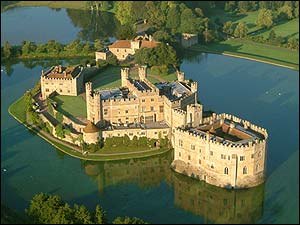
Leeds-CastleLeeds Castle is located in Maidstone, Kent, England. It was a Norman stronghold in the 11th and 12th centuries, a royal palace in the 13th through 15th, and a Tudor palace in the 16th century. It was also owned by my family at one point. The Culpepers (my mother’s family) owned the castle before the English civil war in the early 1600s. They lost it due to being on the wrong side of the war. If you’re not familiar with the outcome of the war, the king was beheaded and the royalist Culpepers fled to the new colonies to escape the same fate.

In the mid-1600s, the royal family was returned to the throne, and the Culpepers got their house back!!

culpeper_garden_originalWhat is now called the Culpeper garden was originally a kitchen garden and nothing more, but in 1980, a designer transformed it into a cottage garden. It has an informal layout with low box hedges bordering Roses, Lupines, and Poppies. It is said to be named after herbalist Nicholas Culpeper, who is a distant cousin of mine. Nicholas transcribed the pharmacopoeia from Latin to English “so that all men may prescribe for themselves.” He ended up dying in the war mentioned above, but as far as I know, he never lived in the castle. It is still nice that they honored the family hundreds of years later by naming something after them.
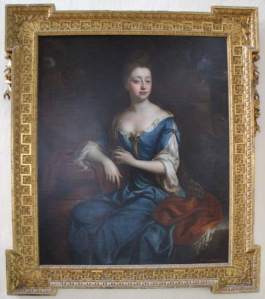
The final Culpeper owner of Leeds was Catherine Culpeper. She married Thomas Fairfax in 1690 and the property then transferred into the Fairfax family. Below are photos of Catherine and Thomas. Since their grandfathers were bitter enemies during the war, I’ve always wondered if the families condoned the marriage, if Catherine was being rebellious by marrying the enemy, or if the Fairfaxes were simply out to take everything from the Culpepers. I’m currently writing a story about it called “The Culpepper-Fairfax Scandal.” I’m not set on the end yet, so we’ll see where the characters take me and which scenario plays out.  At some point in the story, I need to include a stroll through the garden.

LadyCatherine

Thomas_Fairfax 5th baron of cameron, catherine culpeppers husband

A to Z – Beauvoir

A2Z-BADGE_[2016]April 2016 A to Z Challenge. I’m participating in the challenge by writing about history.

B is for Beauvoir.


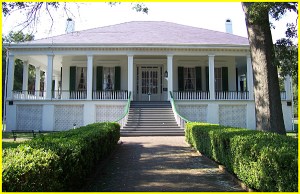
BeauvoirBeauvoir, meaning beautiful view, is know by many people, especially civil war buffs. It’s an antebellum home that sits on the shores of the Gulf of Mexico in the beautiful town of Biloxi, Mississippi. It was many things but best known as the home of Confederate President Jefferson Davis.


It was built between 1848 and 1852 by a rich plantation owner as a summer home for his family. After the man died, it was sold in 1873 by his widow for back taxes, then sold again three months later to a Sarah Dorsey.

In 1877 (following the civil war), Jefferson Davis was on the coast, looking for a place of solitude to write. He visited his family friend Mrs. Dorsey and they agreed he should stay there. He loved the home so much, he offered to buy it, and she sold it to him for $5,500.00 to be paid in three payments. After making the first payment, Mrs. Dorsey died. President Davis then found in her will that he was her sole heir.

President Davis lived in the home until his death in 1889. His daughter Winnie inherited the house and sold it to the Sons of Confederate Veterans with the stipulation that the home be used to house Confederate veterans and their wives at no charge until it wasn’t needed anymore. The last of the veterans vacated the premises in 1957. The home was severely damaged in Hurricane Katrina but is now again open as a tourist attraction and historical site.

If you find yourself in Biloxi and you’d like to visit, daily tours of the mansion run every hour between 9:30am and 4:30pm. The property is located at 2244 Beach Blvd, Biloxi, MS 39531  (228) 388-4400. You can visit their website HERE.


culpepper Joel B CulpepperMy second great grandfather Joel Bluett Culpepper served in the civil war Co. K 63rd Alabama infantry. He signed up at the age of seventeen. In 1863, he was captured and held at Fort Massachusetts on Ship Island until the end of the war. Under his rights as a Confederate veteran, he spent the last ten months of his life at Beauvoir, dying at the home 11 Jan 1911. He is on the records there as James B Culpepper.


A to Z – Arlington National Cemetery

A2Z-BADGE_[2016]April 2016 A to Z blog challenge. I’m participating by writing blogs about history.

A is for Arlington National Cemetery.


Everyone is familiar with Arlington National Cemetery, but the story behind it is pretty strange.


220px-GeoWPCustisThe property was originally owned by George Washington’s step-grandson, George Washington Parke Custis (photo), who built the Arlington House on the property in 1802. George Custis spent a sizable portion of his inheritance to build the palatial home. He married Mary Lee Fitzhugh and had only one child who survived to adulthood –  a daughter named Mary Anna Custis.


Mary_Custis_Lee_and_Robert_E._Lee_Jr_1845In 1831, Mary Anna married none other than Robert E. Lee. Here is a photo of Mary Anna and her son Robert E. Lee Jr., who looks like a little girl if you ask me. The couple moved into the Arlington House with her family.
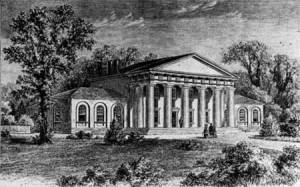
In 1857, George Custis died, leaving the house to Mary Anna’s son, George Washington Lee. Robert E. Lee was the executor of George Custis’s will, and took a three-year leave of absence from the army to make needed repairs to the property. Strangely, the will also dictated that all slaves should be freed within five years of George Custis’s death. Robert E Lee did so, setting the slaves free in December of 1862.


For thirty years, the Lees made their home at Arlington, and here’s where the story takes a sour turn.

As everyone knows, the American Civil War began in 1861. Robert E. Lee resigned his position in the army and joined the Confederate forces. He went away to serve the Confederacy and Mary Anna moved in with family on May 14, confident that federal forces would soon take over her beloved home. She was correct. They occupied Arlington on May 24.

In 1863, the government passed a law that property taxes needed to be paid in person. I doubt Lee could walk into a federal office and not be arrested, besides, he was a little busy at the time. The government seize the property for non-payment of taxes. By the end of the war, the government decided to turn the property into a federal cemetery, assuring that Lee would never return to it.

He didn’t. He died in 1870 without ever returning to Arlington. Mary Anna only returned to the home once before her death in 1873, but she refused to enter the house, too upset at its condition. Their son eventually sued the federal government for his property, and after going all the way to the Supreme Court, he won compensation in the amount of $150,000, about $3.5 million in today’s money.

In 1955, the government finally recognized Robert E. Lee, designating Arlington House as a permanent memorial.

Arlington_House_pre-1861 (all photos are from Wikipedia)