
Saturday Snippet and Sale

51-lUHhsD7L._UY250_Okatibbee Creek (pronounced oh-kuh-TIB-be) is the story of Mary Ann Rodgers Carpenter Jolly and her trials and tribulations in Mississippi during the Civil War. As her brothers and husband went off to war, a deadly typhoid epidemic swept through the county and decimated what was left of her family. Following the loss of so many loved ones, including both parents, she took in her orphaned nieces and nephews and focused on survival. When the war finally ended, she had to pick up the pieces of her shattered life and begin anew. But how?

Okatibbee Creek is a real place. The characters are real. The events are real. The book will leave you crying and cheering. It is written in first person, present tense, diary-style, allowing you to see inside of Mary Ann’s heart and experience every emotion she felt.

The Kindle version of Okatibbee Creek is on sale at Amazon March 4-8 for only $0.99!

The following is a snippet of the scene when Mary Ann received word that her husband had been killed in the war.

**********

When I reach the bottom of the stairs, I see him. I do not recognize his face, but I recognize his clothing. He is a Confederate soldier. He is standing in the open doorway of the store with the gray, cloudy sky at his back. He is dressed in a wrinkled gray uniform with a dirty yellow cummerbund. His trousers have holes in them, with mud caked around the bottoms of his pant legs. His jacket is missing some buttons, and he looks quite thin and weary. He is wearing shoes that are covered in red Mississippi mud and probably have no soles on the bottom. He is holding his tattered hat and a piece of paper in his dirty hands.

“Hello, sir, what can I do for you?” I ask as I approach.

“Hello, ma’am.” He nods. “Are you Mrs. Carpenter?”

“Yes, I am. And who are you, may I ask?”

“Private Joseph Brown, ma’am. Captain asked me to deliver the latest casualty list to you in person.” He holds the folded piece of paper toward me and looks down at the floor, like a child in trouble for doing something wrong.

“Why are you delivering this? It usually comes by a mail carrier,” I ask as I reach for the paper. I look at the boy’s face. He nervously avoids my eyes and keeps staring at the floor.

“Why are you delivering this to me?” I repeat.

“I promised I would. I’m sorry, ma’am. Goodbye, ma’am,” he murmurs, and backs out the open door.

I look at the piece of paper in my hand for a long time, wondering if I can open it. I don’t know whose names are on this paper, but I suspect the worst, and I don’t want to read it. My eyes sting with tears as I dread a simple piece of paper. I try to unfold it, but my hands are shaking, so I stop and hold it to my chest. I take a deep breath.

Martha Jane stands behind me, not saying a word or making a sound.

“Martha Jane, will you please go upstairs and mind the children for a few minutes?” I ask her.

She nods and quietly heads up the stairs.

I walk outside across the wooden porch and down the two stone steps onto the ground. I walk across the dirt road that is now filled with puddles of red mud from the rain. I keep walking straight ahead. I walk into the overgrown field across the road. I walk with purpose, with determination, like I have somewhere important to go. I want to run. I want to run away and never come back. I keep walking.

In the middle of the field, the thunder sounds above my head. I stop and look up at the ominous clouds that are almost as threatening as the piece of paper I hold in my hand. My hands are shaking as I slowly unfold it and smooth it open. My stomach feels like it has a hole in it. My eyes fill with tears. My hands are now trembling so violently, I almost can’t read it. The name at the top is the only name I see.

“Carpenter, Rice Benjamin: killed in battle 31 December, 41st Mississippi Infantry, Co C.”

Drops of water fall onto the page, but I can’t tell if they are raindrops or teardrops. Even God Himself is crying.

*********

Rodgers, Mary Ann Rodgers Carpenter JollyOkatibbee Creek is available March 4-8 for only $0.99 in Kindle at Amazon. Paperback and audiobook are also available. It is the first of three Okatibbee Creek Series books, but they are stand-alone stories. The second is An Orphan’s Heart. The third is Elly Hays.

Okatibbee Creek was the bronze medal winner of the 2013 eLit Book Awards in literary fiction. It also received honorable mention in the 2013 Great Midwest Book Festival for regional fiction and was a nominee in the 2013 Global eBook Awards for historical fiction. It was also awarded Five-Stars at Readers’ Favorite.


Celebrate All Hallow’s Eve with a Shiver up Your Spine!

Happy All Hallow’s Eve to all of you ghouls and goblins.

Just for fun, try the Kindle copy of

The Legend of Stuckey’s Bridge

51ae9DloKqL._UY250_

Old Man Stuckey is the perfect accompaniment to a frightful Halloween week. He’s a little bit Dexter with a streak of Hannibal, but somehow, he makes me laugh.


Pick up a copy…if you dare! Sweet dreams.

Click HERE to go to Amazon! If you don’t have a Kindle, no worries. Click HERE to download the app to your tablet, computer, or phone.


52 Ancestors #38 Favorite Place

52ancestors-2015

This challenge is set forth by No Story Too Small and this week’s theme is “Favorite Place.”

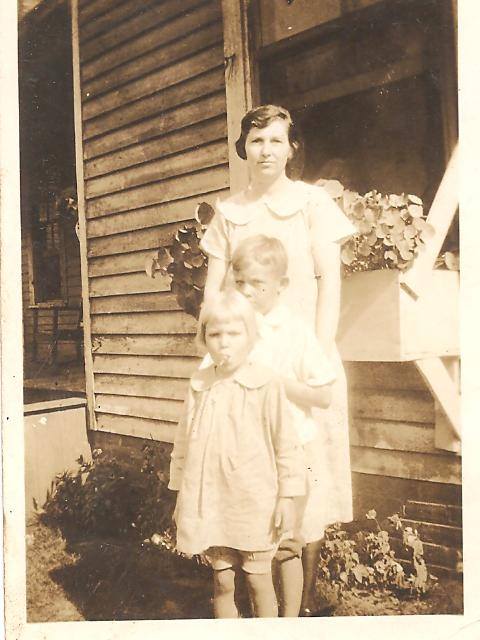
Eula Keene Pickett with Howard and AzaleaMy favorite place was my great grandmother’s house. She lived in Zero, Mississippi, just south of Meridian. This photo, courtesy of my cousin P. Grayson, is around 1925. She is with her son Howard and her daughter Azalea, my grandmother.

Grandma Pickett’s home wasn’t grand, but it was awesome. She had chickens who used to peck at my toes when I went out to collect the eggs. She had a cow that appeared as a calf each spring and disappeared each winter. I supposed we had lots of roasts because of that, but I never thought to ask what happened to the cows. I seem to remember a horse or two. I also remember five little ceramic pigs that held seasonings, salt, and pepper. They sat on the shelf above the kitchen sink. The house always smelled like sweet tea and green beans. My cousins lived next door, and I would run back and forth between playing with them and spending time with my great grandmother. Eula Ouida Keene Pickett 1899-1981 spent a lot of her time sewing quilts. I never thought much of it, but she was always in her chair, working on a new quilt with her glasses resting on the end of her nose.

IMG_20150908_180218183_HDRWhen I turned sixteen, Grandma Pickett gave me one of those quilts, just as she did for each of her six great-grandchildren. The pink one was for my birthday. The blue one was given to me later, just before she died. I was seventeen years old. I still use the quilts in our guest rooms and think of her every time I make the beds.

IMG_20150908_180223409_HDR

On This Day in 1985 William Clinton Culpepper

William Clinton CulpepperOn This Day, September 14, 1985, William Clinton Culpepper died.

Uncle Clinton, as he was known to me, was my great uncle, brother of my grandfather. He lived next door to my grandparents and I have many fond memories of his kindness and love and especially his hugs.


culpepper Sam and Annie CulpepperClinton was born in Kemper County, MS on May 11, 1900 to William Samuel Culpepper and Annie Josephine Blanks (photo). He was the eldest of nine children totaling five boys and four girls. His father was a sawyer who followed the saw mill business, gone from home for great lengths of time, so the boys were taught to run the farm when their father was away. I imagine, being the eldest child, most of the responsibility fell to Clinton.

In 1922, when Clinton was 22, he married Miss Eloise Snowden. Following the birth of their two daughters, Eloise came down with breast cancer. For a man who was used to running the family, Clinton took the illness terribly. He put a gun to his head and pulled the trigger. Eloise survived the illness and Clinton survived the gunshot wound, but he now had a severely reduced mental capacity, and their marriage couldn’t stand the strain. They divorced.

William Clinton Culpepper and Thelma Smith CulpepperIn 1945, Clinton found love for the second time and married Miss Thelma Edna Annie Smith (photo). Again disaster struck. Thelma was diagnosed with breast cancer. Again Clinton put a gun to his head. Again they both survived the disasters. Thelma took care of Clinton for the rest of her life. She died 9 May 1984. Clinton died a year later 14 Sept 1985.

dec 2012 212


They are both buried near Thelma’s parents in Mt. Pleasant Cemetery in DeKalb, Kemper County, MS.

Rest in peace, Uncle Clinton. ♥


This post is brought to you by On This Day: A Perpetual Calendar for Family Genealogy.


52 Ancestors #36 Working for a Living

52ancestors-2015

This challenge is set forth by No Story Too Small and this week’s prompt is Workin’ for a Living.

I have at least six nurses, one doctor, two cops, a seamstress, a school teacher, and a bunch of farmers in my family, but the one that comes to mind is my 2nd great grandfather, the treasurer of Lauderdale County, Mississippi 1904-1907, Thomas Gilbert Lafayette Keene.

plaque in Lauderdale Co Court House in MeridianTGL Keene was born 20 Apr 1859. It took me years to find information about his family and I had to piece it together through other family names, but the 1860 census shows TGL living with his father Green, his mother Sarah, his aunt Elizabeth (dad’s sister), his other aunt Catherine (dad’s other sister) and his seventy-year-old grandpa Gilbert Keene. TGL’s older siblings include John, Martha, Minerva Ellen, and Mary. TGL was the baby at only a year or so old.

Sometime before the 1870 census, his mom and dad died. The 1870 census shows Minerva Ellen, Mary, and TGL (now 11) living with their 50-year-old aunt Elizabeth. Not only are his parents noticeably absent, but grandpa isn’t listed either.

The 1880 census shows TGL at the age of 21 living with his eldest sister Martha and her husband Charles Pierce and their children and working as an assistant on their farm. I assume old aunt Elizabeth was dead by this time. This poor boy just keeps losing the adults in his life.

In Aug 1890, TGL married Sarah Elizabeth “Bettie” Brown, and over the next ten years, they had seven children, one being my great grandmother Eula Ouida Keene Pickett, whom I loved dearly. Too bad she never spoke to me of her family. All of TGL’s children survived him except for a boy who died as an infant.

Records show TGL worked in the county system since at least 1900, becoming the county treasurer 1904-1907, and the marble plaque above still stands in the Lauderdale County Courthouse in Meridian, Mississippi. In 1910, TGL was listed on the census as a Justice of the Peace. In 1918, he returned to his roots and is listed in the Mississippi census as a farmer. Upon his death in 1921 at the age of 62, he was a member of the Lauderdale County Board of Supervisors.

TGL Keene death certStrangely, with all of his public service, there are very few records of him, and his parents are not listed on his death certificate. Perhaps the Keene family never spoke of those who came before. Or perhaps, TGL was a private man. How could his wife and his grown children not know the names of his parents to list on the certificate? His wife outlived him by five years, and they are both buried at Oak Grove Baptist Cemetery in the Bonita Community, Lauderdale County, Mississippi.

t g l keene headstone


Saturday Snippet of Okatibbee Creek

okatibbee creek cover front JPEGOkatibbee Creek is the story of Mary Ann Rodgers Carpenter Jolly and her trials and tribulations in Mississippi during the Civil War. As her brothers and husband went off to war, a devastating typhoid epidemic swept through the county and decimated what was left of her family. Following the loss of so many loved ones, including both parents, she took in her orphaned nieces and nephews and focused on survival. When the war finally ended, she had to pick up the pieces of her shattered life and begin anew. But how?

Okatibbee Creek is a real place. The characters are real. The events are real. The book will leave you crying and cheering. It is written in first person, present tense, diary-style, allowing you to see inside of Mary Ann’s heart and experience every emotion she felt.

The following is a snippet of the scene when Mary Ann received word that her husband had been killed in the war.

**********

When I reach the bottom of the stairs, I see him. I do not recognize his face, but I recognize his clothing. He is a Confederate soldier. He is standing in the open doorway of the store with the gray, cloudy sky at his back. He is dressed in a wrinkled gray uniform with a dirty yellow cummerbund. His trousers have holes in them, with mud caked around the bottoms of his pant legs. His jacket is missing some buttons, and he looks quite thin and weary. He is wearing shoes that are covered in red Mississippi mud and probably have no soles on the bottom. He is holding his tattered hat and a piece of paper in his dirty hands.

“Hello, sir, what can I do for you?” I ask as I approach.

“Hello, ma’am.” He nods. “Are you Mrs. Carpenter?”

“Yes, I am. And who are you, may I ask?”

“Private Joseph Brown, ma’am. Captain asked me to deliver the latest casualty list to you in person.” He holds the folded piece of paper toward me and looks down at the floor, like a child in trouble for doing something wrong.

“Why are you delivering this? It usually comes by a mail carrier,” I ask as I reach for the paper. I look at the boy’s face. He nervously avoids my eyes and keeps staring at the floor.

“Why are you delivering this to me?” I repeat.

“I promised I would. I’m sorry, ma’am. Goodbye, ma’am,” he murmurs, and backs out the open door.

I look at the piece of paper in my hand for a long time, wondering if I can open it. I don’t know whose names are on this paper, but I suspect the worst, and I don’t want to read it. My eyes sting with tears as I dread a simple piece of paper. I try to unfold it, but my hands are shaking, so I stop and hold it to my chest. I take a deep breath.

Martha Jane stands behind me, not saying a word or making a sound.

“Martha Jane, will you please go upstairs and mind the children for a few minutes?” I ask her.

She nods and quietly heads up the stairs.

I walk outside across the wooden porch and down the two stone steps onto the ground. I walk across the dirt road that is now filled with puddles of red mud from the rain. I keep walking straight ahead. I walk into the overgrown field across the road. I walk with purpose, with determination, like I have somewhere important to go. I want to run. I want to run away and never come back. I keep walking.

In the middle of the field, the thunder sounds above my head. I stop and look up at the ominous clouds that are almost as threatening as the piece of paper I hold in my hand. My hands are shaking as I slowly unfold it and smooth it open. My stomach feels like it has a hole in it. My eyes fill with tears. My hands are now trembling so violently, I almost can’t read it. The name at the top is the only name I see.

“Carpenter, Rice Benjamin: killed in battle 31 December, 41st Mississippi Infantry, Co C.”

Drops of water fall onto the page, but I can’t tell if they are raindrops or teardrops. Even God Himself is crying.

*********

Rodgers, Mary Ann Rodgers Carpenter JollyOkatibbee Creek is available in paperback, Kindle, and audiobook at Amazon. CLICK HERE. It is the first of three Okatibbee Creek Series books, but they are stand-alone stories. The second is An Orphan’s Heart. The third is Elly Hays.

Okatibbee Creek was the bronze medal winner of the 2013 eLit Book Awards in literary fiction. It also received honorable mention in the 2013 Great Midwest Book Festival for regional fiction and was a nominee in the 2013 Global eBook Awards for historical fiction. It was also awarded Five-Stars at Readers’ Favorite.
Saturday Snippet – STUCKEY’S BRIDGE

Stuckey's cover_webThe Legend of Stuckey’s Bridge is based on folklore surrounding the real 1850s Stuckey’s Bridge in Lauderdale County, Mississippi. I heard the tales my whole life and was drawn to write a story about the man locals refer to as Old Man Stuckey. He cracked me up in his impatience, but he was still an evil and creepy character. Here’s a bit of the way his brain worked.

**************************************************

“Wha…what’s going on?” The woman jerked and sat up. “Who are you?”

He poked the rifle into her ribs harder. “Where’s your money?”

The woman didn’t fight back. “In…in the coffee pot in the wagon.”

“You got any jewelry?”

“What? No, we don’t…”

He spoke louder, his impatience building. “Do you have anything worth money?”

“Only the…” She looked at the rifle. “Only the gun you’re holding.”

“Don’t move,” he said as he stomped back to the wagon and climbed in to search for the coffee pot.

A few moments later, the woman unexpectedly appeared at the back of the wagon, pointing a trembling six-shooter at Thomas. “Get out!” she screamed, tears streaming down her cheeks.

Without thinking twice, he spun around and shot her point-blank in the chest with the rifle, killing her instantly.

She collapsed to the ground with a thud. He sighed and turned back to his job at hand, and soon located the coffee pot in the bottom of a box, covered with threadbare dishcloths. He took the money out of the pot and crammed the bills into his jacket pocket.

He climbed down from the back of the wagon, removed the gun from the dead woman’s hand, and said, “Too bad you didn’t stay put. Why don’t you women ever learn to do as you’re told?” He shook his head in exasperation. He shoved the six-shooter into his waistband and moved quickly through the dark woods toward to his waiting horse. He rode most of the night, and as the sun rose hot and red on the horizon, he stopped to count his take. “Fourteen measly dollars, a rifle, and a six-shooter.” He grimaced. “I’m getting too old for this.”

*************************************************

Lori Crane Books at Amazon

Book Video Trailer 

Saturday Snippet – OKATIBBEE CREEK

okatibbee creek cover front JPEGOkatibbee Creek takes place in Mississippi during the Civil War and is based on a true story. Our heroine, Mary Ann, has been left alone with the children while the men in her family are off fighting. I don’t think she’s as fragile as the Yankees assume.

*****************************************************************

I can hear Charlie screaming for me as he runs up the road. He flies in the front door of the store, shouting that the Union Army is coming down the street. Oh, no, here we go. Apparently I am now in the middle of this war. Unfortunately, on this day, I have all of the children with me: my three, William’s four, and James’s five.

I order the boys to run to the field in back and chase the hog and the horse into the woods. I order the girls to take every jug, every crock, and every jar of food from the store and the cellar, put them in the attic, barricade the door, and stay there. Then I load my rifle. I’ll be damned if I’m going to let these disgraceful, plundering Yankees ruin my life any more than they already have. And I will kill every last one of them before I let them harm the children. When the Yankees arrive, I will be more than ready for them.

I watch for them out the front window of the store. My palms are sweating. My heart is pounding out of my chest. My breathing is heavy. I can also feel my anger rising like flames from the very depths of Hell. My hands are shaking, though I don’t know if it is from fear or rage. I can hear them coming before I can see them. Their horses are clomping on the dry road and there is a jingling sound from their spurs and saddles. Sure enough, they stop right in front of my store. There are three of them on horseback dressed in their blue uniforms. They are filthy and unshaven and a bit thin and weary. I slowly emerge through the doorway onto the wooden front porch with my loaded rifle in my hands.

“What do you want?” I yell to the Yankees.

“Do you have any food here?” one of them asks, though it sounds more like a demand than a question.

“No, I don’t have any food,” I say, surprised at the sound of the strength in my own voice even though my statement is a bold lie.

“Is your husband home?” the second one asks.

“No. You already killed him,” I reply, with venom in my tone that would scare off any other man, but they don’t move.

“Is there a man of the house here?” the third one asks.

“No, there are no men here, just me.” I raise my gun slightly.

“You need to put that gun away, ma’am. We just want some food. We’re not here to hurt anyone. You have to have some kind of food in that store,” the first one says with a cocky smile on his unshaven face, as he climbs down from his horse. He removes his dusty hat and takes a couple steps toward me.

“I already told you, I don’t have any food,” I say slowly without raising my voice. I do, however, raise my gun to my shoulder and point it squarely at the man’s face. The two Yankees still on horseback put their hands on their pistols.

The man on the ground stops moving and holds up his free hand to the other two to keep them from drawing their weapons. Again, he starts to move toward me.

I cock the hammer. Again, he stops.

We seem to be at a stalemate. But what he doesn’t know is that the rage inside me will have no trouble blowing his damn head off. We stare each other directly in the eye and neither of us moves.

*************************************************

Lori Crane Books at Amazon and audiobook at Audible.

Video Trailer

On This Day in 1905

On This Day in 1905, my 2nd great grandfather, Andrew Jackson Crane, died.

Jack, as he was known, was born January 8, 1852 to Jeremiah William Crane and Sarah Frances Grimes in Clarke County, Mississippi. He had one brother and three sisters. When he was 21, on December 4, 1873, he married Martha Jane “Mattie” Mercer in Clarke County and had three children: Ella Jane, Minnie Lee, and my great grandpa, Amos Bolivar.

To understand his generation, one must remember Abraham Lincoln was elected President in 1860, Mississippi seceded from the Union in 1861, and the country went to war. election1860mapJack was an impressionable youth during this period and probably watched many of his neighbors go off to fight with the 37th Mississippi Infantry. One must wonder if he was a frightened young boy, hiding behind his mother’s hooped skirts, or a feisty lad, anxious to grow up and go too. As with most of the South, cotton was the main economy of the area, and railroads had been built during the 1850s to transport it, but in 1864, General Sherman’s troops marched through the area and destroyed nearly everything, including the railroad tracks. Once the war was over, the tracks were repaired, but the farmers no longer had slaves to work the fields and cotton harvests diminished. Somehow, through the next 40 years of reconstruction, the economy grew quickly. Homes began adding electricity, running water, and paved streets. People weren’t driving automobiles yet, as the Model T wasn’t introduced until 1908, but the wagon riders were now subjected to less dust, and the roads didn’t wash away with heavy rains. The population of nearby Meridian tripled from 1870 to 1885, doubled again by 1898, and doubled again by 1906. Jack lived through a horrific childhood of war and change, but in his later years, he witnessed amazing growth and technology. I wonder if the electricity reached his house before he died.

crane a j and wife obeliskJack passed away at the young age of 53 on August 25, 1905 and is laid to rest near his home at McGowan Chapel Cemetery in Harmony, Mississippi. His wife, Mattie, didn’t die until November 28, 1945 at the age of 93. She never remarried.

This post brought to you by On This Day available on Amazon.

Saturday Snippet – Stuckey’s Gold

Here’s a snippet from my coming release:

STUCKEY’S GOLD: THE CURSE OF LAKE JUZAN

stuckey Gold Cover smallBlurb

In 1840, Pierre Juzan was an innkeeper on the shores of Lake Juzan. His business was successful, but he wanted more. One day he got wind of a coach transporting a trunk of gold near his home, and his actions on that fateful day would spark an Indian curse that would haunt his family for four generations. Seventy years later, can Penelope Juzan break the curse, or will she suffer the same tragic fate as her forefathers?

“The Legend of Stuckey’s Bridge” and “Stuckey’s Legacy: The Legend Continues” told tales of the gold leaving a trail of destruction from Meridian, Mississippi to Jekyll Island, Georgia. In “Stuckey’s Gold: The Curse of Lake Juzan,” we may find the victims in the original tales were merely bit players in a story that is far darker and more sinister than one could imagine.

“Stuckey’s Gold: The Curse of Lake Juzan” is the final installment in the “Stuckey’s Bridge Trilogy” and is the tale of four generations struggling to escape a curse caused by greed.

********************************************************************

The sun had already reached its highest point and was slowly beginning its descent behind them. By the look of the shadows, Leon guessed it was around three o’clock. He knew the traveling distance from the county line, so he figured the coach would be arriving at any moment. As he recalculated its arrival time, he heard horse hooves on the road. The two sat silent and still on their horses and watched the man from last night trot past them. Their plan was to let him travel by unharmed as to not warn the drivers of impending danger. They would take care of him later.

Not more than a few minutes had passed before they heard the grinding of wagon wheels. Two men sat in the driver’s seat of the wooden coach. One was whistling a tune. Leon was feeling anxious and wanted to get on with it, so he decided to make the annoying whistler his first target. He pulled out his bow, armed it with an arrow, took aim through the trees, and let his arrow fly. It hit its intended target and the whistling abruptly stopped. The whistler slumped in his seat, an arrow through the left side of his neck. The horses didn’t flinch, but the man’s partner looked over at him and his jaw dropped. Leon quickly pulled out another arrow, aimed, and put it through the chest of the second man as he still stared at his partner in disbelief. The second man slumped in the seat.

From higher up on the hill, Pierre rode his horse out of the woods and fell in line behind the wagon. He gave Leon a nod. Leon nodded back. Leon tucked his bow away and emerged from the woods, trotting alongside the wagon. The wagon’s team kept pulling the wagon forward, oblivious to the fact they no longer had a driver. They began to pick up speed as the road began to slant downhill. Leon grabbed the side of the wagon and pulled himself onto it, abandoning his own horse on the road. He crawled across the canvas back and climbed over the rail, into the driver’s seat. He grabbed the whistler by the shirt and pushed him over the side. The man plopped onto the road like a sack of potatoes, and Leon felt the coach jostle and heard bones snap as the back wheel of the wagon ran over some part of the whistler’s body. He grimaced at the sound.

Behind him, Pierre grabbed Leon’s abandoned horse’s reins and continued down the hill, pulling Leon’s horse along with him. Leon glanced back and saw both horses neigh and rear up when they approached the whistler’s body unexpectedly sprawled in the middle of the road.

He turned his attention back to the coach’s horses. They were now nearing a gallop down the hill. He reached down on the floor of the wagon and fumbled around until he found the reins. He grabbed them and was about to pull back on them when the butt of a gun came down on top of his head. He saw stars as he fell to the floor of the coach. He turned his head and saw the whistler’s partner pointing a revolver at his face. As the driver clicked the hammer back, Leon kicked the gun out of the man’s hand. He heard it bounce off the edge of the wagon then discharge as it hit the ground. The sound echoed through the trees, startling the wagon’s horses who took off at full gallop.

*************************************************

STUCKEY’S GOLD is available at Amazon!