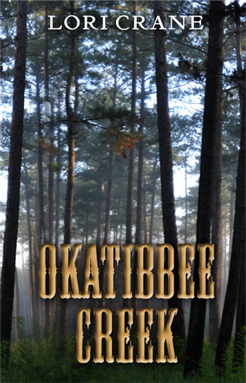
I wrote Okatibbee Creek in 2012. It has become an award-winning book and a story many people seem to treasure. I’m often asked where the story came from…so here ya go.
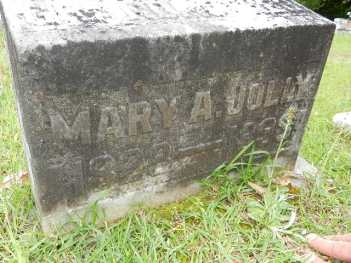
She was just a name in my family tree. Mary Ann Rodgers Carpenter Jolly. My third great grandmother. 1828-1898. I visited her grave at Bethel Cemetery in Mississippi in 2012, and my husband asked, “Now, who is this again?” I sat with him at the foot of her grave and told him her story.
I first discovered she lost her husband, Rice Carpenter, in the Civil War in 1862. How sad to lose the one you love, but hey, it’s war, people die. After he died, she remarried in 1864.
I looked at the 1870 census and found she married William Jolly and was living with his children, her children, and three children they had together. It was a house-full! But at least their three children were proof they must have liked each other, right? That’s good. I was interested in where William came from, so I traced him back and looked at his 1860 census. In 1860, he was living with his wife Harriet, their four children, and a woman named Nancy Carpenter who was 69 years of age.
Nancy Carpenter? The only Nancy Carpenter I know is Rice’s mother. Why was Mary Ann’s mother-in-law living with her future husband in 1860?? Were they neighbors? Was Nancy the cleaning lady? I clicked on Nancy Carpenter and saw her relationship to the “head of house” was listed as “mother-in-law.” She was William’s mother-in-law? What?? She was Harriet’s mother?
So, I went back and looked at Rice’s family, and sure enough, his sister Harriet was married to William. Rice died 31 Dec 1862 and Harriet died a month later of typhoid on 30 Jan 1863. Their spouses, Mary Ann and William, brother-in-law/sister-in-law, married in 1864. Well of course they did. They had known each other for many years, hadn’t they?
The more I looked at the Rodgers and Carpenter families, the more I was amazed by the sheer number of family members they lost to war and typhoid. At the time of my research, I remember counting SEVENTEEN, but I’m sure there were many more I missed. I couldn’t wrap my head around that kind of heartache and quickly became impressed with Mary Ann’s strength. How would you react if you lost two or three family members this year? You would probably need Prozac. How would you respond if you lost a dozen? I wouldn’t even be able to get out of bed. Seventeen in one year? I can’t even fathom that.
 We all come from these strong women. We are the living proof of their strength. If the boat sank, the story would be over. But it didn’t, and we know that because we are here. We are the survivors. I dug deep down in my heart and soul and decided to tell her story, a story she would be proud of. I wanted her to know that she didn’t endure all of that heartache in vain. I am here. I am her legacy. Her story has been told to make us see the strength in our own hearts. We are the products of strength, fortitude, and integrity, as well as tears, heartache, and pain. We are the children our grandmothers fought so hard for, and I want Mary Ann to be as proud of me as I am of her.
Okatibbee Creek is available on Kindle at Amazon for only $0.99 March 4-8. You may also want to pick up a box of Kleenex.



 Grandpa Grimes is laid to rest in Union Spring Primitive Baptist Church Cemetery in Brundidge, Pike County, Alabama, where the 2010 census says the population is just over 2000 people, 33% living below the poverty line. I can imagine how small and poor it was in the 1800s when Grandpa Grimes lived there.
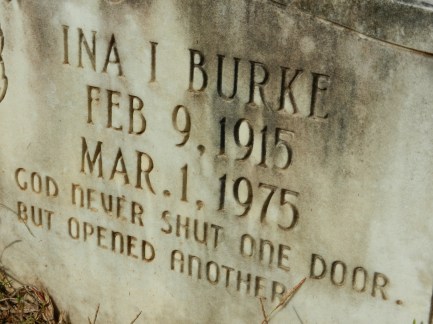
 My grandmother, Ina Inez Burke Culpepper, was a warm and wonderful woman. We always celebrated her birthday on February 9, her death certificate lists her birth as February 9, her tombstone is chiseled February 9. Imagine my surprise when I received her birth certificate stating she was born at 10:00 pm on February 8!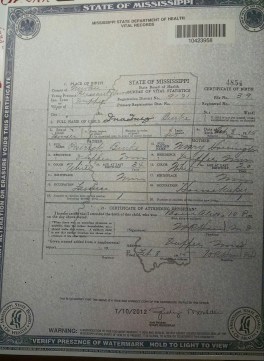




 Castillo San Felipe del Morro, built in 1539, sits guard over San Juan Bay, and on the other side, Castillo San Cristobal guards the land.
 The old city with its cobblestone streets seems to have a lot of Spanish influences, but I also felt a bit of Italy in the architecture (Naples, in particular.) This was all until I got to the food. Sorullitos won my heart and made me want to stay. Sorullitos are a cheese-filled deep-fried sweet corn bread, and I could have eaten a dozen of them. They reminded me of a South American treat.
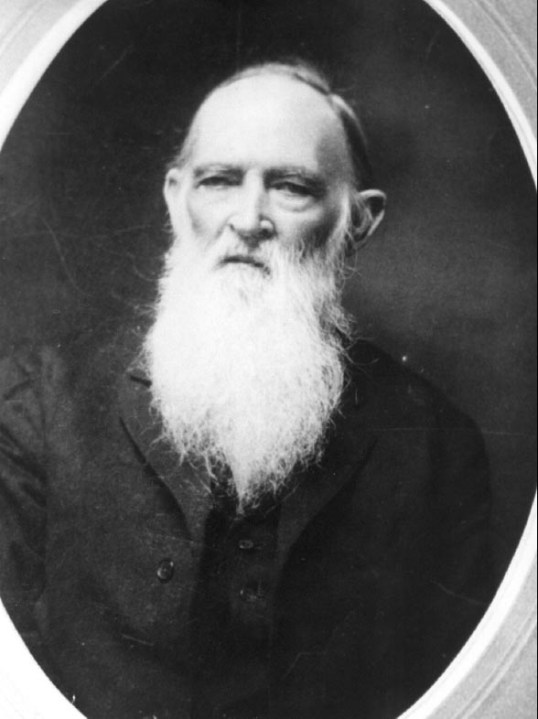
 1814 – When Hays was 19, he and his brother, Absolom, signed up for the Mississippi Militia and were assigned to Captain Evan Austill’s company of volunteers in Major Sam Dale’s Battalion to fight against the hostile Creek Indians. Hays remained in the Militia until October 1818, but was only called out once for a two-month tour. Today, I am a member of the
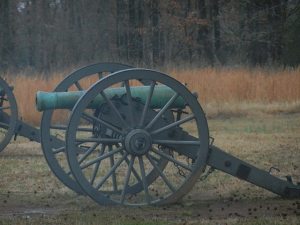 1862 – When the Civil War began, Hays sent four of his sons to fight. Three never returned. Also, during the winter of that year, a typhoid epidemic hit his family, killing the only son who didn’t go off to war. Fortunately, Hays was not around to witness the deaths of his sons as he was the first in the family to died of typhoid that winter in December of 1862. He was 66 years old. His wife died shortly after him in March of 1863, also of typhoid.









 Lori Crane