![A2Z-BADGE_[2016]](https://loricrane.com/wp-content/uploads/2016/04/a2z-badge_2016.jpg?w=170&h=170) April 2016 A to Z Challenge – I’m blogging about history.
April 2016 A to Z Challenge – I’m blogging about history.
W is for Whitehall Palace or How Many Bathrooms Does One Need?
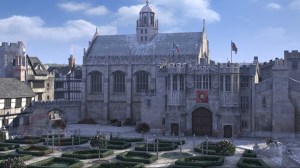 In the 11th and 12th centuries, the center of the action in London was Westminster Palace. Since 1049, the king had lived there, and subsequently, government held their operations there. As you can imagine, the surrounding neighborhood became too expensive for any normal person to afford. So, in 1240, the Archbishop of York bought a more affordable piece of land a little further away and called it York Place. He built a pretty nice house on the 23-acre property. So much so, that King Edward I stayed there while Westminster was being rebuilt to accommodate his large entourage. It must have been a large and splendid house. The photo is a depiction of the property from the show Tutors.
Years later in the late 1400s, Cardinal Wolsey owned the property (confiscated and passed down through a couple wars), and he expanded and expanded and expanded it. For some reason, this guy wanted bigger and bigger. In 1530, Wolsey got on the wrong side of the king, and King Henry VIII removed Wolsey from power and confiscated his house. It is suspected that Henry’s girlfriend Anne Boleyn wanted the house for herself and had something to do with Wolsey’s downfall. Neither here nor there, Henry married Anne Boleyn in 1533, and the two lovebirds moved into the house. Due to the building stones being white, they renamed it Whitehall.
 Henry expanded the house even larger than York and Wolsey had done, adding a bowling green, indoor tennis courts, and a full tiltyard for jousting. After
 dumping beheading Anne, Henry married Jane Seymour in the house in 1536. Masons spent the next few years removing Anne’s monogram from all the woodwork and stonework as embroiderers replaced it in the needlework. A decade and much drama later, Henry died within the walls of the great estate in January of 1547. By then, the palace had grown to 1500 rooms, overtaking the size of the Vatican.
Following Henry’s death, the palace passed from his children Mary to Elizabeth, to their cousin James, who in 1622 constructed the Banqueting House, and finally to Charles I who was beheaded on the lawn of the Banqueting House by Parliament during the English civil war, and to his son Charles II, who also died in the house, but of a stroke.
This brings us to 1691. On April 10, a fire broke out and destroyed much of the living quarters and damaged much of the rest. In 1698, a second fire took what remained. Sadly, it is said that Michelangelo’s Cupid, a mural of Henry VIII, and a marble sculpture of Charles I was also lost in the fire.
The only thing left today is the Banqueting House.
![A2Z-BADGE_[2016]](https://loricrane.com/wp-content/uploads/2016/04/a2z-badge_2016.jpg?w=169&h=169) April 2016 A to Z Challenge – I’m writing about history.
April 2016 A to Z Challenge – I’m writing about history. As with most holidays, Valentine’s Day is nested in pagan roots. February 15 was the pagan festival of Lupercalia. To begin the festival, members of the Luperci (an order of Roman priests) would gather at a sacred cave and sacrifice a goat which represented fertility. They would then cut the goat’s hide into strips and dip the strips in blood. (Romantic so far, no?) They would then march through the town, gently slapping women with the goat hide. Instead of beating the priests to death with rocks, women actually welcomed the slap of the hide, believing it would make them more fertile in the coming year.
![A2Z-BADGE_[2016]](https://loricrane.com/wp-content/uploads/2016/04/a2z-badge_2016.jpg?w=191&h=191) April A to Z Challenge – I’m writing about history.
April A to Z Challenge – I’m writing about history. The UDC, without the name, began before the civil war as quilting circles and hospital associations that aided the soldiers throughout the war. After the war, they continued their work in cemeteries, veteran’s homes, and other such organizations.
 I joined the UDC in Meridian, MS under the service of my great, great grandfather, Joel Bluett Culpepper (photo). He is only one of eight (that I’m aware of) of my grandfathers who served. The others were 2nd great William Henry Blanks III, 3rd great Rice Benjamin Carpenter, 3rd great Rev. Joseph M Culpepper, 3rd great William Thomas Fisher, 3rd great William Lafayette Brown Jr, 3rd great George Washington Spencer, 3rd great James C Howington. I am very proud of the Confederate blood that runs through my veins and always will be.
![A2Z-BADGE_[2016]](https://loricrane.com/wp-content/uploads/2016/04/a2z-badge_2016.jpg?w=196&h=196) April 2016 A to Z Challenge – I’m blogging about history.
April 2016 A to Z Challenge – I’m blogging about history.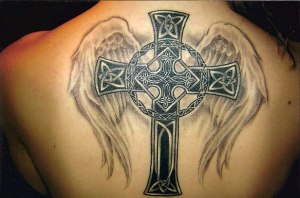 Tattooing is widely practiced today, and some folks say it’s desecrating God’s work, but this blog is not an argument about their merit or lack of. It is about the history of tattoos. When and where did they start…and why?
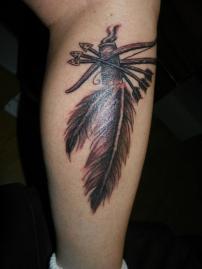
 No matter what people say about tattoos, I find them fascinating. I have two tattoos (below) and hope to get a third someday. Mine are in commemoration of my ancestors, the first being the Culpepper family crest on my back honoring my mother’s family, and the second being the Choctaw Indian crest on my leg honoring my great, great grandmother and my Indian ancestors whose way of life was destroyed when the Culpepper part of the family moved to America. I also have Irish ancestors and hope someday to get a claddagh to honor them.
![A2Z-BADGE_[2016]](https://loricrane.com/wp-content/uploads/2016/04/a2z-badge_2016.jpg?w=138&h=138) April 2016 A to Z Challenge – I’m writing about history.
April 2016 A to Z Challenge – I’m writing about history. Royals have no surnames. That’s right. Queen Elizabeth is Her Royal Highness Queen Elizabeth. Period. Her family’s name is Windsor, but she doesn’t use it. She doesn’t have to.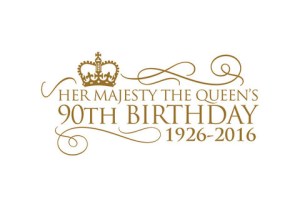
![A2Z-BADGE_[2016]](https://loricrane.com/wp-content/uploads/2016/04/a2z-badge_2016.jpg?w=202&h=202) April 2016 A to Z Challenge – I’m blogging about history.
April 2016 A to Z Challenge – I’m blogging about history.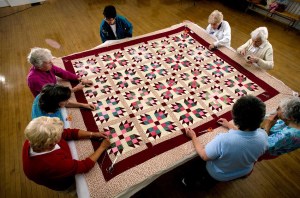
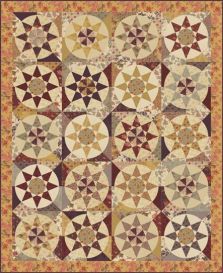 I love quilting, though I admit, I’m not very good at it. My grandmother was a professional seamstress, but I didn’t inherit that ‘fine needlework’ gene. Regardless, I enjoy it, and I’m currently working on the quilt pictured here. It is a
 For people like me who live in genealogy, world history, and ancestry, time is everything. Recorded dates and world events bring my research into focus. What if I’m wrong? What if the recorded dates are not the real dates?
 In 1582, Pope Gregory XIII introduced the Gregorian calendar. He designed the passage of time from the previously used Julian calendar. The Julian calendar was calculated by the moon’s cycles, and it is said that it ran ten minutes too slow every year. Pope Gregory’s mathematicians and astrologers figured that since the time the Julian calendar began in 45 BC, the world had lost roughly ten days. He decided the Julian calendar would end Oct 4, 1582 and the Gregorian calendar would begin Oct 15, 1582. That should fix everything.
 The one thing I find interesting is that Romanesque architecture was big in Europe in the tenth century, like this photo of Piza Cathedral in Italy. Why would that be so when the Romans were long gone by the fifth century? Unless, of course, they weren’t. Dumb calendar.
![A2Z-BADGE_[2016]](https://loricrane.com/wp-content/uploads/2016/04/a2z-badge_2016.jpg?w=188&h=188) April 2016 A to Z Challenge – I’m writing about history.
April 2016 A to Z Challenge – I’m writing about history.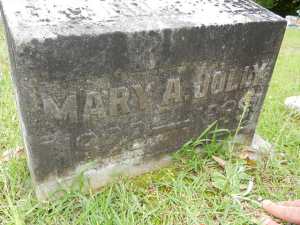
 This is our heritage. These are the strong women we come from. We are the living proof of their strength. We are the survivors. I dug deep down in my heart and soul to tell her story, a story she would be proud of. I wanted her to know that she didn’t endure all of that heartache in vain. I am here. I am her legacy. Her story has been written down to help us realize our own strength. We are the products of our ancestors fortitude and integrity. We are the children our grandmothers fought so hard for, and I want Mary Ann to be as proud of me as I am of her.
![A2Z-BADGE_[2016]](https://loricrane.com/wp-content/uploads/2016/04/a2z-badge_2016.jpg?w=182&h=182) April 2016 A to Z Challenge – I’m blogging about history.
April 2016 A to Z Challenge – I’m blogging about history.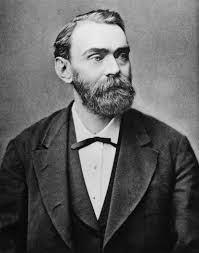 Alfred Nobel was born in 1833 and was a brilliant and notable chemist and engineer. In 1867, he invented dynamite which was used not only to help with construction, but mainly to create weapons. He instantly became a multi-millionaire.
 Mount Vernon was the home of our first president, George Washington. It sits in Fairfax County, Virginia on the banks of the Potomac River.
 In 1758, George began renovations on the house, raising it to two and a half stories. In the 1770s, just before the Revolution, he added even more, the final expansion rendering a twenty-one-room home with an area of 11,028 square feet! A majority of the work was completed by slaves. You can tell he wanted the home to be symmetrical, but if you look at the center door, you will see how far off it is. That probably drove George nuts every time he pulled up in front of the house.
 Lori Crane