52 Ancestors #18 James Rodgers Sr.

52ancestors-2015

This challenge is set forth by No Story Too Small,

and this week’s challenge is “Where there’s a will.”

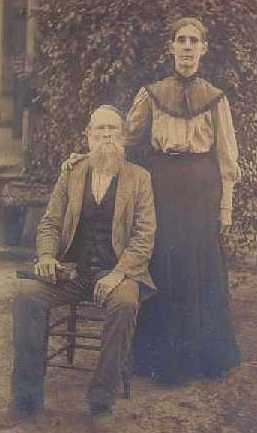
I find it interesting that in the case of wills left by men, they always contain land, money, and sometimes slaves. When we see a will left by a woman, it contains things more intimate in nature – books, sheets, dishes. The following are wills left by my 6th great-grandparents, James Rodgers Sr (1734 MA – 1794 TN) and his wife, Margaret Woods Rodgers (1746 VA – 1811 TN). I highlighted the items so you don’t have to read the whole things. 🙂

last-will-and-testament

Will of James Rodgers

In the Name of God, Amen. I, James Rodgers Junr. of Green County and Western Territory south of the Ohio, being very sick and weak in body but of perfect mind and memory, thanks be given unto God, calling unto mind the mortality of my body and knowing that it is appointed for all men once to die, do make and ordain this my last Will and Testament. That is to say, principally, and first of all, I give and recommend my soul into the hand of Almighty God that gave it, and my body I recommend to the Earth, to be buried in a decent Christian manner at the discretion of my Executors. And as touching such wordly estate wherewith it hath pleased God in bless me in this life, I give and dispose of the same in the following manner, Viz, after defraying funeral expenses and discharging all just debts, I will bequeath unto my dearly beloved wife Margaret, a Negro girl named Esther, one sorrel mare seven or eight years old with saddle and bridle, two cows, one bed and beddings, wit the third of all my movable property, to her, her heirs and assignees forever. I likewise will that she shall have the use of the Plantation I now live on during her widowhood, for the support of her and her children, with all necessary farming utensils. 


Item. I likewise will and bequeath to my son Joseph one hundred and fifty acres of land to be cut of the upper end of my Plantation with five pounds of Virginia currency to be paid in cash.

Item. I will and bequeath to my son John, and my son Samuel, the plantation I now live on in the following manner, and my son John to have upper end joining my son Joseph, and my son Samuel the lower end, to be divided equally betwixt them in quantity and quality, not withstanding should my son John, or my son Samuel, or either of them, come of age during my wife’s widowhood, that they then shall have liberty of improving the woodland belonging to their part as they think proper.

Item. I will and bequeath to my son James and Thomas, the sum of fifty pounds Virginia currency each, to be paid by my sons John and Samuel two years after full possession of their land each paying an equal part.

Item. I will and bequeath to my daughter Sarah one sorrel mare three or four years old with saddle and bridle.

Item. I will and bequeath to my daughter Margaret the sum of fifteen pounds Virginia currency to purchase a horse at her discretion with her saddle and bridle.

Item. I will and bequeath to my daughter Jean, one Negro girl named Hannah, to be her property during said Jean’s life and at her death my executors to sell said Negro and after paying the person who had the care of her during her life, what they think sufficient for their trouble, that then the remainder to be divided equally amongst my Legatees. I likewise constitute and appoint my loving wife Margaret my executrix and my Trusty Friends David Fleming and Samuel Froesure my executors to this my Last Will and Testament and I do hereby utterly disallow, revoke and dismal all and every other former Testaments, Wills, Legacies, Bequeasts and Executors by me, in any ways before named, willed and bequeathed; Ratifying and confirming this and no other to be my Last Will and Testament in witness whereof I have herein to set my hand and seal this fifth day of July, in this year of our Lord, one thousand seven hundred and ninety four.

Will of Margaret Rodgers

Margaret Rodgers dec’d (Min. 6 P. 155)
Tuesday 29th January 1811. This execution of the last will and testament of Margaret Rodgers dec’d was duly proven by the oath of Jacob Kilo and Margaret Campbell, late Margaret Rodgers Jr., their subscribing witnesses, and ordered to be recorded and is as follows. In the name of God Amen.

I Margaret Rodgers Senior of the County of Green and State of Tennessee, being weak and indisposed in body, but of sound, mind and judgemen, do make and ordain this to be my last will and testament. First I will that my funeral expenses be paid by me executors hereafter named and that all lawful debts be paid. Likewise I will and bequeath to my three daughter (viz) Sarah, Margaret, and Jane all four sheets and table linen, to be equally divided between them. Likewise I will and bequeath to my two daughters Sarah and Margaret, my two dishes and puter plates to be equally divided between them. Likewise, I will and bequeath to my daughter Margaret on three year old heifer spotted red and white, and one young sow. Likewise, I will and bequeath to my daughter Jane one new twilled feather bed, two good sheets, three good blankets, one rug, one red, blue and white coverlid, one calico and a linen quilt, one bolster, two pillows with proper cases and bedstead. And likewise all my new seven hundred linen. Also one hundred and fifty dollars to be let to intrust for her use, and if she the said Jane should decease before said money is for her lawful maintenance, then and in that case the money all or in part (as the case may be) shall be divided equally amongst the rest of my heirs. Also one good hog one cow and calf, one set of bed hanglings. It is likewise my earnest request that my daughter, Sarah Kelly, shall keep and nurse my said daughter Jane and it is my will that said Sarah get all the said Jane’s clothes, bed and furniture at her decease. I likewise bequeath to my daughter Margaret, one blue and white coverlid. Likewise I wil and bequeath my fowls of all kinds to my son John Rodgers’ wife, Jane, my daughters Sarah and Margaret. Likewise I will and bequeath one margin Bible to my son James Rodgers. Likewise I give to my daughter Margaret one pocket Bible. Likewise I will and bequeath to my sons Thomas John and Samuel Rodgers and likewise my daughter Sarah each one school Bible. The rest of my estate to be sold and divided equally amongst all my heirs. Likewise or ordain and appoint my son John Rodgers and William Kelly executors of this my last will and testament. Witness my hand and seal this first day of September one thousand eight hundred and nine. 
Signed and acknowledged in presence of
Jacob (his mark) Kilo

Margaret (her mark) Rodgers 

Coddicil to this will. Whereas my son Samuel Rodgers hath some time past purchased a horse from me for which he was to pay me the sum of twenty pounds Virginia currency and have never paid the same, this is therefore to will that the said twenty pounds be added to the dividend of my estate and be reducted out of his part.


52 Ancestors #15 Colepeper/Culpeper/Culpepper

52ancestors-2015

This challenge is set forth by No Story Too Small,

and this week’s challenge is “How do you spell that?”

choctawMost of my family comes from England and Ireland, so the names are very pronounceable. I have a maternal Choctaw Indian great-grandmother in my history, but in 1801, the Treat of Fort Adams was signed, giving 2.6 million acre of Choctaw land in Mississippi to the U.S. Government. By 1830 and the signing of the Treaty of Dancing Rabbit Creek, a total of 23 million acres had been ceded to the government. The Indians were relocated to Oklahoma, but the ones who didn’t go assimilated into the white European culture and gave up their Indian names. I’m sure her father or grandfather had an unusual name, but I will never find out what it was as the Choctaw people didn’t keep good records like the Cherokees did.

So, that leaves me with two choices for this blog. 1) A host of men in my family who have the name Bluett/Bluitt in their lines, or 2) the explanation for Colepeper/Culpeper/Culpepper.

I think I’ll go with #2.

The name began as “de Culpeper.” The French translation of “de” means “of” referring to a place, and “cul” means “the bottom.” Hopefully, it means the bottom of a hill or a road, and not the bottom of your rear end. 🙂 One of the first family manors sat at the dead end of Pepenbury, and we assume Peper is a slang/shortened translation. Eventually, the “de” fell out of fashion, and the name became simply “Culpeper.”

There is some suggestion that the name had something to do with peppers, either farming them or selling them, but the first known Culpeper in 1170 held an office, so he was probably Norman as the Normans were in control politically at that time. This leads us to believe the name had nothing to do with any Anglo-Saxon practice of selling vegetables.

From 1400s to 1600s, many members of the family used “Colepeper” interchangeably with “Culpeper” though I have no idea why, except for the fact that spelling wasn’t standard.

There are a few ancestors who traveled to America and left their mark:

80516215Mid 1600s – My 10th great-grandpa, John Culpeper, and his sons and nephews ran a merchant route between England, Virginia, and Barbados, and there is an island off the coast of Barbados called “Culpepper Island” which is pretty much an uninhabited rock.

Late 1600s – Lord Thomas Culpeper 2nd baron of Thoresway (the above guy’s cousin) was a governor of colonial Virginia, and there is a town and a county named after him—Culpeper, Virginia and Culpeper County, Virginia. That’s better.

VA_25402

52 Ancestors #14 Hays Rodgers

52ancestors-2015

This challenge is set forth by No Story Too Small,

and this week’s theme is “Favorite Photo.”

No, doubt about it, this is the one.

Rodgers Hays Sr

Hays Rodgers Sr was my 4th great grandfather. He was born in Greene Co, Tennessee in February of 1793 to James Rodgers and Elizabeth “Elly” Hays. He was the eldest son and had at least ten siblings. Just before the War of 1812 began, his family moved from Tennessee to the Mississippi Territory, today known as Clarke Co, Alabama. Alabama didn’t become as state until 1819.

military record 11814 – When Hays was 19, he and his brother, Absolom, signed up for the Mississippi Militia and were assigned to Captain Evan Austill’s company of volunteers in Major Sam Dale’s Battalion to fight against the hostile Creek Indians. Hays remained in the Militia until October 1818, but was only called out once for a two-month tour. Today, I am a member of the United States Daughters of 1812 under his patriotism.

On December 11, 1816, he married Marey Ann Scott, who was from Georgia.

In 1818, following the end of his military service, Hays, Marey, and first-born Lewis, moved to Copiah Co, MS (what later became Simpson, MS). He started buying land and farming. Over the next two decades, the couple had a total of 14 children.

In 1834, the US Government began selling off land it had obtained from the Choctaw Indians in the 1830 signing of Dancing Rabbit Creek. Hays went to Pine Springs in Lauderdale County before the land was surveyed and built a small cabin overlooking Rogers Creek bottom so he could claim the land the moment it went up for sale. He was a squatter for all purposes.

September 26, 1836 – A deed was recorded for 80 acres in Pine Springs which he bought from government.

October 1836 – He bought 160 acres next to his 80 acres from John Calhoun. Mr. Calhoun moved to the Martin Community to open a leather tannery.

1839 – He bought 80 acres from Alex McMullen and 80 acres from Jeremiah Howell. He also began buying slaves and producing cotton.

1856 – He was granted public land adjoining his plantation from the US Gov’t in payment for his military service.

MS Cemetery 0761857 – He built the “Ole Stennis House” (photo) at the age of 61.

In 1860, the U.S. Census states Hays owned 13 slaves, a 640 acre (square mile) plantation, 2 horses, 3 mules, 10 cows, 4 oxen, 16 sheep, 60 swine, and $600 in farming instruments, for a total worth of $8400. A person’s total worth did not include the price of the slaves they owned, and most of his wealth was tied up in slaves that were worth more than $1000 each – that’s probably a million bucks in today’s money.

1862 – When the Civil War began, Hays sent four of his sons to fight. Three never returned. Also, during the winter of that year, a typhoid epidemic hit his family, killing the only son who didn’t go to war. Fortunately, Hays was not around to witness the deaths of his sons as he was the first in the family to died of typhoid that winter in December of 1862. He was 66 years old. His wife died shortly after him in March of 1863, also of typhoid.

Upon his death in December 1862, he owned 690 acres of land and stock in the Mobile and Ohio Railroad, which sat unattended until the end of the war, and then for more time as they awaited the boys return at the close of the war in 1865. The boys didn’t return. Finally, the property went to probate in 1869 and was sold at public auction on the steps of the Meridian Courthouse to Major Adam T Stennis, hence the name “Ole Stennis House.” The home remained in the Stennis family for 100 years until 1970 when it was bought by the Hover family.

Interesting note: The only son to return from the war was Hays Jr, albeit with an injured, useless arm and a wilted spirit. Since he no longer had family in Mississippi, Hays Jr. sold his farm and moved to Alabama to be near his wife’s family. He sold his farm to a man named Tom Stennis. Tom Stennis was a former slave to Major Adam T Stennis.

52 Ancestors #12 William Henry Blanks (plural)

52ancestors-2015This ancestry challenge is set forth by No Story Too Small and the theme for this week is “Same.”

 That being said, may I present…

My great great grandfather William Henry Blanks III

blanks william henry III

William III was the son of William Henry Blanks II and Nancy Narcissus Young, and the grandson of William Henry Blanks I and Jane Hill. Seeing a pattern here?

The Blanks family’s American roots date back prior to 1660 Virginia. I’m not sure where they immigrated from. William the elder was born in Virginia in 1755. He was a captain in the NC militia during the American Revolution. He died in Greene Co, Georgia in 1823 at the age of 68. Greene County is in the middle of the northern part of the state, and in 1800, was on the border of Creek Indian land. The War of 1812 saw a lot of fighting between the Americans and the Creek. What in the world possessed these people to live on such a wild frontier?

William II was born in Georgia in 1800 and was a young boy during the War of 1812. He died in Mississippi in 1859.

William III was also born in Georgia in 1846 and shows up in the Lauderdale Co, MS census in 1850 at the age of four.  Note: In 1830, the Treaty of Dancing Rabbit Creek was signed, giving the Choctaw and Creek Indian land, now Alabama and Mississippi, to the Americans. This is why we see such a migration to the area between 1830 and 1850. Land was cheap and the gov’t wanted to get it settled. Anyway, William III was the youngest of seven children and was only 11 when his mother died and 13 when his father died, leaving everything to him and his 16-year-old sister Nancy. I can only imagine how emotionally damaging those deaths were for him at that young age.

MISS0066D_Confederate-Pension-applications-Blake-Bolls-1900-1932_00202William III served the Confederacy in the Civil War under the command of John Cochran in Lauderdale County, MS. He enlisted in 1862 and was still in active service at the close of the war in 1865. On Oct 31, 1867, he married Martha Lettie “Mattie” Carpenter in Lauderdale Co, MS. He was 21. She was 19. Mattie’s father was killed in the war in 1862 when she was only 14, so she knew all too well how hard it was to lose a parent. I assume that was one of the deep connections William and Mattie shared. William and Mattie had 6 girls: Ida, Ada, Annie, Sarah, Ora, and Velma, and I heard there was a boy, John, who died as a small child, though I have no paper trail of him, only verbal history.


blanks william henry blanks III death certWilliam III died in 1922 at the age of 74 of senility and chronic bronchitis.

Mattie died at the age of 84 in 1933 of cerebral hemorrhage.


They are laid to rest at Hickory Grove Cemetery in Laurel, Jones County, MS.

blanks wm III and mattie carpenter headstones

52 Ancestors #11 Thomas Weldon

52ancestors-2015

This challenge is set forth by No Story Too Small, and this week’s theme is “Luck of the Irish.”

The early 1500s in Ireland was characterized as “His Majesty’s Irish enemies.” The Irish were repressed by England, yet they managed to maintain their own language, social system, customs, and laws. Undoubtedly, life was hard five hundred years ago as many Irish lived off the land, mostly as shepherds, but if you love the land as much as I do, you might find this the luckiest of lifestyles.

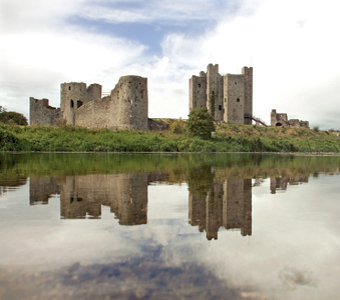
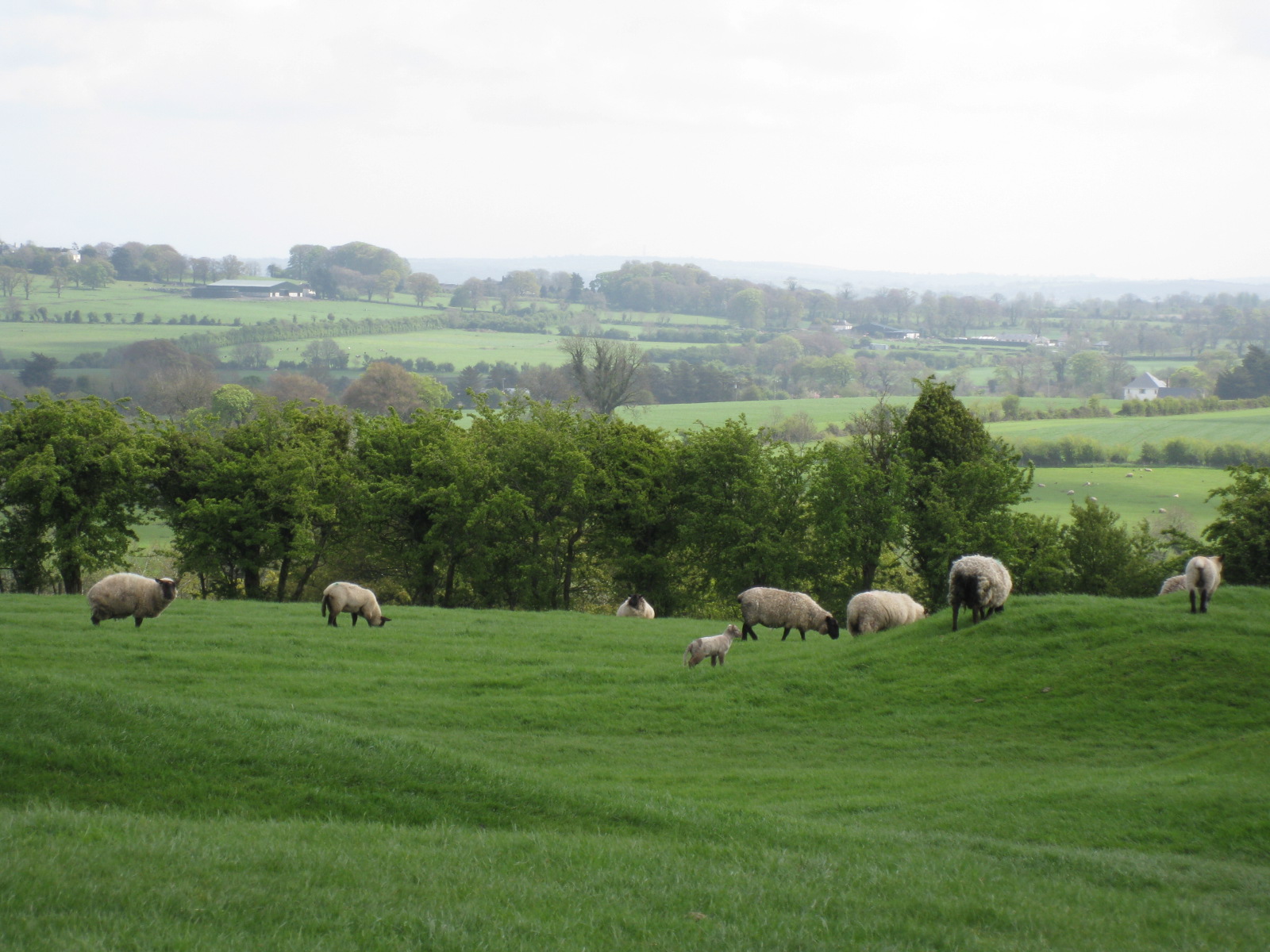
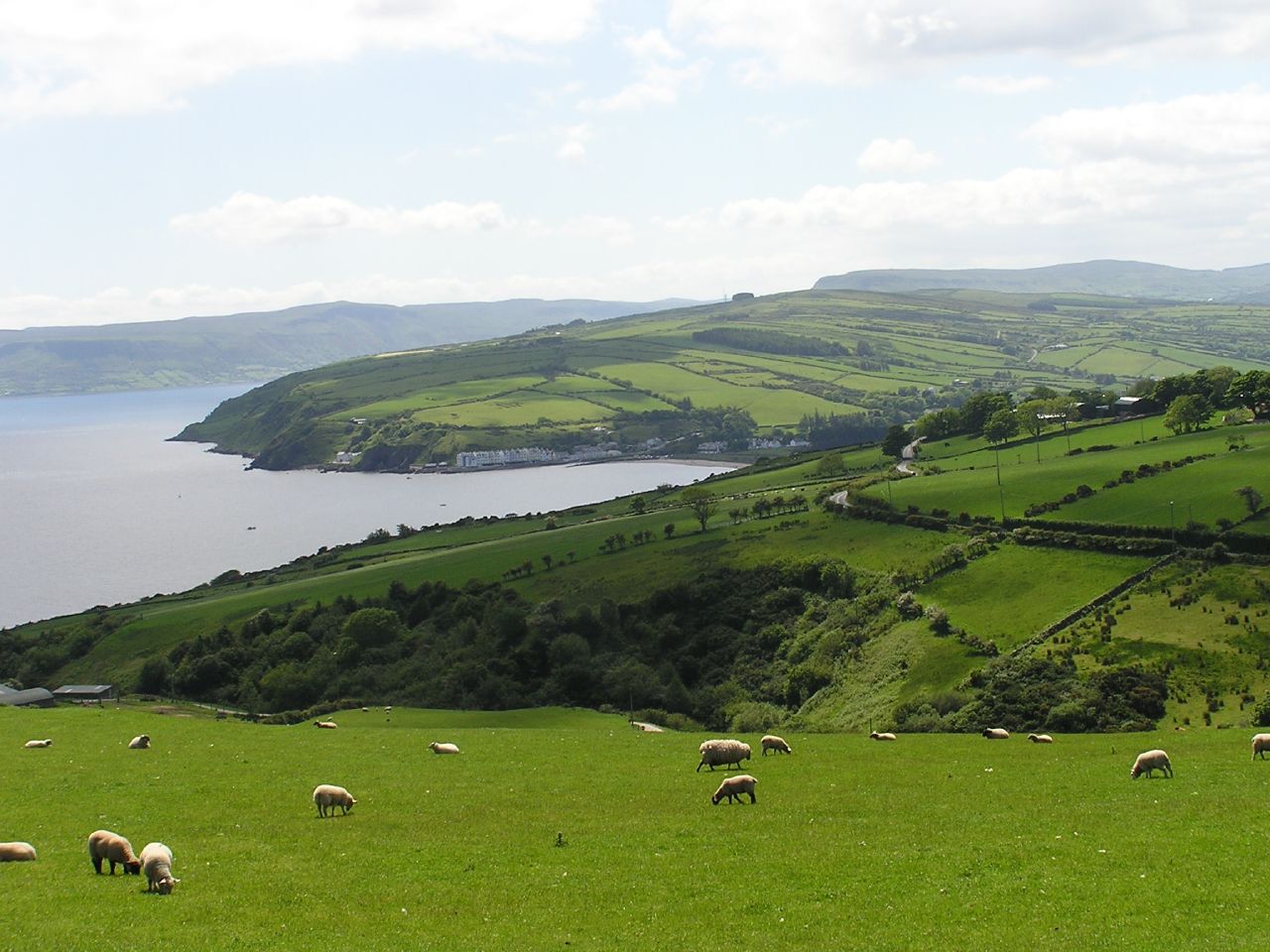
Most of my ancestors hail from England, but there are a few from Ireland. One is my 14th great grandfather, Thomas Weldon, or Veldon as it was originally known. My 4th great grandpa, Jeremiah Crane, married Mary Polly Weldon who was born in Georgia. Her family came from Delaware, via Massachusetts in the early 1600s, and England in the 1500s. The Veldons originally came to Ireland with the Anglo-Normans in the 12th century and settled in “The Pale” which includes the County of Meath, just north of Dublin. Thomas was born in 1480 in Meath and died there at the age of 73 in 1553. I think that’s a considerable age considering the times. Even though his life was undeniably hard, imagine the sites, smells, and sounds he was surrounded by every single day of his life. Below are a few photos of the area as it looks today. I say Thomas Weldon was lucky indeed. 

Media,33747,enimg_0963OLYMPUS DIGITAL CAMERA


52 Ancestors #10 Thomas Culpepper

52ancestors-2015

This challenge is set forth by No Story Too Small, and this week’s theme is “Stormy Weather.”

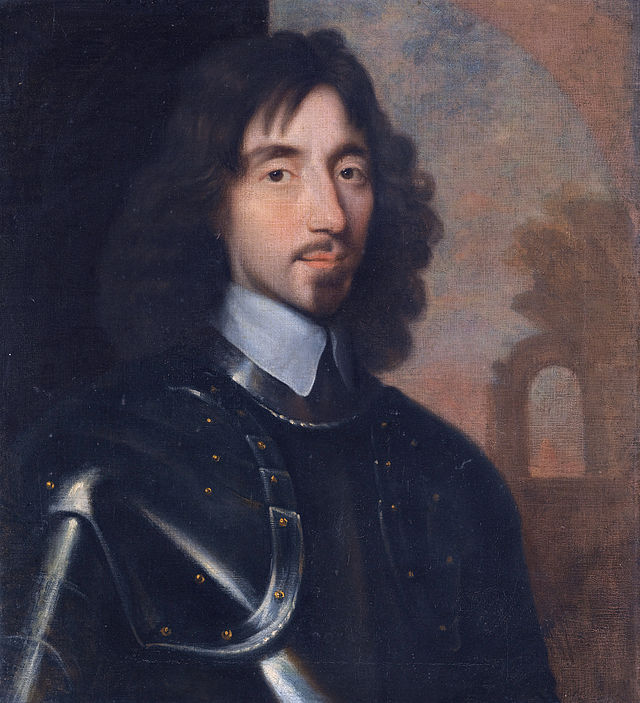
No one weathered storms like my 10th great uncle Thomas Culpepper, and he was literally caught in “Stormy Weather” during one of his greatest moment.

Thomas was the eldest son of John Culpepper of Feckenham and his wife Ursula Woodcock. He was followed by two sisters, Cicely and Frances, and a brother, John, whom we refer to as John Culpepper the Merchant.

Thomas was born into a life of privilege as his family held vast estates and had worked in the king’s service for generations. When Thomas was born in 1602 in Kent, England, the Culpepper family boasted sixteen living barons and earls.

GreenwayCourtAt the age of nineteen, Thomas entered Middle Temple which was a law school. He was soon called to the bar and became a successful lawyer. He married Katherine St. Leger, moved into the family home of Greenway Court (photo) in Kent, and they started their family.

After King James I died in 1625, King Charles took over, and Thomas was promoted to a colonel in the king’s army. This was one hundred years after the Tudor reign where people had been beheaded for their religious beliefs, but King Charles was making everyone nervous with his religious antics. He married a Catholic princess, appointed a Catholic supporter to the office of archbishop of Canterbury, and demanded the Scots begin using the Catholic Book of Prayer. The people of Scotland, Ireland, and England refused to go back to the age of being charged with heresy. They began meeting behind closed doors and discussing what to do about this tyrannical king.

Parliament rallied an army against the king and in 1642 the English Civil War began. As with the Culpeppers before him, Thomas was a royalist and took the side of the king. Thomas and his friend George Goring, the earl of Norwich, fought bravely against Parliament’s army.

General_Thomas_Fairfax_(1612-1671In May 1648, Thomas and George raised 10,000 men around Kent to fight against Parliament. This was a significant number considering by this time Parliament’s army had split into two factions. The larger was holding down an uprising in South Wales, leaving the smaller group of 6,000 men to defend all of London and its surrounding towns. The royalists were holding the town of Maidstone (Thomas’s hometown located south of London) with a force of 2,000 men. Under the leadership of General Thomas Fairfax (photo), 4,000 parliamentarians marched south to Maidstone to recapture it.

culpepper book 1 cover ideaOn June 1, 1648, in the midst of a terrible storm, Fairfax attacked Maidstone. Fairfax’s men took over a bridge and crossed the Medway River and effectively divided Thomas’s men into two groups. Thomas’s diminished army fought in the heavy rains throughout the night and were backed up by Fairfax’s men, street by street, inch by inch. They moved up Weeks Street and finally retreated into St. Faith’s Churchyard where they fought until well after midnight through the raging thunderstorm. At the first light of dawn, out of ammunition and having nowhere else to go, 1,000 royalists emerged from the church and surrendered to Fairfax’s army.

In return for promising to lay down their arms, the soldiers were released and allowed to return to their homes, but in typical Thomas/George fashion, they didn’t. They regrouped and headed north to seize London, but they found the city’s gates closed, so they moved further north to George’s hometown of Colchester. Fairfax’s men pursued them and another battle ensued. Colchester held its ground for eleven weeks, but in August 1648, they were forced to surrender.

Throughout these battles, the king was being held prisoner by Parliament, and for the last two years, the royalists suffered defeat after defeat trying to save him and turn the tide of the war. They began realizing their cause was lost, and across the country, the royalists began surrendering left and right.

In January of 1649, King Charles was charged with treason, found guilty, and was beheaded. Following the king’s execution, all of the royalists, including Thomas Culpepper and George Goring, had their property seized by Parliament and many were beheaded or hung.

In March 1649, George Goring, being held prisoner since his loss at Colchester, was charged with treason and found guilty. Facing beheading, his family petitioned for leniency and the deciding vote, cast by the speaker of the house, granted George his freedom. He joined the exiled court of the prince in the Netherlands and became the captain of the king’s guard. When the prince reclaimed the English throne in May 1660 as King Charles II, George was by his side. George Goring died in 1663 in Brentford, just west of London.

Fortunately for Thomas, his brother John was a merchant who owned a ship. John smuggled Thomas, his wife Katherine, and their four children out of England in 1650 and took them to Virginia. Thomas escaped probable beheading in England, but sadly, he died in Virginia in 1652 at the age of fifty.

His son-in-law, Sir William Berkeley the governor of Virginia, wrote about him, “He lost all his estate, life, and liberty in the king’s service.”

*This story is told in detail in my coming book, “John Culpepper the Merchant,” which is the second book in the Culpepper Saga and will be released May 2015.

52 Ancestors #9 Howell Joel “Hobby” Wedgeworth

52ancestors-2015

This challenge is set forth by No Story Too Small, and this week’s theme is “Close to home.”

You can’t get more close to home than this story. I live just south of Franklin, TN and my great aunt’s father was captured in Franklin during the Civil War, nearly in my backyard.

wedgeworth howell joel hobby and martha morrow, par of ora wedgeworth culpepperHowell Joel “Hobby” Wedgeworth was born Nov. 26, 1837 in Greene County, Alabama to Rev. Joel Walker Wedgeworth and Margaret Jane Smith. In 1852, he married Elvira Hughens and had one daughter Margaret Jane in 1858. Sadly, his wife died in 1860. I don’t know the fate of his little girl, as he went off to fight in the Civil War as a bachelor.

During the war, Hobby served with 5th Mississippi Regiment Co K as a musician. He was wounded in December of 1862, but kept serving. On November 30, 1864, he was captured at the Battle of Franklin, TN and sent to Louisville, KY to military prison, then to Camp Douglas in Chicago. After the war ended, he was released on June 18, 1865. You can read more about the Franklin battle HERE.

It was told by his granddaughter that Rev. Joel Wedgeworth went to a designated meeting place to pick up his son after the war and didn’t even recognize him because he was so thin and worn.

When Hobby returned from the war, he immediately married Martha Morrow (pictured with Hobby) in 1865 and had eight children, the youngest being Ora Wedgeworth who married my great grandpa’s brother, Floyd Culpepper.

Hobby died Jan. 5, 1907 in Neshoba County, Mississippi at the age of 69. He is buried with his wife at Hester Cemetery in Neshoba.

IMG_20141115_150317159_HDRI attended the 150th anniversary muster of the Battle of Franklin November 2014 and witnessed the re-enactment as well as a memorial salute performed in the Confederate cemetery located at the site.IMG_20141115_150047367


52 Ancestors #8 James Rodgers

52ancestors-2015

This challenge is set forth by No Story Too Small, and this week’s theme is “Good Deeds.”

I don’t have any “deeds” for my ancestors, but I do have some “land grants.”

The following is a land grant for my 6th great grandfather, James Rodgers Sr, who was born to James Rodgers and Mary McPherson in 1732 in Massachusetts. He married Margaret Woods in 1766 in Augusta County, Virginia, and they must have immediately moved to Tennessee, as my 5th great grandfather was born in Greene County, Tennessee in 1767. (For family members who follow this blog, this James Rodgers is the grandfather of Hays Rodgers, the father-in-law of Elly Hays.)

James was forty-four years old at the beginning of the Revolution and did not fight, but he served by housing soldiers. In return for his patriotism, he was granted 200 acres of land in Greene County, Tennessee in 1792. He did not enjoy it long, as he died on the land in 1794.

The thing that strikes me is the property lines were set by trees. No wonder people ended up having feuds over whose hog was on whose property.

downloadNorth Carolina Revolutionary War Land Grants

Roll 12: Book 1: Page 284 (Greene County, Tennessee)

The State of North Carolina, to all whom these Presents shall come. Greeting:

Know ye, that we, for and in consideration of the sum of Fifty Shillings for every hundred acres hereby granted, paid into our Treasury by James Rodgers

Have given and granted and by these presents do give and grant unto the said James Rodgers a tract of land containing two hundred acres lying and being in our county of Greene on the north side of Nolachucky on Deals Branch of Lick Creek.

oak-treeBeginning at a Spanish oak, white oak and dogwood and yew. Thence south two hundred and forty poles to a white oak and black oak. Thence with said Rodgers line one hundred and thirty six poles to a stake. Thence to the beginning. As by the plat here unto annexed doth appear together with all woods, waters, mines, minerals, here did with and appurtenances to the said land belonging or appertaining to hold to the said James Rodgers his heirs and assigns forever yielding and paying to us such sums of money yearly or otherwise as our General Assembly from time to time may direct provided always that the said James Rodgers shall cause this grant to be Registered in the Registers office of our said county of Greene within twelve months from the date hereof other sum the same shall be void and of none effect.

In Testimony Whereof, we have caused these, our letters to be made patent and our great Seal to be hereunto affixed.

Witness Alexander Martin

Esquire, our Governor, Captain General and Commander-in-Chief at Danbury this 11th day of May, in the 16th year of our Independence and in the year of our lord 1792.

Alexander Martin (signed)

52 Ancestors #7 Catherine Howard

52ancestors-2015

This challenge is set forth by No Story Too Small, and this week’s theme is “Love.”

One of the most interesting stories of “Love” in my ancestry comes from the journals of Tudor history.

howard2Catherine Howard was the fifth wife of King Henry VIII. She was also my cousin. Her father was Edmund Howard and her mother was Joyce Culpepper. Joyce’s father was Sir Richard Culpepper.

In the 1200s, the Culpepper’s were split into two definitive lines by brothers Walter and Thomas into the Preston Hall Culpeppers and Bayhall Culpeppers, respectively. In the 1400s, the Bayhall line split into two lines with brothers again, so instead of Preston Hall and Bayhall, we now have Preston Hall, Wigsell, and Bedgebury. Catherine’s maternal grandfather, Sir Richard Culpepper, was of the Preston Hall line. Catherine had many Culpepper cousins, one being my 12th great grandfather William Culpepper of the Wigsell line, and another being Thomas Culpepper of the Bedgebury line. Though distant, Catherine Howard and Thomas Culpepper were cousins.

Just to make history even more confusing…Catherine’s paternal grandfather was Thomas Howard Duke of Norfolk. This man was Anne Boleyn’s grandfather too. Catherine and Anne (Henry VIII’s second wife) were first cousins.

On 28 July 1540, sixteen-year-old Catherine married King Henry after he ended his politically motivated marriage to (fourth wife) Anne of Cleaves. Henry was nearly fifty years old. For fourteen months, the newlyweds were happy, but then the rumors began. Henry became convinced his young bride was having relations with a few men, the most painful being his trusted servant, Catherine’s cousin, Thomas Culpepper.

In my opinion, one can imagine Catherine at sixteen-years old being quite overwhelmed by all the attention she was receiving along with her new-found feelings of superiority and immortality simply because she was Henry’s wife. And it is possible that Thomas in his mid-twenties, was merely playing a game with a teenage girl. The excitement of this game would be hard to top, especially with a prize as valuable as the wife of the King. Then again, they may have actually loved each other.

Catherine and Thomas were charged with treason, tried, and convicted. Thomas was beheaded 10 Dec 1541. Catherine was stripped of her title of Queen, locked in her chambers, and her future remained in limbo until Parliament decided what to do with her. On 10 February 1542, she was taken to be executed. She traveled by boat to the Tower and undoubtedly passed under the bridge where Thomas’s head was impaled. I wonder if she looked up. Her execution was held Monday, 13 February 1542.

According to popular folklore, her final words were, “I die a Queen, but I would rather have died the wife of Culpepper”. Did she really die for love, or was she simply a young girl who didn’t realize the place next to the King was a fragile one?

The above portrait, which has always been reported to be that of Catherine Howard, is now in dispute by the National Portrait Gallery in London. Apparently the poor girl lost her head…and now her face. Below is a letter she sent to her cousin/lover Thomas Culpepper.


GW402H604Master Culpeper,

I heartily recommend me unto you, praying you to send me word how that you do. It was showed me that you was sick, the which thing troubled me very much till such time that I hear from you praying you to send me word how that you do, for I never longed so much for a thing as I do to see you and to speak with you, the which I trust shall be shortly now. That which doth comfortly me very much when I think of it, and when I think again that you shall depart from me again it makes my heart die to think what fortune I have that I cannot be always in your company. It my trust is always in you that you will be as you have promised me, and in that hope I trust upon still, praying you that you will come when my Lady Rochford is here for then I shall be best at leisure to be at your commandment, thanking you for that you have promised me to be so good unto that poor fellow my man which is one of the griefs that I do feel to depart from him for then I do know no one that I dare trust to send to you, and therefore I pray you take him to be with you that I may sometime hear from you one thing. I pray you to give me a horse for my man for I had much ado to get one and therefore I pray send me one by him and in so doing I am as I said afor, and thus I take my leave of you, trusting to see you shortly again and I would you was with me now that you might see what pain I take in writing to you.

Yours as long as life endures,
Katheryn.

One thing I had forgotten and that is to instruct my man to tarry here with me still for he says whatsomever you bid him he will do it.


52 Ancestors #6 Chlodio 395-448 A.D. No, Really.

52ancestors-2015

This challenge is set forth by No Story Too Small, and this week’s theme is “So Far Away.”

So, So, So, Very, Very, Far Away!

My Culpepper line is very well traced by many people, including having its own website – Culpepper Connections. My 13th great grandfather William Culpepper married Cicely Barrett. The Barrett line intersects with the Bellhouse line and the Poyntz line and can be traced all the way back to King Charlemagne, King of the Franks 748-814 A.D.

charlemagne-hero-ABIf you Google King Charlemagne’s paternal line, you can go back to his 10th great grandfather. Charlemagne is my 39th, making Chlodio my 51st.


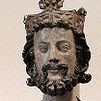
Pépin_the_youngerPepin the Short 714-768 King of the Franks


martel_charles214x313


Charles Martel 688-741 Duke of the Franks, a statesman and military leader


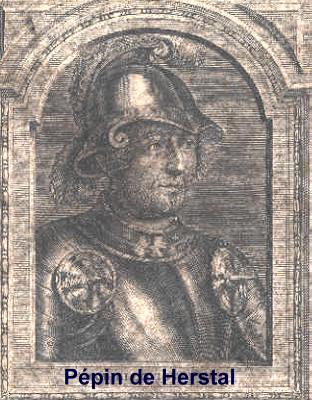
PepinHerstal


Pepin of Herstal 635-714 Duke of the Franks


ansegisel


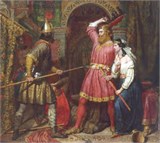
Ansegisel 610-670ish Served King Sigbert III as a Duke. Murdered.


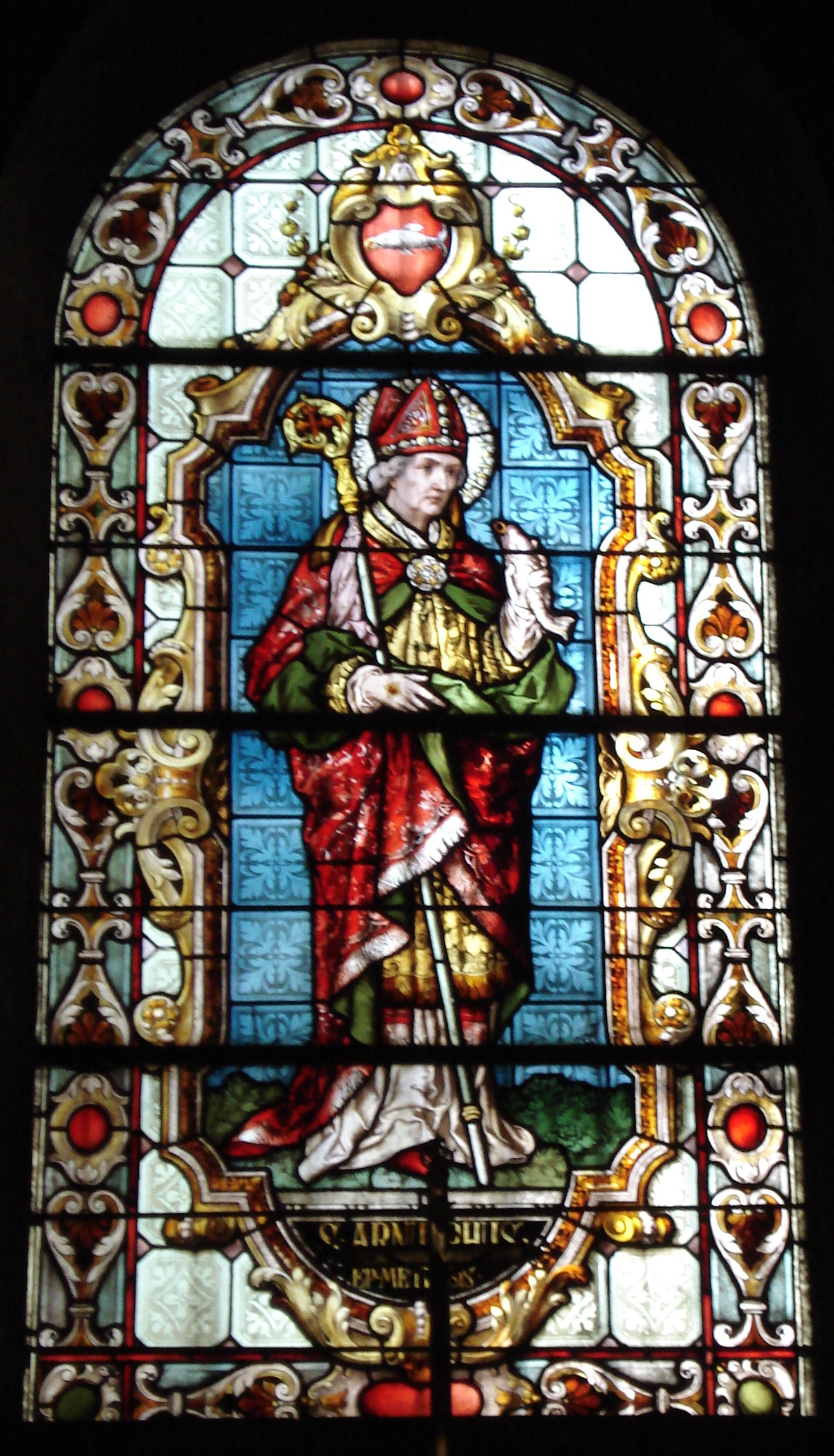
Saint_Arnould


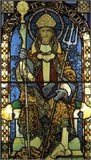
Arnulf of Metz 582-640 Frankish bishop of Metz and advisor to the Merovingian Court.


bodegisel


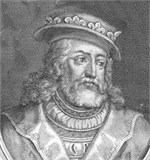
Bodegisel ?-585 Frankish Duke. Served Kings Chilperic I and Chilperic II.


mummolin


Mummolin ? Mayor of the Palace of Neustria. Married Chilperic II’s daughter.


munderic_largeMunderic ?-532 Merovingian with a claim to the Frankish throne. Married a Roman senator’s daughter.


clodericCloderic the Parricide ?-509 Murdered his own father in order to take the kingdom, then was murdered himself.


170px-Rathausturm_Köln_-_Sigibert_von_Ripuarien_(5907-09)Sigobert the Lame 445-509 King of the Franks, murdered by his son Chloderic the Parricide.


ChlodebaudChlodebaud 430-450 King of the Franks


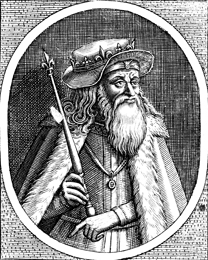
Chlodio Long-HairChlodio Long-Hair 395-448 A.D. King of the Franks