October Ancestry Challenge 2013

oct ancestry challenge-001I was looking for a blog challenge in which to participate in October and didn’t come across anything I liked, so I decided to create my own challenge. Do you study genealogy? Do you have tons of ancestry info and no place to share it? If you read further and decide you’d like to join me, please do so. Help yourself to the official banner and let me know that you’d like to participate. I will post a link to your page as a participant on the “official kick-off blog” the weekend of Sept 27 and update it as anyone joins us.

The October Ancestry Challenge 2013 will be 23 posts (Monday through Friday) in October about a different ancestor each day. If you can find 23 ancestors, you can rock this challenge. It will also be a lesson in history, clothing, culture, and world events. You may include yourself and your parents if you choose.

I’m going to blog about the Culpeppers. I have 25 Culpepper ancestors ranging from my maternal grandfather Earl Culpepper who died in 1994 in Mississippi…

culpepper Earl Culpepper


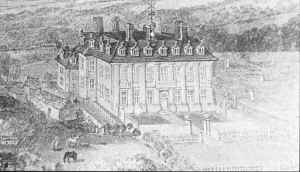
all the way back to my 23rd great grandfather John Culpepper who was born around 1140 in Kent, England.

3d75316f-cd6a-4886-863b-652ad38e6589


(This was his house called Bayhall Manor in Pembury, Kent. Remains of the building were visible until 1960, when one of the national newspapers told a rather exaggerated story of its being haunted. People coming to see it made themselves such a nuisance and rendered it so unsafe, that the owner of the land cleared the ruins away. The ghost was supposed to be that of Anne West, the last person to reside in the mansion. See? It’s already an interesting ancestry blog.)  

My Culpepper ancestors lived through the 2nd Crusade, Genghis Kahn, Marco Polo, gunpowder, the Bubonic plague, Joan of Arc, Henry VIII, Christopher Columbus, Isaac Newton, The Revolutionary War, The War of 1812, Napoleon, Louis Pasteur, Charles Darwin, railroads, The American Civil War, Thomas Edison, Alexander Graham Bell, Model T, Albert Einstein, WWI, airplanes, Titanic, WWII, Vietnam War, not to mention, Victorian dresses, Hobble skirts, ragtime music, smoking jackets, and the first television. 

I’m looking forward to putting together these blogs beginning with my grandfather and working back in time. Please join me beginning October 1st to participate and/or to visit.

When worlds collide…you can hear me scream!

The funniest thing happened yesterday.

I met (online) a cousin on my dad’s side. We share a great grandfather, who I haven’t written about in my blog yet, but I guess I’ll have to get on that now. She showed me a picture of a plaque located in the Lauderdale County Courthouse in Meridian, Mississippi. Our mutual grandfather, Thomas G Lafayette Keene, was apparently the treasurer of Lauderdale County from 1904-1907.

plaque in Lauderdale Co Court House in Meridian


That was awesome! But that wasn’t the funny part.

The book I released in June is called “The Legend of Stuckey’s Bridge.” It takes place in Lauderdale County and you can click on “my books” at the top of the page to read all about it. The man chasing the evil Old Man Stuckey throughout the book was Sheriff J.R. Temple. Go back to the picture and look at the top name.

You probably heard me scream from my office last night when I saw that! My books are historical fiction, based on real people and real events, but it is still strange to see his name etched out in marble and to be reminded that he was indeed a real person and not just a character in my head. And that he knew my great grandfather.  🙂

Stuckey's cover_web

Ancestry Scrapbook

Like I don’t have enough to do, I’ve decided to make Ancestry Scrapbooks for my grown children. Our family is traced so far back, there are almost 9000 people in our family tree, and when I speak about it to my children, they get that glassy-eyed glaze-thing happening. And it doesn’t help matters that since the early 1500s, most of our family have lived in the southeast part of the United States. You know what they say about the south being all intermarried? It’s true! So, when I try to explain that someone on mom’s side is the sister of someone on dad’s side, I lose the kids. Don’t even try to tell them grandpa’s little sister married grandma’s uncle, making my grandma’s uncle also my momma’s uncle. Forget it. They don’t care.

Well, I want them to care!

So, I’ve decided to put together a fun and colorful book they can look through and connect their own dots. There’s a company called My Canvas, that will make a real printed book. You upload all your stuff, arrange it anyway you want, and for a fairly decent price, they will print a real book. They are beautiful books, but the largest is only big enough for 4 or 5 generations. I think I want a little more.

How about a digital scrapbook from DSP?? You make as many pages as you want, print them, and put them in any book you want.

Check out this cover with all the family names! I’m in love with this!!

Ancestors

Apparently you need a photo program like Photoshop (which I suck at) and a layout program like “My Memories Suite” or “Nova Scrapbook Factory Deluxe.” Then you can purchase page kits online or a whole CD of designs. I don’t know that I want to put time into learning a new program. I think I may stick with the old fashion scrap-booking process. Cutting, gluing, adding embellishments.

…but I do LOVE that cover! I might try it.

************************

Update Sept 1st – I did it. I buckled under the pressure and bought “My Memories Suite” and tons of ancestry/genealogy/heritage paper and embellishments to play with. I’ll let you know how it turns out! 🙂

Born August 15, 1828

Rice Benjamin Carpenter was born August 15, 1828 in Greene County, Alabama to Benjamin Carpenter and Nancy Rice Carpenter. He was the eighth of ten children.

In 1834, his family moved to Pine Springs, Lauderdale County, Mississippi for the low-cost land and fertile soil. Rice was six years old.

He married Mary Ann Rodgers in 1846. They were both seventeen.

They had five children – Martha Lettie, Benjamin Hays, William Travis, Charles Clinton, and MF – one girl and four boys.

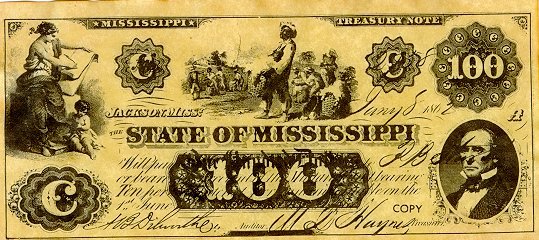
After living with his friends Ebenezer and Sarah Miles in Pine Springs for a few years, in 1853 they bought 80 acres of land from Mary Ann’s father and began farming, but within a few short years, Rice realized he was a better merchant than a farmer, and by 1860 they had opened a general store in Marion Station, Mississippi.

conf_money

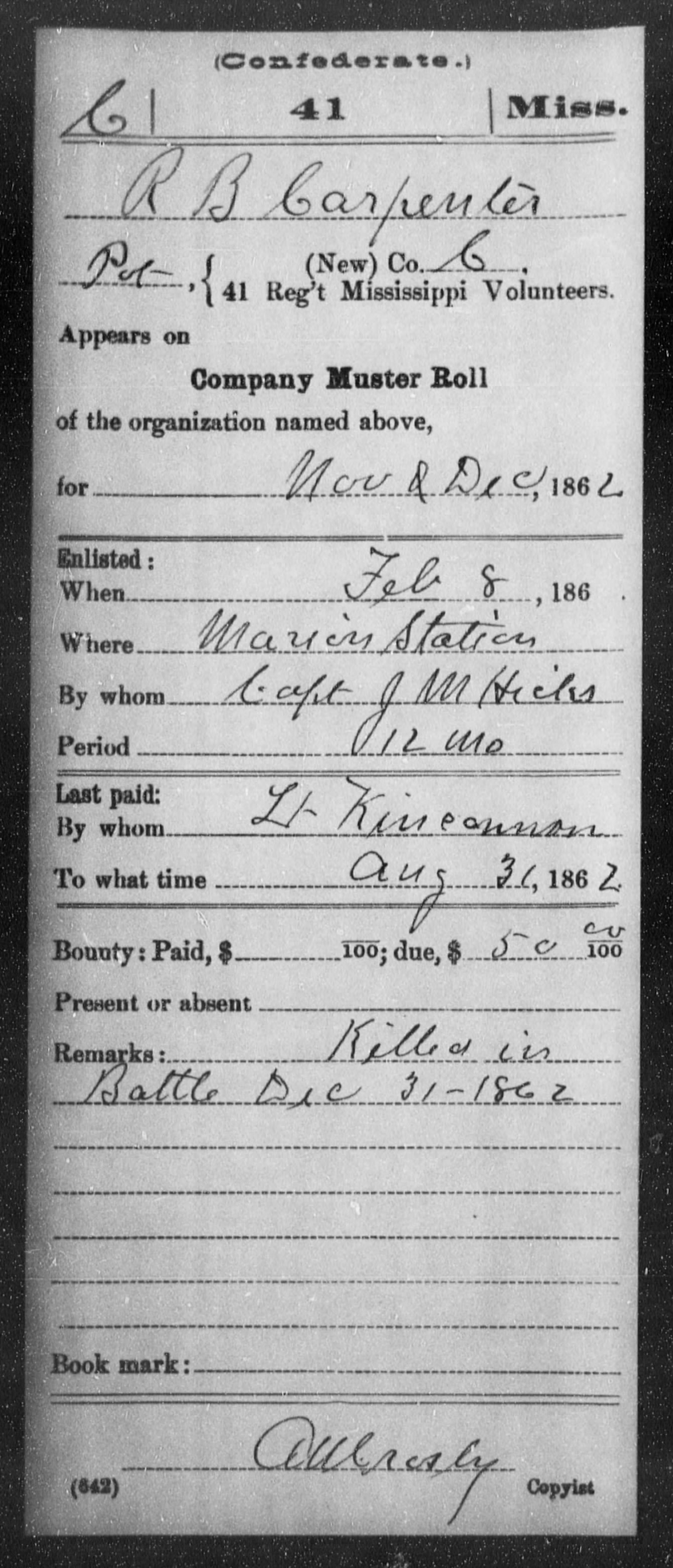
When the Civil War began, Rice signed up for the 41st Mississippi Infantry, Company C on February 8, 1862. This must have been a frightening time for the family, as Mary Ann was eight months pregnant with their last child who was born March 12th, 1862.

dec 2012 388

At dawn on December 31, 1862, amid limestone boulders and cedar forest, his infantry attacked the Union soldiers at the Battle of Stones River in Murfreesboro, Tennessee.

port-hudson

Private Rice Benjamin Carpenter died on that day on the battlefield at the age of 34, leaving behind his wife and children.

Page 5

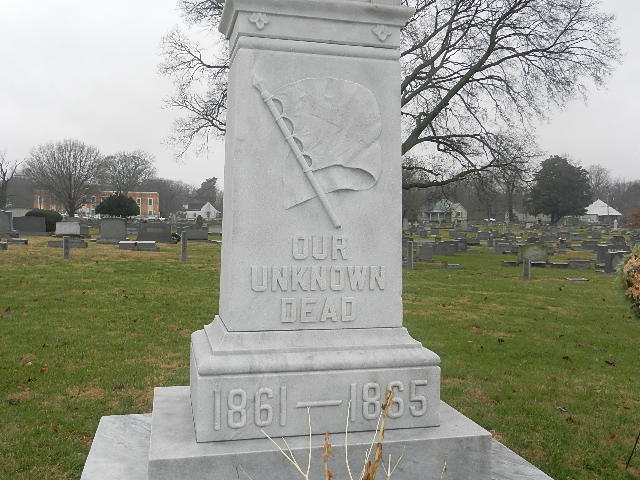
He is laid to rest at Confederate Circle, Evergreen Cemetery, Murfreesboro, Tennessee. RIP 3rd great grandpa. Rest well soldier, your job is done.

dec 2012 407

A portion of his story is told in my book, “Okatibbee Creek.” Available at Amazon.

okatibbee_cover front

Ancestry – or Why I’m So Jacked Up – Great Grandparents continued (dad’s side)

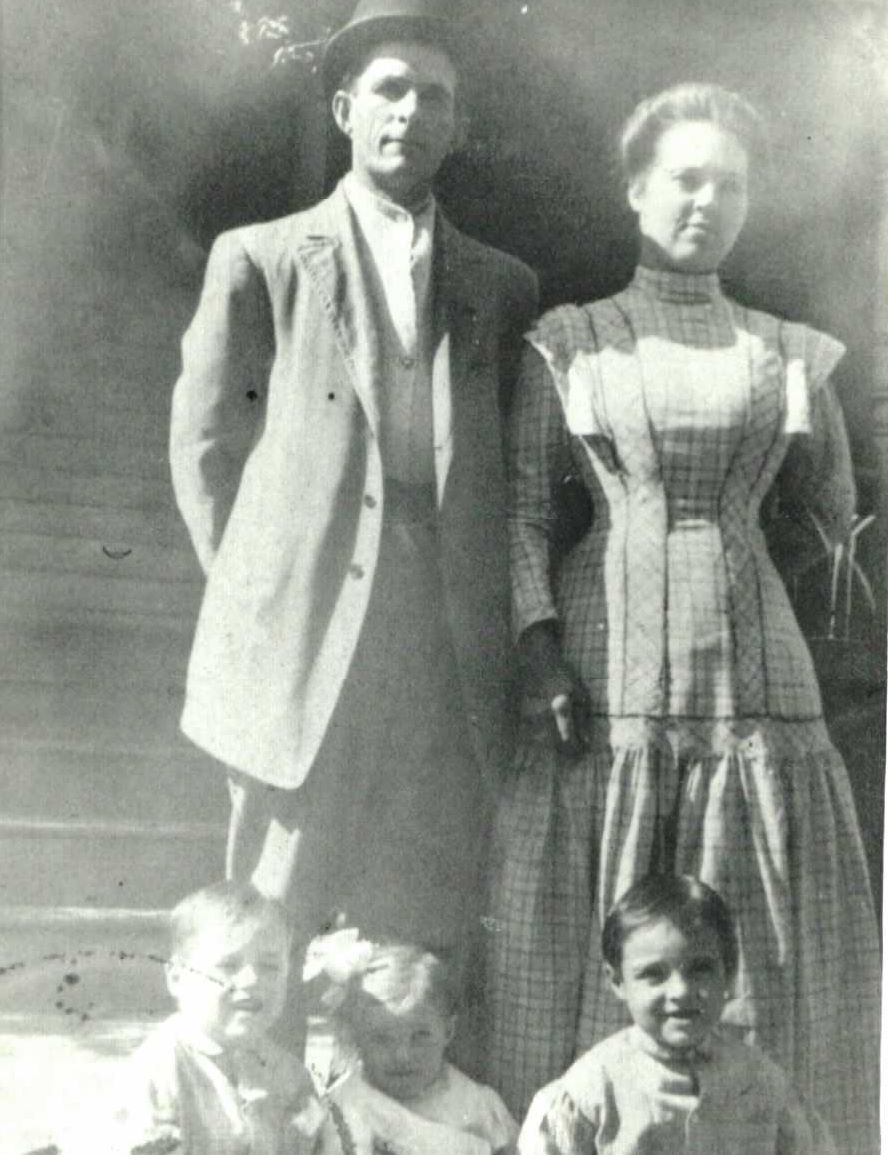
The first part of this blog was written on February 20, 2013. You can see it HERE if you wish. However, the most amazing thing happened this week. I just received a photo in the mail from my cousin. It is my paternal great grandparents!!! I have a picture of her, but I have NEVER seen him before. He was quite dapper, no? 🙂 This is Amos and Minnie Crane and three of their six children, from left to right: Horace, Evelyn, and my grandfather Frank. The photo must be around 1912. Evelyn was born Oct 1910.

Amos Crane and Minnie White with Horace, Minnie Ellen, and Frank

Amos Bolivar Crane and Mary Elizabeth “Minnie” White married in Mississippi on August 10, 1902. He was twenty and she was seventeen. In 1903, they had their first child, Andrew Frank Crane (my grandfather), followed by Horace, Evelyn, Amos Jr, Thomas Jackson (Tommy), and finally, Minnie Ellen in 1918. They lived in Lauderdale County, Mississippi throughout most of their marriage except for a brief stint in Gulfport, Mississippi in the 1950s. He died in 1959 and she followed in 1964. Since I was born in 1962, I probably met her, but I don’t remember, and there is no one left to ask.

They are buried at McGowan Chapel Cemetery in Harmony, Mississippi. I took these photos in September 2012, and a cousin told me I drove right by their house on the way to the cemetery. There were only a couple houses there, but I don’t know which one was theirs. RIP great grandma and grandpa.

crane amos bolivar

white mary elizabeth minnie white crane

Wednesday Writer’s Corner – Aug 7, 2013

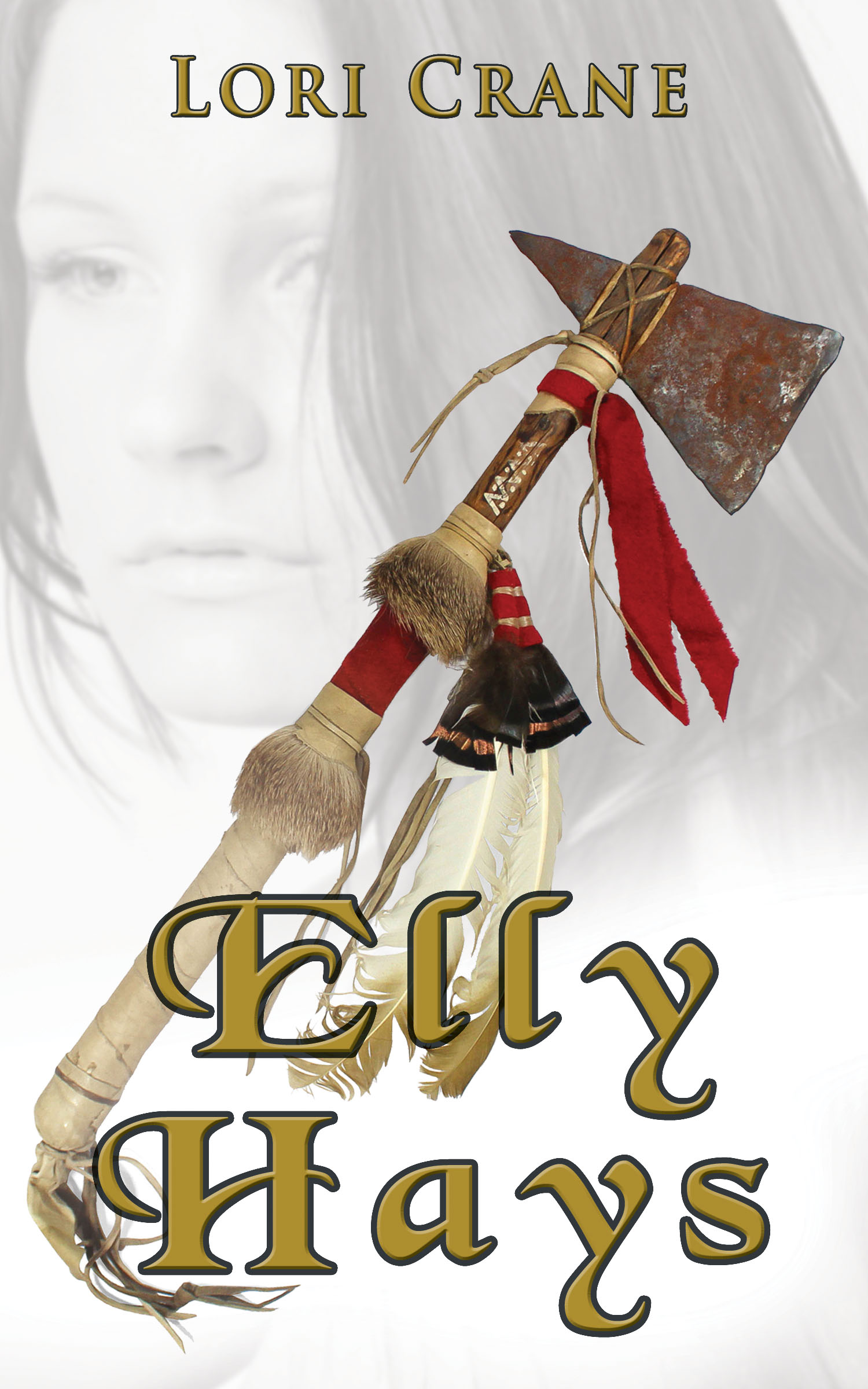
In honor of my coming October book release of “Elly Hays,” today’s Writer’s Corner will be about the book’s heroine, Elizabeth Hays Rodgers, and how she came to be the center of a novel.

She was the only daughter of Samuel Hays and Elizabeth Priscilla Crawford, born in North Carolina in 1774. She spent her young childhood in the unrest of the Revolutionary War. She married when she was sixteen, and after twenty-one years of marriage and eleven children, her husband decided to uproot the family from Tennessee and start a new life in the Mississippi Territory. Considering what they were walking into, I had to write her story. A portion of it is below. It will help you understand that area of the country at that time in history.

The (unedited) Prologue

In 1811, America was on the verge of war. The victory in the Revolutionary War gave Americans their independence, but the newly formed country had many unresolved issues. Americans had a vast frontier to settle and they considered the land now known as Canada to be part of their land. They wanted to expand northward and westward, but the British joined forces with the Native Indians in an attempt to prevent the Americans from expanding in either direction.

The British had also begun restricting America’s trade with France and the mighty Royal Navy ruled the seas. The Royal Navy had more than tripled in size due to their war with France, and they needed sailors. They captured American merchant ships off the coast of America and forced the men with British accents to join the ranks of the Royal Navy, proclaiming they were not American, but indeed British. Kidnappings and power struggles in shipping ports like New Orleans loomed over the newly formed United States.

The British not only invaded the southern coastal cities of the United States, but also the eastern seaboard, attacking Baltimore and New York, and burning Washington D.C. to the ground. The War of 1812 is historically referred to as the second war for independence. It was the battle for boundaries and identity for the Americans.

Sadly, the Native American Indians had the most to lose in the power struggle. Shawnee warrior Tecumseh was but a child when he witnessed his father brutally murdered by a white frontiersman. His family moved from village to village and witnessed each destroyed at the hands of the white men during and after the American Revolution. As a young teen, following the Revolution, he formed a band of warriors who attempted to block the expansion of the white man into their territory, but the effort saw no lasting result. Conflict with the white man was a battle he had fought all his life, and as a warrior now in his early forties, he knew the stakes were high for the Indians in the coming battle. He traveled the southeast, coaxing the numerous Indian nations to unite against the white man, promising help from the British in the form of weapons and ammunition, and offering reinstatement of the Indian’s lost lands upon victory. Tecumseh’s prophet, who traveled with him into Creek territory, forecasted a victory, foreseeing no Creeks being wounded or killed in the battle.

In the Eastern Mississippi Territory, which later became the state of Alabama, the Creek Indians were divided. Many Creek villages had been trading with the white man for years and participated in civilization programs offered by the United States government. These Creeks had been taught the ways of the white man. They spoke English, could read and write, and even incorporated white man’s tools into their daily lives. They traded or were given gifts of plows, looms, and spinning wheels, and had no qualms with the white man. Many had married whites, and they did not want to join in the fight.

In opposition, many villages joined with Tecumseh, for they wanted to maintain their way of life, claiming the white man’s ways would destroy their culture. They had witnessed the white man encroaching on their lands, destroying their forests and villages, and polluting their streams. And probably, some suspected the white man’s intent was not co-existence but domination, for they had seen this come to fruition in the treatment of the black slaves.

In 1811 and 1812, tribal tensions were growing due to these differences in beliefs, and this caused a great war in the Creek nation called The Red Stick War. It was a civil war fought between the Creek people, but by 1813, it expanded to include the American frontiersmen and the U.S. government. At the height of the War of 1812, the Creeks were at war with nearly everyone, including their own people.

It was in this turmoil that a white farming family moved from their home in Tennessee to the fertile farmlands of the eastern Mississippi Territory, a place known today as Clarke County, Alabama. James Rodgers, his wife Elly, and their eleven children unknowingly entered a hornet’s nest.

If you have read the first book in the Okatibbee Creek series, “Okatibbee Creek,” you will be familiar with its heroine, Mary Ann Rodgers. “Elly Hays” is about Mary Ann’s paternal grandmother, Elizabeth Hays Rodgers, better known as Elly. If you have not read any of the Okatibbee Creek series, they are a collection of stories about one family and the strong women of our past. These are the real-life stories of my grandmothers, aunts, and cousins, but if you live in the U. S., they could also be the stories of your female ancestors – the women who fought for us, for our safety, our lives, and our freedom, and who sacrificed everything with the depth of their love and their astounding bravery.

Elly Hays will be release October 2013 in paperback, Kindle, and Nook.
elly cover_web

A to Z Challenge – X is for XCELLENT

X is for XCELLENT

Okay, okay, that is cheating a little, but I have such xcellent news, I have to share.

931313_10151563776273326_144957862_nMy beautiful baby girl got engaged Saturday night to the most amazing young man! See? Xcellent! Told ya.

Congrats to the betrothed couple and many, many years of wedded bliss. If you are a person of religious nature, please send out a blessing for these very special young people. They are the salt of the earth, and they are certainly facing their share of challenges. I won’t go into detail, but trust me, they need serious prayers and love.

My heart is full! ♥

A to Z Challenge – U is for U.S. Military

Blogging from A to Z April 2013 Challenge

U is for U.S. Military

My grandfathers who served:

An * denotes he died in service.

Joel Bluett Culpepper – Confederate Army

William Thomas Fisher – Confederate Army

William Lafayette Brown Jr – Confederate Army

Rev. Joseph M Culpepper – Confederate Army *

Rice Benjamin Carpenter – Confederate Army *

George Washington Spencer – Confederate Army

James C Howington – Confederate Army

William Henry Blanks III – Confederate Army

Hays Rodgers – War of 1812

William Henry Blanks I – American Revolution

Joseph Culpepper Jr – American Revolution

Thomas Young – American Revolution

John B Rice – American Revolution

James Rodgers Sr – American Revolution

Captain Jacob Prickett – American Revolution

My uncles who served:

George M Graham – Confederate Army

Timothy Rodgers – Confederate Army *

Wilson Rodgers – Confederate Army *

Hays Rodgers Jr – Confederate Army

John W Rodgers – Confederate Army *

Benjamin M Culpepper – Confederate Army

Hilliard Carpenter – Confederate Army *

James Monroe Chatham – Confederate Army *

Rev. James Lafayette Blanks – Confederate Army

Richard Lane Blanks – Confederate Army

John Henry Brown – Confederate Army

Absolom Rodgers – War of 1812

…and so very many more. Sleep well, soldiers. Your job is done.

A to Z Challenge – T is for Tradition

Blogging from A to Z April 2013 Challenge

T is for Tradition

What better way to preserve history and honor those who have come before than to be an active member in societies? I never understood what societies did until I became a member of a few. What they do is preserve and honor tradition. They don’t allow ritual and sacrifice be forgotten. The groups I belong to are service organizations, dedicated to promoting patriotism and history, and they follow strict rules of tradition.

small logoI belong to the United States Daughters of 1812 under my 4th great grandfather Hays Rodgers who fought for the Mississippi Militia. He was assigned to Capt Evan Austill’s company of volunteers in Maj Sam Dale’s Battalion to fight against the hostile Creek Indians.

Here is the U.S.D. of 1812’s purpose copied from their website:

The U.S.D. of 1812, founded in 1892, is a volunteer women’s service organization dedicated to promoting patriotism, preserving and increasing knowledge of the history of the American people by the preservation of documents and relics, marking of historic spots, recording of family histories and traditions, celebration of patriotic anniversaries, teaching and emphasizing the heroic deeds of the civil, military, and naval life of those who molded this Government between the close of the American Revolution and the close of the War of 1812, to urge Congress to compile and publish authentic records of men in civil, military, and naval service from 1784 to 1815 inclusive, and to maintain at National Headquarters in Washington D.C., a museum and library of memorabilia of the 1784-1815 period.

(photo: Hays Rodgers)

Rodgers Hays Sr

insigniasign

I also belong to the Daughters of the American Revolution under my 5th great grandfather Joseph Culpepper who fought for the 3rd South Carolina (Rangers) Regiment.

A little piece of their purpose from their website includes: The DAR, founded in 1890 and headquartered in Washington, D.C., is a non-profit, non-political volunteer women’s service organization dedicated to promoting patriotism, preserving American history, and securing America’s future through better education for children.

colorwebbollIf that’s not enough to do, I also belong to the United Daughters of the Confederacy under my 2nd great grandfather Joel B Culpepper who fought for the 63rd Alabama Infantry Co K .

The UDC exists to (from their website):

  • To collect and preserve the material necessary for a truthful history of the War Between the States and to protect, preserve, and mark the places made historic by Confederate valor
  • To assist descendants of worthy Confederates in securing a proper education
  • To fulfill the sacred duty of benevolence toward the survivor of the War and those dependent upon them
  • To honor the memory of those who served and those who fell in the service of the Confederate States of America
  • To record the part played during the War by Southern women, including their patient endurance of hardship, their patriotic devotion during the struggle, and their untiring efforts during the post-War reconstruction of the South
  • To cherish the ties of friendship among the members of the Organization

(photo: Joel B Culpepper)

culpepper Joel B Culpepper

I am honored and blessed to be a small part of these organizations and to carry on the traditions of the women who served before me.

A to Z Challenge – S is for Slavery

S is for Slavery

That title may have raised a few eyebrows, and I apologize. With my recent genealogy research, I have been thinking a lot lately about slavery. Not as in bad or good, or as in a concept of the past, but as in the actual people involved in the process—the slaves and the owners and their lives and relationships.

My family hails from the south—All Of Them. We’ve been in NC, TN, MS and AL since the 1600s. I think all but one of my greats, 2nd greats, and 3rd greats were born and raised in the south. And just like the majority of southern farmers, nearly all of my family owned slaves until 1863ish. What got me thinking about the topic in depth was recently finding a 1750 will of a grandfather who owned 800 acres and left at least 40 slaves to his descendants. 40? What a major financial investment and responsibility that was.

I also have other family history:

…a 3rd great grandfather who gave his slave 80 acres following the emancipation, and his descendants still live on that land to this day, next door to the grandfather’s descendants.

…a great uncle who sold his farm in 1865 to a black man named Tom Stennis. Later I found that this was a former slave of Adam T. Stennis, who bought my 4th great grandfather’s land in 1869.

…that same 4th great grandfather had $8000 of wealth in land and farming equipment in 1860—and had 13 slaves. Generally, a slave would sell for $1000 or more at an auction, so this was not a cheap or frivolous purchase. He was well-to-do with $8000 of land and livestock, but he had most of his wealth tied up in $13,000+ worth of slaves. Those are 1860 prices. I looked it up on http://www.measuringworth.com/uscompare/ and found the relative value of $13,000 in 1860 is up to $45 MILLION today. Holy Cow!

I am not negating the abuse of slaves at the time nor the emotional attachment people of today have to this issue. This is not a debate on whether slavery was good or bad. As intelligent human beings, we can all agree it was/is bad. I am, however, finding more and more evidence that the white plantation owners took good care of their slaves following the emancipation. So, that’s what got me thinking about it…on a human level.

If you own livestock, you probably don’t love them, but you do recognize your responsibility to feed them and take care of them. If you own something rare and valuable like a sports car, you would take very good care of it. If you are from the south, you have a greater sense of responsibility toward your neighbors and community than anywhere I’ve seen on this planet. Everyone knows the kindness and compassion of southerners is unsurpassed.

Now, if the government takes away your ability to make a living, as it did to plantation owners by taking the slaves away, what are you going to do? Easy, you get another job. But what if that action involves 40 people who work for you and depend on you? These were not employees who you hand a pink slip and send on their way. They are your property. Don’t you have a moral obligation to take care of the people in your charge, whether they were birthed or bought? When the slaves were legally freed, where could they go? What could they do?

The most logical idea I thought of was to give them 40 acres in exchange for them still working on your farm. That would help you maintain your income, while at the same time, helping them become free.

I’m wondering if Alex Haley’s “Roots” dug so deep in our collective conscious, that it created in us a mindset that all slave owners were evil, abusive tyrants. Perhaps they were, but I’m finding a lot of evidence to the contrary. This whole issue is swimming around in my head, so please comment if you have thoughts.