52 Ancestors #10 Thomas Culpepper

52ancestors-2015

This challenge is set forth by No Story Too Small, and this week’s theme is “Stormy Weather.”

No one weathered storms like my 10th great uncle Thomas Culpepper, and he was literally caught in “Stormy Weather” during one of his greatest moment.

Thomas was the eldest son of John Culpepper of Feckenham and his wife Ursula Woodcock. He was followed by two sisters, Cicely and Frances, and a brother, John, whom we refer to as John Culpepper the Merchant.

Thomas was born into a life of privilege as his family held vast estates and had worked in the king’s service for generations. When Thomas was born in 1602 in Kent, England, the Culpepper family boasted sixteen living barons and earls.
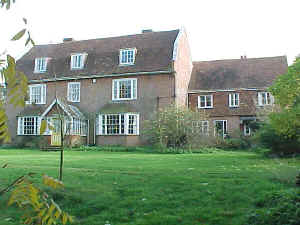
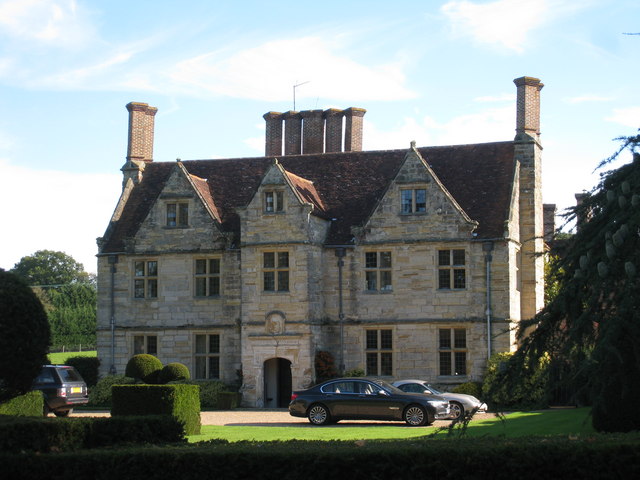
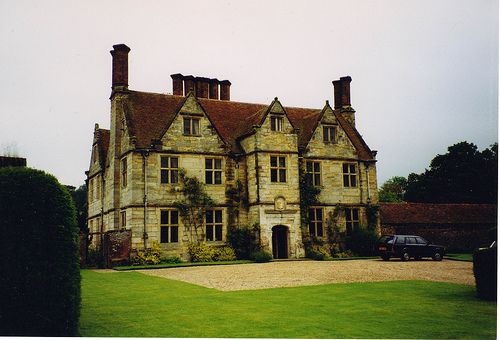
GreenwayCourtAt the age of nineteen, Thomas entered Middle Temple which was a law school. He was soon called to the bar and became a successful lawyer. He married Katherine St. Leger, moved into the family home of Greenway Court (photo) in Kent, and they started their family.

After King James I died in 1625, King Charles took over, and Thomas was promoted to a colonel in the king’s army. This was one hundred years after the Tudor reign where people had been beheaded for their religious beliefs, but King Charles was making everyone nervous with his religious antics. He married a Catholic princess, appointed a Catholic supporter to the office of archbishop of Canterbury, and demanded the Scots begin using the Catholic Book of Prayer. The people of Scotland, Ireland, and England refused to go back to the age of being charged with heresy. They began meeting behind closed doors and discussing what to do about this tyrannical king.

Parliament rallied an army against the king and in 1642 the English Civil War began. As with the Culpeppers before him, Thomas was a royalist and took the side of the king. Thomas and his friend George Goring, the earl of Norwich, fought bravely against Parliament’s army.
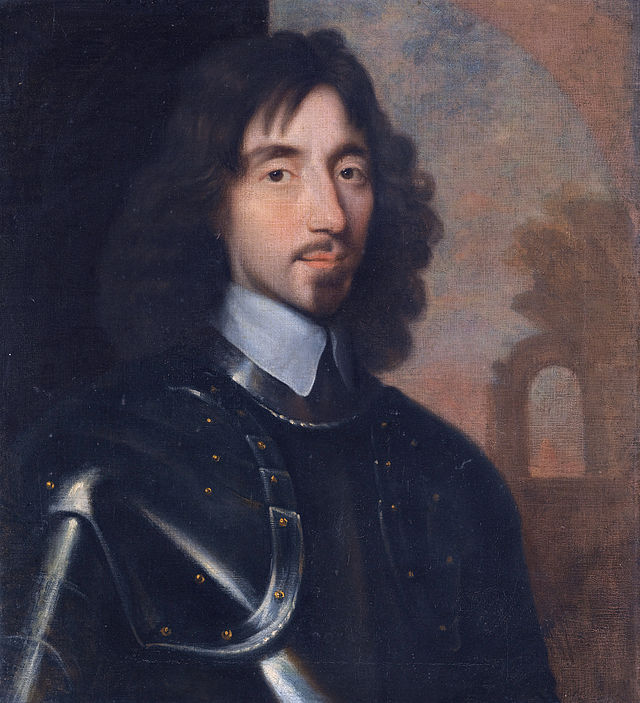
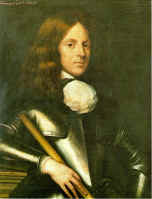
General_Thomas_Fairfax_(1612-1671In May 1648, Thomas and George raised 10,000 men around Kent to fight against Parliament. This was a significant number considering by this time Parliament’s army had split into two factions. The larger was holding down an uprising in South Wales, leaving the smaller group of 6,000 men to defend all of London and its surrounding towns. The royalists were holding the town of Maidstone (Thomas’s hometown located south of London) with a force of 2,000 men. Under the leadership of General Thomas Fairfax (photo), 4,000 parliamentarians marched south to Maidstone to recapture it.

culpepper book 1 cover ideaOn June 1, 1648, in the midst of a terrible storm, Fairfax attacked Maidstone. Fairfax’s men took over a bridge and crossed the Medway River and effectively divided Thomas’s men into two groups. Thomas’s diminished army fought in the heavy rains throughout the night and were backed up by Fairfax’s men, street by street, inch by inch. They moved up Weeks Street and finally retreated into St. Faith’s Churchyard where they fought until well after midnight through the raging thunderstorm. At the first light of dawn, out of ammunition and having nowhere else to go, 1,000 royalists emerged from the church and surrendered to Fairfax’s army.

In return for promising to lay down their arms, the soldiers were released and allowed to return to their homes, but in typical Thomas/George fashion, they didn’t. They regrouped and headed north to seize London, but they found the city’s gates closed, so they moved further north to George’s hometown of Colchester. Fairfax’s men pursued them and another battle ensued. Colchester held its ground for eleven weeks, but in August 1648, they were forced to surrender.

Throughout these battles, the king was being held prisoner by Parliament, and for the last two years, the royalists suffered defeat after defeat trying to save him and turn the tide of the war. They began realizing their cause was lost, and across the country, the royalists began surrendering left and right.

In January of 1649, King Charles was charged with treason, found guilty, and was beheaded. Following the king’s execution, all of the royalists, including Thomas Culpepper and George Goring, had their property seized by Parliament and many were beheaded or hung.

In March 1649, George Goring, being held prisoner since his loss at Colchester, was charged with treason and found guilty. Facing beheading, his family petitioned for leniency and the deciding vote, cast by the speaker of the house, granted George his freedom. He joined the exiled court of the prince in the Netherlands and became the captain of the king’s guard. When the prince reclaimed the English throne in May 1660 as King Charles II, George was by his side. George Goring died in 1663 in Brentford, just west of London.

Fortunately for Thomas, his brother John was a merchant who owned a ship. John smuggled Thomas, his wife Katherine, and their four children out of England in 1650 and took them to Virginia. Thomas escaped probable beheading in England, but sadly, he died in Virginia in 1652 at the age of fifty.

His son-in-law, Sir William Berkeley the governor of Virginia, wrote about him, “He lost all his estate, life, and liberty in the king’s service.”

*This story is told in detail in my coming book, “John Culpepper the Merchant,” which is the second book in the Culpepper Saga and will be released May 2015.

52 Ancestors #7 Catherine Howard

52ancestors-2015

This challenge is set forth by No Story Too Small, and this week’s theme is “Love.”

One of the most interesting stories of “Love” in my ancestry comes from the journals of Tudor history.

howard2Catherine Howard was the fifth wife of King Henry VIII. She was also my cousin. Her father was Edmund Howard and her mother was Joyce Culpepper. Joyce’s father was Sir Richard Culpepper.

In the 1200s, the Culpepper’s were split into two definitive lines by brothers Walter and Thomas into the Preston Hall Culpeppers and Bayhall Culpeppers, respectively. In the 1400s, the Bayhall line split into two lines with brothers again, so instead of Preston Hall and Bayhall, we now have Preston Hall, Wigsell, and Bedgebury. Catherine’s maternal grandfather, Sir Richard Culpepper, was of the Preston Hall line. Catherine had many Culpepper cousins, one being my 12th great grandfather William Culpepper of the Wigsell line, and another being Thomas Culpepper of the Bedgebury line. Though distant, Catherine Howard and Thomas Culpepper were cousins.

Just to make history even more confusing…Catherine’s paternal grandfather was Thomas Howard Duke of Norfolk. This man was Anne Boleyn’s grandfather too. Catherine and Anne (Henry VIII’s second wife) were first cousins.

On 28 July 1540, sixteen-year-old Catherine married King Henry after he ended his politically motivated marriage to (fourth wife) Anne of Cleaves. Henry was nearly fifty years old. For fourteen months, the newlyweds were happy, but then the rumors began. Henry became convinced his young bride was having relations with a few men, the most painful being his trusted servant, Catherine’s cousin, Thomas Culpepper.

In my opinion, one can imagine Catherine at sixteen-years old being quite overwhelmed by all the attention she was receiving along with her new-found feelings of superiority and immortality simply because she was Henry’s wife. And it is possible that Thomas in his mid-twenties, was merely playing a game with a teenage girl. The excitement of this game would be hard to top, especially with a prize as valuable as the wife of the King. Then again, they may have actually loved each other.

Catherine and Thomas were charged with treason, tried, and convicted. Thomas was beheaded 10 Dec 1541. Catherine was stripped of her title of Queen, locked in her chambers, and her future remained in limbo until Parliament decided what to do with her. On 10 February 1542, she was taken to be executed. She traveled by boat to the Tower and undoubtedly passed under the bridge where Thomas’s head was impaled. I wonder if she looked up. Her execution was held Monday, 13 February 1542.

According to popular folklore, her final words were, “I die a Queen, but I would rather have died the wife of Culpepper”. Did she really die for love, or was she simply a young girl who didn’t realize the place next to the King was a fragile one?

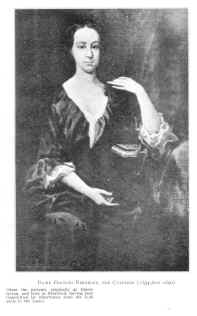
The above portrait, which has always been reported to be that of Catherine Howard, is now in dispute by the National Portrait Gallery in London. Apparently the poor girl lost her head…and now her face. Below is a letter she sent to her cousin/lover Thomas Culpepper.


GW402H604Master Culpeper,

I heartily recommend me unto you, praying you to send me word how that you do. It was showed me that you was sick, the which thing troubled me very much till such time that I hear from you praying you to send me word how that you do, for I never longed so much for a thing as I do to see you and to speak with you, the which I trust shall be shortly now. That which doth comfortly me very much when I think of it, and when I think again that you shall depart from me again it makes my heart die to think what fortune I have that I cannot be always in your company. It my trust is always in you that you will be as you have promised me, and in that hope I trust upon still, praying you that you will come when my Lady Rochford is here for then I shall be best at leisure to be at your commandment, thanking you for that you have promised me to be so good unto that poor fellow my man which is one of the griefs that I do feel to depart from him for then I do know no one that I dare trust to send to you, and therefore I pray you take him to be with you that I may sometime hear from you one thing. I pray you to give me a horse for my man for I had much ado to get one and therefore I pray send me one by him and in so doing I am as I said afor, and thus I take my leave of you, trusting to see you shortly again and I would you was with me now that you might see what pain I take in writing to you.

Yours as long as life endures,
Katheryn.

One thing I had forgotten and that is to instruct my man to tarry here with me still for he says whatsomever you bid him he will do it.


52 Ancestors #2 Lord John Culpepper 1st Baron of Thoresway

52ancestors-2015

This challenge is set forth by No Story Too Small, and this week’s theme is “King.”

Women of my Culpepper line are traced back to King Charlemagne, so I could have taken the easy way and simply wrote about him, but let’s take a road less traveled, shall we?

My 12th great grandfather was John Culpepper of Wigsell. He had four sons: Thomas, William, John (my 11th great), and Alexander. The eldest son, Thomas, had a couple sons, but none with greater ties to THREE Kings than:

Lord John Culpepper, First Baron of Thoresway

book 1 different angleLord Culpepper was born in 7 Aug 1599 in Wigsell Manor (photo), Sussex, England. His mother died in February of the following year and his father died in 1613 when he was a young lad of 14. He attended Oxford University and graduated in 1616, and then attended Middle Temple law school. In 1621, he was knighted by King James. He sold his inherited Wigsell Manor to an uncle to finance his jaunts around the country. After King James died in 1625 and King Charles I took over, Lord Culpepper finally settled down a bit and married Philipa Snelling in 1628, but the young lady died two years later. He remarried in 1631. This young lady was his distant cousin Judith Culpepper (granddaughter of the uncle who bought Wigsell). They had nine children, many of whom died in infancy.

On January 2, 1642, he was sworn in by the Privy Council and appointed Chancellor of the Exchequer. The following year, he became Master of the Rolls. In 1644, at the onset of the English civil war, King Charles made him a baron.

When the war began, Lord Culpepper was the one who protected the king’s heir (Prince Charles) and took him from England for his own safekeeping. The war ended badly for the monarchy as King Charles was charged with treason and beheaded in 1649. Parliament, under the leadership of Oliver Cromwell, governed the country as the “English Commonwealth” for the next decade.

When Cromwell died, Parliament signed a proclamation that Prince Charles was the rightful king and had been so since his father’s death. They postdated all documents and acted as if the last ten years had never happened. Lord Culpepper had been guarding the prince in France and Denmark all this time and escorted him into London in May of 1660 as King Charles II. For his service, Lord Culpepper received all the prestige and glory he was due, including getting all the Culpepper property back that Parliament had seized at the end of the war and being given a large portion of Virginia in the new world.

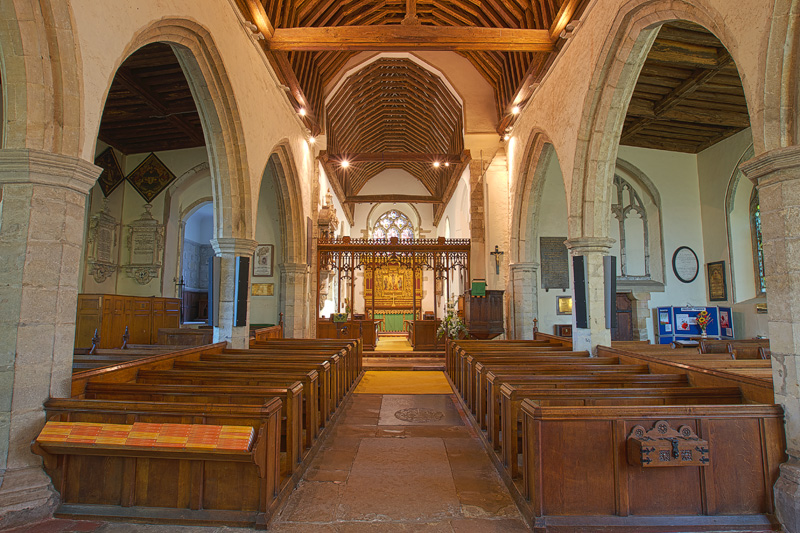
all saints church hollingbourne kent insideShortly after putting the king on his rightful throne, Lord John Culpepper died on 11 July 1660. The inscription placed by his children on his tomb in All Saints Church in Hollingbourne reads:

“To the lasting memory of John, Lord Culpeper, Baron of Thoresway, Master of the Rolles and Privy Counsellor to two Kings, Charles the First and Charles the Second. For equal fidelity to the King and Kingdome he was most exemplary. And in an exile of above ten years was a constant attendant and upright Minister to the Prince last mentioned. With him he returned tryumphant into England on the 29th of May 1660; but died the 11th of July next following in the 61st year of his age to the irreparable loss of his family. He commended his soul to God his faithful Creator, and ordered his body here to expect a blessed Resurrection. His Patent of Honour from King Charles the First dated the 21st of October 1644 may serve for his immortal Epitaph.”

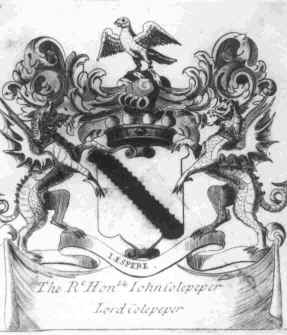
John_Lord_Colepeper_Arms

Saturday Snippet – Culpepper Saga Preview

I usually post blogs about books that are already finished, but I’m having such a good time with my work in progress, I’d like to share a piece of it with you. The Culpepper Saga will be four books about one of my ancestors named John Culpepper.

Culpepper_1John was born in England in 1606. As a young lad he was trained as a lawyer, but he decided to be a merchant instead. He bought a ship and sailed back and forth between the colony of Virginia and England, delivering immigrants to the colonies and bringing back cotton and tobacco. His life wasn’t spectacular, but the cast of characters surrounding him were pretty intriguing, the political and religious climate of his homeland was so volatile, one could lose a head if one wasn’t careful, and the vast expansion of the new world set the stage for quite an amazing adventure. The first installment will be about his childhood, the second about the English Civil War where King Charles I was executed and the royalist Culpepper family scattered like rats, the third about his adventures in Virginia and rise to family patriarch, and the final story will be in his later years during Bacon’s Rebellion and his son causing the Culpepper Rebellion in North Carolina and being charged with treason (good thing daddy was a lawyer!).

culpepper book 2 cover ideaI’ve decided on the title “I, John Culpepper” for the first book.

All that being said, here’s a bit of the scene from the day John was born….

**************************************************************

1606, Blackwall, London

“Master Culpepper! Master Culpepper!” the servant boy shouted over the bells clanging from the church steeple. He pulled the scratchy scarf tightly around his neck to ward off the chill as he pushed his way through the masses gathered on the foggy banks of the Thames.

The crowd had been gathering on the wharf for nearly two days to witness the departure of the ships, and they were prepared for a spectacle unlike any they had seen before. When the tide came in, the three ships carrying one hundred forty passengers and sailors would depart England on an exciting adventure. The air smelled of salt and tar and sweat. This was a remarkable place, a magical place, where the preparations were as exciting at the coming voyage. The anticipation in the air was nearly as thick as the fog.

The boy stopped for a moment as a wooden cask was rolled across the cobblestone in front of him. He watched as workers carefully rolled the barrel up the tilted gangplank. He remained frozen in the middle of the bustling crowd, staring at the ship. He had never seen anything so majestic in all his twelve years, and his jaw dropped at her sheer size. She was an enormous castle-like structure, at least eighty feet in length, her belly bulging at the side where the last of the cargo was being loaded in. Crates and boxes were continually being carried up the gangplank, where they disappeared into the ship’s dark interior. The deck above the cargo area was much narrower and the boy imagined that’s where the sailors would remain during the voyage, climbing masts and hoisting sails. Circling the spiderweb of hemp ropes and yardarms, seagulls cawed as if singing along with the rhythmical clanging of a nearby metal object. The boy scanned the scene for the source of the sound and noticed a blind beggar sitting on the cobblestone near the bow of the ship, tapping a stick on a metal bowl.

Behind the ship floated a second ship, nearly as large as the first, and behind that loomed a third. Each hosted its own cast of sailors, supplies, vagrants, and gangplanks. As wavelets gently raised and lowered the vessels, moans of protest arose from the taut ropes, and the weathered wood creaked with each stomp of a sailor’s boot. Nearby, two mangy hounds barked and growled over some fish scraps, bringing the boy’s attention back to his task at hand. Remembering why he had come, he yelled, “Master Culpepper!” He spun around and around looking for the man, weaving between horses, carts, trunks, and sailors shouting commands. He darted in and out of the crowd, making sure he didn’t bump into any wealthy gentlemen, recognizable by their long cloaks adorned with colorful silk threads.

In April, King James had created the Virginia Company, which would finance sailings to Virginia and Plymouth with the aim of settling colonies and profiting from the land’s abundant natural resources. The aristocracy funded the expeditions with the expectation of making an exorbitant profit. The three ships embarking from Blackwall on this day would sail to Virginia and bring back riches. There were rumors of gold, silver, and gems merely washing up on the shore for the taking. If nothing else, there was surely timber to be harvested. The trees in England had long been felled and the rising price of timber would certainly bring the investors a hefty return.

After they finished loading supplies and the morning fog had dissipated, the ships would raise their sails and ride the tide down the Thames. They would enter the English Channel and cross the great ocean and return by summertime.

The boy bobbed in and out of the crowd, searching for his master.

“Who are you searching for, lad?” a man in a ruffled collar asked.

“Master Culpepper,” the boy replied, removing his hat and revealing his dirty blond hair, which was sticking this way and that like a wheat field in a mighty windstorm. He twisted the wool hat in his hands.

“Johannes or Tom?”

“Johannes Culpepper, sir.”

“I saw him down by the front ship—the Discovery—only moments ago. He was standing right on the dock.”

“Thank you.”

The boy nodded, replaced his cap, and shoved through the workers and onlookers toward the front ship. As he passed the first ship, he looked at the name written on her side and sounded out the letters. He couldn’t make any sense of the words Susan Constant, but when he reached the second ship, he could read God…speed. He wondered if the Godspeed was true to her name. If he were to sail, he would rather sail on the Godspeed and get there faster. From what he understood, it was a two-month voyage if the weather was bonny, maybe four months if the ship ran into rough seas.

He had once spent a morning in a small fishing boat and instantly became green with sickness that lasted for days. He didn’t think he would be able to survive the time it would take to sail to Virginia. He gawked at the bow of the Godspeed as he ran past, witnessing a young lad about his age. The sailor dripped with sweat, even in the chill of the damp morning air, as he coiled ropes and folded sails. What a great adventure it would be to sail to Virginia, but alas, the boy would never get to do such amazing things. He was a servant, a gift from His Majesty King James I to Johannes Culpepper. He would always be a servant, but perhaps someday he would be fortunate enough to serve the king. Even though Master Culpepper was good to him, he wished to someday live at court and be somebody. At least he had the slimmest of chances. His sister had been placed in the kitchen of some castle in Wales. She would never be anything more than a scullery maid. Women would never hold a place in society. They were not welcomed on this voyage, either.

He hopped up and down, unsuccessfully trying to look over the crowd. “Master Culpepper!” he called.

A man turned and pointed. “Culpepper is right over there, son.”

“Thank you, sir.”

The boy sprinted in the general direction, and when he pushed through a couple workers conversing on the dock, he saw him.

“Master Culpepper!”

The boy ran up behind Johannes Culpepper and patted the back of his master’s arm, hopping up and down. “Master Culpepper!”

Johannes turned and looked down at the boy, his square jaw set and his blue-gray eyes burrowing into the lad. “What is it, boy? Why are you making such a commotion?”

The boy panted, out of breath from running. “Master Culpepper, m’lady is havin’ the baby, sir!”

Johannes’s face turned red as he glanced around the crowd to see if anyone was eavesdropping. When he saw no one was, he folded his arms across his chest and stroked his beard. “You came all this way to tell me that?”

“Yes, sir.”

“Very good, boy. You run along home now.”

The boy didn’t move. How could his master not be excited about this news? Did he not want to return home and see his wife and child? Was there anything the boy could say to convince the man to accompany him back to the house?

“Go on. Run along.” Johannes waved the boy off with a flip of his ringed fingers and abruptly turned his back.

“Yes, sir.” The lad backed up, keeping his eyes on his master, wondering what he would tell the governess when he returned home without his master in tow. He had ridden nearly four hours to get to Blackwall this morning, most of it in the dark as the sun had not even risen when he left. He would have a four-hour return trip to think of something. He turned and walked back in the direction from which he had come.


Frances Culpepper Stephens Berkeley Ludwell etc etc

frances_berkleyMy cousin, Frances Culpepper (photo), was born in England in 1634 to Thomas Culpepper and Katherine St Leger. Thomas’s brother, John Culpepper the merchant, was my 10th great grandfather and will play a role later in her life. Frances was baptized 27 May 1634 at All Saints Church in Hollingbourn, where all of the family at that time was baptized. Her siblings were: Mary (1629-30 who died as an infant), Ann (1630-95), Alexander (1631- 24 Dec 1694, Surveyor General of Virginia), and John (1633-74 who often gets confused with John the Carolina Rebel, son of John the merchant).

Culpepper Connections website describes Frances as, “Apart from Pocahontas, Lady Frances Berkeley, the strong-willed, thrice-married and childless Colonial dame who ruled the political roost in Virginia from around 1670 until her death in the 1690s, was the Old Dominion’s most notable 17th century woman.”

Well, doesn’t that make you want to know more about her?

Her father, Thomas Culpepper, was one of the original proprietors of the northern neck of Virginia when the Virginia Charter was formed, transferring control of the colony from the Crown to individual investors. Following King Charles I execution, Thomas moved his entire family to Virginia in 1650 when young Frances was only sixteen. When she turned eighteen, she married the governor of the Albemarle settlement in what is now North Carolina. He was also the owner of Roanoke Island. Yes, where the very first colony disappeared from. His name was Samuel Stephens. Samuel and Frances lived for seventeen years on his 1350-acre plantation called Boldrup in what is now Newport News, Virginia. The plantation land and the house’s crumbled foundation is all that is left today and is listed on the National Register of Historic Places.

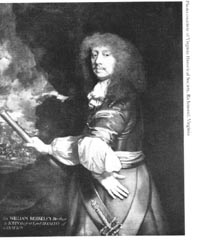
SirWilliamBerkeley2Following Samuel’s death in 1669, Frances inherited his large estate and in 1670, she married yet another politician, Sir William Berkeley, Governor of Virginia (photo). They took up residence at his estate called Green Springs (photo) near Williamsburg, Virginia. Today, about 200 acres of the original plantation land is preserved by the National Park Service, which acquired the property in 1966.

green springs


Nathaniel Bacon, T. ChambarsIn 1676 (100 years before the Revolution and the same year her cousin John Culpepper the Rebel was causing problems in Carolina) there was a dispute with the local Indians who had been chased north by militiamen. The Indians raided the Virginia frontier out of anger, hunger, revenge, who knows? Some colonists saw this as an opportunity to isolate or kill the Indians, some saw it as an opportunity for new slaves and lands. It was typical politics with each side rallying for their own cause. A newcomer to the land and the local Virginia Council was Nathaniel Bacon (photo). He asked Sir William Berkeley to form a party to kill off the Indians, but Berkeley refused as some of the Indians were Virginia’s closest allies. In defiance, Bacon raised a group of volunteers to fight the Indians. This led to a civil war of sorts, with Bacon’s followers against Berkeley’s loyalists. It also became a personal vendetta. At one point, tiring of Bacon’s threats, Berkeley bared his chest and dared Bacon to shoot him. After the public display, Berkeley threw Bacon out of the Council, later reinstated him, and then threw him out again. Berkeley ended up being chased out of town by Bacon’s men, who burned down the capital. Bacon died of dysentery in Oct 1676, but the fighting continued for a few more months without his leadership.

Here’s where Frances steps in…

King-Charles-II-king-charles-ii-25010100-333-400

Frances sailed to England on her husband’s behalf to ask King Charles II (photo) for help, and the King, unaware that Bacon was already dead, signed a proclamation for putting down the rebellion. He dispatched one thousand troops to Virginia, along with a commission of three men to find out what the hell was going on. By the time the soldiers arrived, without Bacon’s leadership, the rebellion had died down. The three members of the King’s commission watched Berkeley identify Bacon’s men as traitors and witnessed the hanging of twenty-three of them. Once the commission reported this back to King Charles II, he summoned Berkeley to return to England to explain his actions. As soon as spring arrived, Berkeley sailed to England to plead his case with the King. He became ill on the journey and went directly to his brother’s house in London upon arrival, where he died in July 1677 before getting a chance to tell his side of the story to the King. Frances didn’t receive the news of his death for months.

Here’s where uncle John steps in…

When John Culpepper the Merchant was fifteen years old, he attended Middle Temple, which was a law school. There he met a young William Berkeley, who was not a “Sir” at the time, and the two became fast friends. Though John was trained as a lawyer, he was more inclined to be a merchant, and in 1633, he bought a ship with his brother Thomas (Frances’s dad) called the “Thomas and John.” The ship delivered immigrants to the new world and shipped cotton, tobacco, and the like back to England. This was probably the vessel Frances and her family sailed on in 1650 to move to Virginia. During the rebellion, Frances and William Berkeley needed money to sail back and forth for this rebellion nonsense and they sold off Roanoke Island. Uncle John Culpepper was the lawyer who oversaw the sale of the land to the Lamb family, witnessing William Berkeley’s signature on the deed.

Gov_Phillip_LudwellIn 1680, Frances married her third husband, Col. Philip Ludwell (photo) of the 4,000-acre Rich Neck Plantation. Ludwell had been a chief supporter of Berkeley during the rebellion and also his cousin. Hmm. Frances never relinquished her title however and was known as Lady Frances Berkeley for the remainder of her life. She died around 1695 at the age of 61. Her body is interred at Jamestown Church Cemetery in Jamestown, Virginia.

As for Col. Ludwell, after serving as governor of the Colony of Carolina 1691-94, he returned to Virginia where he served as Speaker of the House of Burgessesin in 1695-96. In 1700, he moved back to England where he died in 1716.

October Ancestry Challenge – Lord Thomas Culpeper, 2nd Baron of Thoresway

oct ancestry challenge-001The October Ancestry Challenge 2013 – 23 posts/23 days/23 ancestors.

We’re in week three!

Ancestor #11 – Lord Thomas Culpeper, 2nd Baron of Thoresway 1635-1689


great wigsell << The Great Wigsell was the home of my 12th great grandfather John Culpeper of Wigsell, brother of Thomas Culpepper of Sussex (not the guy above). A couple of John’s sons were John of Feckenham (my 11th great) and Thomas of Wigsell (still not the guy above). This Thomas had a son named John who was the 1st Baron Culpeper of Thoresway, who in turn had a son Thomas who was the 2nd Baron Culpeper of Thoresway (the guy above!)

Are there enough Thomases and Johns to confuse you yet? Me, too! That’s why I’m going to leave the relationship between me and Thomas 2nd Lord Culpeper up to you. He’s either a cousin or an uncle or something, but it makes my head spin.


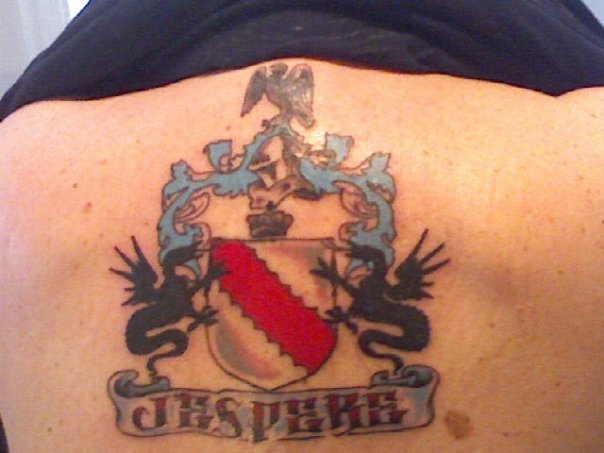
culpepper tatThe most important part is Lord Thomas had no sons, so the Culpeper family crest died with him, as a crest is traditionally given to a son. I figured since nobody was using it, nobody would mind if I did, so here’s my Culpeper tat on my back. The bottom is French and means “I hope.”

Okay, on to Lord Thomas Culpeper, 2nd Baron of Thoresway…


lord_thos Lord Thomas Culpeper, 2nd Baron Thoresway (left), was the son of Judith and John Culpeper, 1st Baron of Thoresway. As a royalist, his father left England at the end of the English civil war following the execution of King Charles I. Lord Thomas lived with his father in the Netherlands and there on 3 August 1659 married the Dutch heiress Margaretta van Hesse. (pictured below)
lady_marg (On a weird note, my trophy husband’s last name is Hess, but I’m sure he’s German, not Dutch.)

In July 1677, upon the death of Virginia Governor Sir William Berkeley, Lord Thomas became governor of Virginia but did not go there until 1679. While in Virginia, he seemed more interested in maintaining his land than governing, and he soon returned to England, though he did continue to serve as an absent governor until 1683.

Leeds-CastleCulpeper’s marriage to Lady Margaretta was not a happy one. She lived at Leeds Castle (photo), and Lord Thomas lived in London with his mistress Susannah Willis and their two daughters. He died in his house in London on St. James Street and left a will in favor of Willis, which Lady Margaretta had suppressed. I assume Lady Margaretta didn’t even find out about the death for quite some time after it occurred. I also have reason to believe her daughter Catherine (mentioned below) may or may not be the child of her husband, but you can read about that scandal in my book “John Culpepper, Esquire,” the third book in the Culpepper Saga.


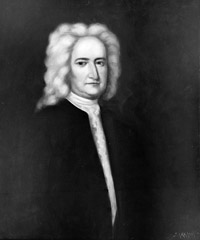
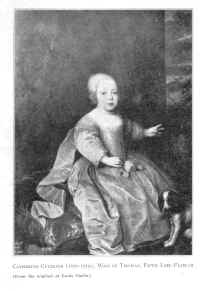
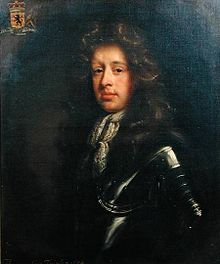
catherine culpeper fairfaxLord Thomas’s only child with Lady Margaretta was a girl, Catherine Culpeper (pictured as a child), and thanks to her mother’s diligence getting the will suppressed, young Catherine inherited much of her father’s wealth. A year after his death, in 1690, Catherine married Thomas Fairfax, 5th Lord of Cameron (pictured below – look at those pouty lips!), thereby transferring the Culpeper wealth into the Fairfax family. The Culpeppers and Fairfaxes shared a long history of clashes, beginning with battling in the English Civil War in the 1640s when 3rd Lord Fairfax (Thomas Fairfax’s grandpa) was a General in the parliamentarian army and the Culpeppers (Catherine’s great uncles) were Royalists in the service of the King. You can read one of those stories here. I imagine a Fairfax/Culpepper marriage was quite a scandal in both families, so he either married her for her castle or for true love. Either way, you can imagine I’ll turn it into a book someday.Thomas_Fairfax 5th baron of cameron, catherine culpeppers husband


In Virginia, both Culpeper County and its county seat, the town of Culpeper, Virginia, are named for Lord Thomas Culpepper 2nd Baron of Thoresway.

John_Lord_Colepeper_Arms

October Ancestry Challenge – Sir Thomas Culpeper

oct ancestry challenge-001The October Ancestry Challenge 2013 is 23 posts in 23 days  about 23 ancestors.

Ancestor #9 – Sir Thomas Culpeper of Hardreshull, Bayhall, and Exton

***** or *****

We’re All Connected, but Don’t Tell My Trophy Husband!

grandpa dallas

I’ve studied genealogy since I was a teenager, and am constantly stunned that my trophy husband only knows his grandparents and great grandparents and doesn’t care to know any more than that. He said his great grandfather came over from England and for reasons unknown, took the surname Dallas (photo). He told me, “You’ll never trace my family because no one knows who Grandpa Dallas really was.”

Well, I take that as a direct challenge.

A day later I asked him, “Would you like to know who your Dallas really was? Yes, I found him. His name was Stanley and he was the son of Captain Edmund Stanley.”

As a side note, I’ve spent years and years tossing it in his face that I come from Nobility. I have Lords and Sirs all over my family tree and there’s even a good chance I descend from King Charlemagne himself.

So anyway, I traced the Stanleys way back and found my trophy husband’s 16th great grandfather was Sir Thomas Culpeper of Hardreshull, Bayhall, and Exton. WAIT! SIR THOMAS WAS MY GRANDFATHER, TOO…he’s my 17th great. So, hubby and I are related waaaayyy back when. That’s cool.

But do I stop there? No! …I should have stopped there.

I found that Sir Thomas had two wives. I descend from the second wife Joyce Baynard, and trophy hubby descends from the first wife, Lady Alianora de Greene.

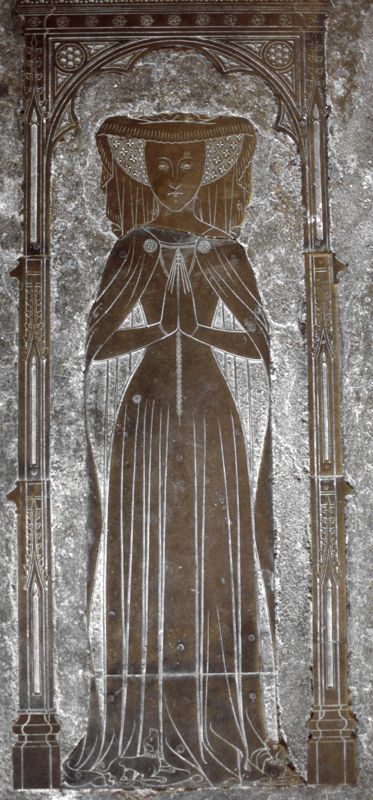
alianora culpepper cobham, church of st peter and st paulsir reginald, church of st peter and st paulSir Thomas and Lady Alianora had a daughter also named Alianora (Eleanor) who married Sir Reginald 3rd Lord Cobham.

(photos are Alianora and Sir Reginald, Church of St Peter and St Paul in Surrey)

Alianora and Sir Reginald had a daughter, Elizabeth Cobham who married Richard LeStrange. These LeStrange guys are all Barons. For you “Cousin’s War” fans, are any of these names starting to ring a bell yet? Ok, we’ll continue.


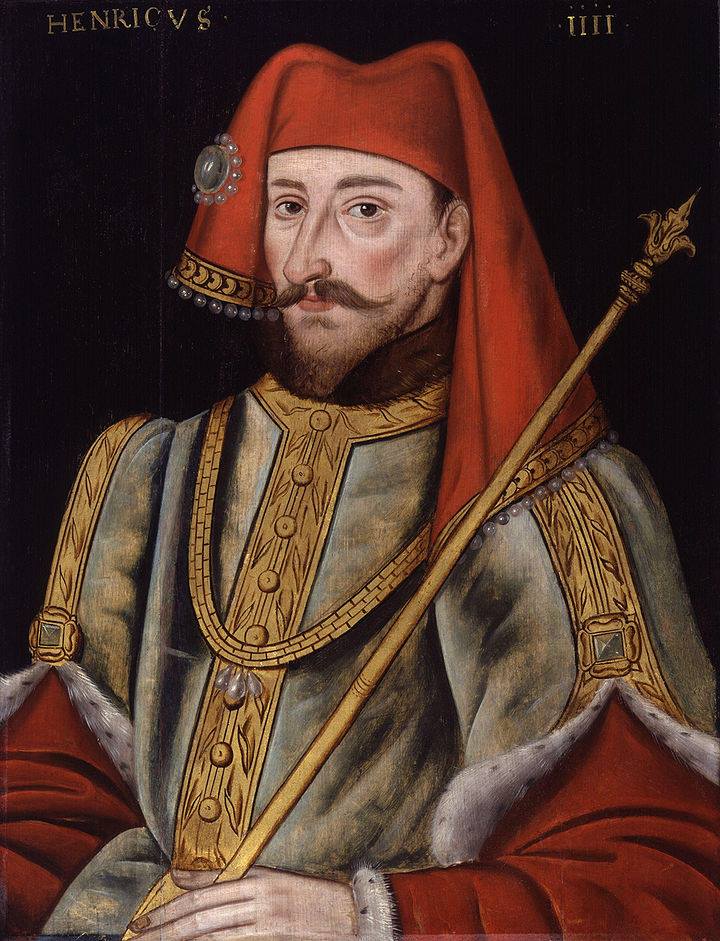
Elizabeth and Richard had a son named John LeStrange who married Jacquetta Wydeville. I’m sure THAT name rings a bell.

john lancasterJacquetta’s mom was Jacquetta de Luxembourg. Her first husband was John of Lancaster Duke of Bedford (photo), who was King Henry V’s brother. Jacquetta was a cousin of the Holy Roman Emperor and the marriage was meant to strengthen ties between England and the Holy Roman Empire. When the Yorks defeated the Lancastrians in 1461, both Jacquetta’s husband, John of Lancaster, and King Henry V were killed in the battle. Edward IV of York became king.


Rivers_Earl richard woodvilleJacquetta de Luxembourg soon married Sir Richard Wydeville Baron Rivers (photo) and went from being a Duke’s wife to being a Baron’s wife. I don’t know if that’s a step up or a step down. They had 14 children including the young Jacquetta Wydeville.


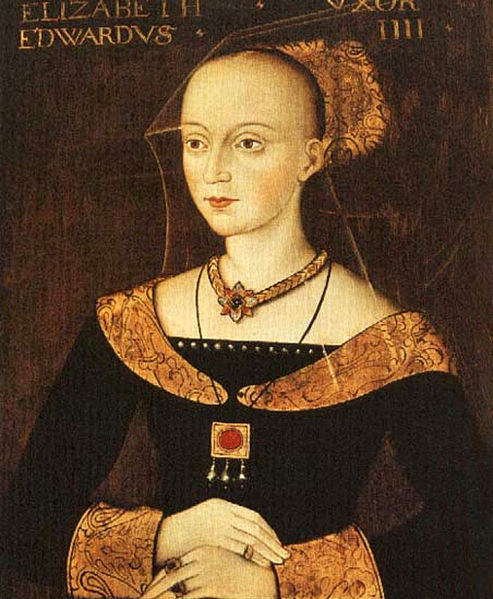
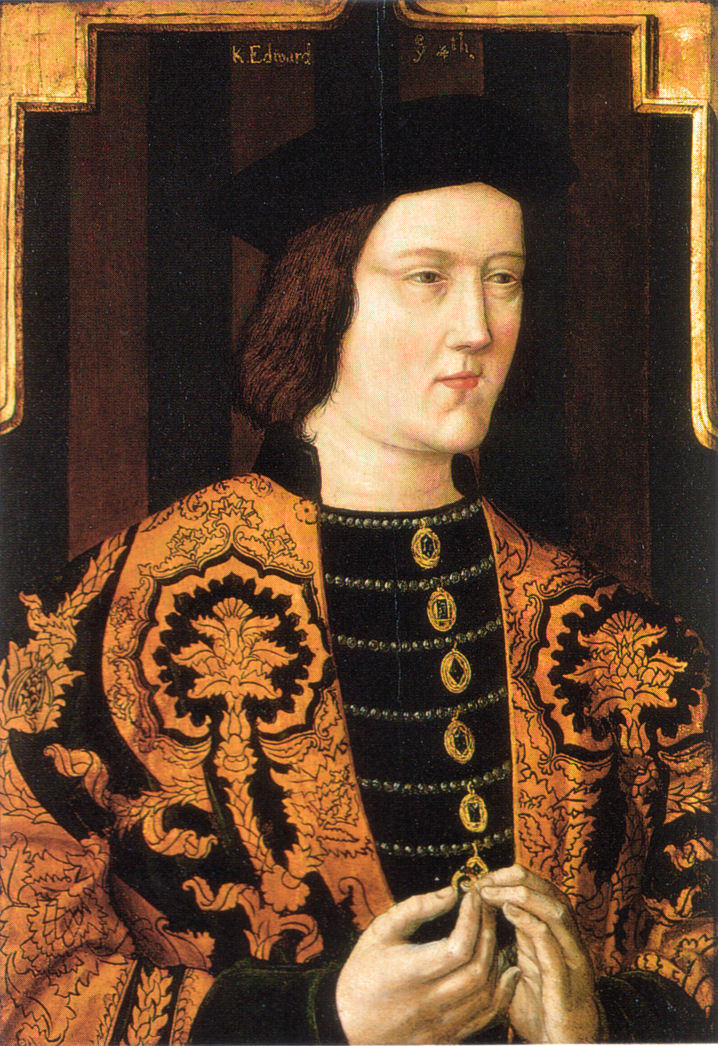
493px-ElizabethWoodvilleEdward_IV_PlantagenetTheir eldest daughter Elizabeth Wydeville (photo) soon married King Edward IV(photo) and became Queen of England, giving birth to the Tudor era, as she was the grandmother of King Henry VIII.


So, seeing that Jacquetta of Luxembourg and Sir Richard Wydeville are my trophy husband’s 13th great grandparents, I guess he actually has more blue blood than I do. But, please, please, don’t tell him.

October Ancestry Challenge – How far back can you go?

oct ancestry challenge-001The October Ancestry Challenge 2013 is 23 posts in 23 days (Monday through Friday) about 23 ancestors.

We’re ending week two!

Ancestor #8 – Zachariah Prickett

How far back can you go?

I’ve traced my roots so far back, there is some evidence that I am descended from King Charlemagne. The cool thing about that is his family is traced very accurately back to sometime in — wait for it — BC.  Yes, Before Christ. Yes, a really, really long time ago.

But as far as my American roots go, as far as I can tell, I am a 13th generation American.

Most of my family came to America from England in the 1600s, and they all seem to have migrated south in the 1800s when the U.S. Government started selling off large plots of land to get the country settled. Someday I’ll sit down and figure out the exact numbers of generations and how far back each go, but when you get up to your 10th greats, there are 2048 of them!!! I just don’t have that kind of time.

I have a lot of 10th, 11th, and 12th generation American ancestors, including a 12th generation on my dad’s Crane side. My 9th great grandpa John Weldon’s (1626-1711 Massachusetts) great grandson’s granddaughter, Mary Polly Weldon, married Jeremiah Crane in 1801. They were my 4th greats.

But the farthest back I can trace my American roots is on my mom’s side. He was my 13th generation, 10th great grandpa Zachariah Prickett, born in Burlington County, New Jersey in the mid to late 1600s. Burlington County is just east of Philadelphia, south of Trenton, northwest of Atlantic City.

Zachariah married a woman named Ellipha in 1699 and had at least four children: John, Zachariah Jr, Hannah, and Elizabeth.

The line from Zachariah to me is:

13. Zachariah Prickett

12. John Prickett

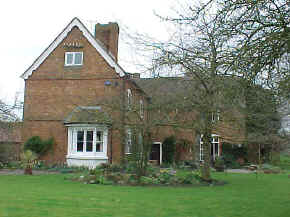
11. Capt Jacob Prickett. prickett Capt Jacob Prickett home built 1781 Fairmont, WVThis was his home built in 1781. It was located just past Prickett’s Fort State Park in Fairmont, West Virginia. It was destroyed by arsonists on March 7, 2005. Jacob was a Revolutionary War soldier. prickett Jacob Prickett II headstone
10. Josiah Prickett

9. Sarah “Sally” Prickett, who married William Howington

8. Herod Howington

7. Nimrod Howington

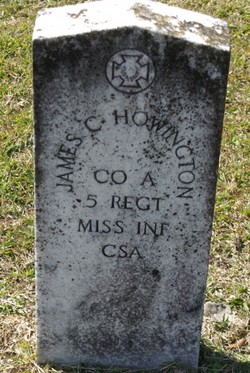
howington James C Howington Headstone6. James C Howington – Civil War soldier <<<

5. John Thomas Howington


burke JP and Mary howington

4. Mary Elizabeth Howington who married John Patrick “Pat” Burke <<<

3. Ina Inez Burke (Ancestor #7) who married Earl Wilmar Culpepper


Momma2. Linda Faye Culpepper, my mother <<< who married my daddy, Andrew Frank Crane V V VDaddy

crane lori baby1. and…..ME!

October Ancestry Challenge 2013 – John Culpepper the Rebel

oct ancestry challenge-001


The October Ancestry Challenge 2013 is 23 posts in 23 days (Monday through Friday) about 23 ancestors. It’s still not to late to join us. Come on, you can catch up.


Ancestor #3 – John Culpeper of Culpeper’s Rebellion


downloadCulpeper’s Rebellion took place in 1677 in Albemarle County, Province of Carolina—which later became North Carolina.

Long story short, the people were fed up with the government and fought back—a story we’ve heard a hundred times. This story, however, is different because John Culpeper, the leader of the rebellion, was my uncle. He was brothers with my 9th great grandfather Henry, sons of my 10th great grandfather John Culpepper the Merchant, who was the subject of my Ancestor #2 blog.

The government of the Carolina colony, set up by His Royal Highness King James I and ruled in 1677 by His Royal Highness King Charles I, consisted of eight Lords Proprietors, the head being deputy governor Thomas Miller, who was also the tax collector. The people were increasingly unhappy with Mr. Miller as they had been taxed nearly to death, and he was severely limiting their freedoms. The final straw came when England passed an act regulating and taxing the shipping of goods to and from the colonies. It sounds like we’re leading up to the Boston Tea Party, but not yet. That didn’t happen until 1773—almost 100 years later. Maybe the people who currently tax us should take a look at history and see the results.

Anyway, young whippersnappers John Culpeper and George Durant, captured and imprisoned Thomas Miller and the members of his cabinet and held them in prison for two years while John stepped in and acted as governor. Fortunately King Charles was too busy partaking in pleasures to worry about those disorderly colonies, so they were free to convene their own legislature and exercise all powers and duties of their own government.

No one cared much about the governing of the colonies, but when the Crown heard rumors that John was acting as tax collector/treasurer and was handing the money inappropriately, he was summoned to England to plead his case. One shouldn’t embezzle from the Crown. When he arrived, he was arrested for treason and embezzlement. He was put to trial, but he was found not guilty as he was acting under the orders of a properly elected assembly …namely his own cabinet.  huh? It probably didn’t hurt that daddy was a lawyer and highly esteemed in the colonies.

Culpeper’s Rebellion was a step towards American independence, fanning the flames that would 100 years later become the Revolutionary War.

October Ancestry Challenge 2013 – John Culpepper the Merchant

oct ancestry challenge-001The October Ancestry Challenge 2013 is 23 posts in 23 days (Monday through Friday) about 23 ancestors. It’s still not to late to join us.

Ancestor #2 –  John Culpepper the Merchant

My 10th great grandfather was John Culpepper, whom we refer to as John Culpepper the Merchant. He was born in 1606 in Kent, England to John Culpepper of Astwood and Ursula Woodcock, and some say he may have died in Virginia around 1674. I say “may have” because there is some genealogical confusion as to which John Culpepper was which. There were fathers, sons, and brothers all with the same name confused further by very sketchy records. Through my research, I have come to believe the John Culpepper who died in 1674 was actually his nephew, son of his brother Thomas.

Anyway, we do know John married a woman by the name of Mary and had sons named Henry (my 9th great grandfather), Dennis, James, Robert, and John of “Culpepper Rebellion” fame. At this point in history, female children weren’t noted, so between the five male births from 1635ish to 1645ish there may have been daughters born also. There is some evidence he had daughters named Hannah and Susannah, which sounds to me like a Dr. Seuss book, but the more I look at them, the more I’m convinced they were not his daughters. There is also further evidence of another girl named Abigail. I haven’t examined her records (or lack of them) yet.

feckenhamcourtfrontA few years ago, my cousin Warren Culpepper visited England and attempted to get pictures of John’s childhood home, the Culpepper manor, Astwood in Feckenham, but they were asked to leave by the owner. These photos are as close as they got.

feckenhamcourtgate

John is thought to be the ancestor of most American Culpeppers. He and his brother had ties to Virginia, so between the boys running back and forth to England (who kept VERY good records) and colonial America (who kept very poor records) we kind of lose track of him.

St_John_the_Baptist,_Harrietsham,_Kent built in the 11th centuryThe few other details we know is that he was baptized in Harrietsham, England at St. John the Baptist Church (built in the 11th century) on 6 Oct 1606; he was admitted to Middle Temple (a law school) to be trained as a lawyer on 7 May 1621, listed in the records there as the second son of John Culpepper of Astwood, Esquire; and he probably didn’t like being a lawyer, because he took up a career of merchant instead. Darned kids never do what you want them to do.

Before 1633, he became part owner with his elder brother of a merchant ship called the “Thomas and John,” which was involved in trade between England and the colonies. Merchants of colonial America left very few records, so our research suffers, but it would appear he and his brother owned a trading company with points of presence in England, Barbados, New England, and Virginia. Maybe this is where my love of tall ships comes from.


culpepper book 2 cover ideaEven though we don’t have a lot of records about John Culpepper the Merchant, we can tell he was obviously a brave man, sailing back and forth across the Atlantic like that. Ahoy, sailor!