A to Z – E is for Elizabeth “Elly” Hays

a2z-h-smallA to Z Blog Challenge

E is for Elizabeth “Elly” Hays

Elly was born in North Carolina in 1774 to Nicholas Hays and Ally Steele. It’s been very difficult finding a paper trail of her young years. The first I’ve found is her marriage certificate 20 Dec 1790 to James Rodgers Jr, which is signed by her brother Samuel Hays. This is in Greene, Tennessee. All of the family records bounce back and forth between Tennessee and North Carolina, so I suspect the state border was blurred at that time.

Once she married, the paper trail becomes clearer.

She gave birth to Elizabeth in 1791, Hays in 1793, a female who is listed in James’s will as “my deceased daughter” in 1794, Absolom in 1796, Margaret Peggy in 1797, Susannah in 1799, Harvey in 1800, Martha Ellen “Ellie” in 1801, Polly in 1806, Napoleon Bonapart in 1808, and Andrew Jackson in 1810, and finally, Lavenia in 1819.

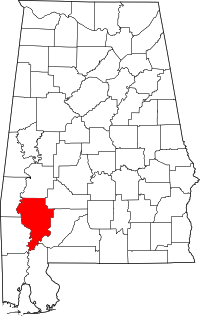
clarke-in-alabamaIn 1811, the family, yes, all thirteen of them (Lavenia wasn’t born yet), moved by wagon from Tennessee to Clarke County, Alabama. At the time, Alabama was part of the Mississippi Territory as Alabama did not become a state until 1819. The area was a wild frontier, filled with the Creek Indians who were causing all the mischief and death they could to keep the white man from encroaching on their land. This was also a few months before the War of 1812 began. In the south, the war was between the Americans and the Indians, who were armed by the British.

The family suffered through serious harassment by the Creek Indians. Their livestock was raided and it is reported their home was burned to the ground. This was at the time both of her older sons, Hays and Absolom, were off serving in the Mississippi Militia and were not home to help.

When the boys were discharged in 1818, Elly packed her family and moved west to Lauderdale County, Mississippi, to the land of the gentle Choctaw Indians.

Following her husband’s death in Mississippi in 1826, Elly moved back to Alabama and lived with her eldest daughter, Elizabeth.

An abstract of her husband’s will is as follows:

WILL OF JAMES RODGERS

Copiah County, Mississippi, August 7, 1826 – Page 180

Orphans Court.

In the name of God Amen, I James Rodgers, doth find myself weak and infirm in bodily health, though strong in recollections and understanding doth therefore recommend my soul to God, my body to the Grave and my worldly effects to be deposed as follows–

 To my dearly beloved wife Elly Rodgers

 My oldest daughter Elizabeth Matlock

 My Eldest son Hays Rodgers

 William H. Wilson, the husband of my daughter and deceased, I give $1.00,

 My son Abslum Rodgers

 My daughter Peggy Rodgers

 My daughter Susanah Rodgers

 My daughter Ellie Kirk

 My son Harvey Rodgers

 My daughter Lavina Rodgers

 My daughter Polly Hendricks

 My son Bonapart Rodgers

 My son Jackson Rodgers

Lastly I, constitute and appoint my son Hays Rodgers and John Deaton, Executors.


Elly died in Grove Hill, Clarke County, Alabama in 1839.

The exact date of her death is unknown. Her burial place is unknown.

Elly is my 5th great grandmother.

41n6zHpRqRLI wrote a book about her called “Elly Hays.”

It’s available at Amazon. Click here. 

On This Day in 1852

A quiet life. An almost uneventful life. A nondescript life.

On this day in 1852, Martha Jane “Mattie” Mercer was born to Amos Windham Mercer and Amanda Sylvester. She was somewhere in the middle of a dozen kids, 8 boys and 4 girls. Her father was 52 years of age when she was born. Her mother was 23. Hmmm. The family made their home in Clarke County, Mississippi, and Mattie lived her entire life there.

At the age of 21, she married Andrew Jackson “Jack” Crane on 4 Dec 1873 and had three children: Ella Jane 1874, Minnie Lee 1878, and my great grandpa Amos Bolivar 1881.

There is nothing outstanding in the genealogy records – no loss of large numbers of family members due to war or disease, no records of still-born infants, no legal records of incarceration, no newspaper clippings, no higher education, nothing out of the ordinary. It seems she lived a quiet life in the same small town she was born into.

After 32 years of marriage, her husband died in 1905 at the age of 53. The subsequent census records show she lived with her daughter Ella, where she remained for the rest of her life. She never remarried. She died at the age of 93 on 28 Nov 1945.

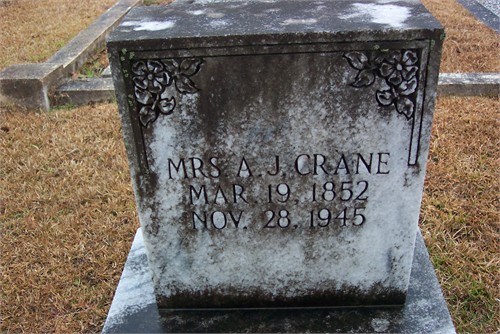
She is laid to rest at McGowan Chapel Cemetery in Clarke County, Mississippi, just down the road from her home. Even her tombstone is nondescript, only referring to her at Mrs. A. J. Crane.

Rest in peace, Grandma Mattie.

mercer martha jane mattie mercer

This story brought to you by On This Day: A Perpetual Calendar for Family Genealogy

On This Day in 1899

On This Day in 1899, this cute little girl was born to Thomas Gilbert Lafayette Keene and Sarah Elizabeth “Bettie” Brown. I’ve written about her before as she was one of my favorite people in the whole world. She was my great grandmother, and I had her in my life until I was eighteen years old.

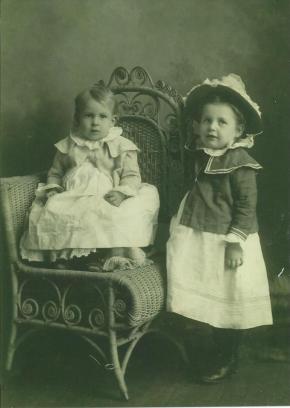
Earl Vandorn and Eula KeeneEula Ouida (WEE-duh) Keene Pickett was born in Lauderdale County, Mississippi and lived there her whole life. She had an older 1/2 sister from her mother’s first marriage and two older biological sisters. She also had two older brothers and one younger brother (shown in the photo), and she had a brother who died as an infant before she was born.

At the age of 17, she married Benjamin Berry Pickett. The Pickett clan was a wild bunch, caught up in moonshine stills, run-ins with local law enforcement, as well as a shoot-out with a revenuer (tax collector) over a moonshine still that landed her husband in jail for a time.


I didn’t know much about her life when she was alive – the Keenes didn’t speak much of the past – more on that later – but as I started looking at that side of the family through ancestry research, I found her to be quite fascinating. She had a son at the age of 18 and a daughter at the age of 19 (my grandmother). Life seemed to be going along as expected.

At the age of 22, things began to turn sour.

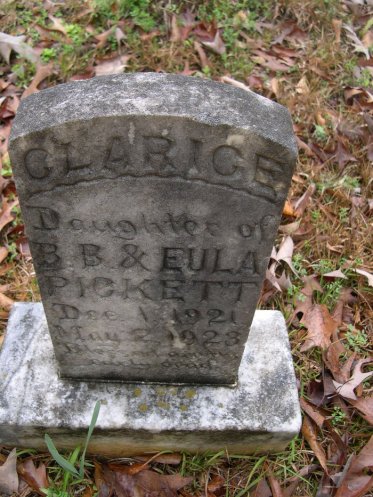
In September of 1921, he father died. She was six months pregnant with her third child. In December she gave birth to a daughter and named the child Fleta Clarice after her 1/2 sister. Though fourteen years apart, the two sisters must have had a great relationship, as a few months before, Fleta had a daughter and named her Eula.

Seventeen months later, Fleta Clarice died of pneumonia. They held the funeral in their living room.

pickett fleta clarise headstoneThe Meridian Star, May 8, 1923

 Fleta Marie (Clarice) Pickett Born: December 1, 1921 in Lauderdale County, MS 

Died: May 8, 1923 in Lauderdale County, MS 

Fleta Marie (Clarice) Pickett Fleta Marie Pickett, 17-month-old daughter of Ben Berry and Eula Keene Pickett, who reside near Zero, MS., passed away this morning at 4 o’clock. Funeral services will be held from the residence Wednesday morning at 10 o’clock. Interment is to follow in Fisher Cemetery. 

A month later, Eula’s sister Fleta died at the age of 38.

This was just before the bloody shoot-out with the revenuer which landed Ben in jail from 1924 to somewhere around 1933. I’m glad Eula didn’t endure those tragedies without her husband by her side, but he certainly wasn’t home in 1926 when Eula’s mother passed away.

These tragedies helped me to understand why she was such a woman of faith. Sometimes you just don’t have anything else to hang on to.

Okay, I promised some family background on the Keenes. In 1859, her father was the last born to Green Keene and Sarah Tabitha. He had an older brother and three older sisters. In the 1860 census, the Keens also had grandpa Gilbert Keene and aunt Elizabeth Keene living with them. By the 1870 census, Thomas was eleven and living with his aunt Elizabeth and two of his sisters. Somewhere between the 1860 and 1870 censuses, his parents and his grandfather had died. In the 1880 census, he was living with his married sister Martha, her husband, and their three children, as aunt Elizabeth had died. In 1887, his sister Martha died. I always found it interesting the Keenes didn’t discuss the past, but in Thomas’s case, he may have been too young to remember his parents or his grandfather. It seems every adult who took care of him died, so maybe he didn’t see any point in dwelling on the past or the sadness. I’m thinking Eula inherited that trait from her father.

In September of 1936, she received the phone call every parent dreads. Her son had been involved in an automobile accident and on the verge of death. He was nineteen.

Eula Keene Pickett with Howard and AzaleaThe Meridian Star, September 5, 1936

Howard Benjamin Pickett 

Born: November 19, 1917 in Lauderdale County, MS 

Died: September 3, 1936 in Newton, MS 

Howard Benjamin Pickett, 19, son of Mr. and Mrs. Benjamin Berry Pickett of Meridian, who was injured in an automobile crash near Newton on Highway 80, died in a Newton hospital late Thursday. Miss Hazel Brasfield, 15, also of Meridian, remained in a critical condition Friday morning. Pickett, who was said to have been driving the automobile when it crashed at 5 a.m., received internal injuries. He never regained consciousness. Miss Brasfield is suffering from a crushed thigh. Other occupants of the machine were Jim Edwards, Billy White, Neva Ezell, Jack Ward, and Geneva Burt, all of Meridian. All were slightly injured but were able to return to Meridian soon after the accident. Pickett is said to have rented the automobile from a 630 taxi driver at 7 a.m. Wednesday, stating he intended to go to Jackson. The crash occurred when a tire blew out, causing the machine to leave the highway, overturning several times before striking a stump. Funeral services will be held at 4 p.m. Friday from the Eight Avenue Baptist Church. Surviving are his parents: Mr. and Mrs. Benjamin Berry Pickett and one sister, Azelea Pickett, all of Meridian. The Rev. Ed Grayson and Rev. Blanding Vaughan will officiate at the funeral. Interment will follow in Fisher Cemetery.

While Eula’s family grew to include a son-in-law, two grandchildren, and eventually six great grandchildren, over the years, she lost everyone from her youth. Her brothers died in 1939, 1947, and 1960. Her sisters died in 1964 and March of 1981. Her husband died in 1973.

She died 3 Oct 1981 and is laid to rest in the Fisher family cemetery in Zero, Mississippi with her husband and her children.

Happy birthday, Grandma! ♥

Pickett Ben and Eula Pickett

This post brought to you by On This Day: A Perpetual Calendar for Family Genealogy

On This Day in 1828

On This Day in 1828, my 3rd great grandpa Jeremiah William Crane Jr was born.

He was born March 17 to Jeremiah William Crane Sr and Mary “Polly” Weldon in Alabama. He was the last of eight children who were born between 1798 and 1828. And, yes, they were celebrating St Patrick’s day around the world on that day. Places like New York and Boston were already hosting parades.

But, I stray from the story…

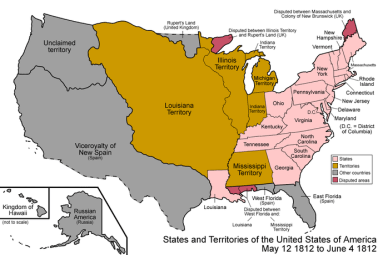
ted-states-1812-05-1812-06.pngDuring the turn of the century in Alabama, the Creek Indians were in the middle of a civil war, as well as fighting off the white men who were encroaching on Indian territory. The War of 1812 in the North was a fight between the British and the Americans, battling over waterways and trade routes. The War of 1812 in the South was between the Americans trying to expand their newly formed nation and the Indians who were armed by the British. The Mississippi Militia was formed across the Mississippi Territory to battle the Indians. At the time the Mississippi Territory encompassed all of Mississippi and Alabama. Alabama didn’t become a state until 1819.

In 1830, the Treaty of Dancing Rabbit Creek was signed and was the first step in the removal of the Indians from the area. The American government began selling parcels of land quickly to get the area settled, and people soon began moving west from Alabama into Mississippi. At the time of the treaty, Jeremiah was only two, but his family had certainly witnessed great war and great change before he came along. His father had actually enlisted and served in Carson’s Regiment in the Mississippi Militia in 1814, but he only served for two months.

I assume things in the area calmed down a bit by the time Jeremiah became a man. I don’t have an official record of his marriage, but he was married to Sarah Frances Grimes, who was about four years his senior. They had their first child, a daughter whom they named Francis, in Alabama in 1847. Jeremiah was 18.

The whole family moved across the border into Mississippi during the next year, and this is where Jeremiah and Sarah’s second daughter, Emily, was born in 1848. Their third child was a son, George William Crane, in 1850, and all were residents of Clarke County, Mississippi in the 1850 census.

In 1852, they had my 2nd great grandfather Andrew Jackson “Jack” Crane, and in 1856, a daughter, Jerry Elizabeth.

After the birth of Jerry Elizabeth, there are no further records of Jeremiah.

The 1860 census shows Sarah living alone with the children- Francis, Emily, GW, Jack, and Jerry, but there is no husband listed. Above and below their names on the census are many of Jeremiah’s brothers with wives and families, and Jeremiah’s parents. They are all listed as farmers. Next to Sarah’s name, the occupation space is blank.

I don’t know what happened to Jeremiah, but he died somewhere between the ages of 28 and 32. The 1860 census states his wife was now 36 and his children were between the ages of 4 and 13.

Whatever happened to him, I hope he’s resting in peace.

Happy birthday, Grandpa Jeremiah William Crane!

forgetmenots

This post is brought to you by On This Day: A Perpetual Calendar for Family Genealogy

On This Day in 1836

On This Day in 1836 my 3rd great grandmother Sarah Ann Elvira Dollar was born.

Don’t you find the name “Dollar” to be a little strange? Well, her father was Ambrose Dollar, her grandfather was Reuben Dollar who came to America from Wales and fought in the Revolution, and her great grandfather was Edward Dolier – probably French Doh-lee-AY or Irish D’Olier. Either one of those makes more sense than Dollar.

Sarah Ann’s mother was Jemima Clearman, whose father was Jacob Van Clearman, whose father was John William Clearman from Germany.

Well, that’s just a crazy European mix, isn’t it?

Let’s go back to her dad’s side for just a moment. This is the transcription of the sworn statement of Dr. J.M. Dollar, the great grandson of Reuben Dollar.

betsy-ross-flag-usa-united-states-of-america-americaGause Texas, August 4th 1913
This is to certify that my great grandfather Reuben Dollar told me of fighting in the Revolutionary War when I was a boy. He came from Wales and fought in the war. He returned to Wales and was disinherited by his father for having fought against the British Crown. After which he returned to America and settled in Edgefield S.C. He died in Miss. in 1858 at the age of 113 years.
Signed J.M Dollar
State of Texas:
County Of Milam:
subscribed and sworn to before me this August 4th. 1913
J.R. Fraim, Notary Public, Milam co. Texas

I find these old records fascinating!!

Anyway, back to Sarah Ann…

pickensShe was the 6th born of 8 children, half boys, half girls. She was born March 11, 1836 in Pickens County, Alabama. Pickens County is right on the Mississippi border, and at some point between 1840 and 1850, the family moved west to Mississippi. At the age of 17, on October 6, 1853, she married William Lafayette Brown, Jr. in Lauderdale County, Mississippi. Keep in mind, the above Patriot grandfather was still alive until 1858 and died in Lauderdale County, Mississippi, so he might have been living with them. If not living with Sarah Ann and her husband, at least with a nearby family member.

Sarah Ann gave birth to her first child at the age of 18, James Floyd Brown in 1854. He was followed by John Ambus Brown in 1857, Angeline Brown in 1859, William Harrison Brown in 1860,  Sarah Elizabeth “Bettie” Brown in 1862, Warren Brown in 1865, Franklin Carlton Brown in 1867, Charles Berry Brown in 1871, Pinkney Earlie Brown in 1874, and Martha Catherine Brown in 1877.

Do you notice anything strange about those birth dates?

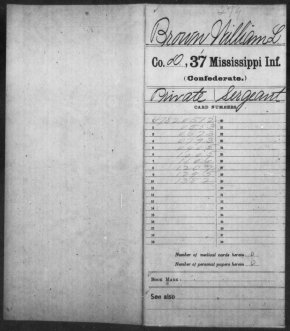
Page 1When the Civil War broke out in 1861, her husband was about 25 years old. Yes, he went to fight for the Confederacy. As a matter of fact, he was a sniper who guarded Mississippi bridges in the area. At one point, he was captured by the Union. He escaped. He went back and allowed himself to be captured again to help others escape, which he/they did. After that, he had a bounty on his head for the rest of the war.

It doesn’t look like the war or the captures between 1861 and 1865 stopped him from visiting home at least a few times. Obviously he stopped by the house long enough for some hanky panky. The girl born in 1862 was my second great grandmother. Her birthday is the same day as mine, November 19.

One thing for sure, these people didn’t back down from a challenge! I look forward to doing more research on the Dollars and Clearmans very soon.

Sarah Ann died in Mississippi July 18, 1915 at the age of 79.

Happy birthday, Grandma Sarah Ann!!

brown william L and Sarah A at goodwater cemetery

This post brought to you by “On This Day,” a perpetual calendar for family genealogy.

Witch Dance

I’ve been working on a new book called Witch Dance. I went down to the real place and took this photo at a nearby location…

bynum mounds photo

Here’s what my amazing book designer came up with, using MY photo. He’s awesome.

witch dance cover

WITCH DANCE

Just south of Tupelo, Mississippi on the Natchez Trace lies a place of mystery called Witch Dance.

When Thomas and Margaret Speedwell took their twins to Witch Dance for a weekend camping trip, they never imagined they would be pulled into a vortex of witchcraft, tragedy, and karma. One of the girls goes missing; the other won’t say what happened on the other side of the hill.

The tragedy pulls together a cast of characters from Margaret’s childhood and beyond – Choctaw and Chickasaw Indians, Toltec ancestors, the extinct Hopewell tribe.

With the help of a childhood friend, a concerned newspaper reporter, and visions by a strange old woman, a two thousand year old mystery begins to unfold, uncovering missing children throughout generations. Who is taking them? Could it be the infamous witches of Witch Dance?

***********************

Here’s an unedited snippet…unedited being the key word there. You, my friends, are the very first to get a sneak peek! 🙂

***********************

Emily and Sarah squealed as they raced each other toward the pair of small hills that sat at the edge of a field. No tree or bush grew on top of the mounds. They were simply two barren knolls of smooth earth, offering neatly manicured grass and clear views of the surrounding land. These hills, historically known to be the ancestral burial grounds of the Hopewell Indians, are today known as the Bynum Mounds, a minor tourist attraction on the Natchez Trace Parkway.

The six-year-old girls raced to the hills as fast as their legs would run. This was nothing new. They raced everywhere. They’d done so since before they learned to walk, crawling faster and faster to beat the other to the prize at the end of the race. Born mere minutes apart, they held the typical sibling rivalry, vying against each other for the prized possession, the favorite toy, or the brightest crayon. But, their favorite competition was racing to the next spot, always endeavoring to be in the lead.

Margaret and Thomas Speedwell had driven down the Natchez Trace from Nashville for a long-overdue getaway with their girls. They arrived yesterday, excited for their weekend camping trip at a place just north of the Bynum Mounds—a campground called Witch Dance.

Witch Dance sounded like a fun place to spend the weekend. It sported an elaborate history, rumored to be the place where witches held their eerie rituals and ceremonies. Legend has it that witches danced around bonfires, and where their feet touched the ground, no grass ever grew again—even until this day. The sign at the entrance stating the legend about the witches was a popular place for souvenir photos by the people who frequented the site – families, ghost hunters, and the curious. The Speedwell family didn’t come down for a ghost hunting expedition. This weekend was simply a chance for Margaret, Thomas, and their girls to shed the stress of their everyday lives and have a little fun.

“I wish they wouldn’t run ahead like that,” Margaret grumbled from the parking lot.

“It’s okay. Let them run,” Thomas replied. “We can see them from here.”

Thomas sensed his wife’s tension, marked by a crease of concern peppering her forehead. He gently reached for her hand as they strolled from the parking lot toward the mounds, following their daughters. The lack of shrubbery and trees made it easy to keep an eye on the girls, but the clear line of sight didn’t help Margaret relax.

“But they always run; through the grocery store, the playground, the parking lot. I’ve scolded them a million times, but I can’t get them to stop racing, no matter the punishment for disobeying.”

Thomas squeezed her hand. “You should let them run as much as they want. Someday they’ll win medals in track or become world-class cross-country runners.” He chuckled softly, attempting to lighten her mood.

Margaret puckered her brow. Thomas knew his carefree tone of voice wasn’t going to make her concerns disappear. He knew she wanted her girls to be proper ladies, not sweaty athletes.

He felt her stiffen when they heard Emily shriek and they both watched the girls run up to the top of one of the hills.

***

Emily shrieked as Sarah grabbed the back of her pink shirt, attempting to catch up, but the material slipped from her fingers. Emily stretched her arm back for Sarah to grasp, and they both laughed as Sarah grabbed on and Emily pulled her forward. The curly-headed blondes crossed over the ridge on the top of the hill and began their descent down the other side when they suddenly stopped in their tracks, their eyes wide at the vision looming in front of them.

On a perfect late summer day with a clear blue sky and bright sunshine, a large cloud rested on the other side of the hill. Not a puffy white cloud—more like a menacing shadow. It slowly swirled and circled about a foot above the ground as if some imaginary wind was trying to create a tornado, but there was no wind, not even the slightest breeze. The shape and movement resembled the twister the girls had seen in the movie with Dorothy and Toto, but there was no dirt or debris or witches or houses in the vortex, just blackness.

The girls froze and squeezed each other’s hands. Emily wanted to scream, but she could only open and close her mouth like a fish washed up on a beach. No sound came. It was as if the shadow had sucked all the air out of her lungs. The black maelstrom quickly increased in size and volume as the whirling winds began to howl, starting first as a low hum and growing louder with each passing moment. The hum grew to an ominous sound, simultaneously emitting an ear-piercing shriek and a low agonizing moan. The girls instantaneously released each other’s hands and covered their ears against the painful sounds. The turbulence continued to expand, growing larger and larger as it moved closer to them.

Even with her hands over her ears, Emily thought she heard human voices mumbling something beneath the roar of wind. She narrowed her eyes and cocked her head as if doing so would make the voices clearer. She couldn’t take her eyes off the vortex, but she felt Sarah reach for her arm. Sarah took a step forward, trying to pull Emily forward with her, but Emily pulled back and Sarah’s fingers lost their grip. Emily didn’t want to go forward. As a matter of fact, everything in her gut told her to turn and run in the opposite direction. Run back to her mother, back to her father, back to safety. She sensed a great wickedness in the sight before them, something evil in the whirling darkness. She knew a malevolent presence lurked inside of the shadow. It watched them from the blackness, wanting them to come closer. Sarah grabbed a handful of Emily’s shirt and pulled harder. Emily pulled back again. She turned to run, the pink cotton material of her shirt, again, slipping from Sarah’s grasp. Emily ran back the way they had come as fast as her legs would carry her. She was certain Sarah would follow. Sarah always followed.

The moment she reached the top of the hill, the roaring stopped. The sound of the whirring, the voices, the wind instantly vanished. She saw her parents casually strolling, hand-in-hand, toward the hill. Why weren’t they running? Didn’t they hear the horrible tornado that almost devoured their children? Emily turned around to look for Sarah, but there was nothing behind her but the bright, sunny valley below. The tornado had vanished. There was no sound, no vortex, no Sarah.

Emily collapsed like a rag doll.

****************

Available now at Amazon, Barnes & Noble, iBooks, Kobo. You can compare this rough draft with the final. My editor rocks!

Stuckey’s Bridge on the Travel Channel

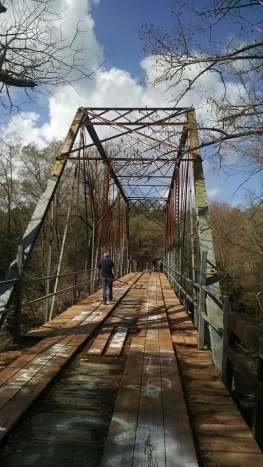
maxresdefaultThe Travel Channel has a show called Most Terrifying Places in America. They’ve been on for a couple seasons now, and they’ve finally gotten around to the most terrifying place I know of – Stuckey’s Bridge.


28379223_10156046535193326_5338741159821456674_n

I was born in Meridian, Mississippi, near the bridge, and heard the creepy legend of the man locals refer to as Ole Man Stuckey my whole life.

Legend has it he was a member of the notorious Dalton Gang, but he was so evil, he was kicked out. He found his way to Lauderdale County, Mississippi where he opened an inn on the Chunky River.

At that time, the river was used to transport goods and produce down to the gulf. Ole Man Stuckey was known to pace the old bridge every evening at dusk, waving his lantern, and offering travelers a warm meal and a soft bed.

In 1901, the Virginia Bridge and Iron Company began rebuilding the 50-year-old wooden bridge. During the project, they discovered bodies buried on the banks.

The townsfolk were suspicious about the creepy man who ran the inn and rounded up a posse to go find him. The mob took him down to the bridge, tied a noose around his neck, and hung him from the new iron rails of the bridge.

His body dangled over the river for five days. When the sheriff cut him down, he splashed into the river below.

Strangely enough, the ghosts around Stuckey’s Bridge today don’t seem to be the victims. The ghost seems to be Ole Man Stuckey, himself. Unexplained lights are witnessed. Footsteps on the bridge and loud splashes into the water below are heard. An apparition of a man walking across the bridge, waving a lantern, is occasionally seen.

28277124_10156046534958326_2362995188662457275_nWe taped the episode for the show last week, and in typical Stuckey-style, there were a few strange occurrences while we were there. A couple phones when crazy for a few minutes. A drone used to take footage of the river and the bridge crashed. We all heard it splash into the water, but when we ran onto the bridge to look over the railing for it, we saw it up in a tree. I wonder what the splash was…

I’ve written three books about the legend (available at Amazon, click here). That’s why they asked me to participate in the show. It was fun to go back home for the day, and I loved being out there again. It’s a cool place and it was a beautiful spring day! I’m very grateful my part of the show was wrapped up before nightfall.


Here’s my cousin dressed up to play the part of Ole Man Stuckey! This picture was taken long after I skedaddled out of there by Stuckey Bridge Canoe and Kayak

28059336_950443391799341_8452101997846096616_n

Sweet Dreams…

On This Day – The Year of the Rooster

2017 The Year of the Rooster!

rooster-bob-marion-rose

If you were born in 1921, 1933, 1945, 1957, 1969, 1981, 1993, or 2005, this is your year!! Not necessarily all good luck, but definitely a year of change and growth.

The rooster is the sign of punctuality. Think of the real rooster, who awakens farmers with the rise of the sun. People born in the Year of the Rooster are honest and intelligent, and most are born naturally good looking.

bbd77de8536ebd73d77ccd3a7ec79627In the Chinese zodiac, January 28, 2017 begins the tenth of the twelve year cycle. Most people would think this year would bring good fortune to those born under the sign, but in truth, this year brings change. The question of luck depends on how you look at those changes.

If you’re a rooster, you may face career changes this year. It won’t all be bad, but you’d be wise to put away a few dollars in case some months get a little tight during the transition. Your relationships will remain stable this year. And, health-wise, make sure you get your annual physical.

Rooster folks have lucky numbers of 5, 7, and 9 and lucky colors of gold and brown.

Celebrities born under the sign of the rooster include Justin Timberlake and Elton John, so maybe we’ll see more of them. Jennifer Aniston and Bette Midler also share this sign. And it wouldn’t upset me to see a bit more of Matthew McConaughey. 🙂

(rooster painting by Theresa Paden at www.TheresaPaden.com)


Historic Stuckey’s Bridge to get fresh coat of paint

An historic wooden bridge spanning the Chunky River in Clarke County is getting a fresh coat of paint Saturday because of recent vandalism.

Source: Historic Stuckey’s Bridge to get fresh coat of paint

Stuckey's cover_webThis above story is the bridge featured in my book, “The Legend of Stuckey’s Bridge.” 

FREE Kindle just for you!

I, John Culpepper” is FREE on Kindle through 4/19. Grab a copy and relax with a good book this weekend. Click here – “I, John Culpepper” at Amazon.

Below is the blurb and a snippet from the book.
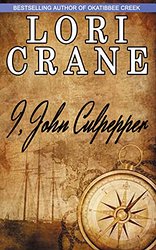
51hHerBrPbL._UY250_I, John Culpepper

John Culpepper was born into a privileged childhood, surrounded by abundant wealth, vast land holdings, and stately English manors. As he grew, he was expected to follow family tradition—attend law school and serve in Parliament, following which he would retire to a quiet life as a country gentleman.

John, however, had different desires. He longed to captain a mighty ship, to hear the snap of the sails, to taste the salty spray on his lips. To follow his dreams, John would have to risk being disinherited by his unyielding father. He would have to defy family convention. He would ultimately be forced to choose between the woman he loved and his mistress—the sea.

I, John Culpepper is a work of historical fiction based on the life of the 17th-century man historians refer to as John Culpepper the Merchant. He is believed to be the progenitor of the modern-day American Culpeppers. He was my 10th great-grandfather.

***********************************************

Here’s a snippet from the day John was born. The photo is the replicas of the ships mentioned in the scene. These replicas were built in the late 1900s and are currently docked on the James River in the Jamestown settlement where the original ships were heading. Road trip! Let’s go!

***********************************************

susan constant, discovery, goodspeed replicas on the chesapeake1606, Blackwall, London

“Master Culpepper! Master Culpepper!” the servant boy shouted over the bells clanging from the church steeple. He pulled the scratchy scarf tightly around his neck to ward off the chill as he pushed his way through the masses gathered on the foggy banks of the Thames.

The crowd had been gathering on the wharf for nearly two days to witness the departure of the ships, and they were prepared for a spectacle unlike any they had seen before. When the tide came in, the three ships carrying one hundred forty passengers and sailors would depart England on an exciting adventure. The air smelled of salt and tar and sweat. This was a remarkable place, a magical place, where the preparations were as exciting at the coming voyage. The anticipation in the air was nearly as thick as the fog.

The boy stopped for a moment as a wooden cask was rolled across the cobblestone in front of him. He watched as workers carefully rolled the barrel up the tilted gangplank. He remained frozen in the middle of the bustling crowd, staring at the ship. He had never seen anything so majestic in all his twelve years, and his jaw dropped at her sheer size. She was an enormous castle-like structure, at least eighty feet in length, her belly bulging at the side where the last of the cargo was being loaded in. Crates and boxes were continually being carried up the gangplank, where they disappeared into the ship’s dark interior. The deck above the cargo area was much narrower and the boy imagined that’s where the sailors would remain during the voyage, climbing masts and hoisting sails. Circling the spiderweb of hemp ropes and yardarms, seagulls cawed as if singing along with the rhythmical clanging of a nearby metal object. The boy scanned the scene for the source of the sound and noticed a blind beggar sitting on the cobblestone near the bow of the ship, tapping a stick on a metal bowl.

Behind the ship floated a second ship, nearly as large as the first, and behind that loomed a third. Each hosted its own cast of sailors, supplies, vagrants, and gangplanks. As wavelets gently raised and lowered the vessels, moans of protest arose from the taut ropes, and the weathered wood creaked with each stomp of a sailor’s boot. Nearby, two mangy hounds barked and growled over some fish scraps, bringing the boy’s attention back to his task at hand. Remembering why he had come, he yelled, “Master Culpepper!” He spun around and around looking for the man, weaving between horses, carts, trunks, and sailors shouting commands. He darted in and out of the crowd, making sure he didn’t bump into any wealthy gentlemen, recognizable by their long cloaks adorned with colorful silk threads.

In April, King James had created the Virginia Company, which would finance sailings to Virginia and Plymouth with the aim of settling colonies and profiting from the land’s abundant natural resources. The aristocracy funded the expeditions with the expectation of making an exorbitant profit. The three ships embarking from Blackwall on this day would sail to Virginia and bring back riches. There were rumors of gold, silver, and gems merely washing up on the shore for the taking. If nothing else, there was surely timber to be harvested. The trees in England had long been felled and the rising price of timber would certainly bring the investors a hefty return.

After they finished loading supplies and the morning fog had dissipated, the ships would raise their sails and ride the tide down the Thames. They would enter the English Channel and cross the great ocean and return by summertime.

The boy bobbed in and out of the crowd, searching for his master.

“Who are you searching for, lad?” a man in a ruffled collar asked.

“Master Culpepper,” the boy replied, removing his hat and revealing his dirty blond hair, which was sticking this way and that like a wheat field in a mighty windstorm. He twisted the wool hat in his hands.

“Johannes or Tom?”

“Johannes Culpepper, sir.”

“I saw him down by the front ship—the Discovery—only moments ago. He was standing right on the dock.”

“Thank you.”

The boy nodded, replaced his cap, and shoved through the workers and onlookers toward the front ship. As he passed the first ship, he looked at the name written on her side and sounded out the letters. He couldn’t make any sense of the words Susan Constant, but when he reached the second ship, he could read God…speed. He wondered if the Godspeed was true to her name. If he were to sail, he would rather sail on the Godspeed and get there faster. From what he understood, it was a two-month voyage if the weather was bonny, maybe four months if the ship ran into rough seas.

He had once spent a morning in a small fishing boat and instantly became green with sickness that lasted for days. He didn’t think he would be able to survive the time it would take to sail to Virginia. He gawked at the bow of the Godspeed as he ran past, witnessing a young lad about his age. The sailor dripped with sweat, even in the chill of the damp morning air, as he coiled ropes and folded sails. What a great adventure it would be to sail to Virginia, but alas, the boy would never get to do such amazing things. He was a servant, a gift from His Majesty King James I to Johannes Culpepper. He would always be a servant, but perhaps someday he would be fortunate enough to serve the king. Even though Master Culpepper was good to him, he wished to someday live at court and be somebody. At least he had the slimmest of chances. His sister had been placed in the kitchen of some castle in Wales. She would never be anything more than a scullery maid. Women would never hold a place in society. They were not welcomed on this voyage, either.

He hopped up and down, unsuccessfully trying to look over the crowd. “Master Culpepper!” he called.

A man turned and pointed. “Culpepper is right over there, son.”

“Thank you, sir.”

The boy sprinted in the general direction, and when he pushed through a couple workers conversing on the dock, he saw him.

“Master Culpepper!”

The boy ran up behind Johannes Culpepper and patted the back of his master’s arm, hopping up and down. “Master Culpepper!”

Johannes turned and looked down at the boy, his square jaw set and his blue-gray eyes burrowing into the lad. “What is it, boy? Why are you making such a commotion?”

The boy panted, out of breath from running. “Master Culpepper, m’lady is havin’ the baby, sir!”

Johannes’s face turned red as he glanced around the crowd to see if anyone was eavesdropping. When he saw no one was, he folded his arms across his chest and stroked his beard. “You came all this way to tell me that?”

“Yes, sir.”

“Very good, boy. You run along home now.”

The boy didn’t move. How could his master not be excited about this news? Did he not want to return home and see his wife and child? Was there anything the boy could say to convince the man to accompany him back to the house?

“Go on. Run along.” Johannes waved the boy off with a flip of his ringed fingers and abruptly turned his back.

“Yes, sir.” The lad backed up, keeping his eyes on his master, wondering what he would tell the governess when he returned home without his master in tow. He had ridden nearly four hours to get to Blackwall this morning, most of it in the dark as the sun had not even risen when he left. He would have a four-hour return trip to think of something. He turned and walked back in the direction from which he had come.

*******************************

Get your copy by clicking HERE.