Saturday Snippet of An Orphan’s Heart

Eric-Hoffer-Finalist-BannerI’ve spent so much time on the Culpeppers lately, I’ve grown a little weary of them. I’ve been writing a four-book series since August, which is itching to become a five-book series. Sigh. I need something a little different. I thought I’d bring back an old story this week. An Orphan’s Heart was a finalist in the 2014 Eric Hoffer Awards. I’m so glad someone else thought it was a good story besides me. 🙂

Our heroine, Ellen, is a young woman in post-civil-war Mississippi, the only female traveling on a wagon train, and I’m sure she’s not used to being treated so harshly. It’s a good thing handsome Luke is somewhat of a hero, because piss-drunk Floyd has grabbed Ellen by the wrist.

If you like the snippet, the Kindle is on sale July 4-6 for $0.99. Pick it up at Amazon HERE.

******************************************

AOH%20cover_webLuke looks past me, over my shoulder. He nods, then there is a sudden noise behind me, and Luke grabs my wrist and says, “Come on!”

“Hey!” Floyd hollers at us as we pull away.

“That’s enough, Floyd!” Buck yells, appearing from the woods behind us.

Floyd turns toward Buck, and moves faster than his inebriated body should be able to. As Floyd loosens his hold on me, Luke yanks me toward the wagon and shoves me in. Buck grabs Floyd by his outstretched arm, spins him around, and puts the knife up to Floyd’s throat. Floyd curses, demanding Buck let him go. I assume Buck refused, for they’re soon having an all-out brawl. I hear the whiskey jug hit the ground, but I don’t know if Floyd threw it or dropped it. I also hear fists making contact with flesh. I can’t imagine Floyd is in any shape to fight off a man like Buck.

I jump when I hear a gunshot. Everything is abruptly silent. Even the bullfrogs stop croaking, and it seems as if time is standing still. I look wide-eyed at Luke, wondering if Floyd has been shot.

“It’s all right,” he says, shaking his head in answer to my unspoken question.

“Are you sure?” I whisper.

He nods. “Yes. I’m sorry. We were hoping Floyd would stay sober, especially with a lady around.”

I hear Buck order Floyd to lie down right where he is and sleep it off, and I breathe a sigh of relief that Floyd is still alive. I don’t hear another word from either man, so I assume Floyd did as he was told.

Luke leaves the back of the wagon. I don’t move. After a few minutes that seem like an hour, he comes back and says, “Floyd has passed out by the fire. You’re safe now.”

“Thank you. I didn’t know I wasn’t safe before,” I mumble to him.

52 Ancestors – #25 Ole Stennis House

52ancestors-2015

This challenge is set forth by No Story Too Small and this week’s theme is “The Old Homestead.”

There is a house in Lauderdale County, Mississippi that I would give anything to own. It was built in 1857 by sixty-one-year-old Hays Rodgers Sr (photo). According to the 1860 census, it looks like he had the help of thirteen slaves. It was the first plank house built in the area. Hays was my fourth great grandfather.

Rodgers Hays Sr

He died of typhoid December 1863, so he didn’t enjoy the house for long, and his wife died the following March. The children were grown and gone, most of the boys lost to the Civil War, so the house sat empty until well after the close of the war. In 1869 it was sold at auction on the steps of the Meridian Courthouse to Major Adam T Stennis (hence the name Ole Stennis House). It remained in the Stennis family for one hundred years but was abandoned and covered in vines toward the end of their ownership.

In 1970, the Hover family bought it and restored it. Mr. Hover told me the only thing he really needed to replace was the rotted front porch. The rest of the house was in good shape. I stopped by there in 2012 and he showed me all around. I didn’t feel comfortable taking pictures of the inside, but I snapped some photos as we left.

MS Cemetery 076

If he ever sells that house, I would love to own it.

52 Ancestors #24 The Heirloom

52ancestors-2015

This challenge is set forth by No Story Too Small and this week’s theme is “Heirloom.”

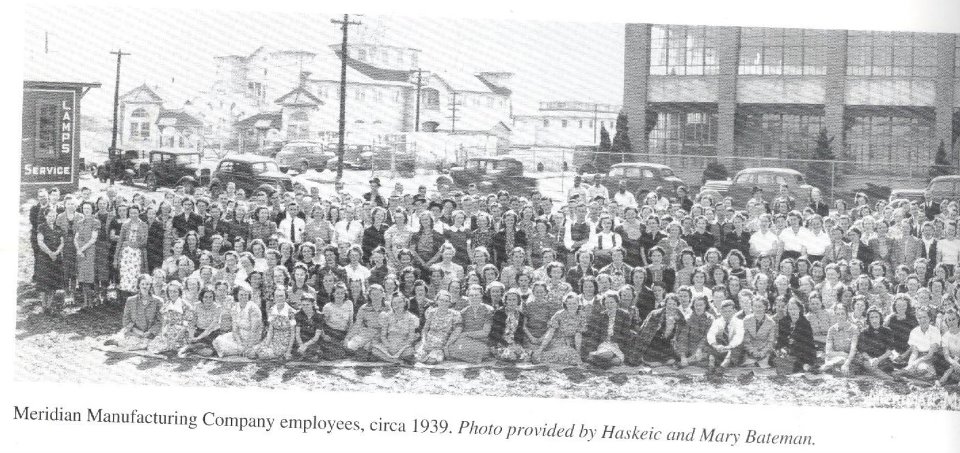
I wish I could say I have lots of old stuff, but alas, I have nearly nothing. I have my maternal grandfather’s old cigar box, and a silver makeup compact from my paternal great grandmother, but the most prize possession is now gone. For a while I had possession of my maternal grandmother’s sewing machine, but it was lost in a move years ago. She was an amazing seamstress and worked for the Burnley Shirt Factory in Meridian, Mississippi. I’m certain she’s in this Burnley employee picture taken in 1939, but it’s so small, I haven’t been able to find her. I don’t even know that I could even recognize her in a picture from 1939.

Burnley Shirt Factory 1939

She died at the age of 59 in 1975 and is still greatly missed. This is her, holding me.

Ina Inez Burke Culpepper 1915-1975

burke ina and gdaughter lori

52 Ancestors #20 Horace Pappy Crane

52ancestors-2015

This challenge is set forth by No Story Too Small,

and this week’s challenge is “Black Sheep.”

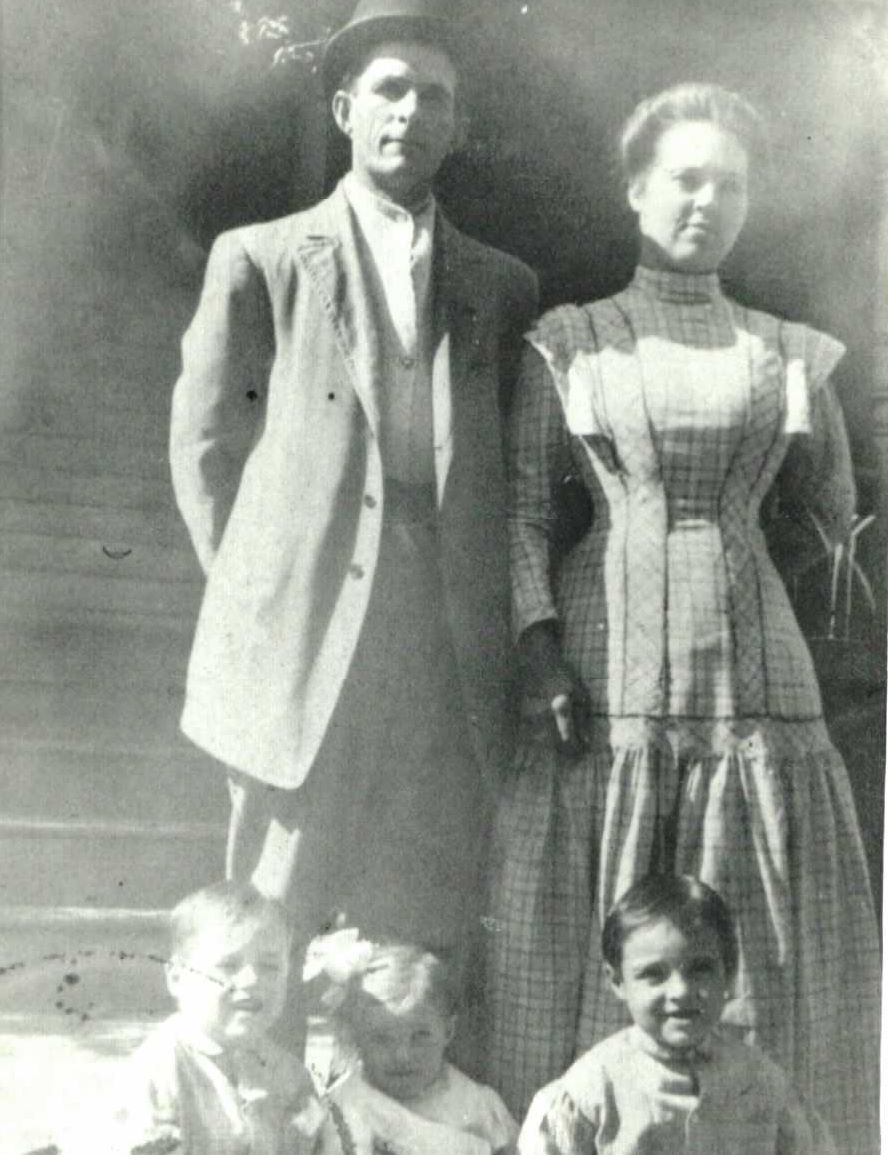
This topic made me laugh as the first person to come to mind was my great uncle Horace “Pappy” Crane. Uncle Horace was born 2 February 1905 to Amos Bolivar Crane and Mary Elizabeth “Minnie” White in Lauderdale County, Mississippi. He was the second of six children. In the following photograph, he is on the bottom far left. The boy on the far right is my grandfather Andrew Franklin Crane.

Amos Crane and Minnie White with Horace, Minnie Ellen, and Frank

Uncle Horace’s claim to fame was driving car #58 in Nascar and surviving a roll-over crash at Daytona in 1960.

This funny black sheep story about him has been pieced together from various relatives and may be a little fuzzy as I have no documentation of the events.

Uncle Horace lived in a modest home in Mississippi and sold off the acres of his property to a builder. The sale did not include his own home, of course. The builder constructed beautiful, expensive homes on the land and eventually came to Uncle Horace to ask when he was going to rebuild. Uncle Horace didn’t realize it at the time, but he had apparently signed a paper stating he would tear down his shack and build a larger, more expensive home in its place. Well, he didn’t have the money to build a new home, so he figured he could make it happen through insurance money and he burnt his own home down.

The arrest happened when the arson investigators found the home was set ablaze with the same mixture of fuel he used to race with. Ooops.

Fortunately for him, he only received probation for the arson, but a while later, he got into a drunken fight in a bar and had a pistol on him – which was against his probation. He spent time behind bars for violating probation.

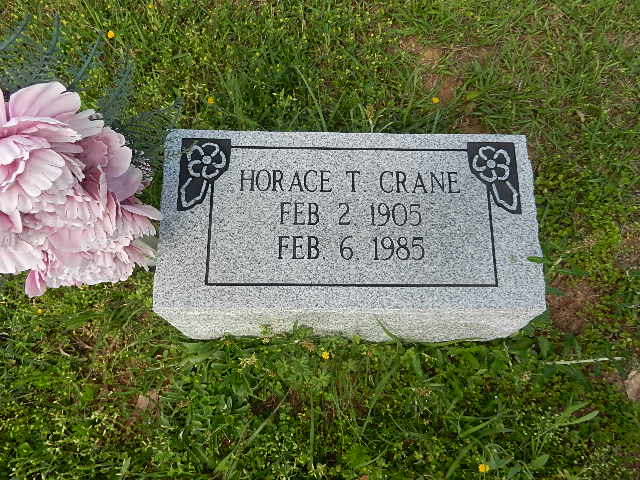
Uncle Horace was the family character everyone has stories about, and the above tale is just the tip of the iceberg. He was very loved. He died 6 February 1985 and is laid to rest at Pleasant Hill Cemetery in Zero, Lauderdale County, Mississippi.

crane, horace t

52 Ancestors #19 Martha Ellen Rodgers

52ancestors-2015

This challenge is set forth by No Story Too Small,

and this week’s challenge is “There’s a Way” which I’ve translated into “travel.”

Years ago I came across a cousin born 4 April 1853. Her father and my 3rd great-grandma were siblings. She was the middle child of five born to James Rodgers and Martha Sanderford in Lauderdale County, Mississippi. When the Civil War began in ’62, her father was too old to serve, so he safely stayed home with her. Yet, things don’t always turn out for the best. The winter of ’62/63 saw a typhoid epidemic in the county and her parents died within days of each other. She was nine. Her name was Martha Ellen Rodgers, known simply as Ellen.

James daughter Martha Ellen Rodgers Meek

Due to all of her uncles fighting the war, she and her siblings moved in with her aunt Mary. Mary had four children of her own and her husband had just been killed in the war 31 December 1862. I can imagine how devastated the family was at that time, and probably hungry and scared.

When the war ended, Ellen was transferred to the custody of her only surviving uncle, Hays Rodgers, who packed up the family and moved to Alabama. The journey there would have been by ox-pulled wagons and would have taken a week. For someone who had never been more than a mile from her childhood home, this must have been quite an adventure. There was also another aunt living in Alabama at the time, Elizabeth, and at some point, Ellen moved in with her.

When I found Ellen had returned to Mississippi alone in 1875, I didn’t understand why, but soon found out that Aunt Elizabeth died that year at the young age of 36. I assume Ellen returned home to stay with her aunt Mary, as she was only 22 years old. The only way to travel from AL to MS at the time was by wagon train as most of the railroad lines were still under repair from their destruction by Sherman’s army. Traveling alone with a bunch of people in a wagon train must have been quite an experience.

The next record of Ellen is found ten years later in 1885. She appears in Texas and is married to Sam Houston Meek. How did she end up there? I found her two brothers had moved there at the end of the war with some other family members (apparently the children were separated), and she probably went out to visit them. One of her brothers was married to Sam’s sister, which explains how she met Sam. From my research, I found the travel from MS to TX would have involved three trains and about ten days. Imagine a young woman traveling alone on three different trains across the 1800s wild west.

Ellen and Sam were only married five years. She died in childbirth at the age of 37. She is buried at Pleasantville Cemetery in Nolanville, Bell County, Texas.

Her story is told in detail in my book An Orphan’s Heart.

rodgers martha ellen rodgers meek, dau of james rodgers

52 Ancestors #15 Colepeper/Culpeper/Culpepper

52ancestors-2015

This challenge is set forth by No Story Too Small,

and this week’s challenge is “How do you spell that?”

choctawMost of my family comes from England and Ireland, so the names are very pronounceable. I have a maternal Choctaw Indian great-grandmother in my history, but in 1801, the Treat of Fort Adams was signed, giving 2.6 million acre of Choctaw land in Mississippi to the U.S. Government. By 1830 and the signing of the Treaty of Dancing Rabbit Creek, a total of 23 million acres had been ceded to the government. The Indians were relocated to Oklahoma, but the ones who didn’t go assimilated into the white European culture and gave up their Indian names. I’m sure her father or grandfather had an unusual name, but I will never find out what it was as the Choctaw people didn’t keep good records like the Cherokees did.

So, that leaves me with two choices for this blog. 1) A host of men in my family who have the name Bluett/Bluitt in their lines, or 2) the explanation for Colepeper/Culpeper/Culpepper.

I think I’ll go with #2.

The name began as “de Culpeper.” The French translation of “de” means “of” referring to a place, and “cul” means “the bottom.” Hopefully, it means the bottom of a hill or a road, and not the bottom of your rear end. 🙂 One of the first family manors sat at the dead end of Pepenbury, and we assume Peper is a slang/shortened translation. Eventually, the “de” fell out of fashion, and the name became simply “Culpeper.”

There is some suggestion that the name had something to do with peppers, either farming them or selling them, but the first known Culpeper in 1170 held an office, so he was probably Norman as the Normans were in control politically at that time. This leads us to believe the name had nothing to do with any Anglo-Saxon practice of selling vegetables.

From 1400s to 1600s, many members of the family used “Colepeper” interchangeably with “Culpeper” though I have no idea why, except for the fact that spelling wasn’t standard.

There are a few ancestors who traveled to America and left their mark:

80516215Mid 1600s – My 10th great-grandpa, John Culpeper, and his sons and nephews ran a merchant route between England, Virginia, and Barbados, and there is an island off the coast of Barbados called “Culpepper Island” which is pretty much an uninhabited rock.

Late 1600s – Lord Thomas Culpeper 2nd baron of Thoresway (the above guy’s cousin) was a governor of colonial Virginia, and there is a town and a county named after him—Culpeper, Virginia and Culpeper County, Virginia. That’s better.

VA_25402

52 Ancestors #14 Hays Rodgers

52ancestors-2015

This challenge is set forth by No Story Too Small,

and this week’s theme is “Favorite Photo.”

No, doubt about it, this is the one.

Rodgers Hays Sr

Hays Rodgers Sr was my 4th great grandfather. He was born in Greene Co, Tennessee in February of 1793 to James Rodgers and Elizabeth “Elly” Hays. He was the eldest son and had at least ten siblings. Just before the War of 1812 began, his family moved from Tennessee to the Mississippi Territory, today known as Clarke Co, Alabama. Alabama didn’t become as state until 1819.

military record 11814 – When Hays was 19, he and his brother, Absolom, signed up for the Mississippi Militia and were assigned to Captain Evan Austill’s company of volunteers in Major Sam Dale’s Battalion to fight against the hostile Creek Indians. Hays remained in the Militia until October 1818, but was only called out once for a two-month tour. Today, I am a member of the United States Daughters of 1812 under his patriotism.

On December 11, 1816, he married Marey Ann Scott, who was from Georgia.

In 1818, following the end of his military service, Hays, Marey, and first-born Lewis, moved to Copiah Co, MS (what later became Simpson, MS). He started buying land and farming. Over the next two decades, the couple had a total of 14 children.

In 1834, the US Government began selling off land it had obtained from the Choctaw Indians in the 1830 signing of Dancing Rabbit Creek. Hays went to Pine Springs in Lauderdale County before the land was surveyed and built a small cabin overlooking Rogers Creek bottom so he could claim the land the moment it went up for sale. He was a squatter for all purposes.

September 26, 1836 – A deed was recorded for 80 acres in Pine Springs which he bought from government.

October 1836 – He bought 160 acres next to his 80 acres from John Calhoun. Mr. Calhoun moved to the Martin Community to open a leather tannery.

1839 – He bought 80 acres from Alex McMullen and 80 acres from Jeremiah Howell. He also began buying slaves and producing cotton.

1856 – He was granted public land adjoining his plantation from the US Gov’t in payment for his military service.

MS Cemetery 0761857 – He built the “Ole Stennis House” (photo) at the age of 61.

In 1860, the U.S. Census states Hays owned 13 slaves, a 640 acre (square mile) plantation, 2 horses, 3 mules, 10 cows, 4 oxen, 16 sheep, 60 swine, and $600 in farming instruments, for a total worth of $8400. A person’s total worth did not include the price of the slaves they owned, and most of his wealth was tied up in slaves that were worth more than $1000 each – that’s probably a million bucks in today’s money.

1862 – When the Civil War began, Hays sent four of his sons to fight. Three never returned. Also, during the winter of that year, a typhoid epidemic hit his family, killing the only son who didn’t go to war. Fortunately, Hays was not around to witness the deaths of his sons as he was the first in the family to died of typhoid that winter in December of 1862. He was 66 years old. His wife died shortly after him in March of 1863, also of typhoid.

Upon his death in December 1862, he owned 690 acres of land and stock in the Mobile and Ohio Railroad, which sat unattended until the end of the war, and then for more time as they awaited the boys return at the close of the war in 1865. The boys didn’t return. Finally, the property went to probate in 1869 and was sold at public auction on the steps of the Meridian Courthouse to Major Adam T Stennis, hence the name “Ole Stennis House.” The home remained in the Stennis family for 100 years until 1970 when it was bought by the Hover family.

Interesting note: The only son to return from the war was Hays Jr, albeit with an injured, useless arm and a wilted spirit. Since he no longer had family in Mississippi, Hays Jr. sold his farm and moved to Alabama to be near his wife’s family. He sold his farm to a man named Tom Stennis. Tom Stennis was a former slave to Major Adam T Stennis.

52 Ancestors #13 Ina Inez Burke Culpepper

52ancestors-2015

This challenge is set forth by No Story Too Small, and this week’s theme is “different.”

My grandmother died March 1, 1975

Meridian Star

March 4, 1975 

Mrs. Ina Culpepper

Services for Mrs. Ina Inez Culpepper, 60, were to be held at 10 a.m. today at Stephens Funeral Home Chapel, Revs. Roger Leggert and Charles Davis officiating. Burial was to be in Liberty Cemetery, Newton County.

Mrs. Culpepper died Saturday in a Meridian hospital. She was a member of First Pentecostal Holiness Church.

Survivors include her husband, Earl W. Culpepper, Meridian; two daughters, Mrs. Bobbie McQueen, Meehan, Mrs. Linda Hegwood, Utica, Mich.; two sisters, Mrs. Ellen Scarbrough, Houston, Tex., Mrs. Myrnis Howard, Meridian; three brothers, Willam Otho Burke, James Otis Burke, and E. O. Burke, all of Duffee, and four grandchildren. 


Mamaw and Papaw with grandkidsIna was my maternal grandmother. She was born in 1915 to Mary Elizabeth Howington and John Patrick “Pat” Burke. Her Howington side was English and Choctaw Indian. Her Burke side was English and Irish. She was the eldest, with four little brothers and two little sisters. One of the boys died as an infant, but the rest of her siblings outlived her and are listed in her obituary. Her mother also outlived her by two years, but for some reason, is not listed.

At the age of 21 in 1936, Ina married Earl Culpepper and had two daughters, one in 1938 and one in 1944. She worked as a seamstress at Burnley Shirt Factory in Meridian, MS and could sew anything just by looking at it in the store for a few minutes. She was a fabulous cook, a quiet woman, and she loved her four grandchildren. The little girl in the photo is me. 🙂

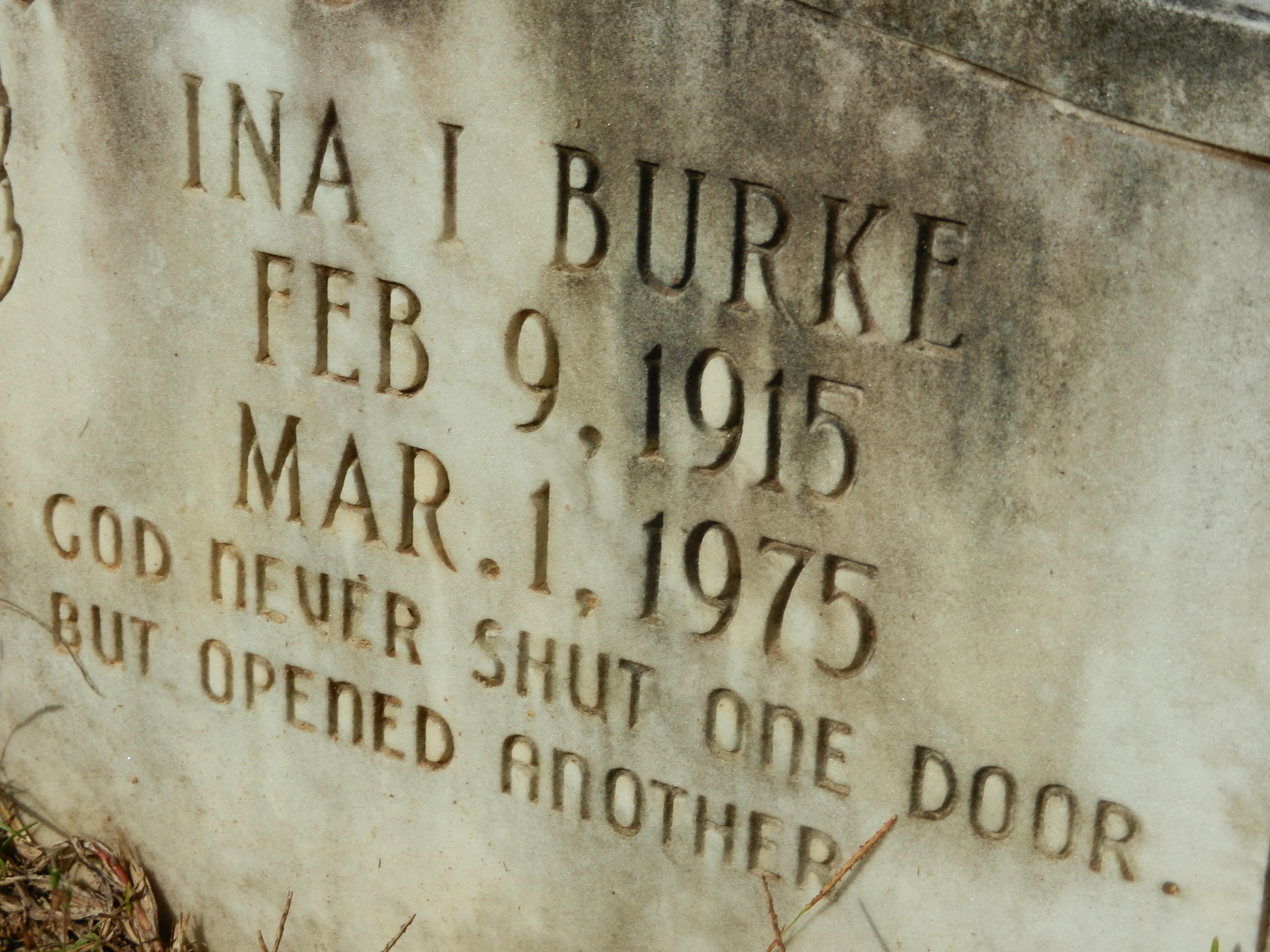
We always celebrated her birthday on February 9. Her tombstone says February 9. Her death certificate says February 9.

Her birth certificate says February 8. It was signed on February 8. It was filed in the state of MS on February 8.

burke Ina Inez Burke headstone

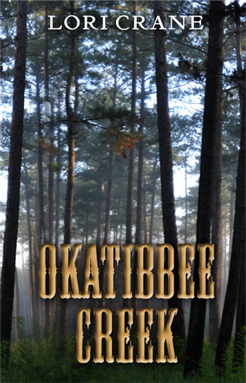
OKATIBBEE CREEK on Amazon

CLICK HERE TO GET YOUR COPY OF OKATIBBEE CREEK …and don’t forget the tissue.

okatibbee creek cover front JPEGIn the bloodiest years of our nation’s history, a young mother was left alone to endure the ravages of the Civil War and a typhoid epidemic that threatened the lives of everyone left behind.

Okatibbee Creek is based on the true story of Mary Ann Rodgers, who survived the collapse of the Confederate dollar, food shortages, and the deaths of countless family members to war and disease. As she searched for a way to feed her children and her orphaned nieces and nephews, Sherman’s Union army marched through Mississippi on their way to destroy Meridian, and Mary Ann found the distant war literally on her doorstep. Help arrived just in the nick of time in the form of an unexpected champion, and Mary Ann emerged on the other side a heroic woman with an amazing story.

Okatibbee Creek is a novel of historical fiction that brings the Deep South vividly to life and will have you cheering and crying through a real-life story of loss, love and survival.

CLICK HERE TO GET YOUR COPY OF OKATIBBEE CREEK

“Stuckey’s Bridge”

Pick up a Kindle copy of “The Legend of Stuckey’s Bridge”! Hop over to Amazon and tell ’em Old Man Stuckey sent ya!

Enjoy…and sweet dreams!

Click HERE 

Stuckey's cover_webIn 1901, the Virginia Bridge & Iron Company began re-building a fifty-year-old Mississippi bridge. In the middle of the project, they began discovering bodies buried on the banks of the river.

Legend has it, he was so evil, he was even thrown out of the notorious Dalton Gang. Years later, he opened an inn near the river, and on foggy nights, boatmen witnessed him pacing back and forth across the bridge, waving his lantern, offering travelers a hot meal and a soft bed.

Those unfortunate enough to take him up on the hospitality were often never seen again.

To this day, eerie experiences are still reported around the bridge that now bears his name. If you travel down to Stuckey’s Bridge, be careful, for not much else is known about the man locals refer to as Old Man Stuckey…until now.