52 Ancestors #16 John Culpepper of Wigsell

52ancestors-2015

This challenge is set forth by No Story Too Small, and this week’s theme is “Live Long.”

Strangely enough, my parents and my maternal grandmother all died in their 50s, so I’ve always had this notion that I would probably die in my 50s also. Not really a morbid thought, just a weird likelihood. When I started looking at the ages of my ancestors for this blog, I was surprised to find a majority of my ancestors lived into their 80s. Maybe I’ll get a few more years out of this life than I thought.

One of my ancestors lived to be 82…back in 1612. I think that is a considerable age for the time. According to early English records, an infant had a 30% chance of dying before the age of 15, 60% for working-class children in the city. As people had no concept of immunity, many died of childhood diseases, and as they grew, they were likely to die of food-borne illnesses or communal diseases like the plague and typhus. In 1665, 80,000 people died of the plague in London, 45,000 were children. Sanitary practices weren’t invented, and medicine wasn’t even a factor. Most thought one survived only because of luck, and many families named their children with identical names, knowing only one had a chance of surviving into adulthood.

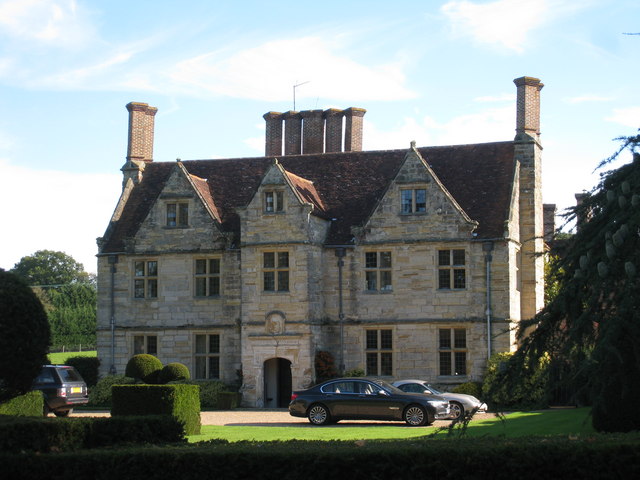
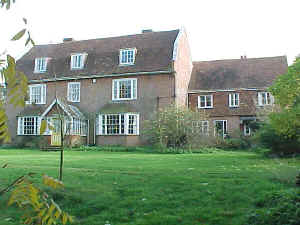
book 1 different angleSo, in 1530, my 12th great-grandfather John Culpepper of Wigsell was born in Salehurst, Sussex, England. He had at least two brothers who also lived to a considerable age, all breaking the above mortality rates. He married Elizabeth Sedley at the age of thirty, had seven children who all survived, and remained in his childhood home of Wigsell Manor until his death 20 October 1612 at the age of 82. The home is still standing today and is privately owned. Mostly, John lived a quiet life in the country, but records show him an active Justice of the Peace in public testimonies and an involvement in Queen Elizabeth’s Privy Council from 1558 to 1592.

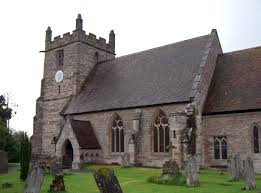
St_Mary_the_Virgin_Church,_Salehurst_(Geograph_Image_2366571_3456e22f)He was buried at St. Mary the Virgin Church in Salehurst on 21 October 1612 as “Johanes Colepeper, armiger, etatis 82.” Armiger means having the right to a coat of arms, and etatis means age. If there was a monument, it was destroyed during the Commonwealth’s desecration of the local churches in the mid 1600s.

52 Ancestors #15 Colepeper/Culpeper/Culpepper

52ancestors-2015

This challenge is set forth by No Story Too Small,

and this week’s challenge is “How do you spell that?”

choctawMost of my family comes from England and Ireland, so the names are very pronounceable. I have a maternal Choctaw Indian great-grandmother in my history, but in 1801, the Treat of Fort Adams was signed, giving 2.6 million acre of Choctaw land in Mississippi to the U.S. Government. By 1830 and the signing of the Treaty of Dancing Rabbit Creek, a total of 23 million acres had been ceded to the government. The Indians were relocated to Oklahoma, but the ones who didn’t go assimilated into the white European culture and gave up their Indian names. I’m sure her father or grandfather had an unusual name, but I will never find out what it was as the Choctaw people didn’t keep good records like the Cherokees did.

So, that leaves me with two choices for this blog. 1) A host of men in my family who have the name Bluett/Bluitt in their lines, or 2) the explanation for Colepeper/Culpeper/Culpepper.

I think I’ll go with #2.

The name began as “de Culpeper.” The French translation of “de” means “of” referring to a place, and “cul” means “the bottom.” Hopefully, it means the bottom of a hill or a road, and not the bottom of your rear end. 🙂 One of the first family manors sat at the dead end of Pepenbury, and we assume Peper is a slang/shortened translation. Eventually, the “de” fell out of fashion, and the name became simply “Culpeper.”

There is some suggestion that the name had something to do with peppers, either farming them or selling them, but the first known Culpeper in 1170 held an office, so he was probably Norman as the Normans were in control politically at that time. This leads us to believe the name had nothing to do with any Anglo-Saxon practice of selling vegetables.

From 1400s to 1600s, many members of the family used “Colepeper” interchangeably with “Culpeper” though I have no idea why, except for the fact that spelling wasn’t standard.

There are a few ancestors who traveled to America and left their mark:

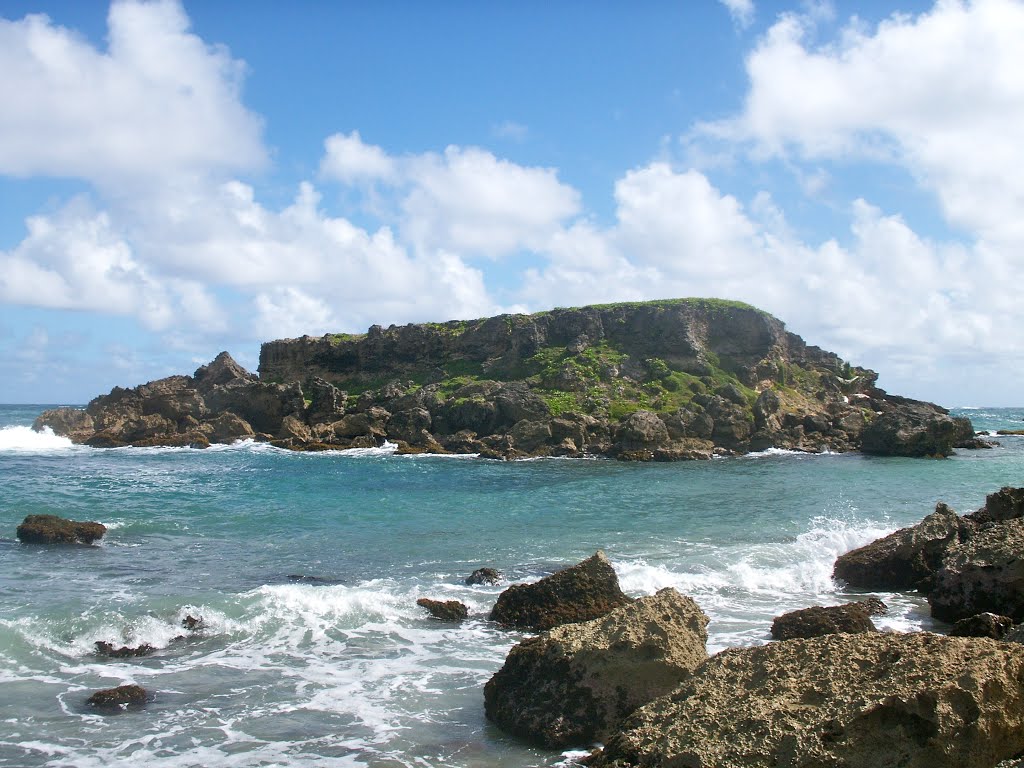
80516215Mid 1600s – My 10th great-grandpa, John Culpeper, and his sons and nephews ran a merchant route between England, Virginia, and Barbados, and there is an island off the coast of Barbados called “Culpepper Island” which is pretty much an uninhabited rock.

Late 1600s – Lord Thomas Culpeper 2nd baron of Thoresway (the above guy’s cousin) was a governor of colonial Virginia, and there is a town and a county named after him—Culpeper, Virginia and Culpeper County, Virginia. That’s better.

VA_25402

It’s Release Day! It’s Release Day!

Culpepper_1I’m so excited!

Today is release day for my new book, I, John Culpepper!! Ahoy, Sailor!

I began writing this book in August of last year, but the more I researched, the more interesting stuff I found, so…the book…became FOUR BOOKS. It morphed into the Culpepper Saga, beginning with John’s childhood, segueing into the English Civil War, moving across the ocean to the colony of Virginia, and finally finding inner peace and acceptance. It seems like I’ve been writing the story forever, and when I put it like that, I guess I have been…well, at least 60 years worth of writing. The tale begins in 1606 in England and is the life-story of my 10th great-grandfather, John Culpepper.

The Culpepper family has been traced by many genealogists back to the 12th century in England. They were a political family who served the monarchy for generations. Though my favorite Culpepper patriarch has always been John Culpepper of Wigsell, who lived in the 16th century, I ended up writing the book series about his grandson, also named John Culpepper. Maybe someday I’ll go back and tell his grandpa’s story.

John was born in Kent, England in 1606 and was surrounded by a cast of interesting family members including his above mentioned grandfather, his brother Thomas who served as a colonel in the king’s army, his uncle Sir Alexander Culpepper who was a knight under King James and King Charles I, and his cousin Lord Culpepper first baron of Thoresway who served under three kings. But none made a bigger impression on John than his overbearing father, Johannes, who was a prominent lawyer in London. His father insisted John attend law school, but John wanted instead to command a mighty ship. This dream strained their relationship, and his father threatened to disown him when it came time to purchase a ship. Instead of receiving daddy’s help, John got funding from his older brother, Thomas, and records show the name of the ship being the Thomas and John. Records also show John in the colony of Virginia upon the occasion of his father’s death.

The first book in the Culpepper Saga, I, John Culpepper, is the story of John’s childhood, his strained relationship with his father, meeting the lovely woman who would eventually become his wife, and starting his career as a ship merchant. In the three sequels, we will find John’s ship becoming a lifeboat that keeps the family from certain execution during the English Civil War, and John’s unwanted law-school education becoming the only thing standing between life and death for his youngest son. In retrospect, maybe John’s father wasn’t the bad guy John always thought him to be.

Everything happens for a reason, especially for John Culpepper.

I, John Culpepper is available at Amazon.

For photos and paintings of the people and places in the series, visit the Culpepper Saga Facebook page.

52 Ancestors #14 Hays Rodgers

52ancestors-2015

This challenge is set forth by No Story Too Small,

and this week’s theme is “Favorite Photo.”

No, doubt about it, this is the one.

Rodgers Hays Sr

Hays Rodgers Sr was my 4th great grandfather. He was born in Greene Co, Tennessee in February of 1793 to James Rodgers and Elizabeth “Elly” Hays. He was the eldest son and had at least ten siblings. Just before the War of 1812 began, his family moved from Tennessee to the Mississippi Territory, today known as Clarke Co, Alabama. Alabama didn’t become as state until 1819.

military record 11814 – When Hays was 19, he and his brother, Absolom, signed up for the Mississippi Militia and were assigned to Captain Evan Austill’s company of volunteers in Major Sam Dale’s Battalion to fight against the hostile Creek Indians. Hays remained in the Militia until October 1818, but was only called out once for a two-month tour. Today, I am a member of the United States Daughters of 1812 under his patriotism.

On December 11, 1816, he married Marey Ann Scott, who was from Georgia.

In 1818, following the end of his military service, Hays, Marey, and first-born Lewis, moved to Copiah Co, MS (what later became Simpson, MS). He started buying land and farming. Over the next two decades, the couple had a total of 14 children.

In 1834, the US Government began selling off land it had obtained from the Choctaw Indians in the 1830 signing of Dancing Rabbit Creek. Hays went to Pine Springs in Lauderdale County before the land was surveyed and built a small cabin overlooking Rogers Creek bottom so he could claim the land the moment it went up for sale. He was a squatter for all purposes.

September 26, 1836 – A deed was recorded for 80 acres in Pine Springs which he bought from government.

October 1836 – He bought 160 acres next to his 80 acres from John Calhoun. Mr. Calhoun moved to the Martin Community to open a leather tannery.

1839 – He bought 80 acres from Alex McMullen and 80 acres from Jeremiah Howell. He also began buying slaves and producing cotton.

1856 – He was granted public land adjoining his plantation from the US Gov’t in payment for his military service.

MS Cemetery 0761857 – He built the “Ole Stennis House” (photo) at the age of 61.

In 1860, the U.S. Census states Hays owned 13 slaves, a 640 acre (square mile) plantation, 2 horses, 3 mules, 10 cows, 4 oxen, 16 sheep, 60 swine, and $600 in farming instruments, for a total worth of $8400. A person’s total worth did not include the price of the slaves they owned, and most of his wealth was tied up in slaves that were worth more than $1000 each – that’s probably a million bucks in today’s money.

1862 – When the Civil War began, Hays sent four of his sons to fight. Three never returned. Also, during the winter of that year, a typhoid epidemic hit his family, killing the only son who didn’t go to war. Fortunately, Hays was not around to witness the deaths of his sons as he was the first in the family to died of typhoid that winter in December of 1862. He was 66 years old. His wife died shortly after him in March of 1863, also of typhoid.

Upon his death in December 1862, he owned 690 acres of land and stock in the Mobile and Ohio Railroad, which sat unattended until the end of the war, and then for more time as they awaited the boys return at the close of the war in 1865. The boys didn’t return. Finally, the property went to probate in 1869 and was sold at public auction on the steps of the Meridian Courthouse to Major Adam T Stennis, hence the name “Ole Stennis House.” The home remained in the Stennis family for 100 years until 1970 when it was bought by the Hover family.

Interesting note: The only son to return from the war was Hays Jr, albeit with an injured, useless arm and a wilted spirit. Since he no longer had family in Mississippi, Hays Jr. sold his farm and moved to Alabama to be near his wife’s family. He sold his farm to a man named Tom Stennis. Tom Stennis was a former slave to Major Adam T Stennis.

52 Ancestors #13 Ina Inez Burke Culpepper

52ancestors-2015

This challenge is set forth by No Story Too Small, and this week’s theme is “different.”

My grandmother died March 1, 1975

Meridian Star

March 4, 1975 

Mrs. Ina Culpepper

Services for Mrs. Ina Inez Culpepper, 60, were to be held at 10 a.m. today at Stephens Funeral Home Chapel, Revs. Roger Leggert and Charles Davis officiating. Burial was to be in Liberty Cemetery, Newton County.

Mrs. Culpepper died Saturday in a Meridian hospital. She was a member of First Pentecostal Holiness Church.

Survivors include her husband, Earl W. Culpepper, Meridian; two daughters, Mrs. Bobbie McQueen, Meehan, Mrs. Linda Hegwood, Utica, Mich.; two sisters, Mrs. Ellen Scarbrough, Houston, Tex., Mrs. Myrnis Howard, Meridian; three brothers, Willam Otho Burke, James Otis Burke, and E. O. Burke, all of Duffee, and four grandchildren. 


Mamaw and Papaw with grandkidsIna was my maternal grandmother. She was born in 1915 to Mary Elizabeth Howington and John Patrick “Pat” Burke. Her Howington side was English and Choctaw Indian. Her Burke side was English and Irish. She was the eldest, with four little brothers and two little sisters. One of the boys died as an infant, but the rest of her siblings outlived her and are listed in her obituary. Her mother also outlived her by two years, but for some reason, is not listed.

At the age of 21 in 1936, Ina married Earl Culpepper and had two daughters, one in 1938 and one in 1944. She worked as a seamstress at Burnley Shirt Factory in Meridian, MS and could sew anything just by looking at it in the store for a few minutes. She was a fabulous cook, a quiet woman, and she loved her four grandchildren. The little girl in the photo is me. 🙂

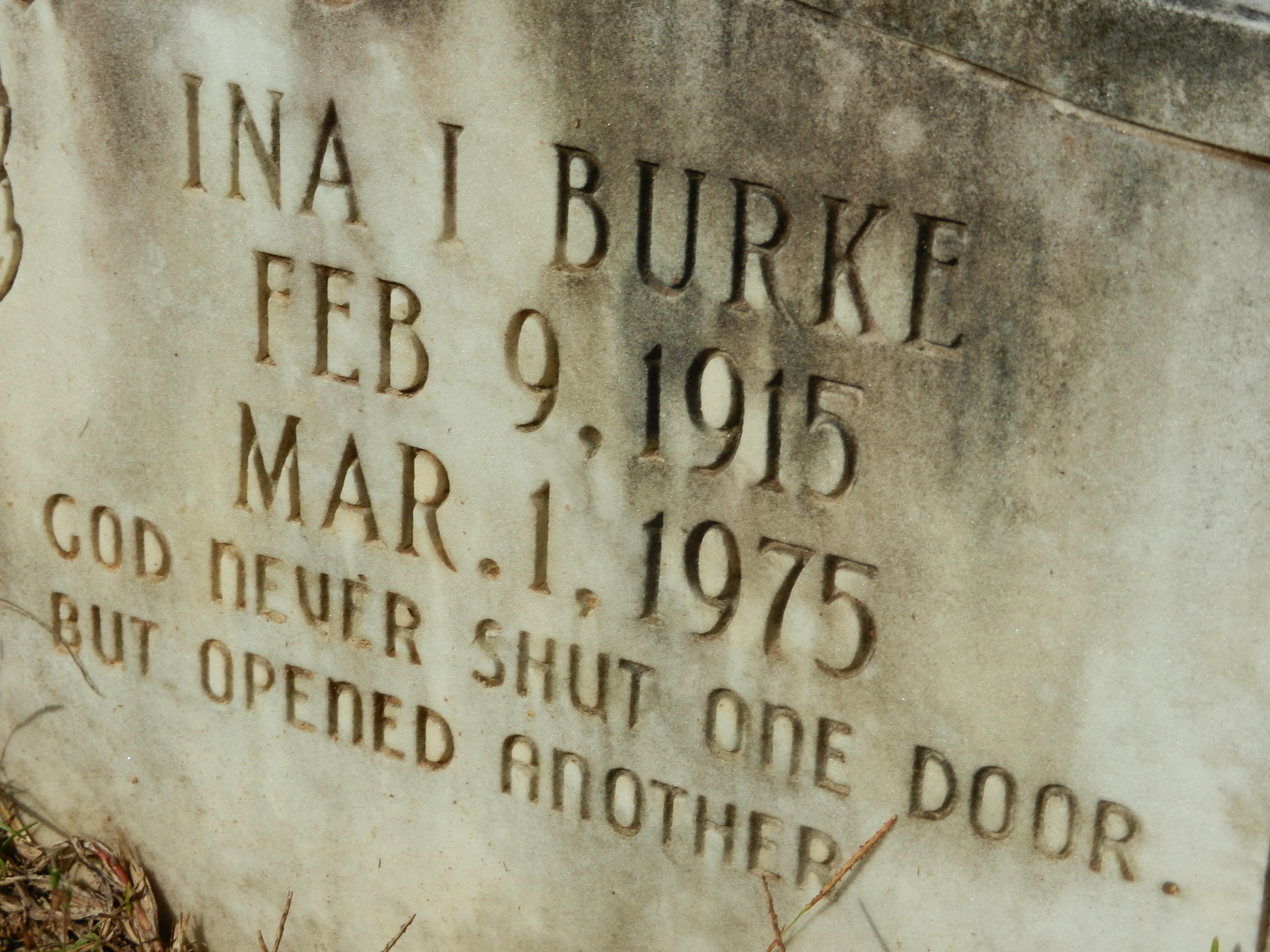
We always celebrated her birthday on February 9. Her tombstone says February 9. Her death certificate says February 9.

Her birth certificate says February 8. It was signed on February 8. It was filed in the state of MS on February 8.

burke Ina Inez Burke headstone

Katherine St. Leger – Culpepper Saga

Culpepper_1This is the third installment about the people and places in my upcoming series, The Culpepper Saga. You can read the first and second installments here and here.

Katherine St. Leger’s relationship to the Culpeppers is a little hard to explain, so bear with me. She was born in 1602 and was the daughter of Warham St. Leger who was a ship captain and sailed on expeditions with Sir Walter Raleigh. Since her father was absent most of the time, she lived with her grandmother, Mary St. Leger, and her step-grandpa, Alexander Culpepper.

Alexander Culpepper had no children and married the St. Leger widow when he was thirty-three years of age. She was quite a bit older than him and was probably already done birthing children by then. That being said, Alexander loved his step-granddaughter, Katherine, and raised her as if she was his own, actually naming her as his daughter in his will.

When Katherine was twenty-six years old, she married Thomas Culpepper, Alexander’s nephew. Thomas was the son of John Culpepper, whom we call Johannes in the book because there are way too many Johns. Johannes was Alexander’s brother. Johannes had two sons, John (our hero) and Thomas. Thomas married Katherine. Did you catch all that?

Katherine and Thomas grew up as cousins, but they really weren’t. Try explaining all that in a book. Go ahead. I dare ya. You’ll have to read the book and see how the heck I did it. 🙂

So, now that you have a slight grasp on who Katherine is, here’s a snippet from the first book, “I, John Culpepper.” Thomas and John are very close, but John has always felt Thomas was their father’s favorite. Maybe he’s right.

***************************************

At the conclusion of the first family supper in their new home, Thomas tapped on the rim of his glass to get everyone’s attention.

“Katherine and I are so pleased that you all could join us in our new home. We trust you all had a pleasant journey getting here, and please know that you are welcome to stay for as long as you like. We invited everyone because we have some news.” He gestured for Katherine to stand by his side. “We would like to inform you that Katherine is with child and we are expecting the first Culpepper grandchild.” Thomas beamed like a ray of sunshine.

Johannes rose and patted him on the back. “Thomas, Katherine, we are overjoyed by this news, and let me be the first to wish you a healthy son.” Johannes raised his glass and the gathering followed his lead.

From across the table, John watched the interaction between his brother and his father, and wondered if he would have received the same hearty congratulations if it were him announcing the arrival of the first grandchild. He glanced at Mary and found her staring at him. He smiled faintly, but knew by the way she cocked her head that she recognized something was amiss.

*********************************************

“I, John Culpepper” will be released April 10, 2015.

Ursula Woodcock Culpepper – Culpepper Saga

Culpepper_1This post is in place of my usual “Saturday Snippets,” and is the second installment of the background of the people and places in my coming series, The Culpepper Saga. You can read the first installment here.

Ursula Woodcock Culpepper is one of the more sentimental characters in my coming series. She was our hero’s mother, and sadly, is only in the first book, “I, John Culpepper.” She was my 11th great grandmother.

astwoodUrsula was born to Ralph Woodcock, the Alderman of London, and his wife Good Bower in 1566. She was baptized at St. Lawrence Jewry in London on January 27, 1566. Her father’s will describes her as “my daughter Ursula, wife of Solomon Pordage.” Ursula and Solomon married in 1581, when Ursula was a child of fifteen.  Solomon Pordage died September 12, 1599 and his will commended his wife to his kinsman, William Stede of Harrietsham. Solomon’s sister, Joan Pordage, was married to a Culpepper and Ursula probably met her second husband, John Culpepper of Feckenham, at family gatherings long before she was widowed. Note: This is John Sr., not our hero John, and in the book I refer to him as Johannes, as that is what is written on his tombstone.

Ursula and Johannes had four children: Thomas, Cicely, John (our hero), and Frances. When the children were small, between the ages of four and ten, the family left their home in Kent and moved to Astwood Court in Feckenham (photo) so Johannes could retire and become a “country gentleman,” but they lived there for less than a year when Ursula took ill and died. She was buried at St. John the Baptist Church in Feckenham on June 2, 1612 as “Ursula, the wife of John Culpepper, Esquire.” She was forty-six years old.download

In the first book in the Culpepper Saga, “I, John Culpepper,” the following is what Johannes thought of his lovely wife. The book will be released April 10, 2015.

*****************************************************************

He pushed open the heavy door a few inches and peeked through the crack. The room was dim with all the heavy curtains drawn. It was quite different up here than the sunshine-filled bustle of the rest of the house. The room was quiet and warm, with the soft flickering light of candles dancing on the tapestries that covered the walls. He called out, “Ursula?”

“Johannes? Is that you? Please, please, come in.”

Her golden voice was as sweet as an angel’s, and that made him smile. He’d married her because of her cheerful voice—well, that and her family’s money. The Woodcock family had more manors and land than the Culpeppers, and the time-honored tradition of marrying heiresses and widows was generally the way the Culpepper men gained their fortunes. But Ursula had something else about her that Johannes loved. She was warm-hearted, with a gentle smile and soft manner. He had initially been attracted to her by the way she said, “Good morning,” and “Good evening,” and particularly the way she said, “Johannes.” Words floated from her lips as if they were lyrics she was singing just for him. Her voice had a happy lilt that filled his heart the way nothing else did. Today, it made him happy to be home.

He swung the door wide, entered the lavishly appointed room, and found Ursula sitting up in the four-poster bed, wearing a soft white gown that floated over her petite frame. A stack of pillows rested behind her back and her legs were covered with a brightly colored velvet quilt. Her hair was plaited on either side of her face, and Johannes was momentarily awed by how peaceful she looked. Childbirth agreed with her.

Her expression was one of excitement and anticipation as she held their newborn in her arms, and her smile grew more radiant as he approached the bed. “It’s a son,” she said.

***************************************************************

52 Ancestors #11 Thomas Weldon

52ancestors-2015

This challenge is set forth by No Story Too Small, and this week’s theme is “Luck of the Irish.”

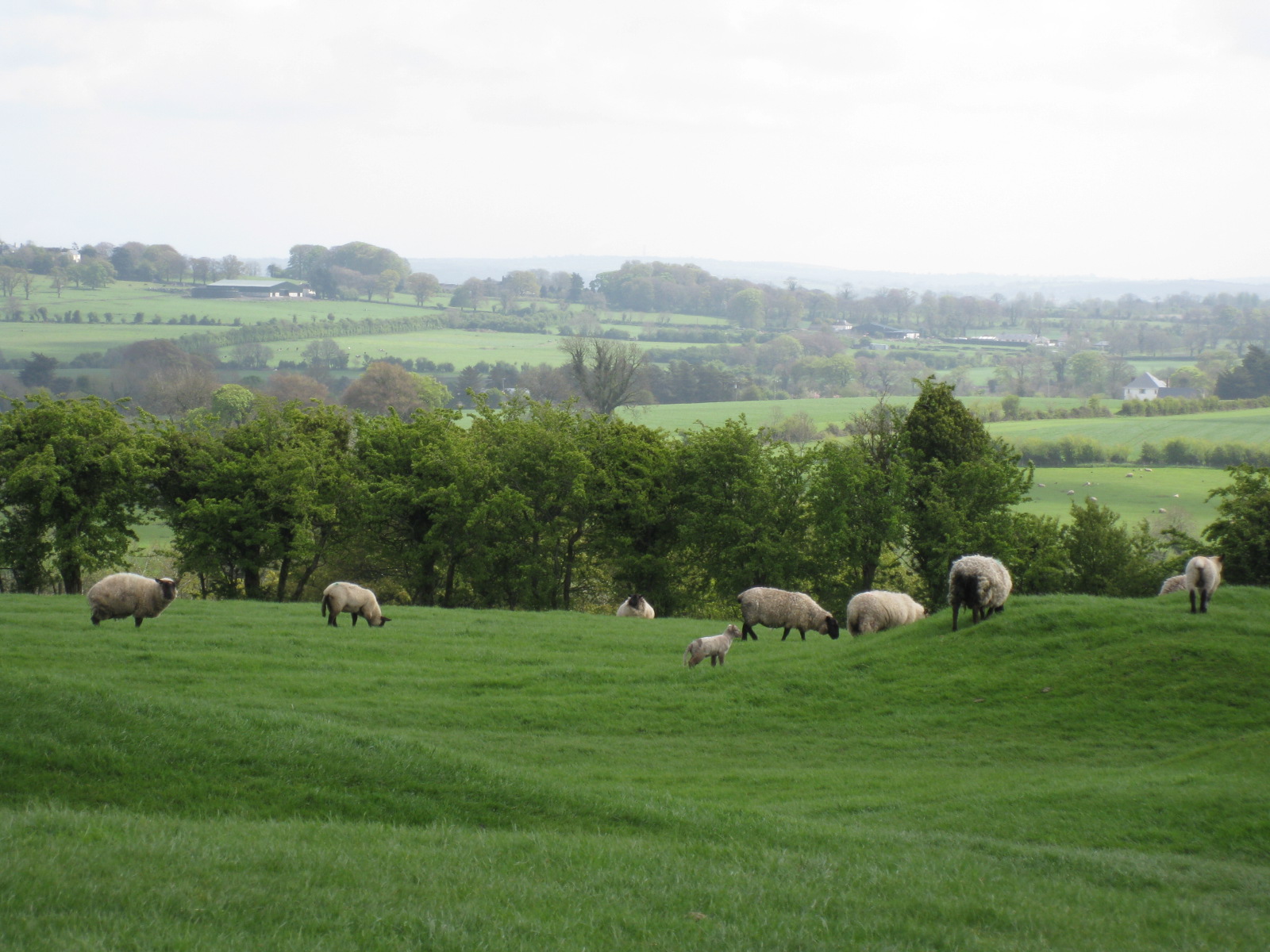
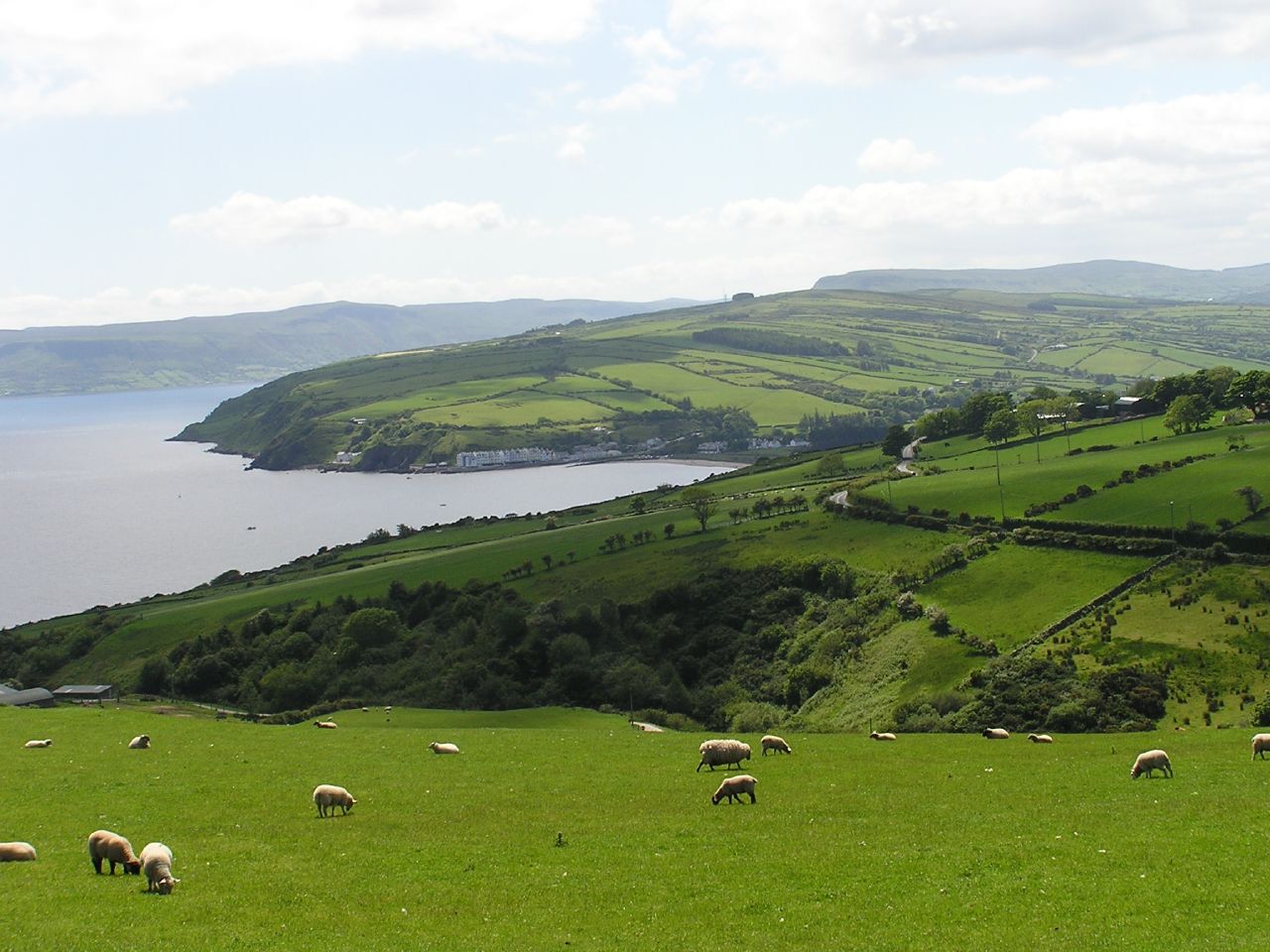
The early 1500s in Ireland was characterized as “His Majesty’s Irish enemies.” The Irish were repressed by England, yet they managed to maintain their own language, social system, customs, and laws. Undoubtedly, life was hard five hundred years ago as many Irish lived off the land, mostly as shepherds, but if you love the land as much as I do, you might find this the luckiest of lifestyles.

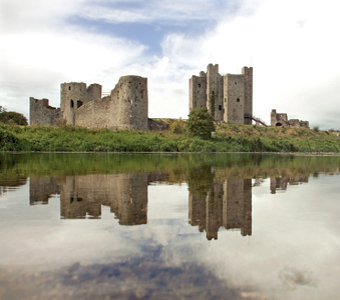
Most of my ancestors hail from England, but there are a few from Ireland. One is my 14th great grandfather, Thomas Weldon, or Veldon as it was originally known. My 4th great grandpa, Jeremiah Crane, married Mary Polly Weldon who was born in Georgia. Her family came from Delaware, via Massachusetts in the early 1600s, and England in the 1500s. The Veldons originally came to Ireland with the Anglo-Normans in the 12th century and settled in “The Pale” which includes the County of Meath, just north of Dublin. Thomas was born in 1480 in Meath and died there at the age of 73 in 1553. I think that’s a considerable age considering the times. Even though his life was undeniably hard, imagine the sites, smells, and sounds he was surrounded by every single day of his life. Below are a few photos of the area as it looks today. I say Thomas Weldon was lucky indeed. 

Media,33747,enimg_0963OLYMPUS DIGITAL CAMERA


Sir William Berkeley – Culpepper Saga

Culpepper_1For the next few Saturdays, in place of my usual “Saturday Snippets,” I’m going to give you some background into some of the people and places in my new series, The Culpepper Saga. The series consists of four books which will be released between April and September.

One of the main characters is Sir William Berkeley. I write stories of my ancestors, but Berkeley is not one of my ancestors. He was, however, a life-long friend of our hero and my 10th great grandpa John Culpepper.

In the 1st book, Berkeley and John are young law students in England. In the 2nd and 3rd books, Berkeley plays a daily role in John’s life and is the Governor of Virginia. In the final book, Berkeley is married to John’s niece and is at the center of a deadly rebellion.

SirWilliamBerkeley2William Berkeley, referred to as “Will” by his family and friends, was born in England in 1605. He was the colonial governor of Virginia from 1642 until his death in 1677. Upon his arrival in Virginia, he built a plantation called Green Spring House and planted corn, wheat, barley, rye, and tobacco, though he despised tobacco. In 1670, he wed thirty-six-year-old Frances Culpepper, the niece of our hero John. Historical records show him fleeing Jamestown during Bacon’s Rebellion in 1676 and taking refuge in Accomac, Virginia. Most people leave it at that, but in my writing world, I happen to know that John had a house in Accomac, so it is obvious he went to John’s. After all, they had been friends for many years, and they were family through marriage. I’ll let you read the rest of his story in the Culpepper Saga, but I’ll leave you with a tidbit from the day he and John met as young boys at law school–a place called Middle Temple.

Note: Wikipedia does not confirm that Berkeley attended Middle Temple, but in “The History of Middle Temple” by Hart Publishing, records of Middle Temple show Berkeley as a student. He also wrote and published a few plays in the 1630s, which was a large part of the curriculum at the school.

The following is an excerpt from “I, John Culpepper.”

**************************************

John clapped along with the other boys as the headmaster strolled toward the center of the room. The man looked as stern as JC had warned. A pair of spectacles rested on the tip of his pointed nose, and his rather large ears stuck out from under his cap. He began stroking his goatee as if caressing the family pet. For a moment, John couldn’t put his finger on what was so amusing about the man’s appearance, then it struck him—the man looked like a goat. John tried unsuccessfully to stifle a giggle.

Barnaby’s brow wrinkled and the corners of this mouth turned down like a fish as he scanned the group of boys. He looked at each one as if viewing a repulsive heap of trash. He cleared his throat and his Adam’s apple bobbed up and down. Just as he opened his mouth to speak, a frizzy-headed boy ran into the room, allowing the door to slam behind him. The sound echoed loudly within the stone walls and the tardy boy’s face turned red with embarrassment. Barnaby followed the boy’s movement with his narrowed eyes as the boy took the only empty seat in the room—right next to John. John felt a trickle of sweat drip down his back as the headmaster slowly walked toward them.

“You’re tardy for my class,” the man scoffed, his eyes filled with hostility. When he said the word class, he drew out the a for an inappropriate amount of time, and John was again reminded of a goat, but with the man standing directly in front of him, he didn’t dare giggle.

“My apologies. I just arrived, sir.”

“What is your name, boy?” Barnaby growled.

“William Berkeley, sir.”

“William Berkeley.” He stared at Berkeley for a long time, as if attempting to memorize every feature of the boy’s face. He then repeated the name. After what seemed like an hour of uncomfortable silence, with the tension in the room growing by the second, Barnaby said, “William Berkeley, I will speak with you in private following this evening’s supper.”

“Yes, sir.” William lowered his eyes to the floor.

As Barnaby turned his back on Berkeley and returned to the center of the room, Berkeley glanced around the room at the other boys. John wondered if Berkeley’s humility was in respect for the headmaster or due to his embarrassment for being late, or both.

Berkeley leaned over to John and whispered, “Who’s that old goat?”

John almost laughed out loud and his hands flew up to his mouth.

Berkeley winked at him and grinned.

******************************************

The first book in the Culpepper Saga, “I, John Culpepper,” will be released April 10, 2015.

52 Ancestors #10 Thomas Culpepper

52ancestors-2015

This challenge is set forth by No Story Too Small, and this week’s theme is “Stormy Weather.”

No one weathered storms like my 10th great uncle Thomas Culpepper, and he was literally caught in “Stormy Weather” during one of his greatest moment.

Thomas was the eldest son of John Culpepper of Feckenham and his wife Ursula Woodcock. He was followed by two sisters, Cicely and Frances, and a brother, John, whom we refer to as John Culpepper the Merchant.

Thomas was born into a life of privilege as his family held vast estates and had worked in the king’s service for generations. When Thomas was born in 1602 in Kent, England, the Culpepper family boasted sixteen living barons and earls.

GreenwayCourtAt the age of nineteen, Thomas entered Middle Temple which was a law school. He was soon called to the bar and became a successful lawyer. He married Katherine St. Leger, moved into the family home of Greenway Court (photo) in Kent, and they started their family.

After King James I died in 1625, King Charles took over, and Thomas was promoted to a colonel in the king’s army. This was one hundred years after the Tudor reign where people had been beheaded for their religious beliefs, but King Charles was making everyone nervous with his religious antics. He married a Catholic princess, appointed a Catholic supporter to the office of archbishop of Canterbury, and demanded the Scots begin using the Catholic Book of Prayer. The people of Scotland, Ireland, and England refused to go back to the age of being charged with heresy. They began meeting behind closed doors and discussing what to do about this tyrannical king.

Parliament rallied an army against the king and in 1642 the English Civil War began. As with the Culpeppers before him, Thomas was a royalist and took the side of the king. Thomas and his friend George Goring, the earl of Norwich, fought bravely against Parliament’s army.
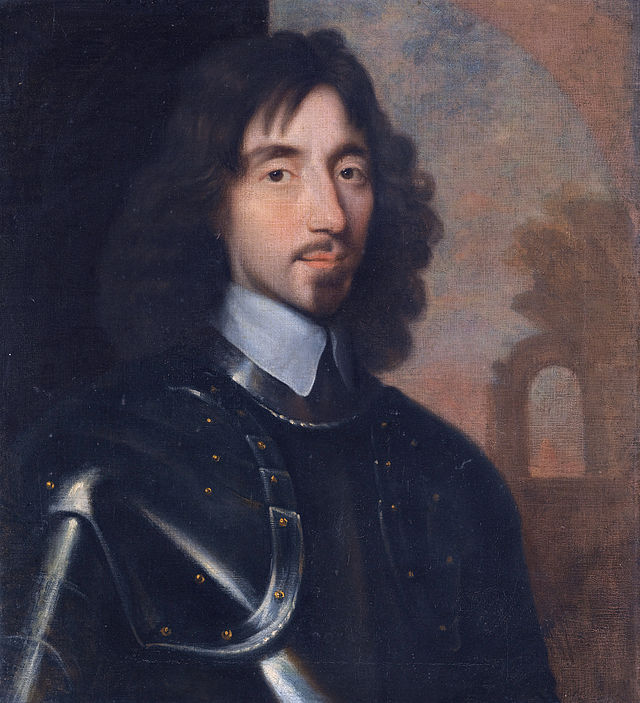
General_Thomas_Fairfax_(1612-1671In May 1648, Thomas and George raised 10,000 men around Kent to fight against Parliament. This was a significant number considering by this time Parliament’s army had split into two factions. The larger was holding down an uprising in South Wales, leaving the smaller group of 6,000 men to defend all of London and its surrounding towns. The royalists were holding the town of Maidstone (Thomas’s hometown located south of London) with a force of 2,000 men. Under the leadership of General Thomas Fairfax (photo), 4,000 parliamentarians marched south to Maidstone to recapture it.

culpepper book 1 cover ideaOn June 1, 1648, in the midst of a terrible storm, Fairfax attacked Maidstone. Fairfax’s men took over a bridge and crossed the Medway River and effectively divided Thomas’s men into two groups. Thomas’s diminished army fought in the heavy rains throughout the night and were backed up by Fairfax’s men, street by street, inch by inch. They moved up Weeks Street and finally retreated into St. Faith’s Churchyard where they fought until well after midnight through the raging thunderstorm. At the first light of dawn, out of ammunition and having nowhere else to go, 1,000 royalists emerged from the church and surrendered to Fairfax’s army.

In return for promising to lay down their arms, the soldiers were released and allowed to return to their homes, but in typical Thomas/George fashion, they didn’t. They regrouped and headed north to seize London, but they found the city’s gates closed, so they moved further north to George’s hometown of Colchester. Fairfax’s men pursued them and another battle ensued. Colchester held its ground for eleven weeks, but in August 1648, they were forced to surrender.

Throughout these battles, the king was being held prisoner by Parliament, and for the last two years, the royalists suffered defeat after defeat trying to save him and turn the tide of the war. They began realizing their cause was lost, and across the country, the royalists began surrendering left and right.

In January of 1649, King Charles was charged with treason, found guilty, and was beheaded. Following the king’s execution, all of the royalists, including Thomas Culpepper and George Goring, had their property seized by Parliament and many were beheaded or hung.

In March 1649, George Goring, being held prisoner since his loss at Colchester, was charged with treason and found guilty. Facing beheading, his family petitioned for leniency and the deciding vote, cast by the speaker of the house, granted George his freedom. He joined the exiled court of the prince in the Netherlands and became the captain of the king’s guard. When the prince reclaimed the English throne in May 1660 as King Charles II, George was by his side. George Goring died in 1663 in Brentford, just west of London.

Fortunately for Thomas, his brother John was a merchant who owned a ship. John smuggled Thomas, his wife Katherine, and their four children out of England in 1650 and took them to Virginia. Thomas escaped probable beheading in England, but sadly, he died in Virginia in 1652 at the age of fifty.

His son-in-law, Sir William Berkeley the governor of Virginia, wrote about him, “He lost all his estate, life, and liberty in the king’s service.”

*This story is told in detail in my coming book, “John Culpepper the Merchant,” which is the second book in the Culpepper Saga and will be released May 2015.