My idea was to write about the wild adventures of a young woman traveling alone across the deep south in the late 1800s. Imaging steam trains and covered wagons crossing the “wild west,” encountering gentlemen who were not always gentlemen, accommodations that were less than luxurious, and money non-existent following the Civil War. Now, place a young girl fighting for survival in this rough and tumble world. That’s what I wanted to write.
Didn’t happen!
I ended up writing an emotionally deep love story that made people cry. It wasn’t the story I set out to write. When I finished it and sent it to my editor, I told her I wasn’t happy with it, but it just sort of wrote itself, and I wasn’t sure what to do with it. When she returned the manuscript to me, she said, “I think you’re a lot closer than you think. It’s a beautiful story.” After living with it for a few months, I decided to leave it alone, allowing it to be what it was, and ended up with 92% of the Amazon reviews being three, four, and five stars. It just goes to show you, you never know what the public is going to like.
An Orphan’s Heart is about a young girl from Mississippi who at the age of nine lost her parents to typhoid, during the Civil War. She was subsequently shuffled from family member to family member through her teenage years, ending up in Alabama. When she became a young women, she traveled to see her brother in Texas and fell in love with a young man there. The love doesn’t last long…you’ll have to read the book.
The heroine is a real person. She is my cousin, Martha Ellen Rodgers, simply known as Ellen. She was raised by her aunt Mary (my 3rd great grandmother). I’ve taken the family events, census records, newspapers, train schedules, cover wagon trails, and social events and weaved them into a story of love – NOT a story of adventure, darn it. She was a very brave young woman, surviving things we can only read about.
This week’s snippet is fromAn Orphan’s Heart. It’s the story of a girl who was orphaned during the Civil War and her quest to find the love she lost as a child. Martha Ellen Rodgers, simply Ellen in the book, grew up in a large, loving family in Mississippi. Her parents died of typhoid within days of each other when Ellen was nine. She spent the rest of her life searching for love and a place to belong. Her travels took her to Alabama, back to Mississippi, and eventually to Texas where she found the love of her life – only to have everything ripped from her in a shattering turn of events.
Note: You’re going to need a kleenex for this one.
Ellen is staying at her aunt’s house in Alabama and helping with the children. She met a handsome boy named Milton who has unexpectedly dropped by while no one was at home.
We make ourselves comfortable at the table, and as we sip our coffee, we chat about his family and farm, but his deep brown eyes make it hard for me to concentrate on anything he’s saying. We chat about his siblings and his hopes for the future. He even mentions that he might like to go to a big city someday, which brings up his desire to ride a train. I would tell him of my dreams of riding a train also, but I can’t seem to get a word in edgewise. Throughout the one-sided conversation, he’s very friendly and open, and I think I may like him a lot more than my first impression, especially his penetrating gaze. Nothing else in the world exists while I’m under that gaze.
Hours later, in the middle of a sentence, he suddenly stops and pulls out his pocket watch. “Oh, it’s getting late.” He rises from the table. “I need to get back to the farm, and you probably need to pick the children up from school.”
Reality hits me like a lightning bolt. I hadn’t thought about the time since we sat down. “Yes!” I jump up from the table. “What time is it?”
“It’s almost three.”
“I do have to go get the children right now. I only have a few minutes to get there. Please excuse me, Milton. It’s been nice spending the afternoon with you, but I really must hurry.” In one move, I grab my bonnet and head toward the door, hoping he’ll hurry behind me, but he seems to be taking his time. I stand with my back against the open door, ready to close it the moment he exits.
As he nears the door, I impatiently wait for him to walk through, but he stops an inch from my face. I think he may kiss me and I feel panic rise in my chest and can’t breathe. I close my eyes for a moment, but then think maybe I shouldn’t because it’ll look like I want him to kiss me, so I quickly open them. His full lips, that cocky grin, and those dimples are enough to set a girl’s head spinning. I’m late to pick up the children, but for that split second with his mouth an inch from mine, I really would like him to kiss me. But then I get this uncomfortable feeling that spending this afternoon with him has been highly inappropriate, so I sidestep away from him and move outside onto the porch.
“Thank you for coming by, Milton. It was very nice seeing you, but I really have to run.”
He steps out onto the porch, with his head cocked to one side, looking at me through squinted eyes. The afternoon sun in his face shows the slightest beginnings of lines around his eyes, and I think as he ages, he’ll become more and more handsome. He shrugs and his smile widens. His smile is filled with a knowledge and confidence that’s alluring, but it also unnerves me in a way I can’t explain. I wish I was more attractive, more assured of myself, more experienced with boys.
I slide behind him, pull the door closed, then quickly move around him again to step off the porch. He watches me with the look of a lion stalking his prey as I climb onto the wagon.
“The visit was my pleasure, Miss Ellen, my pleasure,” he says as he strolls over and places his hands on the worn wood of the wagon.
“I really do have to go now. Please come by again anytime,” I mumble. Did I really just say that? Did I just invite him over again?
“Oh, I’ll be back. You can count on that.” He winks and his eyes twinkle.
I snap the reins and coax the horse away from the house. I take off so fast, I almost rip Milton’s hands off, but I refuse to look back and check. I know he’s standing there watching me. I will not look back. I will not. No.
As I reach the bend in the road, I glance back. Sure enough, he is still standing in the yard with his arms folded across his chest, watching me and smiling. And now he knows I looked back. Oh, what a mess.
Lori Crane is a bestselling and award-winning author of historical fiction and the occasional thriller. Her books have climbed to the Kindle Top 100 lists many times, including “Elly Hays” which debuted at #1 in Native American stories. She has also enjoyed a place among her peers in the Top 100 historical fiction authors on Amazon, climbing to #23. She resides in greater Nashville and is a professional musician by night – an indie author by day. An Orphan’s Heart was a finalist in the 2014 Eric Hoffer Awards!
I wrote Okatibbee Creekin 2012. It has become an award-winning book and a story many people seem to treasure. I’m often asked where the story came from…so here ya go.
She was just a name in my family tree. Mary Ann Rodgers Carpenter Jolly. My third great grandmother. 1828-1898. I visited her grave at Bethel Cemetery in Mississippi in 2012, and my husband asked, “Now, who is this again?” I sat with him at the foot of her grave and told him her story.
I first discovered she lost her husband, Rice Carpenter, in the Civil War in 1862. How sad to lose the one you love, but hey, it’s war, people die. After he died, she remarried in 1864.
I looked at the 1870 census and found she married William Jolly and was living with his children, her children, and three children they had together. It was a house-full! But at least their three children were proof they must have liked each other, right? That’s good. I was interested in where William came from, so I traced him back and looked at his 1860 census. In 1860, he was living with his wife Harriet, their four children, and a woman named Nancy Carpenter who was 69 years of age.
Nancy Carpenter? The only Nancy Carpenter I know is Rice’s mother. Why was Mary Ann’s mother-in-law living with her future husband in 1860?? Were they neighbors? Was Nancy the cleaning lady? I clicked on Nancy Carpenter and saw her relationship to the “head of house” was listed as “mother-in-law.” She was William’s mother-in-law? What?? She was Harriet’s mother?
So, I went back and looked at Rice’s family, and sure enough, his sister Harriet was married to William. Rice died 31 Dec 1862 and Harriet died a month later of typhoid on 30 Jan 1863. Their spouses, Mary Ann and William, brother-in-law/sister-in-law, married in 1864. Well of course they did. They had known each other for many years, hadn’t they?
The more I looked at the Rodgers and Carpenter families, the more I was amazed by the sheer number of family members they lost to war and typhoid. At the time of my research, I remember counting SEVENTEEN, but I’m sure there were many more I missed. I couldn’t wrap my head around that kind of heartache and quickly became impressed with Mary Ann’s strength. How would you react if you lost two or three family members this year? You would probably need Prozac. How would you respond if you lost a dozen? I wouldn’t even be able to get out of bed. Seventeen in one year? I can’t even fathom that.
We all come from these strong women. We are the living proof of their strength. If the boat sank, the story would be over. But it didn’t, and we know that because we are here. We are the survivors. I dug deep down in my heart and soul and decided to tell her story, a story she would be proud of. I wanted her to know that she didn’t endure all of that heartache in vain. I am here. I am her legacy. Her story has been told to make us see the strength in our own hearts. We are the products of strength, fortitude, and integrity, as well as tears, heartache, and pain. We are the children our grandmothers fought so hard for, and I want Mary Ann to be as proud of me as I am of her.
Okatibbee Creek (pronounced oh-kuh-TIB-be) is the story of Mary Ann Rodgers Carpenter Jolly and her trials and tribulations in Mississippi during the Civil War. As her brothers and husband went off to war, a deadly typhoid epidemic swept through the county and decimated what was left of her family. Following the loss of so many loved ones, including both parents, she took in her orphaned nieces and nephews and focused on survival. When the war finally ended, she had to pick up the pieces of her shattered life and begin anew. But how?
Okatibbee Creek is a real place. The characters are real. The events are real. The book will leave you crying and cheering. It is written in first person, present tense, diary-style, allowing you to see inside of Mary Ann’s heart and experience every emotion she felt.
The following is a snippet of the scene when Mary Ann received word that her husband had been killed in the war.
**********
When I reach the bottom of the stairs, I see him. I do not recognize his face, but I recognize his clothing. He is a Confederate soldier. He is standing in the open doorway of the store with the gray, cloudy sky at his back. He is dressed in a wrinkled gray uniform with a dirty yellow cummerbund. His trousers have holes in them, with mud caked around the bottoms of his pant legs. His jacket is missing some buttons, and he looks quite thin and weary. He is wearing shoes that are covered in red Mississippi mud and probably have no soles on the bottom. He is holding his tattered hat and a piece of paper in his dirty hands.
“Hello, sir, what can I do for you?” I ask as I approach.
“Hello, ma’am.” He nods. “Are you Mrs. Carpenter?”
“Yes, I am. And who are you, may I ask?”
“Private Joseph Brown, ma’am. Captain asked me to deliver the latest casualty list to you in person.” He holds the folded piece of paper toward me and looks down at the floor, like a child in trouble for doing something wrong.
“Why are you delivering this? It usually comes by a mail carrier,” I ask as I reach for the paper. I look at the boy’s face. He nervously avoids my eyes and keeps staring at the floor.
“Why are you delivering this to me?” I repeat.
“I promised I would. I’m sorry, ma’am. Goodbye, ma’am,” he murmurs, and backs out the open door.
I look at the piece of paper in my hand for a long time, wondering if I can open it. I don’t know whose names are on this paper, but I suspect the worst, and I don’t want to read it. My eyes sting with tears as I dread a simple piece of paper. I try to unfold it, but my hands are shaking, so I stop and hold it to my chest. I take a deep breath.
Martha Jane stands behind me, not saying a word or making a sound.
“Martha Jane, will you please go upstairs and mind the children for a few minutes?” I ask her.
She nods and quietly heads up the stairs.
I walk outside across the wooden porch and down the two stone steps onto the ground. I walk across the dirt road that is now filled with puddles of red mud from the rain. I keep walking straight ahead. I walk into the overgrown field across the road. I walk with purpose, with determination, like I have somewhere important to go. I want to run. I want to run away and never come back. I keep walking.
In the middle of the field, the thunder sounds above my head. I stop and look up at the ominous clouds that are almost as threatening as the piece of paper I hold in my hand. My hands are shaking as I slowly unfold it and smooth it open. My stomach feels like it has a hole in it. My eyes fill with tears. My hands are now trembling so violently, I almost can’t read it. The name at the top is the only name I see.
“Carpenter, Rice Benjamin: killed in battle 31 December, 41st Mississippi Infantry, Co C.”
Drops of water fall onto the page, but I can’t tell if they are raindrops or teardrops. Even God Himself is crying.
*********
Okatibbee Creek is available March 4-8 for only $0.99 in Kindle at Amazon. Paperback and audiobook are also available. It is the first of three Okatibbee Creek Series books, but they are stand-alone stories. The second is An Orphan’s Heart. The third is Elly Hays.
Okatibbee Creek was the bronze medal winner of the 2013 eLit Book Awards in literary fiction. It also received honorable mention in the 2013 Great Midwest Book Festival for regional fiction and was a nominee in the 2013 Global eBook Awards for historical fiction. It was also awarded Five-Stars at Readers’ Favorite.
My 4th great grandfather was Samuel Dawson Grimes. The line from me to him is my father Andy Crane, my grandfather Frank Crane, my great Amos Crane, my 2nd great Jack Crane, and my 3rd greats Jeremiah Crane and Sarah Frances Grimes.
I haven’t researched my Crane side very much, and certainly haven’t ventured into the wives on that side of the family, but today I found something pretty interesting.
Grandpa Grimes was born around 1757 in North Carolina. There are a few records indicating he participated in the American Revolution, but I haven’t been able to verify that (yet). He married Darcass Wall in 1788 and the two had seven children. At some point, the family moved to Brundidge, Pike County, Alabama, where he died in 1857.
Since I don’t know his exact birth date, I find the following interesting. It’s from Find A Grave.
A newspaper article from the Troy Independent American, published on 22 April 1857, as transcribed by Susie K. Senn in her book “Newspaper Abstracts from Pike County, Alabama 1855-1861”:
The Oldest Man in Pike – Samuel D. Grimes, aged 110 years, and the oldest citizen of this county, died a few days since at his residence. Mr. Grimes enjoyed almost uninterrupted health up to a year or so before his death. For a great part of his life he was a member of the Baptist Church, and died as he lived, an honest, upright citizen and Christian.
110??? Wow! That’s pretty considerable for the times.
I also found his probate records – all thirty hard-to-read handwritten pages. He seemed to be in debt to various local gentlemen, including the local merchant for the purchase of a pair of shoes, a handkerchief, five yards of cotton, and eight yards of calico for $3.45, which was used to “spruce up” his negro woman. His indebtedness was just over $1100.00, and his belongings were auctioned off for $98.00, most being bought by his grown children including his rifle for $1.30. There must have also been a sizable amount of land, as the debtors were paid and there was still plenty to leave to his children and his twenty grandchildren.
The 1840 census shows two adults in his household who couldn’t read or write. It also shows one slave, whom I assume is the “negro woman” mentioned above.
The 1850 census mentions that he is currently 93 years old, living with his daughter, so I think when he died in 1857 he was only 100, but the reporter from the Troy Independent American wasn’t very good at “cipherin’.”
Grandpa Grimes is laid to rest in Union Spring Primitive Baptist Church Cemetery in Brundidge, Pike County, Alabama, where the 2010 census says the population is just over 2000 people, 33% living below the poverty line. I can imagine how small and poor it was in the 1800s when Grandpa Grimes lived there.
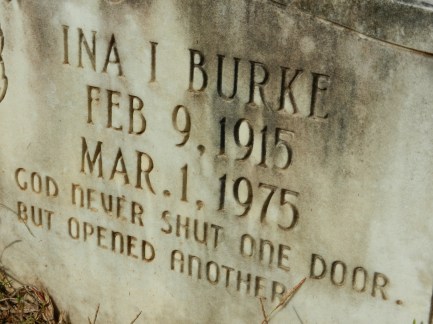
My grandmother, Ina Inez Burke Culpepper, was a warm and wonderful woman. We always celebrated her birthday on February 9, her death certificate lists her birth as February 9, her tombstone is chiseled February 9. Imagine my surprise when I received her birth certificate stating she was born at 10:00 pm on February 8!
She was born in Mississippi in 1915 to John Patrick “Pat” Burke and Mary Howington Burke. She was the eldest of seven children, one dying as an infant. She grew up with three brothers and two sisters.
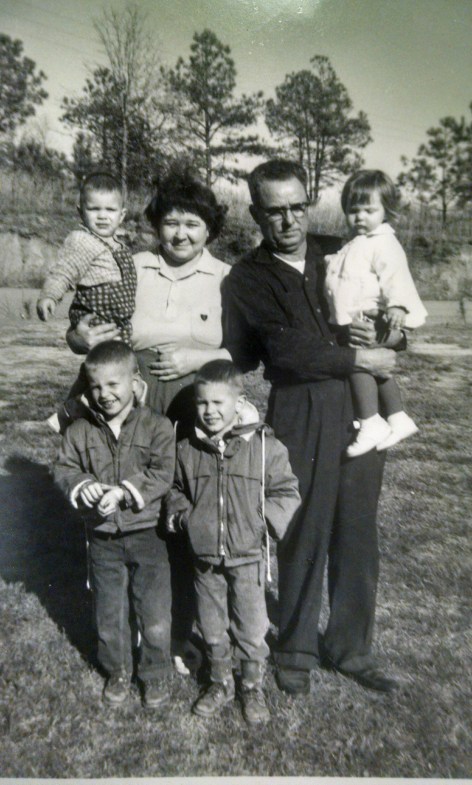
She married Earl Culpepper at the age of 21 on 1 Aug 1936. The union produced two daughters and four grandchildren. (The little girl is me!)
Ina was a great cook and a professional seamstress, working at Meridian’s Burnley Shirt Factory. She spent many hours teaching me to sew when I was small. I was too young to get under her feet in the kitchen and still regret not being able to make biscuits as good as hers.
She died in 1975 of complications of aortic valve replacement. I always thought she died at the age of 59, but now I wonder if she was only 58.
She is laid to rest at Liberty Baptist Church Cemetery in Newton County, Mississippi, not far from where she was born.
The following is a rough draft of my current work-in-progress, The Culpepper-Fairfax Scandal. Catherine Culpepper is nineteen years old, and her rich father, Lord Thomas Culpepper the baron of Thoresway, has just died. For two decades, he had been living in London with his mistress and had left everything to the mistress in his will, but Catherine’s mother had the will suppressed. This scene takes place at the probate hearing at Westminster. Thanks to her mother, Margaretta, and her uncle Alex, Catherine inherited nearly everything.
We’ll make due with a painting of Catherine until I can get a proper book cover made. 🙂
************************************
When the proceedings ended in Catherine’s favor, Margaretta and Alex attempted to whisk Catherine from the courtroom, but they were met at the door by a crowd of enthusiastic well-wishers and more than a few gentlemen of questionable intentions. Catherine had just inherited more wealth than she could ever dream of. Not only was she now the sole owner of Leeds Castle, she also held manors and lands in Sussex and Essex, and was one-sixth owner of the proprietorship of the Virginia Colony. The crowd’s din grew as they attempted to get closer to the wealthy heiress. Pushing and shoving toward her, people reached out to touch her, to take her hand, to gain her attention and her favor. When the family emerged from Westminster, Alex hailed their coach, but when he turned back for Margaretta and Catherine, they had been separated from him by a sea of bodies. Margaretta reached for her daughter’s hand to pull her through the crowd, but their fingers were inches away from each other’s as Catherine was pushed back by the crowd, away from the protection of her mother and their waiting carriage.
“Catherine!” Margaretta called.
Catherine heard her mother’s call but couldn’t see her over the heads of the people surrounding her. She attempted to turn, but a growing throng of people blocked her way. Someone was standing on the hem of her gown, stifling her movement, lest she rip her skirts. Her mother called for her a second time. Her heart began pounding as she heard the panic in her mother’s voice and suddenly realized she might be in a dangerous situation. The crowd was growing riotous, pulling at Catherine’s clothing and her hair. Her honey-colored curls fell to her shoulders as her hairpin was snatched from her head, taking with it a handful of hair. She cried out for her mother, for her uncle, for anyone to save her from the melee. It was then that she felt a strong arm around her waist and another under the back of her legs.
“I’ve got you,” he whispered in her ear.
She was scooped into the arms of a savior. She buried her face into his shoulder as he pushed his way through the crowd toward the waiting carriage. When she was gently placed onto the seat in the carriage, she smoothed her hair from her face and lifted her eyes to look at her uncle. But her savior wasn’t Uncle Alex.
Before her stood a striking man whose brown eyes bore into her own, his dark curls falling over his brow, his full lips begging to be touched. Their eyes locked as if time stood still. He then nodded to her and quickly closed the carriage door, disappearing into the crowd.
Uncle Alex yelled for the driver to make haste, and the carriage sped away from the scene, the wheels bouncing on the rough cobblestone street.
Hays Rodgers Sr was my 4th great grandfather. He was born in Greene Co, Tennessee in February of 1793 to James Rodgers and Elizabeth “Elly” Hays. (Elly was the heroine of my book “Elly Hays.”) Hays was Elly’s eldest son and he had at least ten siblings. Just before the War of 1812 began, the family moved from Tennessee to the Mississippi Territory, today known as Clarke Co, Alabama. Alabama didn’t become as state until 1819.
1814 – When Hays was 19, he and his brother, Absolom, signed up for the Mississippi Militia and were assigned to Captain Evan Austill’s company of volunteers in Major Sam Dale’s Battalion to fight against the hostile Creek Indians. Hays remained in the Militia until October 1818, but was only called out once for a two-month tour. Today, I am a member of the United States Daughters of 1812 under his patriotism.
On December 11, 1816, he married Marey Ann Scott, who was from Georgia.
Winter of 1818, following the end of his military service, Hays, Marey, and first-born Lewis, moved to Copiah Co, MS (what later became Simpson, MS). He started buying land and farming. Over the next two decades, the couple had a total of 14 children. Some died young, but the final tally of grandchildren was 71!
In 1834, the US Government began selling off land it had obtained from the Choctaw Indians in the 1830 signing of Dancing Rabbit Creek. Hays went to Pine Springs in Lauderdale County before the land was surveyed and built a small cabin overlooking Rogers Creek bottom so he could claim the land the moment it went up for sale. He was a squatter for all purposes.
September 26, 1836 – A deed was recorded for 80 acres in Pine Springs which he bought from the government.
October 1836 – He bought 160 acres next to his 80 acres from John Calhoun. Mr. Calhoun moved to the Martin Community to open a leather tannery.
1839 – He bought 80 acres from Alex McMullen and 80 acres from Jeremiah Howell. He also began buying slaves and producing cotton.
1856 – He was granted public land adjoining his plantation from the US gov’t in payment for his military service.
1857 – He built the “Ole Stennis House” at the age of 61. I took this photo in 2012 when I visited the house.
In 1860, the U.S. Census states Hays owned 13 slaves, a 640 acre (square mile) plantation, 2 horses, 3 mules, 10 cows, 4 oxen, 16 sheep, 60 swine, and $600 in farming instruments, for a total worth of $8400. A person’s total worth did not include the price of the slaves they owned, and most of his wealth was tied up in slaves that were worth more than $1000 each – that’s probably a million bucks in today’s money.
1862 – When the Civil War began, Hays sent four of his sons to fight. Three never returned. Also, during the winter of that year, a typhoid epidemic hit his family, killing the only son who didn’t go off to war. Fortunately, Hays was not around to witness the deaths of his sons as he was the first in the family to died of typhoid that winter in December of 1862. He was 66 years old. His wife died shortly after him in March of 1863, also of typhoid.
Upon his death in December 1862, he owned 690 acres of land and stock in the Mobile and Ohio Railroad, which sat unattended until the end of the war, and then for more time as they awaited the boys return at the close of the war in 1865. The boys didn’t return. Finally, the property went to probate in 1869 and was sold at public auction on the steps of the Meridian Courthouse to Major Adam T Stennis, hence the name “Ole Stennis House.” The home remained in the Stennis family for 100 years until 1970 when it was bought by the Hover family.
The story of the time of war and Hays’ death is told through his daughter, Mary Ann’s, eyes in my book “Okatibbee Creek.”
Interesting note: The only son to return home from the war was Hays Jr, albeit with an injured, useless arm and a wilted spirit. Since he no longer had a large family in Mississippi, Hays Jr. sold his farm and moved to Alabama to be near his wife’s family. He sold his farm to a man named Tom Stennis. Tom Stennis was a former slave to Major Adam T Stennis.
The fourth book in the Culpepper Saga – Culpepper’s Rebellion – is here!!!! You can pick it up at Amazon by clicking HERE. If you haven’t yet read any of the Culpepper Saga, you can pick up the first book – I, John Culpepper – for FREE through November 4th by clicking HERE. The four books are the continuing story of the life of John Culpepper, the patriarch of the modern-day American Culpeppers, from his birth in 1606 in England to the end of his life in 1680 in Colonial Virginia. Check out the book blurbs below.
I, John Culpepper
John Culpepper was born into a privileged childhood, surrounded by abundant wealth, vast land holdings, and stately English manors. As he grew, he was expected to follow family tradition—attend law school and serve in Parliament, following which he would retire to a quiet life as a country gentleman.
John, however, had different desires. He longed to captain a mighty ship, to hear the snap of the sails, to taste the salty spray on his lips. To follow his dreams, John would have to risk being disinherited by his unyielding father. He would have to defy family convention. He would ultimately be forced to choose between the woman he loved and his mistress—the sea.
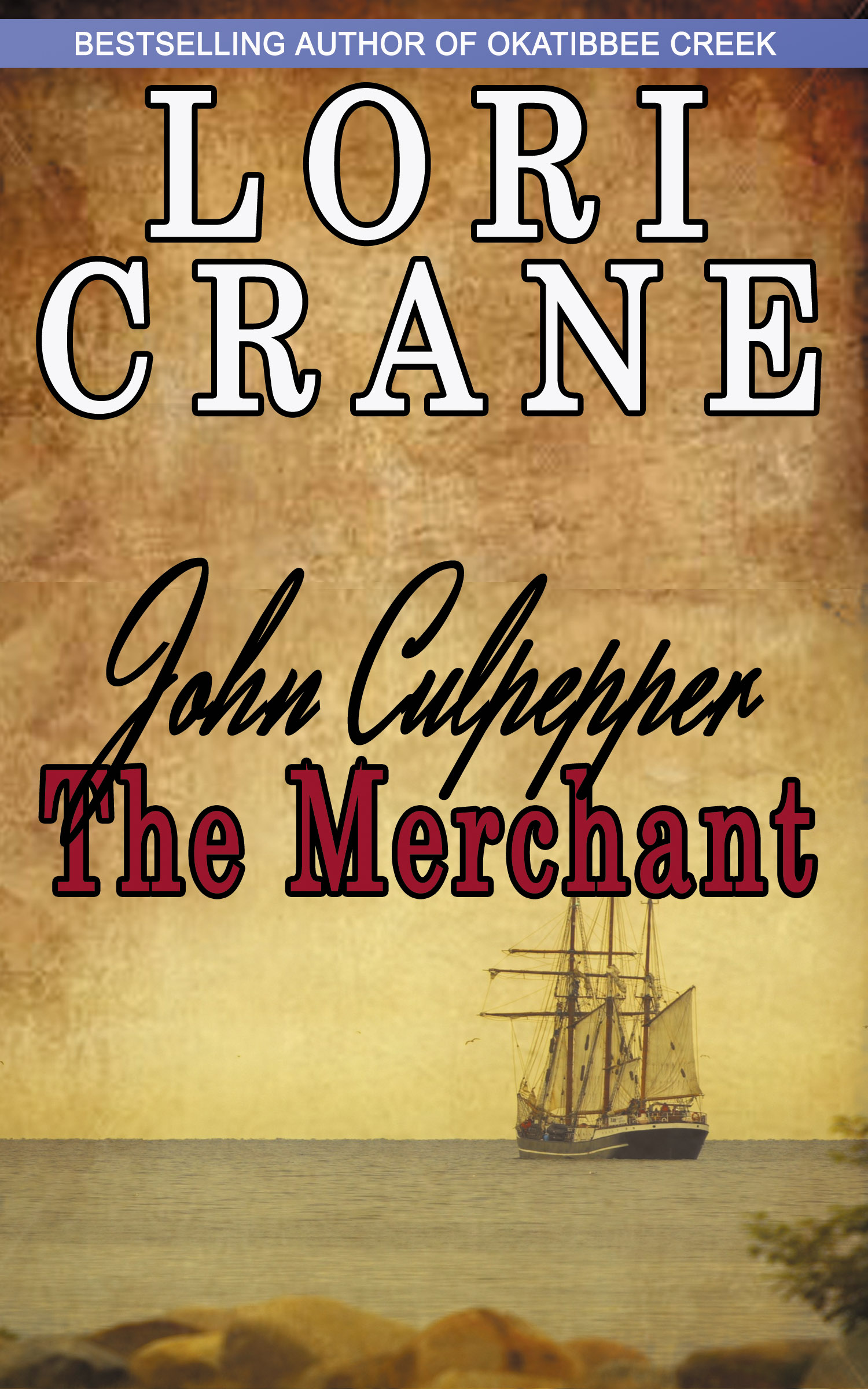
John Culpepper the Merchant
For hundreds of years, the Culpepper family backed the monarchy, but when King Charles disbanded Parliament, married a Catholic princess, and appointed an archbishop who was a Catholic supporter, the royalist Culpeppers found themselves at odds with their friends and neighbors.
Years earlier, against his family’s wishes, John had purchased a merchant ship, sailed to Virginia, and spent most of his time there. While on American soil, he received word of the uprisings that followed the king’s actions.
When civil war began, John feared for the safety of his family in England. He was horrified when the king was captured, convicted of high treason, and beheaded. Would John’s family be next? The only way to rescue them would be with his ship, under the cloak of darkness. Would he succeed, or would they all be caught and tried as traitors?
John Culpepper, Esquire
John Culpepper was a prominent figure in colonial Virginia, a merchant in Jamestown for two decades and a resident since the disastrous civil war that shook England to its core. The Culpepper family, decimated by the war, had known great defeat, but none as heartbreaking as the tragic event that abruptly left John in the position of family patriarch.
He struggled with this newly acquired role, marrying off his nieces to eligible colonialists, sending some of the boys back to England, purchasing a ship for his sons against their mother’s wishes.
Upon the collapse of the English Commonwealth, members of John’s family escorted the exiled prince back to London to be crowned as King Charles II. Would the Culpepper family finally reclaim the power and prestige it had once possessed? And how would John hold his family together on two continents?
Culpepper’s Rebellion
John Culpepper thought he had done right by his family when he married off his niece to his childhood friend, Sir William Berkeley, the governor of Virginia. When his cousin Nathaniel Bacon appeared and began an uprising against Berkeley, John was caught in the middle. He did everything in his power to advise his friend, protect his niece, and honor the crown.
He was unaware that during Bacon’s rebellion, his own son was planning a rebellion in Carolina. John had spent most of his life defying his father and the status quo, but when his son was arrested and charged with treason, he was forced to examine every idea he held about his life and his past. The legal training John had rebelled against in his youth would now be the only thing standing between his son’s life and death.
On This Day in 1865, Benjamin John Carpenter died.
He was my 4th great grandfather, and though the year may look as if he died in the war, he was 75 years old, so probably not.
Benjamin Carpenter was born 9 Feb 1790 in Franklin City, NC to John Carpenter and Elizabeth Upchurch. He was one of an unbelievable 14 children. He was a descendant of Captain William Vincent Carpenter who came to America from England in the early 1600s.
At the age of 19 in 1809, he married Nancy Rice. Miss Rice was the daughter of a Revolutionary War hero and came from a well-to-do NC family with tons of land and many slaves. Benjamin had some work to do to keep Miss Rice in the style she was accustomed to.
In 1810 at the age of twenty, Benjamin’s mother died, and shortly after that, his wife gave him his first daughter. Over the next twenty years, they would have a total of ten children. The first five were born in NC. In 1820, they moved to Greene County, Alabama where the last five were born, including my 3rd great grandfather Rice Carpenter. (Notice how they used mom’s maiden name as the son’s first name. Southern tradition.) In 1836, they migrated west on a wagon train with other local families (Richardsons, Sanderfords, Tutts) to Lauderdale County, Mississippi.
In 1838, they organized the first church in the area called Fellowship Baptist Church. They met in a gumlog cabin that was on the property when they bought it. The church has been moved and rebuilt, but is still active today.
In 1840, Benjamin was elected the county tax assessor and collector. The 1860 census shows he owned quite a bit of land and 18 slaves. The family was doing quite well, but something was going on between Benjamin and Nancy, as she was living with one of her daughters, not with her husband. We’ll never know.
In 1861, the civil war started and the bottom fell out.
31 Dec 1862, his son Rice was killed in the war at the battle of Murfreesboro, TN. There was also a typhoid epidemic that came through his town. A month later, 30 Jan 1863, two of his daughters died of typhoid. Feb 1863, his one-year-old grandson died of typhoid. July 1864, a second son died in the war.
He died 16 Oct 1865 at the age of 75. His wife died five years later in 1870. I don’t know for certain, but I would assume they are buried in unmarked graves on the grounds of Fellowship Baptist Church.
 An Orphan’s Heart is about a young girl from Mississippi who at the age of nine lost her parents to typhoid, during the Civil War. She was subsequently shuffled from family member to family member through her teenage years, ending up in Alabama. When she became a young women, she traveled to see her brother in Texas and fell in love with a young man there. The love doesn’t last long…you’ll have to read the book.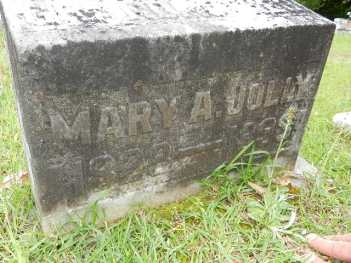




 Grandpa Grimes is laid to rest in Union Spring Primitive Baptist Church Cemetery in Brundidge, Pike County, Alabama, where the 2010 census says the population is just over 2000 people, 33% living below the poverty line. I can imagine how small and poor it was in the 1800s when Grandpa Grimes lived there.
 My grandmother, Ina Inez Burke Culpepper, was a warm and wonderful woman. We always celebrated her birthday on February 9, her death certificate lists her birth as February 9, her tombstone is chiseled February 9. Imagine my surprise when I received her birth certificate stating she was born at 10:00 pm on February 8!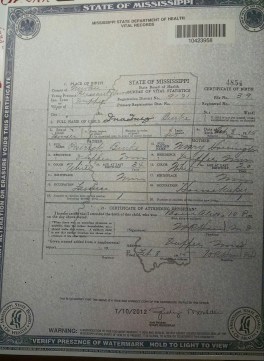


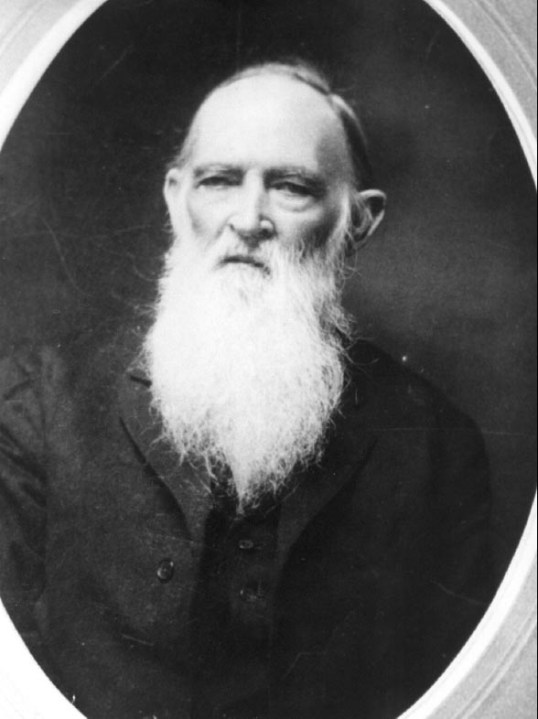
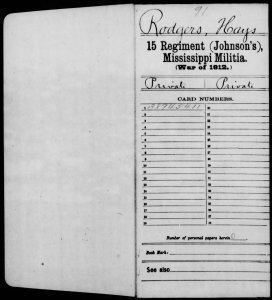 1814 – When Hays was 19, he and his brother, Absolom, signed up for the Mississippi Militia and were assigned to Captain Evan Austill’s company of volunteers in Major Sam Dale’s Battalion to fight against the hostile Creek Indians. Hays remained in the Militia until October 1818, but was only called out once for a two-month tour. Today, I am a member of the
 1862 – When the Civil War began, Hays sent four of his sons to fight. Three never returned. Also, during the winter of that year, a typhoid epidemic hit his family, killing the only son who didn’t go off to war. Fortunately, Hays was not around to witness the deaths of his sons as he was the first in the family to died of typhoid that winter in December of 1862. He was 66 years old. His wife died shortly after him in March of 1863, also of typhoid.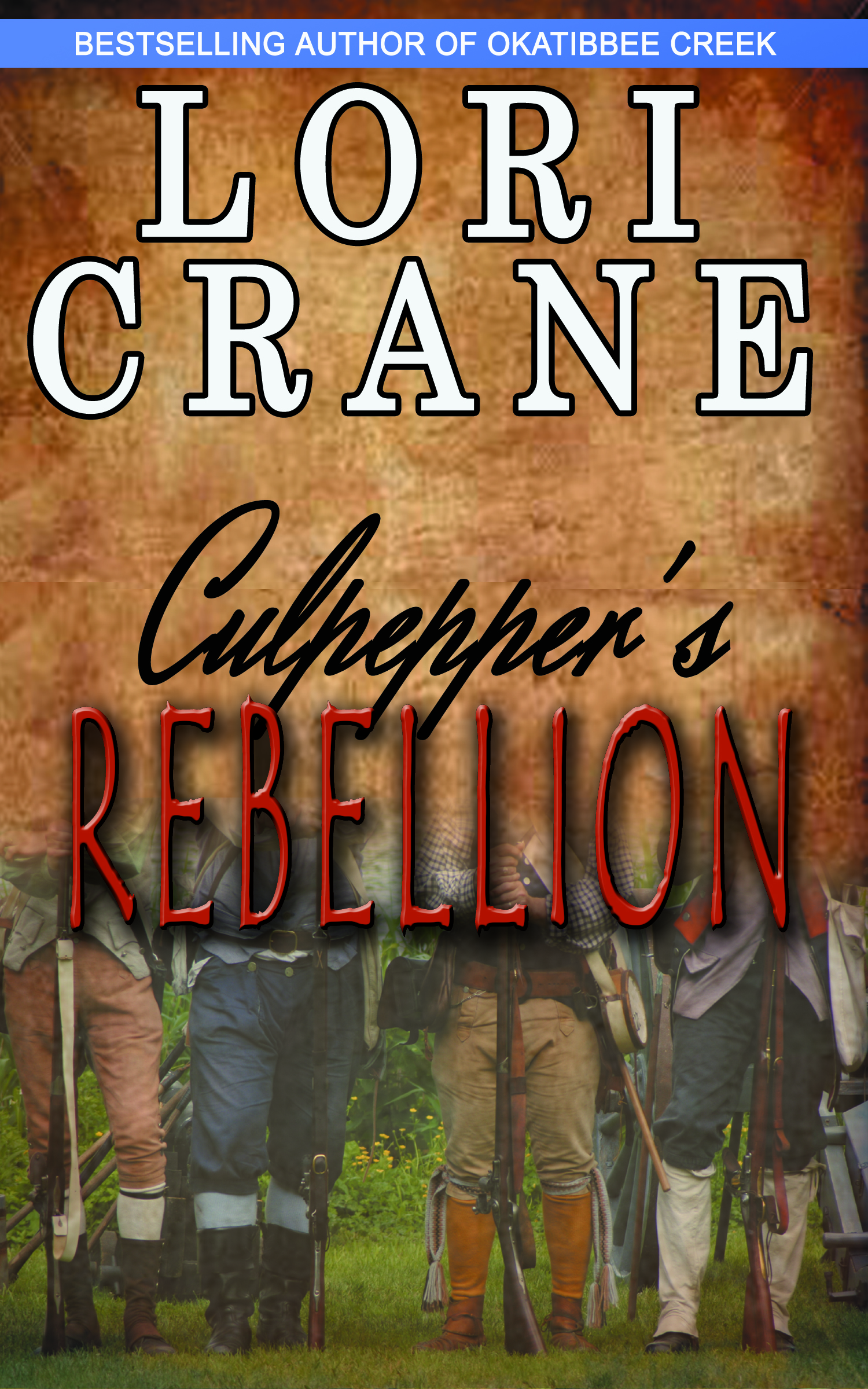



 Lori Crane