“I, John Culpepper” is FREE on Kindle through 4/19. Grab a copy and relax with a good book this weekend. Click here – “I, John Culpepper” at Amazon.
Below is the blurb and a snippet from the book.
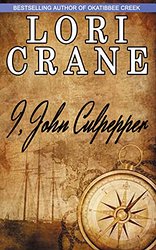 I, John Culpepper
John Culpepper was born into a privileged childhood, surrounded by abundant wealth, vast land holdings, and stately English manors. As he grew, he was expected to follow family tradition—attend law school and serve in Parliament, following which he would retire to a quiet life as a country gentleman.
John, however, had different desires. He longed to captain a mighty ship, to hear the snap of the sails, to taste the salty spray on his lips. To follow his dreams, John would have to risk being disinherited by his unyielding father. He would have to defy family convention. He would ultimately be forced to choose between the woman he loved and his mistress—the sea.
I, John Culpepper is a work of historical fiction based on the life of the 17th-century man historians refer to as John Culpepper the Merchant. He is believed to be the progenitor of the modern-day American Culpeppers. He was my 10th great-grandfather.
***********************************************
Here’s a snippet from the day John was born. The photo is the replicas of the ships mentioned in the scene. These replicas were built in the late 1900s and are currently docked on the James River in the Jamestown settlement where the original ships were heading. Road trip! Let’s go!
***********************************************
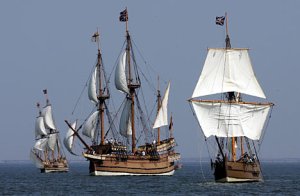 1606, Blackwall, London
“Master Culpepper! Master Culpepper!” the servant boy shouted over the bells clanging from the church steeple. He pulled the scratchy scarf tightly around his neck to ward off the chill as he pushed his way through the masses gathered on the foggy banks of the Thames.
The crowd had been gathering on the wharf for nearly two days to witness the departure of the ships, and they were prepared for a spectacle unlike any they had seen before. When the tide came in, the three ships carrying one hundred forty passengers and sailors would depart England on an exciting adventure. The air smelled of salt and tar and sweat. This was a remarkable place, a magical place, where the preparations were as exciting at the coming voyage. The anticipation in the air was nearly as thick as the fog.
The boy stopped for a moment as a wooden cask was rolled across the cobblestone in front of him. He watched as workers carefully rolled the barrel up the tilted gangplank. He remained frozen in the middle of the bustling crowd, staring at the ship. He had never seen anything so majestic in all his twelve years, and his jaw dropped at her sheer size. She was an enormous castle-like structure, at least eighty feet in length, her belly bulging at the side where the last of the cargo was being loaded in. Crates and boxes were continually being carried up the gangplank, where they disappeared into the ship’s dark interior. The deck above the cargo area was much narrower and the boy imagined that’s where the sailors would remain during the voyage, climbing masts and hoisting sails. Circling the spiderweb of hemp ropes and yardarms, seagulls cawed as if singing along with the rhythmical clanging of a nearby metal object. The boy scanned the scene for the source of the sound and noticed a blind beggar sitting on the cobblestone near the bow of the ship, tapping a stick on a metal bowl.
Behind the ship floated a second ship, nearly as large as the first, and behind that loomed a third. Each hosted its own cast of sailors, supplies, vagrants, and gangplanks. As wavelets gently raised and lowered the vessels, moans of protest arose from the taut ropes, and the weathered wood creaked with each stomp of a sailor’s boot. Nearby, two mangy hounds barked and growled over some fish scraps, bringing the boy’s attention back to his task at hand. Remembering why he had come, he yelled, “Master Culpepper!” He spun around and around looking for the man, weaving between horses, carts, trunks, and sailors shouting commands. He darted in and out of the crowd, making sure he didn’t bump into any wealthy gentlemen, recognizable by their long cloaks adorned with colorful silk threads.
In April, King James had created the Virginia Company, which would finance sailings to Virginia and Plymouth with the aim of settling colonies and profiting from the land’s abundant natural resources. The aristocracy funded the expeditions with the expectation of making an exorbitant profit. The three ships embarking from Blackwall on this day would sail to Virginia and bring back riches. There were rumors of gold, silver, and gems merely washing up on the shore for the taking. If nothing else, there was surely timber to be harvested. The trees in England had long been felled and the rising price of timber would certainly bring the investors a hefty return.
After they finished loading supplies and the morning fog had dissipated, the ships would raise their sails and ride the tide down the Thames. They would enter the English Channel and cross the great ocean and return by summertime.
The boy bobbed in and out of the crowd, searching for his master.
“Who are you searching for, lad?” a man in a ruffled collar asked.
“Master Culpepper,” the boy replied, removing his hat and revealing his dirty blond hair, which was sticking this way and that like a wheat field in a mighty windstorm. He twisted the wool hat in his hands.
“Johannes or Tom?”
“Johannes Culpepper, sir.”
“I saw him down by the front ship—the Discovery—only moments ago. He was standing right on the dock.”
“Thank you.”
The boy nodded, replaced his cap, and shoved through the workers and onlookers toward the front ship. As he passed the first ship, he looked at the name written on her side and sounded out the letters. He couldn’t make any sense of the words Susan Constant, but when he reached the second ship, he could read God…speed. He wondered if the Godspeed was true to her name. If he were to sail, he would rather sail on the Godspeed and get there faster. From what he understood, it was a two-month voyage if the weather was bonny, maybe four months if the ship ran into rough seas.
He had once spent a morning in a small fishing boat and instantly became green with sickness that lasted for days. He didn’t think he would be able to survive the time it would take to sail to Virginia. He gawked at the bow of the Godspeed as he ran past, witnessing a young lad about his age. The sailor dripped with sweat, even in the chill of the damp morning air, as he coiled ropes and folded sails. What a great adventure it would be to sail to Virginia, but alas, the boy would never get to do such amazing things. He was a servant, a gift from His Majesty King James I to Johannes Culpepper. He would always be a servant, but perhaps someday he would be fortunate enough to serve the king. Even though Master Culpepper was good to him, he wished to someday live at court and be somebody. At least he had the slimmest of chances. His sister had been placed in the kitchen of some castle in Wales. She would never be anything more than a scullery maid. Women would never hold a place in society. They were not welcomed on this voyage, either.
He hopped up and down, unsuccessfully trying to look over the crowd. “Master Culpepper!” he called.
A man turned and pointed. “Culpepper is right over there, son.”
“Thank you, sir.”
The boy sprinted in the general direction, and when he pushed through a couple workers conversing on the dock, he saw him.
“Master Culpepper!”
The boy ran up behind Johannes Culpepper and patted the back of his master’s arm, hopping up and down. “Master Culpepper!”
Johannes turned and looked down at the boy, his square jaw set and his blue-gray eyes burrowing into the lad. “What is it, boy? Why are you making such a commotion?”
The boy panted, out of breath from running. “Master Culpepper, m’lady is havin’ the baby, sir!”
Johannes’s face turned red as he glanced around the crowd to see if anyone was eavesdropping. When he saw no one was, he folded his arms across his chest and stroked his beard. “You came all this way to tell me that?”
“Yes, sir.”
“Very good, boy. You run along home now.”
The boy didn’t move. How could his master not be excited about this news? Did he not want to return home and see his wife and child? Was there anything the boy could say to convince the man to accompany him back to the house?
“Go on. Run along.” Johannes waved the boy off with a flip of his ringed fingers and abruptly turned his back.
“Yes, sir.” The lad backed up, keeping his eyes on his master, wondering what he would tell the governess when he returned home without his master in tow. He had ridden nearly four hours to get to Blackwall this morning, most of it in the dark as the sun had not even risen when he left. He would have a four-hour return trip to think of something. He turned and walked back in the direction from which he had come.
*******************************
Get your copy by clicking HERE.
![A2Z-BADGE_[2016]](https://loricrane.com/wp-content/uploads/2016/04/a2z-badge_2016.jpg?w=138&h=138) April 2016 A to Z Challenge – I’m writing about history.
April 2016 A to Z Challenge – I’m writing about history. Royals have no surnames. That’s right. Queen Elizabeth is Her Royal Highness Queen Elizabeth. Period. Her family’s name is Windsor, but she doesn’t use it. She doesn’t have to.
![A2Z-BADGE_[2016]](https://loricrane.com/wp-content/uploads/2016/04/a2z-badge_2016.jpg?w=202&h=202) April 2016 A to Z Challenge – I’m blogging about history.
April 2016 A to Z Challenge – I’m blogging about history.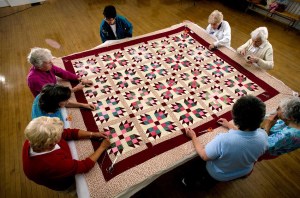
 I love quilting, though I admit, I’m not very good at it. My grandmother was a professional seamstress, but I didn’t inherit that ‘fine needlework’ gene. Regardless, I enjoy it, and I’m currently working on the quilt pictured here. It is a
![A2Z-BADGE_[2016]](https://loricrane.com/wp-content/uploads/2016/04/a2z-badge_2016.jpg?w=170&h=170) April 2016 A to Z Challenge – I’m writing about history. Or maybe about the future?
April 2016 A to Z Challenge – I’m writing about history. Or maybe about the future? For people like me who live in genealogy, world history, and ancestry, time is everything. Recorded dates and world events bring my research into focus. What if I’m wrong? What if the recorded dates are not the real dates?
 In 1582, Pope Gregory XIII introduced the Gregorian calendar. He designed the passage of time from the previously used Julian calendar. The Julian calendar was calculated by the moon’s cycles, and it is said that it ran ten minutes too slow every year. Pope Gregory’s mathematicians and astrologers figured that since the time the Julian calendar began in 45 BC, the world had lost roughly ten days. He decided the Julian calendar would end Oct 4, 1582 and the Gregorian calendar would begin Oct 15, 1582. That should fix everything.
 The one thing I find interesting is that Romanesque architecture was big in Europe in the tenth century, like this photo of Piza Cathedral in Italy. Why would that be so when the Romans were long gone by the fifth century? Unless, of course, they weren’t. Dumb calendar.
![A2Z-BADGE_[2016]](https://loricrane.com/wp-content/uploads/2016/04/a2z-badge_2016.jpg?w=188&h=188) April 2016 A to Z Challenge – I’m writing about history.
April 2016 A to Z Challenge – I’m writing about history.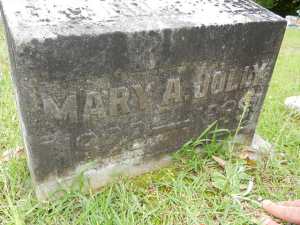
 This is our heritage. These are the strong women we come from. We are the living proof of their strength. We are the survivors. I dug deep down in my heart and soul to tell her story, a story she would be proud of. I wanted her to know that she didn’t endure all of that heartache in vain. I am here. I am her legacy. Her story has been written down to help us realize our own strength. We are the products of our ancestors fortitude and integrity. We are the children our grandmothers fought so hard for, and I want Mary Ann to be as proud of me as I am of her.
![A2Z-BADGE_[2016]](https://loricrane.com/wp-content/uploads/2016/04/a2z-badge_2016.jpg?w=182&h=182) April 2016 A to Z Challenge – I’m blogging about history.
April 2016 A to Z Challenge – I’m blogging about history.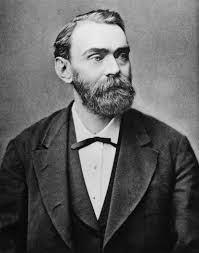 Alfred Nobel was born in 1833 and was a brilliant and notable chemist and engineer. In 1867, he invented dynamite which was used not only to help with construction, but mainly to create weapons. He instantly became a multi-millionaire.
 Mount Vernon was the home of our first president, George Washington. It sits in Fairfax County, Virginia on the banks of the Potomac River.
 In 1758, George began renovations on the house, raising it to two and a half stories. In the 1770s, just before the Revolution, he added even more, the final expansion rendering a twenty-one-room home with an area of 11,028 square feet! A majority of the work was completed by slaves. You can tell he wanted the home to be symmetrical, but if you look at the center door, you will see how far off it is. That probably drove George nuts every time he pulled up in front of the house.
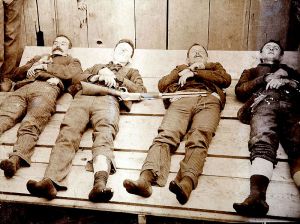
 True? Not true? Half true but blown way out of proportion?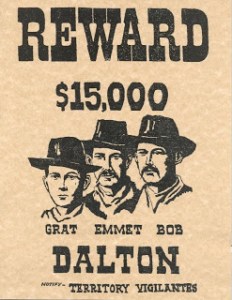
![A2Z-BADGE_[2016]](https://loricrane.com/wp-content/uploads/2016/04/a2z-badge_2016.jpg?w=164&h=164) April 2016 A to Z Challenge – I’m blogging about history.
April 2016 A to Z Challenge – I’m blogging about history. When you think of a king, you usually picture an older, wiser man, sporting a beard and a long robe. Well, King Tut was king for only ten years and died at the young age of nineteen. He was hardly the image we picture in our heads. He died around 1324 B.C. but his remains weren’t discovered until over three thousand years later. His tomb was discovered and opened by Howard Carter November 29, 1922. The carvings on the walls predicted a swift death to anyone who bothers his tomb. (photo by
 In May 1926, Carter reported in his diary that he witnessed jackals around the site, the same type as Anubis who is the guardian of the king. He said he had never seen a jackal in his thirty-five years of working in the desert. (photo by
 ![A2Z-BADGE_[2016]](https://loricrane.com/wp-content/uploads/2016/04/a2z-badge_2016.jpg?w=181&h=181)
 Most everyone knows Jefferson Davis was the President of the Confederate States during the Civil War. Here are some interesting facts you may not know. (photo
 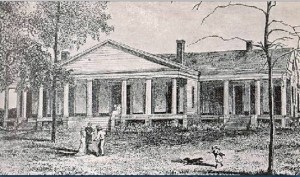 For years following his bride’s death, he was a recluse. He spent his time developing a 1000-acre plantation on his brother’s land and he called it Brierfield. (photo
  Lori Crane