52 Ancestors #37 Seventy-one Grandchildren!!

52ancestors-2015

This challenge is set forth by No Story Too Small, and this week’s prompt is “Large Family.”

Hays Rodgers and Marey A Scott Rodgers

 14 children 

71 grandchildren!

il_570xN.449898023_h4w0

  1. Lewis Rodgers 1817-1890 m. Nancy Powell Ward, nine children
  2. James Rodgers 1818-1862 m. Martha A Sanderford, five children
  3. Allen Rodgers 1820-1894 m. Judith Walker McGehee, seven children, m. Nancy Abigail Chatham, six children
  4. Jackson Rodgers 1821- unknown
  5. Susannah Rodgers 1822-1904 m. Elijah Jackson Chatham, twelve children
  6. Stephen Rodgers 1824-1834 died young
  7. William Hays Rodgers 1826-1834 died young
  8. Mary Ann Rodgers 1828-1898 m. Rice Benjamin Carpenter, five children, m. William Eades Jolly, three children
  9. Timothy Rodgers 1830-1862
  10. Hays Rodgers Jr 1832-1913 m. Lucinda Graham, ten children
  11. Wilson Rodgers 1834-1864 m. Sarah Jane Graham, one child
  12. John W Rodgers 1836-1864
  13. Elizabeth Rodgers 1839-1875 m. George Malon Graham, ten children
  14. Martha Jane Rodgers 1844-1880 m. Martin V Warren, m. James Knox Meeks, m. Adam James Edgar, three children

Hays and Marey were my 4th great grandparents. #8 Mary Ann and Rice were my 3rd great grandparents.

1840810882_Thanksgiving20Dinner_xlargeOne can only imagine what Christmas would look in a house like this. After a while, the birth of a new child would be common place, and one might even have to decide which birth to attend and which one to not attend. There must have been a lot of love and a lot of chaos, but large families also have the potential for great tragedy. Hays and his large family lived in Mississippi, and when the Civil War broke out in 1862, they had no idea what was to come.

#9, #10, #11, and #12 served in the Confederacy. Only #10 returned home, and he came home with a useless arm that had taken a mini ball.

#8, #13, and #14 had husbands who served. As a matter of fact, #14 had two husbands who served. The only one who came home was #13’s. #14 was twice widowed by the age of twenty.

#5 had an eldest son who served. He was the first-born grandson in the family. He died at the age of 18 of illness at the training camp, one of the first casualties of the war.

If losing seven men in a single family wasn’t bad enough, typhoid also swept through the county the winter of 1862/63. During that terrible winter, Hays and Marey died within months of each other. Others lost to the disease were #2 and his wife within days of each other, leaving five orphans. #8’s infant son was also lost.

Looking at it from #8’s perspective. She lost three brothers, three brothers-in-law (one being her husband’s brother), four sisters-in-law (three were her husband’s sisters), an 18-year-old nephew, her husband, her infant son, and both parents within a seventeen month period. FIFTEEN PEOPLE! It turns my stomach to think about it.

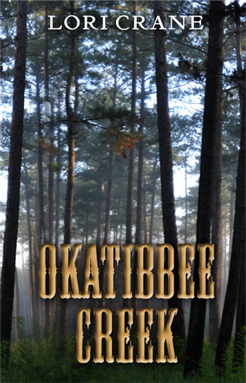
Mary Ann seemed to be the one who held the family together after the tragedy. She was an amazing woman who had no idea how capable she was. Not only did she see the family through the tragedy, she came out on the other side a strong woman with an amazing story. Her story is detailed in my book Okatibbee Creek. 

Rodgers, Mary Ann Rodgers Carpenter Jolly

Saturday Snippet of I, John Culpepper

I began researching my ancestry as a teenager. I knew my Culpepper line came to America from England in the 1600s, and I knew they were wealthy land owners with much prestige in the English court, but I didn’t understand why they would give all that up to sail to an inhospitable land full of savage Indians, facing the possibility of shipwreck, starvation, and death. How did those aristocratic people end up as the modest family I knew in my youth in Mississippi? The journey to find these answers became a series of four books about my 10th great-grandfather, John Culpepper.

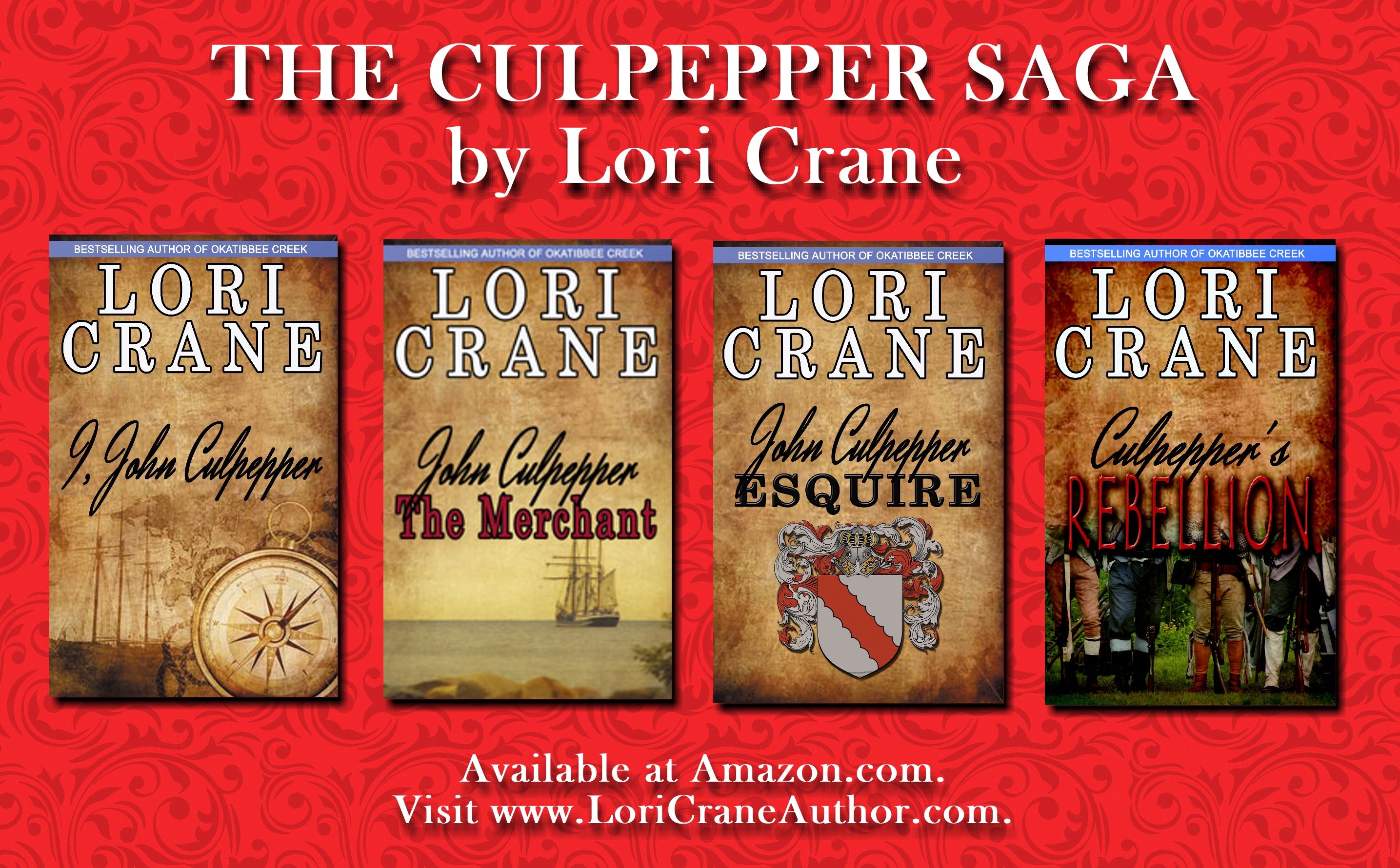
51hHerBrPbL._UY250_Follow the series as John rebels against his father, the English civil war destroys the family, John ends up as the family patriarch in the colony of Virginia, and finally, as John comes to terms with his life and his past. The first book in the series is I, JOHN CULPEPPER. The subsequent books are JOHN CULPEPPER THE MERCHANT, JOHN CULPEPPER ESQUIRE and CULPEPPER’S REBELLION.

Here’s the opening chapter of I, JOHN CULPEPPER, setting the stage with his tumultuous relationship with his dad.

************

CHAPTER 1

Fall 1626

“No! For the hundredth time, no!”

John looked down at the intricate grain of the walnut desk beneath his fingertips and shifted his weight to his other foot. He sighed, feeling his dreams disintegrate before his very eyes. The snap of the white sails, the taste of the salty spray on his lips, the smell of the tar that sealed the decks—the visions were quickly vanishing behind the thick fog of his father’s adamant disapproval. He pictured his mighty ship sinking into the black waters of condemnation, bubbling like a cauldron as it disappeared from sight. There was nothing he could do to change his father’s mind, and he wondered whatever possessed him to come to this man for assistance. He should have known better.

His father glared at John from behind the desk. He propped his elbow on the scrolled arm of the chair as his large hand methodically stroked his pointed beard. “Is there anything else?” he snapped.

John didn’t look up. He shook his head and mumbled, “No.” He turned and padded across the thick rug toward the door, listening to the man’s heavy breathing behind him. He reached for the brass doorknob, paused, and turned back. “You know I’ve always done everything you’ve asked of me. I went to school. I studied to be a lawyer. I did it all for you. I never wanted to practice law. I’d never be happy on the bench.”

“Happy? What makes you think life has anything to do with being happy? You are a Culpepper, and as such, you have an obligation to serve your family and your king in a manner befitting your station. This childish notion of owning a ship is nothing but rubbish.”

John released the doorknob and walked back toward his father’s desk. The intimidating man dwarfed the desk, his size exaggerated by the broad shoulders of his leather jerkin, yet he sat up taller in his chair in preparation for the quarrel to continue. It was a wasted gesture, as his opponent already knew the battle was lost.

John made sure he didn’t raise his voice. “Father, you have financed merchant ships for as long as I can remember. What difference does it make if I’m the one who owns the ship?”

“Culpeppers don’t own ships. I funded those expeditions as an investment—a losing investment, I might add.” He rose from his chair and his voice grew louder, echoing off the oak panels that lined the walls. “There has never been a Culpepper placed in a position of experiencing hunger and savages and shipwrecks, and there won’t be one now, not with my blood written on the purchase. I will not fund a ship for you, John, not now, not ever.” He pointed his finger in John’s face. “And if you somehow find a way to procure a ship, mark my words—I will disinherit and disown you. No son of mine will become a common sailor. I am finished with this conversation once and for all. Have I made myself clear?”

John exhaled, beaten. His shoulders slumped as he broke his father’s glare and dropped his eyes to the floor.

“John? Have I made myself clear?”

“Completely.”

***********

5-star-largeThe recipient of 5-stars at Readers’ Favorite, I, JOHN CULPEPPER is available in paperback and Kindle at Amazon. CLICK HERE.

“In I, John Culpepper, you will be transported back to the time John lived and you will feel like you are a part of John’s life. The experience of reading this book was out of this world. … it is a magical experience and you will not want to miss it for anything! Amazing!” ~ Rabia Tanveer for Readers’ Favorite

culpepper saga-001

52 Ancestors #35 School Days with George Washington Spencer

52ancestors-2015

This challenge is set forth by No Story Too Small and this week’s challenge is “School Days.”

geo wash spencer

My 3rd great grand-father became a Confederate soldier in 1862, but in 1860, he was listed on the U.S. Census as a school teacher in Newton County, Mississippi.

church of rev william saladin spencerGeorge Washington Spencer was born in Alabama in June 1829, the son of preacher William Saladin Spencer and his wife Martha Didama Gross. GW grew up around the Shake Rag Church (photo) in Tuscaloosa, AL as one of eleven children. His last sibling was born in 1835, his father died in 1841, and his mother died in 1867 all in Alabama, but at some point GW moved west to Mississippi. At the age of 29 in 1858, he married Nancy Virginia “Jenny” Holdcroft, and in 1859, they had their first child, my 2nd great grand-mother Nancy Didama Spencer. (She was followed by six siblings.)

The Spencers made their home in Newton County, MS, and with a wife and a baby at home, GW needed a job, so he became a school teacher. There was no organized education at the time, so communities and churches usually gathered up some money and asked someone to educated their children. Teachers were generally left to their own devices to create a curriculum, and classrooms usually held children of all ages in one room. But the good news is that twelve-year-old children at the time were educated with books we would consider college level today. GW spent his days with the local kids, expanding the minds of the next generation.

Then the war began.

He enlisted 1 Mar 1862 at Scooba, Mississippi with Co.B 35th Mississippi Infantry. According to family members, he was sick most of the war from a leg infection and was medically discharged 10 Jan 1864. Rosters show him in Confederate hospitals in Jackson, Marion, and Lauderdale Springs, Mississippi. The passed-down family story is that his wife went by horse and wagon to pick him up from a Confederate hospital to bring him home. This was just before General Sherman’s march from Vicksburg to Meridian in Feb 1864.

Following the war, he is listed on all census records as a farmer until his death 22 Jul 1901. His career in education was a short-lived one.

GW and his wife Jenny are buried in unmarked graves at Hickory Cemetery, Newton County, Mississippi.

(photos courtesy of my cousin M. Baucum)

52 Ancestors # 34 Alma Saterfiel

52ancestors-2015

This challenge is brought forth by No Story Too Small and this week’s challenge is “Non-population.”

Non-population refers to using a schedule that is not a populating-counting survey, such as an agricultural schedule. I’ve searched and searched, but all of the information I possess about my ancestors besides their personal records or land records involves them being counted for something. So… I’ve decided to forego the real meaning and twist the challenge into something I can do. I’ve decided to write about someone who created no population – someone who either never had children or perhaps died young – I’ve opted for Alma Saterfiel.

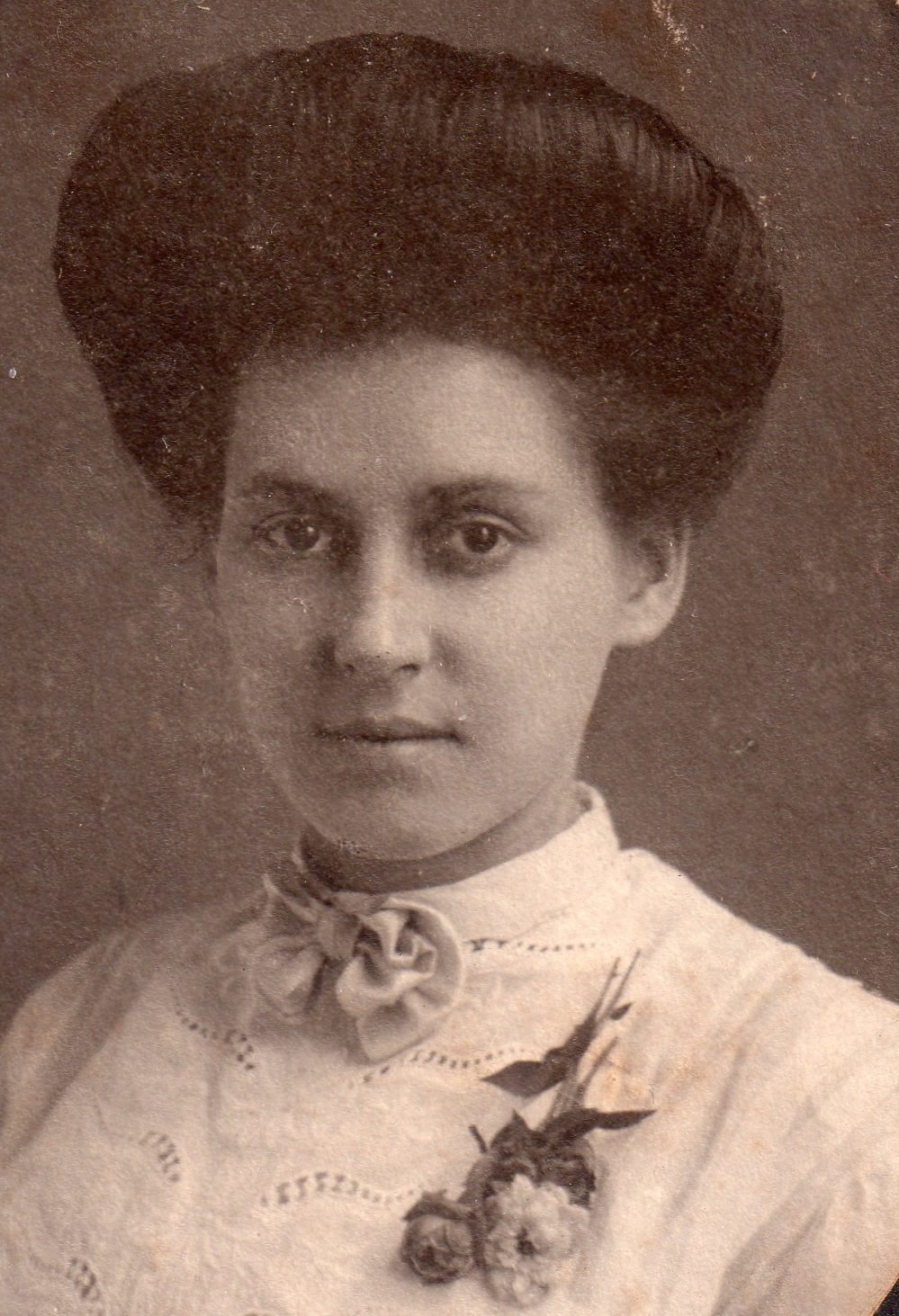
alma saterfiel

Alma was born to Mary Eudora Culpepper and William Bartley Saterfiel on 28 Jul 1907 in Lauderdale County, Mississippi. (Eudora was my great grandfather’s sister.) Alma was the last child of Eudora and William’s union, following two girls and three boys. She died at the age of four on Valentine’s Day 1912. She is laid to rest at Zion Cemetery in Kemper County, Mississippi with her father and her grandparents.

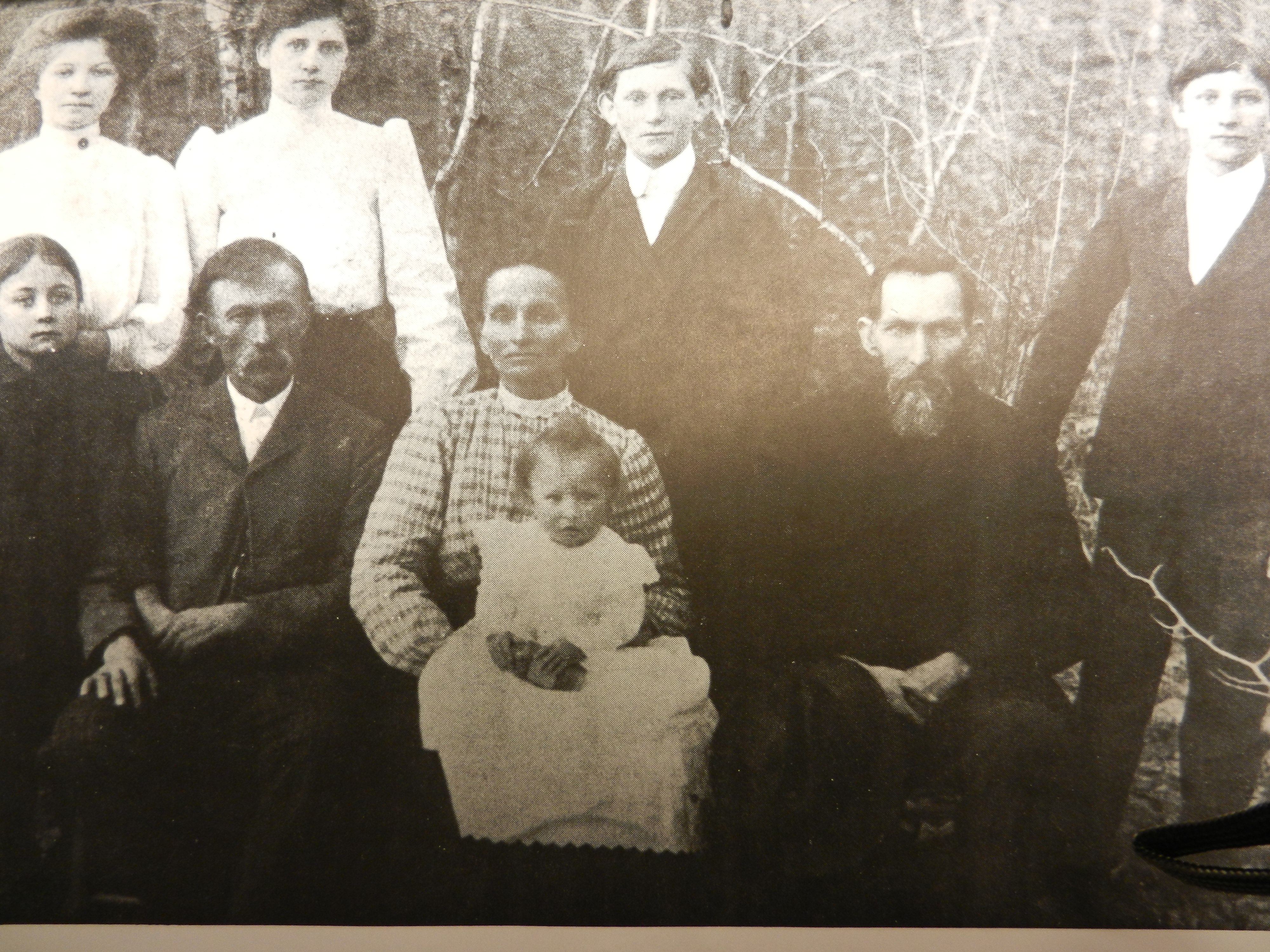
Her family is pictured below in a photograph taken in 1909.

Front row left to right: Dewey Oliver Saterfiel 1901-1968, Will B Saterfiel 1862-1925, Mary Eudora Culpepper Saterfiel 1871-1950, Alma 1907-1912, grandfather Joel B Culpepper 1848-1911.

Back row left to right: Evie Mae Saterfiel 891-1957, Indeola Saterfiel 1893-1956, Willie Carlos Saterfiel 1898-1955, Adie Joseph Saterfiel 1895-1954.

Joel B, Will B and baby Alma are buried at Zion Cemetery, Kemper Co, MS. All others are buried at Pine Grove Cemetery in Lauderdale, MS.

culpepper mary eudora culpepper saterfiel family

Saturday Snippet of Elly Hays

elly cover_webElly Hays is based on real people and real events. She was my 5th great-grandmother, Elizabeth Hays Rodgers. I wrote about her granddaughter in Okatibbee Creek and about her great-granddaughter in An Orphan’s Heart, but I began to wonder where the strength of these women came from, so I backed up in the family tree and found Elly. She lived in the Mississippi Territory, today known as Alabama, in the early 1800s – through a most frightening time when the South was the unsettled frontier and the Creek Indians fought against the Americans for the rights to the land. Not only is this her story, but we also get to see it through the eyes of the Creek warrior, Tafv (pronounced TAH-fuh.)

Elly Hays is told in alternating chapters of Elly’s point of view and Tafv’s point of view, and from the first few chapters, you can sense their will be an epic clash between a warrior with nothing to lose and a young mother on the verge of losing everything.

Below is a snippet of the first meeting between Elly and Tafv’s brother Eto.

*******

She angrily plopped down on a rock and yanked dirty stockings from the basket. She dunked them in the water and began scrubbing them hard enough to put holes in them. She could feel her ears buzzing and her shortness of breath and realized she needed to calm down. She stopped scrubbing, closed her eyes, and took a deep breath through her nose, trying to slow her heart. She concentrated on releasing the tension in her shoulders and the knot in her stomach. She felt guilty for losing her temper with her husband, but frustration was taking over her life. Every day brought new problems—life-and-death problems. Her mounting anger was overriding her fear of the Indians and her love for her husband.

She opened her eyes when she heard him clear his throat behind her, and she turned to apologize for her harsh tone of voice. But when she saw the black eyes looking back at her that did not belong to James, she stopped and gasped. They belonged to an Indian, sitting tall on a brown and white painted horse. She hadn’t heard him approach. She jumped to her feet, wondering where she could run.

The Indian was bare-chested, wearing only tan animal hide pants and moccasins. His hair was short, shaved on the sides and sticking up higher on top. Most of the Indians she had seen had this same haircut. His face was covered with lines of red and black paint, and he wore a headband tied around his head with strips of animal fur hanging on either side of his face. His headband was not adorned with any feathers. This was not the same Indian she had seen before.

He stared at her for a long time and did not move. She glanced across the swift creek to the left and right, but there was nowhere to run. She would never be able to outrun a horse. Her heart beat wildly as beads of sweat broke out on her brow. She remained frozen.

“I came to warn you,” the Indian said in a monotone.

Elly was surprised by his English.

He sat motionless, waiting for her response.

She finally blurted out, “Warn me about what? That you want us to leave? We already got that warning.” She could feel her temper escalating again. All of the tension she had felt the last few months, all of the worry for her children, all of the stress of building a new life, was about to explode in this Indian’s face.

“Yes, I’m here to warn you that you need to leave, but not for the reason you are thinking.” He looked down at the reins in his hands, as if trying to gather his thoughts and find the correct words. “My brother and I were the ones who killed your animals.”

Elly threw a wet stocking on the ground. She hadn’t realized she was still holding it, and it had dripped down her blue linen skirt, causing the front of her dress to become dark in color. “You? You did that? How am I supposed to feed my children?” she raised her voice, her temper becoming stronger than her fear.

“This is the least of your worries. When your husband chased us away, my brother’s boy fell from his horse and snapped his neck.” His eyes carried a tint of sadness. “The boy is dead.”

Elly felt her heart soften for a young boy she didn’t even know. Her anger began to subside, as if it were being washed away by the babbling creek beside her. “I’m…I’m very sorry to hear that,” she stammered, wringing her wet hands together.

“You must understand, my brother is the great warrior of our village. He has vowed revenge on your husband and your family for the death of his son.”

Elly’s eyes widened as the Indian continued.

“He told our Great Chief your husband killed his son, and the Great Chief has given him permission to slaughter your family.”

Elly was shocked by the revelation and quickly shook her head. “No. My…my husband would never kill a boy. He’s never killed anyone, for any reason.”

“Our great warrior does not know this.”

“Please tell him. Tell him my husband didn’t kill his son.” She took a step forward as she begged.

The Indian shook his head and looked at her with compassion. “I cannot tell him anything. I can only warn you. You must leave now…before it’s too late.”

Elly placed her hand over her mouth as tears stung her eyes. Her body began to tremble, and she turned her face toward the creek so the Indian would not see her cry. After a moment, she composed herself, wiped her cheek with the back of her hand, and turned back toward the Indian, but he was gone. She looked left and right through the trees, but it seemed he had simply vanished as quickly as he had appeared.

************

3booksElly Hays is available in paperback and Kindle at Amazon.

Elly Hays received Honorable Mention in the 2013 Great Midwest Book Festival, it was on the short list of “50 self-published books worth reading 2013/14” at Indie Author Land, and the cover was a semi-finalist in the 2014 Authorsdb Book Cover Contest. It is the third book of the Okatibbee Creek Series, following Okatibbee Creek and An Orphan’s Heart.

52 Ancestors – Defective, Dependent, & Delinquent

52ancestors-2015

This challenge is set forth by No Story Too Small and this week’s theme is “Defective, Dependent, & Delinquent.”

According to No Story Too Small:  In 1880, there was a special census schedule for “Defective, Dependent, and Delinquent Classes” — the blind, deaf, paupers, homeless children, prisoners, insane, and idiotic.

I don’t have a direct ancestor listed on this special census (that I’ve found), but I have an aunt, the sister of my great grandmother, who went through quite an ordeal, one that ultimately led to her demise.

ora blanks bates

Ora Alice Blanks was born in 1889 to William Henry Blanks III and Martha Lettie “Mattie” Carpenter. She was the second youngest of six girls. To understand her fragile state, one must understand her parents.

Her father was born in 1846. By the age of thirteen, his mother and father had both died. He served in the Civil War 1861-1865 and after the war, at the age of 21, he married Mattie. Mattie’s childhood was even worse. She was fourteen when her father was killed in the war. Typhoid swept through her family at the same time, killing her baby brother, her maternal grandparents, and a host of aunts, uncles, and cousins. She lost seventeen family members in that year. Yes, you read that right. Seventeen. In one year. I imagine the trauma of losing loved ones at such young ages was hard on both William and Mattie and may have been the bond that united them, but how do you think they functioned as emotionally-damaged parents?

blanks ora blanks shellie bates family 1917Ora and her sisters grew up in Mississippi, and at the young age of sixteen in 1905, Ora married Shelly Houston Bates. A year into the marriage, they had a son. Four years later, another son. And four years after that, a daughter. Two years later in July 1916, they had their fourth child, William Lenard Bates. This is a photo of the family just before disaster struck.

On 29 May 1917, ten-month-old baby William died of enterocolitis, an inflammation of the digestive tract and intestines.

The family moved to Alabama to get a new start because Ora was taking the death so hard. She was seen by a physician. I don’t know what kind of medication was prescribed in 1917, but it may have hastened Ora’s decline. She died 2 Sept 1917, just over three months after her baby, and her death certificate states she died of acute melancholia and convulsions.

Her obituary is as follows:

LAUREL DAILY LEADER September 5, 1917

Death of Mrs. Bates Mourned in Laurel–

The heads of many relatives and friends are bowed in grief at the news of the death of Mrs. Ora Bates of this city. This sad occurrence took place Sunday morning at 8 o’clock, following a nervous breakdown. Three months ago she was taken to Selma, Ala., where all hoped that the change would be of benefit to her. It was in this city that the sad end came, bringing sorrow to her husband, Mr. S. H. Bates, and her three small children, besides a multitude of relatives and friends. The kindness of the Selma Grove of the Woodmen Circle, No. 48, was generously tendered and was appreciated beyond words, Mrs. Bates being a prominent member of the Laurel Grove. Her body was brought to Laurel on Monday afternoon and was met by a devoted delegation of the Laurel Grove of the Woodmen Circle. These ladies accompanied the remains of their much loved member to the Bates home and did all in their power to be of help and comfort at this time when it was so needed. The funeral services followed yesterday afternoon at 4 o’clock, with the interment at the Hickory Grove cemetery. Deepest sympathy is extended especially to Mr. Bates in the loss of his lovely young wife, who was only 26 years of age.

Ora Blanks Bates headstone


52 Ancestors #32 – 32

52ancestors-2015

This challenge is set forth by No Story Too Small and this week’s theme is “32.”

For those of you don’t do genealogy, you have 2 parents, 4 grandparents, 8 great grandparents, 16 2nd great-grandparents, and 32 3rd great-grandparents. The family tree grows exponentially.

This generation of 32 people in my past have been on my mind a lot lately due to the feeding frenzy of liberals trying to erase the history of the Confederacy. Personally, I don’t have a problem with the Confederate flag, but I understand that hate groups have adopted it and it may no longer represent the South throughout the rest of the United States. Perhaps it is time for a discussion about where it should and should not be flown.

I do, however, have a problem with the hatred that these history-erasing people, including some of my very own friends, are spewing and the way vandals are destroying flags, graves, statues, and monuments. You’ll see why in a moment. I’ve decided to not write about only one of my 32 grandmas and grandpas, but all of them.

Jeremiah William Crane, born 1828 Alabama

Sarah Frances Grimes, born 1824 Alabama

Amos Windham Mercer, born 1799 South Carolina

Amanda Merron, born 1829 Florida

Archibald White, born 1808 North Carolina

Elizabeth B Farrish, born 1824 Alabama

Leonard H Morrow, born 1812 Tennessee

Silvia Truss, born 1814 North Carolina

Robert Theodore Pickett, born 1836 Mississippi

Lucy Ann Rackley, born 1834 Alabama

William Thomas Fisher, born 1819 Alabama*

Elizabeth Ann Butler, born 1834 North Carolina

Green Keene, born 1834 South Carolina

Sarah Tabitha unknown, born 1833 Alabama

William Lafayette Brown, born 1836 Mississippi*

Sarah Ann Elvira Dollar, born 1836 Alabama

Rev. Joseph M. Culpepper, born 1822 Georgia**

Nancy Yarbrough, born 1822 Georgia

William Henry Blanks II, born 1800 Georgia

Nancy Narcissus Young, born 1800 North Carolina

Rice Benjamin Carpenter, born 1828 Alabama**

Mary Ann Rodgers, born 1828 Mississippi

George Washington Spencer, born 1829 Alabama*

Nancy Virginia “Ginny” Holdcroft, born 1839 Mississippi

James C Howington, born 1823 North Carolina*

Amelia Ann Elizabeth Smith, born 1827 Alabama

Of the six missing names; two were in Dublin, Ireland, their son (my 2nd great) arrived on the shores of Florida in 1861; two were Choctaw Indians in the Choctaw Territory of Mississippi but I don’t know their names; and the final two are unaccounted for as I have not been able to trace them, but their daughter (my 2nd great), was born in Alabama in 1848, so they certainly lived in the South.

Notice anything?? Yes, 26 (28 if you count the Choctaws, 30 if you count the folks living in Alabama) of my 32 3rd great-grandparents were born in the Confederate States, and EVERY ONE of my 16 2nd greats lived there also. From the records I have: six of the men above fought with the Confederacy (noted by *) – two died in battle (noted by **). Three of my 2nd greats (sons of the above) fought with the Confederacy, not to mention the countless brothers and other sons who served and sometimes died. Mary Ann Rodgers named above lost three brothers, three brothers-in-law, and her husband.

Off the top of my head, eight to ten of these families were in America during the Revolution, fighting for freedom – the freedom to say and do as you please. You have the freedom to be “offended” by the Confederate flag. It was given to you by MY ancestors who have been struggling since the 1600s to build a great country, even before it was a country.

Here’s where I have a problem. You don’t have the freedom nor the “right” to desecrate Confederate graves, statues, monuments, Confederate cemeteries, or the flags within their boundaries, and you certainly don’t have the freedom to take away my heritage. You will never accomplish that. You will never change how I feel about the men who fought in the Confederate Army. They are AMERICAN soldiers. They will always have my deepest respect for being willing to die for what they believed in, whether you agree with their cause or not. My heritage will not be erased. It will not disappear. Do you want to know why? Because I will fight to keep it alive in my family, my community, my descendants, and my heart. I will fight with the same veracity shown by my grandparents when they fought for their freedom. After all, their blood runs in my veins, too.

7872_561759593863541_1656188250_n


Saturday Snippet of Okatibbee Creek

okatibbee creek cover front JPEGOkatibbee Creek is the story of Mary Ann Rodgers Carpenter Jolly and her trials and tribulations in Mississippi during the Civil War. As her brothers and husband went off to war, a devastating typhoid epidemic swept through the county and decimated what was left of her family. Following the loss of so many loved ones, including both parents, she took in her orphaned nieces and nephews and focused on survival. When the war finally ended, she had to pick up the pieces of her shattered life and begin anew. But how?

Okatibbee Creek is a real place. The characters are real. The events are real. The book will leave you crying and cheering. It is written in first person, present tense, diary-style, allowing you to see inside of Mary Ann’s heart and experience every emotion she felt.

The following is a snippet of the scene when Mary Ann received word that her husband had been killed in the war.

**********

When I reach the bottom of the stairs, I see him. I do not recognize his face, but I recognize his clothing. He is a Confederate soldier. He is standing in the open doorway of the store with the gray, cloudy sky at his back. He is dressed in a wrinkled gray uniform with a dirty yellow cummerbund. His trousers have holes in them, with mud caked around the bottoms of his pant legs. His jacket is missing some buttons, and he looks quite thin and weary. He is wearing shoes that are covered in red Mississippi mud and probably have no soles on the bottom. He is holding his tattered hat and a piece of paper in his dirty hands.

“Hello, sir, what can I do for you?” I ask as I approach.

“Hello, ma’am.” He nods. “Are you Mrs. Carpenter?”

“Yes, I am. And who are you, may I ask?”

“Private Joseph Brown, ma’am. Captain asked me to deliver the latest casualty list to you in person.” He holds the folded piece of paper toward me and looks down at the floor, like a child in trouble for doing something wrong.

“Why are you delivering this? It usually comes by a mail carrier,” I ask as I reach for the paper. I look at the boy’s face. He nervously avoids my eyes and keeps staring at the floor.

“Why are you delivering this to me?” I repeat.

“I promised I would. I’m sorry, ma’am. Goodbye, ma’am,” he murmurs, and backs out the open door.

I look at the piece of paper in my hand for a long time, wondering if I can open it. I don’t know whose names are on this paper, but I suspect the worst, and I don’t want to read it. My eyes sting with tears as I dread a simple piece of paper. I try to unfold it, but my hands are shaking, so I stop and hold it to my chest. I take a deep breath.

Martha Jane stands behind me, not saying a word or making a sound.

“Martha Jane, will you please go upstairs and mind the children for a few minutes?” I ask her.

She nods and quietly heads up the stairs.

I walk outside across the wooden porch and down the two stone steps onto the ground. I walk across the dirt road that is now filled with puddles of red mud from the rain. I keep walking straight ahead. I walk into the overgrown field across the road. I walk with purpose, with determination, like I have somewhere important to go. I want to run. I want to run away and never come back. I keep walking.

In the middle of the field, the thunder sounds above my head. I stop and look up at the ominous clouds that are almost as threatening as the piece of paper I hold in my hand. My hands are shaking as I slowly unfold it and smooth it open. My stomach feels like it has a hole in it. My eyes fill with tears. My hands are now trembling so violently, I almost can’t read it. The name at the top is the only name I see.

“Carpenter, Rice Benjamin: killed in battle 31 December, 41st Mississippi Infantry, Co C.”

Drops of water fall onto the page, but I can’t tell if they are raindrops or teardrops. Even God Himself is crying.

*********

Rodgers, Mary Ann Rodgers Carpenter JollyOkatibbee Creek is available in paperback, Kindle, and audiobook at Amazon. CLICK HERE. It is the first of three Okatibbee Creek Series books, but they are stand-alone stories. The second is An Orphan’s Heart. The third is Elly Hays.

Okatibbee Creek was the bronze medal winner of the 2013 eLit Book Awards in literary fiction. It also received honorable mention in the 2013 Great Midwest Book Festival for regional fiction and was a nominee in the 2013 Global eBook Awards for historical fiction. It was also awarded Five-Stars at Readers’ Favorite.

52 Ancestors – 31 Culpepper Line

52ancestors-2015

This challenge has been set forth by No Story Too Small and this week’s theme is “Easy.”

Well, “easy” is easy!

I became interested in genealogy as a teenager when I found my mother’s family had been traced all the way back to John Culpepper, born 1140 in Kent, England. Since the Culpepper men were traced, it was a lot of fun to branch off into wives and siblings and cousins, and I eventually traced one of the Culpepper wives back to King Charlemagne. I’ve been hooked ever since!

Let’s see if I can put together a quick synopsis of the Culpepper men in a countdown to me.

26. John Culpepper 1140 Kent – ?

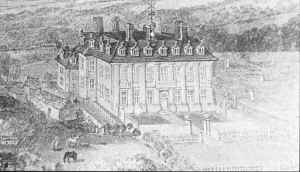
3d75316f-cd6a-4886-863b-652ad38e658925. Sir Thomas the Recognitor Culpepper 1170 Kent – Sussex His home was Bayhall Manor (photo). He was the recognitores magnae assise during the reign of King John.

24. John Spencer Culpepper, Esquire 1200 Bayhall – 1230 London

23. Sir Thomas of Brenchly and Bayhall Culpepper 1230 Kent – 1309 London

22. Sir Thomas of Bayhall in Pembury Culpepper 1260 – 1321 Sussex

21. Sir John of Hardreshull and Bayhall Culpepper 1305 Kent – 1370 Kent Sheriff during the reign of King Richard II

wigsell20. Sir Thomas of Bayhall, Hardreshull, and Exton Culpepper 1356 Warwickshire – 1428 Kent Given the home of Great Wigsell (photo) as a wedding gift from his father. (He is also an ancestor of my husbands – ugh – see the blog linked to Sir Thomas’s name.)

19. Walter of Goudhurst, Hardreshull, and Bayhall Culpepper 1398 Kent – 24 Nov 1462 Kent

18. Sir John Culpepper 1430 Kent – 22 Dec 1480 Kent

17. Walter Culpepper 1465 Kent – 1514 Sussex

16. William Culpepper 1509 Kent – 6 Dec 1559 Sussex

15. John Culpepper of Wigsell 1530 Sussex – 20 Oct 1612 Sussex

14. John Culpepper of Astwood 1565 Sussex – 20 Dec 1635 Kent

13. John Culpepper the Merchant 20 Oct 1606 Kent – ? Probably died in the Virginia Colony Subject of my Culpepper Saga book series.

12. Henry Culpepper 1630 Kent – 1675 Norfolk, Virginia

11. Robert Culpepper 1664 Virginia – 1742 Virginia

10. Joseph B Culpepper 1698 Virginia – 22 May 1745 Edgecombe, North Carolina

9. Joseph Culpepper Jr 1731 NC – 1822 Morgan, Georgia Revolutionary War soldier serving in Georgia.

8. Joseph Culpepper III 1765 NC – 5 May 1816 Jackson Co, Georgia Revolutionary War soldier, 3rd SC regiment.

7. Simon Culpepper 1794 Franklin, Georgia – 28 Apr 1851 Lauderdale Co, Mississippi

6. Rev. Joseph M Culpepper 1822 Jackson Co, Georgia – 15 Aug 1862 Columbus, Mississippi Baptist minister who served in the civil war but is said to have died in the pulpit while preaching.

culpepper Joel B Culpepper5. Joel Bluett Culpepper (photo) Jan 1845 Mississippi – 11 Jan 1911 Jefferson Davis Home for Confederate Soldiers in Biloxi, Mississippi. Joel served in the civil war Co. K 63rd Alabama infantry. He was captured and held at Fort Massachusetts on Ship Island until the end of the war. Under his rights as a Confederate veteran, he spent the last ten months of his life at Beauvoir.


culpepper Sam Culpepper4. William Samuel Culpepper (photo) 8 Jun 1873 Alabama – 10 Dec 1939 Mississippi Sam was a sawyer and followed the sawmill business, being away from home for months at a time. He loved music and was a strict but loving father.


3. Earl Wilmar Culpepper 24 Dec 1914 Mississippi – 5 Mar 1994 Mississippi Earl worked at Burnley Shirt Factory in Meridian, MS and loved music. He could play any instrument he picked up. He died of pneumonia following a stroke at the age of 79.

2. Linda Faye Culpepper 25 Aug 1944 Mississippi – 12 Jul 2001 Michigan Linda was a cardiac nurse. She died of internal injuries after falling from the balcony of her home.

1. Me!


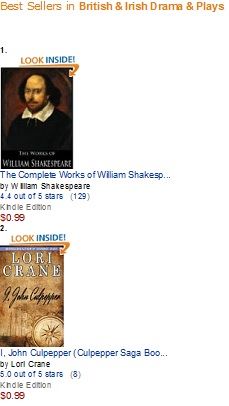
#2 Behind William Freakin’ Shakespeare!

My book I, JOHN CULPEPPER is sitting at #2 behind William Shakespeare…YES, THE William Shakespeare. If for some crazy reason I pass him, I will consider it my best. day. ever. 🙂  Pick it up HERE for $0.99 and make it happen!

Untitled