The backstory behind Okatibbee Creek

I wrote Okatibbee Creek in 2012. It has become an award-winning book and a story many people seem to treasure. I’m often asked where the story came from…so here ya go.
Rodgers, Mary Ann Rodgers Carpenter Jolly

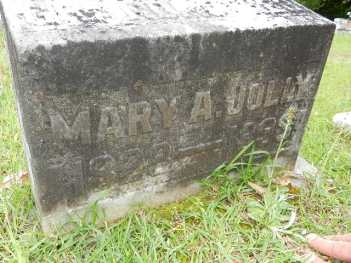
She was just a name in my family tree. Mary Ann Rodgers Carpenter Jolly. My third great grandmother. 1828-1898. I visited her grave at Bethel Cemetery in Mississippi in 2012, and my husband asked, “Now, who is this again?” I sat with him at the foot of her grave and told him her story.

I first discovered she lost her husband, Rice Carpenter, in the Civil War in 1862. How sad to lose the one you love, but hey, it’s war, people die. After he died, she remarried in 1864.

I looked at the 1870 census and found she married William Jolly and was living with his children, her children, and three children they had together. It was a house-full! But at least their three children were proof they must have liked each other, right? That’s good. I was interested in where William came from, so I traced him back and looked at his 1860 census. In 1860, he was living with his wife Harriet, their four children, and a woman named Nancy Carpenter who was 69 years of age.

Nancy Carpenter? The only Nancy Carpenter I know is Rice’s mother. Why was Mary Ann’s mother-in-law living with her future husband in 1860?? Were they neighbors? Was Nancy the cleaning lady? I clicked on Nancy Carpenter and saw her relationship to the “head of house” was listed as “mother-in-law.” She was William’s mother-in-law? What?? She was Harriet’s mother?

So, I went back and looked at Rice’s family, and sure enough, his sister Harriet was married to William. Rice died 31 Dec 1862 and Harriet died a month later of typhoid on 30 Jan 1863. Their spouses, Mary Ann and William, brother-in-law/sister-in-law, married in 1864. Well of course they did. They had known each other for many years, hadn’t they?

The more I looked at the Rodgers and Carpenter families, the more I was amazed by the sheer number of family members they lost to war and typhoid. At the time of my research, I remember counting SEVENTEEN, but I’m sure there were many more I missed. I couldn’t wrap my head around that kind of heartache and quickly became impressed with Mary Ann’s strength. How would you react if you lost two or three family members this year? You would probably need Prozac. How would you respond if you lost a dozen? I wouldn’t even be able to get out of bed. Seventeen in one year? I can’t even fathom that.

okatibbee creek cover front JPEGWe all come from these strong women. We are the living proof of their strength. If the boat sank, the story would be over. But it didn’t, and we know that because we are here. We are the survivors. I dug deep down in my heart and soul and decided to tell her story, a story she would be proud of. I wanted her to know that she didn’t endure all of that heartache in vain. I am here. I am her legacy. Her story has been told to make us see the strength in our own hearts. We are the products of strength, fortitude, and integrity, as well as tears, heartache, and pain. We are the children our grandmothers fought so hard for, and I want Mary Ann to be as proud of me as I am of her.

Okatibbee Creek is available on Kindle at Amazon for only $0.99 March 4-8. You may also want to pick up a box of Kleenex.

Saturday Snippet and Sale

51-lUHhsD7L._UY250_Okatibbee Creek (pronounced oh-kuh-TIB-be) is the story of Mary Ann Rodgers Carpenter Jolly and her trials and tribulations in Mississippi during the Civil War. As her brothers and husband went off to war, a deadly typhoid epidemic swept through the county and decimated what was left of her family. Following the loss of so many loved ones, including both parents, she took in her orphaned nieces and nephews and focused on survival. When the war finally ended, she had to pick up the pieces of her shattered life and begin anew. But how?

Okatibbee Creek is a real place. The characters are real. The events are real. The book will leave you crying and cheering. It is written in first person, present tense, diary-style, allowing you to see inside of Mary Ann’s heart and experience every emotion she felt.

The Kindle version of Okatibbee Creek is on sale at Amazon March 4-8 for only $0.99!

The following is a snippet of the scene when Mary Ann received word that her husband had been killed in the war.

**********

When I reach the bottom of the stairs, I see him. I do not recognize his face, but I recognize his clothing. He is a Confederate soldier. He is standing in the open doorway of the store with the gray, cloudy sky at his back. He is dressed in a wrinkled gray uniform with a dirty yellow cummerbund. His trousers have holes in them, with mud caked around the bottoms of his pant legs. His jacket is missing some buttons, and he looks quite thin and weary. He is wearing shoes that are covered in red Mississippi mud and probably have no soles on the bottom. He is holding his tattered hat and a piece of paper in his dirty hands.

“Hello, sir, what can I do for you?” I ask as I approach.

“Hello, ma’am.” He nods. “Are you Mrs. Carpenter?”

“Yes, I am. And who are you, may I ask?”

“Private Joseph Brown, ma’am. Captain asked me to deliver the latest casualty list to you in person.” He holds the folded piece of paper toward me and looks down at the floor, like a child in trouble for doing something wrong.

“Why are you delivering this? It usually comes by a mail carrier,” I ask as I reach for the paper. I look at the boy’s face. He nervously avoids my eyes and keeps staring at the floor.

“Why are you delivering this to me?” I repeat.

“I promised I would. I’m sorry, ma’am. Goodbye, ma’am,” he murmurs, and backs out the open door.

I look at the piece of paper in my hand for a long time, wondering if I can open it. I don’t know whose names are on this paper, but I suspect the worst, and I don’t want to read it. My eyes sting with tears as I dread a simple piece of paper. I try to unfold it, but my hands are shaking, so I stop and hold it to my chest. I take a deep breath.

Martha Jane stands behind me, not saying a word or making a sound.

“Martha Jane, will you please go upstairs and mind the children for a few minutes?” I ask her.

She nods and quietly heads up the stairs.

I walk outside across the wooden porch and down the two stone steps onto the ground. I walk across the dirt road that is now filled with puddles of red mud from the rain. I keep walking straight ahead. I walk into the overgrown field across the road. I walk with purpose, with determination, like I have somewhere important to go. I want to run. I want to run away and never come back. I keep walking.

In the middle of the field, the thunder sounds above my head. I stop and look up at the ominous clouds that are almost as threatening as the piece of paper I hold in my hand. My hands are shaking as I slowly unfold it and smooth it open. My stomach feels like it has a hole in it. My eyes fill with tears. My hands are now trembling so violently, I almost can’t read it. The name at the top is the only name I see.

“Carpenter, Rice Benjamin: killed in battle 31 December, 41st Mississippi Infantry, Co C.”

Drops of water fall onto the page, but I can’t tell if they are raindrops or teardrops. Even God Himself is crying.

*********

Rodgers, Mary Ann Rodgers Carpenter JollyOkatibbee Creek is available March 4-8 for only $0.99 in Kindle at Amazon. Paperback and audiobook are also available. It is the first of three Okatibbee Creek Series books, but they are stand-alone stories. The second is An Orphan’s Heart. The third is Elly Hays.

Okatibbee Creek was the bronze medal winner of the 2013 eLit Book Awards in literary fiction. It also received honorable mention in the 2013 Great Midwest Book Festival for regional fiction and was a nominee in the 2013 Global eBook Awards for historical fiction. It was also awarded Five-Stars at Readers’ Favorite.

Saturday Snippet – Catherine Culpepper

The following is a rough draft of my current work-in-progress, The Culpepper-Fairfax Scandal. Catherine Culpepper is nineteen years old, and her rich father, Lord Thomas Culpepper the baron of Thoresway, has just died. For two decades, he had been living in London with his mistress and had left everything to the mistress in his will, but Catherine’s mother had the will suppressed. This scene takes place at the probate hearing at Westminster.  Thanks to her mother, Margaretta, and her uncle Alex, Catherine inherited nearly everything.

We’ll make due with a painting of Catherine until I can get a proper book cover made. 🙂

LadyCatherine

************************************

When the proceedings ended in Catherine’s favor, Margaretta and Alex attempted to whisk Catherine from the courtroom, but they were met at the door by a crowd of enthusiastic well-wishers and more than a few gentlemen of questionable intentions. Catherine had just inherited more wealth than she could ever dream of. Not only was she now the sole owner of Leeds Castle, she also held manors and lands in Sussex and Essex, and was one-sixth owner of the proprietorship of the Virginia Colony. The crowd’s din grew as they attempted to get closer to the wealthy heiress. Pushing and shoving toward her, people reached out to touch her, to take her hand, to gain her attention and her favor. When the family emerged from Westminster, Alex hailed their coach, but when he turned back for Margaretta and Catherine, they had been separated from him by a sea of bodies. Margaretta reached for her daughter’s hand to pull her through the crowd, but their fingers were inches away from each other’s as Catherine was pushed back by the crowd, away from the protection of her mother and their waiting carriage.

“Catherine!” Margaretta called.

Catherine heard her mother’s call but couldn’t see her over the heads of the people surrounding her. She attempted to turn, but a growing throng of people blocked her way. Someone was standing on the hem of her gown, stifling her movement, lest she rip her skirts. Her mother called for her a second time. Her heart began pounding as she heard the panic in her mother’s voice and suddenly realized she might be in a dangerous situation. The crowd was growing riotous, pulling at Catherine’s clothing and her hair. Her honey-colored curls fell to her shoulders as her hairpin was snatched from her head, taking with it a handful of hair. She cried out for her mother, for her uncle, for anyone to save her from the melee. It was then that she felt a strong arm around her waist and another under the back of her legs.

“I’ve got you,” he whispered in her ear.

She was scooped into the arms of a savior. She buried her face into his shoulder as he pushed his way through the crowd toward the waiting carriage. When she was gently placed onto the seat in the carriage, she smoothed her hair from her face and lifted her eyes to look at her uncle. But her savior wasn’t Uncle Alex.

Before her stood a striking man whose brown eyes bore into her own, his dark curls falling over his brow, his full lips begging to be touched. Their eyes locked as if time stood still. He then nodded to her and quickly closed the carriage door, disappearing into the crowd.

Uncle Alex yelled for the driver to make haste, and the carriage sped away from the scene, the wheels bouncing on the rough cobblestone street.


Good Luck on Friday the 13th!

Friday the 13th is generally known for bad luck, but today, your luck is good, as you are not the next in a long line of Old Man Stuckey’s victims. Pick up a  copy of The Legend of Stuckey’s Bridge.

Click HERE to get your Kindle!

51ae9DloKqL._UY250_

In 1901, the Virginia Bridge & Iron Company began re-building a fifty-year-old Mississippi bridge. In the middle of the project, they began discovering bodies buried on the banks of the river.

Legend has it, he was so evil, he was even thrown out of the notorious Dalton Gang. Years later, he opened an inn near the river, and on foggy nights, boatmen witnessed him pacing back and forth across the bridge, waving his lantern, offering travelers a hot meal and a soft bed.

Those unfortunate enough to take him up on the hospitality were often never seen again.

To this day, eerie experiences are still reported around the bridge that now bears his name. If you travel down to Stuckey’s Bridge, be careful, for not much else is known about the man locals refer to as Old Man Stuckey…until now.

Click HERE to get your copy!

Redundancy – as in being redundantly redundant

6a0120a85dcdae970b01287770508e970c-piRedundancy: the state of being no longer useful or the inclusion of extra components that are unnecessary.

If there’s one thing that drives me crazy in amateur/unedited/poorly-edited writing, it’s when the writer insults my intelligence by being redundant. I know it takes months and sometimes years to write a book. I know it’s important that the reader understands the characters, their motivations, their wants and needs. I’m convinced some writers and editors don’t realize it only takes a few hours to read a book.

Case in point:

I just finished a story that contained a side-character: an old busy-body woman who lived in the town. The main character ran into this woman in the first chapter. Let’s call her Mrs. Beeman.

Mrs. Beeman owned a cat that was unfortunately stuck in a tree and the main character got suckered into helping rescue said cat. For the next six hours, each and every time Mrs. Beeman’s name was mentioned, I had to stop the progression of the story so the writer could remind me who Mrs. Beeman was and force me to re-live her tragic cat incident.

“Mrs. Beeman, the woman whose cat was stuck in the tree, entered the room.”

“Mrs. Beeman, who Billy had helped early that day when her cat got stuck in a tree, stomped out of the room.

“Mrs. Beeman, yadda yadda cat yadda, sobbed.”

I am not stupid. I know who Mrs. Beeman is.

Keep in mind, unless you’ve penned a tome as lengthy as “War and Peace,” it will only take the reader a few hours to read it. We can and do remember the characters and the names. We don’t need to be reminded over and over of who a character is. And, if we do need to be reminded, then you did not make their entrance as grand as you should have. Write all the details of your characters at our very first meeting. Once the reader has a solid picture of who this person is, you don’t ever need to remind us again. Ever.

Give your reader credit for having at least an iota of intelligence. Do NOT remind them who Mrs. Beeman is or mention her stupid cat who has nothing to do with the story. We got it.

So, did you hear about the day Mrs. Beeman’s cat got stuck in the tree?

Celebrate All Hallow’s Eve with a Shiver up Your Spine!

Happy All Hallow’s Eve to all of you ghouls and goblins.

Just for fun, try the Kindle copy of

The Legend of Stuckey’s Bridge

51ae9DloKqL._UY250_

Old Man Stuckey is the perfect accompaniment to a frightful Halloween week. He’s a little bit Dexter with a streak of Hannibal, but somehow, he makes me laugh.


Pick up a copy…if you dare! Sweet dreams.

Click HERE to go to Amazon! If you don’t have a Kindle, no worries. Click HERE to download the app to your tablet, computer, or phone.


3-step Formula for Writing Blurbs

xrory3.jpg.pagespeed.ic.NKcnIrcztY3-step Formula for Writing Blurbs


Technically, a “synopsis” is the summary you write about your book. A “blurb” is an endorsement usually written by someone else, singing your praises. But, neither here nor there, we know what we’re talking about. We want a short, snappy, sales pitch that makes our book sell. We want a summary that calls to the right readers. We want a description that makes money!

Where to start…


Let’s start with a simple formula:

Plot, Problem, Possibility.

1) What’s the plot of your story? We need a general description of the situation.

2) We need a problem (usually following the plot and proceeded by the word ‘but’ or ‘however’).

3) We need the possibility that our hero may overcome the problem.

Let’s insert a book we all know into this formula. How about Green Eggs and Ham?

Plot: Sam tries to get someone to eat green eggs and ham.

Problem: No matter what Sam does, he can’t accomplish his goal.

Possibility: After begging and pleading, someone finally tries green eggs and ham. Will they like it?

Blurb: Sam travels the world trying to entice someone to try green eggs and ham, but no matter what Sam does, he can’t seem to accomplish his goal. After begging and pleading, someone finally tries Sam’s green eggs and ham. Will they like it or will Sam be forced to continue his journey?

Many writers say to keep the blurb short and don’t give away too much. I agree with keeping it short. Don’t tell about the boat and the goat and the train and the rain. Subplots don’t sell books. But I don’t see a problem with giving away anything. Movie trailers always show the funniest or most dramatic parts. Think of your blurb as a movie trailer. It’s a sneak peek into the story and hopefully will entice the looker to buy. Did everyone skip the movies Titanic and Apollo 13 because we already knew the endings? No, of course not. Tell your potential reader whatever you want them to know, and give them the Plot, the Problem, and the Possibility. Do yourself a favor…include the blurb when you send your manuscript to your editor. He/she can tighten that mess right up!

…and lay off the adjectives. Don’t fill me with flowery crap, just tell me what the story’s about.

book-blurb

**********************

Lori Crane is a bestselling and award-winning author of historical fiction and the occasional thriller. Her books have climbed to the Kindle Top 100 lists many times, including “Elly Hays” which debuted at #1 in Native American stories. She has also enjoyed a place among her peers in the Top 100 historical fiction authors on Amazon, climbing to #23. She resides in greater Nashville and is a professional musician by night – an indie author by day.

Saturday Snippet – In Exchange for Your Freedom

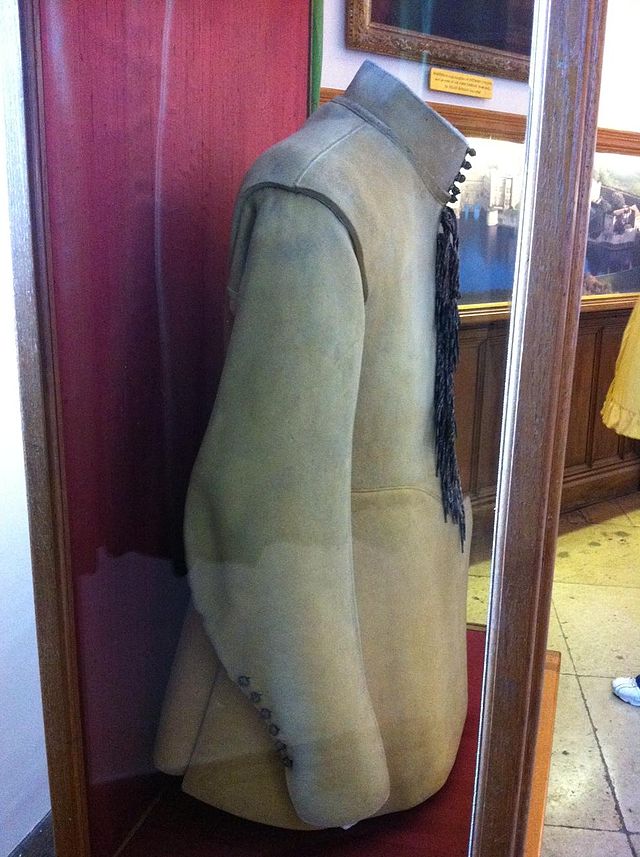
Leeds_Maidstone_Fairfax_Doublet_1648In celebration of the release on October 31st of the fourth book in the Culpepper Saga, “Culpepper’s Rebellion,” we’re spending the next few Saturdays re-living moments from the first three books. In the second book, “John Culpepper the Merchant,” John finds himself mostly in Virginia, while at home in England, a deadly civil war has begun. His brother Thomas has been promoted to colonel in the king’s army. In this snippet, Thomas is fighting in his own backyard against General Fairfax of the parliamentarian army. Thomas’s wife and children could probably here the cannons from their house. The photo is the leather doublet General Fairfax wore in the battle. It has been preserved and is on display at Leeds Castle.


*********************************

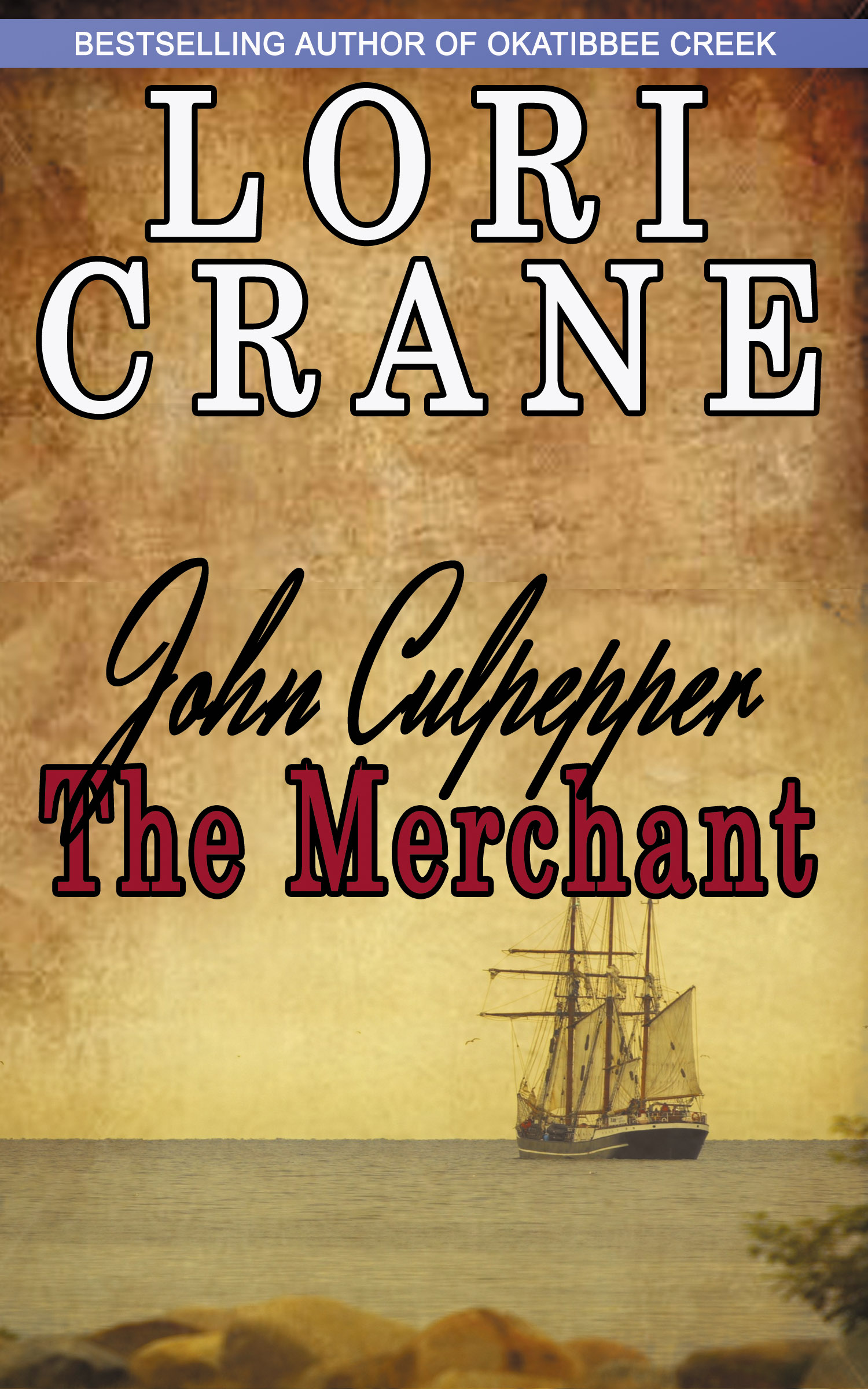
The Merchant ebookWhen the afternoon grew late, the heavens opened up and heavy rains fell on Maidstone, but that did not stop Fairfax’s advance. His troops attacked Thomas’s army from behind. Their powder had become wet in the storm so they couldn’t use their muskets, but they fought with their longbows and swords. Fairfax’s men pushed Thomas’s soldiers back street by street, inch by inch. Lightning flashed as the royalists fought near Gabriel’s Hill. Thunder pounded their ears as they were moved back further to Week Street.

By the time evening turned to night, Thomas and his men had been pushed back to St. Faith’s Churchyard. They fought among massive oaks and tombstones, often not knowing which sounds were thunder and which were cannon fire. Thomas’s men held their ground.

As midnight fell, the fighting died down and Thomas’s men found shelter inside the church. The thunderstorm had flooded the cemetery and the torrents had seeped under the door of the church, covering the floor in inches of rainwater. The soldiers lay on the pews, wondering what they would do come morning. They were tired. They were cold and wet. They didn’t know how they would escape from the church that had now become a prison since Fairfax’s army had the building surrounded. What was left of their ammunition was wet and useless.

In the wee hours of the morning, the storms subsided, and the two armies sat in silence until the night gave way to the soft light of early morning. Thomas looked out the window and saw Fairfax, dressed in black, gallop onto the scene on his white horse. Fairfax spoke to a soldier, and though Thomas couldn’t make out their words, he could tell by Fairfax’s gestures that he was instructing the man to allow the royalist soldiers to emerge from the church and then send them home.

Thomas understood the move. Fairfax only wanted to capture the town; he didn’t want to be responsible for a thousand prisoners. Thomas instructed his men to wave a white flag and surrender. He needed them to stay alive to fight another day. Staying holed up in this church with no ammunition would not win the war. They had to keep their eyes on the larger prize.

One of the men cracked open the church door and stuck a white cloth through the opening, waving it at Fairfax’s man. Slowly, the soldiers exited, arms behind their heads.

Fairfax had won Maidstone.

Since St. Faith’s Church was flooded, the prisoners, under the shadow of muskets and swords, were commanded to walk single file up the hill to All Saints Church, where Fairfax’s men would catalog their names and release them, making them promise to lay down their arms and return home.

Thomas stayed with his men but remained silent at the back of the line, his head bowed, his eyes meeting no one’s. At All Saints Church, Thomas stood in the kaleidoscope of sunny colors blazing through the stained-glass windows and gazed down at his uncle Alexander’s tomb. He was certain his men had fought a brave battle, but as he stared at the tomb, he wondered if he could have done more. His men were before him, lined up like cattle ready to go to slaughter. He felt their fate was even worse than death, for they were giving up their pride and their king.

Perhaps he was being hard on himself. Perhaps he was just tired. After all, he had not felt the comfort of a soft bed for the last forty-eight hours.

After staring at his uncle’s tomb for more than an hour and listening to his soldier’s names being taken at the front of the line, Thomas decided to follow in his uncle’s footsteps. They could take his name on this day. They could take his arms and his horse. They could disband his men, but they would never take his spirit nor his ambition to see the king back on the throne. He would live to see these men with their ink pots and quills beheaded for treason. He would fight for his king until his final breath. Today was not the end. In fact, today was a new beginning.

When he was the only soldier left in the church, he raised his head and stepped away from his uncle’s tomb. He marched to the table set up near the door and looked down at the soldier sitting behind it. He found himself gazing into the eyes of General Thomas Fairfax.

“Well, Colonel Thomas Culpepper, do you claim command of these men?”

“No, these are George Goring’s men. I am only here to serve.”

“Goring? That traitor? It seems you have chosen to serve the wrong side.”

“When all is said and done, we’ll see if that is true, but I suspect you’re mistaken.”

Fairfax sighed and scribbled Thomas’s name on the paper in front of him. He spoke without looking up at Thomas. “Colonel Culpepper, in exchange for your freedom on this day, you are to lay down your arms and return to your home. Do you understand?”

“I understand,” Thomas lied without a flinch.

“Then you are free to go,” Fairfax said.

Thomas didn’t move.

Fairfax looked up.

Thomas said, “I hope you know what you’re doing, Thomas Fairfax. It will be a great shame when we change places and you’re forced to give up your talents as a competent military leader, only to find your head on a spike next to Cromwell’s.”

Fairfax narrowed his eyes. “Is that a threat, Culpepper?”

“No, just an observation.”

A bead of sweat appeared on the general’s forehead. He looked around at his own men loitering in the church. “We are finished here.”

***************************

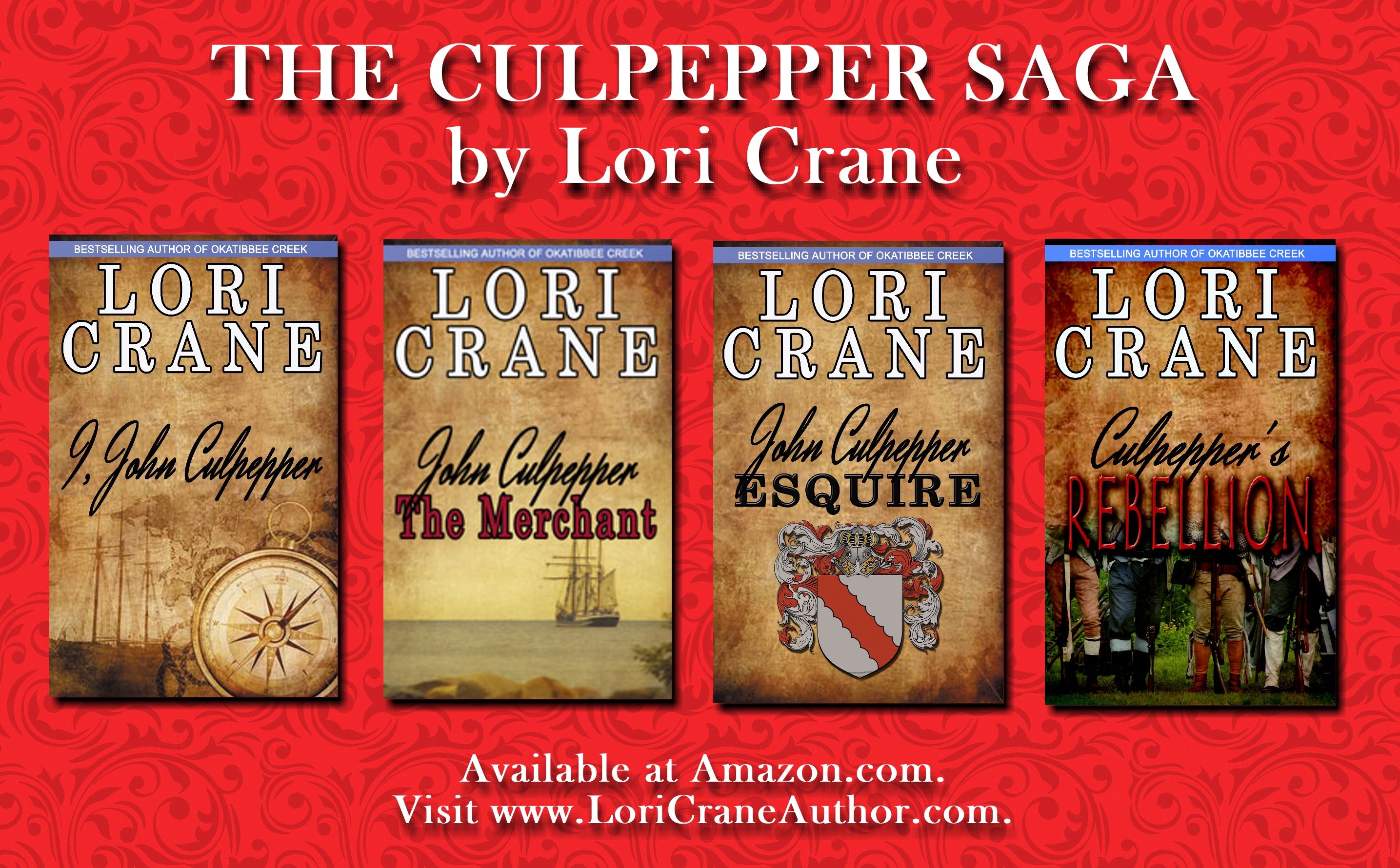
The first three books in the Culpepper Saga are available in paperback and Kindle at Amazon.

culpepper saga-001


Easy as Pie Virtual Book Tour

pieDo you have a new book coming out? Try a virtual book tour. I actually fibbed a bit about the easy-as-pie part, but hey, nothing worth doing is ever easy, is it?
Even if you’re traditionally published, publishers don’t support book tours anymore. So, a writer is left with two options: 1) schedule events and signings yourself or 2) do a virtual tour. Either way is a lot of work, but the virtual tour is far less expensive. You can pay someone to put it together for you, but remember, nobody cares more for your work than you do. You will be much more passionate and energetic about promoting your tour than anyone else on the planet. That being said, if you’d like to put together your own tour, here’s what you need:

  • Preparedness
  • Organization
  • Communication

Ask everyone you know who has a blog and has the kind of customers you could entertain. Don’t ask the guy who writes the auto repair blog to host your chick lit book. You don’t need a lot of blog hosts, only enough to fill a week or two – maybe eight or ten sites. Don’t bother blogging on weekends. Most people blog Monday through Friday. Fill in any holes with Release Parties on Facebook and Live Twitter Events.

  • Prepare all of your blogs, interviews, excerpts, links, media kits, photos, etc., far in advance and keep them in a folder on your computer desk top. Write blogs on why you wrote the book, when and why you started writing, the era the story took place, even an interview your main character. To make it a little easier on yourself, schedule some blogs to simply be short snippets from the book, or even just the synopsis and your bio. Don’t forget to include buy links with every post!!!!
  • Organize your schedule, along with host information, email addresses, etc. You need this all in one place. Excel spread sheet, anyone?
  • Communication with your hosts is key. Keep all correspondence – Invitation, Response, Follow up, Confirmation, Reminder, and Final Thank You. You’re not being a pest. You’re simply making sure all your hosts are on the same page. You also need to communicate with your audience. I suggest posting the schedule and links on one page (maybe your website?) and direct everyone to that page to see the schedule. Don’t try to update six different sites. That’s too much work.

The secret is to be WAY ahead of yourself. Give yourself at least two months, minimum, to plan. You have blogs to write, promotions to do, organizing and scheduling to accomplish. Don’t squeeze yourself into a corner and get stressed.

Give away freebies to attract readers. You can offer eBooks, gift cards (Amazon will let you email them saving on postage), swag, or you can set up an account and do an official raffle. Rafflecopter is awesome. Rafflecopter allows you to give readers entries for specific actions like following you on Twitter, liking your Facebook page, signing up for your newsletter.

Consider offering an end-of-tour Twitter Chat on one day for one hour with a specific hashtag. Announce it throughout the tour. Invite other authors in your genre to participate, so you can discuss your book with them if you have a roomful of lurkers but no tweeters.

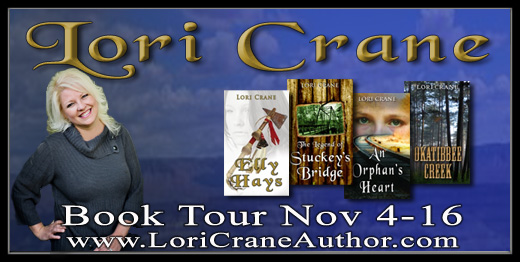
book tour 4banner-elly-book-tourHave some crafty photo-shop-type person make you a banner announcing your tour and post it EVERYWHERE. Here are two I used. One matched my book cover, one matched my website. Notice I put my website as the landing point on both advertisements. That way, I only needed to update sites or links on that one page.

When the tour is over, the hosts thanked, and the giveaways done, clean up your sites. Remove dates from your website and blog, but leave the posts and links up. They will continue to bring business for a long time.

Promote Promote Promote – before – during – and after!!!!!

********************************

Lori Crane is a bestselling and award-winning author of historical fiction and the occasional thriller. Her books have climbed to the Kindle Top 100 lists many times, including “Elly Hays” which debuted at #1 in Native American stories. She has also enjoyed a place among her peers in the Top 100 historical fiction authors on Amazon, climbing to #23. She resides in greater Nashville and is a professional musician by night – an indie author by day.

Mystery, Thriller, Suspense. Where does your book belong?

Incognito-silhouette-150x150So, what’s the deal with the genres Mystery, Thriller, and Suspense??

Most readers don’t know the difference, but if you’re trying to place your book in the best genre to find the perfect readership, a writer should know the difference. The difference depends on if the reader knows what’s going on in advance and which character is telling the story. There is also some vague talk in the industry about pacing playing a role. Some say a thriller moves at a faster pace and a suspense novel moves at a slower pace.

Mystery – A mystery is a story where the reader finds out what’s going on at the same time as the character. Sherlock Holmes knows he has dead bodies piling up but doesn’t know who the murderer is. The reader can decipher the clues as the Sherlock uncovers them.

Thriller – In a thriller, the reader already knows whodunit and is merely along for the ride. If a story is about Jack the Ripper, the reader already knows what is going to happen and who is responsible, and in the story, the reader lives in the moment with either Jack or the one chasing him. If the story is told from the victim’s point of view, it could be categorized as Suspense (see below) because they know something is going to happen, but don’t know what it is. (One can usually recognize suspense by the ominous music in the background. LOL).

Suspense – The reader knows something is going to happen and perhaps knows who will do the deed, but something is unknown. Either the character doesn’t know it’s coming, or the reader doesn’t know the specifics of what, when, who, or how and is turning pages to find out. The reader may witness a person setting a bomb with a timer, but the characters don’t know they’re about to get blown to smithereens in ten minutes. In the above example about Jack, the reader will know Jack is heading toward the victim, but the victim is oblivious, or the victim will know someone is chasing them, but they don’t know who it is.

So, Jack’s story can be a Thriller or Suspense? Yes.

Often the categories will overlap. If there are scenes of suspense where the victim doesn’t know what’s coming, it could be categorized as Thriller/Suspense. If Sherlock’s story revealed the killer to the reader in the beginning and Sherlock was simply chasing him, it could be Mystery/Thriller. Generally, if the work falls into more than one of the above categories, a writer should narrow it down to two. A work of Mystery/Thriller/Suspense will only get lost in the shuffle. Narrow it down as much as you can.

small_moving_boxesBottom line – Don’t fret too much about genre. If it’s a good story, readers will find it and buy it. It doesn’t matter what box the bookstore wants to put it in.

*******************************

Lori Crane is a bestselling and award-winning author of historical fiction and the occasional thriller. Her books have climbed to the Kindle Top 100 lists many times, including “Elly Hays” which debuted at #1 in Native American stories. She has also enjoyed a place among her peers in the Top 100 historical fiction authors on Amazon, climbing to #23. She resides in greater Nashville and is a professional musician by night – an indie author by day.