![A2Z-BADGE_[2016]](https://loricrane.com/wp-content/uploads/2016/04/a2z-badge_2016.jpg?w=146&h=146) April 2016 A to Z Challenge – I’m writing about history.
April 2016 A to Z Challenge – I’m writing about history.
W (part 2) is for Wolsey
Since I wrote about Whitehall Palace yesterday and mentioned one of its owners, Thomas Wolsey, I thought I’d stick here in W for a minute and go a little more in depth about Mr. Wolsey, his amazing rise to status and his total and swift downfall.
 Thomas was born the son of a butcher in England in March 1473. In his twenties, he studied theology, eventually becoming a priest and a chaplain to the Archbishop of Canterbury. In 1509, he went to work for King Henry VIII. That’s where the fun begins. Keep in mind, young Henry was only 18 years old at the time, and I’m sure the 36-year-old Wolsey figured he’d lead the king in righteousness with his mature and prudent ways.
Things went along rather well for Wolsey. You saw his house in the Whitehall Palace blog. Obviously, he was well taken care of by the king. Having the young king’s ear, Wolsey quickly became the controlling force behind all matters of state, and when Pope Leo X appointed Wolsey Archbishop of York in 1515, he became the second most important cleric in England. Henry even appointed him the highest political post possible – Lord Chancellor – which is the king’s chief adviser.
Things proceeded well for about a decade, but Henry was young, egocentric, and distraught by the fact that his wife Catherine had not delivered him a son and heir. Catherine was older than Henry and nearing forty, Henry didn’t think he’d get a son out of her, and I imagine his bitterness grew. Simultaneously, he met and fell in love with another woman, Anne Boleyn, and he decided to rid himself of his wife. But how? He couldn’t have her killed. He couldn’t just sent the queen away. He’d have to divorce her, but divorcing someone meant you couldn’t marry another. That wouldn’t work. There was only one thing to do. He’d have the marriage annulled. There was only one HUGE problem. The Pope refused to annul his marriage to Catherine on the grounds that one can’t throw away a wife because one desires a different wife.
Well, Thomas Wolsey is so important in the church, let’s let him handle it. Surely he can convince the Pope to grant an annulment, especially for the freakin’ KING. OF. ENGLAND.
The divorce went on for years, and each passing message that Wolsey was getting nowhere with the Pope, enraged Henry even more. All for the love of Anne, Henry decided to split from the Catholic Church and become his own religious leader in his own newly formed Church of England. He would grant his own divorce and get rid of his wife. He also decided to get rid of the useless Wolsey. Anne had convinced Henry that Wolsey was slowing down the proceedings on purpose. In 1529, Wolsey’s fall from grace was sudden and total. He was run out of town and stripped of all his titles except Archbishop of York.
Within the year, Catherine was banished from the court. Wolsey was charged with treason and faced beheading. Fortunately for him, he died of natural causes en route to London to answer to the charges. Henry confiscated Wolsey’s Whitehall Palace and married Anne there in 1533.
If all that isn’t sick and twisted enough, Henry had Anne beheaded three years later.
![A2Z-BADGE_[2016]](https://loricrane.com/wp-content/uploads/2016/04/a2z-badge_2016.jpg?w=170&h=170) April 2016 A to Z Challenge – I’m blogging about history.
April 2016 A to Z Challenge – I’m blogging about history.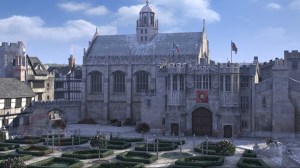 In the 11th and 12th centuries, the center of the action in London was Westminster Palace. Since 1049, the king had lived there, and subsequently, government held their operations there. As you can imagine, the surrounding neighborhood became too expensive for any normal person to afford. So, in 1240, the Archbishop of York bought a more affordable piece of land a little further away and called it York Place. He built a pretty nice house on the 23-acre property. So much so, that King Edward I stayed there while Westminster was being rebuilt to accommodate his large entourage. It must have been a large and splendid house. The photo is a depiction of the property from the show Tutors.
 Henry expanded the house even larger than York and Wolsey had done, adding a bowling green, indoor tennis courts, and a full tiltyard for jousting. After
 ![A2Z-BADGE_[2016]](https://loricrane.com/wp-content/uploads/2016/04/a2z-badge_2016.jpg?w=169&h=169) April 2016 A to Z Challenge – I’m writing about history.
April 2016 A to Z Challenge – I’m writing about history. As with most holidays, Valentine’s Day is nested in pagan roots. February 15 was the pagan festival of Lupercalia. To begin the festival, members of the Luperci (an order of Roman priests) would gather at a sacred cave and sacrifice a goat which represented fertility. They would then cut the goat’s hide into strips and dip the strips in blood. (Romantic so far, no?) They would then march through the town, gently slapping women with the goat hide. Instead of beating the priests to death with rocks, women actually welcomed the slap of the hide, believing it would make them more fertile in the coming year.
![A2Z-BADGE_[2016]](https://loricrane.com/wp-content/uploads/2016/04/a2z-badge_2016.jpg?w=191&h=191) April A to Z Challenge – I’m writing about history.
April A to Z Challenge – I’m writing about history. The UDC, without the name, began before the civil war as quilting circles and hospital associations that aided the soldiers throughout the war. After the war, they continued their work in cemeteries, veteran’s homes, and other such organizations.
 I joined the UDC in Meridian, MS under the service of my great, great grandfather, Joel Bluett Culpepper (photo). He is only one of eight (that I’m aware of) of my grandfathers who served. The others were 2nd great William Henry Blanks III, 3rd great Rice Benjamin Carpenter, 3rd great Rev. Joseph M Culpepper, 3rd great William Thomas Fisher, 3rd great William Lafayette Brown Jr, 3rd great George Washington Spencer, 3rd great James C Howington. I am very proud of the Confederate blood that runs through my veins and always will be.
![A2Z-BADGE_[2016]](https://loricrane.com/wp-content/uploads/2016/04/a2z-badge_2016.jpg?w=196&h=196) April 2016 A to Z Challenge – I’m blogging about history.
April 2016 A to Z Challenge – I’m blogging about history.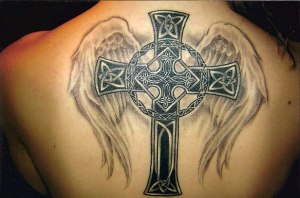 Tattooing is widely practiced today, and some folks say it’s desecrating God’s work, but this blog is not an argument about their merit or lack of. It is about the history of tattoos. When and where did they start…and why?
 No matter what people say about tattoos, I find them fascinating. I have two tattoos (below) and hope to get a third someday. Mine are in commemoration of my ancestors, the first being the Culpepper family crest on my back honoring my mother’s family, and the second being the Choctaw Indian crest on my leg honoring my great, great grandmother and my Indian ancestors whose way of life was destroyed when the Culpepper part of the family moved to America. I also have Irish ancestors and hope someday to get a claddagh to honor them.

![A2Z-BADGE_[2016]](https://loricrane.com/wp-content/uploads/2016/04/a2z-badge_2016.jpg?w=172&h=172) April 2016 A to Z Challenge – I’m blogging about history.
April 2016 A to Z Challenge – I’m blogging about history.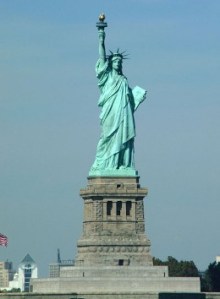 Most people around the world know the Statue of Liberty as a symbol of American freedom. Most Americans know it was a gift from France, but it wasn’t…more on this later.
 …she wasn’t originally supposed to come to America. The designer Frederic Bartholdi (photo), originally proposed that she stand at the entrance of the Suez Canal as a lighthouse, but the deal fell through, leaving Bartholdi to find another home for her.
 …okay, back to the France part. She was built in France, and Bartholdi did everything he could do to get government funding, but they refused. Finally, through fundraisers and donations, the people of France put up $250,000. That’s about $2.5 million in today’s money. Bartholdi spent a decade raising money to finish her, but Joseph Pulitzer, the American newspaper magnate, is the one who finally raised enough money from his American newspaper readers to have her shipped and erected.
![A2Z-BADGE_[2016]](https://loricrane.com/wp-content/uploads/2016/04/a2z-badge_2016.jpg?w=138&h=138) April 2016 A to Z Challenge – I’m writing about history.
April 2016 A to Z Challenge – I’m writing about history. Royals have no surnames. That’s right. Queen Elizabeth is Her Royal Highness Queen Elizabeth. Period. Her family’s name is Windsor, but she doesn’t use it. She doesn’t have to.
![A2Z-BADGE_[2016]](https://loricrane.com/wp-content/uploads/2016/04/a2z-badge_2016.jpg?w=202&h=202) April 2016 A to Z Challenge – I’m blogging about history.
April 2016 A to Z Challenge – I’m blogging about history.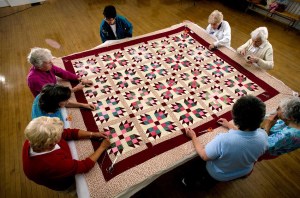
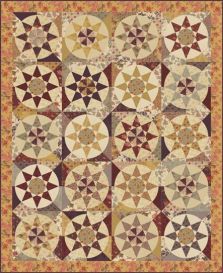 I love quilting, though I admit, I’m not very good at it. My grandmother was a professional seamstress, but I didn’t inherit that ‘fine needlework’ gene. Regardless, I enjoy it, and I’m currently working on the quilt pictured here. It is a
 For people like me who live in genealogy, world history, and ancestry, time is everything. Recorded dates and world events bring my research into focus. What if I’m wrong? What if the recorded dates are not the real dates?
 In 1582, Pope Gregory XIII introduced the Gregorian calendar. He designed the passage of time from the previously used Julian calendar. The Julian calendar was calculated by the moon’s cycles, and it is said that it ran ten minutes too slow every year. Pope Gregory’s mathematicians and astrologers figured that since the time the Julian calendar began in 45 BC, the world had lost roughly ten days. He decided the Julian calendar would end Oct 4, 1582 and the Gregorian calendar would begin Oct 15, 1582. That should fix everything.
 The one thing I find interesting is that Romanesque architecture was big in Europe in the tenth century, like this photo of Piza Cathedral in Italy. Why would that be so when the Romans were long gone by the fifth century? Unless, of course, they weren’t. Dumb calendar.
![A2Z-BADGE_[2016]](https://loricrane.com/wp-content/uploads/2016/04/a2z-badge_2016.jpg?w=188&h=188) April 2016 A to Z Challenge – I’m writing about history.
April 2016 A to Z Challenge – I’m writing about history.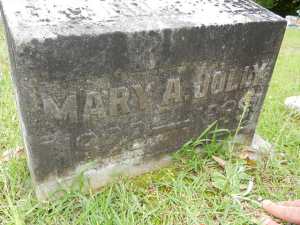
 This is our heritage. These are the strong women we come from. We are the living proof of their strength. We are the survivors. I dug deep down in my heart and soul to tell her story, a story she would be proud of. I wanted her to know that she didn’t endure all of that heartache in vain. I am here. I am her legacy. Her story has been written down to help us realize our own strength. We are the products of our ancestors fortitude and integrity. We are the children our grandmothers fought so hard for, and I want Mary Ann to be as proud of me as I am of her.
 Lori Crane