General Thomas Fairfax or Black Tom

In place of my usual Saturday Snippets for the month of May, I’ll be posting about the characters and places in my coming book, “John Culpepper the Merchant.” It’s the second in the Culpepper Saga.
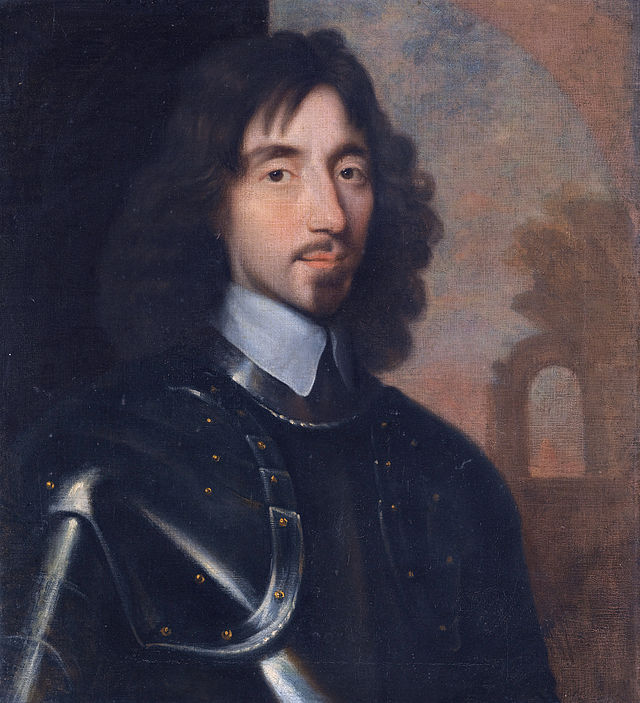
General_Thomas_Fairfax_(1612-1671The book starts in 1640 at the onset of the English Civil War, and one of the characters my hero’s family keeps running into in battle is General Thomas Fairfax (photo). The Culpepper family backed the king as royalists, Fairfax backed Parliament and became the general of the parliamentarian army.

Thomas Fairfax was the 3rd lord of Cameron. He was born into the gentry class January 1612 and was a talented army commander, claiming many victories during the war. He served in Parliament with Oliver Cromwell, but became disenchanted with Cromwell’s policies after Cromwell conquered a town, then murdered one hundred of the three hundred people who surrendered.

Nearing the end of the war, Cromwell had the king in custody and charged him with treason, the consequences of the charge would be beheading. The day the court gathered to sign the king’s death warrant in January of 1650, Fairfax was a no-show. He sent his wife to tell the court that they shouldn’t have elected him to the court for he had no interest in killing the king. He resigned from the army, leaving Cromwell in control the country.

Upon Cromwell’s death in 1659, Fairfax was active in restoring the monarchy to the Stuarts, which conveniently made him exempt from the punishments the new king exacted on the other leaders of the revolution.
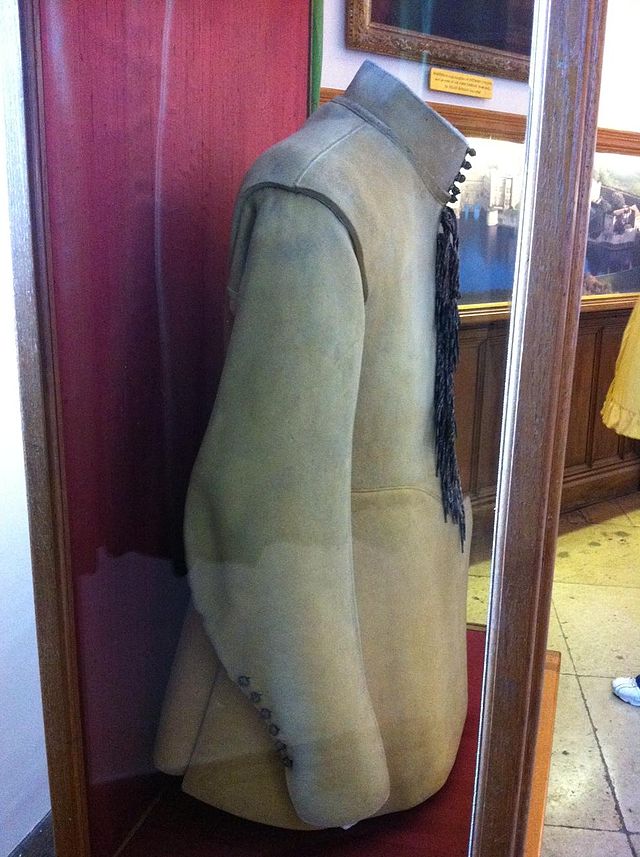
Leeds_Maidstone_Fairfax_Doublet_1648His dark hair and eyes earned him the nickname “Black Tom.” This photo is the doublet he wore in 1648 at the battle of Maidstone, which is a whole chapter in my coming book where he fought directly with Thomas Culpepper (our hero’s brother), and you can read a little about it HERE.

General Fairfax died in 1671 with no sons to take his title of baron, so it was given to his cousin Henry Fairfax. In the future (though not in the Culpepper Saga because it ends before this time) Lord Thomas Fairfax 5th baron of Cameron (Henry’s son) will marry a Culpepper granddaughter. It must have been highly scandalous as their grandfathers were trying to kill each other a few years earlier. Perhaps I should plan on writing another book, The Culpepper-Fairfax Scandal.  🙂

“John Culpepper the Merchant” will be released May 24, 2015.

Saturday Snippets – I, John Culpepper

Culpepper_1My new book, I, John Culpepper, is now available!!

It is the first of four books in the Culpepper Saga and takes place during John’s youth. John was born into great wealth and prestige and got to do things and see things mere commoners would only dream about. When John was fourteen, his cousin, JC was knighted by His Royal Highness King James I, and John not only attended the ceremony, he also attended the joust afterwards.

Here’s what happened…

**********************************

Trumpets sounded again, causing the spectators’ din to increase in pitch. Knights’ horses were usually escorted onto the field by a groom, but a massive black horse, its face covered with metal plate, galloped onto the tiltyard. On its back sat a knight clad in iron armor, sunlight glinting on his breastplate, making it look as if it had been polished for weeks just for today’s event. The crowd roared and rose to its feet as the black horse pranced back and forth, kicking up dust. The rider removed his helm and waved to the crowd. It was JC! John rose to his feet and cheered loudly for his cousin.

A second knight in full plate, riding a white horse, galloped toward the field. The crowd applauded even louder for this contestant, and John bobbed up and down on his tiptoes to see over the standing spectators. Who was this newcomer to receive more applause than his cousin? The horse was wearing plate on its face and chest, and its back was covered with a sapphire blue blanket. It was followed by a small donkey ridden by a squire carrying a standard and trying unsuccessfully to keep pace with the knight and his mighty horse. As the two approached the tiltyard, John saw the standard boasted the royal crest. It was the king!

The two opponents met each other in the middle of the tiltyard and tapped their lances together. JC nodded to the king and then pulled sharply on his horse’s reins. The massive beast stepped backward and curled one of his front legs beneath him in a regal bow. The spectators gave a collective roar of approval.

********************************************

I, John Culpepper is available at Amazon.

The Culpepper Saga Facebook page contains photos and paintings of the houses and people in the series. Hop over and take a look.

Saturday Snippet – I, John Culpepper

Culpepper_1My new book, I, John Culpepper, has been released!!

It is the story of young John Culpepper, whose only dream is to own a merchant ship. As you will see in the snippet below, his aristocratic father is not the most supportive. Some of the story occurs simultaneously with historical events we know well. The follow snippet happens on September 6, 1620.

********************************

Fourteen-year-old John stood on the banks of the Thames and stared at her. She was the most majestic creature he had ever seen. He admired her pear shape, her curved lines. From the beak of her prow to the tip of her stern, she must have been nearly one hundred feet in length. Three masts towered above her decks and her white sails billowed, straining against their ropes. Fluttering atop her mainmast, the red-and-white English flag proudly announced her pedigree. She rode the gentle waves toward the English Channel, sailing into the rising sun. Her sharp silhouette stood in contrast to the backdrop of a clouded pink-and-purple sky.

“What are you looking at, boy?” his father bellowed from the carriage.

He pointed at the river as he turned. “Look at the ship, Father!”

“Stop gawking and get over here and unhitch these horses.”

“Yes, sir,” John mumbled. He trudged back toward the carriage, wondering why there wasn’t a footman or stable boy to take care of the animals. He walked around to the other side of the horses and wrapped his fingers around one of the halters.

He peeked around the horse’s nose, watching his father march through the puddles as he crossed the road toward the inn. His father’s long black cloak billowed behind him, caught by an unexpected breeze. John looked up at the sky. Last night’s storm clouds were dissolving and large pockets of blue sky were beginning to show through. When he looked back at his father, the man’s shadow was walking beside him, just as formidable as the real man.

Thomas appeared by John’s side and plopped their father’s large trunk on the ground at John’s feet. The horse jumped and John quickly released the halter.

Thomas complained under his breath, “You’ll never learn, will you? That’s not one of our ships sailing for the Virginia Company. That’s a competitor’s ship. Father isn’t interested in that ship. As a matter of fact, Father has lost so much money investing in these expeditions, he’s not interested in any ships or your fascination with them.”

“How much money?”

“What?” Thomas asked from the back of the carriage, where he was now retrieving another trunk.

“How much money has he lost?”

“I don’t know exactly, but he’s been waiting for shipments of timber from Virginia that never arrived. He said the men who sailed there were too busy trying to survive to cut any trees. So, each time a ship returns empty, Father loses money.”

“But money aside, how can he not love them? All of them. They’re beautiful. Imagine where that ship is heading, sailing off to some enchanted seaport. Silk from the Orient, cotton and tobacco from the colonies. I can picture it coming ashore in Virginia, where one can view rolling land as far as the eye can see, so much land and it’s nearly free for the taking.” John turned to gaze again at the ship as it rounded the bend of the river. He took a step away from the horses so he could see her better, if only for the next few moments until she disappeared.

“Don’t admire that ship too fondly. She’s not going to the Orient. She’s called the Mayflower and she’s going to Plymouth.” Thomas looked at the ship. “And she’s not so grand. As a matter of fact, she’s rather old. She’s already crossed the ocean quite a few times.” He looked back at John. “And why are you talking about rolling land? You’ll never own land.” He laughed as John struggled with the horse’s buckles. “Father will leave everything to me. You will be sent to Middle Temple to be trained as a lawyer, and someday you will oversee my estates.”

John gave up on the buckles and marched toward his brother. “I don’t want to oversee your estates. Oversee them yourself.”

*****************************************

I, John Culpepper is available at Amazon.

Stop by the Culpepper Saga Facebook page to see more of the people and places of the series.

52 Ancestors #16 John Culpepper of Wigsell

52ancestors-2015

This challenge is set forth by No Story Too Small, and this week’s theme is “Live Long.”

Strangely enough, my parents and my maternal grandmother all died in their 50s, so I’ve always had this notion that I would probably die in my 50s also. Not really a morbid thought, just a weird likelihood. When I started looking at the ages of my ancestors for this blog, I was surprised to find a majority of my ancestors lived into their 80s. Maybe I’ll get a few more years out of this life than I thought.

One of my ancestors lived to be 82…back in 1612. I think that is a considerable age for the time. According to early English records, an infant had a 30% chance of dying before the age of 15, 60% for working-class children in the city. As people had no concept of immunity, many died of childhood diseases, and as they grew, they were likely to die of food-borne illnesses or communal diseases like the plague and typhus. In 1665, 80,000 people died of the plague in London, 45,000 were children. Sanitary practices weren’t invented, and medicine wasn’t even a factor. Most thought one survived only because of luck, and many families named their children with identical names, knowing only one had a chance of surviving into adulthood.

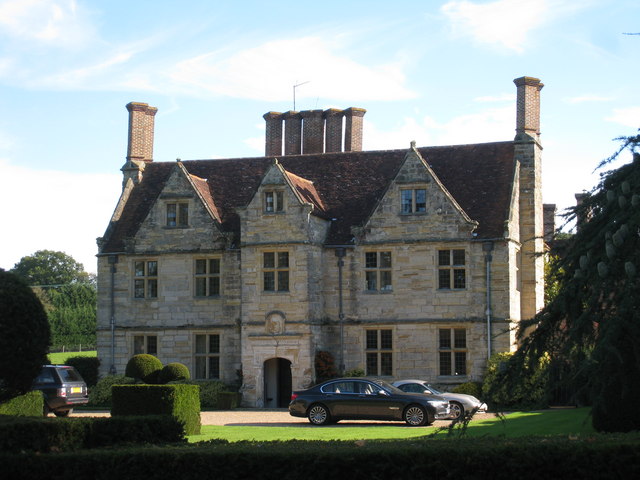
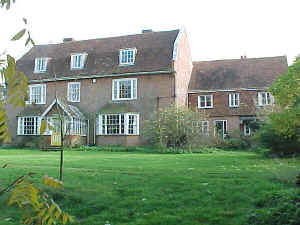
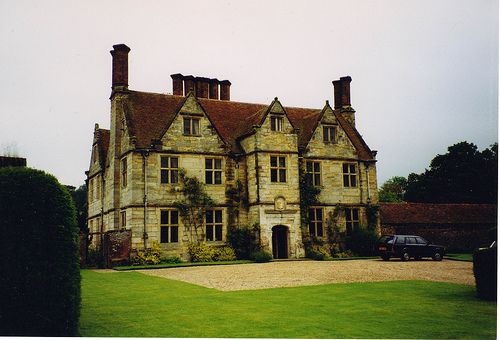
book 1 different angleSo, in 1530, my 12th great-grandfather John Culpepper of Wigsell was born in Salehurst, Sussex, England. He had at least two brothers who also lived to a considerable age, all breaking the above mortality rates. He married Elizabeth Sedley at the age of thirty, had seven children who all survived, and remained in his childhood home of Wigsell Manor until his death 20 October 1612 at the age of 82. The home is still standing today and is privately owned. Mostly, John lived a quiet life in the country, but records show him an active Justice of the Peace in public testimonies and an involvement in Queen Elizabeth’s Privy Council from 1558 to 1592.

St_Mary_the_Virgin_Church,_Salehurst_(Geograph_Image_2366571_3456e22f)He was buried at St. Mary the Virgin Church in Salehurst on 21 October 1612 as “Johanes Colepeper, armiger, etatis 82.” Armiger means having the right to a coat of arms, and etatis means age. If there was a monument, it was destroyed during the Commonwealth’s desecration of the local churches in the mid 1600s.

52 Ancestors #15 Colepeper/Culpeper/Culpepper

52ancestors-2015

This challenge is set forth by No Story Too Small,

and this week’s challenge is “How do you spell that?”

choctawMost of my family comes from England and Ireland, so the names are very pronounceable. I have a maternal Choctaw Indian great-grandmother in my history, but in 1801, the Treat of Fort Adams was signed, giving 2.6 million acre of Choctaw land in Mississippi to the U.S. Government. By 1830 and the signing of the Treaty of Dancing Rabbit Creek, a total of 23 million acres had been ceded to the government. The Indians were relocated to Oklahoma, but the ones who didn’t go assimilated into the white European culture and gave up their Indian names. I’m sure her father or grandfather had an unusual name, but I will never find out what it was as the Choctaw people didn’t keep good records like the Cherokees did.

So, that leaves me with two choices for this blog. 1) A host of men in my family who have the name Bluett/Bluitt in their lines, or 2) the explanation for Colepeper/Culpeper/Culpepper.

I think I’ll go with #2.

The name began as “de Culpeper.” The French translation of “de” means “of” referring to a place, and “cul” means “the bottom.” Hopefully, it means the bottom of a hill or a road, and not the bottom of your rear end. 🙂 One of the first family manors sat at the dead end of Pepenbury, and we assume Peper is a slang/shortened translation. Eventually, the “de” fell out of fashion, and the name became simply “Culpeper.”

There is some suggestion that the name had something to do with peppers, either farming them or selling them, but the first known Culpeper in 1170 held an office, so he was probably Norman as the Normans were in control politically at that time. This leads us to believe the name had nothing to do with any Anglo-Saxon practice of selling vegetables.

From 1400s to 1600s, many members of the family used “Colepeper” interchangeably with “Culpeper” though I have no idea why, except for the fact that spelling wasn’t standard.

There are a few ancestors who traveled to America and left their mark:

80516215Mid 1600s – My 10th great-grandpa, John Culpeper, and his sons and nephews ran a merchant route between England, Virginia, and Barbados, and there is an island off the coast of Barbados called “Culpepper Island” which is pretty much an uninhabited rock.

Late 1600s – Lord Thomas Culpeper 2nd baron of Thoresway (the above guy’s cousin) was a governor of colonial Virginia, and there is a town and a county named after him—Culpeper, Virginia and Culpeper County, Virginia. That’s better.

VA_25402

Work in Progress Blog Tour

I’m excited to participate in a different kind of blog tour today. It’s the Work in Progress Blog Tour!

088eb14324190ad8956eff.L._V146807737_SX200_One of my favorite authors, PC Zick (photo), nominated me to share with you my current Work in Progress. Check out Patricia’s WiP on her blog HERE and her books on Amazon HERE.

The rules of the tour are:

  • Link back to the person who nominated you.
  • Nominate other authors.
  • Write the opening line(s) of your first three chapters from your WiP.

Since I’m super late in joining the tour and my other author friends have already participated, I’m only nominating one writer, so you have no excuse but to check her out…

downloadAnna Belfrage! Anna (photo) is an amazingly talented writer responsible for the eight-book “Graham Saga.” Check out her blog HERE and her books on Amazon HERE.

11109430_501104980043857_173471212737687744_n


And now…

My current WiP is the second book in the Culpepper Saga. Our hero, John, is spending most of his time in the colony of Virginia, but his family is living in England under the dark cloud of a civil war. Here are the opening lines of the first three chapters of my WiP, “John Culpepper the Merchant,” releasing in May 2015.

Chapter 1 – The King

The King marched into the room, unannounced. His footfall echoed off the stone walls as he paraded through the middle of an active session of Parliament and was greeted with stunned silence.

Chapter 2 – John

John Culpepper had been sitting idle in Jamestown for the last ten months. He had never tarried in Virginia for such a length of time before.

Chapter 3 – The Doldrums

She sat idle, unmoving in the dim morning light. Her sails hung limp just as they had for the last two days. John restlessly stared across her bow at the unending sea of glass that lay before him.

Saturday Snippet – I, John Culpepper

Culpepper_1My new book, I, John Culpepper, has just hit the shelves! I’m so excited.

If you haven’t heard anything about it yet, John Culpepper is my 10th great-grandfather, born in England in 1606 and the progenitor of the modern-day American Culpeppers. The book is the first of four in the Culpepper Saga, the story of John’s life, beginning on the day of his birth, through the settlement of the American colonies, the turbulence of the English Civil War, and the rebellions in Virginia and Carolina which one-hundred years later would lead to the Revolution. It is a series of historical fiction, filled with drama and danger. Yet, there are moments of lightness and humor in John’s life.

When John was fifteen, he attended law school in England, and he was under the understandable impression that his headmaster resembled a goat. The joke between him and his friends carries on for quite a few chapters, as young boys typically can’t let a good laugh go without beating it to death with a stick. At one point, they played a prank on the man just as John’s father stormed into the school, angry about John’s behavior.

Below is one of my favorite scenes featuring John, his brother Thomas, his father Johannes, and Headmaster Barnaby.

**************************************************

Johannes Culpepper stomped in through the archway of the library door. His heavy boots echoed off the stone floor and paneled walls and disturbed the quiet room, causing every student to look up from their studies. Johannes’s sheer size was daunting, and in his broad-shouldered jerkin with his large hat, he looked even more intimidating. His face was red and his eyes were narrowed. His jaw twitched in anger. He marched straight to the table in the center of the room where John, Thomas, and their friends sat.

Thomas looked up in surprise. “Father! What brings you here?”

“I’ve gotten word in London that someone is misbehaving.” He glared across the table at John.

“No, Father, that’s not true,” countered John.

“We will discuss this outside. Both of you, come with me.” He marched out the back door and into Temple Garden with John and Thomas trailing close behind. By the time they reached the middle of the yard, faces of schoolboys had pressed against the diamond-shaped panes of glass, watching and listening for the heated argument that was surely to begin.

Johannes stood with his hands on his hips, chastising the boys about something, but the students inside the library couldn’t make out what he was saying. Johannes’s face was red and veins bulged from his temples, but John didn’t look angry. As a matter of fact, he looked quite amused.

John and Thomas faced their father, and directly behind him, picketed in the middle of the garden, was a white goat, dressed in a black robe with gold cords around its neck. Next to the goat stood Barnaby, his hands on his hips, his face purple with anger as he glared at the goat. The goat looked up at Barnaby and let out a loud “baaaa!” John couldn’t stifle his laughter. He turned away from his father and pretended to have a coughing fit.

****************************************

I, John Culpepper is available at Amazon.

Please stop by the Culpepper Saga Facebook page to see photos and to find more information about the settings and characters.

It’s Release Day! It’s Release Day!

Culpepper_1I’m so excited!

Today is release day for my new book, I, John Culpepper!! Ahoy, Sailor!

I began writing this book in August of last year, but the more I researched, the more interesting stuff I found, so…the book…became FOUR BOOKS. It morphed into the Culpepper Saga, beginning with John’s childhood, segueing into the English Civil War, moving across the ocean to the colony of Virginia, and finally finding inner peace and acceptance. It seems like I’ve been writing the story forever, and when I put it like that, I guess I have been…well, at least 60 years worth of writing. The tale begins in 1606 in England and is the life-story of my 10th great-grandfather, John Culpepper.

The Culpepper family has been traced by many genealogists back to the 12th century in England. They were a political family who served the monarchy for generations. Though my favorite Culpepper patriarch has always been John Culpepper of Wigsell, who lived in the 16th century, I ended up writing the book series about his grandson, also named John Culpepper. Maybe someday I’ll go back and tell his grandpa’s story.

John was born in Kent, England in 1606 and was surrounded by a cast of interesting family members including his above mentioned grandfather, his brother Thomas who served as a colonel in the king’s army, his uncle Sir Alexander Culpepper who was a knight under King James and King Charles I, and his cousin Lord Culpepper first baron of Thoresway who served under three kings. But none made a bigger impression on John than his overbearing father, Johannes, who was a prominent lawyer in London. His father insisted John attend law school, but John wanted instead to command a mighty ship. This dream strained their relationship, and his father threatened to disown him when it came time to purchase a ship. Instead of receiving daddy’s help, John got funding from his older brother, Thomas, and records show the name of the ship being the Thomas and John. Records also show John in the colony of Virginia upon the occasion of his father’s death.

The first book in the Culpepper Saga, I, John Culpepper, is the story of John’s childhood, his strained relationship with his father, meeting the lovely woman who would eventually become his wife, and starting his career as a ship merchant. In the three sequels, we will find John’s ship becoming a lifeboat that keeps the family from certain execution during the English Civil War, and John’s unwanted law-school education becoming the only thing standing between life and death for his youngest son. In retrospect, maybe John’s father wasn’t the bad guy John always thought him to be.

Everything happens for a reason, especially for John Culpepper.

I, John Culpepper is available at Amazon.

For photos and paintings of the people and places in the series, visit the Culpepper Saga Facebook page.

Culpepper Saga People and Places

Culpepper_1Only a few more days until “I, John Culpepper” is released!! April 10th!!!

Over the years, and quite a bit recently, I’ve blogged about the people and places found in the book, but if you missed anything, below is a comprehensive list to guide you through the characters. Every one of these people were real. Every one of these homes and castles were real, most still standing today. Being historical fiction, most of the story is also real.

Some of these blogs are old and some are new, but if you click on any name, you can find out more about the person or place.

John Culpepper the merchant, our hero

John’s grandpa, John Culpepper of Wigsell

John’s dad, John “Johannes” Culpepper

John’s mom, Ursula Woodcock Culpepper

John’s son, John Culpepper Jr. of the Culpepper Rebellion

John’s brother, Thomas Culpepper and his wife Katherine St. Leger

John’s childhood friend, Sir William Berkeley

John’s childhood homes, Greenway Court and Astwood Court

John’s niece, (Thomas’s daughter) Frances Culpepper Berkeley

John’s cousin, Lord John “JC” Culpepper, 1st Baron of Thoresway

“JCs” son, Lord Thomas Culpepper, 2nd Baron of Thoresway

Homes of the Culpepper Saga

Culpepper_1In celebration of my upcoming April 10th book release, “I, John Culpepper,” I’m posting bits and pieces about the people and places you will read about in the Culpepper Saga. The four-book saga is based upon my 10th great grandfather, and most of the names and locations are real. The first three blogs about the story are available here, here, and here. This blog is about the homes John spent time in between 1606 and 1634.

Our hero, John Culpepper, was born into a very wealthy family. He was born at Greenway Court in Hollingbourne in the county of Kent. His family moved away when he was only five years old, but he eventually returned to the home when his brother Thomas married and set up house there. In the book, the old house drug up a lot of feelings and memories of John’s childhood that he had long forgotten. The home is still standing and is privately owned today.

GreenwayCourt

From the age of five until he went away to law school, John lived at Astwood Court in Feckenham in the county of Worcester. The home originally belonged to his great uncle Martin and was left to his father. John’s mother died in the house when John was just a child. The home is still standing and is privately owned today.

astwood

As a young boy John spent many summers at his grandfather’s estate of Wigsell Manor in Salehurst, Sussex. The 600-acre property was the stuff boy’s dreams are made of. The home is still standing and is privately owned today.

great wigsell


John’s uncle Sir Alexander Culpepper owned Leeds Castle in Maidstone, Kent. Alexander inherited the house through his wife Mary, the widow of Sir Anthony St. Leger. In 1552, the house was granted to the St. Leger family, and following the Culpepper ownership 1632-1710, it was transferred into the Fairfax family through marriage. It was built in the early 1100s and was once the home of Henry VIII and his first wife Catherine of Aragon. It is now open to the public as a tourist attraction. You can visit Leeds Castle’s website here.

Leeds-Castle