On This Day in 1909

On This Day in 1909, John Francis Burke, passed away. He was 62 years old. He was my great great grandfather.

1847 Ireland

imagesI can’t post a photo to go with this story. The images are too horrific.

In 1847, the great famine in Ireland was in full swing. Food prices had skyrocketed and those who needed food the most, couldn’t afford any. The summer’s crop of potatoes survived, but the crop was inadequate to feed the masses because everyone was afraid to plant. The British Relief Association raised money throughout America and Europe to send assistance. Soup kitchens opened, and people actually collapse and died of starvation trying to get to them. People poured onto ships bound for Canada and America. One shipwreck in April, killed 250 emigrants. In May, one sailed to Canada and was the cause of a typhus epidemic. When all was said and done, between 1845 and 1852, one million people died of starvation and another one million emigrated from Ireland.

This was the atmosphere John Francis Burke was born into. He was born in Dublin on February 27, 1847. One can imagine that his parents were very resourceful, perhaps with the negative connotations of that trait: stingy, tight-fisted, and ungenerous. They spent years struggling to feed their children, and when the potato blight was over, they probably didn’t break the cycle of struggle, just in case it should happen again.

merchant ship replicaNot much is known about his parents or his childhood. A family member told me his sibling had the same names as his children, so I expect there was a Patrick, Robert, Emmett, Nina, Virginia, Kathleen, David, and/or an Edmond somewhere in the bunch. When he was a young lad of 15, he snuck down to the shipyard and stowed away on an American-bound ship. After they set sail, the captain found him en route and told him the ship couldn’t take him back home. He replied to the captain, “If I wanted to go home, I wouldn’t have stowed away.” We don’t know the relationship or lack of one he had with his parents and siblings, but we can imagine his mother searching for her fifteen-year-old son and being heartbroken. I don’t know if he ever contacted his family after leaving Dublin.

The ship dropped him off in Miami, Florida in 1862. Yes, 1862, during the middle of the Civil War. Confederate War Records show a couple men with similar names that could be him serving in Florida, Alabama, and Mississippi. The 1870 census shows a couple names that could be him: one in Florida and one in Alabama. He finally shows up in the 1880 census as being a “ditcher” and living with his new in-laws, the Spencer family.

On December 10, 1879, at the age of 32, he married Nancy Didama Spencer in Lauderdale County, Mississippi. Over the next fourteen years, they had six children: John Patrick 1880, Robert Emmett 1883, George Washington 1886, Nina Virginia 1889, Kathlene L 1892, and David Edmond 1894. These children prove John and Nancy must have liked each other a little bit, but a new snag appears in 1900.

burke JP Burke Sr headstone 2The 1900 census shows Nancy living at home with all the children and listed as a “widow.” I didn’t understand this because John’s headstone clearly says he died in 1909. Finally a cousin told me Nancy did not believe in divorce, but she and John lived in the same house and did not speak to each other for the last fifteen years of their marriage. This also explains why they are buried in different rows at the cemetery. From a psychological standpoint, I wonder if he left Dublin because of his father’s personality and then became just like the man, causing his wife to dislike him. What could someone do that was so bad to tell a census taker he was dead? After John’s death August 18, 1909, the 1910 census shows Nancy as a widow with five children still at home. John is laid to rest at Liberty Baptist Church Cemetery in Duffee, Mississippi, among children and grandchildren.

On a lighter note, I know his son John Patrick “Pat” (my great grandfather) was a fiddle player on the weekends at barn dances. I wonder if Pat learned to play from his father. Playing the fiddle is such an Irish thing to do, don’t you think?

Brought to you by On This Day available at Amazon.
On This Day in 1828

On This Day 1828

August 15, 1828 was the birthday of my 3rd great grandfather, Rice Benjamin Carpenter.

Rice was born to Benjamin Carpenter and Nancy Rice. He was the eighth of ten children, the first five born in North Carolina, and the last five born in Mississippi. When he was 17 years old in 1846, he married my 3rd great grandmother, Mary Ann Rodgers. The Carpenter and Rogers families lived near each other and Rice and Mary Ann had grown up together.

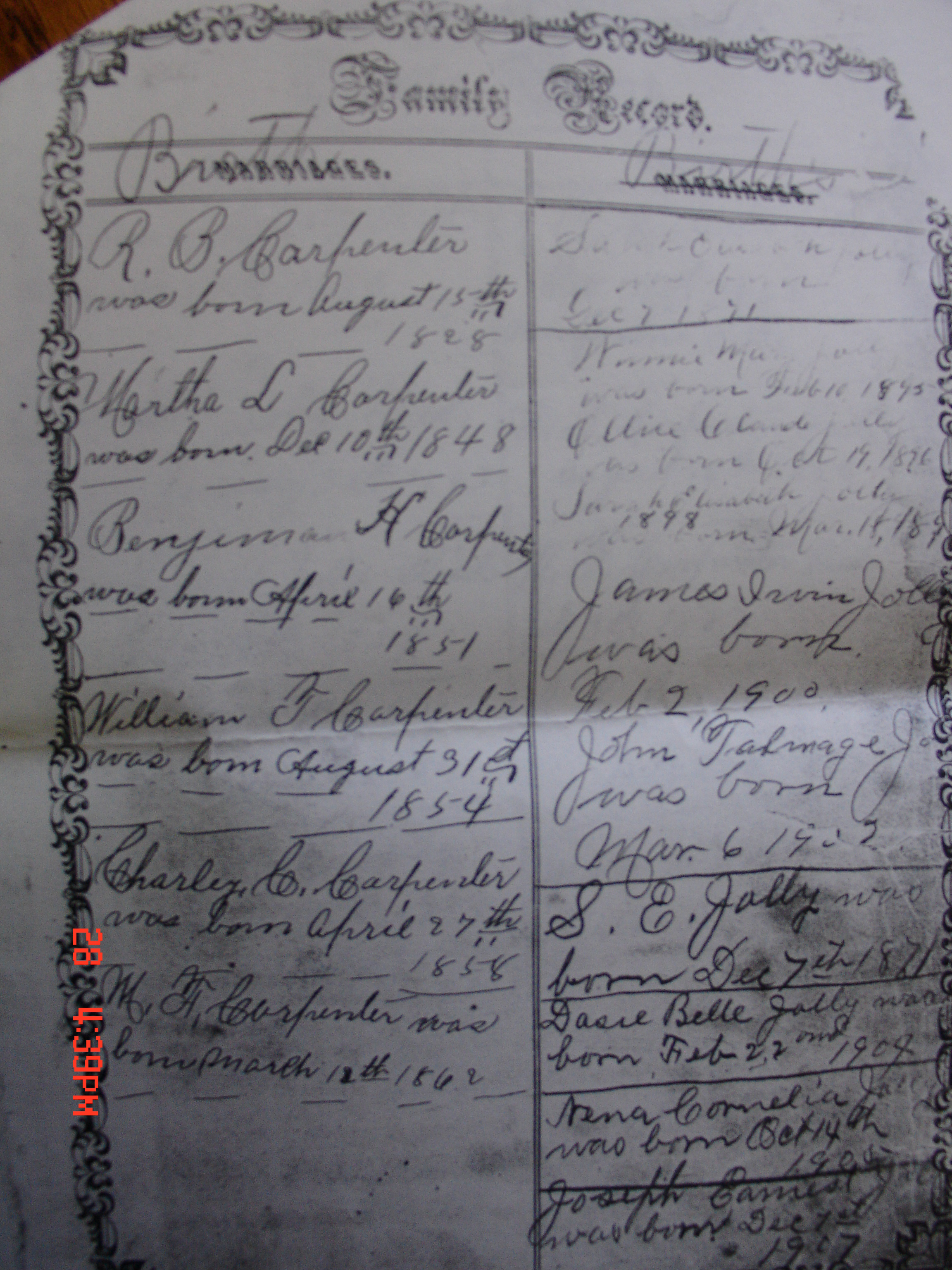
Jolly family bible pg2Rice and Mary Ann had five children: Martha Lettie (my 2nd great grandmother 1848-1933), Benjamin Hays (1850-1929), William Travis (1854-1856), Charles Clinton (1858-1890), and a son with the initials MF (1862-1863). As you can see by the dates, William Travis died at the age of two, and MF died as an infant. His full name is not known, but his initials are written in the family Bible, as you can see on the bottom of the first column in the photo.

Rice and Mary Ann set up house on land they got from Mary Ann’s father, but sometime around 1860, they sold the land and moved to the town of Marion Station in Lauderdale County, Mississippi, to open a general store. Abandoning the farm so Rice could become a merchant was probably their way of starting over after losing their first son. The excitement of a new life was not long-lived, however. In February of 1862, with Mary Ann eight months pregnant, Rice signed up for the 41st Infantry Regiment, the Cole Guards, and prepared to fight in the Civil War.

port-hudsonOn 31 December 1862, his company found themselves in Murfreesboro, Tennessee (only 25 miles from my house) where they met the Union troops head-on at the Battle of Stones River. As you can see in the Port Hudson News, the newspapers were reporting a successful campaign for the Rebels, but Rice was not so lucky. He was killed in the very first charge. Rice’s son MF had been born March 12, 1862. In February of that year, Rice had signed up to fight, but is shown as absent until May. Perhaps he did get to spend time with his youngest son.

On the 150th anniversary of the battle, 31 December 2012, I visited the Stones River National Battlefield in Murfreesboro. The man there told me the battle that took place on 31 December actually happened about two miles up the road in what is now a golf course.

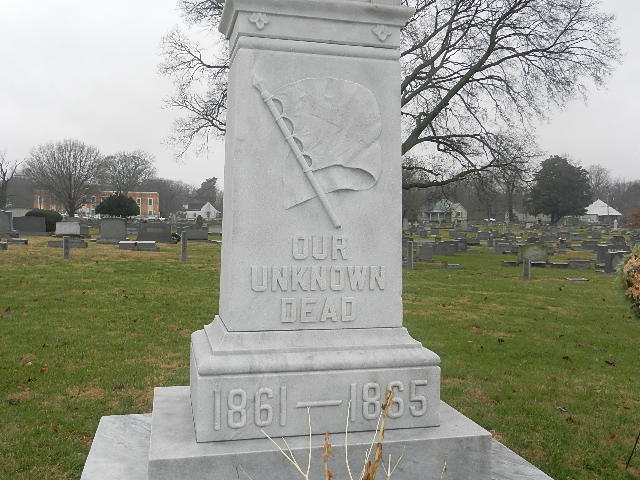
dec 2012 407The Confederate Circle was established at Evergreen Cemetery in Murfreesboro in 1890, and in 1891 all of the remains of soldiers from local areas were re-interred in a mass grave there. Of the 2000 soldiers buried in the Circle, about 90% are unknown or not recorded in the records – one being Rice Benjamin Carpenter. He left behind a grieving widow and three children ages 14, 12, and 4.

Rest in Peace, Grandpa Rice.

Shameless plugs:

Mary Ann’s story is told in my book Okatibbee Creek.

This post is brought to you by On This Day available at Amazon.

Frances Culpepper Stephens Berkeley Ludwell etc etc

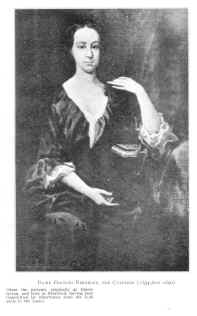
frances_berkleyMy cousin, Frances Culpepper (photo), was born in England in 1634 to Thomas Culpepper and Katherine St Leger. Thomas’s brother, John Culpepper the merchant, was my 10th great grandfather and will play a role later in her life. Frances was baptized 27 May 1634 at All Saints Church in Hollingbourn, where all of the family at that time was baptized. Her siblings were: Mary (1629-30 who died as an infant), Ann (1630-95), Alexander (1631- 24 Dec 1694, Surveyor General of Virginia), and John (1633-74 who often gets confused with John the Carolina Rebel, son of John the merchant).

Culpepper Connections website describes Frances as, “Apart from Pocahontas, Lady Frances Berkeley, the strong-willed, thrice-married and childless Colonial dame who ruled the political roost in Virginia from around 1670 until her death in the 1690s, was the Old Dominion’s most notable 17th century woman.”

Well, doesn’t that make you want to know more about her?

Her father, Thomas Culpepper, was one of the original proprietors of the northern neck of Virginia when the Virginia Charter was formed, transferring control of the colony from the Crown to individual investors. Following King Charles I execution, Thomas moved his entire family to Virginia in 1650 when young Frances was only sixteen. When she turned eighteen, she married the governor of the Albemarle settlement in what is now North Carolina. He was also the owner of Roanoke Island. Yes, where the very first colony disappeared from. His name was Samuel Stephens. Samuel and Frances lived for seventeen years on his 1350-acre plantation called Boldrup in what is now Newport News, Virginia. The plantation land and the house’s crumbled foundation is all that is left today and is listed on the National Register of Historic Places.

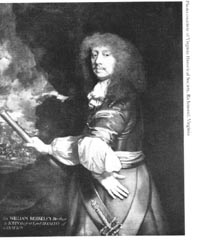
SirWilliamBerkeley2Following Samuel’s death in 1669, Frances inherited his large estate and in 1670, she married yet another politician, Sir William Berkeley, Governor of Virginia (photo). They took up residence at his estate called Green Springs (photo) near Williamsburg, Virginia. Today, about 200 acres of the original plantation land is preserved by the National Park Service, which acquired the property in 1966.

green springs


Nathaniel Bacon, T. ChambarsIn 1676 (100 years before the Revolution and the same year her cousin John Culpepper the Rebel was causing problems in Carolina) there was a dispute with the local Indians who had been chased north by militiamen. The Indians raided the Virginia frontier out of anger, hunger, revenge, who knows? Some colonists saw this as an opportunity to isolate or kill the Indians, some saw it as an opportunity for new slaves and lands. It was typical politics with each side rallying for their own cause. A newcomer to the land and the local Virginia Council was Nathaniel Bacon (photo). He asked Sir William Berkeley to form a party to kill off the Indians, but Berkeley refused as some of the Indians were Virginia’s closest allies. In defiance, Bacon raised a group of volunteers to fight the Indians. This led to a civil war of sorts, with Bacon’s followers against Berkeley’s loyalists. It also became a personal vendetta. At one point, tiring of Bacon’s threats, Berkeley bared his chest and dared Bacon to shoot him. After the public display, Berkeley threw Bacon out of the Council, later reinstated him, and then threw him out again. Berkeley ended up being chased out of town by Bacon’s men, who burned down the capital. Bacon died of dysentery in Oct 1676, but the fighting continued for a few more months without his leadership.

Here’s where Frances steps in…

King-Charles-II-king-charles-ii-25010100-333-400

Frances sailed to England on her husband’s behalf to ask King Charles II (photo) for help, and the King, unaware that Bacon was already dead, signed a proclamation for putting down the rebellion. He dispatched one thousand troops to Virginia, along with a commission of three men to find out what the hell was going on. By the time the soldiers arrived, without Bacon’s leadership, the rebellion had died down. The three members of the King’s commission watched Berkeley identify Bacon’s men as traitors and witnessed the hanging of twenty-three of them. Once the commission reported this back to King Charles II, he summoned Berkeley to return to England to explain his actions. As soon as spring arrived, Berkeley sailed to England to plead his case with the King. He became ill on the journey and went directly to his brother’s house in London upon arrival, where he died in July 1677 before getting a chance to tell his side of the story to the King. Frances didn’t receive the news of his death for months.

Here’s where uncle John steps in…

When John Culpepper the Merchant was fifteen years old, he attended Middle Temple, which was a law school. There he met a young William Berkeley, who was not a “Sir” at the time, and the two became fast friends. Though John was trained as a lawyer, he was more inclined to be a merchant, and in 1633, he bought a ship with his brother Thomas (Frances’s dad) called the “Thomas and John.” The ship delivered immigrants to the new world and shipped cotton, tobacco, and the like back to England. This was probably the vessel Frances and her family sailed on in 1650 to move to Virginia. During the rebellion, Frances and William Berkeley needed money to sail back and forth for this rebellion nonsense and they sold off Roanoke Island. Uncle John Culpepper was the lawyer who oversaw the sale of the land to the Lamb family, witnessing William Berkeley’s signature on the deed.

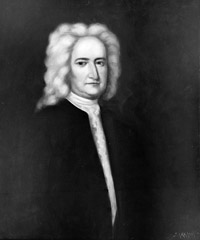
Gov_Phillip_LudwellIn 1680, Frances married her third husband, Col. Philip Ludwell (photo) of the 4,000-acre Rich Neck Plantation. Ludwell had been a chief supporter of Berkeley during the rebellion and also his cousin. Hmm. Frances never relinquished her title however and was known as Lady Frances Berkeley for the remainder of her life. She died around 1695 at the age of 61. Her body is interred at Jamestown Church Cemetery in Jamestown, Virginia.

As for Col. Ludwell, after serving as governor of the Colony of Carolina 1691-94, he returned to Virginia where he served as Speaker of the House of Burgessesin in 1695-96. In 1700, he moved back to England where he died in 1716.

On This Day in 1890

On This Day in 1890, my great great grandparents were wed.

plaque in Lauderdale Co Court House in MeridianThomas Gilbert Lafayette Keene was born 20 Apr 1859 to Green Keene and Sarah Tabitha Keene and grew up in Mississippi. According to records, I believe his parents died during the Civil War. He is shown living with them in the 1860 census, along with his siblings John (1849-) Martha (1851-) Minerva Ellen (1852-1914) and Mary (1855-). He was only an infant. In the 1870 census, he and his sisters are shown living with a woman named Elizabeth Keene (not married) and an 80 year old man named Gilbert Keene. I believe this is his aunt and his grandfather who is Gilbert senior. There is also a Gilbert junior in an earlier census born in 1815.

He more or less disappeared from records until his marriage in 1890, and the next record of him is the marble plaque that is in the Lauderdale County Court House in Meridian, Mississippi showing him as the County Treasurer 1904-1907. (For you “Stuckey’s Bridge” fans, check out the top name – JR Temple, Sheriff.) Later census records list TGL as a member of the Lauderdale County Board of Supervisors, also as a farmer and a Justice of the Peace. He died 26 Sep 1921 and is buried next to his wife at Oak Grove Baptist Cemetery in Bonita. His death certificate lists no parents.t g l keene headstoneTGL Keene death cert


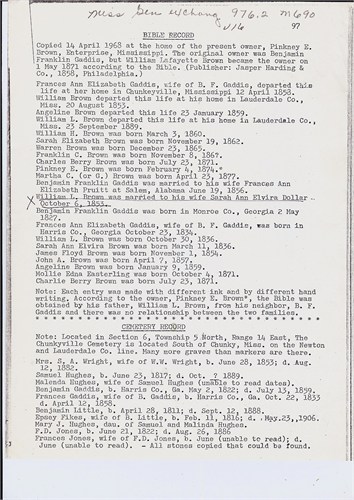
brown william lafayett bible


Sarah Elizabeth “Bettie” Brown was born 19 Nov 1862 (my birthday also) to William Lafayette Brown Jr and Sarah Ann Elvira Dollar Brown in Lauderdale County, Mississippi. (Right is the transcribed family Bible.) There were ten children in her family, seven boys and three girls, one of whom died at birth. Five of the children were born just before the Civil War began, and her father was a sharp shooter guarding the railroad bridges at Chunky, Mississippi, so her mother was home with a handful of children under the age of eight at the start of the war. When her father returned from the war, the next child was born in 1865. They wasted no time!

At the age of 18, Bettie married John Thompson 16 Nov 1881 and had one daughter, Fleta S (1885-1923). I don’t know what happened to Mr. Thompson, but in 1890 Bettie married TGL Keene. They had seven children: Eunice Tabitha (1891-1964) Isaac (1893-1894 infant who is buried near his parents) Essie Mae (1895-1981) Ernest Grady (1895-1947) Benjamin Blaine (1898-1960) Eula Ouida (1899-1981 my great grandmother) and Earl Vandorn (1901-1939). Bettie outlived her husband by five years and died on 18 Jul 1926 at the age of 63. Brown Sarah Elizabeth Bettie Brown Keene

TGL and Bettie lived in the Tunnel Hill area until 1910, when they show up on the census records as living in Meridian.

Happy Anniversary TGL and Bettie!


Brought to you by On This Day available at Amazon.
Nice House, Gramps!

My 11th great grandpa was John Culpepper of Astwood in Feckenham. Not to be confused with his father John Culpepper of Wigsell, or his son John Culpepper the Merchant, or his grandson John Culpepper the Rebel.

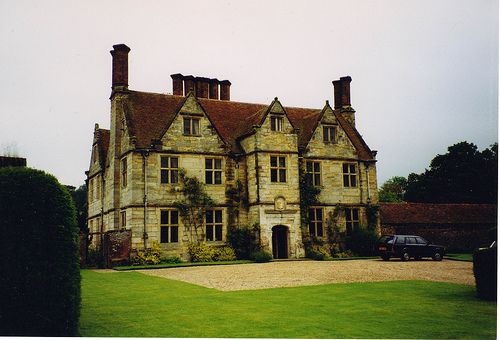
great wigsellJohn was born in 1565 in Salehurst, England in his father’s home, Wigsell Manor (pictured left). He was the second son, eventually totaling three brothers and at least one sister. He was seventeen years of age when he entered Middle Temple (a law school) and began a professional career as a lawyer, called to the bar in 1595, and listed as a Bencher in 1599.

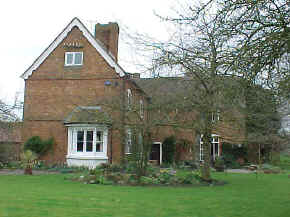
GreenwayCourtHe spent a lot of time at the home of his uncle Francis Culpepper (dad’s brother), whose home was Greenway Court (pictured right). Uncle Francis’s second wife was Joan Pordage. Her brother was Solomon Pordage, who died in 1599, leaving behind widow Ursula Woodcock Pordage. It was at Greenway Court where John first met the widow Ursula – probably before she was widowed as Uncle Francis died in 1591 and his wife Joan Pordage in 1598. John and Ursula didn’t marry until 1600.

John and Ursula set up house at Greenway Court while he ran a profitable law practice.

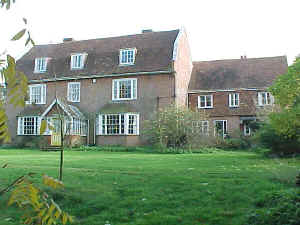
feckenhamcourtfrontWithin a few years, his uncle Martin (dad’s other brother) died in 1605. Martin had two sons, one who had died the year before, and the second who had no children of his own. John was bequeathed Astwood (pictured left) in trust to maintain for Martin’s widow. After the widow remarried and moved elsewhere, John made an arrangement with her to move Ursula and the family to Astwood. His family now totaled four children – Thomas, John (my 10th great), Cicely, and Francis.  Sadly, Ursula died at Astwood and was buried there in June of 1612. He was now a widower with four small children, but apparently his law practice was doing well, as he bought out the aunt’s interest in 1616 and gave up practicing law to become a country gentleman.

all saints church hollingbourne kent insideThat same year, he married Elinor Norwood. They had no children. She died eight years later in 1624. He then married Ann Goddard in 1625. She outlived him by ten years. Sometime before 1635, nearing the age of seventy, he returned to Greenway Court where he died 18 December 1635.

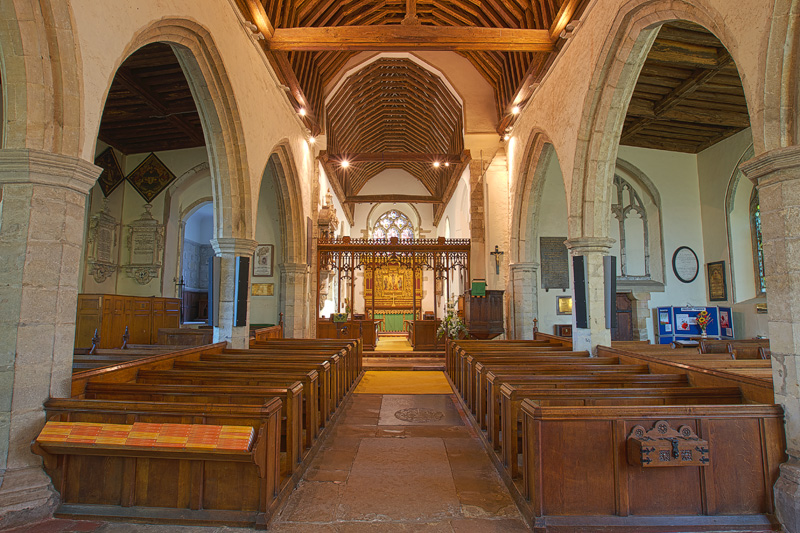
He is buried in the chancel of Hollingbourne Church (pictured right) among other members of the family – Francis 1591, Elizabeth 1626, Philippa 1630, Thomas 1634, Elizabeth 1635, Thomas 1637, Elizabeth 1638, Phillipa 1638, Thomas 1640, John Third Lord Culpepper 1641, Solomon 1647, Cicely 1651, Thomas 1661, Sir Thomas the Elder 1662, Doris 1662, Cecilia 1685, among other memorials, plaques, and graves.
(photos by my cousin Warren Culpepper 2000.)

I’m Back! August 1st is a Great Day!!

Sorry for being MIA. I’ve been in Bermuda since May and internet is ridiculously expensive down there. But I’m back now and will run around and catch up with everyone over the next week.

A few months ago, I published a journal/perpetual calendar called “On This Day” (check it out at  Amazon) to keep track of my ancestral dates. You know, births, deaths, etc. I finally found a minute to use it, and for the last few days I’ve been filling it in, and guess what I found out…

Today is August 1st, and I realized if it weren’t for August 1st, I wouldn’t be here. That gives me a strange feeling that I should put some energy into this day and enjoy it to the fullest.

culpepper earl and ina in front of carOn this day in 1936, my grandparents were married.


john thomas howington florence j smith marriage recordOn this day in 1892, her grandparents were married.


I’m glad to be back, especially on August 1st! Catch you all tomorrow.

Summer 2014 Newsletter

10312579_10152357221103326_361961938920997917_nIf you’re not signed up for my author newsletter, you don’t know what’s up with this donkey! CLICK HERE!! to find out.

My latest newsletter is filled with info about new books, recent awards, and coming stuff, including a giveaway of my new book STUCKEY’S LEGACY. I’m giving the book away this Saturday, before it is available to the public, so pop over and enter. CLICK HERE!!

If you want to sign up for my newsletter, you can do so at the top of the newsletter page. CLICK HERE!! I promise I will never give away or sell your email address, and you can unsubscribe at any time with one click of your mouse. Also, I won’t fill up your inbox with junk. I’m definitely unorganized when it comes to putting together newsletters, so I only send three or four a year, if I remember to do so. 🙂

If you don’t want to sign up but would like to see the latest newsletter and enter to win my new book, you can do that, too. See? We’re easy around here. Simply CLICK HERE!!

50 self-published books worth reading 2013/14

Indie Author Land is hosting “50 Self-published Books Worth Reading in 2013/14.

elly cover_webMy book ELLY HAYS made the short list!!!!

Please vote the old girl into the finals in the literary category…and check out the other books on the list. Some are great books, written by very dear friends, but don’t vote for them. LOL! You can vote 5 times.

Click here to vote and THANK YOU! I owe you a marshmallow peep.

If you’d like to know more about the book, look under “my books” at the top of this page.


Anyone seen a plantation around here?

My aunt lives in Meehan, Mississippi where she married Robert McQueen about fifty years ago. She told me one day an old black man came knocking on her door. She lives in the middle of nowhere, so a stranger knocking on her door was highly unusual. But being in the friendly South (and the fact that she always has a loaded pistol on her), she wasn’t concerned with not knowing the stranger, so she opened the door. He offered to sell her some vegetables. I don’t know if she bought them or not, but the two struck up a conversation.

He asked her if she knew the old Allen Plantation. He said his grandfather worked on it his whole life and it was around the area somewhere. She told him her mother-in-law was an Allen, but she didn’t know if they had a plantation, and she wondered why she had never heard of a family plantation before now.

I began searching for clues. Draw yourself a diagram and follow along. My aunt’s in-laws were William “Mac” McQueen and Mabel Allen, who was the daughter of Preston and Minnie Allen. Mabel’s uncle (Preston’s brother) was Joe Oliver Allen who married Amelia Hand. The couple lived in Amelia’s parents house (Alexander Trotter and Eliza Hand), and after her parents died, the property naturally transferred into the Allen family. I’m convinced the photograph below (circa 1903) is the family plantation the man on my aunt’s porch was speaking of, and if you look on the far left side, you’ll see a black man in the background. His name is George Weeks. My aunt never saw her visitor again, and I wonder if this man in the photo is the grandfather he spoke of.

mcqueen allen home 1903 see notesThe home was located in southwestern Lauderdale County, MS on Point-Wanita Lake Road, just south of Meehan.

Sitting Down in the middle is Eliza O’Ferrall Hand

The two little girls with Eliza are her granddaughters, Alda Allen and Marion Inez Allen.

To the left, Eliza’s daughter Amelia Hand Allen and Amelia’s husband Joe Oliver Allen. Amelia is holding their daughter Velma Estelle Allen.

To the right in the fancy hat is Eliza’s daughter Corette Hand.

The following info is from al and mary dot org

“Note the black man to the far left of the picture. His name is George Weeks. I have been told that right after the Civil War, George showed up at the Hand home, hungry, ragged, and able to speak only a few words of English. He was obviously just a few years from Africa and very confused. The Hand family took him in and he worked for them the rest of his life. The A. T. Hands moved into this home about 1878. Several years after this picture was taken, the old home burned, and the Allens rebuilt on the same site. I can remember the Allen home, having visited there with my parents in the late 1930’s or early 1940’s. What I remember most about the home was a spring located across the road from the house with a hydraulic ram that pumped water up the hill and across the road to a tank that was located to the left of the home.” ~ Albert H Spinks, April 23, 2001.

Uncle Bluitt

culpepper Andrew Bluitt CulpepperThe Rev. Andrew Bluitt Culpepper was my grandfather’s uncle (little brother of Aunt Dora in THIS blog). He died in 1952, so I never met him, but I remember the family bringing his name up on occasion, and he was always referred to as Uncle Bluitt. The name came from his great grandmother, Elizabeth “Betty” Bluett or Bluitt. The spelling changed with each generation, and every generation has at least one male with Bluett in his name.

Uncle Bluitt was the youngest of 6 children of Joel Bluett Culpepper and Mary E “Mollie” McFarland. He was born in Alabama in 1882. Before 1890, the family moved to Kemper County, Mississippi.


culpepper Andrew Bluitt and Ollie KitrellWhen he was 21, he married Ollie Mae Kitrell.

culpepper Curtis and Obbie sons of Andrew Bluitt Culpepper


A year later, they had a son, Louis Curtis Culpepper, and three years later, another son, William Obie Culpepper.


Uncle Bluitt died at the age of 71, and his obit claims he was the pastor of more rural churches than any preacher in Mississippi, and his death certificate states he was also a barber. He died following a stroke, which is not an unusual thing with the males of my family. One of his uncles, (I can’t remember which one off the top of my head) was said to have died of a stroke while preaching in the pulpit. Pastors and strokes run in the clan. Uncle Bluitt is laid to rest with his wife and sons at Pine Grove Baptist Church and Cemetery in Lauderdale County, Mississippi.

culpepper, andrew bluitt and ollie kittrell


Andrew Bluitt Culpepper obituary

Rev. A. B. Culpepper, 71, Martin community, Lauderdale County, passed away Wednesday, Feb. 24. he had been a Baptist minister for 40 years. It was claimed that he had been pastor of more rural churches than any preacher in Mississippi.

Burial was in Pine Grove Cemetery. The Rev. Edward McKeithen, pastor of the Pine Grove Church, officiated, assisted by Rev. Ed Grayson and Rev Truly Reynolds.

He was a member of the Pine Grove Church. Survivors include his widow, Mrs. Ollie Kittrell Culpepper, two sons, Curtis and Obbie Culpepper, 8 grandchildren, and 7 great-grandchildren.