It’s Monday! What are you reading?

2a2It’s Monday! What are you reading? Feel free to grab this meme and hop over to bookjourney.wordpress and join in the fun.

I am originally from the great state of Mississippi, and the work I am reading this week feels like my old uncle is sitting in his rocking chair on the front porch telling me a story. I have always struggled with dialects in the written word, both writing them and reading them. Some read pretty awful, some are difficult to get through (I’m thinking Mark Twain), and once in a great while an author nails it.

S.K. Nicholls absolutely rocks it in RED CLAY AND ROSES. I’m about halfway through the book and enjoying it immensely.

?????????????????????????????????????????????

THE BOOK BLURB

A fictionalized true story of life in the Deep South during the time of Jim Crow Law, and before Roe vs. Wade. Women were supposed to keep quiet and serve, abortion was illegal, adoption difficult, and racism rampant. The discovery of an old ledger opens a window into the dynamics of the 1950s-60s, when the world was beginning to change. Unspoken secrets are shared between Beatrice, The Good Doctor’s wife, and Moses Grier, their black handyman. The Grier’s daughter, Althea, suffers a tragedy that leaves her family silent and mournful. Her brother, Nathan, looks for answers from a community that is deaf, blind, and dumb. A summer romance between Nathan and Sybil, an independent, high-spirited, white woman, leaves more unresolved. Sybil is torn between living the mundane life of her peers, or a life that involves fastening herself to a taboo relationship. Witness social progress through the eyes of those who lived it.

AUTHOR S.K. NICHOLLS

Susan Koone Nicholls is an R.N. who lives in Orlando, Florida, with her husband, Greg. She was born, raised and educated in Georgia, where she also raised her family. She has three children, a step-son, and two grandchildren. Orphaned from her mother at an early age, she spent time in foster care and in a children’s group home in the North Georgia Mountains, The Ethyl Harpst Home.

RED CLAY AND ROSES is available at Amazon, Barnes & Noble, and Smashwords, and you can check out her blog here on WordPress.

50 self-published books worth reading 2013/14

Indie Author Land is hosting “50 Self-published Books Worth Reading in 2013/14.

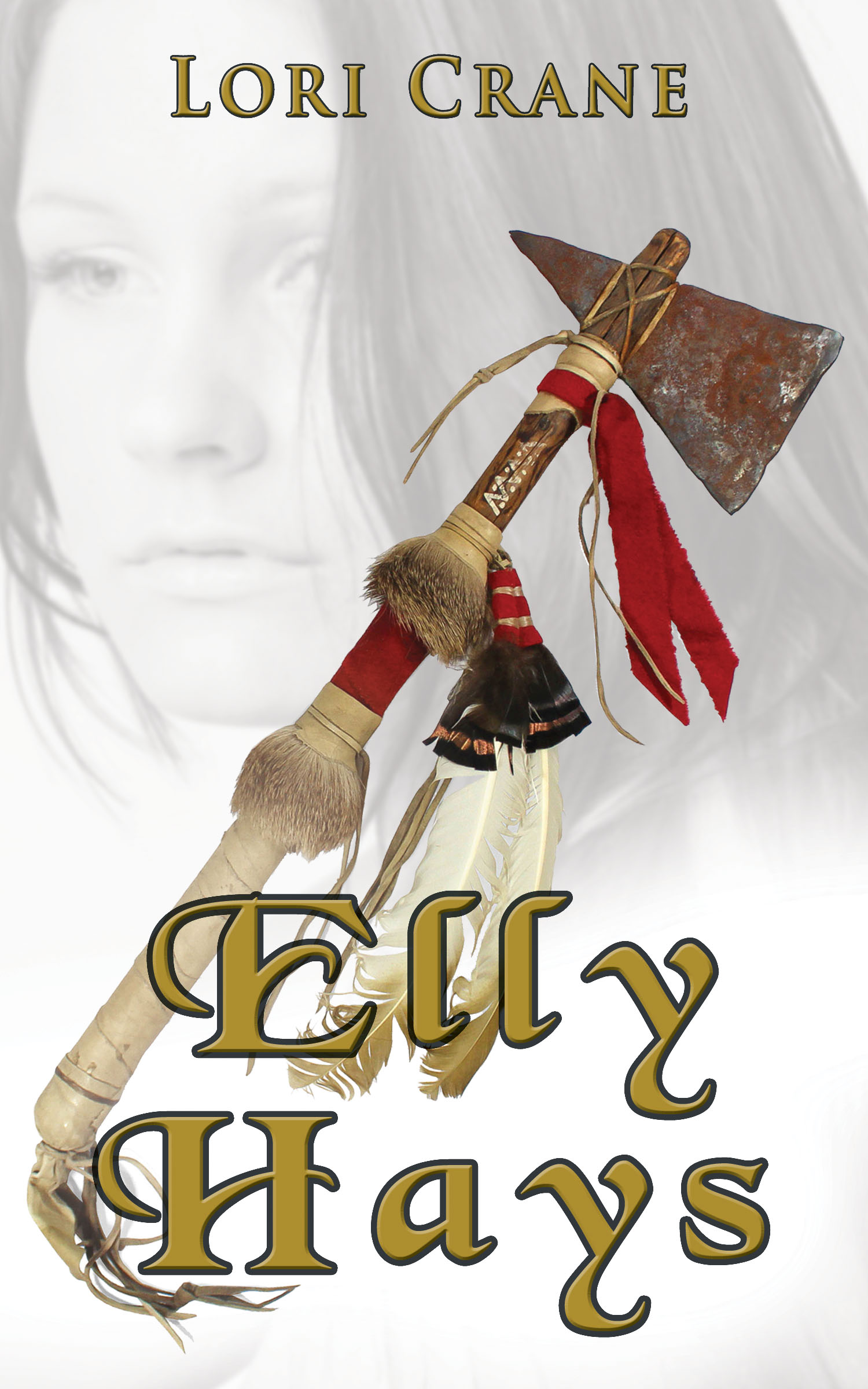
elly cover_webMy book ELLY HAYS made the short list!!!!

Please vote the old girl into the finals in the literary category…and check out the other books on the list. Some are great books, written by very dear friends, but don’t vote for them. LOL! You can vote 5 times.

Click here to vote and THANK YOU! I owe you a marshmallow peep.

If you’d like to know more about the book, look under “my books” at the top of this page.


On This Day in 1861

On This Day, April 12, 1861, Fort Sumter, South Carolina was shelled by the Confederacy. This marked the start of the Civil War.

SumterPreviously, on February 4th, a convention of seceded states met in Montgomery, Alabama and formed the Confederate States of America.

On March 3rd, Confederate General Beauregard took command of the troops around Charleston Harbor, surrounding Fort Sumter.

By April, the fort was running low on rations. President Lincoln (only president for a month at this point) told them he would re-supply and instructed them to hold the fort.

On April 11th, General Beauregard demanded Union Major Robert Anderson evacuate the fort, but he refused. He was warned if he did not evacuate, the fort would be fired upon at 4:30 a.m. on April 12th.

When the evacuation did not happen, as promised, General Beauregard commanded the men to open fire on Fort Sumter. Fortunately, there were no casualties on either side, but the fort had no option but to surrender.

At 2:30 p.m. on April 13th, Major Robert Anderson surrendered the fort.

flying confederate flag on april 14The Confederate flag was raise over Fort Sumter and a 100-gun salute to the flag was planned, but a gun discharged prematurely, killing Union Private Daniel Hough. He was the first casualty of the war.

The war produced over one million casualties with between 650,000 and 850,000 Americans giving their lives. They died fighting their own countrymen and left behind as many grieving parents, widows, and children. These Americans gave their lives to save the United States they knew, whether it be Union or Confederate. As Americans, we have a duty to honor their memories and to get it right. God forbid, we ever divide and do it again.


(shameless plug: I wrote this post in honor of my new book On This Day. It’s a perpetual calendar/journal/record book. If you’re a genealogy buff, you HAVE to get this book to keep track of your ancestor’s special dates. Check it out here.)


Anyone seen a plantation around here?

My aunt lives in Meehan, Mississippi where she married Robert McQueen about fifty years ago. She told me one day an old black man came knocking on her door. She lives in the middle of nowhere, so a stranger knocking on her door was highly unusual. But being in the friendly South (and the fact that she always has a loaded pistol on her), she wasn’t concerned with not knowing the stranger, so she opened the door. He offered to sell her some vegetables. I don’t know if she bought them or not, but the two struck up a conversation.

He asked her if she knew the old Allen Plantation. He said his grandfather worked on it his whole life and it was around the area somewhere. She told him her mother-in-law was an Allen, but she didn’t know if they had a plantation, and she wondered why she had never heard of a family plantation before now.

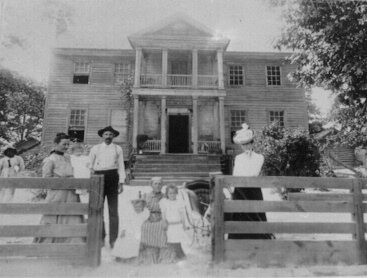
I began searching for clues. Draw yourself a diagram and follow along. My aunt’s in-laws were William “Mac” McQueen and Mabel Allen, who was the daughter of Preston and Minnie Allen. Mabel’s uncle (Preston’s brother) was Joe Oliver Allen who married Amelia Hand. The couple lived in Amelia’s parents house (Alexander Trotter and Eliza Hand), and after her parents died, the property naturally transferred into the Allen family. I’m convinced the photograph below (circa 1903) is the family plantation the man on my aunt’s porch was speaking of, and if you look on the far left side, you’ll see a black man in the background. His name is George Weeks. My aunt never saw her visitor again, and I wonder if this man in the photo is the grandfather he spoke of.

mcqueen allen home 1903 see notesThe home was located in southwestern Lauderdale County, MS on Point-Wanita Lake Road, just south of Meehan.

Sitting Down in the middle is Eliza O’Ferrall Hand

The two little girls with Eliza are her granddaughters, Alda Allen and Marion Inez Allen.

To the left, Eliza’s daughter Amelia Hand Allen and Amelia’s husband Joe Oliver Allen. Amelia is holding their daughter Velma Estelle Allen.

To the right in the fancy hat is Eliza’s daughter Corette Hand.

The following info is from al and mary dot org

“Note the black man to the far left of the picture. His name is George Weeks. I have been told that right after the Civil War, George showed up at the Hand home, hungry, ragged, and able to speak only a few words of English. He was obviously just a few years from Africa and very confused. The Hand family took him in and he worked for them the rest of his life. The A. T. Hands moved into this home about 1878. Several years after this picture was taken, the old home burned, and the Allens rebuilt on the same site. I can remember the Allen home, having visited there with my parents in the late 1930’s or early 1940’s. What I remember most about the home was a spring located across the road from the house with a hydraulic ram that pumped water up the hill and across the road to a tank that was located to the left of the home.” ~ Albert H Spinks, April 23, 2001.

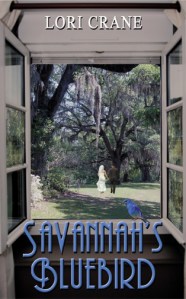
Saturday Snippet – Savannah’s Bluebird

bluebird_small webHere’s a snippet from my brand new book, Savannah’s Bluebird.

*********************************************

She strolled down to the beach of Lake Pontchartrain and found a quiet spot on the bank. She stared at the ripples of water lapping the shore, mesmerized by the sound, which was accompanied by seabirds whistling and cawing as they flew overhead. She closed her eyes and let the sounds wash over her, attempting to block out the awful world she now lived in. The noise of someone clearing her throat interrupted Savannah’s reverie. She looked around and saw an old woman emerging from the tree line behind her. The woman was covered in layers of bright and ornate scarves and wraps that curled around her in the breeze. Her dark red hair was in a bun on top of her head, but stringy ringlets dripped around her face and neck, tangling themselves in her large hoop earrings.

“I thought I’d find you here.” The old woman cackled as she approached.

“I’m sorry, ma’am. You must have me confused with someone else. Do I know you?”

“No, I don’t have you confused with anyone else, dear, and no, you don’t know me.” The old woman had a bulge of tobacco in her cheek, and she spit some sweet-smelling brown juice on the dirt.

Savannah started to rise to leave, made uncomfortable by the weird old woman.

“No, chavi, you need to stay and speak with me. I came down here from Biloxi because I have a gift for you here in my bujo.”

“Your bujo?”

The woman held up her large bag.

Savannah reluctantly sat back down, now curious about the woman.

“You’re from Biloxi?”

“No, dear, I’m from New Orleans, but I’ve lived in Biloxi a few years.” The woman plopped down next to her and began digging deep into the bag. She fished around for a long time and eventually pulled out a small object wrapped in a dirty handkerchief. She looked at it strangely for a moment, and then held it toward Savannah, who did not reach for it.

“Here.” She thrust it into Savannah’s chest. “This is for you. Take it.”

“I’m sure I don’t need any gifts, ma’am.”

“Just open it. It’s baxtalo. You would say…lucky.” She placed it in Savannah’s hand.

Savannah stared at the handkerchief and didn’t move.

“Open it,” the crone demanded.

Savannah placed it on her lap and tried to touch the filthy handkerchief as little as possible as she unfolded it to reveal a small blue object made of glass. She held it up between her thumb and forefinger and saw it was a two-inch-tall bluebird. She turned and awaited an explanation from the old woman.

“I knew you’d like it.” The woman smiled through missing teeth. She twisted her chin to the side and spit more tobacco juice onto the ground.

“But why?”

“I know you’ve had a difficult time since coming here, and I thought this would make you feel better.” The woman turned and stared at the water. Her expression grew solemn and she continued speaking without looking at Savannah. “Fate may not be kind to you, young lady, and you will need this item to face your future.”

“Ma’am, I’m sure I don’t know what you’re talking about.”

“Oh, you don’t, do you? Tell me about Thomas Blakely.”

“What?”

“Your father.”

“What do you know about my father?”

“I met him about fifteen years ago…right here on this very beach.” She thumbed a direction over her shoulder. “Right over there at a little watering hole I worked at. He was courting your mother at the time.” She smiled. “I was young then, too, and I must admit, he was a handsome man, and I had eyes for him as well. He was working on those railroad tracks my people destroyed. They were angry that the train was going to go through their homes. I don’t mean near their homes, I mean right through the middle of them. My people have always lived off the land, not in those fancy houses like you live in. It was because of us that your father was here working at the time. It was because of us he met your mother, so I guess it was because of us that you were born.” She paused and kept staring at the small wavelets. “He sure was a handsome man. Too bad he wasn’t one of us.”

“You’re a gypsy.”

The woman nodded.

“Do you live on the beach in Biloxi?”

“Sometimes. Sometimes I live here.”

Savannah looked down at the glass object in her hand. “You’re the one who told my father the bluebird story.”

“Yes, child, I am.” She turned toward Savannah. “The bluebird is magical, and it can do some surprising things.”

“Yes, my father told me.”

The woman didn’t acknowledge her comment. “Sadly, I didn’t plan on him seeing the bluebird while he was with your mother. I was hoping he would see it while he was with…oh, never mind about that. Things happen and life goes on. We all have our own private destiny to live out, even if it affects others.”

Savannah stared at the woman’s face, realizing the woman wasn’t as old as she initially looked. She carried herself like an old woman, but there wasn’t a crease on her face, not a wrinkle around her eyes or lips. She was actually quite pretty in an exotic way.

“So, you were friends with my father?”

“You could say that.”

Savannah didn’t like the cryptic answer. Did this woman love her father? Was the bluebird story a spell to make her father fall in love?

“Tell me about August.”

A shiver went up Savannah’s spine. “How do you know about August?”

“I know everything, child. I know the past, the present”—she looked Savannah in the eyes—“and the future.”

“Are you a fortune teller?”

The woman shrugged. “No, I am no drabarni—fortune teller, as you say.” She spit again and shrugged. “Some people call me a witch, but I’m no witch, either. I just know things. Some people around here call it voodoo, but it’s not voodoo. My people come from a faraway land and some of us have special gifts.”

The woman slowly climbed to her feet with a few grunts and groans. She leaned forward a bit, half hunched as if her back was aching. Her scarves blew wildly around her head as the wind picked up, giving her a mysterious aura. She looked like a witch.

“I will tell you one thing before I go. My son, Bernard, and your August will meet someday, and you will need that little bluebird when the time comes. Keep it close to you. Remember the magic your father told you of the bluebird, and know that this one holds even more power than the story. It is a mulevi. It will make your deepest wish come true if only you will ask. But be careful how you use it, and don’t use it frivolously. You will know beyond a shadow of a doubt when the time comes, and it will be the most powerful thing you will ever witness.”

“What’s a mulevi?”

“An item to reach the dead.”

***********************************

Lori Crane Books at Amazon

An Inaugural Anniversary

This year is the 225th anniversary of the inauguration of the President of the United States. I’m sure you don’t really care, but the first inauguration was quite interesting. Here are some facts:

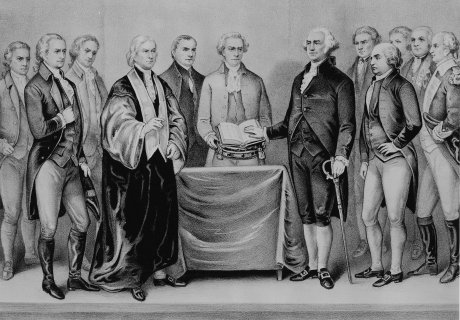
washington-1789The inauguration happened two months late, because bad weather delayed members of the very first Congress’s arrival in New York, where they were voting. Travel was a bear in those days, but the inauguration finally happened on April 30, 1789.

George Washington was UNANIMOUSLY voted into office. When was the last time the House and the Senate did anything unanimously?

They had to borrow a Bible from the Masonic Lodge down the street.

This event set the stage for future inaugurations to follow. It was held outdoors. It included a Bible. The inaugural address was given to a joint session of Congress. The event was followed by a church service and festivities. We still do all those things today. There is one thing that is questionable though. Modern day presidents end their oath with the words, “So help me God,” believing they are following the tradition of George Washington, but there is no evidence Washington ever said that.

And just so you know, Washington served as President without pay.

Happy Inaugural Anniversary!

Goodreads Giveaway of “Stuckey’s Bridge”

Stuckey's cover_webIn preparation for the coming release of “Stuckey’s Legacy: The Legend Continues”, Goodreads is hosting a giveaway of the first book, “The Legend of Stuckey’s Bridge.” There are 20 paperbacks available and the drawing runs through April 10th. Hop over there and claim your FREE copy. Here’s the link —> GOODREADS GIVEAWAY!

Here’s the blurb and the creepy book trailer…

In 1901, the Virginia Bridge & Iron Company began re-building a fifty-year-old Mississippi bridge. In the middle of the project, they began discovering bodies buried on the banks of the river.

Legend has it, he was so evil, he was even thrown out of the notorious Dalton Gang. Years later, he opened an inn near the river, and on foggy nights, boatmen witnessed him pacing back and forth across the bridge, waving his lantern, offering travelers a hot meal and a soft bed.

Those unfortunate enough to take him up on the hospitality were often never seen again.

To this day, eerie experiences are still reported around the bridge that now bears his name, but not much else is known about the man locals refer to as Old Man Stuckey…until now.

Book cover and video trailer by Elite Book Design

Saturday Snippet – Okatibbee Creek

okatibbee_cover frontIt’s been a while since I posted a snippet. The following is from my book Okatibbee Creek. The heroine of the story is my 3rd great grandmother. She barely survived the Civil War and typhoid running rampant through her family. In this scene, the war is over and disease has passed, she is older and having a discussion with the slave who raised her.

*************************************************************

I look up and see Bertie slowly walking up the road toward daddy’s house. She’s wearing a dark blue dress and a floppy straw hat covering her eyes.

“Hi, Miss Bertie,” I yell to her as I wipe away my tears and put a smile on my face.

“Hi, baby girl.” She waves back.

“What brings you out on this lovely morning?” I ask when she finally reaches the porch and plops down on the step. She takes off her hat and reveals her gray hair tied in a bun. She sets her hat next to her and wipes beads of sweat off her forehead with her handkerchief.

“I was just on my way to your house to see the babies and to see how you are doing,” she says as she tucks her handkerchief back into her sleeve.

I can tell by her demeanor that there is something more on her mind, but I figure she will tell me when she is ready.

“Well, it’s nice to see you. We are all doing fine at home,” I reply.

“That’s good to hear, baby girl.”

“Bertie, I’m forty-one years old. How long are you going to call me baby girl?” I tease her.

She laughs. “You have been my baby girl since I came to your daddy’s house when you were six years old. You will always be my baby girl.”

“Aw, you know I love you, Miss Bertie.” I reach over and pat her bony hand.

“And I love you, too, baby girl. You know, you have always been the smartest and most beautiful of your momma’s children. And with everything you have been through, you have become the strongest and most courageous woman I have ever known.”

She pauses and looks out across the yard as her mind wanders to another time and place. After a moment she adds, “Your momma and daddy would be very proud of you, but it was a blessing they were not around to witness all the pain and loss we went through.” She pauses again and looks out across the yard. “You’re also a wonderful mother.”

I can tell she’s leading up to something.

“I don’t know what I would have done without you, Bertie. You helped me through so much.”

“I know what you went through, baby girl. I witnessed it all. I have seen you stand strong in the face of disaster and death and sickness and hunger. You have faced every adversity with courage and every defeat with dignity and grace. I’m very proud of you, more than you’ll ever know.”

My eyes well up with tears as I feel a mixture of being touched by her kind words, and trepidation that she is going somewhere awful with this talk.

“Bertie, your love has been one of the reasons I have been able to be strong and steadfast. Together, we have laughed and cried through so much,” I say as I stare straight ahead at the field.

Memories come flooding back, along with the sadness and the happiness. Rice, Daddy, Momma, Monroe Franklin. I shake the memories off and look back at Bertie.

“I have the feeling you weren’t headed all the way to my house just to tell me you’re proud of me.” I stop and wait for her to speak.

“Well, baby girl, like I said, you have always been the smartest of your momma’s children.” She takes a deep breath and exhales. I wait patiently as I watch her build up her courage. “Well, I have not been feeling very well lately and I saw the doctor. He said he can’t do much for me and I may not be around much longer. You know I have raised Tony as my own since his parents died of the fever. He’s only thirteen and not quite ready to face the world on his own just yet.” She looks away. I can tell she is trying to get through this speech without crying. Finally, she turns to me and looks me straight in the eye. “I want to ask you to take care of Tony when my time comes. I can rest easy if I know you will do that for me.”

“What? Bertie, of course I will take care of Tony. But I don’t want to hear anything about you being gone. We’ve been through too much together and everything finally seems to be turning around for the better.” I pause, wondering if that is really true. Is everything going to be all right?

I continue, “We’ve walked straight through the midst of hell and we are just now starting to find our way back.”

“I hope you’re right, baby girl, but we can’t control what the good Lord wants to do. We just have to handle it the best we can when it comes.”

I nod and quietly say, “Bertie, I will do whatever you need me to do.”

“I know you will, baby girl. I just thought it would be nice to ask.” She winks at me.

Using both arms to lift herself, Bertie slowly rises from the step. I stand up, too, and she gives me a long hug. She puts her hat on and carefully steps away from the porch, heading toward the dirt road. I yell “goodbye” to her and she waves her hand behind her head without turning around. She walks very, very slowly, favoring one leg more than the other, and I watch her until she shuffles out of sight.

**********************************************

Lori Crane Books at Amazon and on audiobook at Audible.

Happy 143rd Birthday, Aunt Dora!

culpepper mary eudora culpepper saterfiel familyMary Eudora Culpepper Saterfiel Watson was born March 31, 1871.

She is pictured here in the center with her husband WB Saterfiel to the left, her father JB Culpepper to the right, and her children from left to right in front Dewey Oliver Saterfiel and baby Alma. In the back row, left to right, Evie Mae Saterfiel Hodges, Indeola “Necie” Saterfiel Byrd, Willie Carlos Saterfiel, Adie Joseph Saterfiel.

Side note: I ordered my grandparent’s marriage license and the witness was D.O. Saterfiel, the little guy. He was my grandpa’s cousin. I sometimes forget these people knew each other. 🙂

She was my grandpa’s aunt Dora. She was born to Joel B Culpepper and Mary E “Mollie” McFarland in Sumter County, Alabama, as the only girl with five brothers. There was another girl born to the union, but she died at birth. Aunt Dora was the eldest of the children, so I imagine she was the caregiver to her little brothers. At some point when the children were little, the family moved to Kemper County, MS. After her mother’s death in 1908, her father moved in with her for a short time. That’s when this photo was taken. Shortly after this, he was placed in a soldier’s home in Biloxi, MS, where he died less than a year later, on Nov. 11, 1911. Dora was 40.

culpepper Mary Eudora Culpepper SaterfielWhen she was about 19, she married William Bartley Saterfiel around 1890 and had six children. Three of her children married into the Hodges family. Mr. Hodges married three times, and with each union came more children. The three Saterfiel children married a Hodges child from each of the three wives. The Hodges/Saterfiel family reunion must be confusing.

She lost her youngest child in 1912. Baby Alma was only five years old when she died, not very long after the top photo was taken.

Following her husband’s death in 1925, she married GW Watson in 1929. Though she was married to Mr. Watson for 21 years, her headstone reads Eudora Saterfiel and her obit says nothing of Mr. Watson’s children. She died at the age of 78. Her obit is as follows:

culpepper, mary eudora culpepper saterfiel watsonFriday, January 6, 1950

Mrs. G. W. Watson

Mrs. G. W. Watson of Collinsville died Friday at St. Joseph Hospital, following a heart attack. Funeral will be held Sunday at 2 p.m. from the Union Funeral Home. The Rev. Edward McKeithen officiating. Interment will be in Union. Survivors include three sons: A. J. and D. O., Collinsville, and W. C. Saterfiel, Causeyville: Two daughters, Mesdames Joe Byrd and George Hodges, Collinsville: several grandchildren and great-grandchildren.  

Her father, husband, and baby Alma are buried at Zion Cemetery, Kemper Co, MS. She and her other children are buried at Pine Grove Cemetery in Lauderdale Co, MS. Mr. Watson and his first wife are buried at Memorial Park in Newton Co, MS.

My Grandmah – the Doctah

In the early 1900s, my great grandmother, Nancy Didama Spencer Burke (Grandma Damie) was a doctor. She rode around the back hills of Newton County, Mississippi, taking care of the sick. She didn’t ride in a car. She rode side-saddle, and a woman doctor was a rare thing.

Many moons ago, women were the caretakers and caregivers, but at some point the medical power was given over to men. Gaining that power back was a hard door to open.

T909228_08It was opened by Elizabeth Blackwell (pictured left) in the mid-1800s. Miss Blackwell was born in England, but raised in America. A dying female friend told her she would have suffered far less if her physician had been a woman. This statement encouraged Elizabeth to pursue a career in medicine. She was told she would never become a doctor, because there was no schooling available for a woman, but that didn’t stop her from applying to every medical school in the country. Finally, as a joke, she was voted into Geneva Medical College in New York. I can only imagine the ridicule she received at the all-male school. But she showed them. She graduated first in her class in 1849 and later studied surgery, midwifery, and obstetrics. One can imagine she had very few patients and no camaraderie, but she persevered. Keep in mind this was 100 years before women even got the right to vote. She was a strong and intelligent woman.

She paved the path for many women in the field of medicine – even Grandma Damie.