On This Day in 1864

carrie mcgavock portrait

Yesterday, November 29, 1864, Carrie McGavock sat on the front porch of her Tennessee home, the Carnton Plantation, enjoying a warm afternoon of Indian summer. Suddenly, she witnessed thousands of Confederate troops marching across her 1400 acres, heading directly toward her home. The troops told her a battle was coming and asked if they could use her house as a hospital, and by nightfall, surgeons and medics had arrived and started moving her furniture against the walls to make way for the injured. They took the doors off her outbuildings to be used as cots and operating tables. I can only imagine how nervous she felt, dreading the unknown that was to come.


carnton house


On This Day, November 30, 1864

back of Carnton HouseAt 3:30 p.m. the five-hour battle began. Cannon fire shook the house. Bullets drilled holes into the walls of the outbuildings. By the time night fell and the battle was over, hundreds of wounded, bleeding, and dying men had been carried into her home and placed throughout the rooms, in the hallways, on the staircase. Four dead generals lay covered on this back porch. 150 soldiers died in her home that night. The wooden floors are still stained with their blood. The outbuildings still show the bullet holes.


The next morning, December 1, 1864

cemetery 1At the first light of dawn, the 750 residents of Franklin, TN began tending the nearly 10,000 Union and Confederate soldiers lying all over McGavock’s property, some dead, some wounded, moaning and crying out for help. Forty-four private homes in Franklin were converted into temporary hospitals.

By 1866, the McGavock’s had seen numerous bodies that had been buried in shallow graves all over the battlefield become unearthed by the elements and the woodland animals. The McGavocks donated two acres of their land to be used as a Confederate Cemetery and properly re-interred the soldiers. Carrie’s husband, John McGavock, and the townspeople cataloged and buried 1500 Confederate soldiers, 500 of whom they could not identify. The Union soldiers were moved to the National Cemetery in Murfreesboro, TN.


mcgavock confererate cemeteryCarrie McGavock cared for the Confederate cemetery until her death in 1905, at which time it was turned over to the United Daughters of the Confederacy.

On This Day in 1963

On This Day in 1963, President John Fitzgerald Kennedy was assassinated.

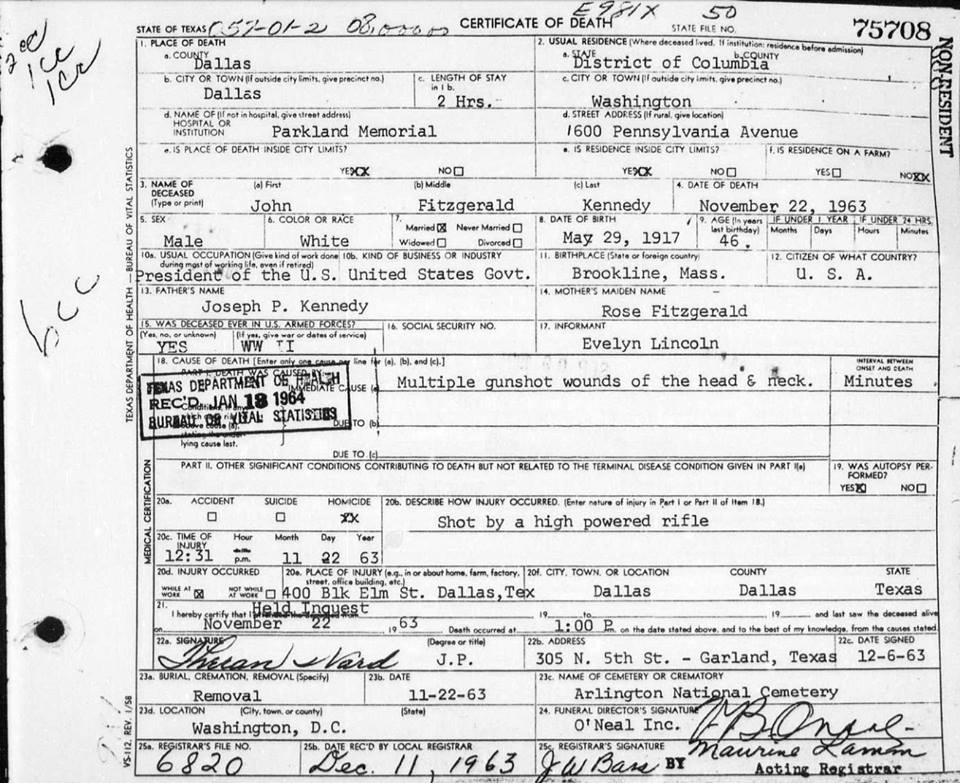
He was born May 29, 1917 to Joseph P Kennedy and Rose Fitzgerald in Massachusetts and was 46 at the time of his death. His death certificate states he died of “multiple gunshot wounds of the head & neck” and “shot by a high powered rifle.” We already know so much about his life and his assassination, there’s nothing more I can add in a simple blog post, but what I find interesting is his death certificate. One can imagine how badly the typist’s hands were shaking as she typed, “1600 Pennsylvania Avenue,” “President of the U.S.,” and “United States Govt.” I wonder if she had to ask anyone what she should type in the box asking for occupation.

John F Kennedy death cert


It’s Monday! What are you reading? – Many Lives, Many Masters

2a2I just finished Many Lives, Many Masters by Dr. Brian L Weiss.

I was speaking with a friend who recently lost her father and she found peace in this book. I had heard of it many years ago but never read it. We recently lost a family member and I thought I’d read it before recommending it to loved ones. I found it to be a fast-paced story and totally engrossing, and I read it in one sitting. If you are familiar with the precepts of reincarnation, you won’t find anything new here, but the story is an interesting journey nonetheless. If you are not familiar with any theories of reincarnation, this book may blow your mind. If you are interested in reincarnation at all, I highly recommend this book. It is well written and a great story.


816VjgKSqiL._SL1500_

Blurb from Amazon:

As featured on Oprah’s “Super Soul Sunday,” the classic bestseller on a true case of past-life trauma and past-life therapy from author and psychotherapist Dr. Brian Weiss—now featuring a new afterword by the author.

As a traditional psychotherapist, Dr. Brian Weiss was astonished and skeptical when one of his patients began recalling past-life traumas that seemed to hold the key to her recurring nightmares and anxiety attacks. His skepticism was eroded, however, when she began to channel messages from the “space between lives,” which contained remarkable revelations about Dr. Weiss’ family and his dead son. Using past-life therapy, he was able to cure the patient and embark on a new, more meaningful phase of his own career.

She’s Baaaaccckkk!

10481883_10203752346040808_3404858305990932508_nHi everyone! I’ve been gone

for. ev. ver!

I’ve been sailing since the middle of September, and I’m so glad to be home, even if it’s only for a week. I’m headed to NY on Sunday for the next six weeks. I’ve spent the last nine weeks in Europe and took a few pictures….


10610830_10152660947323326_1592678349874496485_nHere’s where it all started…


Some pictures from Barcelona. The guy on the top of the pole is Christopher Columbus, and thank goodness, he was pointing to my ship.

1800383_10152692668333326_4868420902030716129_n

10686700_10152660972233326_5346307412934289161_n


10702163_10152675782863326_334878310078426967_nNext up was Corsica, but we didn’t stop. I only saw it from the Mediterranean.


10313707_10152737700838326_2673587486057984155_n10358568_10152667746103326_5181883343469354238_nI went to Naples six times. The mountain out there is Vesuvius. I kept my fingers crossed that she would remain sleeping every time I saw her.


1455039_10152720868563326_8222989447546971984_n10701987_10152720858248326_2441353318324324858_n10710704_10152720865083326_1342714401150661099_n


I ventured to Rome. Made it to the Colloseum and the Forum, but I couldn’t see the Vatican up close. I saw it from the train a few times, but I was only there on Wednesdays, and the Pope speaks on Wednesday mornings. I just couldn’t take the crowds.


10382741_10152752730223326_3289685350957169671_nMade it to Livorno/Pisa/Tuscany/Florence area, but I had to work those nights, so I didn’t see much.


.

.

.


10174779_10152704500328326_4586062434434155627_n1480664_10152673634993326_5908748731591260899_n


Next up was the French Riviera. Cannes is where we docked, but all the cool little towns are right there…Monaco, Monte Carlo, St Tropez, Nice…such a beautiful place…with amazing quiche!


10672263_10152675783028326_4929563275863032242_nI went to another place in Spain…the island of Mallorca! So pretty. This was a cool little outcropping of an island called Dragonera.


10712741_10152767698358326_862094451764650218_nAfter going round and round in the Mediterranean for six weeks, I sailed through the Straights of Gibraltar. Here’s a picture of the Rock of Gibralter…at night! LOL!


10518694_10152771157333326_6782067331973551001_nSpent the day in Madiera, Portugal…not to be confused with Mierda. LOLOLOL!


10421437_10152780034073326_5914253893115798567_n10407469_10203750495754552_4545765016370718929_nA week in the middle of the Atlantic was fairly psychologically weird for me. I just tried to keep my mind off it.


10647048_10152786514448326_9109105973842559942_n


I finally ended up in St. Maarten. The first land sighting in a week! Gives a whole new meaning to Land Ho!

Stopped off at St. Thomas, too…


10421211_10203912265398692_2936491076712944381_nAnd finally to Miami, where I caught the first plane home. Sigh! Glad to be home!!!

On This Day in 1877

Annie Blanks CulpepperOn This Day in 1877, a beautiful woman was born. On November 10, 1877, my great grandmother, Josephine Annie Blanks Culpepper, was born in Kemper County, Mississippi to William Henry Blanks III and Martha Lettie “Mattie” Carpenter. She was in the middle of seven children, six of them being girls. Her father was a teenager when the Civil War took place and fought as a private in the 2nd Mississippi Infantry Company H. Her mother was a young lady of fourteen when she lost her own father at the Battle of Stones River on December 31, 1862. I can imagine as parents, they did their best to keep the peace in the household, but there is a distinct possibility they both had emotional scars from the trauma each had seen and faced during the war.

Annie grew up on a farm in Daleville, Mississippi, and with eleven aunts and uncles in the area, one must assume she had plenty of cousins to play with. She witnessed amazing technological changes as home comforts such as indoor plumbing and electricity moved from the nearby city of Meridian to the country, and paved roads reached homes throughout the area at the turn of the century before the Model T made its first appearance in 1908.

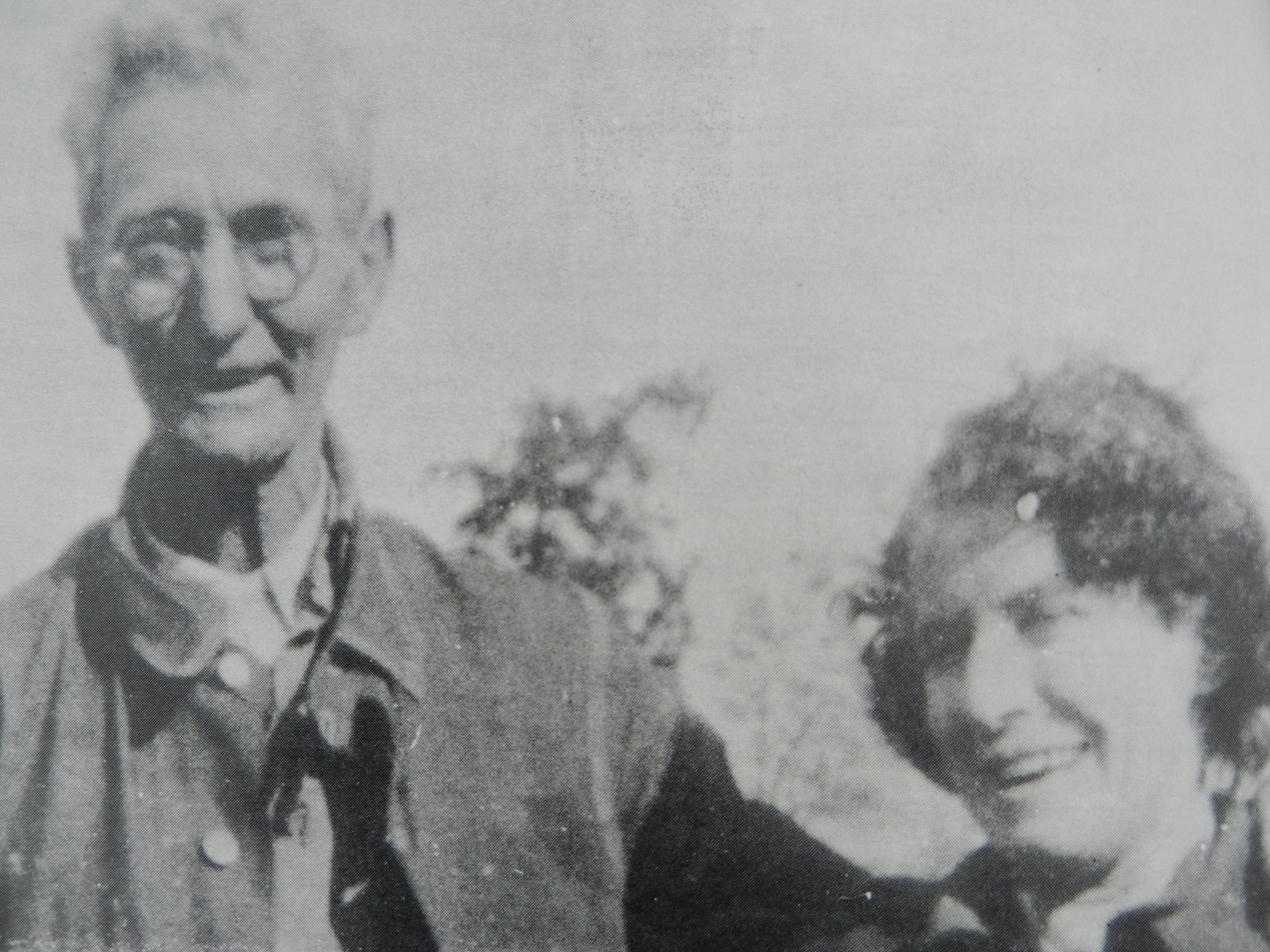
culpepper Sam CulpepperIn 1899, she met handsome William Samuel “Sam” Culpepper, and they married when she was 21. She said about him, “Sam was really a handsome man with rosy cheeks, dark curly hair, and teeth as white as pearls.” Sam was described as a kind fellow who always had a twinkle in his eye and a smile on his face. He loved fishing, squirrel hunting, and playing the family’s old pump organ. He was a sawyer by trade and followed the sawmill business, often being gone for weeks at a time. Fortunately Annie and Sam had five boys and four girls between 1900 and 1921, and the boys were taught to run the farm in their father’s absence. He was said to have been a strict but loving father.

culpepper Sam and Annie CulpepperAfter their youngest child married and moved out in 1938, one would have expected they lived out their retirement in comfort, but sadly, Sam suffered from high blood pressure, and his life was cut short by a stroke at the age of 66, on December 10, 1939. Annie never remarried. In her later years, she moved to Mobile, Alabama and lived with their sons who had relocated there.

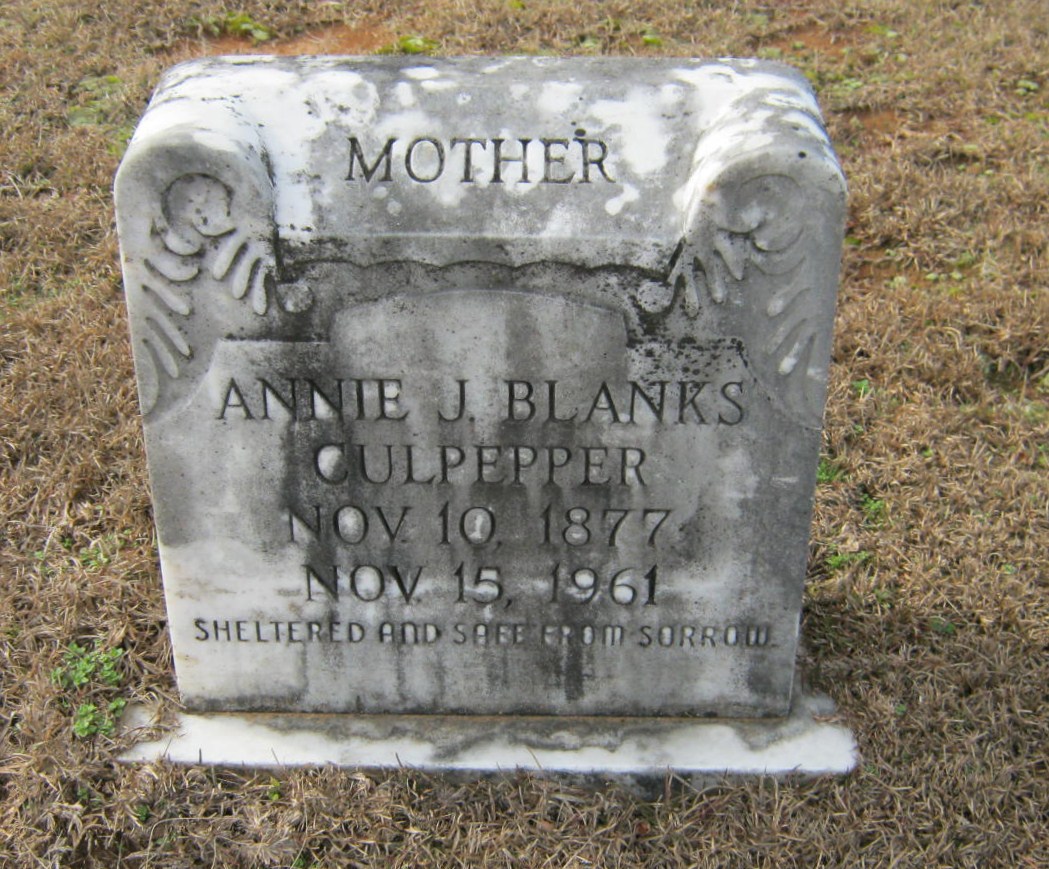
She passed away at the age of 84 on November 15, 1961. She is laid to rest next to her husband at Mt. Nebo Cemetery in Kemper County, Mississippi.


culpepper annie j blanks headstoneHer obituary is as follows:

Funeral arrangements were being completed today for Mrs. Anne Blanks Culpepper, 84 of Mobile, a former resident of the Martin community who died yesterday at Mobile.

Mrs. Culpepper was a member of the Duffee Baptist Church and had been active in its various organizations until she suffered a broken hip three years ago. Her two daughters are Mrs. Mae Howington of Meridian and Mrs. Aaron Spears of Enterprise. She is also survived by five sons, Joe Culpepper of Susqualena; Earl and Clinton Culpepper, Meridian; Fred and Frank Culpepper, Mobile; and two sisters, Mrs. Woodie Logan and Miss Velma Blanks of Laurel.

The body was to arrive in Meridian this afternoon and will be at Stephen’s. The service will be held at 2 o’clock tomorrow at the Mt. Nebo Baptist Church with Rev. Herman Pilgrim in charge, assisted by the Rev. Vernon Blackburn. Interment will be in the Mt. Nebo Cemetery.

This post is brought to you by On This Day available at Amazon.


Food Pyramid Categories…and what the heck they mean

September 1st, I posted a blog on a book I was reading that teaches a person with any chronic illness how to heal their body using nutrition. You can read that here. As I was doing my morning walk, I got to thinking that a lot of us could use some help understanding health and wellness BEFORE we get to the point of chronic illness, so being a certified nutritionist and a personal trainer who used to own a couple gyms, I decided to post a blog on the components of the food pyramid, which so many people don’t understand. Below is the pyramid broken down for beginners and forgetters.

Disclaimer: Please see your doctor before starting on any nutrition program as this may not be right for you. This diet contains all food groups and does not take into account any allergies, diet restrictions, or vegan/vegetarian choices.
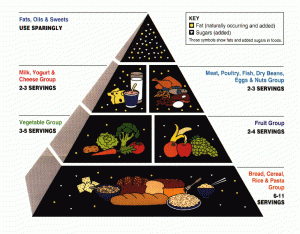
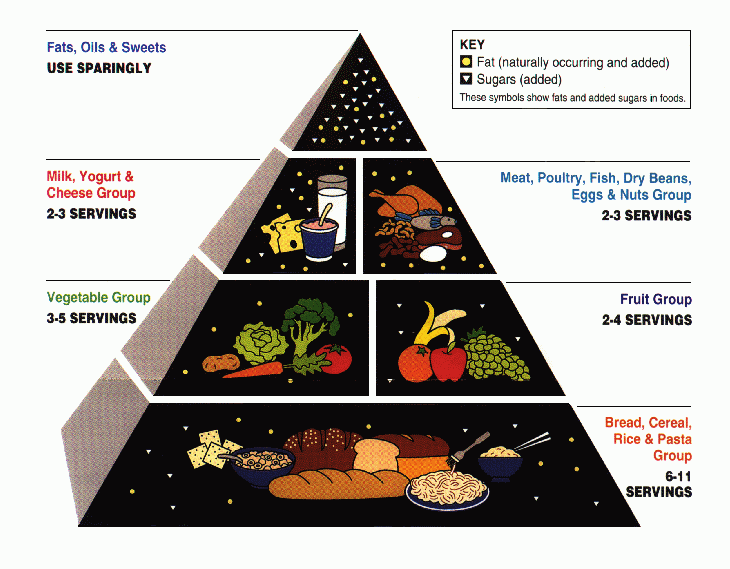
USDA_Food_PyramidThe following nutritional program is based on the USDA food pyramid and in my opinion and experience is the easiest and best way to good health. I have followed this plan strictly three times in my life; once to lower my 200 cholesterol to 140, which I did in six weeks; once to lose 30 pounds of baby weight, which I did over three months; and recently, to control my borderline diabetes. I haven’t had my sugar checked recently, but I feel 100% better and coincidentally lost a quick ten pounds. Yay! We are using the lowest serving numbers in the pyramid diet, as the largest serving numbers should be saved for 230-pound male body builders who work out six times a week. By the end of the blog, you should understand the number of servings you need.

Let’s talk quickly about calories. The easiest way to decide how many calories you need is by the weight you want to be. If you want to be 140 pounds, multiply 140 by 10. You need 1400 calories per day. If you want to be 150 pounds, 1500 calories per day. Easy! This amount should be adjusted up or down by your fitness and exercise level. If you want to be 140 pounds, but are inactive, then 1200 calories would help you lose weight. If you want to gain weight from 140 to 150 and you run marathons, you may need 1800 calories. Adjust your numbers accordingly, understanding that 3500 calories equals roughly one pound (body fat and lean muscle tissue are different numbers, but that’s a good estimate.) If you consume 300 calories less than you need and burn 200 calories a day with exercise, that’s a 500 calorie deficit per day or 3500 calories per week. You should lose just over a pound per week. In contrast, if you overeat by 50 calories per day, you’ll gain six pounds per year. Not hard to do. We’ll discuss calories more at the end of this blog.

Let’s talk about measuring. It’s a pain in the rear to pull out a measuring cup to get a perfect serving of one cup or one tablespoon. Measure things the first couple times, always using the same cup or spoon or plate, then you can eyeball it for the rest of your life. Of course, when you buy new dishes, you’ll have to measure again. My new soup bowls are flippin’ huge!  🙂

Ready to feel better? Ready to have more energy? Ready to learn what’s good and what isn’t? Let’s go!

1531544_10152318711308326_7663885554453194581_nDAIRY

For the record – the white-faced beauty in the photo is my girl Lucy. Freckles is behind her.

Dairy – The first thing to know is the USDA recommends two-three servings of dairy per day. You need calcium for healthy bones and vitamin D to help absorb the calcium. A serving size is 8 ounces of milk or yogurt. That’s it! (Cheese looks like its included in the dairy category, but it actually has more protein than calcium, so we’ll include it later in the protein section.) If you currently drink whole milk, this week buy 2%, then 1%, then finally skim. You’ll get used to it, I promise, and soon you’ll wonder how you ever drank milk that was so thick. FYI: If you add a pat of butter to one cup of skim milk, you get 1%. Another pat will give you 2%. Two more pats will give you whole milk. Try that little exercise just for fun and see if you can drink it. Eww. Those fats are saturated fats and clog up your arteries and your heart. Also understand that your yogurt should be sugar free, fat free, and fruit free. Bummer! Don’t worry, we’ll fix it later.

Diet Plan – Enjoy one cup of skim milk with breakfast. You do eat breakfast don’t you? If not, just drink the milk. Enjoy one cup of skim milk or yogurt later in the day as an afternoon snack between lunch and dinner.

OLYMPUS DIGITAL CAMERAFRUIT

Fruit – Fruit contains natural sugars and tons of vitamins. They will give you spurts of energy and feed your organs in spectacular ways, aiding in fighting off colds and helping in digestion and elimination. The USDA recommends two-four servings of fruit per day. A serving of fruit is quite simple. In most cases, it’s a piece that you can hold in your hand. Orange, apple, pear, peach, kiwi, plum, etc. In some cases like watermelon, that measurement is not available, so keep in mind that you should still be able to hold the serving in your hand. One cup of watermelon or cantaloupe, 15 grapes, a box of raisins or dried cranberries, 1/2 grapefruit, 1/2 cup of berries, 1/2 cup juice, etc. If you’re not a big fruit eater, try the dried raisins or cranberries on your salad, cooked on top of your meat, or added to your morning cereal. Do not substitute a fruit serving for what’s in the bottom of store-bought yogurt. That’s too much added sugar. If you want fruit in your yogurt, add your own fresh fruit. If fresh fruit is not available, buy frozen fruit. If that’s not available, buy canned fruit that’s packed in water or light syrup. Avoid the extra sugar of heavy syrups whenever possible. Note: if you have blood sugar issues, you should eat your fruit with other foods. When eaten alone, fruit can cause a spike and a quick drop in sugar levels.

Diet Plan – Enjoy two fruits per day. Add one to breakfast and one later as a mid-morning snack. NOTE: Make one of them a citrus (orange, tangerine, grapefruit, pineapple) which covers your proper vitamin C intake for the whole day.

Culmination – You should enjoy a dairy and a fruit with breakfast (or as breakfast, try yogurt with fresh blueberries), a fruit as a mid-morning snack, and a dairy as an afternoon snack.


Sauteed-Veggies_0VEGGIES

Veggies are easy! The USDA recommends three-five servings per day. A serving size in one cup raw or 1/2 cup cooked. Bam! You know what veggies are, but I will tell you what they are not. They are NOT potatoes, corn, or beans (except for green beans). Potatoes, corn, and beans contain more starch than fiber and are placed in the grain/starch category which we will go over below. So, your veggies are anything leafy and green, squash, zucchini, pickles, cucumbers, tomatoes (which are super high in vitamin C), brussel sprouts, peppers, eggplant, cabbage, carrots, radishes, etc. If you can grow it in your garden, it’s probably a veggie. The easiest way to keep track of your veggies is to eat one for lunch and two for dinner. Slice a tomato to go with your sandwich, add chopped veggies to the top of your pasta, salads are always good. If you’re on the go and simply don’t have time, try a small can of sodium-free V8 juice. You can chug it in one second.

Diet Plan – Enjoy three veggies per day, one with lunch and two with dinner. NOTE: Make one a dark leafy green (kale, broccoli, spinach, romaine, etc.) which covers your proper iron intake for the whole day. Iron is good for the blood.

Culmination – Enjoy a dairy and a fruit with breakfast, a fruit as a morning snack, a veggie with your lunch, a dairy as an afternoon snack, and two veggies with your dinner.

10543639_10152584438533326_311256467130695967_nPROTEIN

Protein – The USDA food pyramid recommends two-three servings of protein at three ounces per serving. Three ounces of meat is the size of a deck of playing cards. Just like the fruit or vegetable, it’s something you can hold in your hand. Proteins include beef, pork, chicken, turkey, duck, etc. It also includes all seafood, but with seafood, you can eat double because it’s lower in calories. Eggs are also included in the protein category. One egg equals one ounce, so a three egg omelet is good. The pyramid states cheese is in the dairy category, but they’ve gone back and forth with this for years. Here, we’ll keep cheese in the protein category, but make sure it’s a hard cheese like parmesan. Soft cheeses like American and Feta are super high in fat (that’s why they’re soft). Buy soft cheeses like mozzarella and cheddar that say “part skim.” That has a lower fat content. Don’t get me wrong: Fat is not bad, but we don’t want the saturated fats found in cheeses, we want healthy unsaturated fats, which we will learn about below. Although legumes, peanut butter, nuts and seeds are high in protein, they contain more starches and fats than protein, so are categorized in other places which we’ll discuss below in fats and grains. So, basically your protein is meat, seafood, eggs, and cheese. Make the most lean choices you can when choosing your meats, keeping in mind the farther away from the bone, the less fat. This means a steak is better than ribs, a breast is better than a leg. And processed meats such as sausage, bacon, and lunch meats should go far away. They are filled with sodium and fat. Avoid them if you can.

Diet Plan – Eat one serving of protein at lunch and one at dinner. (You can change your protein serving to breakfast if desired.)

Culmination – Our diet is expanding into eating five meals per day: Breakfast – one dairy and one fruit; Snack – one fruit; Lunch – one protein and one veggie; Snack – one dairy; Dinner – one protein and two veggies.

imagesFATS

Fats – There are two kinds of fats: fats that come from animals are saturated fats, and fats that come from plants are unsaturated fats. Your body needs fats, but your heart doesn’t need the saturated kinds. The USDA recommends fat intake be kept to a minimum. You can add up to three unsaturated fats daily, one at each meal. A serving is generally a tablespoon. Fats include oil, grease, butter, nuts, seeds, and strangely, avocado. Watch where your fats come from. If it’s from an animal, find a vegetable substitute. Margarine is better than butter, Canola oil is better than Crisco, sunflower seeds are better than bacon. If you have to eat bacon (which I LOVE), one slice is a fat serving. The best way to use fats is to cook in olive oil, make homemade oil and vinegar dressing for your salad, and add some walnuts, almonds, or peanuts to your breakfast cereal.

Diet Plan – Keep in mind that all fats are optional and may be adding extra calories you don’t need. You may add one serving of fat to each meal.

Culmination – You should be eating five times per day and using the following in your diet: Breakfast – one fruit, one dairy, one fat; Snack – one fruit; Lunch – one protein, one veggie, one fat; Snack – one dairy; Dinner – one protein, two veggies, one fat.

download (1)GRAINS AND STARCHES

Grains and Starches – These terms are used interchangeably, though technically, starches are grains, fruits, and veggies, and grains are just grains. Whatever, for the sake of this menu, we’ll pretend they are the same thing. This is the hardest category for people to master because it includes fried and sugary things such as cakes, pies, chips, and french fries. Ugh. The most important thing to keep in mind about grains is to ALWAYS choose a whole grain. Those fried and sugary items listed above are NOT whole grains. A whole grain is: whole wheat, barley, rice, corn, rye, etc. Read the label of your bread this week. The first ingredient should include the word “whole.” If your bread contains the words “enriched” or “bleached” then put it back down on the shelf. Enriched means they process the crap out of it until it has no more nutritional value, then add chemical vitamins and minerals back into it. Your body can’t break down those chemicals, so the “enriched, bleached” wheat bread you’re eating is just useless calories. Read the label!! A grain/starch is 80 calories. You can find that information on the label also. Generally, a serving of grain is one slice of bread, english muffin, pita, tortilla, small bagel, or one cup of breakfast cereals, but make sure they are “whole” and have minimal sugar. Cheerios, Raisin Bran, Total, pretty much anything by Kashi, is good. Natural grains such as one cup of oatmeal, grits, brown rice, or whole wheat pasta are perfect. The last part of grains include one potato, one ear of corn, or one cup of beans (not green beans, those are a veggie). Those are all starchy veggies and have been placed in the grain/starch category. Make good whole-grain choices for this category. Don’t waste it on processed chips and french fries. The USDA recommends six-eleven servings per day. The difference there is 480 calories to 880 calories. Yikes! Generally, five or six work for women, and six to ten work for men.

Diet Plan – You should add one-two servings of grain/starch per meal.

Culmination – Your pyramid meals should look like the following: Breakfast – one grain, one dairy, one fruit, one fat; Snack – one fruit; Lunch – two grains, one protein, one veggie, one fat; Snack – one dairy; Dinner – two grains, one protein, two veggies, one fat. This is a 1200 calorie diet. See “Calories” below to adjust your caloric intake by adding grains, veggies, and fruits.

CALORIES – We discussed calories at the top of the blog, but now that you have a better understanding of food groups, let’s break it down further. A dairy serving, a fat serving, and a grain/starch serving are each 80 calories. A fruit is 60 calories. A veggie is 40 calories. Protein is 150 calories. If you are adjusting your calorie intake, keep in mind we never adjust dairy, protein, or fats, because we don’t want to increase cholesterol or saturated  fat levels. Add calories by adding fruit, veggies, and grains. Don’t get lazy and add grains that aren’t healthy.

SNACKS – Besides the regular snacks on this diet, sometimes we just need something sweet, crunchy, or chocolaty. Count these snacks as your grains/starches. A sugar-free fudgecicle has 45 calories. You can have two in place of a grain! – Try your veggies raw and dip them in two tablespoons of hummus (70 calories = a grain). Just as satisfying as any sour cream or ranch dip. – If you find yourself surrounded by birthday cake or Thanksgiving pie, take the smallest piece and trade the calories out for your grains. – Alcohol is also 80 calories per a proper portion and counted as a grain, but use in moderation while getting your diet on track. Nothing can blow a diet faster than a late night alcohol binge. – Popcorn is a great TV snack and is 80 calories per three cups. Lay off the butter, try some popcorn sprinkle mix instead. The store carries great flavors like cheddar and jalapeno.

FREE STUFF – You can use up to three free items per day. These items include fat-free sour cream (perfect for that baked potato), ketchup, mustard, BBQ sauce, non-dairy coffee flavorings, low-fat mayonnaise, and of course, add herbs to everything. I always have fresh chives in the fridge. Diet sodas are free, but be warned they are very high in sodium, and new studies are coming out daily condemning aspartame. Tea and coffee is always free.

WHITE DEATH – Anything white needs to be used in great moderation. They include: sugar, salt, flour, rice, bread, pasta. Substitutes include: brown sugar or molasses, sea salt, whole wheat flour, brown rice, whole grain bread, and whole wheat pasta.

SHOPPING – Plan your menus in advance so you have everything you need when it’s time to eat. Don’t randomly throw dinner together with whatever is in the fridge. The best way to shop at the grocery store is to go around the outside walls. Everything you need for health is along those walls – fruits, veggies, dairy, meat, read the labels for the best grains, buy healthy fats. Everything in the center aisles needs to be approached with great caution. If it comes in a box, it probably doesn’t have much vitamins or minerals left in it, but it still has plenty of the calories, salts, preservatives, and sugars.

Eat balanced, eat fresh, eat healthy!

It’s Monday! What are you reading? The Gerson Therapy

2a2

I just finished reading

The Gerson Therapy: The Proven Nutritional Program for Cancer and Other Illnesses

by Charlotte Gerson and Morton Walker


coverThis is a different book than the sort I usually talk about. It’s a juicing book to heal your body. Dr. Max Gerson (1881-1959) was a pioneer in using nutrition to HEAL every chronic illness from arthritis to diabetes to cancer. After losing my son-in-law to Hodgkin’s Lymphoma in February, I spoke to so many people who knew people who beat cancer using this program. They swear this program works. I also saw a TV special on Dr. Gerson and found him quite amazing. Well, heading into the second half of my life (if I live that long), I have some health concerns and thought I’d take a look at this book. I’ve fought blood sugar problems my whole life and was told by a physician that I would probably be an insulin dependent diabetic by the time I turned 50. I hasn’t happened yet, but I do feel it sneaking up on me.

I found the 2-year-long nutrition program to be quite intensive, but if it’s a matter of dying of cancer or following a strict diet for two years, I’ll go with the diet. There are some quirky things like coffee enemas that I won’t go into, but the science that backs it in the book is quite convincing.

My only problem with the book is what it said at the end. It said the diet should NOT be followed by healthy people. I don’t get that at all. You have to come down with a chronic illness before you can get healthy? I understand it’s a radical diet, but something about that didn’t make sense to me, and they could have told me that BEFORE I bought the book.

So, long story short, I’m sticking with my basic pyramid diet and hoping for the best.

Frances Culpepper Stephens Berkeley Ludwell etc etc

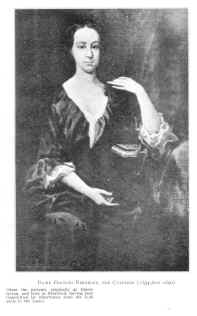
frances_berkleyMy cousin, Frances Culpepper (photo), was born in England in 1634 to Thomas Culpepper and Katherine St Leger. Thomas’s brother, John Culpepper the merchant, was my 10th great grandfather and will play a role later in her life. Frances was baptized 27 May 1634 at All Saints Church in Hollingbourn, where all of the family at that time was baptized. Her siblings were: Mary (1629-30 who died as an infant), Ann (1630-95), Alexander (1631- 24 Dec 1694, Surveyor General of Virginia), and John (1633-74 who often gets confused with John the Carolina Rebel, son of John the merchant).

Culpepper Connections website describes Frances as, “Apart from Pocahontas, Lady Frances Berkeley, the strong-willed, thrice-married and childless Colonial dame who ruled the political roost in Virginia from around 1670 until her death in the 1690s, was the Old Dominion’s most notable 17th century woman.”

Well, doesn’t that make you want to know more about her?

Her father, Thomas Culpepper, was one of the original proprietors of the northern neck of Virginia when the Virginia Charter was formed, transferring control of the colony from the Crown to individual investors. Following King Charles I execution, Thomas moved his entire family to Virginia in 1650 when young Frances was only sixteen. When she turned eighteen, she married the governor of the Albemarle settlement in what is now North Carolina. He was also the owner of Roanoke Island. Yes, where the very first colony disappeared from. His name was Samuel Stephens. Samuel and Frances lived for seventeen years on his 1350-acre plantation called Boldrup in what is now Newport News, Virginia. The plantation land and the house’s crumbled foundation is all that is left today and is listed on the National Register of Historic Places.

SirWilliamBerkeley2Following Samuel’s death in 1669, Frances inherited his large estate and in 1670, she married yet another politician, Sir William Berkeley, Governor of Virginia (photo). They took up residence at his estate called Green Springs (photo) near Williamsburg, Virginia. Today, about 200 acres of the original plantation land is preserved by the National Park Service, which acquired the property in 1966.

green springs


Nathaniel Bacon, T. ChambarsIn 1676 (100 years before the Revolution and the same year her cousin John Culpepper the Rebel was causing problems in Carolina) there was a dispute with the local Indians who had been chased north by militiamen. The Indians raided the Virginia frontier out of anger, hunger, revenge, who knows? Some colonists saw this as an opportunity to isolate or kill the Indians, some saw it as an opportunity for new slaves and lands. It was typical politics with each side rallying for their own cause. A newcomer to the land and the local Virginia Council was Nathaniel Bacon (photo). He asked Sir William Berkeley to form a party to kill off the Indians, but Berkeley refused as some of the Indians were Virginia’s closest allies. In defiance, Bacon raised a group of volunteers to fight the Indians. This led to a civil war of sorts, with Bacon’s followers against Berkeley’s loyalists. It also became a personal vendetta. At one point, tiring of Bacon’s threats, Berkeley bared his chest and dared Bacon to shoot him. After the public display, Berkeley threw Bacon out of the Council, later reinstated him, and then threw him out again. Berkeley ended up being chased out of town by Bacon’s men, who burned down the capital. Bacon died of dysentery in Oct 1676, but the fighting continued for a few more months without his leadership.

Here’s where Frances steps in…

King-Charles-II-king-charles-ii-25010100-333-400

Frances sailed to England on her husband’s behalf to ask King Charles II (photo) for help, and the King, unaware that Bacon was already dead, signed a proclamation for putting down the rebellion. He dispatched one thousand troops to Virginia, along with a commission of three men to find out what the hell was going on. By the time the soldiers arrived, without Bacon’s leadership, the rebellion had died down. The three members of the King’s commission watched Berkeley identify Bacon’s men as traitors and witnessed the hanging of twenty-three of them. Once the commission reported this back to King Charles II, he summoned Berkeley to return to England to explain his actions. As soon as spring arrived, Berkeley sailed to England to plead his case with the King. He became ill on the journey and went directly to his brother’s house in London upon arrival, where he died in July 1677 before getting a chance to tell his side of the story to the King. Frances didn’t receive the news of his death for months.

Here’s where uncle John steps in…

When John Culpepper the Merchant was fifteen years old, he attended Middle Temple, which was a law school. There he met a young William Berkeley, who was not a “Sir” at the time, and the two became fast friends. Though John was trained as a lawyer, he was more inclined to be a merchant, and in 1633, he bought a ship with his brother Thomas (Frances’s dad) called the “Thomas and John.” The ship delivered immigrants to the new world and shipped cotton, tobacco, and the like back to England. This was probably the vessel Frances and her family sailed on in 1650 to move to Virginia. During the rebellion, Frances and William Berkeley needed money to sail back and forth for this rebellion nonsense and they sold off Roanoke Island. Uncle John Culpepper was the lawyer who oversaw the sale of the land to the Lamb family, witnessing William Berkeley’s signature on the deed.

Gov_Phillip_LudwellIn 1680, Frances married her third husband, Col. Philip Ludwell (photo) of the 4,000-acre Rich Neck Plantation. Ludwell had been a chief supporter of Berkeley during the rebellion and also his cousin. Hmm. Frances never relinquished her title however and was known as Lady Frances Berkeley for the remainder of her life. She died around 1695 at the age of 61. Her body is interred at Jamestown Church Cemetery in Jamestown, Virginia.

As for Col. Ludwell, after serving as governor of the Colony of Carolina 1691-94, he returned to Virginia where he served as Speaker of the House of Burgessesin in 1695-96. In 1700, he moved back to England where he died in 1716.

It’s Monday! What are you reading? “Live from the Road”

2a2


I’m reading one of my favorite authors…

PC Zick

“Live from the Road”


smallsmall2

“Live from the Road” is a story of two friends, Meg and Sally, and their road trip across Route 66. They are escorted by their grown daughters, and the four women each have their own personal demons to face during the trip. Some of their struggles are shared with each other, some kept private.

There were idiosyncrasies in this story that made me giggle. At each stop, they invite whomever they ran into to join them, and a lot of people strangely took them up on the offer. I would never be that open to invite strangers to join my vacation, but I have some girlfriends who would do something that crazy, so it’s not all-together impossible. At one point, they had four or five cars in their caravan. I thought the concept of strangers joining on one’s vacation was a little weird, but then I realized I had joined them, too. I was traveling the Route with them, experiencing the sites and sorting through the personal problems. The road trip mimicked the trip through life – the inner journey. The part I loved best was Meg’s 50-year-old brain struggling with her own mid-life crisis. I found myself thinking her thoughts many times. Perhaps these are the thoughts of every mature woman.


“Live from the Road” blurb

Live from the Road takes the reader on an often humorous, yet harrowing, journey as Meg Newton and Sally Sutton seek a change in the mundane routine of their lives. Joined by their daughters, they set off on a journey of salvation enhanced by the glories of the Mother Road.

Along the way, they are joined by a Chicago bluesman, a Pakistani liquor store owner from Illinois, a Marine from Missouri, a gun-toting momma from Oklahoma, and a motel clerk from New Mexico.

Death, divorce, and deception help to reveal the inner journey taking place under the blazing desert sun as a Route 66 motel owner reads the Bhagavad-Gita and an eagle provides the sign they’ve all been seeking.

Enlightenment comes tiptoeing in at dawn in a Tucumcari laundromat, while singing karaoke at a bar in Gallup, New Mexico, and during dinner at the Roadkill Cafe in Seligman, Arizona.

The trip isn’t always easy as laughter turns to tears and back again. However, the four women’s lives will never be the same after the road leads them to their hearts – the true destination for these road warriors.

088eb14324190ad8956eff.L._V146807737_SX200_PC ZICK – Author

P.C. Zick began her writing career in 1998 as a journalist. She’s won various awards for her essays, columns, editorials, articles, and fiction. She describes herself as a “storyteller” no matter the genre.

She’s published five works of fiction and two nonfiction books.

She was born in Michigan and moved to Florida in 1980. She finds the stories of Florida and its people and environment a rich base for her storytelling platform. Florida’s quirky and abundant wildlife – both human and animal – supply her fiction with tales almost too weird to be believable.
Her fiction contains the elements most dear to her heart, ranging from love to the environment. In her novels, she advances the cause for wildlife conservation and energy conservation. She believes in living lightly upon this earth with love, laughter, and passion.

“This is one of the most exciting times to be an author,” Ms. Zick says. “I’m honored to be a part of the revolution in writing and publishing.”

PC’s website

PC’s Amazon Page

PC’s blog

Nice House, Gramps!

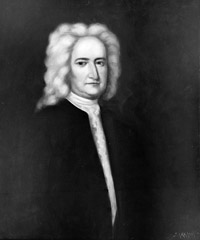
My 11th great grandpa was John Culpepper of Astwood in Feckenham. Not to be confused with his father John Culpepper of Wigsell, or his son John Culpepper the Merchant, or his grandson John Culpepper the Rebel.

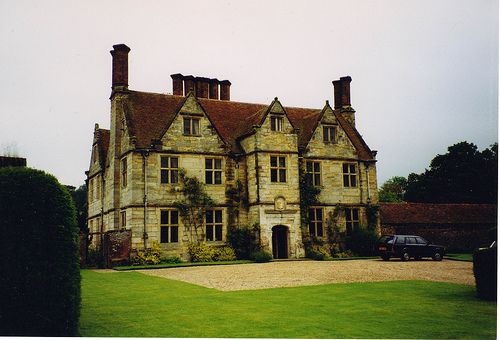
great wigsellJohn was born in 1565 in Salehurst, England in his father’s home, Wigsell Manor (pictured left). He was the second son, eventually totaling three brothers and at least one sister. He was seventeen years of age when he entered Middle Temple (a law school) and began a professional career as a lawyer, called to the bar in 1595, and listed as a Bencher in 1599.

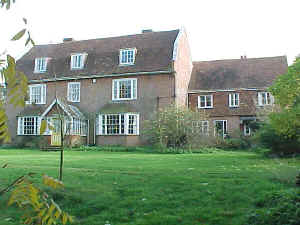
GreenwayCourtHe spent a lot of time at the home of his uncle Francis Culpepper (dad’s brother), whose home was Greenway Court (pictured right). Uncle Francis’s second wife was Joan Pordage. Her brother was Solomon Pordage, who died in 1599, leaving behind widow Ursula Woodcock Pordage. It was at Greenway Court where John first met the widow Ursula – probably before she was widowed as Uncle Francis died in 1591 and his wife Joan Pordage in 1598. John and Ursula didn’t marry until 1600.

John and Ursula set up house at Greenway Court while he ran a profitable law practice.

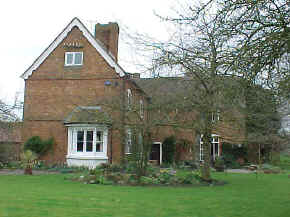
feckenhamcourtfrontWithin a few years, his uncle Martin (dad’s other brother) died in 1605. Martin had two sons, one who had died the year before, and the second who had no children of his own. John was bequeathed Astwood (pictured left) in trust to maintain for Martin’s widow. After the widow remarried and moved elsewhere, John made an arrangement with her to move Ursula and the family to Astwood. His family now totaled four children – Thomas, John (my 10th great), Cicely, and Francis.  Sadly, Ursula died at Astwood and was buried there in June of 1612. He was now a widower with four small children, but apparently his law practice was doing well, as he bought out the aunt’s interest in 1616 and gave up practicing law to become a country gentleman.

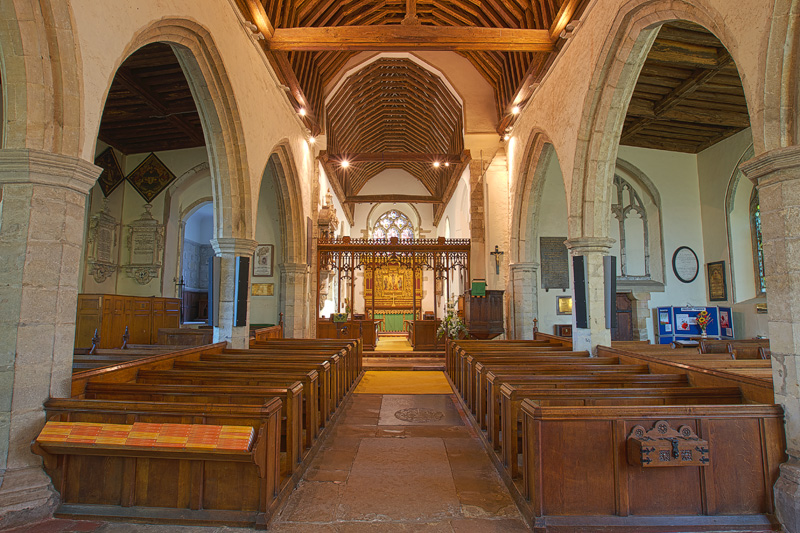
all saints church hollingbourne kent insideThat same year, he married Elinor Norwood. They had no children. She died eight years later in 1624. He then married Ann Goddard in 1625. She outlived him by ten years. Sometime before 1635, nearing the age of seventy, he returned to Greenway Court where he died 18 December 1635.

He is buried in the chancel of Hollingbourne Church (pictured right) among other members of the family – Francis 1591, Elizabeth 1626, Philippa 1630, Thomas 1634, Elizabeth 1635, Thomas 1637, Elizabeth 1638, Phillipa 1638, Thomas 1640, John Third Lord Culpepper 1641, Solomon 1647, Cicely 1651, Thomas 1661, Sir Thomas the Elder 1662, Doris 1662, Cecilia 1685, among other memorials, plaques, and graves.
(photos by my cousin Warren Culpepper 2000.)