A to Z Challenge – U is for U.S. Military

Blogging from A to Z April 2013 Challenge

U is for U.S. Military

My grandfathers who served:

An * denotes he died in service.

Joel Bluett Culpepper – Confederate Army

William Thomas Fisher – Confederate Army

William Lafayette Brown Jr – Confederate Army

Rev. Joseph M Culpepper – Confederate Army *

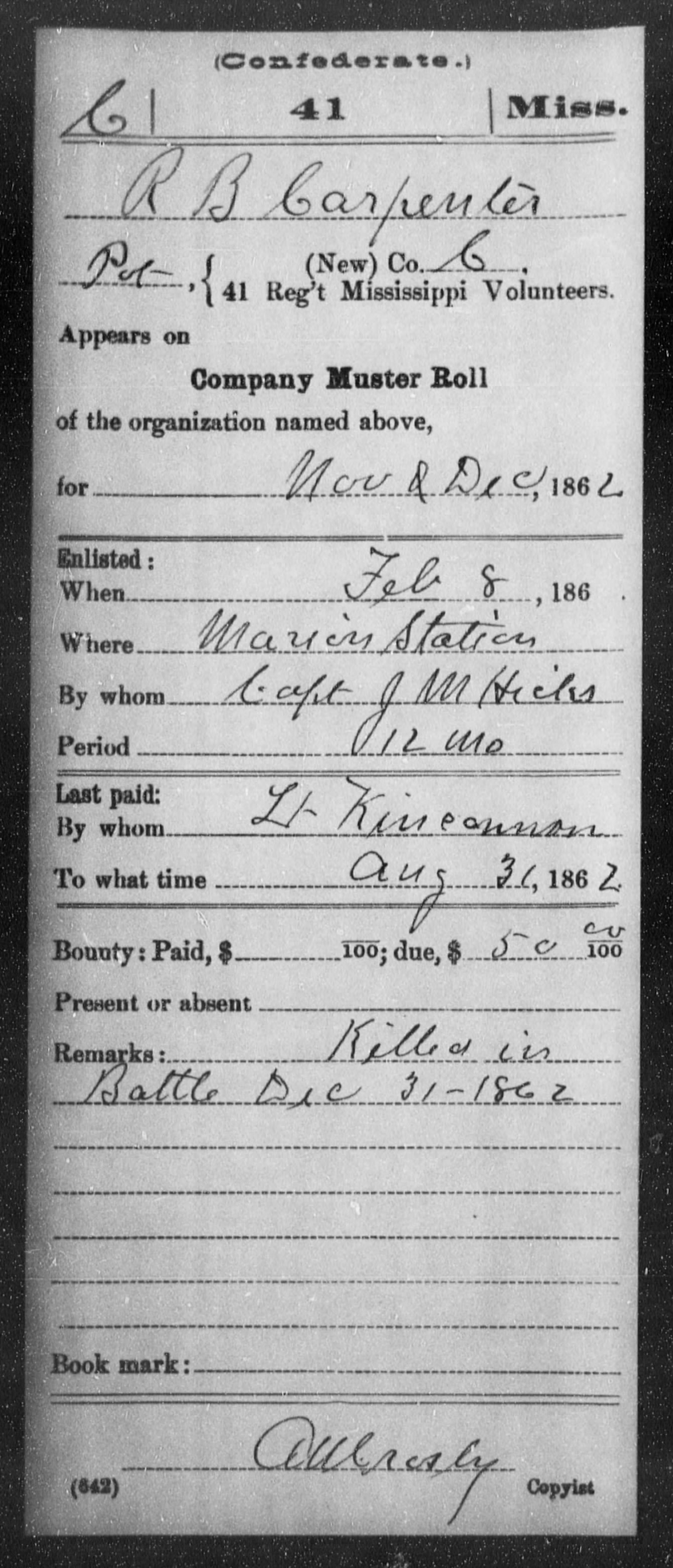
Rice Benjamin Carpenter – Confederate Army *

George Washington Spencer – Confederate Army

James C Howington – Confederate Army

William Henry Blanks III – Confederate Army

Hays Rodgers – War of 1812

William Henry Blanks I – American Revolution

Joseph Culpepper Jr – American Revolution

Thomas Young – American Revolution

John B Rice – American Revolution

James Rodgers Sr – American Revolution

Captain Jacob Prickett – American Revolution

My uncles who served:

George M Graham – Confederate Army

Timothy Rodgers – Confederate Army *

Wilson Rodgers – Confederate Army *

Hays Rodgers Jr – Confederate Army

John W Rodgers – Confederate Army *

Benjamin M Culpepper – Confederate Army

Hilliard Carpenter – Confederate Army *

James Monroe Chatham – Confederate Army *

Rev. James Lafayette Blanks – Confederate Army

Richard Lane Blanks – Confederate Army

John Henry Brown – Confederate Army

Absolom Rodgers – War of 1812

…and so very many more. Sleep well, soldiers. Your job is done.

A to Z Challenge – T is for Tradition

Blogging from A to Z April 2013 Challenge

T is for Tradition

What better way to preserve history and honor those who have come before than to be an active member in societies? I never understood what societies did until I became a member of a few. What they do is preserve and honor tradition. They don’t allow ritual and sacrifice be forgotten. The groups I belong to are service organizations, dedicated to promoting patriotism and history, and they follow strict rules of tradition.

small logoI belong to the United States Daughters of 1812 under my 4th great grandfather Hays Rodgers who fought for the Mississippi Militia. He was assigned to Capt Evan Austill’s company of volunteers in Maj Sam Dale’s Battalion to fight against the hostile Creek Indians.

Here is the U.S.D. of 1812’s purpose copied from their website:

The U.S.D. of 1812, founded in 1892, is a volunteer women’s service organization dedicated to promoting patriotism, preserving and increasing knowledge of the history of the American people by the preservation of documents and relics, marking of historic spots, recording of family histories and traditions, celebration of patriotic anniversaries, teaching and emphasizing the heroic deeds of the civil, military, and naval life of those who molded this Government between the close of the American Revolution and the close of the War of 1812, to urge Congress to compile and publish authentic records of men in civil, military, and naval service from 1784 to 1815 inclusive, and to maintain at National Headquarters in Washington D.C., a museum and library of memorabilia of the 1784-1815 period.

(photo: Hays Rodgers)

Rodgers Hays Sr

insigniasign

I also belong to the Daughters of the American Revolution under my 5th great grandfather Joseph Culpepper who fought for the 3rd South Carolina (Rangers) Regiment.

A little piece of their purpose from their website includes: The DAR, founded in 1890 and headquartered in Washington, D.C., is a non-profit, non-political volunteer women’s service organization dedicated to promoting patriotism, preserving American history, and securing America’s future through better education for children.

colorwebbollIf that’s not enough to do, I also belong to the United Daughters of the Confederacy under my 2nd great grandfather Joel B Culpepper who fought for the 63rd Alabama Infantry Co K .

The UDC exists to (from their website):

  • To collect and preserve the material necessary for a truthful history of the War Between the States and to protect, preserve, and mark the places made historic by Confederate valor
  • To assist descendants of worthy Confederates in securing a proper education
  • To fulfill the sacred duty of benevolence toward the survivor of the War and those dependent upon them
  • To honor the memory of those who served and those who fell in the service of the Confederate States of America
  • To record the part played during the War by Southern women, including their patient endurance of hardship, their patriotic devotion during the struggle, and their untiring efforts during the post-War reconstruction of the South
  • To cherish the ties of friendship among the members of the Organization

(photo: Joel B Culpepper)

culpepper Joel B Culpepper

I am honored and blessed to be a small part of these organizations and to carry on the traditions of the women who served before me.

A to Z Challenge – S is for Slavery

S is for Slavery

That title may have raised a few eyebrows, and I apologize. With my recent genealogy research, I have been thinking a lot lately about slavery. Not as in bad or good, or as in a concept of the past, but as in the actual people involved in the process—the slaves and the owners and their lives and relationships.

My family hails from the south—All Of Them. We’ve been in NC, TN, MS and AL since the 1600s. I think all but one of my greats, 2nd greats, and 3rd greats were born and raised in the south. And just like the majority of southern farmers, nearly all of my family owned slaves until 1863ish. What got me thinking about the topic in depth was recently finding a 1750 will of a grandfather who owned 800 acres and left at least 40 slaves to his descendants. 40? What a major financial investment and responsibility that was.

I also have other family history:

…a 3rd great grandfather who gave his slave 80 acres following the emancipation, and his descendants still live on that land to this day, next door to the grandfather’s descendants.

…a great uncle who sold his farm in 1865 to a black man named Tom Stennis. Later I found that this was a former slave of Adam T. Stennis, who bought my 4th great grandfather’s land in 1869.

…that same 4th great grandfather had $8000 of wealth in land and farming equipment in 1860—and had 13 slaves. Generally, a slave would sell for $1000 or more at an auction, so this was not a cheap or frivolous purchase. He was well-to-do with $8000 of land and livestock, but he had most of his wealth tied up in $13,000+ worth of slaves. Those are 1860 prices. I looked it up on http://www.measuringworth.com/uscompare/ and found the relative value of $13,000 in 1860 is up to $45 MILLION today. Holy Cow!

I am not negating the abuse of slaves at the time nor the emotional attachment people of today have to this issue. This is not a debate on whether slavery was good or bad. As intelligent human beings, we can all agree it was/is bad. I am, however, finding more and more evidence that the white plantation owners took good care of their slaves following the emancipation. So, that’s what got me thinking about it…on a human level.

If you own livestock, you probably don’t love them, but you do recognize your responsibility to feed them and take care of them. If you own something rare and valuable like a sports car, you would take very good care of it. If you are from the south, you have a greater sense of responsibility toward your neighbors and community than anywhere I’ve seen on this planet. Everyone knows the kindness and compassion of southerners is unsurpassed.

Now, if the government takes away your ability to make a living, as it did to plantation owners by taking the slaves away, what are you going to do? Easy, you get another job. But what if that action involves 40 people who work for you and depend on you? These were not employees who you hand a pink slip and send on their way. They are your property. Don’t you have a moral obligation to take care of the people in your charge, whether they were birthed or bought? When the slaves were legally freed, where could they go? What could they do?

The most logical idea I thought of was to give them 40 acres in exchange for them still working on your farm. That would help you maintain your income, while at the same time, helping them become free.

I’m wondering if Alex Haley’s “Roots” dug so deep in our collective conscious, that it created in us a mindset that all slave owners were evil, abusive tyrants. Perhaps they were, but I’m finding a lot of evidence to the contrary. This whole issue is swimming around in my head, so please comment if you have thoughts.

A to Z Challenge – R is for Rice

Blogging from A to Z April 2013 Challenge

R is for Rice

As with other blogs on my site, this is about my ancestors–the Rice family.

My 3rd great grandfather was Rice Benjamin Carpenter. He was born in 1828 and died during the Civil War serving the Confederacy at the battle of Stones River in Murfreesboro, TN on 31 Dec 1862. He left behind a wife and four young children. He is buried at the Confederate Circle at Evergreen Cemetery in Murfreesboro.

Page 5

carpenter rice

His first name came from his mother’s family—the Rice family. His mother was Nancy Rice, born born 1791 in NC. At some point around 1834ish, she and her husband, Benjamin Carpenter, packed up their home and five children and moved to Lauderdale Co, MS. After arriving there, they had five more children. Nancy and Ben both died in Lauderdale Co in 1870 and 1865, respectively.

Nancy’s father was John B Rice (I bet the B was for Benjamin). John was born in 1755 in NC and died there 29 Apr 1836. He married Elizabeth Hopkins, who was also born and died in NC. They had at least eight children in the late 1700s, including a son named Hopkins Rice. Is this getting confusing yet? John served in the American Revolution (pension no 59062). That makes at least 3 grandfathers of mine who served.

One of my genealogy buddies found the following in a Rice Family archive. It reads to be from a slave’s descendant.

My family history dates back to Nash County, North Carolina in 1787. A woman by the name of Chaney was born. Little is known about her background, but it is believed that she was the daughter of an African. I have done extensive research on the slaves of Hopkins Rice. It is believed that Chaney and her sister were given to the Hopkins Family of Nash Carolina. Peter Hopkins was the first Hopkins in his family to move to Edgecombe County, North Carolina. He was born in 1730. He married a woman named Wilmoth Fowler. She was born in 1747 in Wake County, North Carolina. She was the daughter of Joseph F. & Anne Fowler. The couple had known children: William Hopkins, John Hopkins, David Hopkins, Elizabeth Hopkins-Rice, and Susannah Hopkins-Russell. The Hopkins oldest daughter, Elizabeth, married a Revolutionary War Hero named John Rice. He was born in 1755 in Bute County, North Carolina. They moved to Nash County, North Carolina and purchased about 800 acres of land on Lee’s Creek. They couple had about eight children.1. John Rice, 2. William Rice, 3. Elizabeth Rice-Richardson, 4. Nancy Rice-Carpenter, 5. Mary Rice-Marriott, 6. James M. Rice, 7. Benjamin Rice, 8. Hopkins Rice. Chaney was brought to this plantation, but it is unsure exactly when. However most of her children were born on the Rice plantation. There is a strong possibility that she had more than five children, but it is uncertain. In the early 1800’s John Rice deeded Chaney and her children to his son Hopkins Rice and his wife Jane. In the early 1820’s Hopkins and his family migrated to Greene County, Alabama by way of Georgia. They purchased land in 1828, where the estate grew in the Clinton and Pleasant Ridge areas. In the later years, some of the Rice’s were sold to various plantations. One of Chaney’s sons, Anderson, was sold to Eldred Pippen. Also three of her great grandsons were sold. Jesse Rice was sold to Gaston Wilder of Pickens County, Alabama. Richard “Dick” Gilmore was sold to William Gilmore of Mantua. The last son was sold to a Harkness, whose name is not known.”

John’s father was Jared or Jerret Rice. He was born around 1730. He married Lettie Potts and they had at least six children. They lived in NC. My second great grandmother (Rice Benjamin Carpenter’s first child) was Martha Lettie Carpenter Blanks. I always wondered where the name Lettie came from. Now we know.

A to Z Challenge – Q is for Quick Quiz

Blogging from A to Z April 2013 Challenge

A2Z-2013-BADGE-001_%5BMed%5D

Q is for Quick Quiz


Q: If four musicians are a quartet, what are five musicians?

Q: What is an animal with four legs called?

Q: What is a shape with four sides such as a square or a rectangle?

Q: What does this phrase have that makes it a question?

Q: What is one fourth of a gallon?

Q: What is a distant energy form in space that gives off radiation?

Q: Where do you carry your arrows?


Done. How did you do? We know all these answers, but it is often difficult to think of a proper name on the spot when you have to…or maybe I’m just getting old.

If you missed any, here are the answers:

Quintet

Quadruped

Quadrilateral

Question mark

Quart – no, not quarter

Quasar

Quiver

A to Z Challenge – P is for Paternal

Blogging from A to Z April 2013 Challenge

P is for Paternal

I write sooooo much about my mother’s ancestry line. On her side, I have five grandfathers who fought for the Confederacy, two who fought in the War of 1812, two in the Revolution, and Irish and English ancestors dating way, way, way back. I seldom write about my father’s line, so I thought P should stand for Paternal and I should blog about my daddy’s side.

CRANE FAMILY

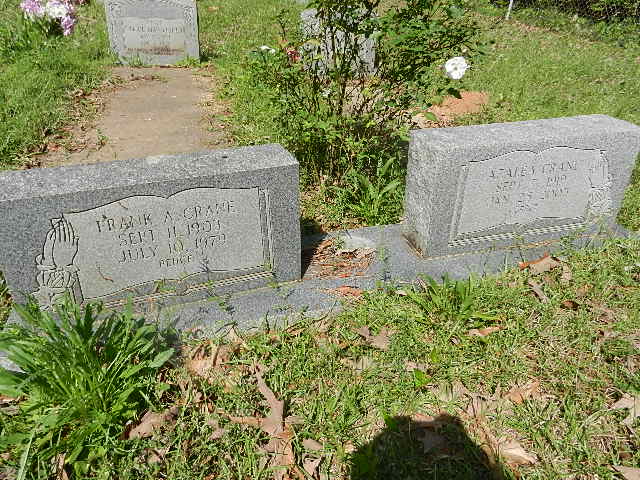
My father was Andrew Frank “Andy” Crane Jr. (1940-1994). He was born in MS and died in TN.

Daddy

Daddy headstone

My grandfather was Andrew Frank Crane Sr. “Frank” (1903-1979). He married Margaret Azalea Pickett (see Pickett Family below).

Grandpa and Miss Crane

My great grandfather was Amos Bolivar Crane (1881-1959). There are still a lot of men named Bo in the Crane family. Amos married Mary Elizabeth “Minnie” White and her family was from Tennessee and North Carolina. I see a lot of Tennessee/NC mixtures in my tree. The state line must have been blurred for a long time.

crane amos bolivar

white mary elizabeth minnie white cranemaggie white, minnie crane, frank crane, Laura Catherine Morrow White, nannie white, sis narcissa

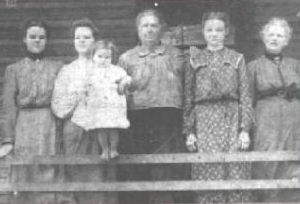
The woman holding the baby is Minnie White Crane, and the baby is my grandpa Andrew Frank Crane Sr. The woman in the middle is my great great grandma Laura Catherine Morrow White.

My 2nd great was Andrew Jackson “Jack” Crane (1856-1905). He married Martha Jane Mercer, whose grandmother was a Windham. I have the Mercers traced back to 1500 England. They came to America about 1650. The Windhams are traced back to 1665 Virginia, but with a name like Windham, I’m sure they came from England.

crane a j and wife obelisk

crane martha jane mercer

My 3rd great was Jeremiah William Crane (1828-1860). He married Sarah Frances Grimes. Her family, the Grimes and the Pettibones, came to America from England in the late 1600s.

My 4th great was Jeremiah Crane (1781-?) born in Georgia. He married Mary Polly Weldon. The Weldon family came to America from England in the mid-1600s.

PICKETT FAMILY

My paternal grandmother was Margaret Azalea Pickett (1919-2005). I have the Pickett line traced back to 1591 England. They came to America around 1600. Some settled in NY and MI, others moved south. I was born in MS and now live in MI. I find it funny that generations later I ended up where my some of my ancestors settled. Maybe I’m not supposed to be in the South.

MS Cemetery 052

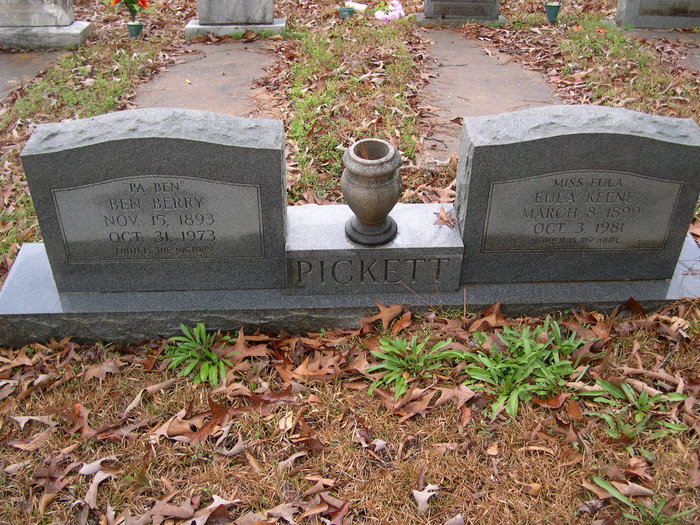
Her father was Benjamin Berry Pickett (1893-1981). There is a book called “Thunder at Meridian” by Hewitt Clarke that relates a story of a 1923 bloody shoot-out between some moonshiners and a tax collector. One of the men went to prison for killing the tax collector. That was Grandpa Ben. You probably didn’t want to mess with him and his brothers. (Note: My grandmother said the story wasn’t true, but she was four at the time, so how much of the truth did she really know?) Ben married Eula Ouida Keene. I haven’t been able to trace the Keene family at all, but her mother’s family was the Browns. I traced them back to 1775 Georgia. Her grandpa, William Lafayette Brown, was a sharp-shooter in the Civil War, guarding the railroad bridges in Chunky, MS. He was captured and escaped. He allowed himself to be captured a second time to help others escape. He/they did. He had a bounty on his head for the rest of the war. The Browns were married into the Hamrick, Clearman, and Dollar families who have all been in America since before 1700. All came from England except the Hamricks, who were from Germany. (photo: Eula and Ben about 1970.) For more about Ben and Eula click here.

Pickett Ben and Eula Pickett

pickett ben and eula headstone

Ben Pickett’s mom was Caledonia Fisher (wife of Joseph Lawson Pickett). I haven’t been able to trace the Fishers back past 1700, because every generation has a Southy Fisher with a kid named Southy and umpteen grandchildren named Southy. North Carolina has more Southy Fisher records than the sky has stars. Too confusing for me to figure out.

pickett, joseph lawson sr, son of rt and lucy

pickett, caledonia d fisher, wf of joe lawson sr

I still have Fisher cousins living on Fisher land in MS, and they have tons of stories about my 3rd great grandpa William Thomas Fisher and his escapades during the Civil War. He married Ann Butler. There is a story that he went down to New Orleans to get her a slave woman to keep the house. While he was there, he saw a young black boy and asked the slave traders what they were going to do with him. They told him they would throw him overboard for the sharks on the way back. He took the boy home and raised him as his own. The boy stayed by his side during the Civil War and fought for the Confederacy. William gave the boy forty acres when he set him free, and the boy’s family still lives on the land to this day. Note: Yeah, William’s dad was named Southy and his son was named William Southy. Ugh. (photo: William Thomas Fisher and Ann Butler on their wedding day.)

MS Cemetery 056William T. and Ann Elizabeth (Butler) Fisher

Just for kicks, here’s my great great great great grandpa Southy Fisher!

fisher southy fisher headstone

Well, that’s it. Not as interesting as mom’s family, but some good stories nonetheless. With all these English ancestors, I feel the need to go have a cup of tea.

A to Z Challenge – O is for Origami Owl

Blogging from A to Z April 2013 Challenge

O is for Origami Owl – I should get double points for that.

This is my new favorite thing. It’s jewelry. Guys! Don’t turn away here. It’s cute, it’s inexpensive, it’s online, she’ll love it.

spring-style

You must purchase a locket. You may also want to purchase a chain, an inside disc for the locket, and a charm to hang off the chain. But here’s the best part. The charms that go inside the locket are generally $5. You can’t beat that price. It’s so affordable, you can change charms and styles on a whim.

I wanted one for myself but couldn’t decide on charms, so I bought one for my daughter instead. I know what she likes. I got a T for her boyfriend’s name, a dog for her puppy, an apple because she’s a teacher, a D and Z for her Delta Zeta sorority, and a few other cute things. I also got a heart-shaped charm to hang off the chain. That’s for her momma’s love. Awwww.

Sooooo cute!!

Click here to check out their site.

A to Z Challenge – N is for Narration

Blogging from A to Z April 2013 Challenge

N is for Narration

Do you have a book out? Have you thought about turning it into an audio book?

If you hire someone to narrate it, you will pay between $200 and $400 per finished hour. Ouch. Or you can cut a deal with a narrator at ACX (Audiobook Creation Exchange) for 50% of your profits for 10 years. Double Ouch. However, most will not cut a deal with you unless you have at least three books out and they are all selling well. If you bypass the professionals and ask your brother-in-law who knows a guy in a band who has a musician friend who owns a studio AND sweet talk the cute neighbor with the really great voice do it, it could be an ouch to your pocketbook and a big Oh No to your listeners.

So, that leaves you with very limited options, the most obvious being, do it yourself!

The_Podcave_home_studio_update_(179160280)

You CAN do it yourself with a very limited budget and a great deal of patience. You can buy recording software, a USB converter box, headphones, a microphone, a mic stand, mic cord, and windscreen….and action! Before you hit the record button, there are a few things to keep in mind. I have been a recording profession my whole life, so I know a thing or two about studio production. Besides the obvious task of checking with the site you will upload it to for their specifications, do/don’t do the following:

1. Don’t wear jewelry. Jingle-jangles wreck your story.

2. Don’t wear clothing that rubs. Leather, corduroy, nylon are all no-nos. Tshirts and sweats are good studio clothes.

3. Don’t eat or drink anything that makes your mouth sticky, but do eat something light before you record, so your stomach doesn’t growl in the middle of the best scene.

4. Get a nice level (volume) on your screen, somewhere close to the loudest without going into the red. Red is bad.

5. Sit as close to the microphone as possible and read the script from something silent – try your ipad.

6. Get rid of all animals, ticking clocks (including watches, covered in #1), cell phones, and don’t record while your furnace or air conditioner is running. Florescent light also make a humming noise. Turn them off.

7. Sit up straight so you are breathing well. Posture is everything. In life, too.

8. Read the story as if you’re reading it to a child, with lots of inflection. Monotone is monotonous.

9. THE. MOST. IMPORTANT. ITEM. Read  s  l  o  w  l  y. Even when the climax is coming, read higher and louder, but DO NOT speed up…E V E R.

10. Record each chapter beginning with “Chapter 1, The Beginning.” Add a two second pause then start the chapter. Save the chapters in separate files named ‘chapter1’ ‘chapter2’ etc.

11. Include three additional files: A) The Opening: Title, written by, narrated by. B) The Closing: This has been title, written by, narrated by, copyright year and publisher, production copyright year and publisher. C) The Sample: A sample file consisting of 1-5 minutes of the story. You can choose any part you want, but it should not contain The Opening, Closing, or Chapter Name, just the story. This will be used by Audible, Amazon, or wherever you upload it to to give potential customers a sample of your story and your voice.

12. Pack your patience. You will not be able to read a whole book in one day. Don’t even try. Even professionals will only do a chapter or two per day. Your voice can’t take it, neither can your brain. It’s a lot of work. Take frequent breaks – every 10-15 minutes. Rest your vocal chords for a few minutes, sip water, stand up and stretch. Vocal chords are a muscle. Work them, then let them rest.

13. Be brave and give it a try. No one knows your story like you do. You may not like the sound of your own voice, but everyone else loves it. What are you waiting for? Maybe you will be the BEST narrator ever, and I will see you next year as one of the ‘talents’ on ACX.

Good Luck!!

A to Z Challenge – M is for Morris

Blogging from A to Z April 2013 Challenge

M is for Morris

My post about James C Howington caused a bit of a stir when I mentioned his great grandfather Robert Morris signed the Declaration of Independence. Therefore, here is an entire post devoted to Robert Morris.

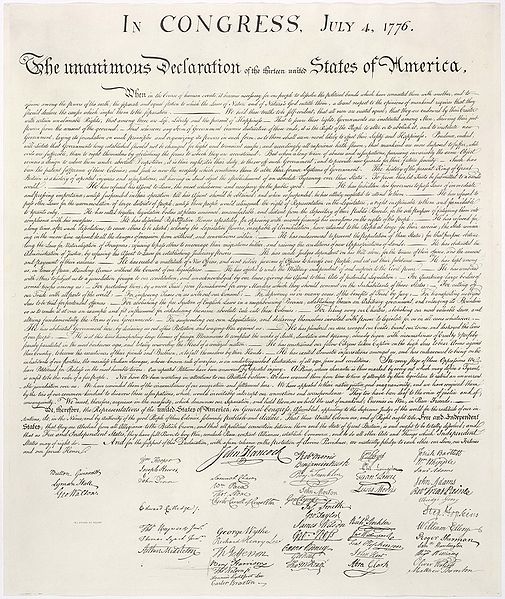
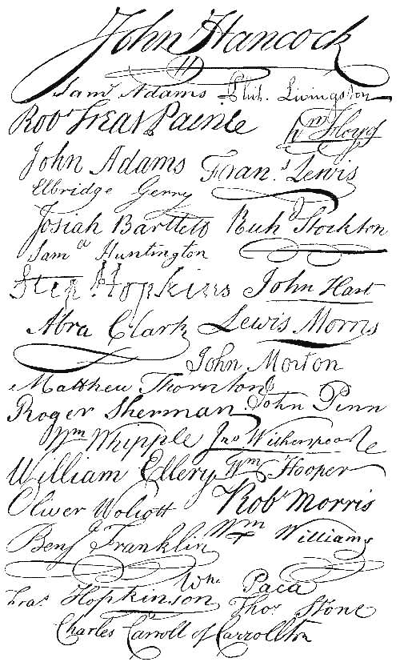
My sixth great grandfather was Robert Morris Jr., signer of the Declaration of Independence, the Articles of the Confederation, and the U. S. Constitution. Also, wearer of a stylish tricorn hat!

2550222618_38f5d3b0e8

He was born in January 1734 in Liverpool, England to Robert Sr. and Elizabeth Murphet. He had 4 brothers and 3 sisters. His father was a tobacco merchant, who traded extensively with America and moved to America when Robert was a small boy. Eventually his father sent for him, and he arrived in America in 1744. While he studied in Philadelphia, his father resided in Maryland and died in an accident when wadding from a ship gun being fired in his honor, struck and killed him.  I am not sure what happened to his mother. There are records of an Elizabeth Morris dying in Liverpool in 1778, but biographies of Robert say upon the death of his father, he was left an orphan at the age of 15. Those reports say his mother died when he was two, and he was raised by his maternal grandmother until he moved to America.

Following his father’s death, he served as an apprentice to a merchant in Philadelphia and upon the merchant’s death, he entered a partnership with the merchant’s son. It was called “Willing, Morris & Co.” and would last until 1793. One can understand he was trying to make a living from the goods he was shipping so was NOT happy with the tariffs and taxes Great Britain placed on those goods. They vastly cut into his profits. He signed a non-importation agreement with other merchants of Philadelphia that they would no longer trade goods with Great Britain. This must have been a considerable financial sacrifice.

By 1775, the colonist had finally had enough and wanted a separation from the British government. Later that same year, Robert was elected to the Continental Congress that met in Philadelphia (not in Washington D.C.). War was brewing. The Declaration of Independence was approved on July 4, 1776, but the actual signing didn’t take place until August 2. declaration

signers

During the war, he was instrumental in securing funds to supply the soldiers, including loaning 100,000 pounds of his own money and financing 80% of all bullets fired in the war.

Following the war, he was instrumental in creating the national bank. He was then appointed Senator for Pennsylvania, and in 1789, President George Washington appointed him Secretary of the Treasury, but he declined the office.

Unwise land purchases led to his bankruptcy in 1798, and he spent a few years in debtor’s prison. Following his release in 1801, he led a quiet life and died in relative poverty at the age of 73 in 1806.

howington james c great grandparents robert and mary morrisThere is not much detailed information about his private life, but he married Mary White in 1769, and they had 5 sons and 2 daughters. She probably had no idea that her husband would commit treason against the Crown and there would be a storm of war ahead of them, and certainly had no idea he would spend three years in prison, but she stood beside him through the good and bad until his death.

He is buried in the family vault of Bishop William White, his brother-in-law, at Christ Church churchyard in Philadelphia.

img_2091

I am a member of many patriotic organizations including the United Daughters of the Confederacy and the Daughters of the American Revolution. There is a group called the Descendants of the Signers of the Declaration of Independence. I guess I should check that out.

A to Z Challenge – L is for Lori…duh

Blogging from A to Z April 2013 Challenge

L is for Lori

Well, of course it is.

It’s also for Late. I am late posting this because I’ve been on the road all weekend. If you don’t know me personally, I am an indie author by day, but by night, I’m a dueling piano player. I’ve slept about 6 hours in the last two days and the couch is calling my name, so until next time, here’s me at my real job. This was obviously taped on a Saturday following four straight nights of dueling piano insanity. If you don’t know, singers are only allotted so many high notes in any given week. 😛

Thanks to my film-maker friend, Phil Koch, for the video.