Saturday Snippet and Sale

51w5TKRgkCL._UY250_This week’s snippet is from An Orphan’s Heart. It’s the story of a girl who was orphaned during the Civil War and her quest to find the love she lost as a child. Martha Ellen Rodgers, simply Ellen in the book, grew up in a large, loving family in Mississippi. Her parents died of typhoid within days of each other when Ellen was nine. She spent the rest of her life searching for love and a place to belong. Her travels took her to Alabama, back to Mississippi, and eventually to Texas where she found the love of her life – only to have everything ripped from her in a shattering turn of events.

Note: You’re going to need a kleenex for this one.

An Orphan’s Heart is being offered for only $0.99 this weekend (March 18-22) on Kindle at Amazon.

Enjoy the video trailer and a snippet below.

**************************

**************************

Ellen is staying at her aunt’s house in Alabama and helping with the children. She met a handsome boy named Milton who has unexpectedly dropped by while no one was at home.

We make ourselves comfortable at the table, and as we sip our coffee, we chat about his family and farm, but his deep brown eyes make it hard for me to concentrate on anything he’s saying. We chat about his siblings and his hopes for the future. He even mentions that he might like to go to a big city someday, which brings up his desire to ride a train. I would tell him of my dreams of riding a train also, but I can’t seem to get a word in edgewise. Throughout the one-sided conversation, he’s very friendly and open, and I think I may like him a lot more than my first impression, especially his penetrating gaze. Nothing else in the world exists while I’m under that gaze.

Hours later, in the middle of a sentence, he suddenly stops and pulls out his pocket watch. “Oh, it’s getting late.” He rises from the table. “I need to get back to the farm, and you probably need to pick the children up from school.”

Reality hits me like a lightning bolt. I hadn’t thought about the time since we sat down. “Yes!” I jump up from the table. “What time is it?”

“It’s almost three.”

“I do have to go get the children right now. I only have a few minutes to get there. Please excuse me, Milton. It’s been nice spending the afternoon with you, but I really must hurry.” In one move, I grab my bonnet and head toward the door, hoping he’ll hurry behind me, but he seems to be taking his time. I stand with my back against the open door, ready to close it the moment he exits.

As he nears the door, I impatiently wait for him to walk through, but he stops an inch from my face. I think he may kiss me and I feel panic rise in my chest and can’t breathe. I close my eyes for a moment, but then think maybe I shouldn’t because it’ll look like I want him to kiss me, so I quickly open them. His full lips, that cocky grin, and those dimples are enough to set a girl’s head spinning. I’m late to pick up the children, but for that split second with his mouth an inch from mine, I really would like him to kiss me. But then I get this uncomfortable feeling that spending this afternoon with him has been highly inappropriate, so I sidestep away from him and move outside onto the porch.

“Thank you for coming by, Milton. It was very nice seeing you, but I really have to run.”

He steps out onto the porch, with his head cocked to one side, looking at me through squinted eyes. The afternoon sun in his face shows the slightest beginnings of lines around his eyes, and I think as he ages, he’ll become more and more handsome. He shrugs and his smile widens. His smile is filled with a knowledge and confidence that’s alluring, but it also unnerves me in a way I can’t explain. I wish I was more attractive, more assured of myself, more experienced with boys.

I slide behind him, pull the door closed, then quickly move around him again to step off the porch. He watches me with the look of a lion stalking his prey as I climb onto the wagon.

“The visit was my pleasure, Miss Ellen, my pleasure,” he says as he strolls over and places his hands on the worn wood of the wagon.

“I really do have to go now. Please come by again anytime,” I mumble. Did I really just say that? Did I just invite him over again?

“Oh, I’ll be back. You can count on that.” He winks and his eyes twinkle.

I snap the reins and coax the horse away from the house. I take off so fast, I almost rip Milton’s hands off, but I refuse to look back and check. I know he’s standing there watching me. I will not look back. I will not. No.

As I reach the bend in the road, I glance back. Sure enough, he is still standing in the yard with his arms folded across his chest, watching me and smiling. And now he knows I looked back. Oh, what a mess.

*************************

An Orphan’s Heart is only $0.99 on Kindle March 18-22 at Amazon.

Lori Crane is a bestselling and award-winning author of historical fiction and the occasional thriller. Her books have climbed to the Kindle Top 100 lists many times, including “Elly Hays” which debuted at #1 in Native American stories. She has also enjoyed a place among her peers in the Top 100 historical fiction authors on Amazon, climbing to #23. She resides in greater Nashville and is a professional musician by night – an indie author by day. An Orphan’s Heart was a finalist in the 2014 Eric Hoffer Awards!

The backstory behind Okatibbee Creek

I wrote Okatibbee Creek in 2012. It has become an award-winning book and a story many people seem to treasure. I’m often asked where the story came from…so here ya go.

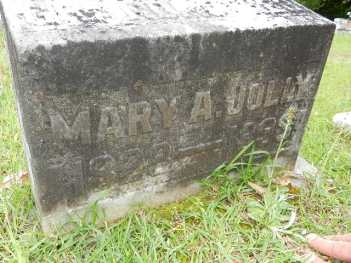
Rodgers, Mary Ann Rodgers Carpenter Jolly

She was just a name in my family tree. Mary Ann Rodgers Carpenter Jolly. My third great grandmother. 1828-1898. I visited her grave at Bethel Cemetery in Mississippi in 2012, and my husband asked, “Now, who is this again?” I sat with him at the foot of her grave and told him her story.

I first discovered she lost her husband, Rice Carpenter, in the Civil War in 1862. How sad to lose the one you love, but hey, it’s war, people die. After he died, she remarried in 1864.

I looked at the 1870 census and found she married William Jolly and was living with his children, her children, and three children they had together. It was a house-full! But at least their three children were proof they must have liked each other, right? That’s good. I was interested in where William came from, so I traced him back and looked at his 1860 census. In 1860, he was living with his wife Harriet, their four children, and a woman named Nancy Carpenter who was 69 years of age.

Nancy Carpenter? The only Nancy Carpenter I know is Rice’s mother. Why was Mary Ann’s mother-in-law living with her future husband in 1860?? Were they neighbors? Was Nancy the cleaning lady? I clicked on Nancy Carpenter and saw her relationship to the “head of house” was listed as “mother-in-law.” She was William’s mother-in-law? What?? She was Harriet’s mother?

So, I went back and looked at Rice’s family, and sure enough, his sister Harriet was married to William. Rice died 31 Dec 1862 and Harriet died a month later of typhoid on 30 Jan 1863. Their spouses, Mary Ann and William, brother-in-law/sister-in-law, married in 1864. Well of course they did. They had known each other for many years, hadn’t they?

The more I looked at the Rodgers and Carpenter families, the more I was amazed by the sheer number of family members they lost to war and typhoid. At the time of my research, I remember counting SEVENTEEN, but I’m sure there were many more I missed. I couldn’t wrap my head around that kind of heartache and quickly became impressed with Mary Ann’s strength. How would you react if you lost two or three family members this year? You would probably need Prozac. How would you respond if you lost a dozen? I wouldn’t even be able to get out of bed. Seventeen in one year? I can’t even fathom that.

okatibbee creek cover front JPEGWe all come from these strong women. We are the living proof of their strength. If the boat sank, the story would be over. But it didn’t, and we know that because we are here. We are the survivors. I dug deep down in my heart and soul and decided to tell her story, a story she would be proud of. I wanted her to know that she didn’t endure all of that heartache in vain. I am here. I am her legacy. Her story has been told to make us see the strength in our own hearts. We are the products of strength, fortitude, and integrity, as well as tears, heartache, and pain. We are the children our grandmothers fought so hard for, and I want Mary Ann to be as proud of me as I am of her.

Okatibbee Creek is available on Kindle at Amazon for only $0.99 March 4-8. You may also want to pick up a box of Kleenex.

Samuel Dawson Grimes – oldest citizen of the county at 110?

My 4th great grandfather was Samuel Dawson Grimes. The line from me to him is my father Andy Crane, my grandfather Frank Crane, my great Amos Crane, my 2nd great Jack Crane, and my 3rd greats Jeremiah Crane and Sarah Frances Grimes.

I haven’t researched my Crane side very much, and certainly haven’t ventured into the wives on that side of the family, but today I found something pretty interesting.

Grandpa Grimes was born around 1757 in North Carolina. There are a few records indicating he participated in the American Revolution, but I haven’t been able to verify that (yet). He married Darcass Wall in 1788 and the two had seven children. At some point, the family moved to Brundidge, Pike County, Alabama, where he died in 1857.

brundidge_al

Since I don’t know his exact birth date, I find the following interesting. It’s from Find A Grave.

A newspaper article from the Troy Independent American, published on 22 April 1857, as transcribed by Susie K. Senn in her book “Newspaper Abstracts from Pike County, Alabama 1855-1861”:

The Oldest Man in Pike – Samuel D. Grimes, aged 110 years, and the oldest citizen of this county, died a few days since at his residence. Mr. Grimes enjoyed almost uninterrupted health up to a year or so before his death. For a great part of his life he was a member of the Baptist Church, and died as he lived, an honest, upright citizen and Christian. 

110??? Wow! That’s pretty considerable for the times.

I also found his probate records – all thirty hard-to-read handwritten pages. He seemed to be in debt to various local gentlemen, including the local merchant for the purchase of a pair of shoes, a handkerchief, five yards of cotton, and eight yards of calico for $3.45, which was used to “spruce up” his negro woman. His indebtedness was just over $1100.00, and his belongings were auctioned off for $98.00, most being bought by his grown children including his rifle for $1.30. There must have also been a sizable amount of land, as the debtors were paid and there was still plenty to leave to his children and his twenty grandchildren.

The 1840 census shows two adults in his household who couldn’t read or write. It also shows one slave, whom I assume is the “negro woman” mentioned above.

The 1850 census mentions that he is currently 93 years old, living with his daughter, so I think when he died in 1857 he was only 100, but the reporter from the Troy Independent American wasn’t very good at “cipherin’.”

union springsGrandpa Grimes is laid to rest in Union Spring Primitive Baptist Church Cemetery in Brundidge, Pike County, Alabama, where the 2010 census says the population is just over 2000 people, 33% living below the poverty line. I can imagine how small and poor it was in the 1800s when Grandpa Grimes lived there.
Saturday Snippet – Catherine Culpepper

The following is a rough draft of my current work-in-progress, The Culpepper-Fairfax Scandal. Catherine Culpepper is nineteen years old, and her rich father, Lord Thomas Culpepper the baron of Thoresway, has just died. For two decades, he had been living in London with his mistress and had left everything to the mistress in his will, but Catherine’s mother had the will suppressed. This scene takes place at the probate hearing at Westminster.  Thanks to her mother, Margaretta, and her uncle Alex, Catherine inherited nearly everything.

We’ll make due with a painting of Catherine until I can get a proper book cover made. 🙂

LadyCatherine

************************************

When the proceedings ended in Catherine’s favor, Margaretta and Alex attempted to whisk Catherine from the courtroom, but they were met at the door by a crowd of enthusiastic well-wishers and more than a few gentlemen of questionable intentions. Catherine had just inherited more wealth than she could ever dream of. Not only was she now the sole owner of Leeds Castle, she also held manors and lands in Sussex and Essex, and was one-sixth owner of the proprietorship of the Virginia Colony. The crowd’s din grew as they attempted to get closer to the wealthy heiress. Pushing and shoving toward her, people reached out to touch her, to take her hand, to gain her attention and her favor. When the family emerged from Westminster, Alex hailed their coach, but when he turned back for Margaretta and Catherine, they had been separated from him by a sea of bodies. Margaretta reached for her daughter’s hand to pull her through the crowd, but their fingers were inches away from each other’s as Catherine was pushed back by the crowd, away from the protection of her mother and their waiting carriage.

“Catherine!” Margaretta called.

Catherine heard her mother’s call but couldn’t see her over the heads of the people surrounding her. She attempted to turn, but a growing throng of people blocked her way. Someone was standing on the hem of her gown, stifling her movement, lest she rip her skirts. Her mother called for her a second time. Her heart began pounding as she heard the panic in her mother’s voice and suddenly realized she might be in a dangerous situation. The crowd was growing riotous, pulling at Catherine’s clothing and her hair. Her honey-colored curls fell to her shoulders as her hairpin was snatched from her head, taking with it a handful of hair. She cried out for her mother, for her uncle, for anyone to save her from the melee. It was then that she felt a strong arm around her waist and another under the back of her legs.

“I’ve got you,” he whispered in her ear.

She was scooped into the arms of a savior. She buried her face into his shoulder as he pushed his way through the crowd toward the waiting carriage. When she was gently placed onto the seat in the carriage, she smoothed her hair from her face and lifted her eyes to look at her uncle. But her savior wasn’t Uncle Alex.

Before her stood a striking man whose brown eyes bore into her own, his dark curls falling over his brow, his full lips begging to be touched. Their eyes locked as if time stood still. He then nodded to her and quickly closed the carriage door, disappearing into the crowd.

Uncle Alex yelled for the driver to make haste, and the carriage sped away from the scene, the wheels bouncing on the rough cobblestone street.


Happy 223rd Birthday!

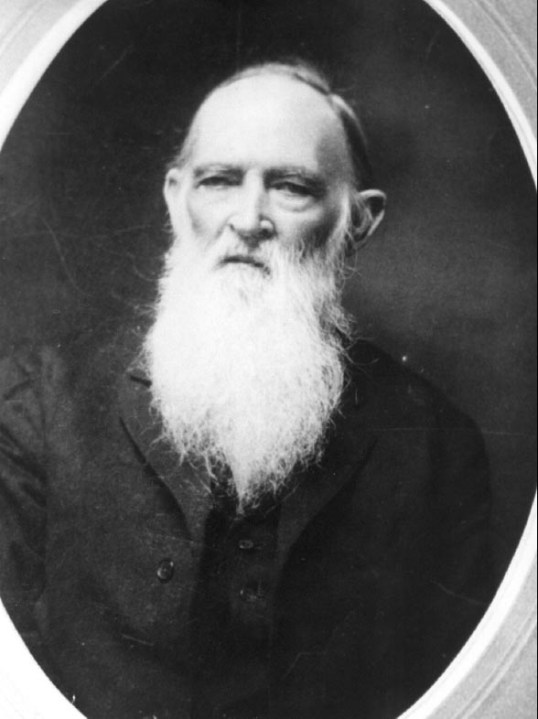
Rodgers Hays Sr

Hays Rodgers Sr was my 4th great grandfather. He was born in Greene Co, Tennessee in February of 1793 to James Rodgers and Elizabeth “Elly” Hays. (Elly was the heroine of my book “Elly Hays.”) Hays was Elly’s eldest son and he had at least ten siblings. Just before the War of 1812 began, the family moved from Tennessee to the Mississippi Territory, today known as Clarke Co, Alabama. Alabama didn’t become as state until 1819.

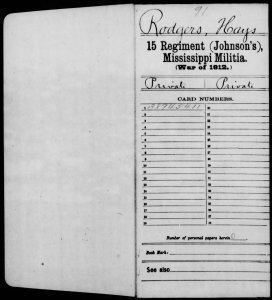
Page 11814 – When Hays was 19, he and his brother, Absolom, signed up for the Mississippi Militia and were assigned to Captain Evan Austill’s company of volunteers in Major Sam Dale’s Battalion to fight against the hostile Creek Indians. Hays remained in the Militia until October 1818, but was only called out once for a two-month tour. Today, I am a member of the United States Daughters of 1812 under his patriotism.

On December 11, 1816, he married Marey Ann Scott, who was from Georgia.

Winter of 1818, following the end of his military service, Hays, Marey, and first-born Lewis, moved to Copiah Co, MS (what later became Simpson, MS). He started buying land and farming. Over the next two decades, the couple had a total of 14 children. Some died young, but the final tally of grandchildren was 71!

In 1834, the US Government began selling off land it had obtained from the Choctaw Indians in the 1830 signing of Dancing Rabbit Creek. Hays went to Pine Springs in Lauderdale County before the land was surveyed and built a small cabin overlooking Rogers Creek bottom so he could claim the land the moment it went up for sale. He was a squatter for all purposes.

September 26, 1836 – A deed was recorded for 80 acres in Pine Springs which he bought from the government.

October 1836 – He bought 160 acres next to his 80 acres from John Calhoun. Mr. Calhoun moved to the Martin Community to open a leather tannery.

1839 – He bought 80 acres from Alex McMullen and 80 acres from Jeremiah Howell. He also began buying slaves and producing cotton.

1856 – He was granted public land adjoining his plantation from the US gov’t in payment for his military service.

MS Cemetery 0761857 – He built the “Ole Stennis House” at the age of 61. I took this photo in 2012 when I visited the house.

In 1860, the U.S. Census states Hays owned 13 slaves, a 640 acre (square mile) plantation, 2 horses, 3 mules, 10 cows, 4 oxen, 16 sheep, 60 swine, and $600 in farming instruments, for a total worth of $8400. A person’s total worth did not include the price of the slaves they owned, and most of his wealth was tied up in slaves that were worth more than $1000 each – that’s probably a million bucks in today’s money.

dec 2012 3881862 – When the Civil War began, Hays sent four of his sons to fight. Three never returned. Also, during the winter of that year, a typhoid epidemic hit his family, killing the only son who didn’t go off to war. Fortunately, Hays was not around to witness the deaths of his sons as he was the first in the family to died of typhoid that winter in December of 1862. He was 66 years old. His wife died shortly after him in March of 1863, also of typhoid.
Upon his death in December 1862, he owned 690 acres of land and stock in the Mobile and Ohio Railroad, which sat unattended until the end of the war, and then for more time as they awaited the boys return at the close of the war in 1865. The boys didn’t return. Finally, the property went to probate in 1869 and was sold at public auction on the steps of the Meridian Courthouse to Major Adam T Stennis, hence the name “Ole Stennis House.” The home remained in the Stennis family for 100 years until 1970 when it was bought by the Hover family.

The story of the time of war and Hays’ death is told through his daughter, Mary Ann’s, eyes in my book “Okatibbee Creek.”

Interesting note: The only son to return home from the war was Hays Jr, albeit with an injured, useless arm and a wilted spirit. Since he no longer had a large family in Mississippi, Hays Jr. sold his farm and moved to Alabama to be near his wife’s family. He sold his farm to a man named Tom Stennis. Tom Stennis was a former slave to Major Adam T Stennis.

This story is brought to you courtesy of “On This Day: A Perpetual Calendar for Family Genealogy.”

Nathaniel Bacon from the Culpepper Saga

book 4 nathaniel baconIn lieu of a Saturday Snippet, I’d like to introduce you to the ever handsome and dashing Nathaniel Bacon (photo).

THE MAN

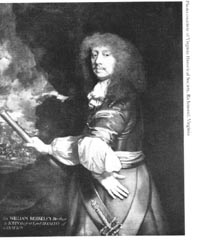
Nathaniel was born in 1647 in England to an aristocratic family. In the early 1670s, he was charged with some phony land dealings and fled to Virginia. Fortunately, he had a few distant cousins already living there. One was the hero of the Culpepper Saga, John Culpepper. The other was Sir William Berkeley, the governor of Virginia, who was married to John’s niece. One big happy family. Berkeley assisted Bacon in obtaining land grants, and being family and all, Berkeley gave Bacon a seat on the Virginia Council in 1675. And all is well.

THE TIMES

In the 1670s, the colonists of Virginia fought continuously with the local Indians. The Indians were barbaric and destroyed colonists’ homes and crops and killed their families. The colonists needed some sort of militia to keep their families and property safe, but there were only 6,000 free men in the colony. These were mostly aristocratic men with a combined total of 2,000 indentured servants and 6,000 slaves. Do you really think they were the kind to go do the dirty work of fighting off the Indians? And they certainly didn’t want to arm disgruntled servants and slaves. In typical politician fashion, Berkeley’s only idea was to raise more taxes in hopes that something would work. One of the taxes was the Fort Tax, which was supposed to be used to build forts and to man them to keep a look-out for Indians. The “forts” ended up being nothing more than mud huts and of course were never manned. Berkeley’s colonists were not happy. He had a mess on his hands.

Along comes Bacon who would be happy to take care of the Indian problem. He doesn’t speak with the governor about his plans, but after serving copious amounts of brandy at his estate, he was unanimously elected the leader of the new militia. This illegal militia was not approved by Governor Berkeley and could certainly be construed as usurping the governor’s prerogative. Not something one should do in the times.

THE CRAZY GOVERNOR

SirWilliamBerkeley2Berkeley (photo) was pushing seventy years and his actions seem a bit nuts.

First, when he heard about Bacon’s militia, he named Bacon a rebel and took away his seat on the council.

Then he forgave him and gave him his seat back. He told Bacon if he stayed out of trouble for a fortnight, he would grant him the commission to raise a legal militia.

After Bacon went home, Berkeley named Bacon a traitor and sent his men to arrest him. Bacon fled and the two played cat-and-mouse for a few months. Berkeley was being threatened by the militia, bombarded by the colonists, and fighting with the Indians. Afraid for his life, he fled also.

With Berkeley gone, Bacon came back to Jamestown and tried to take back his seat on the council, but the council refused. Berkeley heard of Bacon’s whereabouts and sent his men to arrest Bacon. Bacon spread propaganda about his location – one day he was here with four-hundred men, the next he was there with five-hundred.

Following the rebels burning down the entire city of Jamestown, Berkeley came out of hiding to view the damage. Bacon followed and surrounded the state house with Berkeley in it. Berkeley came out and bared his chest, demanding that Bacon shoot him right now. Bacon refused and the two went inside to discuss terms to an agreement. Berkeley, of course, gave Bacon everything he wanted including command of the Virginia militia.

After Bacon left to begin forming his militia, Berkeley denied ever giving him the commission and again demanded his arrest. He then went back into hiding until this Bacon mess was over. While Berkeley was in hiding, he received word that Bacon had died October 1676 of dysentery and the rebellion was over.

Many think Bacon’s actions were simply to put an end to local Indian problems, but after studying the incident, I’m leaning toward the idea that Bacon’s ego was larger than that. I think he wanted to be the governor of Virginia. He wanted to run the aging Berkeley out of office and take the glory (and the tax money) for himself.

Following the rebellion, Berkeley gathered up the leaders of the militia and hung twenty-three of them. He was summoned to England by the king to answer for his actions. He sailed the following spring, but he became ill on the voyage and died shortly after his arrival in July 1677 – without ever seeing the king.

*************************

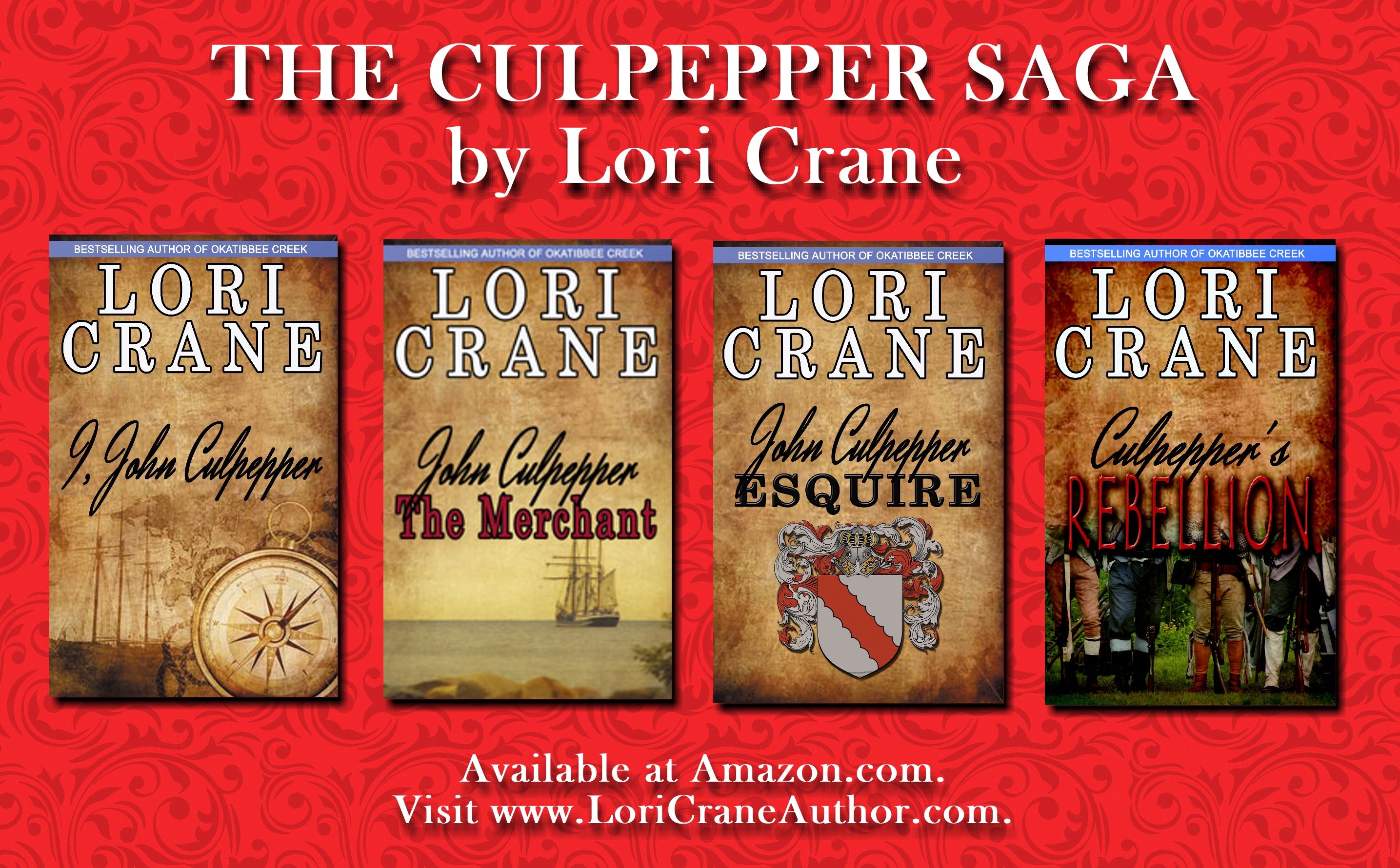
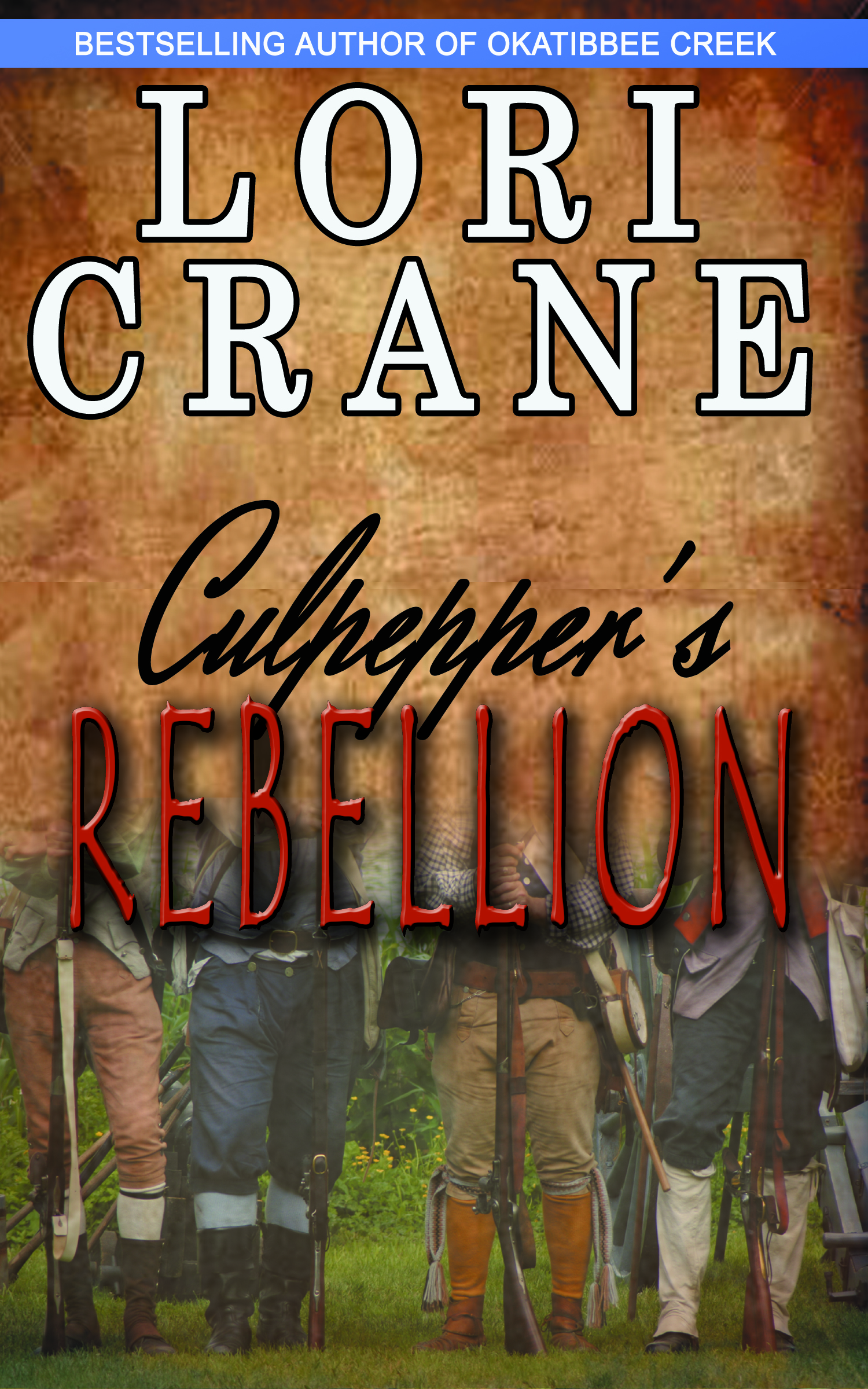
Culpepper4Bacon’s Rebellion is a huge part of the fourth book in the Culpepper Saga, “Culpepper’s Rebellion.” It will be released October 31, 2015 and will be available in paperback and on Kindle at Amazon.

culpepper saga-001

52 Ancestors #40 – On This Day – James Otis Burke

I’ve been participating in the “52 Ancestor” challenge all year, following along with the weekly themes and having a great time. BUT…I work out of the country for months at a time and generally write and schedule the blogs in advance. APPARENTLY, someone has dropped the ball in getting the October themes posted. As I type this in the real word today is Sept 24 and I leave for the month of October on Sep 26. I have today and tomorrow to write and schedule October’s ancestry blogs. SO, I’m forced to blog without themes.

I also write a blog called “On This Day,” which takes place on the day of the birth/death/anniversary/etc. of an ancestor, BUT I’ve not posted many “On This Day” blogs this year because I’ve been doing “52 Ancestors.”

Guess we’ll have to combine the two for the month of October.

James Otis Burke and son Jerry BurkeTHEREFORE, I present to you “52 Ancestors” “On This Day in 2003”

James Otis Burke

James Otis Burke (photo with infant son), whom we loving called Uncle Otis died on this day in 2003. He was my grandmother’s younger brother, my great uncle, born 14 Feb 1922 to John Patrick Burke and Mary Elizabeth Howington. He was the middle child of seven children, one who died as an infant. He was born and raised in Little Rock, Newton County, MS. There’s not much in Newton County but farmland, but the city of Meridian isn’t far away.

In 1941 at the age of 19, he served in the United States Army during WWII.

When he returned from the war, he married Luna Marie Arledge and they had three children. One boy and two girls. I remember my mother speaking of her cousins so lovingly. They were products of the 50s generation. I’m sure they spent many nights at the drive-in in town, and I picture them hanging out together just like the “Happy Days” TV show.

Uncle Otis buried his wife in 1990. She died at the age of 66. He never remarried.

PhotoELF Edits: 2009:11:10 --- JPG Compressed 96 % YUV444 EXIF --- gamma; despeckle; resize

He died on October 1, 2003 at the age of 81 and is buried with his wife at Pleasant Grove Baptist Church Cemetery in Newton County.

PhotoELF Edits:2009:11:10 --- JPG Compressed 95 % YUV444 EXIF --- resize


52 Ancestors #39 Unusual Names

52ancestors-2015

This challenge is set forth by No Story Too Small, and this week’s theme is “Unusual.”

Now that I’ve been singing Tom Jones’s “It’s Not Unusual” for the last week, I may have come up with an idea for this theme. I’ve decided to look at some unusual names and where they came from.

eula and benMy aunt’s name is Ouida, pronounced WEE-da. I found out her grandmother was Eula Ouida Keene 1899-1981 (photo with husband).


blanks bates marie louise bates and grandmother martha carpenter blanksMy 2nd great grandmother Martha Lettie Carpenter 1848-1933 (photo with granddaughter) was named after her 2nd great grandmother Lettie Potts 1735-?.


culpepper Joel B CulpepperMy 5th great grandmother was Elizabeth Bluett 1798-1856. After she married a Culpepper, there has been a Bluett or Bluitt in nearly every generation, including my 3rd great grandpa Joel Bluett Culpepper 1845-1911 (photo) and my great uncle Andrew Bluitt Culpepper 1882-1954.


My 4th great grandmother Elizabeth Rice 1791-1870 named her son Rice Carpenter 1828-1862, who happened to be Martha Lettie Carpenter’s father.


Rodgers Hays SrMy 5th great grandmother Elizabeth Hays 1774-1839 named her son Hays Rodgers 1793-1862 (photo), who happened to be Rice Carpenter’s father-in-law.


My favorite name from the olden days was not a relative, but the name has stuck with me for a long time. It’s Pinkney Jeeter. Oh, how I love that! 🙂


52 Ancestors #38 Favorite Place

52ancestors-2015

This challenge is set forth by No Story Too Small and this week’s theme is “Favorite Place.”

Eula Keene Pickett with Howard and AzaleaMy favorite place was my great grandmother’s house. She lived in Zero, Mississippi, just south of Meridian. This photo, courtesy of my cousin P. Grayson, is around 1925. She is with her son Howard and her daughter Azalea, my grandmother.

Grandma Pickett’s home wasn’t grand, but it was awesome. She had chickens who used to peck at my toes when I went out to collect the eggs. She had a cow that appeared as a calf each spring and disappeared each winter. I supposed we had lots of roasts because of that, but I never thought to ask what happened to the cows. I seem to remember a horse or two. I also remember five little ceramic pigs that held seasonings, salt, and pepper. They sat on the shelf above the kitchen sink. The house always smelled like sweet tea and green beans. My cousins lived next door, and I would run back and forth between playing with them and spending time with my great grandmother. Eula Ouida Keene Pickett 1899-1981 spent a lot of her time sewing quilts. I never thought much of it, but she was always in her chair, working on a new quilt with her glasses resting on the end of her nose.

IMG_20150908_180218183_HDRWhen I turned sixteen, Grandma Pickett gave me one of those quilts, just as she did for each of her six great-grandchildren. The pink one was for my birthday. The blue one was given to me later, just before she died. I was seventeen years old. I still use the quilts in our guest rooms and think of her every time I make the beds.

IMG_20150908_180223409_HDR

On This Day in 1985 William Clinton Culpepper

William Clinton CulpepperOn This Day, September 14, 1985, William Clinton Culpepper died.

Uncle Clinton, as he was known to me, was my great uncle, brother of my grandfather. He lived next door to my grandparents and I have many fond memories of his kindness and love and especially his hugs.


culpepper Sam and Annie CulpepperClinton was born in Kemper County, MS on May 11, 1900 to William Samuel Culpepper and Annie Josephine Blanks (photo). He was the eldest of nine children totaling five boys and four girls. His father was a sawyer who followed the saw mill business, gone from home for great lengths of time, so the boys were taught to run the farm when their father was away. I imagine, being the eldest child, most of the responsibility fell to Clinton.

In 1922, when Clinton was 22, he married Miss Eloise Snowden. Following the birth of their two daughters, Eloise came down with breast cancer. For a man who was used to running the family, Clinton took the illness terribly. He put a gun to his head and pulled the trigger. Eloise survived the illness and Clinton survived the gunshot wound, but he now had a severely reduced mental capacity, and their marriage couldn’t stand the strain. They divorced.

William Clinton Culpepper and Thelma Smith CulpepperIn 1945, Clinton found love for the second time and married Miss Thelma Edna Annie Smith (photo). Again disaster struck. Thelma was diagnosed with breast cancer. Again Clinton put a gun to his head. Again they both survived the disasters. Thelma took care of Clinton for the rest of her life. She died 9 May 1984. Clinton died a year later 14 Sept 1985.

dec 2012 212


They are both buried near Thelma’s parents in Mt. Pleasant Cemetery in DeKalb, Kemper County, MS.

Rest in peace, Uncle Clinton. ♥


This post is brought to you by On This Day: A Perpetual Calendar for Family Genealogy.