On This Day in 1861

On This Day, April 12, 1861, Fort Sumter, South Carolina was shelled by the Confederacy. This marked the start of the Civil War.

SumterPreviously, on February 4th, a convention of seceded states met in Montgomery, Alabama and formed the Confederate States of America.

On March 3rd, Confederate General Beauregard took command of the troops around Charleston Harbor, surrounding Fort Sumter.

By April, the fort was running low on rations. President Lincoln (only president for a month at this point) told them he would re-supply and instructed them to hold the fort.

On April 11th, General Beauregard demanded Union Major Robert Anderson evacuate the fort, but he refused. He was warned if he did not evacuate, the fort would be fired upon at 4:30 a.m. on April 12th.

When the evacuation did not happen, as promised, General Beauregard commanded the men to open fire on Fort Sumter. Fortunately, there were no casualties on either side, but the fort had no option but to surrender.

At 2:30 p.m. on April 13th, Major Robert Anderson surrendered the fort.

flying confederate flag on april 14The Confederate flag was raise over Fort Sumter and a 100-gun salute to the flag was planned, but a gun discharged prematurely, killing Union Private Daniel Hough. He was the first casualty of the war.

The war produced over one million casualties with between 650,000 and 850,000 Americans giving their lives. They died fighting their own countrymen and left behind as many grieving parents, widows, and children. These Americans gave their lives to save the United States they knew, whether it be Union or Confederate. As Americans, we have a duty to honor their memories and to get it right. God forbid, we ever divide and do it again.


(shameless plug: I wrote this post in honor of my new book On This Day. It’s a perpetual calendar/journal/record book. If you’re a genealogy buff, you HAVE to get this book to keep track of your ancestor’s special dates. Check it out here.)


Anyone seen a plantation around here?

My aunt lives in Meehan, Mississippi where she married Robert McQueen about fifty years ago. She told me one day an old black man came knocking on her door. She lives in the middle of nowhere, so a stranger knocking on her door was highly unusual. But being in the friendly South (and the fact that she always has a loaded pistol on her), she wasn’t concerned with not knowing the stranger, so she opened the door. He offered to sell her some vegetables. I don’t know if she bought them or not, but the two struck up a conversation.

He asked her if she knew the old Allen Plantation. He said his grandfather worked on it his whole life and it was around the area somewhere. She told him her mother-in-law was an Allen, but she didn’t know if they had a plantation, and she wondered why she had never heard of a family plantation before now.

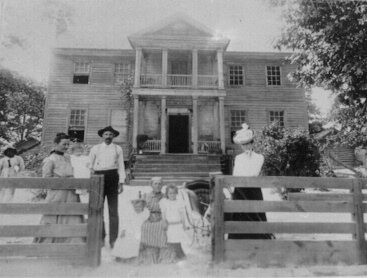
I began searching for clues. Draw yourself a diagram and follow along. My aunt’s in-laws were William “Mac” McQueen and Mabel Allen, who was the daughter of Preston and Minnie Allen. Mabel’s uncle (Preston’s brother) was Joe Oliver Allen who married Amelia Hand. The couple lived in Amelia’s parents house (Alexander Trotter and Eliza Hand), and after her parents died, the property naturally transferred into the Allen family. I’m convinced the photograph below (circa 1903) is the family plantation the man on my aunt’s porch was speaking of, and if you look on the far left side, you’ll see a black man in the background. His name is George Weeks. My aunt never saw her visitor again, and I wonder if this man in the photo is the grandfather he spoke of.

mcqueen allen home 1903 see notesThe home was located in southwestern Lauderdale County, MS on Point-Wanita Lake Road, just south of Meehan.

Sitting Down in the middle is Eliza O’Ferrall Hand

The two little girls with Eliza are her granddaughters, Alda Allen and Marion Inez Allen.

To the left, Eliza’s daughter Amelia Hand Allen and Amelia’s husband Joe Oliver Allen. Amelia is holding their daughter Velma Estelle Allen.

To the right in the fancy hat is Eliza’s daughter Corette Hand.

The following info is from al and mary dot org

“Note the black man to the far left of the picture. His name is George Weeks. I have been told that right after the Civil War, George showed up at the Hand home, hungry, ragged, and able to speak only a few words of English. He was obviously just a few years from Africa and very confused. The Hand family took him in and he worked for them the rest of his life. The A. T. Hands moved into this home about 1878. Several years after this picture was taken, the old home burned, and the Allens rebuilt on the same site. I can remember the Allen home, having visited there with my parents in the late 1930’s or early 1940’s. What I remember most about the home was a spring located across the road from the house with a hydraulic ram that pumped water up the hill and across the road to a tank that was located to the left of the home.” ~ Albert H Spinks, April 23, 2001.

#Hashtags for #Writers

twitbirdHASHTAGS ROCK MY WORLD!

Here’s a huge list for you authors on Twitter. It was compiled by a bunch of people, and I compiled it further. Print it out and enjoy!


BASIC WRITING STUFF

  • #AmWriting
  • #AmEditing
  • #AmRevising
  • #Author
  • #Authors
  • #AuthorLife
  • #BookMarket (Thursday’s at 4 pm ET)
  • #CopyWriting
  • #EditGoal
  • #Editing
  • #ePubChat
  • #IndieAuthors
  • #LitChat (every M/W/F)
  • #MemoirChat (every other Wednesday at 8 pm ET)
  • #NaNoWriMo
  • #PBLitChat (picture books only)
  • #PoetTues
  • #ScriptChat
  • #TenQueries
  • #WordCount
  • #WriteGoodNews
  • #Writer
  • #Writers
  • #WriteChat
  • #WriterWednesday (or #WW or ##WW)
  • #WritersLife
  • #WritersRoad
  • #Writing
  • #WritingBlitz
  • #WritingParty
  • #WroteToday
  • #YALitChat
  • #ZineChat

BOOK GENRE

  • #amreading
  • #Biopic
  • #Book
  • #Comedy
  • #Cookbooks
  • #Cooking
  • #Crime
  • #DarkFantasy
  • #Dystopian
  • #Erotica
  • #KidLitChat
  • #FanFic
  • #Fiction
  • #FlashFic
  • #Food
  • #Historical
  • #History
  • #HistFic
  • #HistNovel
  • #Horror
  • #KidLit
  • #Literature
  • #LitFic
  • #MGLit (Middle Grade Lit)
  • #MemoirChat
  • #Mystery
  • #NonFiction
  • #Novel
  • #Paperbacks
  • #Paranormal
  • #Recipes
  • #Regency
  • #RomanceWriter
  • #Romance
  • #Romantic
  • #RomanticSuspense
  • #RWA (Romance Writers of America)
  • #SCBWI (Society of Children’s Books Writers and Illustrators)
  • #Science #Fiction
  • #ScienceFiction
  • #SciFi
  • #SciFiChat
  • #Short
  • #ShortStories
  • #Short #Stories
  • #ShortReads
  • #ShortStory
  • #SteamPunk
  • #Suspense
  • #TrueStories
  • #UrbanFantasy
  • #WomensFiction
  • #YA

INDUSTRY INFO

  • #AskAgent
  • #AskAuthor
  • #AskEditor
  • #BookMarketing
  • #EBooks
  • #ePub
  • #ePublishing
  • #GetPublished
  • #HowTo
  • #IAN1 (Independent Author Network)
  • #Indie
  • #IndieAuthor
  • #IndiePub
  • #IndiePublishing
  • #IndiePubChat
  • #PromoTip
  • #Publishing
  • #Pubtip
  • #PubWrite
  • #SelfPub
  • #SelfPublishing
  • #VSS (very short story)
  • #WebFic
  • #WebLit
  • #WritingTip
  • #WriteTip
  • #WLCauthor (World Literary Cafe)


CONNECT WITH WRITERS

  • #AmWriting
  • #AmEditing
  • #EHFA (English historical fiction authors)
  • #WordCount
  • #WriterWednesday
  • #WritersLife
  • #YALitChat
  • #LitChat (every M/W/F)
  • #MemoirChat (every other Wednesday at 8 pm ET)
  • #BookMarket (Thursday’s at 4 pm ET)
  • #ScriptChat (Screenwriters)
  • #PoetTues
  • #ZineChat
  • #WritingParty
  • #IndieAuthors
  • #WriteChat
  • #NaNoWriMo
  • #PBLitChat (Picture books only)
  • #Tweets4authors


CREATIVE JUICES

  • #1K1H (one thousand words one hour)
  • #140Poem
  • #Creativity
  • #StoryStarter
  • #WIP (work in progress)
  • #WordAThon
  • #WriteGoal
  • #WriteMotivation
  • #WritersBlock
  • #WritingPrompt
  • #WritingSprint

CONNECT WITH READERS

  • #99c
  • #99cents
  • #Amazon
  • #AmazonKindle
  • #AmazonLikes
  • #AmazonPrime
  • #AmReading
  • #BestRead
  • #BookBuzz
  • #BookBuzzr
  • #BookGiveaway
  • #BookMarketing
  • #BookReview
  • #Books
  • #BookSpotlight
  • #BookWorm
  • #Borrow
  • #eBook
  • #eReaders
  • #ff (Friday Follow)
  • #Free
  • #Freebie
  • #FreeBook
  • #FreeDownload
  • #FictionFriday
  • #FictionFridays
  • #FridayFlash
  • #FridayReads
  • #GoodReads
  • #GreatRead
  • #IndieThursday
  • #IndieTuesday
  • #iPad
  • #KDP
  • #KDPSelect
  • #Kindle
  • #KindleBargain
  • #KindleBooks
  • #KindleeBooks
  • #KindleFire
  • #KindleTouch
  • #KindleTweet
  • #Kobo
  • #LendingLibrary
  • #LitChat
  • #MustRead
  • #MyWANA (We Are Not Alone writer’s group)
  • #New
  • #Nook
  • #Novel
  • #Novelines (to quote your own work)
  • #Novelists
  • #Novels
  • #Paperbacks
  • #Poetry
  • #PoetryMonth
  • #Pubit
  • #Read
  • #Reader
  • #Readers
  • #Reading
  • #Reviews
  • #SampleSunday
  • #SeriesBooks
  • #ShortReads
  • #Smashwords
  • #Sony
  • #Special
  • #StoryFriday
  • #StoryTelling
  • #TeaserTuesday or #TeaserTues
  • #GreatReads
  • #WhatToRead
  • #WriteQuote
  • #WeekendReader
  • #WLC (World Literary Cafe)
  • #WLCbookbuzz
  • #Wordathon

PROMOTE, NETWORK, MARKET

  • #ASMSG (authors social media support group)
  • #AuthorRT (author’s retweet group)
  • #BYNR (book your next read)
  • #CR4U (clean reads for you)
  • #FollowFriday
  • #free or #freebie
  • #FreebieFriday
  • #FreeReads
  • #HSFCA (historical fiction authors retweet group)
  • #IAN1 (Indie author network)
  • #IARTG (indie author retweet group)
  • #RT
  • #Share
  • #WLCauthor (World Lit Cafe)
  • kinds of books – #Kindle #Nook #ebook #paperback #epub #amazon #kdp #audiobook #audible #trailer #excerpt #pdf1

An Inaugural Anniversary

This year is the 225th anniversary of the inauguration of the President of the United States. I’m sure you don’t really care, but the first inauguration was quite interesting. Here are some facts:

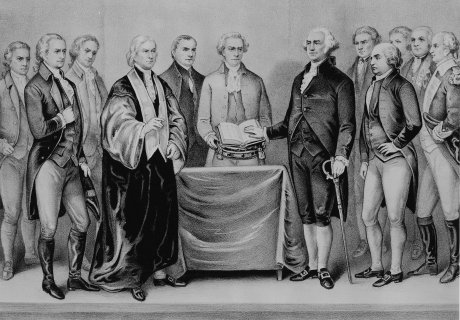
washington-1789The inauguration happened two months late, because bad weather delayed members of the very first Congress’s arrival in New York, where they were voting. Travel was a bear in those days, but the inauguration finally happened on April 30, 1789.

George Washington was UNANIMOUSLY voted into office. When was the last time the House and the Senate did anything unanimously?

They had to borrow a Bible from the Masonic Lodge down the street.

This event set the stage for future inaugurations to follow. It was held outdoors. It included a Bible. The inaugural address was given to a joint session of Congress. The event was followed by a church service and festivities. We still do all those things today. There is one thing that is questionable though. Modern day presidents end their oath with the words, “So help me God,” believing they are following the tradition of George Washington, but there is no evidence Washington ever said that.

And just so you know, Washington served as President without pay.

Happy Inaugural Anniversary!

Uncle Bluitt

culpepper Andrew Bluitt CulpepperThe Rev. Andrew Bluitt Culpepper was my grandfather’s uncle (little brother of Aunt Dora in THIS blog). He died in 1952, so I never met him, but I remember the family bringing his name up on occasion, and he was always referred to as Uncle Bluitt. The name came from his great grandmother, Elizabeth “Betty” Bluett or Bluitt. The spelling changed with each generation, and every generation has at least one male with Bluett in his name.

Uncle Bluitt was the youngest of 6 children of Joel Bluett Culpepper and Mary E “Mollie” McFarland. He was born in Alabama in 1882. Before 1890, the family moved to Kemper County, Mississippi.


culpepper Andrew Bluitt and Ollie KitrellWhen he was 21, he married Ollie Mae Kitrell.

culpepper Curtis and Obbie sons of Andrew Bluitt Culpepper


A year later, they had a son, Louis Curtis Culpepper, and three years later, another son, William Obie Culpepper.


Uncle Bluitt died at the age of 71, and his obit claims he was the pastor of more rural churches than any preacher in Mississippi, and his death certificate states he was also a barber. He died following a stroke, which is not an unusual thing with the males of my family. One of his uncles, (I can’t remember which one off the top of my head) was said to have died of a stroke while preaching in the pulpit. Pastors and strokes run in the clan. Uncle Bluitt is laid to rest with his wife and sons at Pine Grove Baptist Church and Cemetery in Lauderdale County, Mississippi.

culpepper, andrew bluitt and ollie kittrell


Andrew Bluitt Culpepper obituary

Rev. A. B. Culpepper, 71, Martin community, Lauderdale County, passed away Wednesday, Feb. 24. he had been a Baptist minister for 40 years. It was claimed that he had been pastor of more rural churches than any preacher in Mississippi.

Burial was in Pine Grove Cemetery. The Rev. Edward McKeithen, pastor of the Pine Grove Church, officiated, assisted by Rev. Ed Grayson and Rev Truly Reynolds.

He was a member of the Pine Grove Church. Survivors include his widow, Mrs. Ollie Kittrell Culpepper, two sons, Curtis and Obbie Culpepper, 8 grandchildren, and 7 great-grandchildren.

Happy 143rd Birthday, Aunt Dora!

culpepper mary eudora culpepper saterfiel familyMary Eudora Culpepper Saterfiel Watson was born March 31, 1871.

She is pictured here in the center with her husband WB Saterfiel to the left, her father JB Culpepper to the right, and her children from left to right in front Dewey Oliver Saterfiel and baby Alma. In the back row, left to right, Evie Mae Saterfiel Hodges, Indeola “Necie” Saterfiel Byrd, Willie Carlos Saterfiel, Adie Joseph Saterfiel.

Side note: I ordered my grandparent’s marriage license and the witness was D.O. Saterfiel, the little guy. He was my grandpa’s cousin. I sometimes forget these people knew each other. 🙂

She was my grandpa’s aunt Dora. She was born to Joel B Culpepper and Mary E “Mollie” McFarland in Sumter County, Alabama, as the only girl with five brothers. There was another girl born to the union, but she died at birth. Aunt Dora was the eldest of the children, so I imagine she was the caregiver to her little brothers. At some point when the children were little, the family moved to Kemper County, MS. After her mother’s death in 1908, her father moved in with her for a short time. That’s when this photo was taken. Shortly after this, he was placed in a soldier’s home in Biloxi, MS, where he died less than a year later, on Nov. 11, 1911. Dora was 40.

culpepper Mary Eudora Culpepper SaterfielWhen she was about 19, she married William Bartley Saterfiel around 1890 and had six children. Three of her children married into the Hodges family. Mr. Hodges married three times, and with each union came more children. The three Saterfiel children married a Hodges child from each of the three wives. The Hodges/Saterfiel family reunion must be confusing.

She lost her youngest child in 1912. Baby Alma was only five years old when she died, not very long after the top photo was taken.

Following her husband’s death in 1925, she married GW Watson in 1929. Though she was married to Mr. Watson for 21 years, her headstone reads Eudora Saterfiel and her obit says nothing of Mr. Watson’s children. She died at the age of 78. Her obit is as follows:

culpepper, mary eudora culpepper saterfiel watsonFriday, January 6, 1950

Mrs. G. W. Watson

Mrs. G. W. Watson of Collinsville died Friday at St. Joseph Hospital, following a heart attack. Funeral will be held Sunday at 2 p.m. from the Union Funeral Home. The Rev. Edward McKeithen officiating. Interment will be in Union. Survivors include three sons: A. J. and D. O., Collinsville, and W. C. Saterfiel, Causeyville: Two daughters, Mesdames Joe Byrd and George Hodges, Collinsville: several grandchildren and great-grandchildren.  

Her father, husband, and baby Alma are buried at Zion Cemetery, Kemper Co, MS. She and her other children are buried at Pine Grove Cemetery in Lauderdale Co, MS. Mr. Watson and his first wife are buried at Memorial Park in Newton Co, MS.

My Grandmah – the Doctah

In the early 1900s, my great grandmother, Nancy Didama Spencer Burke (Grandma Damie) was a doctor. She rode around the back hills of Newton County, Mississippi, taking care of the sick. She didn’t ride in a car. She rode side-saddle, and a woman doctor was a rare thing.

Many moons ago, women were the caretakers and caregivers, but at some point the medical power was given over to men. Gaining that power back was a hard door to open.

T909228_08It was opened by Elizabeth Blackwell (pictured left) in the mid-1800s. Miss Blackwell was born in England, but raised in America. A dying female friend told her she would have suffered far less if her physician had been a woman. This statement encouraged Elizabeth to pursue a career in medicine. She was told she would never become a doctor, because there was no schooling available for a woman, but that didn’t stop her from applying to every medical school in the country. Finally, as a joke, she was voted into Geneva Medical College in New York. I can only imagine the ridicule she received at the all-male school. But she showed them. She graduated first in her class in 1849 and later studied surgery, midwifery, and obstetrics. One can imagine she had very few patients and no camaraderie, but she persevered. Keep in mind this was 100 years before women even got the right to vote. She was a strong and intelligent woman.

She paved the path for many women in the field of medicine – even Grandma Damie.

October Ancestry Challenge – Rice Benjamin Carpenter

oct ancestry challenge-001 October Ancestry Challenge 2013

23 days – 23 posts – 23 ancestors

Ancestor #21 – Rice Benjamin Carpenter

Rice was my 3rd great grandfather. He was born to Benjamin Carpenter and Nancy Rice in 1828 in Tennessee. Before 1834, his family moved to Lauderdale County, Mississippi. This was just following the signing of the Treaty of Dancing Rabbit Creek in 1830, and the government had moved the Choctaw Indians off the land and were selling it for cheap to get it settled by Americans.

Rice married Mary Ann Rodgers (Ancestor #17) in 1846 and had five children before he went off to fight in the Civil War. On December 31, 1862, he fought in the Battle of Stones River in Murfreesboro, Tennessee. The following is a chapter from my book “Okatibbee Creek.”

****************************************************************

okatibbee creek cover front JPEGThe ground is hard. The air is chilly. Every night, it’s pitch-black out here. I haven’t been able to sleep a wink. I can hear some low, quiet talking outside, an ole hoot owl in the woods far away, a couple of bull-frogs croaking in the grass, and even someone snoring next to me. I wish I could sleep.

I remember the day we arrived. The land here was quite beautiful then. There were thick woods of cedar trees lining a beautiful river.

That was a month ago. Over the last three weeks, most of the trees have been used for firewood, to build makeshift cabins, and turned into poles to hold up tents. It’s been raining a lot, mixed with a little snow and freezing rain. When the sun comes out in the morning, everything melts. Now this once beautiful land looks like one big, muddy pigsty. The mud is awful and the smell is even worse. God, the smell.

We were told that we would be awakened well before dawn for a mission. It must be almost that time. I’m tired. I’m anxious. I’m hungry. If we have a mission this early, there won’t be time for any breakfast. Maybe some hardtack and warm canteen water and that’s it.

I don’t know what I’d do right now for a good, strong cup of hot coffee. We haven’t had any coffee for weeks. We’ve been boiling chicory and peanuts instead. I would like some real coffee.

I would also like some clean clothes and some new shoes as well. I wonder if Mr. Calhoun has new shoes selling in the store. I would like some of his well-made shoes without mud on them, and with soles that aren’t worn through. I would like some clothes that aren’t caked in mud and sweat. I would like a chicken dinner. I would like to see my wife and my children. I would like to get away from these drunken, loud men. I would like to get away from the coughing and the diseases that are spreading through our camp like wild-fire. I would like to get back to my civilized store and my comfortable life, away from this godforsaken war that has gone on far too long for my taste. I should have been home months ago.

I hear them outside moving around now. I hear them all waking up and starting to stir. Someone sticks his head in my tent and says, “Rice, come on, we’re meeting at the captain’s tent in ten minutes.”

Yeah, there is something big going on, all right. One could almost cut the tension in the air with a knife. In ten minutes, we will find out exactly what it is. I put on my coat and hat and what remains of my worn shoes, and head through the mud to the captain’s tent.

“Men, you all know we have Yankees just over the river. We’ve heard that they plan to engage us after breakfast, but we’re not going to wait for them to come across. We’re going to give them a nice little surprise wake-up right now.” He points to a map on the table and continues. “The Kentucky boys are going to go around this way, and the Tennessee boys are going to take them on from that direction. We will move through this way. Since it is so early, we should be able to catch most of them still asleep in their tents.”

He waves his stick around the map so quickly, it is almost hard to figure out exactly where we are supposed to go.

“Any questions?” he asks.

All the men shake their heads.

“Good, let’s go kick some Yankee butt. When we are finished, we will confiscate their coffee, and I’ll join you in a cup,” he says.

“Now you’re speaking my language, Captain,” I joke.

He smiles and pats me on the shoulder as I leave the tent.

We grab our muskets and revolvers and move through what remains of the dense cedar glades, up the river-bank, as quiet as deer at dusk. It is still dark. I guess it must be about four or four thirty in the morning. We usually move to the sound of drum and bugle, but not on this day. Today, we are gravely quiet. As we plant ourselves behind some low limestone rocks about seven hundred yards away from the enemy, I can see about thirty campfires and a few men wandering around, but the camp is mostly quiet. It might be my imagination, but I think I smell coffee. Oh, what I wouldn’t give for a cup of that. It dawns on me that there are a lot more campfires than men, so they must want us to think that their army is a lot bigger than it actually is. Why else have so many campfires?

I am uncomfortable lying on my belly so low on the ground behind eight-inch-tall limestone rocks, and I wonder why we haven’t built some fortifications over the last month. Not that there are any trees left to build them with, but I wonder nonetheless. I assume we weren’t planning on this attack, but since the opportunity has presented itself, we are going to take advantage of it, with or without fortifications.

When everyone gets into position, we start aiming for the men who are walking around, though when they hear the first gun-shot, they crouch down, running and scurrying for their guns. I see quite a few of them fall before I ever hear one of their guns shooting back at us. For a moment, I think this is going to be an easy victory. We’ll send those Yankees back home with their tails between their legs before dawn. Then we’ll drink their coffee.

A few days ago, about twenty-five hundred of our Calvary boys rode all the way around the Union camp, confiscated four wagon trains, and took about a thousand Union prisoners, but we didn’t get any coffee. Maybe these Yankees don’t have much coffee, either.

“Well, they’re not getting any today,” I mumble to myself as I raise my musket and fire.

As the Yankees start to run away, someone behind us gives the rebel yell and we all follow suit. It is a mix of an Indian war cry and a gypsy scream. The Yankees probably think Indians are attacking them. We all rise from our positions and start running after them.

After we cross the freezing cold river, we pick up speed and are almost right on top of them. We are moving in and fast. Roughly ten thousand Confederate troops are raining down on their heads before breakfast. Most of those Yankee boys are running away like scared little rabbits.

“Run, rabbit, run!” I yell.

Our band starts playing “Dixie” and we hum along as we aim, fire, and reload. Occasionally, cannon fire shakes the ground, fills the air with smoke, and drowns out the band. One cannon fires so close behind me, I think my hearing will be gone for good. I am aiming at a Yankee when a cannon fires. I blink my eyes and the Yankee is gone.

One of the boys loading the cannon yells to me, “I got him for you, Rice. You go on home now.”

He roars with laughter as I roll my eyes at him and wiggle my finger in my ear, gesturing that I can’t hear him. He laughs louder.

Our band is now playing “My Bonnie Blue Flag” as we start moving in closer. We walk so far and so long, it seems the Yankees have all but run all the way back home. We move for a solid two miles before we catch up with them again. By the time we engage them again, it is light outside.

Our band always plays marches like “Marching Through Georgia” or “I’m a Good Ole Rebel.” The Yankee bands always play songs like “Battle Hymn of the Republic.” A popular song on both sides is “Home Sweet Home,” but our band is not allowed to play that. The captain says the melancholy tune makes everyone homesick, and he is afraid some of the men will desert and go home. But for some reason on this cold Tennessee morning, our band starts playing that song.

Our boys always sing along, but today, the strangest thing happens. The Union boys start singing along. I can hear them singing over the gunfire. I can’t believe I can hear Yankees singing, partly because they are that close, but mostly because we are in the heat of battle. Singing together seems more than bizarre to me. Then the Union band picks up on the tune and they start to play along also. Everyone is singing and for a split second, the shooting stops. For a brief moment, the cannon fire stops.

I think, how can everyone sing together and then resume shooting one another? How can everyone share this melancholy moment and take up arms again? Men on both sides are singing together like I’ve never heard anyone sing before. In another time, another place, we would be friends.

I stop firing and listen to everyone singing, thinking this is the most surreal moment I can remember in my life. I am lying flat on my stomach, and I lift my head to look around at the men. As I rise further and turn to look at the ones behind me, I feel a searing pain rip through my chest. I reach up to my chest and feel warm blood oozing out of a bullet wound. Damn. I optimistically think it is probably only a surface wound, and I will be all right if I can make it all the way back to camp. I can write to Mary and tell her I’m all right. I don’t want her and the children to worry about me.

As I try to get to my feet and turn toward the direction of camp, I feel another hot pain go through my left temple.

I hear someone yell, “Rice, get down!”

I fall to my knees, thinking this can’t possibly be the end. No, it can’t be. I have a beautiful wife and wonderful children to get home to. I try to get up again, but stumble forward and fall facedown onto the ground.

“Rice!” I hear someone yell again.

I stare at the pebbles and the pine needles on the ground. Blood starts to pool under my face, turning the dirt and pebbles and pine needles a flood of bright red.

I listen as the cannons roar and the rifles fire and the band plays “Home Sweet Home,” and I think of my beautiful Mary and my wonderful children—Mattie, Benjamin, Charlie, and Monroe. How lucky I am to have them.

Then slowly, everything fades from red to black.

****************************************************************
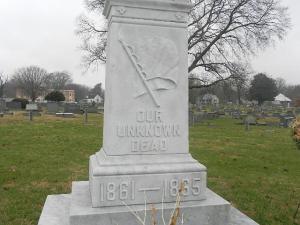
dec 2012 407Private Rice Benjamin Carpenter

Killed in battle December 31, 1862

Murfreesboro, Tennessee

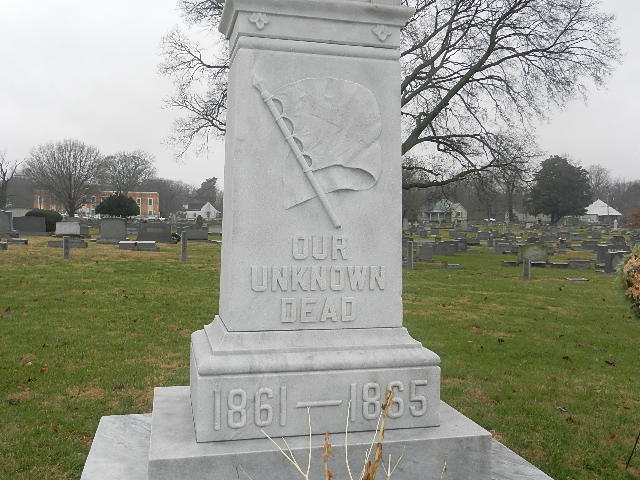
Remains and memorial at Evergreen Cemetery in the Confederate Circle

October Ancestry Challenge – Martha Ellen Rodgers

oct ancestry challenge-001 October Ancestry Challenge 2013

23 posts – 23 days – 23 ancestors

Ancestor #19 – Martha Ellen Rodgers 

Martha Ellen Rodgers is my cousin. Her father and my 3rd great grandmother were siblings.


James daughter Martha Ellen Rodgers MeekShe was born in 1853 in Lauderdale County, Mississippi to James Rodgers and Martha Sanderford Rodgers. She had a five-year-old brother and a two-year-old sister, and two more children would follow. She grew up in a farming community, surrounded by loving grandparents and more than a dozen aunts and uncles, along with their respective spouses and children. Her father and a slave named Bill built the log home she grew up in. Her childhood was ideal.

In 1861, Mississippi seceded from the Union and Civil War broke out. Though she had many uncles go off to fight in the war, her brothers were too young and her father was too old, so they remained safely at home with her.

But all would not remain ideal, as during the fall of 1862, a typhoid epidemic invaded her community, killing her grandparents, many aunts, uncles, and cousins, and both of her parents. Her father died October 12, 1862. Her mother died a few short weeks later.

She was nine.

Her given name was Martha Ellen Rodgers, but she was simply known as Ellen.

Hays Rodgers Jr and wife Lucinda GrahamShe and her siblings were placed in the custody of the eldest male in the family, their uncle Hays Rodgers Jr. (photo with wife Lucinda), but he was off fighting in the war, so she was raise for a time by her aunt Mary Ann Rodgers Carpenter (Ancestor #17). When Hays Jr. returned home from the war, he sold his farm and moved to Alabama. Ellen went with him. Her other aunt, Aunt Elizabeth Rodgers (photo with husband George), was also there, and when Aunt Elizabeth died in 1875, Ellen returned to Mississippi. rodgers elizabeth and husb george malon graham, daug of hays g

She stayed in Mississippi for a while with her two sisters, but eventually went to Texas. Her two brothers had moved there years earlier, and I imagine she only went out for visit, though the thought of a young woman traveling alone in the 1800s seems dangerous to me. When she got there, everything changed for her.

When she arrived, she met her brother’s wife’s brother, Sam Houston Meek. She and Sam married in 1885. They had twin sons in 1886 who both died. Then they had a daughter Olive Lee in 1888. When Olive Lee was two, Ellen had another girl in 1890, but the baby girl died, and sadly, Ellen died of complications within the week. She was 37.

rodgers martha ellen rodgers meek, dau of james rodgersShe is buried in Nolanville, Bell County, Texas at Pleasant Hill Cemetery.

My book, AN ORPHAN’S HEART, is her story.

October Ancestry Challenge – John Francis Burke

oct ancestry challenge-001The October Ancestry Challenge 2013 23 posts – 23 days – 23 ancestors.

Ancestor #16 – John Francis Burke, my 2nd great grandfather from Dublin, Ireland.

Family stories say he stowed away alone on an America-bound ship when he was 15 years old. The captain found him en route and told him he could not be taken back. He told the captain, “If I wanted to go back, I wouldn’t have stowed away.” So, they dropped him off in Miami in 1862, in the beginning of the Civil War.

There are a few John Burkes in Confederate military records and census records from 1862 to 1870, but I don’t know which one, if any, is him. There is one in particular in the 1870 census listed as a farmhand in Alabama that I am leaning toward, but I’m not sure.

The next record of him was his marriage in 1879 to Nancy Didama Spencer of Mississippi, daughter of my Ancestor #5 George Washington Spencer. He is shown living with her family in the 1880 census and is listed as a “ditcher.” The record said he was 30 years old, making his birth about 1850, making him only 12 years old when he ran away from home. I wish I could figure out the truth, which may require a trip to Dublin.

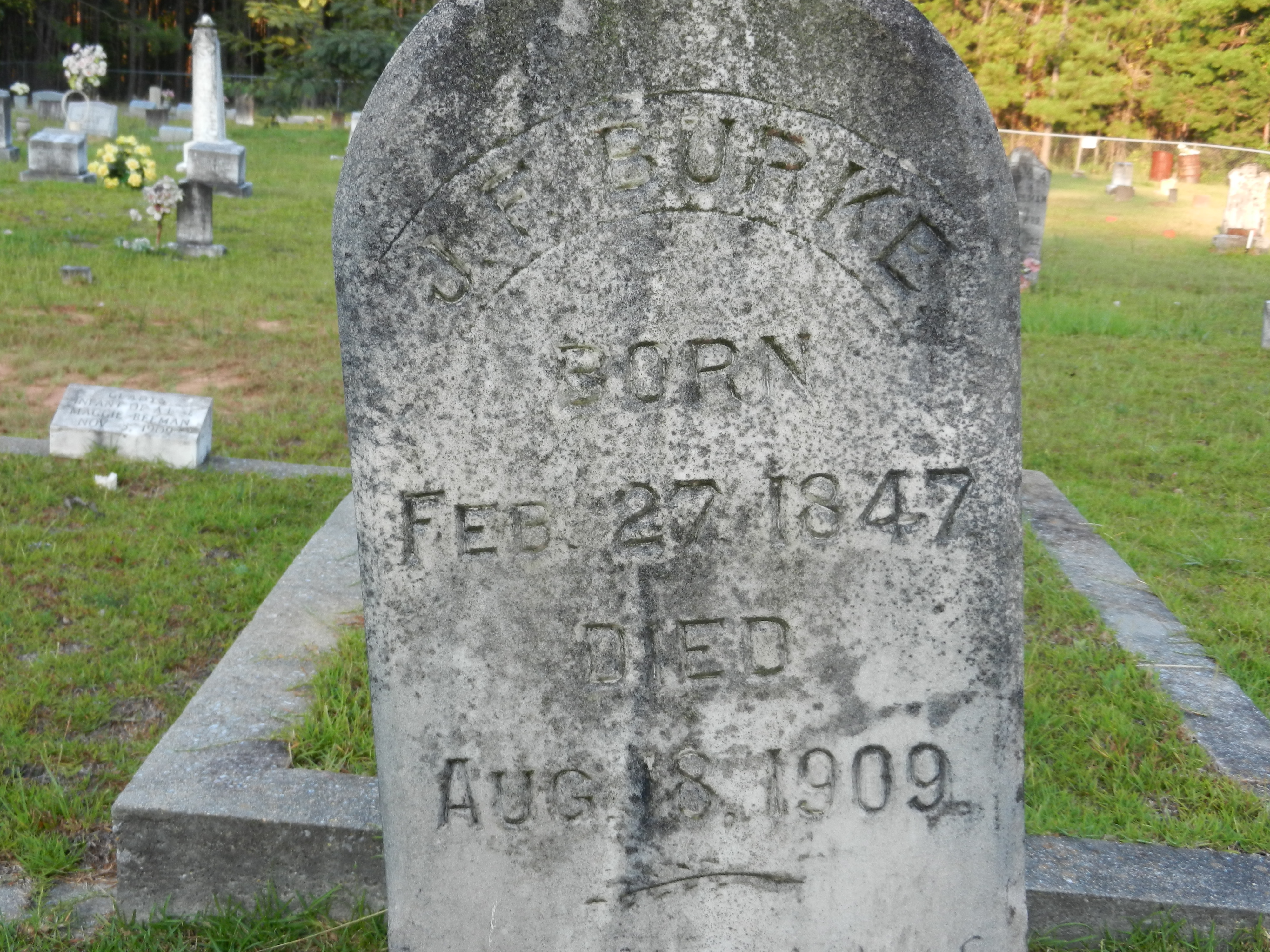
burke JP Burke Sr headstoneHe and “Grandma Damie” had six children between 1880 to 1894. There are no other records of him. Strangely, Damie is listed as a widow in the 1900 census, though John Francis did not die until 1909. Family members tell me Damie did not believe in divorce, and Damie and John spent the last ten years of their marriage under the same roof, but not speaking. When Damie spoke to the census-taker, she said she was a widow. I don’t know what he did to make her so angry, but it must have been a doozey. This explains why they are not buried next to each other at the cemetery. I always wondered why they are in different rows.

On a side note: One of their children was John Patrick Burke who married Mary Elizabeth Howington. I think Mary Elizabeth Howington’s mother was a Choctaw Indian, but I’m still trying to prove that fact. Anyway, John Patrick Burke’s mother, Grandma Damie, was a doctor and rode around the community side-saddle taking care of the sick. My mother told me a story about a grandmother who was a “medicine woman” who knew every plant and tree and how it could be used to heal people. She told me it was my other grandmother who was a Choctaw Indian, but I believe she got the women confused, and she was speaking of Grandma Damie as the doctor, but the other grandma was the Indian.

Family members told me John Francis left home because he was angry with his father. I don’t know who his parents were, but if I ever venture into Dublin, Ireland records, I should be able to find him because his children were named after his siblings. His children were John Patrick “Pat”, Robert Emmett “Bob”, George Washington (Probably won’t find a sibling with that name. That was his father-in-law’s name), Nina Virginia, Kathlene L, and David Edmund.

I don’t know what kind of childhood his son (my great grandpa), John Patrick “Pat” Burke, had as he died four years before I was born, but I do know he played fiddle every Saturday night at the community barn dances. A cousin has his fiddle and the family pump organ stored away. Being a professional musician, I would give anything to get my hands on those. I wonder where my great grandfather learned to play fiddle. It’s such an Irish thing to do, don’t you think? Perhaps his father taught him. Hmmm.

tattooI’m not sure I will ever find my Irish ancestors, and I feel sorry for John Francis’s mother, never knowing what happened to her rebellious fifteen-year-old son. John Burke could have pulled that name out of the sky or it could have been Bourke or O’Byrne or something. Either way, here’s a toast to my grandfather, John Francis Burke. For without his braveness at the tender age of fifteen, I would not be here.