On This Day in 1882

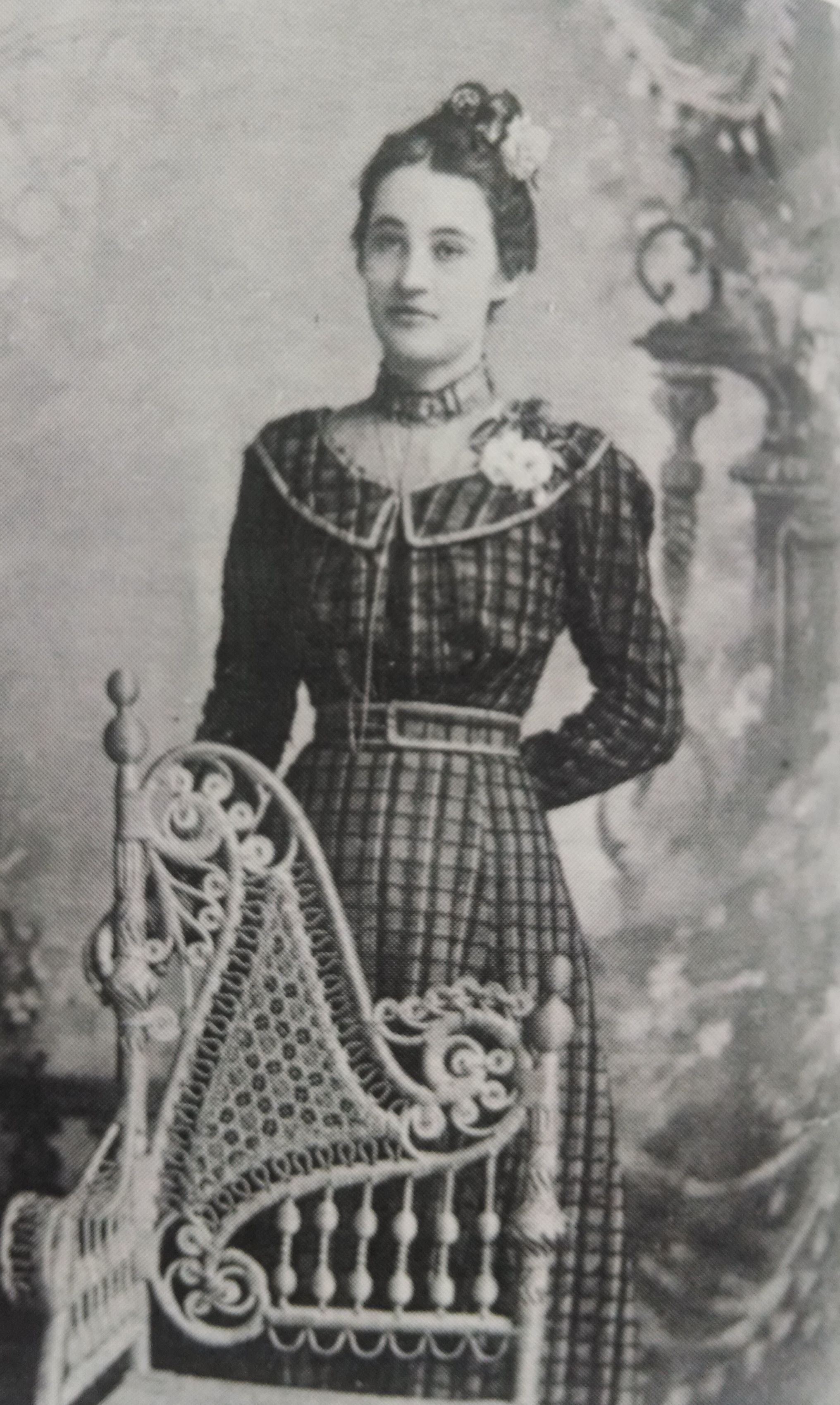
culpepper ora wedgeworth wife of Joseph FloydOn This Day in 1882, my great great aunt, Ora Wedgeworth Culpepper was born to Howell Joel “Hobby” Wedgeworth and Martha Morrow in Lauderdale County, Mississippi. She was the youngest of eight children with only one other girl, the eldest.


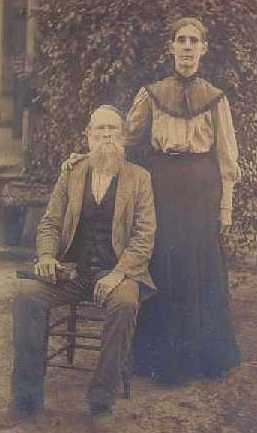
wedgeworth howell joel hobby and martha morrow, par of ora wedgeworth culpepperPrior to Hobby marrying Martha, he had been previously married to Elvira Hughens. They had one daughter in 1858, and Elvira died in 1860. I don’t know who raised the girl after that, as Hobby went off to fight with the 5th Mississippi Infantry Company K and was captured by Union soldiers at the Battle of Franklin, Tennessee (where I currently live) on November 30, 1864. He spent the last six months of the war at Camp Douglas, Illinois as a prisoner of war. His father, Rev. Joel Walker Wedgeworth, went to pick him up after the war ended, and it was said his father didn’t even recognize him because he was so thin. One can tell just by looking at this photo of Hobby and Martha, they were very strict parents.

culpepper joseph floyd

On November 2, 1904, Ora married Joseph Floyd Culpepper, my great grandpa Sam Culpepper’s brother, and between 1905 and 1926, they had eight children, five girls and three boys.


culpepper joseph floyd and ora wedgeworthOra lost her husband to pneumonia on August 1, 1951. She never remarried. She died May 15, 1966 at the age of 83. They are buried at Memorial Park Cemetery, Winston County, Mississippi.


This post brought to you by On This Day.


Saturday Snippet – Culpepper Saga Preview

I usually post blogs about books that are already finished, but I’m having such a good time with my work in progress, I’d like to share a piece of it with you. The Culpepper Saga will be four books about one of my ancestors named John Culpepper.
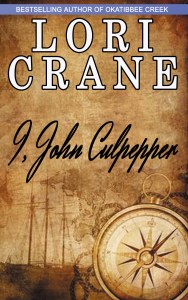
Culpepper_1John was born in England in 1606. As a young lad he was trained as a lawyer, but he decided to be a merchant instead. He bought a ship and sailed back and forth between the colony of Virginia and England, delivering immigrants to the colonies and bringing back cotton and tobacco. His life wasn’t spectacular, but the cast of characters surrounding him were pretty intriguing, the political and religious climate of his homeland was so volatile, one could lose a head if one wasn’t careful, and the vast expansion of the new world set the stage for quite an amazing adventure. The first installment will be about his childhood, the second about the English Civil War where King Charles I was executed and the royalist Culpepper family scattered like rats, the third about his adventures in Virginia and rise to family patriarch, and the final story will be in his later years during Bacon’s Rebellion and his son causing the Culpepper Rebellion in North Carolina and being charged with treason (good thing daddy was a lawyer!).

culpepper book 2 cover ideaI’ve decided on the title “I, John Culpepper” for the first book.

All that being said, here’s a bit of the scene from the day John was born….

**************************************************************

1606, Blackwall, London

“Master Culpepper! Master Culpepper!” the servant boy shouted over the bells clanging from the church steeple. He pulled the scratchy scarf tightly around his neck to ward off the chill as he pushed his way through the masses gathered on the foggy banks of the Thames.

The crowd had been gathering on the wharf for nearly two days to witness the departure of the ships, and they were prepared for a spectacle unlike any they had seen before. When the tide came in, the three ships carrying one hundred forty passengers and sailors would depart England on an exciting adventure. The air smelled of salt and tar and sweat. This was a remarkable place, a magical place, where the preparations were as exciting at the coming voyage. The anticipation in the air was nearly as thick as the fog.

The boy stopped for a moment as a wooden cask was rolled across the cobblestone in front of him. He watched as workers carefully rolled the barrel up the tilted gangplank. He remained frozen in the middle of the bustling crowd, staring at the ship. He had never seen anything so majestic in all his twelve years, and his jaw dropped at her sheer size. She was an enormous castle-like structure, at least eighty feet in length, her belly bulging at the side where the last of the cargo was being loaded in. Crates and boxes were continually being carried up the gangplank, where they disappeared into the ship’s dark interior. The deck above the cargo area was much narrower and the boy imagined that’s where the sailors would remain during the voyage, climbing masts and hoisting sails. Circling the spiderweb of hemp ropes and yardarms, seagulls cawed as if singing along with the rhythmical clanging of a nearby metal object. The boy scanned the scene for the source of the sound and noticed a blind beggar sitting on the cobblestone near the bow of the ship, tapping a stick on a metal bowl.

Behind the ship floated a second ship, nearly as large as the first, and behind that loomed a third. Each hosted its own cast of sailors, supplies, vagrants, and gangplanks. As wavelets gently raised and lowered the vessels, moans of protest arose from the taut ropes, and the weathered wood creaked with each stomp of a sailor’s boot. Nearby, two mangy hounds barked and growled over some fish scraps, bringing the boy’s attention back to his task at hand. Remembering why he had come, he yelled, “Master Culpepper!” He spun around and around looking for the man, weaving between horses, carts, trunks, and sailors shouting commands. He darted in and out of the crowd, making sure he didn’t bump into any wealthy gentlemen, recognizable by their long cloaks adorned with colorful silk threads.

In April, King James had created the Virginia Company, which would finance sailings to Virginia and Plymouth with the aim of settling colonies and profiting from the land’s abundant natural resources. The aristocracy funded the expeditions with the expectation of making an exorbitant profit. The three ships embarking from Blackwall on this day would sail to Virginia and bring back riches. There were rumors of gold, silver, and gems merely washing up on the shore for the taking. If nothing else, there was surely timber to be harvested. The trees in England had long been felled and the rising price of timber would certainly bring the investors a hefty return.

After they finished loading supplies and the morning fog had dissipated, the ships would raise their sails and ride the tide down the Thames. They would enter the English Channel and cross the great ocean and return by summertime.

The boy bobbed in and out of the crowd, searching for his master.

“Who are you searching for, lad?” a man in a ruffled collar asked.

“Master Culpepper,” the boy replied, removing his hat and revealing his dirty blond hair, which was sticking this way and that like a wheat field in a mighty windstorm. He twisted the wool hat in his hands.

“Johannes or Tom?”

“Johannes Culpepper, sir.”

“I saw him down by the front ship—the Discovery—only moments ago. He was standing right on the dock.”

“Thank you.”

The boy nodded, replaced his cap, and shoved through the workers and onlookers toward the front ship. As he passed the first ship, he looked at the name written on her side and sounded out the letters. He couldn’t make any sense of the words Susan Constant, but when he reached the second ship, he could read God…speed. He wondered if the Godspeed was true to her name. If he were to sail, he would rather sail on the Godspeed and get there faster. From what he understood, it was a two-month voyage if the weather was bonny, maybe four months if the ship ran into rough seas.

He had once spent a morning in a small fishing boat and instantly became green with sickness that lasted for days. He didn’t think he would be able to survive the time it would take to sail to Virginia. He gawked at the bow of the Godspeed as he ran past, witnessing a young lad about his age. The sailor dripped with sweat, even in the chill of the damp morning air, as he coiled ropes and folded sails. What a great adventure it would be to sail to Virginia, but alas, the boy would never get to do such amazing things. He was a servant, a gift from His Majesty King James I to Johannes Culpepper. He would always be a servant, but perhaps someday he would be fortunate enough to serve the king. Even though Master Culpepper was good to him, he wished to someday live at court and be somebody. At least he had the slimmest of chances. His sister had been placed in the kitchen of some castle in Wales. She would never be anything more than a scullery maid. Women would never hold a place in society. They were not welcomed on this voyage, either.

He hopped up and down, unsuccessfully trying to look over the crowd. “Master Culpepper!” he called.

A man turned and pointed. “Culpepper is right over there, son.”

“Thank you, sir.”

The boy sprinted in the general direction, and when he pushed through a couple workers conversing on the dock, he saw him.

“Master Culpepper!”

The boy ran up behind Johannes Culpepper and patted the back of his master’s arm, hopping up and down. “Master Culpepper!”

Johannes turned and looked down at the boy, his square jaw set and his blue-gray eyes burrowing into the lad. “What is it, boy? Why are you making such a commotion?”

The boy panted, out of breath from running. “Master Culpepper, m’lady is havin’ the baby, sir!”

Johannes’s face turned red as he glanced around the crowd to see if anyone was eavesdropping. When he saw no one was, he folded his arms across his chest and stroked his beard. “You came all this way to tell me that?”

“Yes, sir.”

“Very good, boy. You run along home now.”

The boy didn’t move. How could his master not be excited about this news? Did he not want to return home and see his wife and child? Was there anything the boy could say to convince the man to accompany him back to the house?

“Go on. Run along.” Johannes waved the boy off with a flip of his ringed fingers and abruptly turned his back.

“Yes, sir.” The lad backed up, keeping his eyes on his master, wondering what he would tell the governess when he returned home without his master in tow. He had ridden nearly four hours to get to Blackwall this morning, most of it in the dark as the sun had not even risen when he left. He would have a four-hour return trip to think of something. He turned and walked back in the direction from which he had come.
 

On This Day in 1891

On This Day in 1891

My great great grandparents, Joseph Lawson Pickett and Caledonia D Fisher, were married in Lauderdale County, Mississippi.

pickett, joseph lawson sr, son of rt and lucyJoe Lawson was born Jan 1866, son of Robert Theodore Pickett and Lucy Ann Rackley in Alabama. He had four older sisters and four younger brothers, all born in Alabama. Sometime between 1880 and 1890, the family moved to Mississippi. At age 25, he married 21-year-old Callie. They had five boys and one girl: Benjamin Berry (1893-1973 my great grandpa), Robert Elbert (1897-1978), Joseph Lawson Jr (1901-1928), Florence (1902-1990), Mark Joshua (1905-1949), and Clyde (1907-1993). From the stories passed down of the four boys, including moonshine stills, shootouts with local authorities, going to prison for murder, and young Joe Jr. being shot by law enforcement at the age of 27, they were obviously a wild bunch. I don’t know if the parents didn’t discipline the children or if the boys were just uncontrollable. Joe Lawson died at the age of 44 in 1910. The exact date of his death is unknown at this time, but it was after the 1910 census was taken which was April 20th. Callie never remarried.

pickett, caledonia d fisher, wf of joe lawson srCallie was born 12 Jul 1870 to William Thomas Fisher and Ann Eliza Butler in Mississippi. She had six older siblings and four younger ones, totaling six boys and five girls. Her father was a Civil War soldier and owned quite a bit of land in the Zero Community near Meridian. He was just as much a character at those Pickett boys. Perhaps that’s why Callie liked Joe so much. Callie’s father was in jail at the start of the Civil War for shooting a man over a poker game, but they released him so he could go fight. Having children born in 1860, 62, 63, and 65, I’m not sure when or where he actually fought. A portion of Fisher land was designated as Fisher Cemetery, holding the remains of many Fisher and Pickett descendants, but Joe and Callie are both laid to rest down the road at Pleasant Hill Cemetery in Meridian. She died 26 Aug 1931. Her obituary in the Meridian Star Newspaper is as follows, but notice the marriage year is different, probably told to the paper by a member of the family. I have the Lauderdale County Marriage Records transcribed which say, “1891, Marriage Book 2, page 368.”

Mrs. Caledonia Fisher Pickett, 61, died Wednesday at 4:30 a.m. at her home on Rt. 3. She was born and raised in Lauderdale County and in 1889 was married to the late Lawson Pickett. She was a member of the Zero Methodist Church. She is survived by one daughter, Mrs. Florence Harper; four sons; Ben, Elbert, Mark, and Clyde Pickett; one sister, Mrs. Ada Purvis; three brothers, Thomas, Jeff, and Jim Fisher. Funeral services will be held from Pleasant Hill Methodist Church Thursday at 3:30 p.m., the Revs. J.W. Ramsey and Ed Grayson officiating. Interment to follow in the Pleasant Hill Cemetery. Active Pallbearers: Lester Walker, Earl Dawes, George Gay, Charlie Molpus, Dan Covington, and Dan Rolling. Honorary: Martin Miller, C.S. Dearman, John Robinson, Ed Culpepper, Elmer Brown, and Monroe Sims.  ~Meridian Star

This post brought to you by On This Day available at Amazon.


On This Day in 1890

On This Day in 1890, my great great grandparents were wed.

plaque in Lauderdale Co Court House in MeridianThomas Gilbert Lafayette Keene was born 20 Apr 1859 to Green Keene and Sarah Tabitha Keene and grew up in Mississippi. According to records, I believe his parents died during the Civil War. He is shown living with them in the 1860 census, along with his siblings John (1849-) Martha (1851-) Minerva Ellen (1852-1914) and Mary (1855-). He was only an infant. In the 1870 census, he and his sisters are shown living with a woman named Elizabeth Keene (not married) and an 80 year old man named Gilbert Keene. I believe this is his aunt and his grandfather who is Gilbert senior. There is also a Gilbert junior in an earlier census born in 1815.

He more or less disappeared from records until his marriage in 1890, and the next record of him is the marble plaque that is in the Lauderdale County Court House in Meridian, Mississippi showing him as the County Treasurer 1904-1907. (For you “Stuckey’s Bridge” fans, check out the top name – JR Temple, Sheriff.) Later census records list TGL as a member of the Lauderdale County Board of Supervisors, also as a farmer and a Justice of the Peace. He died 26 Sep 1921 and is buried next to his wife at Oak Grove Baptist Cemetery in Bonita. His death certificate lists no parents.t g l keene headstoneTGL Keene death cert


brown william lafayett bible


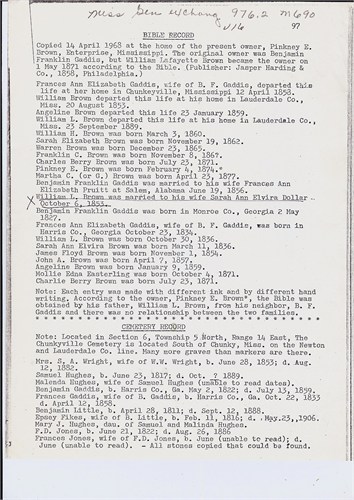
Sarah Elizabeth “Bettie” Brown was born 19 Nov 1862 (my birthday also) to William Lafayette Brown Jr and Sarah Ann Elvira Dollar Brown in Lauderdale County, Mississippi. (Right is the transcribed family Bible.) There were ten children in her family, seven boys and three girls, one of whom died at birth. Five of the children were born just before the Civil War began, and her father was a sharp shooter guarding the railroad bridges at Chunky, Mississippi, so her mother was home with a handful of children under the age of eight at the start of the war. When her father returned from the war, the next child was born in 1865. They wasted no time!

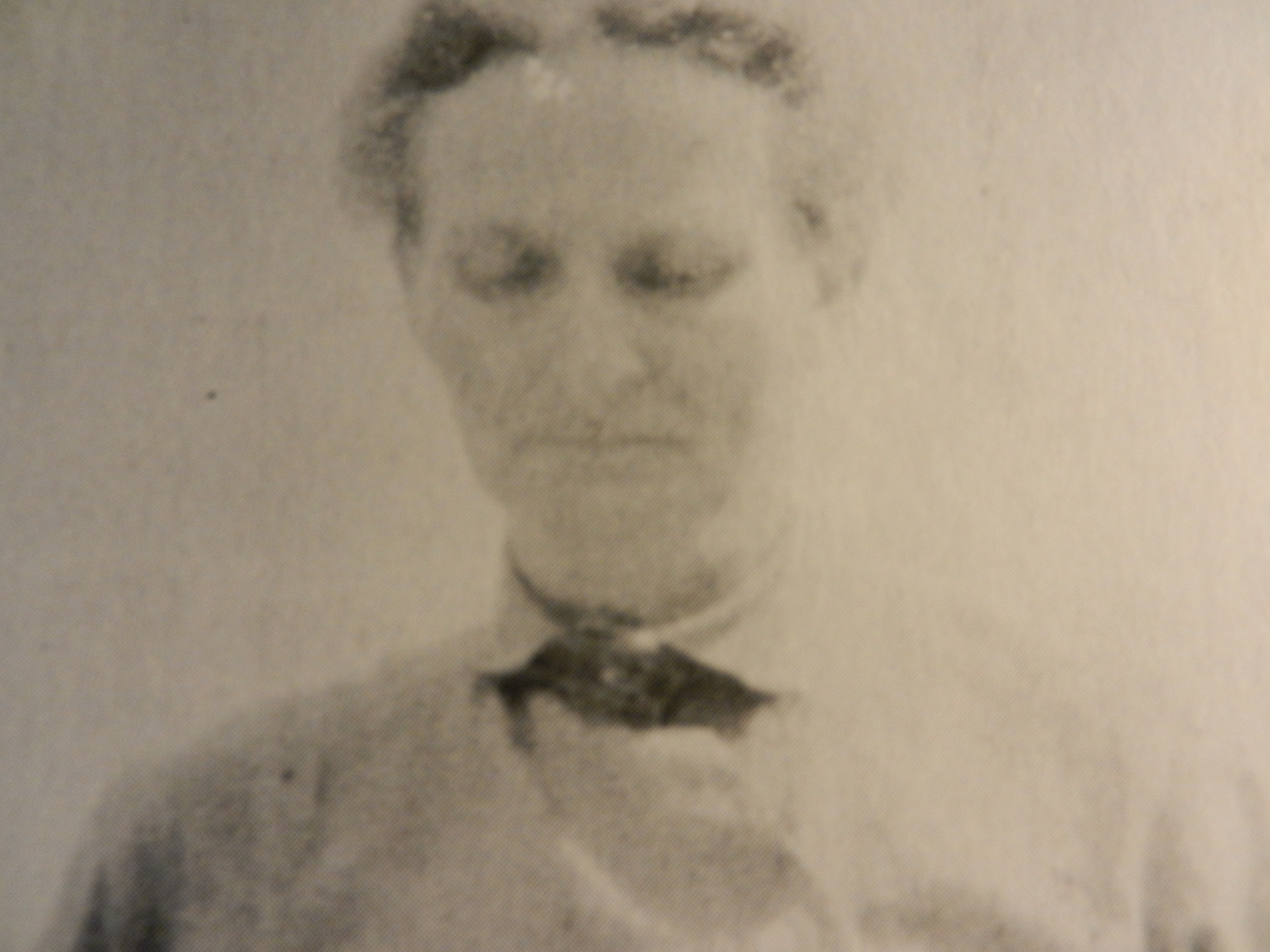
At the age of 18, Bettie married John Thompson 16 Nov 1881 and had one daughter, Fleta S (1885-1923). I don’t know what happened to Mr. Thompson, but in 1890 Bettie married TGL Keene. They had seven children: Eunice Tabitha (1891-1964) Isaac (1893-1894 infant who is buried near his parents) Essie Mae (1895-1981) Ernest Grady (1895-1947) Benjamin Blaine (1898-1960) Eula Ouida (1899-1981 my great grandmother) and Earl Vandorn (1901-1939). Bettie outlived her husband by five years and died on 18 Jul 1926 at the age of 63. Brown Sarah Elizabeth Bettie Brown Keene

TGL and Bettie lived in the Tunnel Hill area until 1910, when they show up on the census records as living in Meridian.

Happy Anniversary TGL and Bettie!


Brought to you by On This Day available at Amazon.

I’m Back! August 1st is a Great Day!!

Sorry for being MIA. I’ve been in Bermuda since May and internet is ridiculously expensive down there. But I’m back now and will run around and catch up with everyone over the next week.

A few months ago, I published a journal/perpetual calendar called “On This Day” (check it out at  Amazon) to keep track of my ancestral dates. You know, births, deaths, etc. I finally found a minute to use it, and for the last few days I’ve been filling it in, and guess what I found out…

Today is August 1st, and I realized if it weren’t for August 1st, I wouldn’t be here. That gives me a strange feeling that I should put some energy into this day and enjoy it to the fullest.

culpepper earl and ina in front of carOn this day in 1936, my grandparents were married.


john thomas howington florence j smith marriage recordOn this day in 1892, her grandparents were married.


I’m glad to be back, especially on August 1st! Catch you all tomorrow.

Anyone seen a plantation around here?

My aunt lives in Meehan, Mississippi where she married Robert McQueen about fifty years ago. She told me one day an old black man came knocking on her door. She lives in the middle of nowhere, so a stranger knocking on her door was highly unusual. But being in the friendly South (and the fact that she always has a loaded pistol on her), she wasn’t concerned with not knowing the stranger, so she opened the door. He offered to sell her some vegetables. I don’t know if she bought them or not, but the two struck up a conversation.

He asked her if she knew the old Allen Plantation. He said his grandfather worked on it his whole life and it was around the area somewhere. She told him her mother-in-law was an Allen, but she didn’t know if they had a plantation, and she wondered why she had never heard of a family plantation before now.

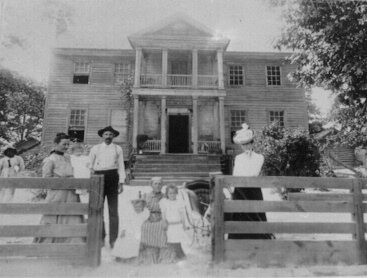
I began searching for clues. Draw yourself a diagram and follow along. My aunt’s in-laws were William “Mac” McQueen and Mabel Allen, who was the daughter of Preston and Minnie Allen. Mabel’s uncle (Preston’s brother) was Joe Oliver Allen who married Amelia Hand. The couple lived in Amelia’s parents house (Alexander Trotter and Eliza Hand), and after her parents died, the property naturally transferred into the Allen family. I’m convinced the photograph below (circa 1903) is the family plantation the man on my aunt’s porch was speaking of, and if you look on the far left side, you’ll see a black man in the background. His name is George Weeks. My aunt never saw her visitor again, and I wonder if this man in the photo is the grandfather he spoke of.

mcqueen allen home 1903 see notesThe home was located in southwestern Lauderdale County, MS on Point-Wanita Lake Road, just south of Meehan.

Sitting Down in the middle is Eliza O’Ferrall Hand

The two little girls with Eliza are her granddaughters, Alda Allen and Marion Inez Allen.

To the left, Eliza’s daughter Amelia Hand Allen and Amelia’s husband Joe Oliver Allen. Amelia is holding their daughter Velma Estelle Allen.

To the right in the fancy hat is Eliza’s daughter Corette Hand.

The following info is from al and mary dot org

“Note the black man to the far left of the picture. His name is George Weeks. I have been told that right after the Civil War, George showed up at the Hand home, hungry, ragged, and able to speak only a few words of English. He was obviously just a few years from Africa and very confused. The Hand family took him in and he worked for them the rest of his life. The A. T. Hands moved into this home about 1878. Several years after this picture was taken, the old home burned, and the Allens rebuilt on the same site. I can remember the Allen home, having visited there with my parents in the late 1930’s or early 1940’s. What I remember most about the home was a spring located across the road from the house with a hydraulic ram that pumped water up the hill and across the road to a tank that was located to the left of the home.” ~ Albert H Spinks, April 23, 2001.

Uncle Bluitt

culpepper Andrew Bluitt CulpepperThe Rev. Andrew Bluitt Culpepper was my grandfather’s uncle (little brother of Aunt Dora in THIS blog). He died in 1952, so I never met him, but I remember the family bringing his name up on occasion, and he was always referred to as Uncle Bluitt. The name came from his great grandmother, Elizabeth “Betty” Bluett or Bluitt. The spelling changed with each generation, and every generation has at least one male with Bluett in his name.

Uncle Bluitt was the youngest of 6 children of Joel Bluett Culpepper and Mary E “Mollie” McFarland. He was born in Alabama in 1882. Before 1890, the family moved to Kemper County, Mississippi.


culpepper Andrew Bluitt and Ollie KitrellWhen he was 21, he married Ollie Mae Kitrell.

culpepper Curtis and Obbie sons of Andrew Bluitt Culpepper


A year later, they had a son, Louis Curtis Culpepper, and three years later, another son, William Obie Culpepper.


Uncle Bluitt died at the age of 71, and his obit claims he was the pastor of more rural churches than any preacher in Mississippi, and his death certificate states he was also a barber. He died following a stroke, which is not an unusual thing with the males of my family. One of his uncles, (I can’t remember which one off the top of my head) was said to have died of a stroke while preaching in the pulpit. Pastors and strokes run in the clan. Uncle Bluitt is laid to rest with his wife and sons at Pine Grove Baptist Church and Cemetery in Lauderdale County, Mississippi.

culpepper, andrew bluitt and ollie kittrell


Andrew Bluitt Culpepper obituary

Rev. A. B. Culpepper, 71, Martin community, Lauderdale County, passed away Wednesday, Feb. 24. he had been a Baptist minister for 40 years. It was claimed that he had been pastor of more rural churches than any preacher in Mississippi.

Burial was in Pine Grove Cemetery. The Rev. Edward McKeithen, pastor of the Pine Grove Church, officiated, assisted by Rev. Ed Grayson and Rev Truly Reynolds.

He was a member of the Pine Grove Church. Survivors include his widow, Mrs. Ollie Kittrell Culpepper, two sons, Curtis and Obbie Culpepper, 8 grandchildren, and 7 great-grandchildren.

Happy 143rd Birthday, Aunt Dora!

culpepper mary eudora culpepper saterfiel familyMary Eudora Culpepper Saterfiel Watson was born March 31, 1871.

She is pictured here in the center with her husband WB Saterfiel to the left, her father JB Culpepper to the right, and her children from left to right in front Dewey Oliver Saterfiel and baby Alma. In the back row, left to right, Evie Mae Saterfiel Hodges, Indeola “Necie” Saterfiel Byrd, Willie Carlos Saterfiel, Adie Joseph Saterfiel.

Side note: I ordered my grandparent’s marriage license and the witness was D.O. Saterfiel, the little guy. He was my grandpa’s cousin. I sometimes forget these people knew each other. 🙂

She was my grandpa’s aunt Dora. She was born to Joel B Culpepper and Mary E “Mollie” McFarland in Sumter County, Alabama, as the only girl with five brothers. There was another girl born to the union, but she died at birth. Aunt Dora was the eldest of the children, so I imagine she was the caregiver to her little brothers. At some point when the children were little, the family moved to Kemper County, MS. After her mother’s death in 1908, her father moved in with her for a short time. That’s when this photo was taken. Shortly after this, he was placed in a soldier’s home in Biloxi, MS, where he died less than a year later, on Nov. 11, 1911. Dora was 40.

culpepper Mary Eudora Culpepper SaterfielWhen she was about 19, she married William Bartley Saterfiel around 1890 and had six children. Three of her children married into the Hodges family. Mr. Hodges married three times, and with each union came more children. The three Saterfiel children married a Hodges child from each of the three wives. The Hodges/Saterfiel family reunion must be confusing.

She lost her youngest child in 1912. Baby Alma was only five years old when she died, not very long after the top photo was taken.

Following her husband’s death in 1925, she married GW Watson in 1929. Though she was married to Mr. Watson for 21 years, her headstone reads Eudora Saterfiel and her obit says nothing of Mr. Watson’s children. She died at the age of 78. Her obit is as follows:

culpepper, mary eudora culpepper saterfiel watsonFriday, January 6, 1950

Mrs. G. W. Watson

Mrs. G. W. Watson of Collinsville died Friday at St. Joseph Hospital, following a heart attack. Funeral will be held Sunday at 2 p.m. from the Union Funeral Home. The Rev. Edward McKeithen officiating. Interment will be in Union. Survivors include three sons: A. J. and D. O., Collinsville, and W. C. Saterfiel, Causeyville: Two daughters, Mesdames Joe Byrd and George Hodges, Collinsville: several grandchildren and great-grandchildren.  

Her father, husband, and baby Alma are buried at Zion Cemetery, Kemper Co, MS. She and her other children are buried at Pine Grove Cemetery in Lauderdale Co, MS. Mr. Watson and his first wife are buried at Memorial Park in Newton Co, MS.

My Grandmah – the Doctah

In the early 1900s, my great grandmother, Nancy Didama Spencer Burke (Grandma Damie) was a doctor. She rode around the back hills of Newton County, Mississippi, taking care of the sick. She didn’t ride in a car. She rode side-saddle, and a woman doctor was a rare thing.

Many moons ago, women were the caretakers and caregivers, but at some point the medical power was given over to men. Gaining that power back was a hard door to open.

T909228_08It was opened by Elizabeth Blackwell (pictured left) in the mid-1800s. Miss Blackwell was born in England, but raised in America. A dying female friend told her she would have suffered far less if her physician had been a woman. This statement encouraged Elizabeth to pursue a career in medicine. She was told she would never become a doctor, because there was no schooling available for a woman, but that didn’t stop her from applying to every medical school in the country. Finally, as a joke, she was voted into Geneva Medical College in New York. I can only imagine the ridicule she received at the all-male school. But she showed them. She graduated first in her class in 1849 and later studied surgery, midwifery, and obstetrics. One can imagine she had very few patients and no camaraderie, but she persevered. Keep in mind this was 100 years before women even got the right to vote. She was a strong and intelligent woman.

She paved the path for many women in the field of medicine – even Grandma Damie.

A to Z Challenge – U is for U.S. Military

Blogging from A to Z April 2013 Challenge

U is for U.S. Military

My grandfathers who served:

An * denotes he died in service.

Joel Bluett Culpepper – Confederate Army

William Thomas Fisher – Confederate Army

William Lafayette Brown Jr – Confederate Army

Rev. Joseph M Culpepper – Confederate Army *

Rice Benjamin Carpenter – Confederate Army *

George Washington Spencer – Confederate Army

James C Howington – Confederate Army

William Henry Blanks III – Confederate Army

Hays Rodgers – War of 1812

William Henry Blanks I – American Revolution

Joseph Culpepper Jr – American Revolution

Thomas Young – American Revolution

John B Rice – American Revolution

James Rodgers Sr – American Revolution

Captain Jacob Prickett – American Revolution

My uncles who served:

George M Graham – Confederate Army

Timothy Rodgers – Confederate Army *

Wilson Rodgers – Confederate Army *

Hays Rodgers Jr – Confederate Army

John W Rodgers – Confederate Army *

Benjamin M Culpepper – Confederate Army

Hilliard Carpenter – Confederate Army *

James Monroe Chatham – Confederate Army *

Rev. James Lafayette Blanks – Confederate Army

Richard Lane Blanks – Confederate Army

John Henry Brown – Confederate Army

Absolom Rodgers – War of 1812

…and so very many more. Sleep well, soldiers. Your job is done.